2024-09-19 22:06
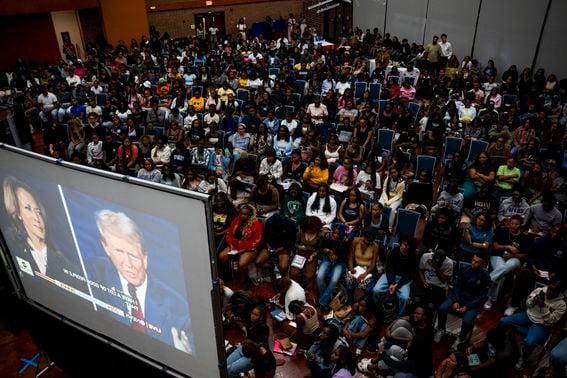
The agency appealed a lower court's decision to let the firm offer prediction markets on which party will control each house of Congress. Crypto firms are watching the case. A panel of judges grilled attorneys for the U.S. Commodity Futures Trading Commission and prediction-betting platform Kalshi over the company's efforts to launch political prediction markets in the U.S., without indicating whether they'd allow Kalshi to offer these products while reviewing a lower court's ruling on the products. CFTC General Counsel Rob Schwartz and Jones Day Partner Yaakov Roth took turns explaining why an appeals court should or should not block Kalshi from listing these events contracts. The Thursday hearing came days after a federal judge ruled that the CFTC could not block Kalshi from listing political prediction markets, letting the company list contracts predicting how control of the House and Senate might play out. But it only lasted for a few hours, since the CFTC quickly filed for an emergency stay, which the appeals court granted on a temporary basis. During the 2.5-hour hearing, the judges did not seem especially impressed by either party, saying various arguments or explanations did not make sense and drilling into specific terms of the Commodity Exchange Act and what they mean. The judges did not get to asking what an event contract actually is until more than two hours into the hearing. The CFTC's Schwartz called D.C. District Court Judge Jia Cobb's Sept. 12 ruling "seriously flawed," and said it could allow Kalshi – and other companies – to immediately launch "high-stakes" betting markets. "If that happens, the harm to the public is going to be profound at a time, and I don't mean to be dramatic, but Americans broadly believe that our democracy is under threat," Schwartz said. "In order to obtain a stay, the commission has to show two things: merit, and that there will be some harm, irreparable harm, absent the stay, and they can't make either of those," Roth said in his opening statement. Kalshi saw $50,000 deposited in its two political events contracts in the eight hours or so that the products were live before the CFTC filed for an emergency stay, Roth said. Market manipulation concerns The CFTC's arguments revolve around the agency's stated inability to police the underlying events – namely, U.S. elections. Market participants could distort markets to suggest one candidate is doing better than another, Schwartz said, and it would be more difficult to correct than other markets. A judge posed the hypothetical question of whether a counterparty might take the other side of a bet made for manipulative purposes: "Somebody will take the other side and eat their lunch. Is that what's supposed to happen?" That is what should happen, but political prediction markets may be susceptible to manipulation that cannot be easily corrected, Schwartz said. "It's because the sources of information that they absorb and reflect are opaque and unreliable. I am talking about polls with undisclosed methodologies, so, bad methodologies, fake polls, pollsters with agendas, inaccurate news, fake news, on and on," he said. "Normal futures contracts have an objective indicator that is reliable, kind of a published index report." If these markets are manipulated, that would both harm the market participants and could even undermine election integrity, Schwartz said. Later in the hearing, he drew a distinction between political event contracts and other types of bets that could be placed. "There's really very little monkeying around you can do with an earthquake," Schwartz said, responding to one example. Roth, speaking on Kalshi's behalf, pushed back, saying the more robust a market is, the less susceptible it would be to that type of manipulation. He pointed to the $1 billion already bet on Polymarket, which does not offer services in the U.S. after a settlement with the CFTC, saying the regulator's argument essentially suggests having an overseas vendor provide these products may be better than Kalshi doing so. "The most important thing I want to make is that the way to reduce that risk is to allow Kalshi markets to offer because right now, this activity is happening and being reported to voters based on markets that are not regulated, that are open to foreign traders, that have no surveillance. … There's no transparency," he said. "We don't know who's buying, who's selling cryptocurrency. If this was happening on Kalshi's markets, we would have this whole suite of regulatory provisions that apply." 'Irreparable harm' The CFTC needed to show there was a risk of "irreparable harm" in allowing Kalshi to continue listing and trading its events contracts. Todd Phillips, an assistant professor of law at the Georgia State University Robinson College of Business, told CoinDesk it was "unclear if [the CFTC] did that" over the course of the hearing. The regulator could have done a better job explaining what event contracts actually are and how a state prohibiting gambling on elections counts as gaming for the purposes of the Commodity Exchange Act, he said. On the other hand, Kalshi also faced tough questioning from the panel of judges on the appeals court. "Kalshi is making an argument that 'you should allow us to do something that 29 states prohibit, and that's big," he said. "That would be effectively overturning the law in more than half the country. Marc Hochstein contributed reporting. https://www.coindesk.com/policy/2024/09/19/us-election-betting-cftc-kalshi-both-grilled-by-judges-in-appeals-court/
2024-09-19 21:29
The matter has been closely followed in crypto markets, since the Sky platform has $200 million of loans collateralized by the token, and since WBTC is one of the biggest cryptocurrencies, with nearly $10 billion outstanding. Sky, the decentralized finance lender previously known as MakerDAO, will move forward with a plan to offboard wrapped bitcoin (WBTC) as collateral, following a vote that closed on Thursday and garnered overwhelming support from the project's community. The matter has been closely followed in crypto markets, since the Sky platform has $200 million of loans collateralized by the token, and since WBTC is one of the biggest cryptocurrencies, with nearly $10 billion outstanding. BA Labs, an influential advisor to the project, had initially floated the idea of reducing exposure to WBTC in August, before confirming the plan last week with an official proposal to move ahead with the vote to eliminate the exposure entirely. This week's Sky vote, which went live on Monday and was open for three days, and saw 88% of participants vote in favor of ditching wBTC in five separate proposals for a five-step offboarding process. Some 12% abstained. Following the vote, Sky will move forward with the offboarding of WBTC, with the first phase starting on Oct. 3 and culminating in the final phase on Nov. 28. BA Labs, in its proposals to offboard WBTC, had cited perceived risks from Tron founder Justin Sun's involvement with BiTGlobal, the custodian for the underlying assets. BitGo, the original custodian for WBTC, announced in August that it planned to transition control of the asset to a joint operation with BiT Global, which has regulated operations based in Hong Kong. Sun told CoinDesk last week that WBTC has a "sterling track record that is unmatched by any competing offers recently floated by the skeptics." WBTC is a token that allows investors to use bitcoin (BTC) on other blockchains, such as Ethereum, and often is at the center of the DeFi lending space as collateral. WBTC currently has a $9.7 billion market capitalization. Separately, The Defiant reported that the community behind Aave, the biggest DeFi lender, is unconvinced of the need to offboard WBTC as collateral. https://www.coindesk.com/markets/2024/09/19/defi-lender-sky-ratifies-plan-to-offboard-wrapped-bitcoin-due-to-sun-concerns/

2024-09-19 19:34
Lawyers contacted by CoinDesk are skeptical the FTX’s founder will get another trial. It’s been about 10 months since Sam Bankman-Fried was convicted on seven counts of fraud and conspiracy related to the collapse of FTX. It’s been about six months since he was sentenced (in March) to 25 years in federal prison. In that time, the crypto industry has moved on: markets are up, VC dollars are back, and politicians are once again supporting the industry. Meanwhile, the mainstream media has almost forgotten about the fallen crypto king, SBF himself. So might a judge and jury see SBF’s case differently should it hear evidence from the FTX founder again? That certainly seems to be the hope of SBF’s new legal team, which took over his case after his trial lawyers, Mark Cohen and Christian Everdell, stepped down following his conviction. On Friday, Sept. 13, his new lead lawyer, Alexandra Shapiro, filed an appeal to the Second Circuit Court of Appeals, laying out why SBF believes he deserves another hearing. “In the United States, people accused of crimes are presumed innocent unless and until proven guilty beyond a reasonable doubt,” Shapiro's appeal begins. “They are entitled to a fair trial by a jury. When the government introduces evidence, defendants have the right to rebut that evidence and present their side of the story. That, at least, is how it’s supposed to work. But none of that happened here.” The 102-page document argues that SBF was unfairly treated at trial, which took place as public scrutiny of the FTX case reached a fever pitch. Shapiro argues SBF was “presumed guilty by federal prosecutors eager for quick headlines,” “presumed guilty by the judge who presided over his trial,” and that the “prevailing narrative” of FTX’s collapse, and SBF’s part in it, was accepted as true, without proper inquiry. “From day one, the prevailing narrative—initially spun by the lawyers who took over FTX, quickly adopted by their contacts at the U.S. Attorney’s Office—was that Bankman-Fried had stolen billions of dollars of customer funds, driven FTX to insolvency, and caused billions in losses,” the appeal continues. “Now, nearly two years later, a very different picture is emerging—one confirming FTX was never insolvent, and in fact had assets worth billions to repay its customers. But the jury at BankmanFried’s trial never got to see that picture.” SBF has long maintained that FTX was never really insolvent and it was forced into bankruptcy unnecessarily. It notes that, under the bankruptcy settlement, nearly all its customers are being made whole. Shapiro says Judge Lewis A. Kaplan deprived the jury of “Brady” evidence favorable to the defendant, including that SBF made good investments (such as in Anthropic, the AI startup) alongside the bad ones. However, lawyers contacted by CoinDesk were skeptical that SBF would win a retrial, given the high bar for such legal turnovers. “It’s just not very common for an appellate court to double-guess a case like this,” said Tama Beth Kudman, partner at Kudman Trachten Aloe Posner. SBF’s lawyers would have to prove not only that Kaplan was biased against SBF, she said, and also that such bias led to actions that were prejudicial against SBF. To allow the appeal to go forward, the Second Circuit Court of Appeals would be saying effectively that it thought the judge in the original case acted inappropriately – something it rarely does, Kudman said. The appeals court might order a retrial if SBF's lawyers could show that Kaplan had a personal conflict of interest. But there’s no evidence for that, thus far. “Kaplan is known as a well-tempered, good natured judge. I would have thought he would have stepped aside if there was any reason that he shouldn’t be hearing the case,” Kudman said. Joshua Ashley Klayman, the U.S. head of fintech and head of blockchain and digital assets at Linklaters, said the appeal may have been timed to coincide with sentencing for Caroline Ellison, SBF’s former colleague and sometime lover. U.S. government lawyers have not requested jail time for Ellison, noting that the SBF case would have been “difficult to prove” without her testimony. Shapiro may be trying to juxtapose SBF’s steep sentencing with Ellison’s much lighter penalty. “Without expressing a view on the likelihood of success of Sam Bankman-Fried’s appeal, the timing of his filing may be strategic," Klayman said. "SBF’s appeal was filed on September 13, 2024, three days after the filing of Caroline Ellison’s sentencing memorandum. SBF was sentenced to 25 years in prison, while Caroline Ellison’s counsel has requested a non-custodial sentence." Klayman said news that FTX creditors are being repaid could help SBF's legal team. “The mainstream media has reported on FTX’s plans to repay customers. Perhaps SBF and his counsel may hope that, with the passage of time, SBF’s arguments [that FTX customers didn’t lose money] may be viewed in a different light." Joe Valenti, partner in the White Collar & Government Enforcement practice at law firm Saul Ewing, says appeals courts tend to give significant discretion to judges in weighing evidence, provided they meet a basic standard of reasonableness. "Anything that's tied to the reading of the facts, or the conduct of the courtroom, they give significant leeway to the court," he said. Judges are allowed to control the courtroom in the interest of expeditious justice and limiting evidence from being admitted to the record is well within the discretion of the judge. As for the argument that customers are being made whole in bankruptcy, Valenti doesn't see that argument holding much water either. "It doesn't matter if the money was paid back. If you're a cashier at the supermarket and you take $20 to go to the casino, it doesn’t matter if you give back the money the next day. You still took money from the grocery store." https://www.coindesk.com/business/2024/09/19/does-sbfs-appeal-stand-a-chance-of-succeeding/

2024-09-19 19:15
The decision to split up the upgrade wasn't unexpected. Developers had discussed that Pectra was becoming too ambitious to ship all at once, floating the idea of splitting it up to minimize the risk of finding bugs in the code. Ethereum developers agreed on Thursday to split their upcoming hard fork, Pectra, into two packages, in a move to make the massive upgrade less unwieldy and reduce the risk of missteps or bugs. The decision to split up the upgrade wasn't unexpected. Developers had discussed previously that Pectra was becoming too ambitious to ship all at once, floating the idea of splitting it up in order to minimize the risk of finding bugs in the code. Pectra was on track to be Ethereum’s biggest hard fork to date. (A hard fork is the technical term for when a blockchain splits from its original, and is the method used by Ethereum to implement major software upgrades.) Now, developers will be able to focus on a much narrower scope. Previously, developers shared they would aim to have the upgrade live in early 2025; that is still the case for the first part of the Pectra package. The core developers decided that eight Ethereum improvement proposals (EIPs) will be included in the first package, which includes EIP-7702, aimed at improving the user-experience of wallets, and famously scribbled by Ethereum co-founder Vitalik Buterin in 22 minutes. The second package is up to be changed over the next few months, but as of now could include proposals that aim to make changes to the Ethereum Virtual Machine, known as EOF, along with introducing a feature called PeerDAS, which improves data availability sampling and ultimately is beneficial for layer-2 blockchains. The developers acknowledged that the scopes of these upgrades can change over time, so solidifying this upgrade wouldn't be wise in this moment. "There seems to be agreements to split current Pectra somehow," said Ethereum Foundation researcher Alex Stokes, who led the call. "And then downstream, we can figure out what comes next." “I hear everyone that, it can be tricky to not want to put new things in. I would lean towards, again, keeping the scope very small, just because then that's going to maximize our chances of actually shipping the second fork very quickly with respect to this first one,” Stokes added. https://www.coindesk.com/tech/2024/09/19/ethereum-developers-confirm-plan-to-split-pectra-upgrade-in-two/

2024-09-19 18:32
The top crypto's current correction from the March peak resembles the action of 2016 and 2020 during the previous bull runs, which resolved in new all-time highs in the latter months of the year. Bitcoin could be heading for a breakout to new record prices, based on previous cycle's price action. Historical data suggests price could potentially rise to $108,000 to $155,000. Bitcoin (BTC) has been stuck in a grueling, multi-month correction since hitting $73,000 in March, convincing many investors that the market top is already behind. However, the recent price action resembles the top cryptocurrency's behavior during the previous two market cycles, which eventually resolved to the upside towards the end of the year. This suggests that a breakout to new record prices could happen in the next months. Despite bitcoin's anemic performance since March, it's still up 290% from its November 2022 market bottom, in line with the previous two bull markets during the same period, Glassnode data shows. At this point in the four-year cycle, BTC advanced 309% during the 2015 to 2018 bull run and 251% in the 2018 to 2022 cycle. On both occasions, the periods with the steepest rallies came later in the cycle on the way to the market top. If BTC stays within the range of its previous two cycles until the end of the year, it could rise by 600% to 900% from its cycle low, potentially reaching a price between $108,000 to $155,000. Typical halving year correction This year's corrective phase also mirrors the price action of bitcoin's previous two halving years. BTC reached a mid-cycle peak in 2016 and 2020, followed by months of sideways action to break higher in the latter months of the year, well-followed pseudonymous crypto analyst CryptoCon noted. The halving event happens automatically every four years and reduces by 50% the issuance of new tokens, which is widely believed to impact bitcoin's supply to create scarcity. BTC dipped more than 40% from its June 2016 intermediate cycle top before breaking higher in December, TradingView data shows. In 2020, it declined roughly 21% from an August peak to eventually make new highs in late October, per TradingView. In both cases, the real fireworks happened in the next year, hitting a market cycle top. This year, BTC hit a local peak in March at $73,000 before declining as much as 33% to its early August low. It's getting closer to the end of the typical mid-cycle correction, CryptoCon pointed out. "Whether it's cycle top calls or recession predictions, everyone has a reason why they should fear the worst," he said. "Meanwhile, the cycle continues right on track, unscathed." "All roads point to the real bitcoin bull run [in] 2025," he added. https://www.coindesk.com/markets/2024/09/19/bitcoins-breakout-to-new-highs-could-be-near-past-market-cycles-suggest/

2024-09-19 12:26
MicroStrategy, Cathedra Bitcoin and Metaplanet are leading the charge in maximizing bitcoin holdings. Cathedra Bitcoin pivots from mining to data centers to increase bitcoin holdings per share, responding to industry pressures created by the bitcoin halving and low mining revenue. Metaplanet focuses on boosting bitcoin holdings per share monthly, resulting in a 587% increase in stock value year-to-date. Bitcoin (BTC) has emerged as a significant treasury asset for public companies, a trend catalyzed by MicroStrategy's (MSTR) decision to incorporate bitcoin into its corporate treasury in August 2020, resulting in an over 800% increase in its stock value. According to BitcoinTreasuries.net, public companies hold approximately 354,316 BTC, about 1.69% of the total bitcoin supply of 21 million. This move has inspired a following, with several other companies adopting bitcoin to diversify and protect themselves from inflationary pressures. Notable among these are Metaplanet (3350), Semler Scientific (SMLR) and most recently, Cathedra Bitcoin (CBIT). Cathedra Bitcoin, a publicly traded company on the TSX Venture Exchange in Canada, has made a strategic shift from focusing solely on bitcoin mining to developing and operating data centers. The change comes as the mining industry faces increasing challenges due to the bitcoin halving. The Hashrate index, which tracks bitcoin mining revenue, is at a relatively low 43 (petahash/second) PH/s, with an all-time low of 36 PH/s, causing many public miners to struggle in 2024. Cathedra's goal is now to maximize bitcoin holdings per share by moving away from mining to create a more sustainable cash flow. This pivot allows the company to continuously acquire more bitcoin, focusing on long-term growth in bitcoin holdings rather than costly operational ventures. "Going forward, we will make all capital allocation decisions with the intention of maximizing our shareholders’ per-share bitcoin holdings," the company said. Also active in the bitcoin treasury arena is Metaplanet, led by CEO Simon Gerovich. Similar to Cathedra, Metaplanet is also prioritizing growth in its bitcoin holdings. Gerovich has emphasized the company's goal of boosting its holdings each month, a strategy that has led to significant gains. Year-to-date, Metaplanet's stock value has increased by 587%, reflecting the market's positive response to its strategic approach. MicroStrategy remains a pioneer and the most significant participant in the bitcoin treasury space. Under Michael Saylor's leadership, the company continues to innovate and expand bitcoin adoption. On Sept. 18, it announced the pricing of a $875 million convertible senior notes offering, upsized from an initial $700 million. The notes carry a 0.625% interest rate and mature in 2028. The proceeds will be used to redeem $500 million in high-interest 6.125% senior secured notes at a redemption price of 103.063% of the principal amount, reducing the company's interest payments. The remaining funds will be used to buy more bitcoin. The offering also includes an option for initial purchasers to buy up to an additional $135 million in notes. In a recent 8-K filing, MicroStrategy introduced an innovative concept called "bitcoin yield," which measures the percentage change in the company's bitcoin holdings relative to its assumed diluted shares outstanding, including both Class A and Class B shares. From January 1 to Sept.12 the company's bitcoin yield was 17%, with a quarter-to-date yield of 4.4%. According to the MSTR-tracker, the bitcoin per share ratio is currently about 0.0012. This metric suggests that long-term shareholders are experiencing accretive value in their bitcoin holdings. https://www.coindesk.com/business/2024/09/19/maximizing-bitcoin-per-share-a-new-corporate-strategy/