2024-09-18 17:02
The U.S. securities regulator took a beating in a congressional hearing that was weighted against it, with a witness list of critics calling out the SEC for its fight against crypto firms. The Securities and Exchange Commission was mostly a punching bag for witnesses in a House Financial Services Committee hearing hosted Wednesday by its crypto subcommittee. Daniel Gallagher, a former SEC commissioner, recounted Robinhood's difficulty in trying to comply with the agency's views on crypto and argued the regulator has ignored its own authority to do something more to establish digital assets rules. The U.S. Securities and Exchange Commission was hammered for two hours in a congressional hearing on Wednesday in which the witness list predominantly included agency critics, including former Commissioner Daniel Gallagher, who is now at Robinhood. In a preview of what could come when all five SEC commissioners – including Chair Gary Gensler – face a full hearing of the House Financial Services Committee on Sept. 24, the agency took a rhetorical beating from most of Wednesday's witnesses, all the Republican members and some of the crypto-friendly Democrats on the subcommittee holding a hearing entitled, "Dazed and Confused: Breaking Down the SEC’s Politicized Approach to Digital Assets." Gallagher, who is a senior lawyer at Robinhood Markets and whose name has been circulated as a possible agency chair if Republicans retake the White House next year, recounted a "very frustrating" situation in which his company was rebuffed in an effort to register with the SEC for crypto activity and has recently received a notice that the agency is weighing an enforcement action "on our very compliant Robinhood crypto offering." Read More: Robinhood Joins Coinbase in Saying It Tried to 'Come In and Register' Like SEC Wanted "We have to look over our shoulder left and right because of this regulatory uncertainty," Gallagher said, arguing that the agency has deliberately ignored a legal authority that would have allowed it to engage in some initial rulemaking even before Congress weighs in. "Ultimately, it will be up to Congress to rectify the commission's failure to act to register both tokens and platforms and to provide clarity for those which do not require registration," Gallagher said. "Only Congress will be able to truly provide the necessary long term regulatory clarity for digital assets, but nothing is stopping the commission from moving now to provide tailored relief that allows firms to register, even if provisionally, and continue to innovate in the meantime." Lawmakers questioned the uncertainty over the compliance status of Prometheum Inc., the SEC's first special purpose broker dealer for crypto, which recently opened its crypto securities custody operation. They also questioned witnesses on the meaning of the SEC's recent admission in its legal dispute with Binance that it erred in using the confusing shorthand term "crypto asset security," which wasn't meant to suggest that crypto tokens themselves are securities. Democrats spent much of their time underlining the extent of fraudulent activity in the industry. Rep. Sean Casten (D-Ill.) also criticized former President Donald Trump's family crypto project, World Liberty Financial. The congressman suggested its intent to retain 20% of its tokens for insiders seems designed to get around the proposal in a prominent legislative proposal, the Financial Innovation and Technology for the 21st Century Act (FIT21), in which projects with less than 20% of internal ownership can be considered decentralized. Rep. Brad Sherman (D-Calif.), one of the panel's most colorful and vocal critics of the crypto industry, also targeted Trump. "He's announced that he is now the chief crypto advocate," Sherman noted. "So on the one hand, he has all that power given to them by the Republican Party. On the other hand, he's trying to make billions of dollars for advocating crypto. That's a conflict of interest that makes Clarence Thomas look like Mother Teresa," he said, in a reference to the recent scandals tied to Supreme Court Justice Thomas. https://www.coindesk.com/policy/2024/09/18/secs-crypto-record-rebuked-by-ex-commissioner-gop-lawmakers-in-hearing/

2024-09-18 11:58
Crypto-friendly Revolut is said to be quite far along in creating its own stablecoin, according to two people familiar with the plan. A spokesman for Revolut said the company wants to expand its crypto offerings, taking a compliance-first approach to become a safe harbor for the entire crypto community. Revolut, which snagged a U.K. banking license in recent months, would join other entrants to the stablecoin sector including PayPal, Ripple and BitGo. Revolut, a London-based fintech company that offers cryptocurrency trading, intends to issue its own stablecoin, according to four people who have heard about the plan. The company, which snagged a U.K. banking license in July and was valued at $45 billion earlier this year, is said to be quite far along in creating the stablecoin, according to two of the people. Asked about its stablecoin plans, a spokesman for Revolut said the firm wants to expand its crypto offering, taking a compliance-first approach to become a safe harbor for the entire crypto community. “Crypto is a big part of our belief in banking without borders and we have a clear mission to become the safest and most accessible provider of crypto asset services,” the spokesman said in an email. The highly lucrative stablecoin sector, dominated by Tether's USDT with a market cap of about $119 billion, has seen a growing crop of new entrants. Circle’s USDC ranks second, at about a third of the size. Last year, payments service PayPal started issuing a stablecoin, with blockchain firms Ripple aiming to join in the coming weeks and BitGo announcing a planned introduction at Token2049 in Singapore earlier this week. The tokens, whose value is pegged to a real-world asset, often buy government-issued debt to support their value. That provides a steady stream of interest payments to the companies, making them highly profitable. Tether reported first-half profit of $5.2 billion. The trend may also be driven to some degree by incipient guidance on crypto-tokens coming out of Europe, in the form of the Markets in Crypto Assets (MiCA) regulatory framework. Revolut has allowed the buying and selling of crypto within its app for several years and launched a standalone cryptocurrency exchange for experienced traders in May. https://www.coindesk.com/business/2024/09/18/fintech-giant-revolut-said-to-be-planning-stablecoin/

2024-09-18 11:10
Deal was with a number of TON whales directly, and not a fundraising round with the TON Foundation Bitget and Foresight Ventures announced on Wednesday that it acquired $30 million in TON from whales. This deal was not structured as a traditional VC investment, but rather a purchase from the token's largest holders Crypto exchange Bitget and Web3 investor Foresight Ventures announced on Wednesday that they have increased their exposure to The Open Network (TON Blockchain) by $30 million through a deal with a number of unnamed whales of the TON ecosystem. This investment wasn’t a traditionally structured deal where the investors buy tokens from the foundation that supports the blockchain, but rather direct purchase from TON whales a spokesperson confirmed. “The investment is between Bitget, Foresight Ventures, and Toncoin holders. The TON Foundation is not involved in the deal. As TON foundation is actively supporting development and user adoption of the TON ecosystems, we will closely work with TON Foundation to boost the TON ecosystem,” a spokesperson confirmed to CoinDesk by email. “All TON tokens acquired have a lock-up period and will be gradually released according to the vesting scheme to ensure that all parties are committed to the TON ecosystem for the long term.” TON has been one of the year’s notable growth stories, thanks to its connection with Telegram’s nearly 900 million users. DeFiLlama data shows that TON’s total value locked exceeds $400 million. In April, Tether expanded to TON to boost peer-to-peer payments on Telegram. Recently the total authorized USDT on TON hit $1 billion. While Telegram and TON aren’t formerly affiliated, the two share an ecosystem. "The surge of the TON ecosystem represents the biggest growth opportunity in the cryptocurrency market this year and in the next three-to-five years,” Forest Bai, co-founder and CEO of Foresight Ventures, said in a release. Toncoin (TON) is currently trading for $5.51, up 5% in the last week according to CoinDesk Indicies data. https://www.coindesk.com/markets/2024/09/18/bitget-foresight-ventures-buy-30m-ton-tokens-from-whales/

2024-09-18 11:00
On Thursday, Ethereum developers will decide if Pectra will be split into two forks. If developers agree on the split, the first package could come in 2025, as early as February. It's only been six months since Ethereum, the dominant smart-contract blockchain, had its last major upgrade. But there are so many developer priorities for what to tackle next that there's a growing realization they can't all happen at once. So now, Ethereum developers are considering dividing the highly anticipated Pectra upgrade into two parts. Pectra was on track to be Ethereum’s biggest hard fork to date. (A hard fork, in this case, is the technical blockchain term for the software upgrade.), But some developers argue that the entire package of new features has become unwieldy, and they have expressed a desire to split it due to its complexities, and the risk of doing too much, too fast. During an All Core Developers call last week, Ethereum developers started to play with the idea that splitting the hard fork into two might be feasible. EF DevOps Engineer Parithosh Jayanthi, who was one of the core developers pushing to split Pectra, told CoinDesk over Telegram that “we’re talking about splitting it into two forks, mainly to reduce the risk of a bug and to enable faster shipping of both forks.” According to a report by Christine Kim, vice president of research at Galaxy Digital, the first part of Pectra would include Ethereum Improvement Proposals (EIPs) including EIP-7702, which aims to improve wallets – famously scribbled by Ethereum co-founder Vitalik Buterin in 22 minutes. The second part would see EIPs aimed at upgrading Ethereum’s Virtual Machine, known as EOF. On Thursday, Ethereum developers will decide in their upcoming All Core Developers Consensus layer call if Pectra will be split into two forks. Possible downside If developers agree on the split, the first package could come in 2025, as early as February. Ethereum developers haven’t disagreed much with the potential of splitting the fork, though EF researcher Ansgar Dietrichs told CoinDesk that one downside would be pushing EIP-7594, or PeerDAS, to the second package. PeerDAS aims to improve data availability on Ethereum, and with the delay in the feature going live, there might be slightly higher fees for layer-2 blockchains for the time being. “PeerDAS is crucial to make sure L2s have more room for future throughput growth, so the sooner we ship it, the more certain we can be that we can support whatever throughput L2s might need over the next year,” Dietrichs told CoinDesk. “For now, we still have some room to go even before PeerDAS. So hopefully it won’t matter at all. Worst case, L2s will have slightly higher fees again for a few months while we wait for the second half of the Pectra fork.” Dietrichs said that, "Ultimately, I think a split is likely still the right decision.” “I think everyone agrees that it's a really big fork, so a natural thing to do is just to break it into two,” said EF Researcher Alex Stokes on last week’s call, according to Kim’s report. “Generally, smaller forks are less risky.” https://www.coindesk.com/tech/2024/09/18/ethereum-devs-poised-to-split-blockchains-next-big-upgrade-pectra-in-two/

2024-09-18 08:59
The Ethereum blockchain has the most active developers, the highest number of active users and ether has a market cap that is five times larger than its nearest competitor, the report said. Despite recent underperformance, ether is potentially a contrarian bet into the year-end, the report said. Bitwise noted that the majority of stablecoins are issued on the Ethereum blockchain and more than 60% of all DeFi assets are locked on the network. Ethereum is like the Microsoft of blockchains, the asset manager said. Ether (ETH), the second-largest cryptocurrency, seems to be liked by nobody right now, but the native token of the Ethereum blockchain's underperformance could reverse as the year draws to a close, Bitwise said in a report on Tuesday. The asset manager noted that year-to-date ether is little changed, while bitcoin (BTC) is up 38% and Solana's sol (SOL) has risen 31%. Ether's recent underperformance stems from risk related to November's U.S. presidential election, rising competition from Solana and other blockchains, challenged tokenomics and a mixed response to the introduction of spot exchange-traded funds (ETFs) in the U.S., the report said. Still, it's not all doom and gloom. The majority of stablecoins are issued on Ethereum, more than 60% of all decentralized finance (DeFi) assets are locked on the blockchain and the popular prediction market Polymarket also settles on the layer-1 chain, Bitwise noted. "Ethereum has the most active developers, the most active users, and a market cap that is 5X bigger than its closest competitor," wrote Matt Hougan, chief investment officer at Bitwise. "It's like the Microsoft (MSFT) of blockchains," Hougan wrote. Everyone wants to talk about about newer companies and their game-changing tech such as Google (GOOG), Slack (WORK) and Zoom (ZM), "but Microsoft is still larger than all of them put together." Ether's challenges are not "existential" and the market may reevaluate the cryptocurrency closer to the U.S. election. "It looks like a potential contrarian bet through the end of the year," the report said. https://www.coindesk.com/markets/2024/09/18/ethereum-is-the-microsoft-of-blockchains-eth-underperformance-may-reverse-into-year-end-bitwise/

2024-09-18 07:51
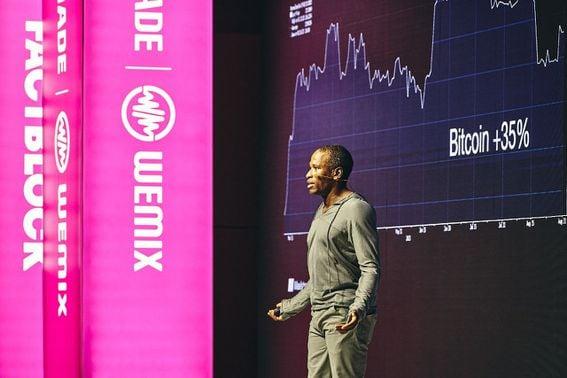
A rate cut could add to inflation and strengthen the Japanese yen, crashing markets, Hayes explained. The era of central banks is over, Hayes said ahead of an expected Fed rate cut Wednesday. Ethena's USDe and Pendle's BTC staking could benefit from the impending low interest rate regime, Hayes said. Demand for tokenized Treasuries, an interest-rate-sensitive product, could weaken if interest rates remain low. Arthur Hayes, chief investment officer of Maelstrom and co-founder of BitMEX, has made a bold statement that risk assets, including cryptocurrencies, could crash a few days after the first Fed rate cut, which is expected to be announced on Wednesday. The Fed is expected to announce its first rate cut since 2020 later today, kicking off the so-called liquidity easing cycle that has historically boded well for bitcoin (BTC). The impending rate cut, however, would add to the inflation problem and lead to yen (JPY) strength, causing broad-based risk aversion, Hayes explained in an exclusive interview with CoinDesk on the sidelines of the Token2049 conference in Singapore. "The rate cut is a bad idea because inflation is still an issue in the U.S., with the government being the biggest contributor to the sticky price pressures. If you make borrowing cheaper, it adds to inflation," Hayes said. "The second reason is that the interest rate differential between the U.S. and Japan narrows with rate cuts. That could lead to sharp appreciation in the yen and trigger unwinding of the yen carry trades," Hayes added. Markets got a taste of the destabilizing effect of the yen's strength and the resulting unwinding of the yen carry trades in early August after the Bank of Japan raised its benchmark borrowing cost to 0.25% from zero. Bitcoin fell from roughly $64,000 to $50,000 within a week, CoinDesk data show. USD/JPY is the only thing that matters in the short-term, Hayes said. Most analysts expect the BOJ to increase rates further in the coming months as the Fed takes the other route. The divergent policy paths mean the yen could rally further, forcing investors to square off long positions in risk assets financed by the JPY-denominated loans. Hayes sees interest rates in the U.S. falling all the way back to near-zero levels from the current range of 5.25% to 5.5%. "The initial reaction is going to be negative and the central bank's response will be to do even more [cuts] to stem the crisis. So, I think that cutting rates is a bad idea, but they're going to do it anyway, and so they're going to go to zero quickly," Hayes explained. Ether bull run ahead Near zero interest rates mean investors could look for yield elsewhere again, reigniting bull run in yield-bearing pockets of the crypto market like ether, Ethena's USDe and Pendle's BTC staking. Ether (ETH), which offers annualized staking yield of 4%, would eventually benefit from ultra-low rates. Ethena's USDe, which uses BTC and ETH as backing assets, combining them with equal-value short perpetual futures positions to generate yield, and DeFi platform Pendle's BTC staking, which, as of last week, offering a floating yield of 45% stands to benefit as well, Hayes explained. Meanwhile, demand for tokenized Treasuries, an interest-rate-sensitive product, could weaken. The era of central banks is over Over the past couple of years, Scottish market strategist Russel Napier has repeatedly said that advanced nation governments, focused on bringing down debt-to-GDP ratios, have taken control of the money supply, and central banks are fast becoming irrelevant. Per Napier, governments will resort to targeted liquidity creations in sectors like manufacturing and re-industrialization while keeping inflation elevated. Hayes believes the same and sees it as a positive development for the crypto market. "I 100% agree with that prognosis. The era of central banks is over. The politicians are going to take over and tell banks to create liquidity in specific sectors of the economy," Hayes quipped. "So you're going to see soft and hard capital controls in different locations, which means that, crypto is the only asset that you can own that's globally portable and gets you out of that system," Hayes added. https://www.coindesk.com/markets/2024/09/18/fed-rate-cut-could-crash-crypto-markets-but-era-of-central-banks-is-over-arthur-hayes/