2024-05-22 18:19
Lawmakers are set to vote on the FIT21 bill Wednesday afternoon. The U.S. House of Representatives is poised to vote in favor of a crypto market structure bill for the first time, in a symbolic effort to radically reshape the country's digital asset regulatory landscape. The bill, dubbed FIT21, would grant the U.S. Commodity Futures Trading Commission (CFTC) greater spot-market authority over digital assets deemed to be commodities, while also creating new jurisdictional lines for the Securities and Exchange Commission (SEC). Crypto companies and digital asset issuers would have a framework for determining whether and how their assets are securities under the terms defined by the bill, which in turn would let them know who their primary regulator could be. Rep. Patrick McHenry (R-N.C.), who chairs the Financial Services Committee, told reporters on Tuesday that he hoped for "a substantial vote" in favor of the legislation to demonstrate that there is real momentum for digital asset legislation, a week after the Senate voted in favor of a House resolution that overturned SEC accounting guidance. The bill is expected to pass, with a handful of Democrats joining a majority of Republicans in voting in favor of the bill. The bill's path through the Senate is less clear, and the White House earlier Wednesday said it opposed the legislation, though President Joe Biden did not threaten a veto. For and against The bill has been the subject of a large amount of discussion in recent days. Rep. Jim Himes (D-Conn.), one of at least nine Democrat lawmakers who said they would support the bill, said he "look[ed] forward to working with my colleagues on the Financial Services Committee on our continued oversight of this issue." "FIT21 is an important step forward in the regulation of the cryptocurrency industry and a meaningful improvement on the status quo," he said in a statement. Rep. Ro Khanna (D-Calif.) announced he would vote in favor of the bill shortly before the vote on Wednesday, saying "we need blockchain innovation here in America." Rep. French Hill (R-Ark.) told reporters on Tuesday that the bill creates a "5-step test on whether something is a decentralized blockchain or not," and includes a roadmap for the regulator to utilize. In comments to the House Rules Committee, he said the lawmakers who developed the bill had engaged with regulators – including the SEC – for more than a year, incorporating their feedback to the legislation. "We included provisions to mitigate conflicts of interest. We impose capital and other necessary requirements on intermediaries. And we impose higher standards for custody," he said. There's an interim process as well, where companies need to file a "notice of intent to register" with the agencies, he said. Opposition to the bill, however, starts within the House Financial Services Committee itself. Rep. Maxine Waters (D-Calif.), the ranking member on the committee, dubbed the bill the "not fit for purpose act" and told the House Rules Committee on Tuesday that it "is perhaps the worst, most harmful deregulatory proposal I have seen in a long time," likening it to the Commodity Futures Modernization Act. The CFMA, Waters charged, deregulated certain derivatives products which later "blew up our economy when AIG collapsed." FIT21 does not give the CFTC greater authority to target fraud or other crimes, despite directing the agency to oversee digital commodities, she said. The bill also sunsets disclosure requirements after 180 days, meaning the regulator cannot force companies it's supposed to regulate to provide audited financial statements past that deadline. "What is even more problematic is the bill’s definition of quote 'investment contract assets,'" she said. "Securities that meet this definition would be transferred into a regulatory void, with no primary regulator and virtually no laws and regulations to speak of. Importantly, the definition of investment contract asset is not limited to crypto, and it would be fairly easy for both crypto and traditional securities to be formatted to meet this definition." Interest groups weigh in A group of unions, consumer protection organizations, academics and others sent a public letter to House Speaker Michael Johnson (R-La.) and Minority Leader Hakeem Jeffries (D-N.Y.) asking them to vote against the bill and laying out a list of concerns similar to Gensler's. The letter took aim at the industry more broadly, saying crypto "still struggles to demonstrate viable use cases outside of speculative investment" and referencing the various ongoing bankruptcies and civil and criminal litigation. "The industry has superficially recovered this year, in part due to controversial approval of spot BTC ETPs by the Securities Exchange Commission," the letter said. "Yet, the scams, hacks, theft, instability, reckless promotional activities, and regulatory evasion that were present during the last crypto bull market remain endemic in the industry today." The letter was signed by organizations including the AFL-CIO, Americans for Financial Reform, Revolving Door Project, the National Consumer Law Center and over 30 others as well as 10 individuals. Echoing Gensler, the groups said they are concerned the bill would weaken existing securities laws to the point where even non-crypto companies could "evade more rigorous oversight" by tying themselves to a decentralized network (or at least claiming they were tied to a decentralized network). While the bill gives the CFTC greater authority, the letter said this authority "is vague," to the point it could undermine other agencies like the Consumer Financial Protection Bureau. "All told, we believe this bill as written introduces a policy 'cure' that would be far worse than the disease and create significant harm within and far beyond the crypto industry," the letter said. Advocates for the bill argue that legislation is needed to support companies' efforts to "build a better financial services system and better internet." "Since the inception of the Bitcoin network in 2009, the blockchain and digital asset industry has existed without targeted market regulation," a letter filed by the Blockchain Association, a lobby group, said. "The absence of clear rules leads to confusion in the marketplace for companies – and leaves users and consumers unprotected." The letter, signed by groups including stablecoin issuer Circle, Ethereum incubator ConsenSys, venture capital firm Digital Currency Group, exchanges such as Kraken and 50 other companies in the sector, went on to argue that the "lack of clarity" risked putting the U.S. behind in "the global technology race." SEC Chair Gary Gensler published a statement on Wednesday opposing the legislation. In it, he raised the specter of crypto's various collapses and frauds, suggesting the bill might allow even traditional pump and dumpers or penny stock pushers to escape oversight by branding themselves as using decentralized networks. "We should make the policy choice to protect the investing public over facilitating business models of noncompliant firms," he said. https://www.coindesk.com/policy/2024/05/22/us-house-set-to-vote-for-first-standalone-crypto-market-structure-bill/

2024-05-22 15:51
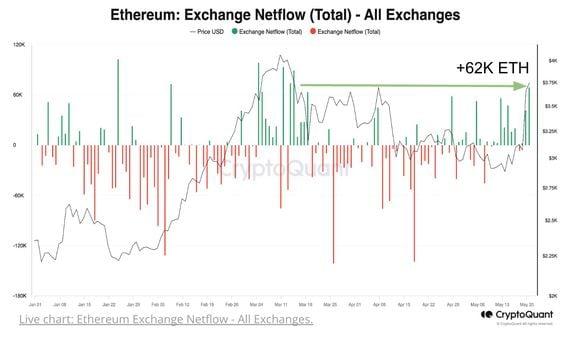
The surge in deposits comes after a 22% rally in ether spurred by hopes of a spot ETF approval. Exchanges experienced a net inflow of 62,000 ETH ($231 million) this week, suggesting a period of volatility is coming. Daily spot buying from ETH permanent holders hit its highest level in 2024 this week. A significant price correction is expected if a spot ether ETF is delayed or denied due to high levels of open interest. Ether (ETH) is expected to experience a period of volatility this week due to exchange inflows spiking to the highest level since March, according to a report by data provider CryptoQuant. The daily net flow of ETH, which tracks inflows and outflows to exchanges, hit 62,000 ether ($231 million) this week. High exchange flows are typically associated with volatility, the report said. The surge in deposits comes on the back of a significant rally in ether, with prices rising by 22% in two days after Bloomberg analyst James Seyffart said that the odds of spot ether exchange traded-fund (ETF) approval have increased to 75% and multiple reports that filing process with the U.S. Securities and Exchange Commission (SEC), for the ETFs, are suddenly seeing progress. Traders responded by aggressively opening ETH long positions on perpetual exchanges and buying spot, resulting in the largest daily spot buying from ETH permanent holders so far in 2024. These trades were placed in the hopes that ETH price will see a similar uptick that bitcoin (BTC) has seen since the news of the approval of U.S. spot ETFs started to make the rounds last year. The increase in demand for ETH led to a short squeeze, with 9,300 ETH being liquidated on the short side over a 48-hour period. CryptoQuant warns that if an ether ETF application is delayed or denied, a significant price reaction could occur due to high open interest, which currently stands at a record high of $11.7 billion. https://www.coindesk.com/business/2024/05/22/ether-volatility-expected-as-traders-flood-exchanges-with-231m-of-eth-amid-etf-hopes/
2024-05-22 15:09
MetaMask is a giant in the Ethereum ecosystem, but it's poised to cross one of the biggest tribal divides in crypto. MetaMask, the most-used Ethereum wallet, is working to integrate native bitcoin (BTC), according to two people familiar with the matter. Access could arrive within the next month, one person said, while another said functionality is not yet set in stone, but features could initially be limited and expanded over time. MetaMask is a giant in the Ethereum (ETH) ecosystem, the most-used wallet on that blockchain. It's poised to cross one of the biggest tribal divides in cryptocurrencies, with plans to add support for Bitcoin (BTC), according to two people with direct knowledge of the matter. The exact timeline is unclear, but one person said access could arrive in MetaMask within the next month. Another person said the exact Bitcoin functionality is not yet set in stone, but features could initially be limited and expanded over time. MetaMask's Ethereum wallet is the gateway for more than 30 million monthly active users into the Web3 world of decentralized applications and non-fungible tokens, or NFTs. When Ethereum debuted almost a decade ago, it expanded the capabilities of what a blockchain could do beyond what Bitcoin pioneered, adding support for smart contracts – essentially software built atop that blockchain. MetaMask helps users navigate such a smart contract-based environment. Since early last year, similar functionality has been added to Bitcoin, including NFT-like Ordinals and Runes, which enabled the creation of meme coins on Bitcoin. Whether MetaMask support will help users traverse these Bitcoin enhancements is unclear. MetaMask is built by Consensys, an Ethereum-centric research and development firm helmed by Ethereum co-founder Joe Lubin. Asked to comment on the development plans, a MetaMask spokesman said via email: "We're excited about MetaMask's commitment to embracing the multi-chain world of web3 and continually exploring new integrated features to enhance the usability and security of the leading self-custodial wallet. While we can't confirm any timeline for specific developments at this time, we're always working on innovations to serve our users better. Stay tuned for further updates when we're ready to share more." While MetaMask does not currently facilitate Bitcoin directly, it uses an Ethereum-compatible ERC-20 token known as Wrapped Bitcoin (WBTC) to bridge bitcoin to Ethereum's decentralized apps. https://www.coindesk.com/business/2024/05/22/bitcoin-is-coming-to-ethereum-stalwart-metamask-sources/

2024-05-22 14:30
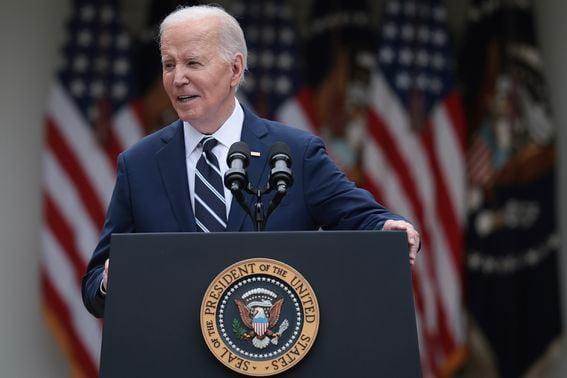
The FIT21 bill will see a vote in the House later Wednesday. The White House is against the U.S. House of Representatives passing a crypto market structure bill, but the president isn't threatening to veto it, in a positive sign for the crypto industry. U.S President Joe Biden's White House published a statement of administrative policy Wednesday saying the administration opposed the passage of the Financial Innovation and Technology for the 21st Century Act, citing concerns over a lack of investor protections should it make its way through Congress. The bill also suggested the White House would want to work with Congress on future legislation addressing the crypto markets, in contrast with previous statements from Securities and Exchange Commission Chair Gary Gensler, who has repeatedly said he does not believe the industry needs additional legislation specific to crypto. "The Administration is eager to work with Congress to ensure a comprehensive and balanced regulatory framework for digital assets, building on existing authorities, which will promote the responsible development of digital assets and payment innovation and help reinforce United States leadership in the global financial system," the statement said. "H.R. 4763 in its current form lacks sufficient protections for consumers and investors who engage in certain digital asset transactions." This is the second statement of administrative policy the administration has published in recent weeks, after threatening a veto against a bill looking to overturn controversial SEC accounting guidance. That bill sailed through the House and Senate. The statement came hours after the SEC's Gensler published his own opposing statement on the legislation, saying it would harm the regulator's efforts to police traditional capital markets as well as crypto markets. FIT21 would redefine how securities issuers have to comply with existing federal law and Supreme Court precedent, the SEC chair said in his statement. The bill's advocates say U.S. law doesn't allow for crypto companies to operate without the threat of civil litigation, a view Gensler described as these companies trying to get out of meeting disclosure and other compliance requirements for securities issuer. The bill would create a new definition specific to digital assets, to identify when they're securities or digital commodities and whether the SEC or Commodity Futures Trading Commission should be the primary spot market regulator. The full House is set to take up the bill later Wednesday, with a vote scheduled for this afternoon. "The Administration looks forward to continued collaboration with Congress on developing legislation for digital assets that includes adequate guardrails for consumers and investors while creating the conditions needed for innovation, and further time will be needed for such collaboration," the White House statement on Wednesday concluded. https://www.coindesk.com/policy/2024/05/22/us-president-biden-does-not-threaten-veto-against-house-crypto-market-structure-bill-but-opposes-passage/
2024-05-22 12:09
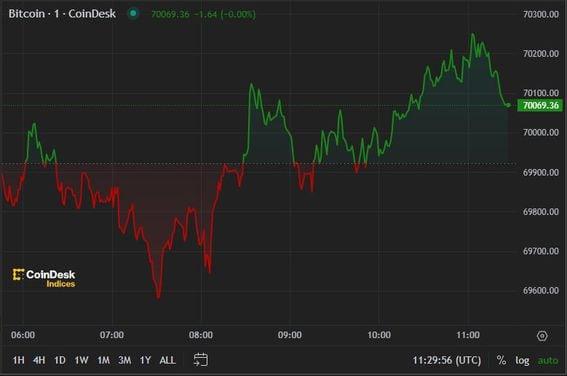
The latest price moves in crypto markets in context for May 22, 2024. Latest Prices Top Stories Bitcoin hovered around the $70,000 mark during the European morning, a slight drop following Tuesday's rally to as high as $71,400. BTC is currently priced at $70,069, around 1.6% lower over 24 hours. The CoinDesk 20 Index (CD20), offering a measurement of the broader digital asset market, fell about 0.5%. BlackRock's spot bitcoin ETF (IBIT) recorded over $290 million in inflows on Tuesday, its highest one-day figure since April 5 and nearly three times the previous high this month: $93 million on May 16. As a whole, ETFs took on nearly $300 million in net inflows on Tuesday. Ether's market cap rose by over $70 billion on Tuesday, not far off the entire market value of Solana's sol token at around $80 billion. The ether price surged more than 19% on Monday for a total of $439 billion, according to data source TradingView. The surge followed renewed hopes that a spot ether ETF will be approved in the U.S. Analysts say the gap between ether and rivals like SOL will widen in the coming months as a potential spot ETF launch opens the token to mainstream institutional adoption. At the time of writing, ETH is priced at $3,726, a decrease of just over 0.8% in the last 24 hours. WisdomTree has been given the green light to list bitcoin and ether ETPs on the London Stock Exchange. The asset manager said it was among the first applicants to have its prospectus given the go-ahead by the FCA. The Physical Bitcoin (BTCW) and Physical Ethereum (ETHW) ETPs are expected to start trading on May 28 and will be available only to professional investors. They will carry fees of 35 basis points. The FCA said in March it would not object to requests from financial institutions seeking to list ETPs for professional investors, a partial lift on the ban it put in place in 2020. The products however remain out of bounds for retail investors. Chart of the Day The chart shows the share of BTC/USDT trading that occurred during the U.S. hours (13:00 to 20:00 UTC) in the first four months of the year, starting from 2015. The U.S. share has steadily increased, reaching a record high of 46% in 2024 as the debut of spot ETFs in the U.S. opened the doors to mainstream institutional adoption. "The new ETFs calculate their net asset value (NAV) against dedicated benchmarks at the US close each weekday, thereby boosting arbitrage and price discovery," Paris-based Kaiko said in the weekly newsletter, explaining the concentration of activity during the American hours. Source: Kaiko - Omkar Godbole Trending Posts SEC's Gensler Says House Bill Would 'Undermine' Regulator's Crypto, Capital Markets Oversight Coinbase, Kraken, Others Form Coalition to Tackle 'Pig Butchering' Scams Donald Trump-Themed Meme Coins Breed Crypto Millionaires as MAGA Token Surged https://www.coindesk.com/markets/2024/05/22/first-mover-americas-bitcoin-hovers-around-70k-after-etf-records-month-high-inflows/
2024-05-22 10:56
Traders on Lyra have snapped up ether calls at the $5,000 strike and higher this week. There is a 20% chance of ether rallying as high as $5,000 by the end of June, according to dominant DeFi options protocol Lyra. Traders have snapped up ether calls at the $5,000 strike and higher this week. The price of ether (ETH) has a 20% chance of rallying to $5,000 by the end of next month, data from the decentralized options marketplace Lyra indicates. The price peaked at $4,692 during the previous bull market, according to CoinDesk data. To hit the new record, ether would need to rise by about a third from the current level around $3,740. That would follow this week's more than 20% surge spurred by sudden optimism that the U.S. Securities and Exchange Commission (SEC) will approve spot ETH exchange-traded funds (ETFs). "Lyra options markets are implying a ~20% chance of ETH reaching $5,000 by June 28," Nick Forster, Lyra's founder and a former Wall Street options trader, told CoinDesk in an email. "There is a 20% chance of ETH moving above $5,500 by July 26, as traders have increased positioning post the ETF speculation." Lyra is a decentralized settlement protocol for spot, perpetuals and options trading. In the past 24 hours, the protocol registered a crypto options trading volume of $1.33 million, accounting for over 50% of the global decentralized finance (DeFi) options tally of $2.08 million, according to data source DeFiLlama. Traders from Lyra correctly predicted BTC's first-quarter rally and the April peak near $70,000. Options are derivative contracts that give their holders the flexibility to buy or sell the underlying asset in the future at a price agreed upon today. A call gives the right to buy, and a put option offers the right to sell. Traders typically buy call options to profit from or hedge against price rallies and prefer puts when anticipating a price drop. This week, Lyra-based traders have snapped up ether call options expiring in June and July at strikes above $5,000, revealing a bullish outlook. “The ETH ETF approval should have an outsized effect on ETH relative to Bitcoin. ETH is starting from a market cap that is roughly one-third of what Bitcoin's was prior to the ETF being priced in," Forster said. “This should drive more volumes to options as traders play the ETF approval event and position for volatile markets without being subject to liquidation (on the long side)." The bias for calls on Lyra is consistent with the activity on leading centralized exchanges like Deribit. https://www.coindesk.com/markets/2024/05/22/ether-has-1-in-5-chance-of-tapping-5k-by-end-june-defi-options-protocol-lyra-says/