2024-03-18 17:45
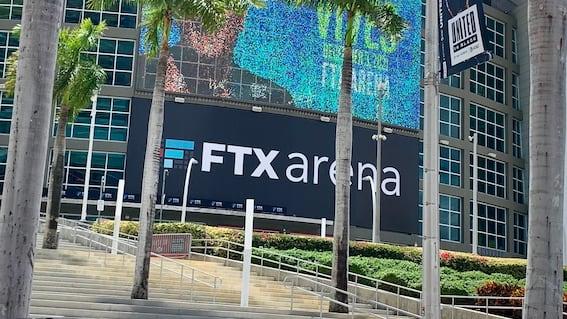
The London-based firm says the creditor promised to fork over two FTX accounts, only to back out of the deal after the value of its claims skyrocketed. London-based investment firm Attestor Capital, a top holder of FTX bankruptcy claims, has filed suit against a FTX creditor who allegedly promised to sell the firm two FTX accounts, only to back out of the deal once the value of its claims skyrocketed. According to court documents filed in New York on Jan. 29, Attestor, through a wholly-owned subsidiary called Svalbard Holdings Limited, made an agreement with a Panamanian company, Lemma Technologies, to purchase the accounts – worth a combined $166 million at the time of FTX’s collapse – in June 2023, after placing the highest bid at an auction organized by Lemma Technologies in May 2023. Lemma Technologies was not an original FTX creditor: the company had allegedly acquired the accounts on Jan. 18, 2023, when its majority owner and president, South Korean national Junho Bang, transferred the rights to both of his personal accounts to his firm. According to Attestor’s documents, Lemma Technologies has “no known assets” other than Bang’s transferred claims. But after making a deal to sell its claims to Attestor for approximately $58 million – 35% of the initial value of its accounts – Attestor says Lemma and its South Korean owners got cold feet. According to Attestor’s complaint, Lemma “began to assert that complications had arisen” regarding its authority to sell the claims, and that Bang could be “exposed to liability to his business associates” if the accounts were transferred to Attestor. While they delayed, Attestor claims Lemma Technologies “began to attempt to renegotiate” the agreed-upon purchase price of the accounts – evidence, Attestor says, of the company’s “seller’s remorse.” At the time of Attestor’s purchase of Lemma Technologies’ claims, the 35% price was above the typical price paid to claims holders, according to data from Claims Market. But in the months following the agreement, while both parties were working on due diligence, the average bid for FTX claims steadily climbed, reaching 68% by the end of 2023. The most recent data from Claims Market puts the average bid for FTX claims at 92%. The value for FTX claims has risen along with investors’ confidence that they will get their money back at the end of the bankruptcy process: in January, lawyers for the defunct exchange said they expected to be able to pay back customers in full, aided by the rising price of bitcoin. Lemma has not publicly responded to Attestor’s suit or filed a defense against it. CoinDesk’s request for comment, sent to two email addresses connected to Bang in the court documents, remained unanswered at the time of publication. Haru Invest connection Attestor’s suit against Lemma is not the only legal battle Bang is facing. Along with two other executives connected to Haru Invest, a South Korean crypto yield platform, Bang was arrested in February after Korean authorities accused the trio of embezzling 1.1 trillion won – approximately $828 million – from customers. It is unclear whether Bang remains in custody. Haru Invest halted withdrawals and deposits last June, citing “certain issues” with one of its service providers. The company later announced that it was filing both a criminal complaint and a civil lawsuit against B&S Holdings, which acted as a consignment operator for the platform, for allegedly providing fraudulent management reports. Bang is, according to Haru Invest and local media, the majority shareholder of B&S Holdings. https://www.coindesk.com/policy/2024/03/18/ftx-claims-holder-attestor-takes-creditor-to-court-over-alleged-sellers-remorse/
2024-03-18 17:20
The Fidelity Wise Origin Bitcoin Fund has attracted $6.9 billion from investors since its launch in January, the fifth-highest amount of all exchange-traded funds. Fidelity’s Wise Origin Bitcoin Fund (FBTC) has seen the fifth most inflows out of all exchange-traded funds (ETFs) so far this year. The fund attracted roughly $6.9 billion since its launch on Jan. 12. Fidelity’s Wise Origin Bitcoin Fund (FBTC) is the fifth most popular exchange-traded fund (ETF) on the market right now, attracting roughly $6.9 billion since its introduction on Jan. 12, according to data from Bloomberg Intelligence. The fund is the second of the spot bitcoin ETFs to make it into the top five. BlackRock’s iShares Bitcoin Trust (IBIT) joined the ranks of the biggest funds in February. The No. 1 fund based on 2024 inflows is Vanguard’s S&P 500 ETF (VOO), which has attracted over $24 billion from investors. IBIT is in third place with $12.5 billion, behind the iShares Core S&P 500 ETF (IVV), which has seen just over $15 billion of inflows this year. After a strong start to the week last week, flows into the 10 spot bitcoin ETFs slowed on Thursday and Friday as part of a wider market sell-off. The funds recorded a combined $133 million entering on Thursday and $199 million on Friday, according to data from Farside Investors. https://www.coindesk.com/markets/2024/03/18/fidelitys-bitcoin-fund-becomes-fifth-most-popular-of-all-etfs-in-2024/

2024-03-18 16:05
Data shows that the average trade size for the biggest spot bitcoin ETF, BlackRock’s IBIT, hovers around $13,000, suggesting that a big chunk of its demand is coming from nonprofessional investors. Data suggests that most of the demand for spot bitcoin ETFs has so far come from retail investors. The average trade size of BlackRock's iShares Bitcoin Fund (IBIT), according to one source, is 326 shares, or around $13,000, suggesting that those trades were made by nonprofessional investors. Billions of dollars have flowed into spot bitcoin (BTC) exchange-traded funds since they were launched in January and sentiment around the cryptocurrency has simultaneously improved – a case where reality appears to have matched the hype. This number wouldn’t be so shocking if that money was coming from big institutions, but, according to experts, it’s not. It’s coming from ordinary people, deemed in the financial world as retail investors. “There's probably some advisers in there, but, largely speaking, based on the size of the trades, it looks like retail is definitely a big factor,” said Bloomberg Intelligence senior ETF analyst Eric Balchunas. According to his data, the iShares Bitcoin Trust (IBIT) – issued by the world's largest asset manager, BlackRock – is seeing an average of 250,000 trades in a day. The average trade size is 326 shares, or around $13,000, suggesting to Balchunas that those trades were made by nonprofessional investors. BlackRock declined to comment. But a person familiar with the matter said that, while BlackRock is seeing buying interest from all types of customers, ranging from retail to institutional, most of the money flow seems driven by retail investors. In the stock market, large transactions are routinely split up into tiny chunks for more efficient processing, so a 326-share average trade side isn't necessarily a sign amateurs with thin wallets are driving the action. But Balchunas said that issuers have confirmed to him that demand is driven by the retail crowd. One issuer CoinDesk spoke with agrees. VanEck brought the VanEck Bitcoin Trust (HODL) to market in January alongside the other nine spot bitcoin ETFs. “I would say, broadly, it’s a lot of retail,” said Kyle DaCruz, director of digital assets products at VanEck. But there’s a lack of transparency into who invests in ETFs in the early days of launch as many of the trades are executed by authorized participants, market makers and brokers, who all invest on behalf of an entity, he added. ETFs make it easier for individual investors to allocate money into bitcoin and without holding the actual asset themselves. ETFs can be traded through financial advisers or brokerage accounts, paving the way for non-crypto investors to easily put some of their savings into the cryptocurrency. BlackRock’s IBIT, which has attracted more than $14 billion in assets in just two months, is by far the winner among the bitcoin ETFs. This is no surprise, said Balchunas. “BlackRock is everything to everybody,” he said. “It’s high liquidity and low fee, which means that it could appeal to institutions or financial advisors. That is a powerful combination," he added. "And then you put the BlackRock brand on it. … Look out.” Nine of the 10 bitcoin ETFs have seen new money added since they began trading on Jan. 11. Grayscale's GBTC, which has existed for years as a closed-end fund but converted into an ETF in January, has seen an outflow. But overall these products have had an outstanding performance, Balchunas said. Normally, funds with fees as low as the ones on most of the bitcoin ETFs would need about $80 million to $100 million in assets to break even. The smallest one, WisdomTree’s Bitcoin Fund (BTCW), has roughly $70 million. “We’d call that a legit hit,” said Balchunus. “IBIT just makes it look like [BTCW is] getting no love, but it’s really good.” https://www.coindesk.com/consensus-magazine/2024/03/18/bitcoin-etfs-hot-start-seems-largely-driven-by-retail-investors/

2024-03-18 16:02
Bitcoin ETF inflows on Monday and Tuesday will be the "real test" for what's next for the largest crypto asset's price, Markus Thielen wrote. U.S.-listed spot bitcoin ETFs attracted record inflows last week, but the trend is slowing. BTC may drop to as low as $59,000 if ETF inflows fell short of expectations, 10x Research said. Spot bitcoin (BTC) exchange-traded funds (ETF) in the U.S. notched record inflows last week, but weaker demand in the next day or so could trigger the next leg down for bitcoin's price, according to crypto analytics firm 10X Research. The 10 ETFs combined pulled in $2.6 billion in fresh funds in the five days ended March 15, per data from Farside Investors, but most of the net inflows happened from Monday to Wednesday propelling BTC to new all-time highs of near $74,000. The bitcoin ETFs only booked $133 million and $198 million of net inflows on Thursday and Friday, respectively, while BTC turned sharply lower to below $65,000 over the weekend. Bitcoin's price found short-term support at those levels and stabilized at $67,000, but the "real test" will come Monday and Tuesday, with bitcoin's correction potentially continuing if ETF inflows disappoint, Markus Thielen, founder of 10X, wrote in a Monday report. "While this is an unpopular narrative, it would be expected to see inflows slow down after prices experience significant intraday volatility," the report said. "Based on our reversal indicators, a retracement to $59,035 appears more likely, offering better risk-reward entry levels," which would indicate another 10% drop from current BTC prices. Despite the possibility of a deeper correction, the crypto bull market is not over yet, the report added. "We can still argue that bitcoin will climb materially higher during the next few months as this bull market will likely continue," Thielen said. If BTC recovers above $70,000 – above its former all-time high in 2021 – the rally could open the door to much higher prices, he added. Earlier Monday, U.K. bank Standard Chartered (STAN) boosted its year-end bitcoin price target to $150,000 from $100,000, while predicting a $250,000 high for 2025. https://www.coindesk.com/markets/2024/03/18/bitcoin-correction-may-continue-if-etf-inflows-disappoint-in-next-few-days-10x-research/

2024-03-18 12:08
The trend was fueled by the success of Book of Meme (BOME), which turned a few hundred dollars into hundreds of thousands in paper gains for early investors. Presales have gained popularity in the crypto market, with many projects raising millions of dollars based on simple X posts even in the absence of a working product. The trend was fueled by the success of Book of Meme (BOME), which turned a few hundred dollars into hundreds of thousands in paper gains for early investors. The frenzy left some market observers warning of the high risks involved in participating in such presales. Raising millions of dollars appears not to require a working product, a white paper, a long-term plan or even a meme picture in some parts of the crypto market. These days, a simple post on X announcing a so-called presale can attract millions of dollars in Solana’s SOL token. Presales are events where tokens are nominally sold before the official launch. They are typically conducted by sending funds to a crypto address and receiving, at a later date, a predetermined number of tokens. Some on-chain watchers estimate that over $100 million worth of tokens were sent to various meme coin presales over the weekend, mainly on the Solana blockchain. The frenzy of handing over funds in return for a promise has left some market observers unimpressed. “2 years later and everyone is right back to bidding ponzis,” popular Ethereum investor @sassal0x said in a post on X. “People can do what they want with their money but sending money to a 'memecoin presale' that has a 99.9% chance of rugging is actually just dumb as hell.” “Presale is live,” is the general template for such posts. “To participate send SOL to (contract address). Minimum participation: 0.5 SOL.” The hype over presales soared after the success of Book of Meme (BOME). Its creator offered a presale last week, and early investors turned a few hundred dollars into hundreds of thousands of dollars in paper gains in a few days. The token's market capitalization went from zero to $1.6 billion in a few days, with over $100 million in daily trading volume. It was listed on prominent crypto exchanges including Huobi and Binance, much to the surprise of some observers. BOME’s price action led to other opportunistic developers floating their own presales. Scores of X posts, mainly from influencers – accounts with a large following – are trying to raise capital in return for a promise of a token that may be distributed to funders later on. For example, one project captured $30 million in a 30-minute period in European morning hours on Monday. The project purports to be an AI-driven application. Several presale tokens issued since BOME have already turned over millions of dollars in trading volumes in the past 24 hours, hitting market capitalizations of as high as $600 million, Birdeye data shows. The frenzy has contributed to a jump in Solana’s SOL tokens. The SOL price crossed $200 for the first time since November 2021 as network activity continues to grow rapidly. https://www.coindesk.com/markets/2024/03/18/lure-of-quick-money-sees-100m-flow-to-solana-meme-coin-presales/

2024-03-18 12:06
55.76% of ETHFI's supply has been allocated to core contributors and investors. The stakers that have locked more than $12 billion staked on Binance Launchpad received 20 million tokens. ETHFI was trading at $4.13 with an FDV of $4.13 billion. The initial circulating supply is 115.2 million tokens. ETHFI, the governance token of the largest liquid restaking protocol Ether.Fi, debuted at $4.13 after the token was distributed via an airdrop and to participants of a Binance Launchpad round. The token has since slumped by more than 20%. At the time of writing, ETHFI is trading at $3.60 on Binance and recorded a trading volume of over $118 million in the first 45 minutes of trading. The token had a fully diluted value (FDV), the market value of a token if the entire supply ends up in circulation, of $3.6 billion. More than $2 billion worth of the FDUSD stablecoin and 17.3 million BNB ($10 billion) were staked on the Binance Launchpad. Launchpad stakers receive an allocation of ETHFI relative to the amount they staked. Several of the recently-listed tokens on Binance’s launchpad slumped after release: ARKM dropped from its debut price of 90 cents to 30 cents, while PORTAL fell from $3.60 to $2.08 three after being issued. The max supply of ETHFI is capped at one billion, with 20 million tokens being allocated to the Binance Launchpad and 60 million tokens being set aside for “season one” of the token airdrop, which ended on March 15. An additional 50 million tokens will be distributed after “season two.” Investors will receive 32.5% of the token’s total supply over the course of a two-year vesting schedule, whilst core contributors will receive 23.26% over three years. The initial circulating supply will be 115.2 million tokens. Ether.Fi's total value locked (TVL) has surged 117% in the last 30 days with total deposits approaching $3 billion, according to DefiLlama. Restaking is a strategy used by those that stake ether (ETH) and want to generate additional yield. By using a protocol like Ether.Fi, stakers receive a liquid restaking token (LRT) that can be used elsewhere on other protocols, they also receive loyalty points that can be converted into a token airdrop. https://www.coindesk.com/business/2024/03/18/etherfi-token-debuts-at-413-after-airdrop-and-binance-launchpad-distribution/