2024-09-10 19:50
Investors during late August and early September pulled roughly $1.2 billion out of the funds over eight consecutive days, the longest streak of exits so far. U.S.-traded spot bitcoin ETFs saw $1.2 billion in outflows between Aug. 27 and Sept. 6. This marked the longest streak of outflows since the launch of the funds, but it signals nothing but healthy growth, an expert said. The recent plunge in the price of bitcoin (BTC) was accompanied by a sizable amount of net outflows from the 12 U.S. spot exchange-traded funds (ETFs). While on its face, that might appear worrisome, it's more likely a sign of healthy growth. “This is going to be two steps forward, one step back," Eric Balchunas, senior ETF analyst at Bloomberg, said. "That’s the way many ETF categories are born and mature,” he added. “Nothing goes up in a straight line – flow-wise – ever because ETFs service long term investors and traders.” The funds bled roughly $1.2 billion worth of bitcoin between Aug. 27 and Sept. 6, according to data from Farside Investors. At eight, that was the most consecutive days of net outflows that the ETFs have experienced since launching on Jan. 12. The $1.2 billion represented roughly 3% of total assets in the funds, which, according to Bianco Research, stood at $46 billion after the outflows. Balchunas said a worrisome number would be more like 15%-20%. The ETF issuers have mostly been blessed with sizable amounts of cash flowing into their newly-opened funds. In their first two months of trading, the ETFs saw net inflows totallng $12 billion, according to Bianco Research. Not as bullish on the funds as Balchunas, Bianco noted that the pace of inflows has since slowed, with just $4 billion of new money over the next six months, including only $1 billion over the past three months. “The key to building a category isn't so much taking in money when there's good times, but it's limiting the outflows at bad times and I've seen these Bitcoin ETFs do a great job in the latter,” Balchunas said, referring to recent large price sell-offs associated with Mt. Gox and the German government, during which the ETFs quickly reverted to inflows after seeing only modest exits of money.. “The [ETFs have] really done a good job keeping bitcoin out of the abyss," said Balchunas. "They have saved bitcoin’s butt a couple times in the past couple months, from real, real depths." https://www.coindesk.com/business/2024/09/10/bitcoin-etfs-are-fine-despite-suffering-their-worst-string-of-outflows-says-expert/

2024-09-10 17:10
The protocol faced a challenging environment as yields from arbitraging bitcoin and ether funding rates tumbled to near-zero. Even so, its USDe token held steady to its $1 peg. The market cap of Ethena's USDe token fell below $2.7 billion from $3.6 billion as demand faltered. The protocol generates yield for investors by shorting bitcoin and ether derivatives in a "carry trade," but funding rates have turned negative over the past weeks. Even so, the token's price held stable around $1 during the unwinding, defying early concerns of a downard spiral. Crypto yield protocol Ethena, which skyrocketed earlier this year to over $3.6 billion in deposits, faced its biggest test as crypto markets cooled off and investors pulled the funds that backed its USDe synthetic dollar token. Even so, USDe held steady to its $1 peg. The protocol has endured nearly $1 billion in outflows since July, DefiLlama data shows. That's a 27% decrease in the token's supply. The protocol's governance token, ethena (ENA), has tumbled 85% from its April high. The decline coincided with funding rates for crypto perpetual futures, a key source of yield for USDe, falling to near-zero in the past few weeks. They hit an annual 40%-70% in March. "Lower funding rates makes it less attractive to hold and stake USDe," Julio Moreno, an analyst at CryptoQuant, said in an interview with CoinDesk. USDe uses bitcoin (BTC) and ether (ETH) as backing assets, pairing them with an equal-value short perpetual futures position on exchanges. Perpetual funding rates are usually positive, which means Ethena's USDe generates revenue on its backing derivative assets. "One of the most important risks USDe faces is an environment of sustained negative funding rates in the perpetual futures market," Moreno said. "In this scenario, Ethena would need to pay funding in order to keep its short positions open." The yield offered to USDe tumbled to 4.4% from its March peak of over 50%, according to DefiLlama. That's lower than less risky investments such as a vanilla money-market fund or other Treasury-backed digital token offerings. Price stability Skeptics raised concerns about Ethena's model, likening it to the imploded stablecoin project Terra-Luna. Terra's algorithmic stablecoin fell into a spiral in May 2022 after its subsidized growth ran out of fuel, kickstarting a brutal crypto winter. The current, unfavorable market environment and flurry of withdrawals offered a chance to prove the protocol's stability. "We are pleased with how Ethena has responded to multiple deep market corrections in the last few months," said Guy Young, co-founder and CEO of the protocol's development firm, Ethena Labs. "Stress tests were always going to surface, and growing at the pace we were indefinitely is clearly not possible." The price of USDe remained stable at its $1 peg during the outflows, and the subsequent unwinding of trading positions to meet demand for withdrawals happened "all orderly with zero issues experienced on the US dollar peg," Young added. Ethena keeps a "rainy day" fund, known as the reserve fund, to pay for funding rates if needed. To minimize protocol risks, the reserve should stand at least at 1% of USDe supply, CryptoQuant's Moreno said. "This is the case at the moment, as the reserve fund stands at $45 million, which is around 1.6% of the current USDe market capitalization," Moreno said. "Investors need to watch this key metric to assess Ethena’s risk." https://www.coindesk.com/markets/2024/09/10/ethenas-yield-machine-sees-1b-outflows-as-crypto-market-cools-but-theres-good-news/

2024-09-10 16:07
Traders see only a 17% chance that Donald Trump will say "crypto" or "bitcoin" and just 13% for Kamala Harris. Cryptocurrency has come a long way. Once obscure, the technology now has a shot at being mentioned in Tuesday night's U.S. presidential debate between Donald Trump and Kamala Harris. A long shot, but still a shot. On Polymarket's "What will Trump say at the debate?" contract, "yes" shares for "crypto/Bitcoin" were trading at 17 cents midday Tuesday in New York, indicating traders see a 17% chance he will say one or both words. Each share pays out $1 worth of cryptocurrency if the prediction turns out to be correct, and nothing if it is proven wrong. Crypto trails behind hot-button issues the former commander-in-chief and Republican nominee is likelier to utter, such as "abortion" (the highest probability, at 83%) as well as Trumpian epithets like "Comrade Kamala" (40%). Vice President Harris, meanwhile, has an even slimmer chance of mentioning bitcoin or crypto, at 13%. Once again, "abortion" is the leading contender for a mention from the Democratic candidate (an 87% probability), followed by the description of her opponent as a "convicted felon" (58%). Trump has aggressively courted crypto voters and donations this year. Harris' campaign has made overtures, although the vice president serves in an administration the industry considers hostile. Prediction markets allow traders to bet money on the outcomes of everything from flu outbreaks and wars to Rotten Tomatoes scores. Detractors say they amount to little more than gambling, but proponents say prediction markets offer a superior source of forecasting to polls and pundits. Because the traders making predictions are putting money on the line, they have a powerful incentive to thoroughly research topics and voice their honest conclusions, not what other people want to hear, the argument goes. Election betting has surged this year and Polymarket has captured most of the action despite a regulatory settlement that requires it to block users from the U.S. (though some traders could be using VPNs to disguise their locations). Friday was the platform's biggest day ever, with $34 million in trading volume, according to Dune Analytics data. On Manifold, a self-described "play money" prediction market, "bitcoin" ranks near the bottom of words or phrases likely to be said during Tuesday's debate, with 12% odds, slightly ahead of "unburdened" (8%) and "coconut" (6%). Bets on this market are paid out in mana, a digital (not crypto) currency. New users get free mana when they sign up and can buy more, but they can't cash it out; the main incentive to place bets on Manifold is to build a reputation as an accurate forecaster. https://www.coindesk.com/markets/2024/09/10/trump-harris-debate-polymarket-shows-slim-odds-of-crypto-mention/

2024-09-10 15:53
The emergence of new mining rigs may have created an opportune environment for solo miners, according to CryptoQuant. Solo miner receives $181,000 block reward. Bitcoin mining still dominated by larger mining pools, with FoundryUSA and Antpool representing more than 50% of the total hash rate. A solo bitcoin (BTC) miner beat a swathe of powerful mining pools to receive a $181,000 reward after successfully mining block 860749 on Tuesday. Bitcoin blocks are produced roughly every 10 minutes and are typically mined by mining pools, which combine computing power to give them the best possible chance of pocketing the block reward. The reward to successfully mine a block sits currently at 3.125 bitcoin, after a recent halving event earlier this year. Solo miners usually have historically had limited computing power to mine blocks, although new solo mining rigs like BitAxe claim to offer 500 Giga Hashes per second (GH/s). Still, a solo miner winning a block could be compared to winning a lottery, given that the network's hashrate and difficulty are currently at all-time highs and institutional miners with immense computing power are also competing for the same block rewards. "It is not a rare occurrence that a solo miner finds a block, it is just a low probability event," CryptoQuant's head of research Julio Moreno told CoinDesk. "However, this has been happening a little bit more frequent as there has been a growth in the production of small ASICs (mining equipment), which is specifically targeted to people that want to mine by their own from their own home." "Still, the mining pool space remains highly concentrated, with two pools, FoundryUSA and Antpool, adding up to 53% of the total Bitcoin network hashrate," Moreno added. According to Hashrate Index, Foundry USA currently has a reported hash rate of 202.8 exahashes per second (EH/s), and AntPool has a figure of 160.3 EH/s. An exahash is a metric that is one billion times greater than a gigahash. CORRECTION (Sept. 10, 2024, 22:16 UTC): Corrects the length of time it usually takes for a Bitcoin block to be produced. https://www.coindesk.com/business/2024/09/10/solo-bitcoin-miner-wins-big-after-securing-an-entire-block-reward/
2024-09-10 12:00
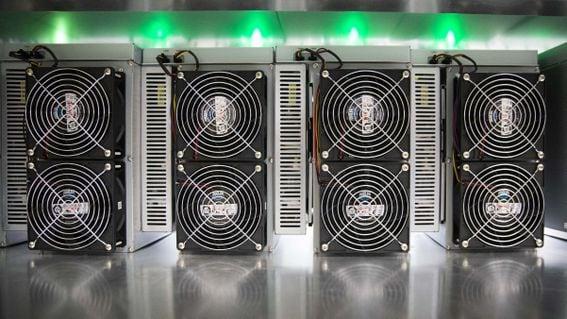
The latest price moves in crypto markets in context for Sept. 10, 2024. Latest Prices CoinDesk 20 Index: 1,817.62 +2.4% Bitcoin (BTC): $57,160 +3.54% Ether (ETH): $2,349.98 +1.54% S&P 500: 5,471.05 +1.16% Gold: $2,504.83 −0.07% Nikkei 225: 36,159.16 −0.16% Top Stories Bitcoin fluctuated around $57,000 during the European morning having gained about 3% in the last 24 hours. Still, it remains around 3% lower in September and more than 20% below the all-time high of $73,000 in March. The broader digital asset market has risen about 2.35%, as measured by the CoinDesk 20 Index. Bitcoin ETFs registered net inflows for the first time in over a week on Monday, gaining $28.7 million. Despite the rally, NYDIG has noted that bitcoin's "near-term catalysts … are sparse." The firm wrote on Monday that September is a notoriously weak month for bitcoin prices but, on the bright side, October is generally one of the strongest. BTC and ETH options trading on derivatives exchange Deribit shows a bias for bearish puts over bullish calls, suggesting traders remain concerned about crypto price weakness in the short term. "Given the velocity of last week's dip, the market is still very cautious about downside risk," QCP's market insights team said in a Telegram broadcast. "Risk reversals until October are still skewed towards puts in both BTC and ETH." The cautious sentiment perhaps stems from historical data, which shows recessions and risk aversion tend to follow the start of a Fed rate-cutting cycle. The central bank is widely expected to cut rates by 25 basis points next week. Price rallies could, therefore, be fleeting until the Fed meeting. Blockchain data provider Nansen bought staking platform StakeWithUs as CEO Alex Svanevik looks to expand beyond data provision into offering investment services for institutions and retail traders. While the purchase price was not disclosed, a spokesperson for the company said it was a seven-figure sum. StakeWithUs, which is backed by the Singapore government's innovation project SGinnovate, provides staking across multiple blockchains. Following its integration, Nansen will offer non-custodial staking for over 20 assets, including SOL, SUI, OSMO and ATOM. "By enabling staking within Nansen, we are not only expanding our service offerings but also enhancing our support for the blockchain ecosystems we integrate with," Svanevik said in a statement. Chart of the Day The chart shows ether's session-wise price performance over the past four weeks. Ether has dropped over 12% in one month, with most losses happening during the U.S. trading hours. The Asia-Pacific hours have been a source of bullish pressures for the cryptocurrency. Source: Velo Data - Omkar Godbole Trending Posts Crypto Retail Market Is Poised for a Rebound: Gemini Nigeria SEC to Commence Enforcement Action on Unlicensed Crypto Firms: Reports Coinbase Layer-2 Success Shows Power of Marketing Over Cutting-Edge Tech https://www.coindesk.com/markets/2024/09/10/first-mover-americas-bitcoin-rises-to-57k-as-etfs-end-losing-streak/
2024-09-10 11:20
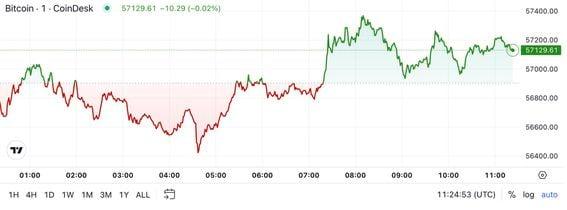
The T3 Financial Crime Unit is looking to clean up USDT issued on Tron, a blockchain favored by bad actors. Tron, Tether and TRM Labs are joining forces to fight financial crime. A TRM Labs report from 2023 showed that the Tron blockchain was home to nearly half of all illicit crypto volume. A 2023 report from TRM Labs showed that the Tron blockchain was home to nearly 45% of all illicit crypto volume. Now, the blockchain founded by Justin Sun is working with TRM Labs and USDT issuer Tether in a task force created to fight financial crime. “TRON originated with the belief that technology can be used for good and to empower people across the globe,” Sun said in a release. “By collaborating with TRM Labs and Tether, TRON is helping to ensure that blockchain technology is used to make our world a better place, and sends a clear message that illicit activity is not welcome in our industry.” The task force, the T3 Financial Crime Unit (T3 FCU), will combat illicit activity involving USDT, the largest stablecoin, on Tron. Data from Tether shows there’s $60.7 billion of USDT issued on Tron, $53.9 billion on the Ethereum blockchain and $712 million on Solana. The T3 FCU said it has already frozen $12 million in USDT tied to blackmail scams and investment fraud. According to a release, TRM Labs will use its intelligence suite to help Tron and Tether analyze blockchain activity to detect suspicious patterns. Representatives from TRM Labs said that while the total illicit volume of crypto remains low, the goal is to push it to zero. “As adoption of stablecoins continues to rise, it’s critical that key industry players proactively evolve their capabilities to combat illicit activity and ensure a safe and secure environment,” Chris Janczewski, head of global investigations at TRM Labs, said in a release. In February, Tether rival Circle said it would stop minting USDC on Tron, citing its risk management framework as part of the decision. https://www.coindesk.com/business/2024/09/10/tron-tether-and-trm-labs-start-financial-crime-fighting-force/


