2024-02-29 17:34
The large U.S. wirehouses have yet to offer the newish funds to their clients, Matt Hougan told CNBC. Bitwise chief investment officer Matt Hougan expects even more demand for the spot bitcoin ETFs as larger U.S. wirehouses begin participating. He said that the current demand has been largely coming from retail investors, hedge funds and independent financial advisors. Bitwise's Bitcoin Fund (BITB) is one of four spot bitcoin ETFs that have crossed $1 billion in AUM since launch. The ten spot bitcoin ETFs have arguably had one of the most successful launches in history with trading volume and inflows reaching new highs this week, but Bitwise Chief Investment Officer Matt Hougan expects even more demand is on the way. In an interview with CNBC on Thursday, Hougan said that the initial demand for the ETFs, among them his own company's BITB, has largely been coming from retail investors, hedge funds and independent financial advisors. “I think there’s an even bigger wave coming in a few months as the major wirehouses come on,” he said. Some of the largest wirehouses in the U.S. include Bank of America, Wells Fargo, Goldman Sachs and JPMorgan, none of whom have yet to offer the funds to clients. Read More: Morgan Stanley Evaluating Spot Bitcoin ETFs for Its Giant Brokerage Platform: Sources The bitcoin ETFs on Wednesday blew through their daily volume record with roughly $7.7 billion in trading, up from the previous record of $4.7 billion which had come a day earlier. BlackRock’s iShares Bitcoin ETF (IBIT) had nearly $3.3 billion in volume, more than double the previous record of $1.35 billion. The fund also now has more than $9 billion in assets under management, sitting atop the AUM leaderboard for the new funds (ex-GBTC, which was in existence as a closed-end fund prior to its conversion to an ETF). Following IBIT, Fidelity's FBTC has accumulated more than $6 billion in AUM, and the only other two funds with more than $1 billion in AUM are ARK/21Shares' ARKB and Bitwise's BITB. "There'll be some consolidation," said Hougan, who expects six to eight of the ETFs surviving long term. https://www.coindesk.com/markets/2024/02/29/bitcoin-etf-buying-led-by-retail-hedge-funds-fas-larger-players-still-to-come-bitwise-cio/

2024-02-29 17:00
The bitcoin production cost has historically acted as a lower boundary to the cryptocurrency’s price, the report said. The halving event in April will have a negative impact on the profitability of bitcoin miners. The bitcoin price could fall to $42,000 post-halving. Larger publicly listed miners are better placed to survive. The bitcoin (BTC) halving event, scheduled for April, will have a negative impact on the profitability of miners given the reduced rewards and higher production cost and ultimately could mean lower prices for the cryptocurrency, JPMorgan (JPM) said in a Feb. 28 research report. The bank notes that the bitcoin production cost has historically acted as a lower boundary for BTC prices, and it says this could fall to $42,000 after halving. The central point of the bank’s estimated production cost range is currently around $26,500, which would mechanically double to $53,000 post-halving. The bitcoin network could also see a 20% decline in its hashrate after halving, which would reduce the BTC estimated production cost and the price to $42,000, the report said. “This $42k estimate is also the level we envisage bitcoin prices drifting towards once bitcoin-halving-induced euphoria subsides after April,” analysts led by Nikolaos Panigirtzoglou wrote. This has implications for miners with higher costs, the bank said. “Bitcoin miners with below average electricity costs and more efficient rigs are likely to survive while those with high production costs would struggle.” Larger publicly listed bitcoin miners are better placed to endure in this “fight for survival,” the authors wrote, adding that “in a similar fashion to 2022” their market share is expected to increase post-halving. https://www.coindesk.com/business/2024/02/29/bitcoin-could-slide-to-42k-after-halving-hype-subsides-jpmorgan-says/

2024-02-29 10:00
The figure represents 2% of the token’s circulating supply, or the number of tokens on the open market. Floki developers propose burning 2% of the circulating supply to increase scarcity and network security. The burn will utilize tokens from the Multichain Bridge, which previously held tokens prior to its implosion in July 2023. Floki (FLOKI) developers will float a proposal to burn 2% of the token’s circulating supply to increase scarcity and bump network security for the dog-themed crypto platform. “We’re proposing a burn of 190,918,585,431.84 $FLOKI tokens,” lead developer B told CoinDesk in a Telegram message. “That’s around 2% of the token’s current circulating supply, which is currently worth over $11 million.” Burns refers to permanently removing tokens from circulating supply by sending them to a crypto wallet that no one controls. Floki previously conducted a burn event in January 2023, which preceded a 70% price spike in the days afterward at the time. Developer B said that the tokens for the proposed burn will originate from the supply stored on the Multichain bridge. Multichain was a platform that let users transfer tokens between various networks – but imploded in July 2023 after an exploit saw over $130 million in funds stolen from the platform. Floki said it had removed tokens prior to Multichain’s implosion and has since held those in a secure wallet. “We noticed a few red flags with Multichain last year and immediately proceeded to withdraw the bridge tokens we had with them into the Floki multisig,” B shared. “We believe that the only trustless way to guarantee that they NEVER enter into circulation is to burn them.” Floki climbed as much as 13% after the news and was recently trading 10% higher, CoinDesk data show. The CD20, a gauge of the broader crypto market, was little changed over the same period. https://www.coindesk.com/markets/2024/02/29/floki-developers-float-proposal-to-burn-11m-tokens-reducing-supply-by-190b-floki/
2024-02-29 09:24
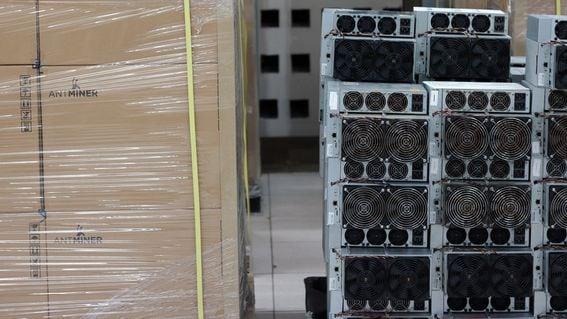
The number of bitcoin held in wallets tied to miners has dropped to the lowest since mid-2021. The number of BTC held in wallets tied to crypto miners has declined by 8,426 this year, extending the slide that began in October. Impending reward halving and the dry season in China might explain why miners are running down their coin stashes. The number of bitcoin (BTC) held by crypto miners has dropped to the lowest level since July 2021 as they run down their coin stashes ahead of the programmed halving of the revenue earned per block. Data tracked by Glassnode shows the estimated number of BTC held in wallets tied to miners fell by 8,426 BTC ($530 million) since the start of the year to 1,812,482 BTC. The decline began in the second half of October, when miners held over 1.83 million BTC. Miners create valid blocks, adding transaction records to the public ledger, or the blockchain. New coins emitted with each block are given to miners as a reward for the work. They also receive transaction fees. Currently, the miners receive 6.25 BTC per block. The halving, a quadrennial event due in April, will reduce that figure to 3.125 BTC, cutting per-block revenue by 50%. To improve profitability, miners may be using their stored BTC to buy more efficient equipment so that running costs drop, said FRNT Financial, a crypto platform based in Toronto. "Miners may also be inclined to sell in order to better position ahead of the halving," FRNT Financial said in a Tuesday newsletter. "This may involve purchasing more efficient mining equipment due to new economics the halving will bring." The halving is widely seen as a stress test for miners, as it is expected to reduce revenues and boost production costs simultaneously. Industry consolidation is possible. The prolonged dry season in the southwest of China, which typically extends from October to March/April, could be another reason for the decline in the miners' bitcoin balances. China accounts for roughly 20% of the total computing power on the Bitcoin network. "Miners in some Chinese regions are known to bring online additional hardware during the wet season when hydro power becomes abundant. Conceivably, miners may sell during the dry season to counteract the inactivity of mining hardware," FRNT Financial said. https://www.coindesk.com/markets/2024/02/29/crypto-miners-still-selling-their-bitcoin-as-reward-halving-looms-blockchain-data-show/
2024-02-29 08:33
The tokens were up over 40% in the past 24 hours, continuing a rally as a beta bet on the blockchains they are based upon. Traders are using prominent meme tokens, such as Dogecoin (DOGE) and bonk (BONK), as ecosystem bets for their respective blockchains, Ethereum and Solana. DOGE futures set a record open interest at $1 billion - indicative of the strong interest in the tokens. Nearly 70% of these bets were on the long side. Traders are continuing to use prominent meme tokens as ecosystem bets on their respective blockchains, boosting dogecoin (DOGE) futures to set a record level. DOGE tokens were up as much as 40% before giving back some gains in the past 24 hours as bitcoin (BTC) rallied to over $63,000 from $59,000. DOGE led gains among major tokens and significantly beat the broader CoinDesk 20 (CD20) index, which is up nearly 7.8% in the same period. Open interest, or the amount of unsettled bets on DOGE futures, increased over 54% since Wednesday, Coinglass data shows, setting a lifetime record of $1 billion in bets involving the tokens. An increase in open interest means new or extra money entering the market. Data shows 70% of traders are long DOGE – expecting it to go higher. As such, data from CryptoQuant tracking DOGE price action shows the token’s Relative Strength Index (RSI), a measure of the rate of change of prices, has reached the “overbought” level - one that indicates a “possible trend reversal” in the coming days. Fundamentally, Dogecoin developers released the network’s core version 1.14.7, on Tuesday, a minor release that amped up security and upgraded node operators. Another relatively recent technical improvement was the introduction of Ordinals on the Dogecoin blockchain, with some developers even releasing popular games that run wholly using dogecoin. Some in crypto circles say meme tokens may be more attractive to retail investors as as the bull market continues – mainly due to their relevance in popular culture, low unit bias and familiarity. Meanwhile, data from Coinglass shows shorts or bets against DOGE lost over $40 million in the past 24 hours. Liquidations occur when an exchange forcefully closes a trader’s leveraged position as a safety mechanism due to a partial or total loss of initial margin. That happens primarily in futures trading, which only tracks asset prices, as opposed to spot trading, where traders own the actual assets. https://www.coindesk.com/markets/2024/02/29/dogecoin-bullish-bets-reach-record-1b/

2024-02-29 08:01
Additionally, the SEC has said that Terraform should not be allowed to hire law firm Dentons or pay litigation costs for employees, the report said. The U.S. SEC has objected to Terraform’s $166 million retainer of Law Firm Dentons. The SEC alleges that the money was “siphoned” off into an “opaque slush fund for its lawyers,” which could have gone to investors and creditors. The U.S. Securities and Exchange Commission (SEC) has raised objections to a $166 million retainer payment to lawyers of Terraform, according to Reuters. Additionally, the SEC has said that Terraform should not be allowed to hire law firm Dentons or pay litigation costs for employees, the report said. The SEC has alleged that Terraform intended to avoid paying a future judgment in the SEC’s lawsuit, which is why it sent $166 million to Dentons. Terraform Labs and its founder, Do Kwon, currently face a trial in the U.S. from the SEC regarding the collapse of TerraUSD. Terraform Labs filed a voluntary petition in Delaware for Chapter 11 bankruptcy in January 2024 after the failed stablecoin TerraUSD and the LUNA token collapsed in May 2022, destroying billions of dollars in investor wealth. The money was “siphoned” off into an “opaque slush fund for its lawyers,” which could have gone to investors and creditors seeking to be repaid in Terraform’s bankruptcy, the SEC said, according to the report. Terraform Labs or Dentons did not immediately respond to CoinDesk’s request for comment. Read More: Do Kwon Tries to Delay SEC’s Terraform Trial so He Can Attend https://www.coindesk.com/policy/2024/02/29/sec-objects-to-terraforms-166m-retainer-of-law-firm-dentons-reuters/