2024-09-09 08:33
Liquidity both close to and further away from the going market rate has declined, hinting at an impending bull reversal. The low order book liquidity suggests an impending bull reversal, according to Hyblock Capital. Negative funding rates point to a potential short squeeze. The market is fast moving into a positive macro environment, LondonCryptoClub said. Bitcoin (BTC) order books, which show the supply and demand dynamics for the largest cryptocurrency, are signaling a potential price bottom and a bullish shift on the horizon. Data tracked by Hyblock Capital shows market depth, or the collection of buy and sell orders, both close to the going market rate and further away, dried up over the weekend. That's a pattern usually observed at market turning points, suggesting an end to BTC's decline from late-August highs above $65,000. Liquidity, represented by market depth, gauges the market's ability to absorb large trading orders without influencing price. It tends to depend on several factors, including the time of day, prevailing market events and specific price levels. Market bottoms are characterized by traders struggling to make decisive moves, leading to fewer buy and sell orders and a decline in liquidity. "By analyzing the combined spot order books, particularly at the 0%-1% and 1%-5% spot order book depth, we see a pattern where low liquidity in the order book often coincides with market bottoms," Shubh Verma, co-founder and CEO of Hyblock Capital, said in an interview with CoinDesk. "These low order book levels can be early indicators of a price reversal, frequently preceding a bullish trend." "It's a signal worth monitoring for traders looking to catch significant movements before they unfold. Understanding these imbalances can help identify key turning points in the market," Verma said. The 1% market depth shows the total volume of buy and sell orders within 1% of the current mid-market price. The 5% depth represents liquidity 5% away from the current mid-price. Hyblock tracks market depth across multiple exchanges, including Binance and Coinbase. Potential short squeeze and positive macro Bitcoin changed hands at $54,800 at press time, up 4.3% from Friday's low of $52,530, according to TradingView data. Still, funding rates in the perpetual futures market tied to bitcoin remain negative, indicating a bias for bearish bets known as shorts, according to Coinglass. So, if the market remains resilient, bears may throw in the towel, squaring off shorts and putting upward pressure on prices. "Positioning remains light, and with funding [rates] negative, the short-term 'pain trade' is perhaps higher," the LondonCryptoClub newsletter said in Sunday's edition. The market is fast moving into positive macroeconomic developments for bitcoin, according to the newsletter. "Fiat, debt driven economies cannot sustain high real rates. The window to normalise rates and reduce central bank balance sheets, withdrawing liquidity, are typically small and that window has now firmly closed. Whilst we encourage short term caution as the market seeks assurances that the Fed will keep the party going, rest assured the punch bowl is about to be returned. Bitcoin and broader crypto investors will be getting drunk again quite soon," the newsletter reads. https://www.coindesk.com/markets/2024/09/09/bitcoin-bottom-in-btc-order-book-liquidity-says-yes/

2024-09-09 04:47
The asset and broader crypto market tend to move on the release of U.S. economic figures and political developments. Bitcoin remained stable over the weekend, trading between $54,000 and $55,000, following a significant liquidation of crypto long positions after a U.S. jobs report indicated a weaker labor market. Upcoming events this week include a Presidential debate and the release of U.S. economic indicators like the CPI and PPI, with market analysts from Presto Research suggesting Bitcoin is undervalued due to its record-high network security despite prevailing macroeconomic concerns. Bitcoin (BTC) was little changed over the weekend ahead of a busy week that includes a much-awaited Presidential debate and the release of key U.S. economic figures that track changes in consumer prices and inflation. BTC traded in a tight range between $54,000 and $55,000 over the weekend, marked by lower trading volumes on exchanges. On Friday, over $220 million in crypto longs, or bets on higher prices, were liquidated amid a sudden market drop after a jobs report - leading to less activity. Major tokens were similarly little changed, with ether (ETH), Solana’s (SOL), Cardano’s ADA, Ripple's XRP (XRP) and Tron’s (TRX) rising just 0.5% in the past 24 hours. Mid-cap tokens showed some gains as memecoin neiro on ETH (NEIRO) and the BitTorrent token (BTT) jumped 25%. However, bitcoin appears attractive to traders at Presto Research at current prices, who said in a Monday note that they consider the asset “grossly undervalued.” “Amid macro factors dominating BTC price talk lately, the market is overlooking one of the key fundamentals underpinning Bitcoin’s value – network security,” Presto analysts Peter Chung and Min Jung said. “The hashrate, the computational power that secures the network, has hit an all-time high of 679 EH/s, making it the most secure network by far.” “If you believe that trend will continue (in fact, the availability of spot ETF means we are in a much better setup than ever before), BTC seems grossly undervalued at the moment,” they added. Bitcoin (BTC) miners are expanding their capacity again since August, as previously reported, amid all-time highs in hashrate, which has typically marked price bottoms for the asset. Elsewhere, some traders said the lower-than-expected U.S. payroll figures indicated a weaker labor market, while the lower unemployment figure has lessened the concerns of an imminent recession. “It seems the lower-than-expected payroll data is dominating the market sentiment at the moment, as broad assets declined since Friday’s data,” Lucy Hu, senior analyst at Metalpha, told CoinDesk in a Telegram message. “We expect the crypto market will remain highly volatile leading to the next Fed meeting.” However, bitcoin could see movement in the coming week as August’s Consumer Price Index (CPI) figures are scheduled for Wednesday, and Producer Price Index (PPI) figures on Thursday. Also on Tuesday, crypto-friendly Republican candidate Donald Trump goes head to head with Democrat Kamala Harris, where voters are on the lookout for policy decisions. Trump has previously said he aims to make the U.S. the “crypto capital” of the world, and Harris aides are also reportedly considering policies to grow the industry. CORRECTION (Sept. 9, 11:14 UTC): Corrects release dates for inflation data in penultimate paragraph. https://www.coindesk.com/markets/2024/09/09/bitcoin-grossly-undervalued-at-current-prices-traders-say-ahead-of-cpi-trump-harris-debate-week/

2024-09-09 01:12
The prediction market site "has staked its future on ... these markets," it told a court, pushing back against the CFTC's motion for a two-week wait. Kalshi, the U.S. prediction market platform that just won a lawsuit against its regulator, said its future depends on being able to list election betting contracts while there's still time before Americans cast their votes on Nov. 5. In a court filing Sunday, the New York-based company pushed back against the Commodity Futures Trading Commission's emergency motion to bar it from listing such contracts for another 14 days. The motion is "meritless," Kalshi said, and granting it would cause "irreparable harm" to the company. "That delay—which the agency would assuredly try to parlay into another, then another, until it is too late—would be devastating for Kalshi, which has staked its future on this litigation and these markets," the company told the U.S. District Court for the District of Columbia. Last year, the CFTC forbade Kalshi from listing contracts on which party would control each house of Congress after the election. Such contracts, the agency said, would amount to unlawful gaming and would be "contrary to the public interest." Kalshi then sued, calling the regulator's decision "arbitrary [and] capricious." In a ruling handed down Friday, Judge Jia M. Cobb sided with Kalshi but did not give her rationale, which she said she would spell out in a subsequent opinion. She did not say when that opinion would be published. Kalshi triumphantly declared on its website: "We did it! U.S. election markets are coming to Kalshi." Hours later, the CFTC filed its emergency motion asking Cobb to stay her order for 14 days following publication of the opinion. Without knowing her reasoning, the agency said, it can't figure out whether it should appeal the decision. If granted, the stay would mean Kalshi wouldn't be allowed to list election markets until late September at the earliest. The company, which settles trades in U.S. dollars, has been locked out of this year's election betting boom. "The Commission lost, fair and square, on the law," Kalshi said in its Sunday filing. "It should not be allowed to snatch a procedural victory from the jaws of defeat by running out the clock." Kalshi is the only CFTC-regulated prediction market in the U.S. It lists contracts on a variety of events, ranging from whether U.S. students' test scores will improve or worsen to how high bitcoin will rise this year. (To be clear: Trades are settled in dollars.) PredictIt, an older U.S. site that also settles bets in fiat, lists election contracts under a narrow regulatory exemption. Polymarket, this year's breakout success story in both prediction markets and cryptocurrency, is barred from doing business with U.S. residents under a settlement with the CFTC. Even so, PredictIt and Polymarket have been "accumulating market share at the expense of law-abiding Kalshi," the company told the court Sunday. "[A]s Kalshi has waited for the litigation process to run its course, unregulated operations like Polymarket have taken advantage of that time to dominate the market," Kalshi said. "Further delays may make it impossible for Kalshi to meaningfully compete in this space." In friend-of-the-court briefs and comment letters on a related CFTC proposal, academics, investors, businesses and other parties have argued that election contracts provide ways to hedge risk and give the public valuable information for forecasting. "The public has already been denied these benefits for over a year, while the CFTC’s unlawful order was in place," Kalshi said. "And with the election now fewer than 60 days away, there has never been a more important time for those benefits to materialize." Meanwhile, Better Markets, a lobbying group that opposed Kalshi's plan, called the judge's Friday ruling in Kalshi's favor a "Dangerous Step Towards Allowing Gambling on U.S. Elections, Threatening Democracy and the Integrity of our Markets." https://www.coindesk.com/policy/2024/09/09/us-election-betting-delay-would-be-devastating-to-kalshi-firm-says/

2024-09-07 04:38
The agency says it can't make "an informed decision" about whether to appeal the judge's decision in Kalshi's favor until it knows her as-yet-unpublished rationale. Hours after losing a long-running court case filed by U.S. prediction market platform Kalshi, regulators are making a hail Mary pass. Late Friday, the Commodity Futures Trading Commission filed an emergency motion asking a federal judge to grant a temporary stay of her decision in Kalshi's favor. The stay would prevent Kalshi from listing election markets for at least 14 days. Last year, the CFTC forbade Kalshi from listing contracts betting on which party would control each house of Congress after the November election. Such contracts, the agency said, would amount to unlawful gaming and would be "contrary to the public interest." Kalshi then sued, calling the regulator's decision "arbitrary [and] capricious." In a ruling handed down Friday, Judge Jia M. Cobb, of the U.S. District Court of the District of Columbia, sided with Kalshi but did not give her rationale, which she said she would spell out in a subsequent opinion. She did not say when that opinion would be published. Kalshi triumphantly declared on its website: "We did it! U.S. election markets are coming to Kalshi." The CFTC then filed its emergency motion asking Cobb to stay her order for 14 days following publication of the opinion. "Without the benefit of the Court’s reasoning, the CFTC is unable to make an informed decision whether to appeal, nor is it able to fully brief a motion for stay pending any forthcoming appeal," the agency wrote. If granted, the stay would mean Kalshi wouldn't be allowed to list its election markets until late September at the earliest. The company, which settles trades in U.S. dollars, has been locked out of this year's election betting boom, dominated by crypto-based rival Polymarket, which is barred from serving U.S. residents under its own settlement with the CFTC. A Kalshi spokesperson did not immediately respond to a request for comment late Friday. https://www.coindesk.com/policy/2024/09/07/cftc-pleads-with-judge-to-block-kalshi-election-contracts-for-14-days/
2024-09-06 21:42
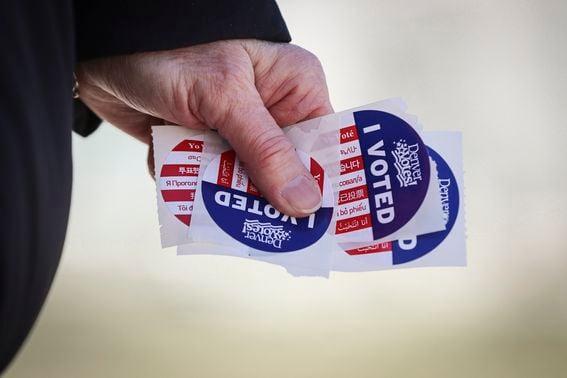
With two months to go before the election, the U.S.-regulated platform may now get a sliver of the 2024 political betting bonanza that's been dominated by crypto-based rival Polymarket. Kalshi, a U.S.-regulated prediction market platform, won its federal lawsuit against the Commodity Futures Trading Commission over a plan to offer contracts on which party will control each house of Congress after the November election. Although the CFTC could appeal, Kalshi, which had been locked out of this year's election betting boom while the case was pending, can now grab a sliver of that action in the last two months before the election. "We did it!" the company said in a notice on its website Friday. "U.S. election markets are coming to Kalshi." More broadly, the ruling represents a victory for advocates of prediction markets, in which traders bet on the outcomes of real-world events ranging from elections to album sales to temperature increases. Prediction markets are popular in crypto circles, and although Kalshi does not use cryptocurrency, the crypto industry has been watching the case closely; VC firm Paradigm filed a friend-of-the-court brief supporting the plaintiff. Last year, the CFTC forbade Kalshi from listing the Congressional control contracts, on the grounds that they would amount to unlawful gaming and would be "contrary to the public interest." Kalshi then sued, calling the regulator's decision "arbitrary [and] capricious." In a ruling handed down Friday, Judge Jia M. Cobb, of the U.S. District Court of the District of Columbia, sided with Kalshi. "For the reasons stated in the Court’s forthcoming memorandum opinion, the Court GRANTS Plaintiff’s motion for summary judgment ... and DENIES Defendant’s cross motion for summary judgment," Cobb wrote. "Defendant’s September 22, 2023 order prohibiting Plaintiff from listing its congressional control contracts for trading is hereby VACATED." Proponents say prediction markets beat polls and pundits as a method of forecasting events and gauging sentiment, because participants have skin in the game and so are incentivized to do thorough research and express their honest opinions. This year's prediction market breakout success, Polymarket, runs on crypto rails and is riding high on excitement about election betting. In August, the site logged over $470 million in volume, a record, according to Dune Analytics data; the lion's share of that was traded on election contracts. Polymarket is reaping the benefits of the U.S. election despite being barred from doing business with U.S. residents under a regulatory settlement with the CFTC. Bets on Polymarket are written into smart contracts on a blockchain and settled in USDC, a stablecoin, or cryptocurrency that trades 1:1 for dollars. Kalshi, by contrast, does business only in the U.S. and settles trades in normal greenbacks. However, every contract it lists is subject to approval or second-guessing by the CFTC, which is why it had to take the regulator to court over the Congressional control contract. Another fight looms, as the CFTC weighs a proposed rule to bar any of the entities it regulates from offering contracts on political contests, in part over concerns they would undermine the integrity of elections. https://www.coindesk.com/policy/2024/09/06/kalshi-cleared-to-offer-congressional-prediction-markets-in-victory-against-cftc/
2024-09-06 16:40
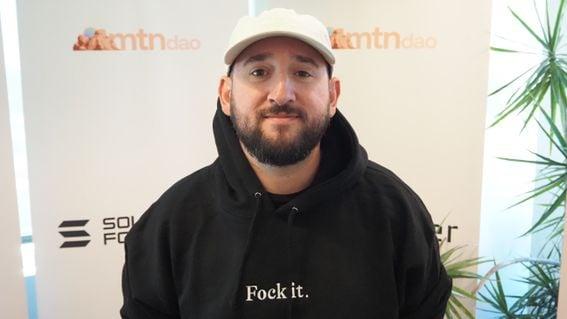
Inside life at the mtnDAO hacker house. SALT LAKE CITY — Many of the software devs attending mtnDAO are building projects to support their venture capital-backed crypto companies. T.J. Littlejohn, a longtime attendee of this self-described "notorious" hacker house, says he's building for himself. T.J. hacked his new product together with a few weeks of collaborative coding and countless ZYN packets – two hallmarks of the event. Called "Blurt," the latest creation from the mtnDAO trenches offers a crypto-powered alternative for live streamers to collect donations from their viewers – in crypto, of course. Its development is a sign of progress for a Solana innovation introduced earlier this year – called blinks – that makes interacting with crypto as easy as a click on a tweet. Blurts was hardly an idea before mtnDAO opened its August edition. Now, with only a few days left before dozens of Solana blockchain-focused developers clear out of this WeWork in downtown Salt Lake City until February, it's fully functional. In a slapdash kind of way, Blurts embody the staying power of a hacker house that doesn't have an agenda beyond show up and build. Hosts Barrett and Edgar Pavlovsky don't seem to care what the attendees of mtnDAO do while they eat the free lunches, sit at free desks and pile up free swag for an entire month – though they do sometimes invest seed capital in the most promising projects made here. Whether Blurts gets that infusion feels almost beside the point. In an interview, T.J. was noncommittal about making Blurts his full-time gig. He's more like a one-man "product studio" that "ships fast" and pivots often. During the last mtnDAO six months ago, he was building animation programs for the Apple VR headsets everyone was wearing. What are Blurts Blurts are built on blinks, a months-old standard for accessing and executing blockchain programs directly from X (formerly Twitter). A properly-coded blinks program populates a mini-app for, perhaps, trading cryptocurrencies, within the social media webpage, saving the would-be trader from having to move to another website to place their bid. For Blurts, this means a would-be donor to a streamer can send crypto dollars to their favorite Fortnite-playing tweenager directly from the window where they're watching the stream. "That's a big thing with blinks: It keeps the viewer in the content of the stream while they donate," said T.J., himself a streamer. (He said he "generally beats the five-year-olds" in Fortnite. "But the 12-year-olds are where I struggle." Right now Blurts only work on X, but T.J. said blinks' creator company Dialect has committed to expanding blinks to Twitch, where millions of live streamers play video games for profit. Building at mtnDAO "I probably wouldn't have shipped this if I was just home," T.J. said, citing the "builder energy of a sometimes bustling WeWork that at peak had 70-odd developers typing away in front of monitors. There's practical upside for building in a collaborative workspace, too. Representatives of Dialect were on hand to help T.J. through some of the intricacies of deploying on blinks. So, too, were employees of TipLink, another crypto payments startup that streamlines the wallet onboarding process with users' Google accounts. "Being able to shoot the sh*t with people and bounce ideas off of everyone and show prototypes every step of the way" helped get things done faster, T.J. said. https://www.coindesk.com/business/2024/09/06/blurt-developer-thinks-crypto-makes-for-better-donations-to-twitch-streamers/