2024-01-30 20:41
The Ethereum co-founder has warmed up on the potential intersection between AI and crypto, though he warns developers to be careful. AI has stolen some of crypto's luster over the past year: a Silicon Valley obsessed with Web3 and the Metaverse seems to have turned its attention entirely towards large language models and apps like ChatGPT. Some blockchain projects have tried to take advantage of the new AI hype, but while crypto startups like Worldcoin, the identity firm from OpenAI founder Sam Altman, have found use cases that straddle both worlds, many AI-flavored crypto projects tend to feel like they're more buzz than substance. Whatever the potential pitfalls, according to Ethereum co-founder Vitalik Buterin, the intersection between crypto and AI still holds promise. In a blog post released on Tuesday, Buterin delivered his thoughts on where crypto and AI tech might collide in the coming years, though he also took care to warn that there might be challenges. Using the analogy of a "game," Buterin divided the potential overlaps between AI and blockchain into four distinct categories. The most "viable" category, according to Buterin, contains applications where AI acts as "a player in a game." At a high level, this category captures apps where "the ultimate source of the incentives comes from a protocol with human inputs." An example of this would be a prediction market: AI can be used to predict the outcome of a given event, and a blockchain-based mechanism can enforce the rules around how much the AI (or the person operating it) should be rewarded or penalized based on its guess. The next category, which Buterin tags as "high potential, but with high risks," includes applications where AI acts as an "interface to the game." In these applications, AI is used to help users "understand the crypto world around them" and ensure their behavior "matches their intentions." Buterin gives the example of scam-detection features, like the one used in the MetaMask crypto wallet to warn users if they might be interacting with a deceptive application. Such features could be "super-charged" by AI's enhanced detection and explanatory capabilities. The third category defined by Buterin describes apps where AI dictates the "rules of the game." "Think 'AI judges,'" he explained, warning that one should "tread very carefully" when exploring this problem space. An obvious crypto use-case here would be to help DAOs, or decentralized autonomous organizations, make subjective decisions using AI. Buterin's fourth category for the potential intermarriage of AI and crypto includes use cases where AI is the "objective of the game." This "longer-term" category involves using blockchains as infrastructure for building better AI models. While Buterin says he is more optimistic than he once was about the intersections between AI and crypto, he does see potential challenges with balancing the transparency of crypto with the customary opaqueness of "black box" AI systems: "In cryptography, open source is the only way to make something truly secure, but in AI, a model (or even its training data) being open greatly increases its vulnerability to adversarial machine learning attacks." At the end of his post, Buterin issues a warning to developers: "It is worth treading carefully." https://www.coindesk.com/tech/2024/01/30/vitalik-buterin-says-developers-should-tread-carefully-mixing-crypto-and-ai/

2024-01-30 18:14
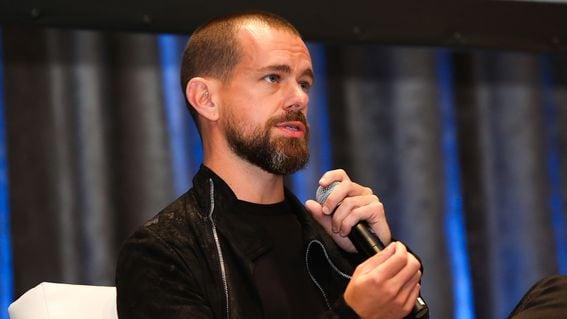
The company plans to drastically reduce its headcount throughout 2024 through a series of layoffs and reorganizing measures. Block Inc., the blockchain and payments firm led by Twitter founder Jack Dorsey, confirmed to CoinDesk that it has begun laying off employees this week as part of the company's previously disclosed plan to cut headcount by as much as 10% by the end of 2024. Block, whose companies include Square Inc., Cash App and Tidal, as well as the bitcoin-focused division TBD, said in an earnings call last year that it would reduce its headcount from 13,000 in the third quarter of 2023 to an "absolute cap" of 12,000 by the end of this year. In a memo to Block staff obtained by Business Insider in November, Dorsey explained the plans by stating that "the growth of our company has far outpaced the growth of our business and revenue." The company did not confirm the exact size of this week's layoffs to CoinDesk, but confirmed that its overall targets hadn't changed and would be reached gradually through a combination of performance adjustments and other reorganizing measures. Block, formerly known as Square, rebranded in 2021 to emphasize a shift towards blockchain technology. Dorsey resigned from his CEO role at Twitter in 2021 but stayed on at Block, where he has consistently voiced opinions in support of bitcoin. https://www.coindesk.com/business/2024/01/30/jack-dorseys-block-inc-begins-layoffs-under-previously-disclosed-plan-to-cut-staff-by-10/
2024-01-30 17:36
The British bank expects the SEC will treat spot ether ETF applications similarly to bitcoin ETFs and anticipates approvals on May 23. Ether (ETH), the second-largest cryptocurrency by market value, could rise nearly 70% from current levels and hit $4,000 by May as applications for spot-based exchange-traded funds (ETF) will likely win regulatory approval in the U.S., Standard Chartered Bank said in a report on Tuesday. Led by research head Geoff Kendrick, the StanChart analysts expect that the U.S. Securities and Exchange Commission (SEC) – as it did with Bitcoin – will delay decisions on spot ETF applications until eventually giving a green light on the first final deadline. This puts May 23 as provisional day for an approval, the date of final deadlines for applications by asset managers VanEck and Ark/21Shares. The market currently underestimates the odds of an approval, according to the report, but the bank sees "no fundamental reason" for the SEC to treat ETH differently than bitcoin. It highlighted that ETH futures are also listed on the regulated Chicago Mercantile Exchange (CME) and the SEC did not include ETH among the 67 cryptocurrencies the agency claims to be securities during its legal fight against Ripple. "Heading into the expected approval date on May 23, we expect ETH prices to track, or outperform, bitcoin (BTC) during the comparable period," wrote Kendrick and team. BTC surged 85% from around $25,000 in mid-June – when asset management giant BlackRock filed for an ETF – to roughly $47,000 when the spot ETFs won approval on January 10. The report also said that ETH would face less selling pressure after a potential ETF approval than BTC, because the Grayscale Ethereum Fund (ETHE) has a smaller market share of ether market capitalization than the Grayscale Bitcoin Fund (GBTC), with even less shares held by the FTX bankruptcy estate. Bitcoin tumbled to as low as $38,500 last week from a $49,000 high on January 11 when BTC ETFs started trading, with market observers pointing to GBTC fire-sales with some $5 billion in outflows since its conversion into an ETF. The StanChart report also added that the first type of ether ETFs in the U.S. will likely track spot ETH price and not include staking rewards. https://www.coindesk.com/markets/2024/01/30/ether-could-hit-4000-with-likely-spot-eth-etf-approval-in-may-standard-chartered/

2024-01-30 14:11
Celo, which is in the midst of transforming into an Ethereum layer 2 network, increasingly positions itself as a blockchain for real-world assets. Stablecoin issuer Circle expanded native issuance of its $26 billion stablecoin USDC to the Celo network, the Celo Foundations announced Tuesday in a press release. With the development, the Celo ecosystem looks to boost cross-border payments and peer-to-peer transactions in developing regions, facilitating conversion from local currencies, the press release explained. CLabs, an organization dedicated to Celo ecosystem development, will also propose a community vote to enable paying transaction fees (gas) with USDC stablecoin. The USDC expansion came as Celo increasingly vying to be an important plumbing for tokenized real-world assets (RWA) -- placing traditional investments such as bonds and credit on blockchains in a token form and use stablecoins for settlements. RWA-focused marketplace Untangled Finance and credit platform Huma expanded to the network in the past months. "The Celo ecosystem is excited to bring more RWAs on-chain through our partnership with Circle and the launch of USDC on Celo," Isha Varshney, head of strategy and innovation at the Celo Foundation, said in a statement. "We want to be the best ecosystem for stablecoins, which has proven to be among the industry’s prevailing use cases, as institutional investors come into Web3.” Celo is currently in the process of ditching its standalone blockchain and migrating to become an Ethereum-based layer 2 network. https://www.coindesk.com/tech/2024/01/30/circle-to-issue-its-stablecoin-usdc-on-celo-network-to-boost-rwa-capabilities/
2024-01-30 13:35
One of the suspects voluntarily transferred the bitcoin to the Federal Criminal Police Office. Police in Germany have provisionally seized 50,000 bitcoin (BTC) worth $2.17 billion, calling the action its largest cryptocurrency seizure ever, according to a police statement. The claim is related the operation of a piracy website in 2013 that violated the Copyright Act. Proceeds of that venture were then converted to bitcoin. One of the two suspects voluntarily transferred the bitcoin to the Federal Criminal Police Office (BKA), the statement said. An investigation is ongoing into subsequent commercial money laundering, although no official charges have been lodged against the men. "A final decision has not yet been made about the utilization of the bitcoins," the police statement added. In 2023, the U.S. government seized $216 million worth of bitcoin linked to Silk Road, a dark net market that was taken down in 2013. The U.S. government now holds $9.5 billion worth of bitcoin, according to Arkham data. https://www.coindesk.com/business/2024/01/30/german-police-seize-21b-worth-of-bitcoin-in-piracy-sting/

2024-01-30 12:34
Certrik suggests the exploit could be due to a rounding error. The stablecoin issued by decentralized platform Abracadabra.money (MIM), suffered a flash crash to $0.76 after reports of a $6.5 million exploit. Blockchain security firm PeckShield published initial details of the exploit at 11:35 UTC Tuesday, adding that the attacker was funded from Tornado Cash, a sanctioned privacy protocol. Cetrik said that "early indications point to a rounding error being the root cause." MIM developers said that the Abracadabra DAO will be buying back the stablecoin, which is designed to trade at $1, from the market to preserve the peg. It was trading around $0.94 at press time, per CoinMarketCap. "We are aware of an exploit involving certain cauldrons on Ethereum," MIM wrote on X. "Our engineering team is triaging and investigating the situation. To the best of its Ability, the DAO treasury will be buying back MIM from the market to then burn. More updates are coming." The stablecoin also fluctuated in 2022 during the collapse of FTX, as a third of MIM's collateral was in FTT, FTX's native token. As FTT crumbled, MIM fell to $0.95 before trading back to parity. The project came under scrutiny earlier this year after a proposal was made to transition power from the decentralized Abracadabra DAO to a centralized entity with lawyers and trustees. https://www.coindesk.com/business/2024/01/30/mim-stablecoin-suffers-flash-crash-amid-65m-exploit/