2024-01-29 19:47
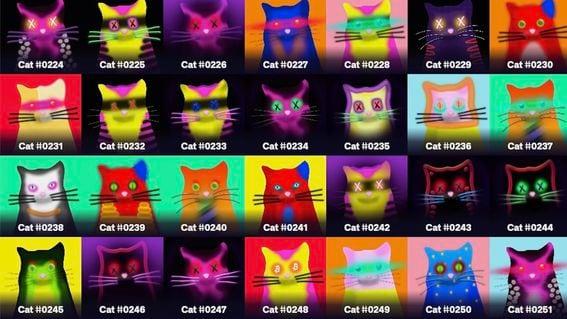
The collection was on sale for 0.1 BTC ($4,300) each, meaning upwards of 300 BTC ($13 million) could have been raised if the full series of 3,000 had been placed. The much-anticipated sale of a debut collection of "Quantum Cats" Bitcoin inscriptions by the Ordinals project Taproot Wizards was marred by technical issues on Monday, leaving users frustrated and forcing an embarrassing delay. The planned sale of around 3,000 digital cats, designed to honor a Bitcoin improvement proposal known as OP_CAT, commenced with a two-hour "whitelist" window at 17:00 UTC (noon ET) on Monday, but this had to be postponed until Tuesday due to the issues encountered. "There’s been an incredible demand for the cats today, and our servers simply couldn’t handle the amount of people who were trying to mint," Taproot Wizards posted on X. The collection was on sale for 0.1 BTC ($4,300), meaning as much as 300 BTC ($12.9 million) could have been raised if every cat was to be sold. According to the tweet, around 30% of the cats were minted on Monday. That would equate to nearly 1,000 cats, for around around 100 BTC ($4.3 million). It was an inauspicious start for Taproot Wizards, which raised $7.5 million in a seed funding round in November, reflecting the high hopes for projects focused on the fast-growing arena of inscriptions from the Ordinals protocol, colloquially referred to as "NFTs on Bitcoin." The first item in the Quantum Cats series, a special image known as "Genesis Cat," sold earlier this month on the auction house Sotheby's for an eye-popping $254,000. Udi Wertheimer apologizes Udi Wertheimer, one of the company's co-founders, apologized to would-be buyers during a live Spaces session on the social-media platform X. "There's been some glitches," Wertheimer said. "I know this isn't the experience people were expecting." Following the two-hour whitelist window, the plan was for minting to pause for an hour before the remaining cats became available for general sale. Complaints filled the project's Discord channel on Monday: "This has got to be one of the worst mint experiences I've ever seen," one user wrote. The Ordinals protocol allows the inscriptions of data into satoshis – the smallest units of bitcoin – effectively creating non-fungible tokens (NFTs) on the Bitcoin network. The protocol debuted at the start of 2023, becoming a contentious issue for the Bitcoin community, with some users saying they are pointlessly congesting the network. Read More: Bitcoin-Based Digital Art Image 'Genesis Cat' Sells for $254K in Sotheby's Auction https://www.coindesk.com/tech/2024/01/29/taproot-wizards-debut-sale-of-bitcoin-nfts-quantum-cats-marred-by-tech-issues/
2024-01-29 18:03
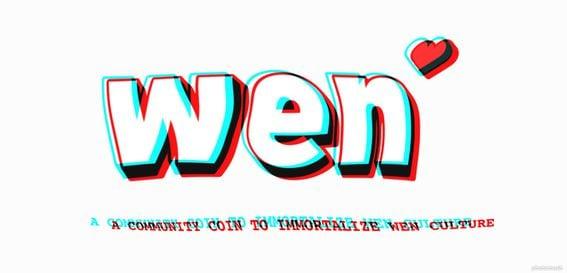
The burn turned out to be a "sell the news event" as traders had already accounted for the purge – and then some. The Wen meme coin saw a sharp drop in price Monday as traders weighed how to value news that 27% of the airdropped token's supply would be burned. The Solana-based token was trading over 30% below its daily high around press time, thanks in large part to a major plunge triggered by a whale seller who exited their position shortly after 11:00 AM on the East Coast. That action was part of a "sell the news" event tied to the Wen project's decision to burn all tokens that went unclaimed during its three-day airdrop, which concluded Monday. Traders, it seemed, had already priced in the impact of the supply dropping by over 270 billion tokens. In the Discord server for Jupiter, the protocol that facilitated the airdrop, pseudonymous crypto traders were licking their wounds. "Wen burn has no effect on price. Moonbois in the mud," wrote one who went by the name Sonofkarm. The Wen burn capped a breakneck final prelude to the main event of so-called "Jupuary," a month of testing and preparation for Jupiter's own massive token airdrop. The trade routing protocol is to distribute 40% of its upcoming JUP token to its users on January 31. "WEN was a fantastic test," Jupiter's pseudonymous co-founder Weremeow wrote on X Monday, explaining the launch offered a stress test for the same infrastructure that will soon distribute JUP. However, Weremeow said the team had "one big fuckup" by accidentally stranding 100 tokens marked for airdrop in an engineer's account, who then improperly supplied the tokens to a trading pool. In the post, Weremeow said the unsanctioned activity was not an ethical issue, "just incredible dumbness." https://www.coindesk.com/markets/2024/01/29/solana-meme-coin-wen-plummets-despite-burning-27-of-supply/
2024-01-29 17:00
The goal of these "protocol councils,” sometimes called “security councils,” is to nudge these nascent networks toward increasing decentralization, by gradually removing them from under the control of their original developers. How are they different from boards of directors? Trust the humans. That principle stands at the core of a new trend in the blockchain industry, where overseers of various networks are establishing groups of people to help steer protocol changes and ensure security. The goal of these "protocol councils,” sometimes called “security councils,” is to nudge the nascent networks toward increasing decentralization, by gradually removing them from under the control of their original developers. Before cutting the cord completely, where the networks essentially run automatically, or subject to some sort of democratic process, the thinking is that a panel of well-meaning humans can serve as the ultimate guardians – able to step in quickly when emergencies arise, or providing the final sign-off on major protocol changes. One can be forgiven for the cynicism: Aren't these distributed ledgers supposed to decentralize everything? There's also sighs (or even groans) over the observation that the blockchain industry already is filled with groups of people, seemingly created out of thin-air, that often have very little purpose other than for members to brag that they are on some kind of board. The projects argue that these protocol councils are a necessity as the industry matures. Polygon, the Ethereum layer-2 network, has a 13-person "Protocol Council." Arbitrum, another major Ethereum-focused layer-2, has a "Security Council," while Optimism also has a "Security Council." “This is a necessary evil,” Mehdi Zerouali, the director of Sigma Prime, a blockchain security firm, said in an interview. He serves on Polygon's council. “Obviously we're still trusting that group of 13 people not to collude. I could potentially be pulling off like this campaign where I'm like, reaching out privately, and then convincing everyone to sneak in a bug and sharing the proceeds with them. That is a risk.” “This is why those 13 people are public facing people that have a strong reputation in the Ethereum space that are already trusted by Ethereum users,” Zerouali added. What is the protocol council? Polygon formed its protocol council in October, with the express mandate to oversee any major or emergency changes to the core protocol. The members on the team are leading figures in the Ethereum ecosystem, and are tasked with executing “the community-led process to initiate future upgrades,” according to a blog post. Those tasks are really broken down into two types of scenarios: first, regular protocol upgrades, such as adding new or removing features to the blockchain; and second, if there is an immediate threat to the protocol itself; in those situations, the group can bypass the traditional governance framework. For non-emergency updates, the council follows similar processes as other protocols. On Polygon, anyone can submit a Polygon Improvement Proposal (PIP), which then goes through a governance and community process. Once consensus is reached, members of the council, the “signers,” are responsible for triggering the change. That’s done through a multi-signature safe, a type of crypto wallet that requires several private keys to sign off in order for smart contracts to perform certain tasks. During a regular protocol change, Polygon needs seven of the 13 members to sign off, while in an emergency, they need 10 council members. “Our responsibility is making sure that the governance proposals are matching the specification, making sure that what we're about to push to the chain is exactly what's been described in the PIP,” Zerouali said. “And then once we're comfortable with that, there's a bit of due diligence that's involved for the 13 parties. And once the 13 parties are OK with what they've seen, then, you know, it's about approving a specific transaction through a safe multisig.” 'Training wheels' for decentralization The goal for this council is to be an interim step toward decentralization – in having the protocol control itself through code, running automatically as it were – in keeping with the will of a community of network users. Having the councils is akin to using "training wheels," Georgios Konstantopoulos, chief technology officer at the crypto-focused venture capital firm Paradigm, told CoinDesk in an interview. They're "something that you use to prevent something bad from happening.” “Ethereum consensus is controlled by code. We have the Beacon Chain and it took us seven years to fully get there,” said Jerome de Tychey, the creator of EthCC and another member of Polygon’s protocol council. “So I guess it will take less than that for Polygon to reach that kind of maturity.” Arbitrum’s security council is made up of 12 members, who are elected through the Arbitrum DAO. The council is divided into two groups, and every six months, elections are held to fill those seats. According to a blog post from the Arbitrum DAO, no more than three candidates from the same organization can sit on the security council at the same time. Optimism’s security council also operates in a similar vein to Polygon’s. According to a blog post, Optimism’s security for its mainnet is also dependent on a multisig (multi-signature) wallet, though Optimism stated that members on the council who have access to the multisig are anonymous. “Members are anonymous in order to make the multisig more difficult to compromise.” The councils are touted as an alternative to other governance structures short of full decentralization, such as the "foundations" that oversee many blockchain projects. “On other protocols, you still have the foundation, controlling close to 100% of the governance of the protocol. L2s, where I guess the security model is very explicit: We trust the foundation,” Zerouali said. “That foundation can potentially be acting in ways that aren't necessarily aligned with its community.” The other end of the spectrum is where the protocols are resilient and robust when it comes to bugs or protocol changes. “This is a utopia, as of today, particularly when we deal with ZK technology that's relatively new, untested, and certainly hasn't gone through the test of time over the past few years,” Zerouali said. “That side of the spectrum is not really an option for ZK protocols, zkEVMs, at the moment, just because of A) the very high risk of code bugs to be introduced on various different layers, the provers, the sequencers, the contracts themselves, and B) the need for constant upgrades.” These elements of the blockchain architecture could be prone to failure. “So for emerging L2 technologies, like Optimism, Arbitrum, zkEVMs, when they go live, they go live on something that has been battle tested, but not battle tested to be in the wild, with tons of different things,” de Tychey told CoinDesk. “That's why those technologies tend to rely on councils to provide insight on taking care of different things that maybe the implementers didn't think of, or finger pointing on incentive directions that weren't weren't explored a part of the audits of the new implementation, and so on,” de Tychey said. https://www.coindesk.com/tech/2024/01/29/as-blockchains-push-toward-decentralization-these-people-serve-as-ultimate-guardians/

2024-01-29 16:53
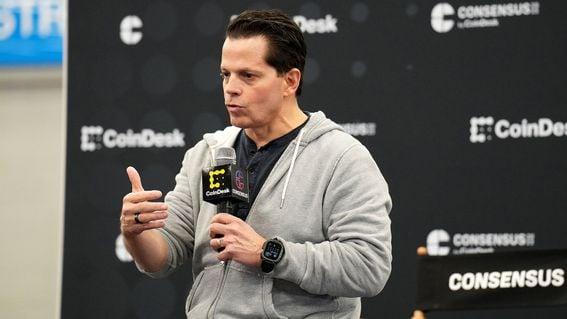
Scaramucci also praised BlackRock CEO Larry Fink for “[doing] his homework” on bitcoin and changing his mind on the asset. Skybridge Capital founder and managing partner Anthony Scaramucci sees bitcoin (BTC) soaring to at least $170,000 after the halving in April, when the number of new bitcoin entering circulation shrinks again. “Go back and look at Bitcoin halving cycles,” Scaramucci said on the Scott Melker podcast. “The day that Bitcoin halves, multiply it by four [and] 18 months later and it’s been uncanny that that’s been the price of Bitcoin.” “I’m using a $35,000 number at the halving and that’s conservative … Let’s say we’re at $50,000 in April, then it’s a $200,000 handle. Let’s say we’re at $60,000, it will be $240,000,” he said. As for his long-term price target, Scaramucci predicts bitcoin could easily reach half of the market capitalization of gold, which would bring the price of one coin up to roughly $400,000. Scaramucci previously disclosed that he was the first external investor in BlackRock’s spot bitcoin exchange-traded fund (ETF), prior to its approval on January 11. Ahead of BlackRock's interest in a bitcoin ETF, its CEO Larry Fink was famously skeptical about the asset. In public interviews since his company last June filed paperwork for the ETF, however, Fink has done an about face, calling himself "a big believer." “I’m going to give Larry a lot of credit, because Larry actually did the homework [on bitcoin],” Scaramucci said. “It takes a very smart leader to pridefully say that bitcoin sucks and then 24 months later say ‘you know what I got this wrong, BlackRock needs to be a part of this.’” https://www.coindesk.com/markets/2024/01/29/anthony-scaramucci-predicts-bitcoin-to-hit-170k-post-halving/
2024-01-29 14:30
OKX says wallet support is coming first, with a marketplace to follow OKX announced that it’s adding support for Atomicals (ARC-20), Stamps (SRC-20), Runes, and Dogecoin’s Doginals (DRC-20) to its platform, with plans to launch a marketplace in the near future. OKX says that it will integrate the bitcoin token standard SRC-20 for viewing and transferring inscription standards on February 5, followed by the integration of ARC-20, DRC-20, and Runes standards in late February. OKX Wallet’s inscriptions tool currently supports inscriptions minting on 23 networks, including Bitcoin, Dogecoin, Ethereum, Polygon, BNB Chain, Avalanche-C, Arbitrum One, and a number of others. Inscriptions have taken off in the last year after first launching on the bitcoin blockchain. According to data from Dune, there are over 58 million inscriptions on the bitcoin blockchain, and $166.8 million spent on BRC-20 fees. While inscriptions have often been equated to Non-Fungible Tokens (NFTs), and exhibit many similar traits, they aren’t entirely the same. Inscriptions are recorded directly on-chain, whereas NFTs are simply a link between the blockchain and a jpeg or other file stored on a server. “It’s not a Web2 link, it’s a pure Web3 product,” OKX’s Chief Innovation Officer Jason Lau said in an interview with CoinDesk. Anyone who purchased an NFT via FTX’s marketplace learned this lesson in December 2022, as the 'Web2 link' between jpeg and chain broke as bankruptcy officials took over FTX’s servers, causing NFTs to go blank and links to point to pages announcing the bankruptcy. “These things will last forever, as long as the chain lasts,” Lau said. Lau sees inscriptions as a “new canvas” for Web3 creators. "It’s been a little over a year since the first public ordinal and inscription was minted. And throughout that year, the community has really grown... I think of it as a new canvas,” he said. “I like to use the word canvas because users and creators and different developers get to pick what characteristics and features that they want and choose the change that makes sense.” Lau gives the example of high-value, rare, or premium NFT collections going on bitcoin because of its premium block space and demand for high-quality ordinals and inscriptions. Whereas more accessible or mass-market projects, chains like Solana might be suitable, emphasizing the importance of having art and data immutably stored on-chain. While Lau acknowledged that there's a debate around inscriptions on the Bitcoin blockchain, he dismisses those who call it a waste or blockchain pollution as holding a fringe position. “I think it really is a bitcoin maxi-driven sort of narrative," he said. "Our perspective is more usage of bitcoin and more usage of bitcoin blockspace is good for the network.” https://www.coindesk.com/tech/2024/01/29/okx-starts-inscription-support-atomicals-stamps-runes-and-doginals/

2024-01-29 13:00
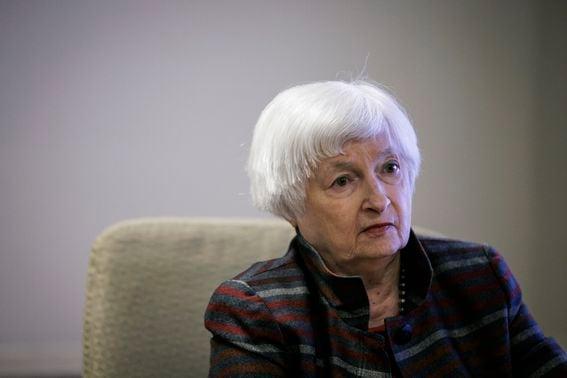
If all else fails with Plan A for setting up stablecoin rules with legislation, the industry's Republican allies in Washington have revealed their worry the Federal Reserve could step in. After the 2008 global financial meltdown, Congress set up a round table of regulators who could wield a unique tool against the next emerging threats. The Financial Stability Oversight Council (FSOC) can tag companies with systemic-risk labels that saddle them with tremendous new restrictions, and the crypto sector has the council's attention. In November, the FSOC – a collection of the heads of the U.S. Department of the Treasury, Federal Reserve, Securities and Exchange Commission and other agencies – erased some key changes from the Trump era that had neutered the council's power to designate companies as threats. It's now back in full effect, even if the authority has long remained dormant. At any time, the council could decide that one of the giants in the digital assets sphere – say, a stablecoin issuer such as Circle – could wound the wider financial system in the event of a failure, something akin to American International Group Inc.'s role in the mortgage collapse of 2008. When the FSOC affixes that tag on a business, it becomes a regulatory ward of the Fed, subjected to a number of compliance demands and supervision. So far, there's no sign such a move is coming, but the council has been warning of stablecoins' emerging dangers to financial stability, and congressional Republicans finally brought this potentially into the public in a subcommittee hearing this month. As most of the digital assets industry was glued to news of the spot bitcoin exchange-traded funds (ETFs), lawmakers on the House Financial Services Committee asked pointed questions about exactly what the uber regulator has in mind for crypto. "FSOC needs to tread very carefully when entertaining the idea of sidestepping Congress and congressional intent," said the Rep. French Hill (R-Ark.), the chairman of the digital-assets subcommittee, who underlined the legislative work he and other lawmakers have been doing to shepherd crypto bills toward the House floor. "We've crafted a regulatory framework for digital assets, and we've crafted a regulatory regime for stablecoins," he said. "We don't need FSOC to be involved in that. What they need to do is support our legislative effort." Warnings The systemic-risk watchdog's most recent mention of virtual assets came in its annual report last month, which again highlighted crypto as a potential emerging hazard to the health of U.S. finance. The regulators are especially concerned over stablecoins, the tokens matched to the value of steady assets such as the U.S. dollar, which are generally used as a means to buy and sell volatile digital assets. On the surface, the council's calls for crypto legislation seem supportive of lawmakers' aims. But the report again added a kind of warning. "The council remains prepared to consider steps available to it to address risks related to stablecoins in the event comprehensive legislation is not enacted," it said. Basically: If you don't act soon, we may. Despite the warning, one of those testifying at the hearing, Ji Kim, the general counsel and head of global policy for the Crypto Council for Innovation, told CoinDesk it's still unlikely that FSOC might wield this tool. "It would certainly be surprising for that to happen, since FSOC designation is deliberately a very high bar, which is meant for risks of great magnitude," he said. The council's members have granted that the current crypto sector "does not rise to the level of being a systemic risk." Bill Hulse, senior vice president of the U.S. Chamber of Commerce's Center for Capital Markets Competitiveness, suggested at the hearing that the council may be threatening Congress with potential risk designations as leverage to get its way on how the bills are written. But he contended that 2022 – with its massive industry failures that included the collapse of FTX – neatly demonstrated there's no case to be made that the crypto sector can significantly shake the rest of the country's financial plumbing. "None of these failures – including instances of fraud and other breaches of consumer trust – had a material effect on the 'traditional financial system,'" he said in his testimony. The FSOC has a spotty track record and is famously sluggish, because a long list of agency heads with very different interests must agree on the actions the council takes. In the beginning, it roped in several large insurers, including AIG, but all four of the companies it initially designated have since exited. In the intervening years, it's focused largely on its annual report that flags ongoing concerns. Lawmakers and Paul Kupiec, a senior fellow at the American Enterprise Institute, noted at the hearing that the group of regulators recently failed to head off one of the most serious financial crises since the mortgage meltdown. When institutions such as Silvergate Bank and Signature Bank started tanking – in part due to reliance on crypto-industry deposits – the council had done nothing to prevent it. Federal banking agencies whose chiefs are on the FSOC "fell short on their efforts to supervise banks that had significant business relationships with the digital asset industry," Kupiec noted. "They did not use their prompt corrective action powers to mitigate the risks generated by the banks’ investment decisions and the digital business relationships." To bring a crypto firm under Fed supervision, the council would have to go through a lengthy, multi-stage process that it's never used on any companies other than those implicated in dangers during the 2008 crisis. Designating a crypto firm as risky might also open the council to questions about why it hasn't targeted a giant U.S. asset manager. For now, Republican lawmakers seem to be laying down their own warning that the administration will hear from them again if the FSOC goes down that road. https://www.coindesk.com/policy/2024/01/29/a-backdoor-regulatory-option-haunts-us-crypto/