2023-11-08 20:34
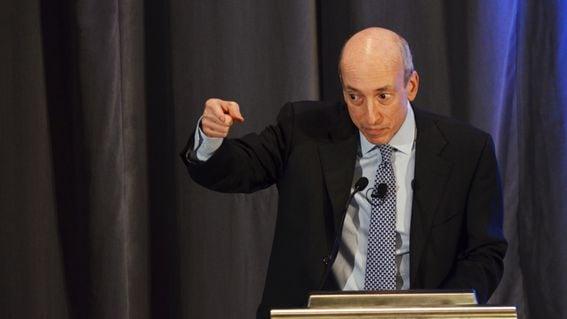
Analysts at Bloomberg predict that if a spot bitcoin ETF is not approved in this period, there’s still a 90% chance for approval by Jan. 10. The Securities and Exchange Commission (SEC) has one last short window, an eight-day period starting Thursday, if it wants to approve all 12 spot bitcoin (BTC) ETF applications this year, Bloomberg Intelligence analysts wrote in a note on Wednesday. Bitcoin traded slightly higher on Wednesday afternoon, staying well past the $35,000 mark ahead of the start of the period. The analysts, Eric Balchunas and James Seyffart, who expect the SEC to ultimately allow all 12 applications to launch their products, wrote that comment periods for seven applicants end on Wednesday, which means that the SEC could issue approval orders starting Thursday, Nov. 9 through Nov. 17. This is the first approval window after Grayscale’s court victory on Oct. 23 to convert its roughly $17 billion Grayscale Bitcoin Trust (GBTC) into a spot ETF. Three applicants, Hashdex, Franklin and Global X, may have their own comment periods, the note said, so if the SEC is willing to disregard those applications for now, they could issue approvals for the first nine filings, which include BlackRock, Grayscale, 21Shares & Ark, Bitwise, VanEck, Wisdomtree, Invesco & Galaxy, Fidelity and Valkyrie. The analysts believe that even if the SEC delays its decision another time during this period, there’s still a 90% chance that at least one spot bitcoin ETF gets approved by Jan. 10. https://www.coindesk.com/business/2023/11/08/bitcoin-pushes-towards-36k-ahead-of-last-approval-period-for-spot-etfs-this-year/
2023-11-08 18:10
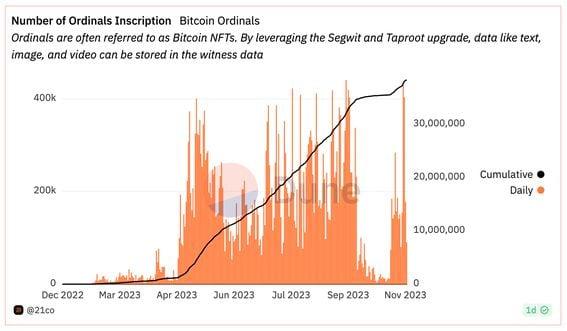
Higher fees are also boosting bottom lines for the industry's beleaguered miners, 21Shares noted. Network fees on Bitcoin surged to near $7 amid resurgence of Ordinals inscriptions. Bitcoin toppled Ethereum in NFT sales volume on Wednesday, per CryptoSlam data. Bitcoin fees surged to the highest level since the meme coin mania this past May amid the resurgence of Bitcoin-linked non-fungible tokens (NFT), known as Ordinals. At $6.84 on Wednesday, average transaction fees for using the Bitcoin blockchain are now up roughly 970% from a low of $0.64 touched in August, BitInfoCharts data shows. The surge is driven by increasing minting of Ordinals, with nearly 1.9 million inscriptions uploaded to the blockchain over the past two weeks, digital asset management firm 21Shares pointed out in a report Wednesday. Bitcoin became the top blockchain by NFT sales volume (excluding wash trading) in the past 24 hours, toppling Ethereum, CryptoSlam data shows. Ordinals – a protocol that allows users to store NFTs on Bitcoin – saw a spike in demand this spring during a short-lived meme token craze and drove fees to almost 2-year highs. Binance, the world's largest crypto exchange, listed Ordinals' token ORDI earlier this week and it almost doubled in price before giving up some of its gains Wednesday. "While ordinals have been limited to memecoin implementations, they do act as a proxy for increasing demand for Bitcoin blockspace," 21Shares analysts said. The resurgence of Ordinals also helps the bottom line of bitcoin miners, the report pointed out, with blockchain transaction fees now making up about 8.5% of their revenue. This is of particular import for the miners as Bitcoin's quadrennial halving event expected in April 2024 is drawing nearer, which will cut block rewards for the industry in half. https://www.coindesk.com/markets/2023/11/08/bitcoin-fees-soar-nearly-1000-since-august-as-ordinals-are-back-in-vogue/
2023-11-08 17:11
For stablecoins to be able to be used as a means of exchange they should be able to maintain their value during the day, economists at the Bank for International Settlements said. Stablecoins do not live up to their name, economists and analysts at the Bank for International Settlements said in a report published on Wednesday. "Not one of the stablecoins assessed in this paper has been able to maintain their closing prices in parity with their peg," the paper from the international organization said. Stablecoins are usually pegged to assets like the U.S. dollar. Stablecoins have been seen by some as an alternative form of payment. However, "to serve as a medium of exchange, they must also be able to maintain their peg during the day," something which the report said does not happen consistently enough. The paper looked at stablecoins like Pax Gold, USD Coin, Tether and more. It also referenced the collapse of Terra's algorithmic stablecoin UST, that sent shockwaves throughout the crypto market and propelled losses in the sector last year. "The lack of transparency regarding the availability and quality of these reserves may undermine trust in stablecoins’ credibility and their ability to maintain their peg," the report said. Moody's Analytics also released an article on Monday that said fiat-backed stablecoins depegged – and lost their par with the asset they were pegged to – at least 609 times this year alone. https://www.coindesk.com/policy/2023/11/08/bis-researchers-say-stablecoins-are-failing-to-live-up-to-promise/

2023-11-08 15:00
The CEO of Edge & Node shares how The Graph network – sometimes called the "Google of Web3" – is supposed to help organize data for other protocols. The Graph, a project that says it's sometimes called the Google of Web3, has come out with a new roadmap, outlining new features the network will add as it characterizes itself as the leader of "indexing" data from blockchains. Tegan Kline, the CEO of Edge & Node, the initial company developing The Graph, caught up with CoinDesk to give us an update on what The Graph is up to. Highlights of the interview: "We will need a data availability layer in The Graph’s ecosystem." "Almost all of DeFi uses The Graph." "There's really no decentralized competitor today. The biggest competition is people that are splitting it up in-house in a centralized way." Q: Tell us a little bit about The Graph? So The Graph was the first to index data in the blockchain space. We started with the hosted service and now we have the decentralized network that's been operating for almost three years, and there's over 1,000 applications on the network today. Q: Can you go into more detail about how indexing works? With The Graph, we organize that data, that's on Ethereum, so developers and dapps can easily access that data, and so then applications can load quickly. Q: Data availability – that seems to be a big topic of conversation in the Ethereum ecosystem lately – is that also needed for a protocol like The Graph? Q: How does The Graph compare and contrast with protocols like Chainlink – Chainlink’s oracle is feeding data into blockchains and you (The Graph) are feeding data off of blockchains onto websites? So Chainlink is bringing data onto the blockchain and The Graph is organizing public data that's on the blockchain. So for example, we have a partnership with Chainlink and we can organize oracle data. As an example because Chainlink, the oracle is putting that data on-chain, they're verifying it, and then The Graph is able to organize that data. So Chainlink has all the data in the world, putting that on-chain. We have the on-chain data, taking that to the rest of the world. And we believe over time, more and more data will be on-chain. Q: Who are you indexing that data for? Who are your customers? So Art Blocks leverages The Graph to organize data for their NFT marketplace: seeing how many NFT's were sold and how many are in the collection, what's the price? That's an example of that data is all pulled from The Graph. The data is on the blockchain when it comes to on-chain transactions, and so those on-chain transactions, you want to be able to pull those in real time, and you have to organize the data in an efficient way. So applications are able to outsource this indexing to The Graph network, so they just can focus on building really amazing applications. It's the same as you would use a Comcast, as opposed to building out your own telecom line in your house. Same with The Graph: you're outsourcing that to The Graph network, so you don't have to think about it and you can just build really amazing applications. Almost all of DeFi uses The Graph. For example Uniswap, to see the prices of the tokens, all of that data is pulled using the Graph network. Q: Who are your competitors? Who do you bucket yourself with and what projects are most similar to The Graph? Q: So where is all this going? Is The Graph going to be alone in this? And so it's nice that we can kind of unite the ecosystems together. But I'm really excited about the future. You know, I think we've already proven we've proven the monetary policy side of crypto right with bitcoin and the need for a sound monetary system in my opinion we have but where you know where the opportunity is, and where I'm really excited about is the Web3 side because we have to build out this decentralized open-source permissionless technology. And, we work on data, right? And we've created a new incentive system around data so that no one company can own and control that data. And really, it's about giving public data back to individuals and not having control of it as a company. I think with crypto and Web3, we're creating a movement that is free, it's self-sovereign, and we have to make sure the Web3 stack is fully decentralized. Otherwise, there's really no point in doing what we're doing. It’s not going to be forced on anyone but I think giving people an option away from the centralized world is a really great, great thing. Q: There’s the Graph, Edge & Node, and a foundation? How does that all differ? One of the examples is Messari, they're a core developer. And they build subgraphs, which are the open API's that applications use. They standardize that data so that large institutions can leverage that standardized data. https://www.coindesk.com/tech/2023/11/08/almost-all-of-defi-uses-the-graph-qa-with-edge-node-ceo-tegan-kline/

2023-11-08 12:00
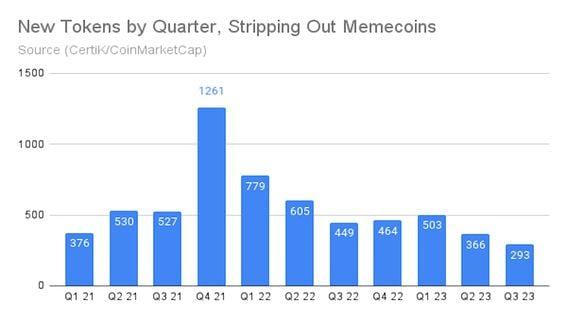
Excluding memecoins, some 293 new tokens were added to the CoinMarketCap website, less than a fourth what was added during the bull market of late 2021, according to new data compiled by the smart-contract auditor CertiK. Just as green shoots are appearing in crypto markets, a new data set has emerged showing just how dramatically the pace of blockchain development slowed recently. The amount of new token creation dropped during the third quarter to the lowest since at least the start of 2021, according to blockchain smart-contract auditor CertiK. The company created the data set by using the list of tokens added each quarter to the tracking website CoinMarketCap, and then stripping out so-called memecoins that serve no ostensible purpose but to provide yuks and a vessel for speculation. Some 293 new tokens were added in the third quarter, down from 366 in the second quarter and 449 in the year-earlier period, according to the data. During the height of the bull market in cryptocurrencies in the fourth quarter of 2021, some 1,261 new tokens were created. The numbers are consistent with separate reports illustrating the depths of so-called crypto winter. A report last month from the digital-asset firm Galaxy noted that venture-capital funding for crypto and blockchain projects slid last quarter to the lowest since late 2020. "It may still be a sign of crypto winter where everyone has paused developing and launching, waiting for the arrival of spring," said Ronghui Gu, CertiK's co-founder, who is also an assistant professor of computer science at Columbia University in New York. Decline in liquidity Several blockchain projects have had to cut staff, with NFT marketplace OpenSea being the latest to do so, announcinga 50% reduction on Nov. 3, with the CEO writing in a post on X that the company was "building a new foundation." "It's probably partially due the general decline in liquidity in the industry," said Sean Farrell, a crypto analyst at the independent investment-research firm FundStrat. "No one wants to list a token when there there is a lack of risk-taking." But the price of bitcoin staged a powerful rally in October, and major altcoins have also been on the rise, fueling speculation that the worst of the market malaise might be over. Last week, funds for investing in cryptocurrencies attracted some $767 million of fresh money, marking the best six-week stretch since the 2021 bull market. The recent drop in token listings may reflect, to some degree, a maturation of the crypto industry, FundStrat's Farrell said. "There are more legitimate projects out there now, so the battle for that incremental liquidity is tougher," he said. "The bar for launching a token is higher." Some would-be issuers may have been deterred by the risk of running afoul of regulators – a heedfulness that may not have existed in prior eras of the 14-year-old crypto industry. "The regulatory uncertainty in the U.S. has discouraged many projects from launching tokens," Farrell said. https://www.coindesk.com/tech/2023/11/07/new-cryptocurrencies-getting-created-at-slowest-pace-in-3-years-data-shows/
2023-11-08 09:50
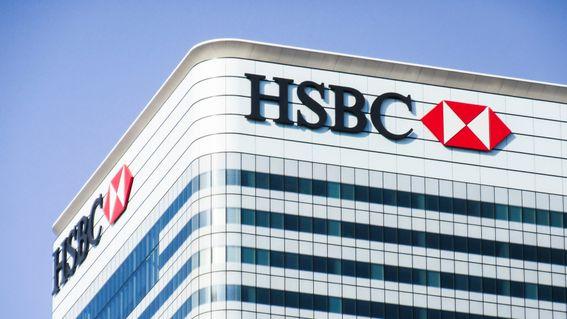
The platform, planned for 2024, complements its new offering for tokenized gold as well as one for issuing digital assets. HSBC, one of the world's largest banks, said it plans to start a digital-assets custody service for institutional clients focusing on tokenized securities in conjunction with Swiss crypto safekeeping specialist Metaco. Once live in 2024, the custody service will complement HSBC Orion, the London-based bank’s platform for issuing digital assets, as well as a recently introduced offering for tokenized physical gold, HSBC said in a statement. Together, the platforms will form a complete digital asset offering for institutional clients, the bank said. Banks and financial institutions are bringing a range of real-world assets (RWA) onto blockchains, both private ledgers and public networks like Ethereum, in a process known as tokenization. Last month, regulators in Singapore, Japan, the U.K. and Switzerland said they will test tokenization for fixed income, foreign exchange and asset management products. HSBC pointed out its custody plans, for now, involve “tokenized securities issued on third-party platforms, e.g., private and/ or public blockchain compatible tokenized bonds or tokenized structured products (not for custody of cryptocurrencies or stablecoins).” In September, CoinDesk reported HSBC was working with Fireblocks, another custody technology firm. A person familiar with the matter said HSBC's work with Fireblocks involved the bank’s innovation team. "Metaco remains focused on delivering the most robust digital asset custody platform on the market to financial institution clients," CEO and founder Adrien Treccani told CoinDesk via email. "With the strong backing of Ripple, we're excited about our growth outlook and continue to invest in people and technology." Metaco was acquired by Ripple in May for $250 million. The new custody service for digital assets "will complement HSBC Orion, our platform for issuing digital assets, as well as our recent launch of tokenized physical gold," John O’Neill, HSBC's global head of digital assets strategy, markets and securities services, said in the statement. “These services underscore HSBC’s commitment to the overall development of digital asset markets.” https://www.coindesk.com/business/2023/11/08/hsbc-to-offer-tokenized-securities-custody-service-for-institutions/