2023-10-31 13:35
The Bitcoin white paper was first published 15 years ago. CoinDesk reflects on some of its earliest archival material and statements from Bitcoin creator Satoshi Nakamoto. From Aug. 18, 2008, to Oct. 31 of the same year, Satoshi Nakamoto must have had a hectic few months. That summer day, Nakamoto had registered the bitcoin.org domain name, indicating perhaps the first time the pseudonymous cryptography expert realized he may be onto something. By Halloween Day, the day the Bitcoin white paper was first sent out to a cryptography mailing list, announcing the project to the world, Nakamoto had hard-coded the entire project. “I actually did this kind of backwards. I had to write all the code before I could convince myself that I could solve every problem, then I wrote the paper,” Nakamoto wrote on Nov. 11, 2008. He was responding to cryptography mailing list subscriber Hal Finney, the receiver of the first bitcoin transaction, who in 2004 had built a reusable proof-of-work system that inspired Bitcoin. Of course, there’s evidence suggesting that Nakamoto had had the idea far earlier than 2008. For instance, in an early 2010 email to Jon Matonis, a former VISA executive, congratulating him on a blog post Matonis wrote about the long development of electronic money, Nakamoto said he wished “there was something like that when I originally researched this three years ago.” “Bitcoin would be right up your alley,” Nakamoto said. Matonis would go on to become a founding director of the Bitcoin Foundation. At the time, Nakamoto discussed Bitcoin in a few narrow ways. Although he often responded to interested potential users, or did outreach himself trying to bring the revolutionary technology in front of cryptography fans, hardcore coders and libertarians Nakamoto presented Bitcoin as a fairly utilitarian and spartan project. When someone created the first Wikipedia page for Bitcoin in July 2010, Nakamoto said it was too “promotional” for his taste. “Just letting people know what it is, where it fits into the electronic money space, not trying to convince them that it's good,” Nakamoto added. Bitcoin is, as Nakamoto described it, an electronic, peer-to-peer currency-like system. It could “become” a currency so long as people ascribe value to it, and that could happen for any number of reasons like wanting to collect interesting things or needing an alternative to using credit cards online, he had suggested. “Bitcoins have no dividend or potential future dividend, therefore not like a stock,” he wrote.” “More like a collectible or commodity.” But the chief innovation Nakamoto knew from the beginning was that Bitcoin has no central issuer, or “mint,” as he sometimes called it. “There isn’t a central mint or company running it. As long as there are users, it survives,” he wrote in that 2010 email to Matonis. Someone so deeply involved in the digital currency space of the ’90s knew that experiments like DigiCash and LibertyReserve failed because there was a person or company in the middle to become compromised. This is a revolutionary idea, of course, and the first of many cryptocurrency experiments to follow that replaced “trust intermediaries” with certain cryptographic guarantees and the collective empowerment of users. Users gave bitcoin its value, and they are incentivized to see the network grow. At the time, Nakamoto thought Bitcoin might be useful for small transactions like micropayments, which “massive overhead costs” at banks make impossible, as well as international transfers or private payments. Not all of Nakamoto’s early ideas panned out. Micropayments have failed to materialize, and today it’s painfully obvious how unfit a fully-public network like Bitcoin is for privacy. But he was right that Bitcoin would grow to become a real alternative to trust-based finance. Today, the total value of bitcoin in circulation is worth over $672 billion and financial institutions from BlackRock to VanEck want in. Bitcoin abstracted away the trust that is inherent in the modern money system, where banks and other financial institutions keep track of all the transactions that flow through and ultimately decide which were valid and who could use the system. Bitcoin is as much a public broadcast system as it is a currency network, which allows anyone, anywhere to validate and verify the blockchain on their own. Or, as Nakamoto told Wei Dei, the inventor of another Bitcoin progenitor, b-cash, it solves the “double-spend” problem and other issues of trust in money by using a “peer-to-peer network” that “timestamps transactions” and “hashes them into an ongoing” chain “that cannot be changed without redoing the proof-of-work.” Nakamoto had reached out on Friday, Aug. 22, 2008, to ask Dei how he should be cited in the Bitcoin white paper. CORRECTION (Oct. 31, 2023, 15:38 UTC): Fixes spelling of Wei Dei's name. https://www.coindesk.com/consensus-magazine/2023/10/31/bitcoin-2008-satoshi-nakamotos-busy-few-months-building-the-revolutionary-p2p-electronic-cash-network/
2023-10-31 13:30
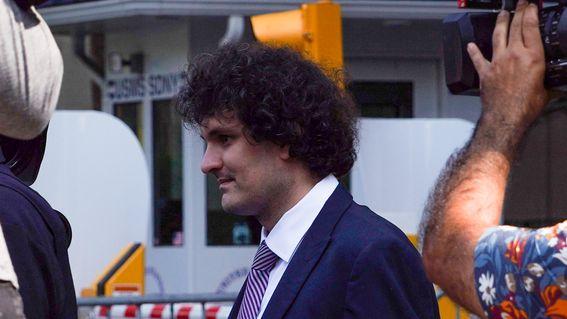
Bankman-Fried was charming in front of reporters before FTX collapsed. Now he's just defensive. There was a moment on Monday where an assistant U.S. attorney needed to ask FTX founder Sam Bankman-Fried if he was the chairman and sole board member of Alameda Research, while showing him a document that he signed, which literally identified him as the chairman and sole board member. And Sam's response was he did not intend to be, which curiously enough, was not the question actually asked. 'I'm not sure how to interpret the metadata' The narrative Sam Bankman-Fried is still in court trying to defend himself against charges he defrauded and conspired to defraud a bunch of people by stealing FTX customer and investor funds and blowing it on frivolous things like private jet rides and luxury apartments. Monday's testimony was especially, I would argue, rough for the defendant. And since I'm still spending every day in court watching the greatest show in crypto, I'm going to ditch whatever I was originally planning to write about and instead invite you inside Monday's performance. Why it matters This case is just getting more intriguing, especially now that the defendant himself is testifying. Breaking it down You remember those DirecTV Rob Lowe ads? Rob Lowe with DirecTV is a suave dude. Rob Lowe with old-fashioned cable TV is a bit rough to look at. Bankman-Fried's testimony provides a very similar split-screen moment. He did well enough when responding to questions from Mark Cohen, his defense attorney. He provided a compelling explanation of how FTX collapsed – potentially compelling enough to convince a jury of his peers that he didn't defraud all the people he allegedly defrauded. He was the DirecTV version of himself. And then it was Assistant U.S. Attorney Danielle Sassoon's turn to ask questions. That's when he, in a big way, became the rough, cable-TV version. Am I insane? Or was the back-and-forth over whether Bankman-Fried was the sole board member of Alameda insane? Reader, I invite you to judge for yourself: Sassoon: "Do you see at the top where it says 'Alameda Research, Unanimous Consent of Board of Directors, Stock Transfer'?" Bankman-Fried: "Yep." Editor's note: He kept saying "yep" instead of "yes," which shouldn't be a big deal but kind of added to the tonal issues. Sassoon: "This is transferring the Robinhood stock to yourself, right?" Bankman-Fried: "Transferring it from one company that I was a partial owner of to another company I was a partial owner of. Sorry. I'm not sure it says it's transferred to me." Sassoon: "You owned the company it was transferred to, right?" Bankman-Fried: "I was one of the owners of both the companies." … and then later … Sassoon: "You were the only member of the board?" Bankman-Fried: "It looks like it." Sassoon: "Were you in fact the only member of the board?" Bankman-Fried: "I'm not sure which board this refers to." Look, this exchange dragged on in this fashion for a while, to the point that Judge Lewis Kaplan stepped in: "You owned 90% of the stock, right? Did you become a director by mistake or accident or something?" The critical question has always been how the jury views the different witnesses and their testimony. Would the 18 (now 17) randomly selected New Yorkers find the prosecution's parade of people more compelling than Bankman-Fried and his tiny slate of defenders? The defense walked Bankman-Fried through a series of questions where he subtly contradicted many of the major witnesses called by Department of Justice prosecutors, making this a real question. After Monday's performance, it seems a bit easier to answer. Bankman-Fried's got two issues, as my colleague Danny Nelson wrote last week: One is that he doesn't have a lot of particularly satisfying responses to some of the DOJ's questions (from a substantive viewpoint). The other is that he doesn't have a lot of particularly satisfying responses to some of the DOJ's questions (from a "words, what do they mean?" viewpoint). On the second issue first: He really is not coming off as a compelling or truthful witness. He's continuing to provide long-winded and overly hedged responses to some pretty basic responses. Judge Lewis Kaplan had to repeatedly tell him to answer the question that was actually asked, and to use words like "yes" or "no." Sassoon is drawing out Bankman-Fried's less compelling side. At one point, she pulled up an FTX marketing deck, which included a slide on clawbacks, and asked him to read the first subheading. Bankman-Fried started reading a number of words, before Sassoon interrupted him and asked him to specifically read the subheading. "The first word is preventing, the second word is clawbacks," he said, sparking disbelieving laughs from the overflow room gallery. Other notable moments include Sassoon suggesting Bankman-Fried lied under oath before the House Financial Services Committee, and pointing out that he told a lot of people about his efforts to shape his image – even as he claimed he did not remember telling any of the nearly dozen people she pointed to about those efforts. At one point Sassoon asked how Bankman-Fried got to the Super Bowl, where he snapped a photo with Katy Perry, Orlando Bloom, Kate Hudson and other people. Bankman-Fried said he didn't remember. "You don't recall flying to the Super Bowl on a private plane?" And after receiving a negative response: "Is it because you flew on a private plane so frequently?" On the actual substance, Bankman-Fried again struggled to provide coherent responses. Sassoon asked him repeatedly if he saw a spreadsheet laying out Alameda's balances. Though Bankman-Fried testified Friday that he saw one of the tabs (the one titled "Alt 7"), he hedged – a lot – on Monday. Sassoon asked if he saw the spreadsheet. Bankman-Fried again hedged, leading to Sassoon pulling up the metadata provided by Google showing it had been looked at by Bankman-Fried's Alameda Research email account. "I'm not sure how to interpret the metadata," Bankman-Fried said, leading to another interjection from the judge: "You were not asked how to interpret the metadata." Stories you may have missed Do Kwon's Terraform Labs Seeks Early Court Rejection of U.S. SEC Case: Terraform Labs and its co-founder Do Kwon (who's currently in a Montenegrin prison – more on this below) filed for summary judgment in the U.S. Securities and Exchange Commission's case against them. Crypto Exchange Linked to 3AC Founders Drops Lawsuit Against Mike Dudas: Headline seems pretty self-explanatory to be honest. OPNX sued Dudas on allegation claims. U.K. Publishes Final Proposals for Crypto, Stablecoin Regulation: The U.K. plans to introduce legislation for fiat-backed stablecoins next year, followed by rules for algorithmic stablecoins and other issues. This week Wednesday 18:00 UTC (2:00 p.m. ET) We'll find out if I have to pay an arm and a leg if I look for a house next year after the FOMC meeting. Thursday 07:00 UTC (8:00 a.m. BST) We'll find out if people in the U.K. have to pay an arm and a leg if they look for a house next year. Elsewhere: (Politico) House Financial Services Committee Chair and former Speaker Pro Tempore Patrick McHenry (R-N.C.) felt "pure anger" when former Speaker Kevin McCarthy (R-Calif.) was ousted and he had to take over for three weeks, he told Politico. (Wall Street Journal) This is an excellently reported article by the Journal about Terra's Do Kwon and how he landed up in a Montenegrin jail cell. (Intelligencer) Let's get a bit meta. Here's where I've been for uh four weeks? This is week five of the trial right? Right. If you’ve got thoughts or questions on what I should discuss next week or any other feedback you’d like to share, feel free to email me at [email protected] or find me on Twitter @nikhileshde. You can also join the group conversation on Telegram. See ya’ll next week! https://www.coindesk.com/policy/2023/10/31/sam-bankman-fried-needs-better-answers-on-the-stand/
2023-10-31 06:54
Unibot confirmed on X that it had suffered a token approval exploit in its new order router. Crypto stolen via an exploit on Telegram chatbot Unibot has been swapped for ether via Tornado Cash and is on the move. According to PeckShield, the attacker first moved the stolen crypto to Uniswap and then sent it to Tornado Cash. Earlier, the protocol disclosed it was the victim of a token approval exploit when moving to a new router, and it would reimburse any stolen funds. Tornado Cash is often at the nexus of high-profile hacks and exploits in the crypto world. In August, some of its development team were charged with helping hackers launder over $1 billion, including from entities tied to North Korea. Volume on the privacy protocol is down 90% after the arrests and subsequent sanctions. The price of the Unibot token is down nearly 25% to just over $42. The price of the token peaked in mid-August at almost $220. The protocol, at its peak, generated a significant amount of revenue, thus attracting the interest of investors. This is the latest exploit in the crypto world. Last week, LastPass users lost $4.4 million worth of crypto. According to data spotted by Lookonchain, the attacker’s wallet now has just over $630,000 in crypto assets, with the majority being in ether (ETH) followed by USDC. https://www.coindesk.com/markets/2023/10/31/unibot-token-hurtles-25-as-telegram-bot-exploited-for-630k/

2023-10-31 05:55
The BOJ's yield curve control program has been a major source of liquidity for financial markets since 2016. Bitcoin (BTC) continues to trade above $34,000 after the Bank of Japan (BOJ) softened its grip on the “yield curve control” (YCC) program, counteracting the Federal Reserve’s liquidity tightening. At press time, the leading cryptocurrency by market value changed hands at $34,300, representing a 0.18% drop on a 24-hour basis, CoinDesk data show. On Tuesday, the central bank kept the short-term policy rate steady at -0.1%, continuing its negative interest rate policy. However, the BOJ said it would consider the 1% upper bound for the 10-year government bond yield as a “reference” rather than a hard cap. This tweak will allow for more yield fluctuations and relieve the pressure on the BOJ to step in with liquidity-boosting bond purchases every time the 10-year yield tests the erstwhile 1% hard cap. Bitcoin is known to track changes in global fiat liquidity, and the Japanese central bank’s YCC has been a significant source of liquidity since 2016. The BOJ’s move is consistent with Monday’s Nikkei report, which said the bank will take a more flexible stance, allowing the benchmark yield to rise above 1%. The U.S. dollar-Japanese yen (USD/JPY) pair has bounced back to 150 from 149.20, a sign the overnight Nikkei report had traders expecting the BOJ to move the hard cap to 1.25% or 1.5%. Per some observers, BOJ’s latest tweak represents a stealth move away from the dovish YCC program, which calls for caution on the part of traders of liquidity-sensitive risk assets, including cryptocurrencies. “Key paragraph from the BOJ - 1% is now the “soft” upper limit (reference) and won’t be enforced as strictly. That, and the upward revision to inflation forecasts, means this is THE most hawkish BOJ has been in a while...just not as hawkish as the Nikkei leaks suggested,” rates strategist Rishi Mishra said on X. The International Monetary Fund (IMF) has urged the BOJ to abandon YCC and prepare for eventual tightening or rate hikes. https://www.coindesk.com/markets/2023/10/31/bitcoin-holds-steady-above-34k-after-hawkish-boj-decision/
2023-10-31 05:07
The term may have implications for the fraud charges Bankman-Fried faces. Sam Bankman-Fried’s attorneys are trying again to have the jury overseeing his trial consider the role of English law in governing FTX’s terms of service, hoping it may lead to a “not guilty” verdict on some of the fraud charges the exchange founder faces. “For misappropriation to have occurred, under the Government’s theory, there must have existed a trust, fiduciary relationship, or a similar relationship between FTX and its customers,” a filing including a proposed jury instruction said. The proposed jury instruction would tell the 12 individuals deciding Bankman-Fried’s fate that "FTX’s relationship with its customers was governed by the Terms of Service," which in turn are "governed by ... English law.” An additional set of filings provides example cases from the U.K. "Under English law, the Terms of Service do not create a trust relationship or similar fiduciary relationship between FTX and its customers. Nor, under English law, do any representations made after a customer agreed to the Terms of Service create a trust relationship or similar fiduciary relationship," the filing suggested Judge Lewis Kaplan said. "The mere fact that a person subjectively expected, understood or believed that a trust, fiduciary relationship, or similar relationship existed does not create such a relationship." Defense attorney Mark Cohen had former FTX General Counsel read a part of the terms of service in court earlier this month, which said, "The terms and any dispute shall be governed by, and construed in accordance with, English law." The Department of Justice hadn’t responded to the newest filing as of 10:30 p.m. EDT. Still, a previous filing opposing one of Bankman-Fried’s proposed expert witnesses made it clear that prosecutors believe focusing strictly on the wording of the Terms of Service and their application under English law misconstrues their charge. “It is legally incorrect to imply to the jury that its focus should be solely on the terms of service ... rather than on the full range of the defendant’s misrepresentations and misleading conduct,” the DOJ’s Aug. 28 filing said. Bankman-Fried’s past statements and "the common understanding of cryptocurrency customers” are relevant in addition to the terms, that filing said. During the FTX founder’s trial, prosecutors have asked FTX customers and Bankman-Fried to discuss the exchange’s marketing and what that may have meant for customers more broadly. Judge Kaplan has told the parties that he intends to hold a jury charge conference – which will let the parties argue over their various competing jury instruction proposals – after they both rest, which may occur as soon as Wednesday. Bankman-Fried took the stand last week, and is currently going through a cross-examination, which the DOJ expects to wrap up Tuesday morning. Read all of CoinDesk’s coverage here. https://www.coindesk.com/policy/2023/10/31/sam-bankman-frieds-defense-team-makes-last-ditch-bid-to-get-english-law-detail-in-jury-instructions/
2023-10-31 00:00
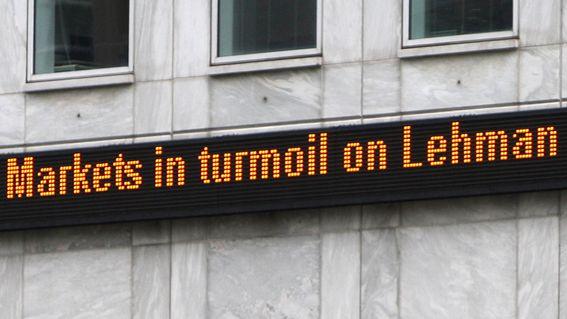
The titans of finance are increasingly driving a space that, to many, was designed to put them out of business. If you were paying attention back then, you don't need to be told this, but for those who were not: Late October 2008 was an incredibly ugly time in money, markets and finance. Major firms, most famously Lehman Brothers, had just collapsed or required bailouts. Many others were teetering, and the stock market was tanking. Governments and central banks were trying to contain the catastrophe. And I wasn't sleeping well, tangled up in covering the carnage at Bloomberg News. Oct. 31, 2008, is also when the Bitcoin white paper came out – now 15 years ago to the day. Ensconced in traditional finance, I didn't notice the cryptocurrency revolution had begun, nor had the rest of what we now call TradFi; the financial system appeared to be burning down, after all – we were busy. Satoshi Nakamoto's paper didn't explicitly say: The world needs a peer-to-peer system to move money around to replace Wall Street giants because they can't be trusted, they're falling apart, etc. But that was the vibe as folks picked up on the idea and made the Bitcoin blockchain and bitcoin (BTC) the cryptocurrency real. Bitcoin got switched on, BTC started getting mined and stuff started happening – small stuff at first. Pizzas were purchased. A website morphed from a place to swap Magic: The Gathering cards to a giant crypto exchange – and then got massively hacked. Other cryptocurrencies debuted, expanding what blockchains could do. Crypto prices soared – like, really soared – as idealists who embraced the idea of decentralization and cutting out middlemen in finance harnessed Satoshi's ideas, made them real and extended them. (More than a few charlatans got involved as well.) Wall Street and the rest of TradFi started paying attention – trying to move conventional financial operations onto blockchains and trading "digital assets," their genteel term for cryptocurrencies. Today, we find ourselves at an ironic moment. These titans of finance are increasingly driving a space that, to many, was designed to put them out of business. Take, for instance, the story of the moment (excluding Sam Bankman-Fried's ongoing criminal fraud trial). Giddiness over BlackRock (the biggest asset manager in the world) and some of its peers trying to list bitcoin ETFs in the U.S. pushed up bitcoin's price last week, a bet that these easy-to-trade products will bring a flood of investment into BTC. BlackRock and other ETF providers look poised to be – assuming regulators permit these products, and there are reasons to think they'll have to – the new bitcoin whales. Also, CME Group, owner of the Chicago Mercantile Exchange, is close to overtaking Binance as the largest crypto derivatives exchange in the world. (CME's product is a cash-settled futures contract, essentially a side bet on bitcoin's price; no BTC changes hands). In other words, a business with roots in the 19th century and agricultural commodities like corn and pork bellies, and one of the key spots in all of traditional finance, is a major player in crypto trading. That said, this is less about how much of the total BTC stash that Wall Street holds. Finance people are increasingly taking over the story – at least to the mainstream – around bitcoin, to an extent that is noteworthy. What does TradFi muscling its way to the front of the pack mean for crypto? First, an asterisk: Bitcoin ETFs and crypto derivatives trading (much of it involving BTC) don't mean finance bros are swallowing all of crypto. Bitcoin is not all of crypto – though its market capitalization as a percentage of the whole crypto market is at an unusually high level above 50%. There are the myriad blockchains like Ethereum and its associated layer-2 networks such as Polygon that run smart contracts – software designed to power various financial and other applications – and that have their own tradable tokens. That's a whole largely decentralized realm (in aspiration, if not always in practice) that, even to some in TradFi, represents a way to replace conventional ways of doing finance with blockchain-powered versions. That fits broadly with Satoshi's peer-to-peer vision, even if some of the folks that have adopted this mindset collect Wall Street-sized paychecks. Which brings us back to the irony. Whether bitcoin and crypto folks like it or not, TradFi is coming/is already here – though the degree of their involvement will hinge on regulators' desires, and they're clearly not psyched, judging, for instance, from the actions of the U.S. Securities and Exchange Commission and banking agencies. Crypto will still have its crypto-y moments, like last week when the price of a totally normal token called HarryPotterObamaSonic10Inu zoomed higher. "We have proposed a system for electronic transactions without relying on trust," Satoshi wrote 15 years ago. After Sam Bankman-Fried, Do Kwon and Alex Mashinsky showed what can happen when you trust crypto natives, are users prepared to trust different crypto shepherds? Or will they finally ditch the shepherds, as Satoshi might have hoped? https://www.coindesk.com/business/2023/10/31/on-bitcoin-white-papers-15th-anniversary-wall-street-threatens-to-swallow-its-one-time-challenger/