2024-09-26 03:25
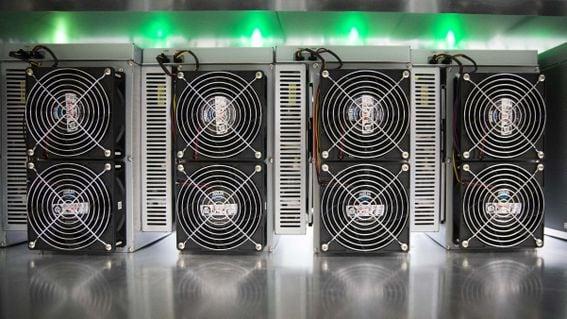
And no, she didn’t rule that crypto mining devices were securities. An SEC suit against Green United, a firm accused of scamming investors with promises of cloud mining, can proceed to trial. Claims that crypto mining devices constitute securities are incorrect, and are based on a misinterpretation of court documents. The U.S. Securities and Exchange Commission’s (SEC) lawsuit against Green United can proceed to trial, a Utah judge ruled Monday. Last March, the SEC accused the Utah-based operation of scamming investors out of $18 million by selling them phony crypto mining equipment via a multi-level marketing scheme in which the company’s affiliates received a portion of the proceeds from each of the $3,000 “Green Boxes” they sold. According to the SEC’s complaint, investors were told that the so-called Green Boxes were specialized crypto miners that mined GREEN tokens on the Green Blockchain – which they allegedly claimed supported a “public global decentralized power grid” – and could generate 40% to 50% monthly returns. Investors never physically received their equipment, and were told that the machines would be remotely hosted at a Green United-controlled data center. In reality, the Green Blockchain didn’t exist, but the Green Boxes did – sort of. Green United’s founder, Will Thurston (who, along with promoter Kristoffer Krohn, is also named as a defendant in the lawsuit), allegedly used the money investors gave him for the phony Green Boxes and used it to buy S9 Antminers – commercially-available bitcoin mining machines – which he then used to mine bitcoin for himself. According to the SEC, investors didn’t see any of the actual bitcoin (BTC) their purchases mined, but instead received periodic distributions of worthless GREEN tokens created by Thurston on the Ethereum blockchain. Though Green United’s lawyers attempted to have the case dismissed, U.S. District Court Judge Ann Marie McIff Allen ruled that the SEC has “sufficiently alleged a security in the form of Green Boxes” to allow the case to proceed to trial, as well as its allegations of fraud. The ruling caused something of a stir in online crypto circles, with at least one large X account claiming (in a since-deleted post) that the “SEC says crypto mining devices are securities.” “This is wrong. Remain calm,” responded Neeraj Agrawal, director of communications at crypto lobbying group Coin Center. “This has no bearing on managed crypto mining. It’s garden variety ‘cloud mining’ scamming.” The judge’s Monday ruling makes no mention of the real S9 Antminers – or bitcoin – Green United was allegedly buying with investor funds. https://www.coindesk.com/policy/2024/09/26/utah-judge-rules-secs-case-against-alleged-crypto-mining-scam-green-united-can-proceed-to-trial/
2024-09-25 17:49
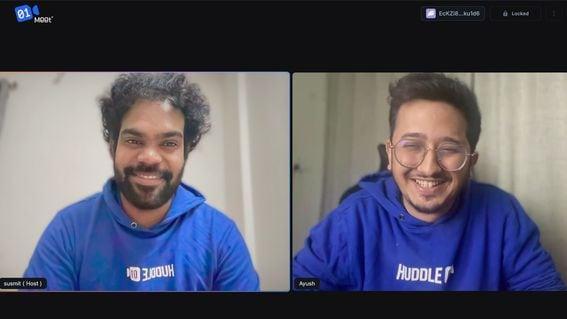
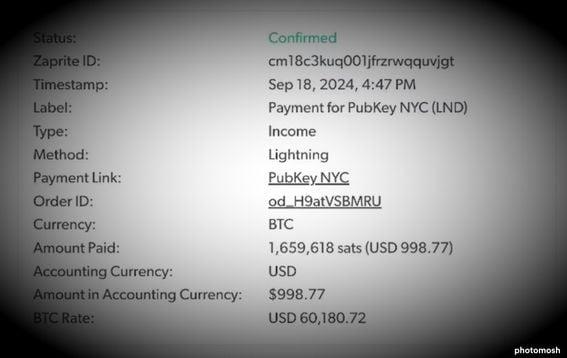
Republican U.S. presidential candidate Donald Trump won chits from the Bitcoin community for reportedly purchasing smash burgers at a Bitcoin-friendly New York pub. But in a way, the whole episode was about damage control. Bitcoiners aren't usually the forgiving type – especially toward perceived apostates who ape into other cryptocurrencies. That's why Republican U.S. presidential nominee Donald Trump's visit last week to a beloved Bitcoin bar in New York appeared so well timed – to repair any lost credibility after he and his family started promoting a decentralized-finance project that appears rooted in other blockchain ecosystems. ALSO: Democratic U.S. presidential candidate Kamala Harris's policy is "N/A." Telegram's turnabout. EXCLUSIVE: Huddle01, a video-conferencing blockchain project taking on Zoom, aims to sell as much as $37 million of "media nodes." Top picks from the past week's Protocol Village column: $110 million of blockchain project fundraisings. Network news Screenshot of the Zaprite invoice used by Republican U.S. presidential nominee Donald Trump to buy burgers and Diet Cokes at the bar PubKey in New York (PubKey/X) LESSER EVILISM – It goes without saying that many Bitcoin purists do not like to mingle their business, politics or even company with users of other blockchains or cryptocurrencies. Which is partly why the Republican U.S. presidential nominee Donald Trump garnered so much scorn from Bitcoiners last week for promoting a very-much-NOT-Bitcoin decentralized-finance project, World Liberty Financial – complete with its own token, and a pre-mined allocation to insiders. "Trump launching a sh*tcoin may have been the final straw to lose my vote," tweeted Bitcoin-friendly author Mitchell Askew. Responses on the thread ranged from total agreement to what one might call lesser evilism – the rhetorical contrast of one bad option with an even worse option: "True but it’s that or WW3 with commie Kamala," wrote @FrictionlessBTC. The DeFi dalliance threatened to undo much of the goodwill Trump built up at the Bitcoin Nashville conference in July, when he tossed out a series of red-meat pledges, including commuting the rest of Silk Road creator Ross Ulbrecht's life sentence and creating a "strategic national bitcoin stockpile." Multiple standing ovations ensued. So it was fortuitous timing for Trump that his campaign scheduled a stop, later in the week, at the Bitcoin-friendly New York City bar, PubKey. According to the bar's official X account, Trump bought 50 smash burgers and Diet Cokes for people in attendance, at a total cost of $998.77 including tax and tip, and then paid for it all in bitcoin. Fox News posted a video of the entire scene, leading a sharp-eyed reporter from CryptoSlate to quickly point out that Trump's role mainly consisted of standing by at the counter while handlers actually performed the transaction, passing smartphones back and forth between them. Whatever. The bar crowd cheered. "Crypto burgers!" Trump said as he handed them out. A voice from behind the camera corrected him, "Bitcoin burgers!" As much as it was a second chance for Trump to prove his Bitcoin bona fides, the choreographed transaction served as a sort of benchmark for the blockchain's evolution as a viable payments option for a retail-facing business in the U.S. Will Cole, head of product at the Bitcoin payments app Zaprite (who happens to be Bitcoin-friendly U.S. Senator Cynthia Lummis's son-in-law), described what he called the "Trump stack:" PubKey, running a node on Bitcoin's Lightning Network on Voltage Cloud, used Zaprite to provide an invoice for the purchase, and Trump paid using a Strike wallet. (Official spokespeople for the Trump campaign didn't respond to CoinDesk's email asking where the bitcoin originated from.) Asked whether the episode might have helped erase any lingering disgust among Bitcoiners over the World Liberty Financial rollout, PubKey founder Thomas Pacchia didn't exactly dispute the premise of the question: "The other stuff that the family has going on is sort of outside our purview and scope," he said in an interview. "Everybody is on a journey toward understanding the difference between Bitcoin and crypto. I like to meet people where they are." ELSEWHERE: Caroline Ellison exits a Manhattan courthouse after being sentenced to two years in prison on Sept. 24, 2024. (Victor Chen/CoinDesk) Former Alameda Research CEO Caroline Ellison was sentenced to two years in prison by a federal judge on Tuesday. The judge said Ellison, 29, who will also have to forfeit about $11 billion, could serve the sentence at a minimum-security facility near Boston, where her family lives. Ellison was a key witness in the government’s trial against her former boyfriend, FTX founder Sam Bankman-Fried, who was convicted on seven counts of fraud and conspiracy before being sentenced earlier this year to 25 years in prison. Vice President and Democratic nominee Kamala Harris made her first remarks on crypto on Sunday before donors in New York City. (Her specific choice of term was "digital assets.") A person with knowledge of the talks between her campaign and crypto insiders told CoinDesk that the discussions about digital-asset policy remain high-level and aren't likely to produce a detailed stance before the election in early November. Stand With Crypto, an advocacy group whose industry partners include exchanges Coinbase and Gemini as well as Filecoin developer Protocol Labs, issued a rating of "N/A" on Harris's crypto policies, for "not enough information." Telegram, the instant-messaging app popular with crypto-industry pros, made significant changes to its terms of service, chief executive officer Pavel Durov said in a post on the app on Monday. The app’s privacy conditions now state that Telegram will now share a user’s IP address and phone number with judicial authorities in cases where criminal conduct is being investigated. Crypto exchange BingX has been hacked for a "minor" amount of assets and the exchange plans to compensate users for any loss, the firm's chief product officer (CPO) said in a message on X. On-chain data suggests nearly $43 million was stolen from the exchange in multiple tranches, with $13.25 million ether, $2.3 million BNB, $4.4 million USDT, among other being drained. Former Grammy-nominated artist and entrepreneur Iggy Azalea will release Motherland, a new online casino that uses her MOTHER token, in November. Azalea unveiled the project alongside business partner Joe McCann, founder of crypto investment firm Asymmetric, and manager Reece Pearson at her Motherland Rodeo event, at Breakpoint in Singapore last Friday. Huddle01, Blockchain Video Conferencing Project That Seeks to Outdo Zoom, Targets $37M Node Sale Huddle01 CTO Susmit Lavania, left, and CEO Ayush Ranjan, on a Huddle video conference call. (Huddle01) Huddle01, a blockchain project to provide decentralized audio and video conferencing – aiming to provide lower latency virtual meetings than Zoom and Google Meet – plans to raise as much as $37 million in a sale of network nodes. The 49,600 "media nodes" being sold offer operators a way to contribute excess internet bandwidth the communication network, in exchange for token rewards. According to a litepaper, some 21% of the project's HUDL tokens will be distributed to media nodes. “These nodes will power a network that already outperforms the incumbent Web2 competitors on latency where there is a large cluster of nodes, and is capable of improving lags across the globe,” Huddle01 CEO Ayush Ranjan said in the release, shared exclusively with CoinDesk. The project is built using technology borrowed from the Ethereum layer-2 network Arbitrum. A test network will launch two weeks after the sale completes, according to the press release. Huddle01 becomes the latest in a growing trend of blockchain projects conducting node sales as a way to raise funds while simultaneously decentralizing their networks. GO HERE FOR THE FULL STORY BY BRADLEY KEOUN Money Center Fundraisings Screengrab from Daylight blog post with examples of personalized transaction recommendations (Daylight) Daylight, a project with an API that powers personalized transaction recommendations for crypto wallets like Coinbase Wallet, MetaMask, Zerion and OKX Wallet, has raised $6 million in a seed round led by Union Square Ventures and co-led by 1kx. Examples of recommended transactions (see images, above) include token mints, claims and quests. According to a blog post: "It’s like the home tabs of Netflix or Spotify, but with things to do onchain instead of movies or music." Others (Details in Protocol Village column): Celestia Foundation ($100M, first on CoinDesk), WSPN ($30M), Drift ($25M), Darkbright ($6M). Deals and grants Deus X CEO Tim Grant (Deus X) Crypto Investment Firm Deus X Capital Unveils DeFi Unit Which Will Start New Yield Generating Protocol MicroStrategy Boosts Bitcoin Holdings With $458M Purchase, Upsized Convertible Note Offering to $1B Polymarket Reportedly Seeks $50M in Funding, Mulls Token as Election Bets Surge Data and Tokens Sky Reconsiders Plan to Offboard Wrapped Bitcoin, After Chat With BitGo CEO Ethereum Developers Confirm Plan to Split 'Pectra' Upgrade In Two MicroStrategy Outpaces BlackRock's IBIT by Over 3x Year-to-Date YouTube Page of India's Supreme Court Hacked to Promote XRP *Regulatory and Policy 'We are Running Out of Time': U.S. House Democrat Urges Stablecoin Bill Compromise Mango Markets Mulls CFTC Settlement Over Crypto Trading Violations Protocol Village Top picks of the past week from our Protocol Village column, highlighting key blockchain tech upgrades and news. Praxis "Citizen Map" (Praxis) Calendar Sept. 25-26: European Blockchain Convention, Barcelona Sept. 30-Oct. 2: Messari Mainnet, New York. Oct. 1-2: CV Summit, Zug, Switzerland. Oct. 9-11: Permissionless, Salt Lake City. Oct. 9-10: Bitcoin Amsterdam. Oct. 10-12: Bitcoin++ mints ecash: Berlin. Oct. 15-17: Meridian, London. Oct. 18-19: Pacific Bitcoin Festival, Los Angeles. Oct. 21-22: Cosmoverse, Dubai. Oct. 23-24: Cardano Summit, Dubai. Oct. 25-26: Plan B Forum, Lugano. Oct. 30-31: Chainlink SmartCon, Hong Kong. Nov. 9-11: NEAR Protocol's [REDACTED], Bangkok. Nov. 10: OP_NEXT Bitcoin scaling conference, Boston. Nov. 11-14: Websummit, Lisbon. Nov 12-14: Devcon 7, Bangkok. Nov. 15-16: Adopting Bitcoin, San Salvador, El Salvador. Nov. 20-21: North American Blockchain Summit, Dallas. Dec. 5-6: Emergence, Prague Jan. 21-25: WAGMI conference, Miami. Jan. 30-31: PLAN B Forum, San Salvador, El Salvador. Feb. 19-20, 2025: ConsensusHK, Hong Kong. May 14-16: Consensus, Toronto. May 27-29: Bitcoin 2025, Las Vegas. https://www.coindesk.com/tech/2024/09/25/the-protocol-when-trump-bought-red-meat-bitcoin-burgers-he-called-it-crypto/
2024-09-25 15:42
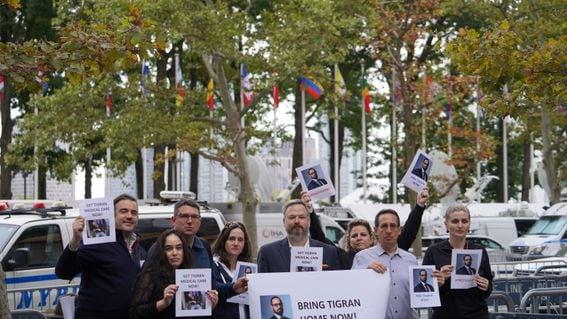
Tigran Gambaryan has been detained in Nigeria since February. A group of former government employees and compliance officials, now working in the crypto industry, rallied in front of the United Nations on Wednesday to show support for Tigran Gambaryan, Binance's head of financial crime compliance who's been detained in Nigeria since February. Gambaryan is being held as a representative of the company he works for, with prosecutors trying him on money laundering charges brought against Binance. He is being held in the Kuje Prison, which is notorious for holding terrorists and other criminals, where his health has deteriorated heavily; in a recent video, he was struggling to walk with a crutch. A spokesperson for his family said he has also suffered multiple infections, as well as a herniated disc in his back. Despite this, the U.S. government only publicly acknowledged his detention earlier this month, though Secretary of State Antony Blinken has discussed Gambaryan with Nigerian officials in May, the New York Times reported. Amanda Wick, a former federal prosecutor and government investigator who organized the protest, noted that Gambaryan used to work for the U.S. government. Prior to his role at Binance, Gambaryan was an investigator with the IRS's Criminal Investigation wing. "America has fought harder for people who committed crimes [in the countries they were detained in] than for someone who fought for his country," Wick said. Nigeria prosecuting someone to get the attention of their employer is "truly unjust," said Chris Tyrrell, the chief risk and compliance officer at Ondo Finance. Gary Weinstein, the founder of Infinity Advisory LLC and former state assistant attorney general, said all of the attendees present were in favor of consumer protections and "high-integrity" markets, including Gambaryan. He noted that Gambaryan had been invited by the Nigerian government when he visited in February and was given a "false assurance of safe passage." "One cannot do their job if one is in fear of getting snatched by a nation-state," he said. https://www.coindesk.com/policy/2024/09/25/former-government-employees-compliance-officers-rally-for-detained-binance-executive/
2024-09-25 15:29
In an interview, Michael Gronager also said it doesn't matter who wins the U.S. presidential election. Stablecoins will drive institutional adoption in Asia, Chainalysis CEO Michael Gronager said in an interview. While Asia has greater user adoption, the U.S. is still the more influential geography. Even so, the result of the U.S. presidential election in November "won't matter much." SINGAPORE — Stablecoins will drive institutional adoption in Asia, "even if regulators are not happy with it," Chainalysis co-founder and CEO Michael Gronager said in an interview at Token2049 in Singapore. Yet, while more users in the region have leaped into cryptocurrency than elsewhere, the U.S. is still the industry's most influential geography. Stablecoins, crypto tokens whose value is pegged to a real-world asset like the dollar or gold, underpin the crypto trading system. Also, because their value is fixed – or meant to be – they can be used as a store of value and a medium of exchange. "One of the things we have seen as the biggest trends in crypto right now, and probably the killer app, is something as mundane as stablecoins," he said. "Two-thirds of all transactions in transaction volume on blockchains are stablecoins." Chainalysis, a blockchain analytics company, regularly releases reports on the state of crypto and its adoption across the world. The most recent listed five Asian countries in the top 10 of the Global Adoption Index. India and Nigeria have kept the top two positions for two years in terms of grassroots crypto adoption, and Indonesia, a new No. 3, is the fastest growing. "Last year, one or two banks in Japan said they wanted to launch a U.S. dollar-backed stablecoin within a year. It hasn't happened yet," Gronager said. "I had conversations last week in Japan and now we have 10 banks wanting to launch such stablecoins. "Why hasn't it happened yet? (Because) banks are slow. They talk to the regulator." Regulators definitely have "some level of concern" and many things will need to be ironed out, he said. In the meantime, banks have to face growing competition from stablecoins when it comes to remittances, according to Gronager. While Asia appears to dominate in terms of adoption, the U.S. which ranks fourth in the Chainalysis report, is the most influential region because that's where the trading volumes come from and the crypto economy looks to institutions like the U.S. Congress and Securities and Exchange Commission (SEC) for big signals. "The real volume of crypto is tied to countries like the U.S. and others," Gronager said. "The story we are trying to tell you is more like saying crypto users per capita. So basically, how many people using [crypto] within the country. The adoption is, like, who's holding crypto for the average people in countries. In the U.S., that's less than it is, for example, in India." Despite the regulatory influence and despite crypto influencers' focus on the U.S. presidential candidates' positions on the industry, the November election isn't a big deal, Gronager said. "It won't matter much," whether Donal Trump or Kamala Harris wins, Gronager predicted. "Just getting on the other side" of this election will be healthy for everyone." Read More: India and Nigeria Lead the World in Crypto Adoption Again, but Indonesia Is Fastest Growing: Chainalysis https://www.coindesk.com/policy/2024/09/25/stablecoins-will-drive-institutional-adoption-in-asia-chainalysis-ceo/
2024-09-25 13:17
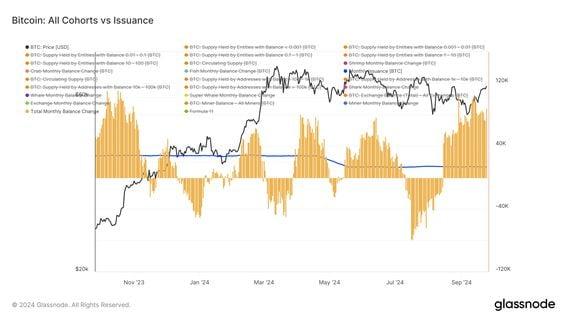
Smaller bitcoin investors and reduced liquidity signal potential for continued price growth Retail bitcoin investors, particularly "crabs" and "shrimps," have accumulated 35,000 BTC in the past 30 days, highlighting increased confidence and participation from smaller holders. With 40,000 BTC withdrawn from exchanges in the past 30 days, reduced liquidity suggests a potential supply squeeze, creating a bullish environment for future bitcoin price increases. In the past 30 days, the Bitcoin (BTC) ecosystem has seen a significant rally in accumulation, with approximately 88,000 BTC being amassed on a net basis. This strong period of accumulation, which has persisted through much of September, is notable for being about seven times the monthly bitcoin issuance of around 13,500 BTC. Such intense accumulation has not been seen since Q4 2023, a period that saw a rapid increase in bitcoin's price. A deeper analysis of this net accumulation reveals that retail investors, particularly smaller holders, are playing a significant role. Investors with less than 10 BTC, often categorized as “crabs” (owning 1 to 10 BTC) and “shrimps” (owning less than 1 BTC), have collectively accumulated 35,000 BTC in the past 30 days. This trend of retail accumulation has been ongoing since May, underscoring the growing confidence and participation of smaller investors in the market. Another factor providing a tailwind for bitcoin's price is the substantial outflow of bitcoin from exchanges. Around 40,000 BTC have left exchanges in the past 30 days, signaling reduced liquidity. When bitcoin is withdrawn from exchanges, it can indicate that holders intend to keep it off the market, reducing selling pressure and creating a bullish environment for future price increases as 74% of the circulating supply is considered illiquid. This combination of retail accumulation and exchange outflows suggests that bitcoin's current momentum could continue to strengthen in the coming months. https://www.coindesk.com/markets/2024/09/25/retail-accumulation-and-exchange-outflows-drive-market-optimism-for-bitcoin/
2024-09-25 12:25
Purchasers of the nodes could earning rewards for contributing excess internet bandwidth to the network, which aims to reduce latency while providing "censorship-resistant real-time connectivity." Sale of as much as $8 million of nodes to whitelisted buyers would begin on Nov. 6. Additional node sales after that could increase total raised to $37 million. Huddle01's "dRTC Chain" is built using the Ethereum layer-2 project Arbitrum's Orbit software stack, with a test network scheduled to launch two weeks after the node sale concludes. Huddle01, a blockchain project to provide decentralized audio and video conferencing – aiming to provide lower latency virtual meetings than Zoom and Google Meet – plans to raise as much as $37 million in a sale of network nodes. The 49,600 "media nodes" being sold offer operators a way to contribute excess internet bandwidth the communication network, in exchange for token rewards. According to a litepaper, some 21% of the project's HUDL tokens will be distributed to media nodes. Huddle01 is built using technology borrowed from the Ethereum layer-2 network Arbitrum. The first sale of up 20,000 nodes, which would cost a total of $8 million, is set to begin in early November, with a whitelist sale starting on Nov. 6 and a public sale on Nov. 8, according to a press release shared exclusively with CoinDesk. If those are sold out, subsequent nodes could be sold to reach as much as $37 million. A test network will launch two weeks after the sale completes, according to the press release. “These nodes will power a network that already outperforms the incumbent Web2 competitors on latency where there is a large cluster of nodes, and is capable of improving lags across the globe,” Huddle01 CEO Ayush Ranjan said in the release. Huddle01 becomes the latest in a growing trend of blockchain projects conducting node sales as a way to raise funds while simultaneously decentralizing their networks. Earlier this year, Aethir, a decentralized GPU cloud infrastructure provider, raised about $126 million in ether (ETH) by distributing node licenses, and since then projects including Sophon, CARV, XAI Games, Powerloom and more recently Sonic SVM have pursued the method to bring in fresh funds. Built on Arbitrum Orbit Huddle01, which previously had raised about $6 million in traditional fundraisings from investors including Hivemind, Balaji Srinivasan, Stani Kulechov, Dan Romero and Juan Benet, describes itself in the litepaper as "a fully decentralized, self-sovereign, borderless and open network that will provide the necessary framework for performant, cost-effective and censorship-resistant real-time connectivity." The project's "dRTC Chain" is a new Ethereum-compatible blockchain network built using technology from the layer-2 project Arbitrum's Orbit software stack. Purported benefits of the decentralized setup include avoidance of the "oligarchic practices" of "large corporations that exert unilateral price and supply dominance," as well as reduced costs and latency resulting from the "geographic disparity of data centers." According to the team, Huddle01 boasts a latency of 13 milliseconds in New York City, compared to Google Meet’s 141 milliseconds, and Zoom’s 20 milliseconds. One feature of the project is "token gated rooms," where only holders of specific fungible tokens or NFTs on Ethereum or Solana can join a virtual meeting space. https://www.coindesk.com/tech/2024/09/25/huddle01-blockchain-video-conferencing-project-that-seeks-to-outdo-zoom-targets-37m-node-sale/