2024-08-23 04:00
The new project, "Soneium" will be a layer-2 network atop the Ethereum blockchain, using technology from Optimism's OP Stack. Sony, the Japanese electronics giant famous for developing the Betamax and Walkman in the 1970s, is now starting its own blockchain. Sony Block Solutions Labs, a joint project between Sony Group and Singapore-based Startale Labs, said Friday it's coming out with a new layer-2 network atop the Ethereum blockchain called Soneium. The news signals that there may be a renewed interest from mainstream companies in building products for consumers with blockchain technology. Soneium, expected to go live on a test network in the next few days, will make use of optimistic rollup technology, which allows users to transact on networks on top of Ethereum for cheaper. It will be built using the Optimism blockchain ecosystem’s OP Stack, a customizable toolkit that lets developers create their own networks using Optimism’s technology, with connections to other networks in the ecosystem via the “Superchain.” Other networks that have famously chosen to use of OP Stack are the U.S. crypto exchange Coinbase’s “Base” and decentralized-identity project Worldcoin’s “World Chain.” 'Onboarding Web3 people' Startale Labs is led by CEO Sota Watanabe, who is also the director at Sony Block Solutions Labs and co-founded the Astar Network. Startale spun out from the Astar Foundation, and helped maintain the Astar zkEVM, which leverages Polygon’s Chain Development Kit (CDK,) a competitor to the OP Stack, but making use of Polygon’s zero-knowledge technology. Startale will be focusing its efforts and resources from now on only on Soneium, and moving away from Astar zkEVM, Watanabe told CoinDesk in an interview. “Astar zkEVM will be integrating its assets and underlying infrastructure with Soneium,” Sony Block Solutions Labs wrote in a press release shared with CoinDesk. The “first year is all about onboarding Web3 people, because technology-wise and the community-wise, it is a little bit early to onboard the general users,” Watanabe told CoinDesk. “And then phase two, within two years, we're going to onboard Sony products, such as, Sony Bank, Sony Music, Sony Pictures and so on. So we would like to integrate Web3 and blockchain technology into Sony's product. And in three years, we would like to onboard not only Sony, but also all enterprises and all general dapps on the top of it.” “But this is a general timeline. We're going to try to onboard enterprises as many as possible from the first year,” Watanabe added. https://www.coindesk.com/tech/2024/08/23/sony-electronics-pioneer-behind-walkman-starts-own-blockchain-soneium/

2024-08-22 20:15
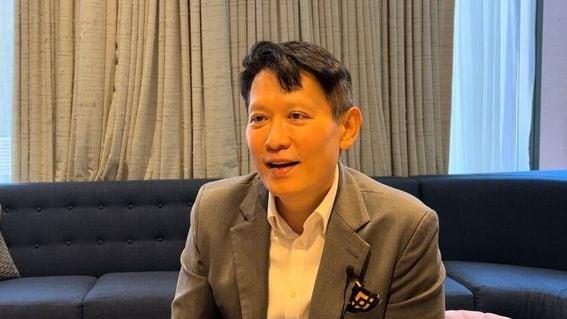
Four takeaways from CoinDesk’s interview in New York yesterday. Yesterday, CoinDesk was lucky enough to sit down with Richard Teng, the new CEO of Binance. It was a chance for us to meet with the man entrusted to run the world’s biggest crypto company at a fascinating time. Teng, a former regulator, was appointed last year as Binance reached a $4.3 billion settlement with U.S. authorities for violating sanctions and anti-money laundering regulations. He replaced CZ, Binance’s larger-than-life founder, who is currently serving a four month prison sentence in California. My colleague Cheyenne Ligon wrote up the interview yesterday (the headline was that Binance, unlike other large crypto companies, is not currently considering an IPO). Here are some other takeaways along with some personal impressions. Teng Is Not CZ CZ always gave the impression of being the man in charge, the operational and spiritual leader of Binance. Teng is a different sort of CEO. He deflected questions about technology and future plans to other managers, and Teng made a point of saying that Binance was now a more decentralized company. “Today, the organization is quite different from the one CZ led. It was a founder-led organization, CZ was running it,” Teng told us. “Right now, it’s a totally different corporate structure. It’s a board-led organization. We have three independent directors on board, we have a talented crew of very senior experienced executives for day-to-day operations at the company.” Teng was a financial regulator in his native Singapore as well as the United Arab Emirates. He was appointed CEO because he understands regulation and regulators. The challenge for Binance is to convince authorities that it can be trusted on money laundering and other sensitive issues. It’s investing heavily in compliance. Teng, who has a graceful, unflappable manner, is the man for the hour. No HQ yet CZ famously used to say that Binance was a “global company,” by which he meant not only did it operate around the world, but really was of the world, as opposed to any one country. Since Binance got into regulatory strife, that line has shifted: Binance is now looking for a home. But Teng said it hasn’t made a decision on where yet. “We have not decided on the global headquarter issue. It is very important, it is very complex. We need to be quite thoughtful in understanding the impact on the various stakeholders,” he said. Regulation and taxation consequences seemed to be top-of-mind in those deliberations. Asked why Binance now wanted an HQ, Teng said: “I think global headquarters is really to give assurance to regulators on the shape and form and the direction of travel for the company. It’s similar to a board of directors.” Running a global crypto business is… complicated U.S. crypto companies often complain about the uncertainty of doing business in the U.S, given the lack of legislation and that regulators at the SEC and the CFTC have been slow to give clear guidance to what is and isn’t permissible when it comes to digital assets. Imagine running a business around the world where there are many jurisdictions with that lack of clarity. Binance has 19 licenses around the world, with recent approvals in Thailand, India and Brazil. That’s a lot of cultural and legal complexity. Take Nigeria, for instance, where Tigran Gambaryan, an American employee of Binance, is currently detained. Nigeria claims, without evidence, that crypto was responsible for devaluing the naira and law enforcement there has accused Gambaryan of money laundering and tax evasion. According to the BBC, Nigeria has asked for $10 billion in return for his release, which, frankly, sounds a lot like a ransom demand. "Tigran has been unjustly held for close to half a year now," Teng told us. "He needs medical treatment before his conditions become permanent." No IPO planned As the current crypto cycle took shape with the ETF approvals and the Bitcoin halving in the last six months, it was rumored that several large crypto companies would look to go public. But while giants like Circle are getting ready, Binance is happy with its current ownership structure, Teng said. “We are in very strong financial shape, so there’s really no need for us to consider any fundraising or an IPO at this time. Since the fifth month of Binance’s operation [in 2017], it has been profitable, and it has been very prudent in terms of spending. So [an IPO] is not a subject that has come up.” Not coming back to the U.S. – for now We wondered if and when Binance might consider returning to the United States (it currently has no license here). Perhaps a Donald Trump victory, which many think will create a more favorable environment for crypto, might be a precipitating factor? Teng said there were no current plans. “Our business is outside of the U.S. So we watch with excitement what’s happening in the U.S., but it has no bearing on our business whatsoever.” Teng said the U.S. remains an “important market” but Binance does not appear to be rushing back, given all the problems it’s had with regulators here in the last couple of years. But luckily Teng still wants to travel here, so we and others can talk to him about Binance and crypto’s future. Note: The views expressed in this column are those of the author and do not necessarily reflect those of CoinDesk, Inc. or its owners and affiliates. https://www.coindesk.com/opinion/2024/08/22/meeting-binance-ceo-richard-teng/
2024-08-22 19:21
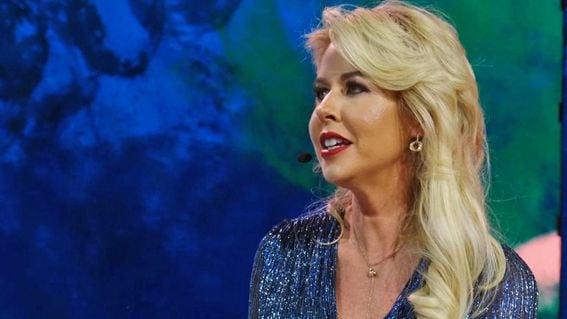
Michelle Bond was indicted on charges that she took illegal campaign contributions when the digital assets advocate and former SEC lawyer was running for Congress. A once-prominent crypto advocate, Michelle Bond, has been indicted for taking illegal money from her former FTX executive boyfriend, Ryan Salame, to back her congressional campaign in 2022. Bond, a former Securities and Exchange Commission lawyer, was the CEO of a crypto trade group in Washington. Michelle Bond, who once ran a Washington-based crypto advocacy group and had served as a U.S. Securities and Exchange Commission lawyer, was indicted in federal court for taking illegal campaign contributions during her 2022 run for Congress, and court documents detail how a river of cash came through her former FTX executive boyfriend. Bond was accused in an indictment unsealed on Thursday of several counts of illegal handling and acceptance of campaign donations, tied to former senior executive Ryan Salame. She was also said to have filed ethics documents on behalf of the campaign that made bogus claims about the source of her money. A court clerk told CoinDesk that Bond was expected to be presented before a magistrate judge in Manhattan around 3 p.m. EDT on Thursday. Salame wasn't named in the court papers, but the description matches the ex-CEO of Bahamas-based FTX Digital Markets, who received a 7.5-year sentence in a plea deal that Salame now argues was supposed to protect Bond. Salame's lawyers contend that his guilty plea for campaign finance violations and running an unlicensed money transmitting business was meant to halt the case against Bond. (A judge scheduled a hearing on this issue for next month.) Read More: Former FTX Executive Ryan Salame Claims Government Backtracked on Plea Deal: Filing The indictment against Bond in the U.S. District Court for the Southern District of New York was dated earlier this week. Bond, who has made a recent effort to return to commenting on crypto policy affairs, declined to comment through a representative. Salame didn't immediately respond to a request for comment sent through his lawyers. Salame and Bond have a child together, and the couple was often featured during Bond's failed Republican campaign for a New York seat in the U.S. House of Representatives. The two sought to associate themselves at the time within the circles of former President Donald Trump, and she was endorsed by son Donald Trump Jr. A self-funded candidate has to ensure under election rules that they are using their own money. Bond is accused of taking several payments in 2022, some of them in the hundreds of thousands of dollars. "I just wanted to say thank you so much for paying that [consulting firm] invoice…really appreciate this, means a lot," Bond texted to Salame in February 2022, according to the indictment. He's said to have responded, "If you're thanking me for that. … the expenses on you actually running … going to get me so much love <3." Her campaign raised more than $1.5 million, according to Federal Election Commission records, but the vast bulk of that allegedly came from Bond herself. The indictment argues virtually all of it originated as payments from Salame or FTX, which subsequently collapsed in one of the most consequential failures in the industry's history. After some of the allegations emerged of an improper financial connection to FTX, Bond resigned as the CEO of the Association for Digital Asset Markets (ADAM). Though she spent about the same as her Republican primary opponent and was backed by about $1.3 million in advertising paid for by the crypto industry, she managed to bring in less than 30% of the vote. https://www.coindesk.com/policy/2024/08/22/crypto-promoter-and-failed-politician-michelle-bond-accused-of-illegally-taking-ftx-cash/
2024-08-22 18:33
Worldcoin is currently collecting data of individuals with its Orb device in 25 locations of the Latin American country. The SIC's notification against Worldcoin consists of a first act of indictment that is initiated without formal accusation The accusation also includes Tools for Humanity, the company behind Worldcoin. The SIC could impose economic sanctions and apply the temporary or definitive closure of Worldcoin in Colombia. Colombia's Superintendence of Industry and Commerce (SIC) has accused the decentralized identity project Worldcoin and the company behind it, Tools for Humanity, of alleged violations of the personal data protection regime, the agency said in a statement released Tuesday. The SIC's notification against Worldcoin consists of a first act of indictment that is initiated without formal accusation. “The purpose of the proceedings is to determine whether the investigated companies have infringed the Colombian personal data protection regime in the collection of sensitive personal data in relation to the implementation of personal data processing policies and privacy notices,” the SIC detailed. According to its website, Worldcoin, a crypto startup founded by OpenAI's Sam Altman, is currently collecting data of individuals with its Orb device in 25 locations in Colombia, including the capital, Bogota, and six other cities, such as Medellin, Cartagena, and Barranquilla. If Worldcoin were found guilty, the SIC could impose economic sanctions to temporary suspension (for six months) or immediate and definitive closure of its operation, the agency said. Different governments in Latin America have already started investigating Worldcoin's initiatives. In August, just two months after Worldcoin began operating in Ecuador, the country's central bank issued a reminder that “crypto assets are not a currency.” In August 2023, the Argentine Agency for Access to Public Information (AAIP) initiated an inquiry targeting Worldcoin to ascertain the legality of its data collection practices. Worldcoin did not immediately respond to CoinDesk's request for comment. https://www.coindesk.com/policy/2024/08/22/colombias-regulator-notifies-worldcoin-of-alleged-data-violation/

2024-08-22 13:34
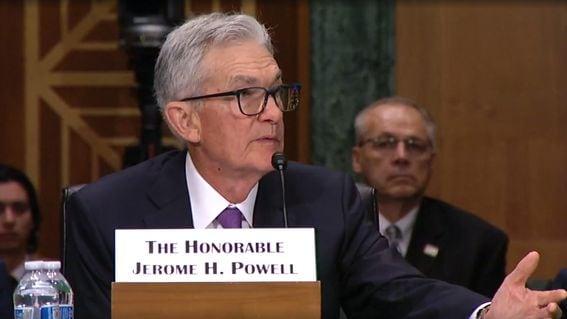
Bitcoin remains nearly 20% below its all-time high, while U.S. stocks and gold are at or within close shouting distance of record levels. Jerome Powell is seen prepping markets for a 25 basis point rate cut at the Fed's September meeting The Fed chair is also anticipated to signal a cautious approach to cutting rates further Traditional markets have been in rally mode, but bitcoin continues to struggle More than two and one-half years after starting what became an historic monetary tightening cycle, U.S. Federal Reserve Chairman Jerome Powell is widely anticipated to signal that the central bank will imminently begin to ease policy. Powell's keynote speech at the Kansas City Fed's Jackson Hole Economic Symposium is scheduled for Friday at 10 am ET and past Fed chairs – including Powell – have often used this forum to tip off important shifts in central bank policy. As often occurs, markets have been way ahead of the Fed, with traders weeks ago having priced in a 100% chance of at least a 25 basis point rate cut at the bank's September meeting. Yesterday's release of the FOMC minutes from the Fed's July policy meeting also likely took away some of tomorrow's thunder, saying the "vast majority" of participants saw a September rate cut as likely appropriate. Beyond tipping the September cut, most anticipate Powell to flag a cautious approach to easing policy, i.e. signaling that the Fed will trim just 25 basis points at its September meeting and advising markets not to expect an unbroken series of rate cuts at future meetings. Traditional markets on the rise as bitcoin languishes Despite a sizable stumble from mid-July into early August, U.S. stock markets have mostly been in bull mode in the lead up to the coming easing cycle. The S&P 500 is only about 1% below its record high hit in early July and the Nasdaq a bit more than 4% below its peak. Gold has been on a run as well, touching a record high of $2,566 earlier this week. Bond markets are in a good mood too, with the 10-year U.S. Treasury yield yesterday dropping to a multi-year low of 3.77%. Bitcoin (BTC), however, has been unable to get out of its own way. Though recovering nicely from the early August panic that briefly took prices below $50,000, bitcoin at its current $60,800 is far below an all-time high of around $73,500 touched all the way back in March. The world's largest crypto has seemingly been ignoring other positive catalysts as well, including growing institutional interest and continued inflows into the spot ETFs. Bitcoin this week also got potential good news on the regulatory front with ABC News reporting that crypto-friendly Robert Kennedy Jr. could drop out of the presidential race on Friday and endorse crypto-friendly GOP candidate Donald Trump. On the Democratic side, a top Kamala Harris campaign official suggested a Harris administration would be far friendlier to the crypto industry than the Biden regime. https://www.coindesk.com/markets/2024/08/22/fed-chair-jerome-powell-expected-to-set-stage-for-september-rate-cut/
2024-08-22 13:07
The memecoin generator launched in mid-August and has crossed $1 million in revenues in its first nine days - a large amount considering Tron’s low fees. SunPump has generated over $1 million in under two weeks by enabling users to create and trade meme coins easily. It has seen significant activity with over 7,300 tokens created in 24 hours, earning substantial revenue. Early investors in meme coins like SUNWUKONG and SUNDOG have seen massive returns, with one trader turning $1,000 into $400,000. The virality has led to record revenues for the underlying Tron network, which crossed $3.48 million in two days and positively influenced the price of TRX and related assets. Merchants made fortunes by selling shovels during the gold rush, and the crypto market is seeing glimpses of that behavior in current times. Newly-released SunPump.meme, a meme coin generator on the Tron network backed by Tron creator Justin Sun, has raked in over $1 million revenue in a little under two weeks. The application lets users easily issue meme coins and trade them as they would on a crypto exchange. The product banks on the ongoing meme coin craze among crypto traders, one that is mainly focused within the Solana ecosystem. SunPump is similar in concept to Solana’s runaway hit application Pump.Fun. Both allow users to select a picture, choose the number of tokens, a theme, and issue new tokens for a few dollars in capital. These tokens are automatically listed on decentralized exchanges once they reach a market value of $60,000 on Pump and $69,420 (a reference to memes) on SunPump. SunPump is quickly gaining a following. Data tracked by Dune Analytics shows over 7,300 tokens were created on SunPump in the past 24 hours, generating $585,000 revenue. On the other hand, Pump recorded 6,700 new token issuances, generating $366,000 in revenue in that timeframe. Several meme coins launched on SunPump have created big paper profits for early buyers. One address “TDm2” tracked by on-chain analytics tool Arkham shows its owner turned an initial $1,000 purchase into $400,000 on SUNWUKONG, a reference to the newly-release Chinese video game Black Myth: Wukong. Another trader turned $1,690 of SUNDOG into more than $20 million million in six days. They hold $19.5 million of SUNDOG across seven addresses and have already sent $1 million to exchanges, Arkham noted. The platform’s popularity is driven, in part, by Sun’s bullish posts about the future of SunPump. “It's just the beginning,” he said in a Thursday X post. “We are doing our best to serve all the meme developers and users in the industry.” “It's still early. Just do the math,” Sun said on Wednesday. “How big of a market can be created with over $60 billion in liquidity? The total market cap of TRON meme is still less than $200 million USD. TO THE SUN.” On Thursday, SunPump's transaction fees were reduced to a flat fee of 0.76 TRX—worth 1 cent—from an earlier fee of 1% per transaction to encourage more usage. As such, SunPump’s popularity has boosted the fortunes of its underlying network and TRX tokens. Data tracked by DefiLlama shows Tron made a lifetime record $3.48 million in revenue in the past two days each. This was the first time the network made more than $2 million in a single day since it was first launched in May 2018. TRX prices, meanwhile, have jumped more than 20% in the past week, beating bitcoin and major token gains tracked by the liquid CoinDesk 20 (CD20) index, which are just over 4%. Other Tron-based assets closely related to founder Justin Sun, such as BTT, SUN and JST have rocketed higher as well, rising as much as 15% over the past week, CoinGecko data shows. Such gains are just beginning. Sun said Thursday that the “meme strategy” could bring the Tron blockchain revenue to over $4 billion in the next 12 months, which could mean at least $2 billion given as rewards to stakers and for transaction subsidies – boosting the fundamentals for TRX tokens. https://www.coindesk.com/markets/2024/08/22/memecoin-frenzy-reaches-tron-as-justin-sun-backed-sunpump-rakes-in-big-bucks/