2024-08-21 20:26
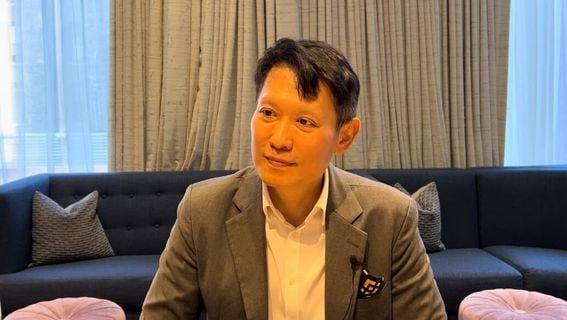
Tigran Gambaryan, a U.S. citizen who works for Binance, has been held in Nigeria since February. Binance CEO Richard Teng urged Nigeria to release detained American executive Tigran Gambaryan. "He needs medical treatment before his conditions become permanent," Teng said during an interview. "Our priority is really to get him home safely." NEW YORK — Binance CEO Richard Teng urged the Nigerian government to release Tigran Gambaryan, an American employee of the world's largest crypto exchange who has been detained in Nigeria since February. "Tigran has been unjustly held for close to half a year now," Teng told CoinDesk during a Wednesday interview in New York. "He needs medical treatment before his conditions become permanent." Gambaryan, Binance's head of financial crime compliance, was detained in Abuja six months ago, shortly after voluntarily traveling to Nigeria's capital city at the government's invitation. At first, Gambaryan and another executive, British-Kenyan national Nadeem Anjarwalla, were held under house arrest without explanation. But after Anjarwalla, Binance's regional manager for Africa, escaped custody, Gambaryan was moved to the notorious Kuje prison and charged with money laundering and tax evasion. The BBC reported in March that the Nigerian government requested nearly $10 billion from Binance to secure his release. Nigerian officials have also accused Binance, without evidence, of tanking the value of the naira. The tax evasion charges against Gambaryan were later dropped, but he is currently being prosecuted for money laundering in a trial that began in June. He has pleaded not guilty to all charges. Since his arrest, Gambaryan's health has rapidly deteriorated. He is believed to have contracted malaria, which, without receiving proper medical treatment, has led to subsequent infections including double pneumonia and a tonsil infection. According to a spokesperson for his family, Gambaryan has also developed complications from a herniated disc in his back, which has left him in excruciating pain and unable to walk. He has appeared in court in a wheelchair and has collapsed at least once. Reports from Gambaryan's family suggest he has not only been denied adequate medical treatment, but also that Kuje prison authorities refuse to release his medical records despite court orders to do so. Gambaryan has also reportedly been denied sufficient access to his lawyers. "Our priority is really to get him home safely to his family and to his friends," Teng said. Teng stressed that Binance has been committed to resolving its issues with regulators around the world, most recently in India and Brazil. "We have been working collaboratively with global regulators around the world to resolve issues," Teng said. "We would look forward to collaborating with the Nigerian government. They don't need to hold Tigran." Gambaryan's unjust detention has attracted the attention of many in the crypto industry, as well as former federal prosecutors and current members of Congress who have called on U.S. President Joe Biden, Secretary of State Antony Blinken and Presidential Envoy for Hostage Affairs Roger D. Carstens to treat Gambaryan's case as a hostage situation and bring him back to the U.S. The U.S. government has made no public statement on Gambaryan's situation. Kevin Reynolds, Ben Schiller, Margaux Nijkerk, Jennifer Sanasie and Mel Montanez contributed reporting. https://www.coindesk.com/policy/2024/08/21/get-him-home-binance-ceo-urges-nigerian-government-to-free-detained-exec/
2024-08-21 20:01
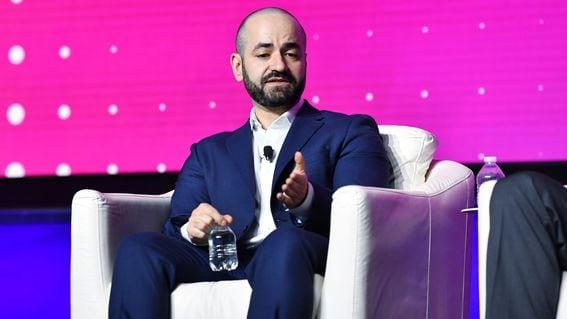
Richard Teng, who replaced founder Changpeng "CZ" Zhao in November, is playing the long game. Binance's Richard Teng, who replaced founder Changpeng "CZ" Zhao as CEO, said in an interview that the crypto exchange is in strong financial shape, so it isn't considering an IPO. CZ, who is currently serving a four-month prison sentence, is no longer involved with running the company, Teng said, though CZ's partner, Ye Hi, is. Teng noted the need to atone. "We acknowledge our past mistakes. We have paid a heavy penalty on that front." NEW YORK — Richard Teng ascended to the top of cryptocurrency behemoth Binance last year via less-than-ideal circumstances as his predecessor, Changpeng "CZ" Zhao, was forced to quit the exchange as part of a multi-billion-dollar settlement with the U.S. government. But on the plus side, he inherited a CEO job at a profitable cornerstone of the crypto industry – albeit one he aims to grow and mature. In the nine months since he's taken the helm, Teng – a former regulator in both his native Singapore and the United Arab Emirates – has focused on transforming Binance from a founder-led organization, as it was during CZ's tenure as CEO, to one steered by a board of directors. And, while the company kept mum on where exactly it was headquartered – at least once vaguely insisting that it's an "international company," and always denying that it was a Chinese company – Teng is on the hunt for a place for Binance to permanently call home. The enormous surge in crypto prices since Binance rival FTX's collapse in late 2022, coupled with traditional financial institutions' embrace of (or incursion into, depending on one's perspective) the space and hopes that U.S. regulators might soften their stance on crypto, has led to speculation about a looming wave of initial public offerings. But, in a wide-ranging interview with CoinDesk journalists in New York on Wednesday, Teng said his seven-year-old company isn't considering one. "We are in very strong financial shape, so there's really no need for us to consider any fundraising or an IPO at this time," Teng said. "Since the fifth month of Binance's operation, it has been profitable, and it has been very prudent in terms of spending. So [an IPO] is not a subject that has come up." The exchange's efforts to become more transparent – including spending 36% more on compliance efforts last year versus 2022 and its ongoing search for a place to put down roots – are, Teng says, about having better relationships with global regulators and, thus, steering the company in more future-proofed direction. "It's really about building a sustainable enterprise that will not only succeed over the next few years, but continue to prosper for the next 50 to 100 years," Teng said. "That's certainly our aspiration." CZ's involvement Teng was appointed CEO by CZ, who stepped down as Binance CEO as part of the company's $4.3 billion settlement with U.S. regulators for violating sanctions and anti-money laundering (AML) laws. CZ also pleaded guilty to failing to maintain an appropriate AML and know-your-customer (KYC) regime and was sentenced to four months in federal prison in June. But CZ, who had been the very public face of Binance, is no longer part of the company's day-to-day operations or decision-making. (He began a four-month prison sentence in June.) "As part of the U.S. resolution, CZ is not able to be involved in the operations of the company," Teng said. "I don't speak to him." However, Teng said that Binance co-founder Yi He – CZ's partner and the mother of his three youngest children – is still a "critical part" of the crypto exchange's management team. "Yi is involved in various aspects of the business," Teng said, adding that she oversees Binance's human resources department and likes to joke that she is the exchange's chief customer service officer. "She's a highly talented, highly independent-minded person." Global ambitions When asked whether Binance had considered raising money to potentially dilute CZ's ownership of the company, Teng demurred, saying that such questions were for the exchange's shareholders and board of directors to decide. But Teng said that CZ's status as a felon has presented less of a challenge to getting regulated than outside observers might think. "We do work closely with global regulators. In many places around the world, it's not a problem. There could be areas where it may be a challenge, but we have already resolved some of those issues," Teng said, referring to the licenses the company has recently received and settlements it has made in countries like Dubai, India, Thailand and Brazil. Teng stressed the importance of Binance clearing the slate with global regulators, atoning for its past missteps and moving forward with its business in a more transparent, regulated manner. "We acknowledge our past mistakes. We have paid a heavy penalty on that front," Teng said. "Going forward, we are looking at how we continue to build a sustainable, robust platform working with global regulators." No interest in the U.S. One country Binance is not currently interested in expanding into is the U.S., which levied that massive penalty on the exchange late last year. "At this point in time, what we're really focusing on is markets outside of the U.S.," Teng said. And while many in the crypto industry are eagerly anticipating the outcome of the upcoming U.S. presidential election, hopeful that a Donald Trump victory could pave the way for a clearer – and friendlier – regulatory regime for crypto, Teng said the election results mean little to Binance either way. "Our business is outside of the U.S.," Teng said. "So we watch with excitement what's happening in the U.S., but it has no bearing on our business whatsoever." Kevin Reynolds, Ben Schiller, Margaux Nijkerk, Jennifer Sanasie and Mel Montanez contributed reporting to this story. https://www.coindesk.com/policy/2024/08/21/new-binance-ceo-sees-no-need-for-ipo-as-he-plots-100-year-strategy-for-crypto-exchange/
2024-08-21 19:29
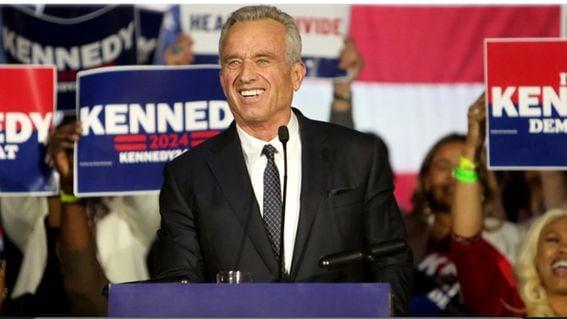
The independent candidate has scheduled a national address for Friday. Robert Kennedy Jr. is planning to drop out of the 2024 presidential race by the end of this week, reported ABC News on Wednesday. The story goes further, saying sources indicate Kennedy is leaning toward endorsing GOP presidential candidate Donald Trump, though those same sources said that decision hasn't yet been made final. The Kennedy exit and Trump endorsement rumors began in earnest yesterday after his vice presidential pick Nicole Shanahan floated the idea in a podcast appearance. Shortly after, Kennedy tweeted, "I am willing to talk with leaders of any political party to further the goals I have served for 40 years in my career." Current Polymarket odds show a 99% chance Kennedy drops out of the race and the chance of a Harris victory has dipped to 46% from about 54% one week ago. The price of bitcoin appears to have reacted to the news, rising to $61,000, 3% higher over the past 24 hours. Kennedy has scheduled a national address Friday from Phoenix at 2 pm ET. https://www.coindesk.com/markets/2024/08/21/rfk-jr-reportedly-dropping-out-of-presidential-race-mulling-trump-endorsement-bitcoin-jumps-past-61k/
2024-08-21 18:56
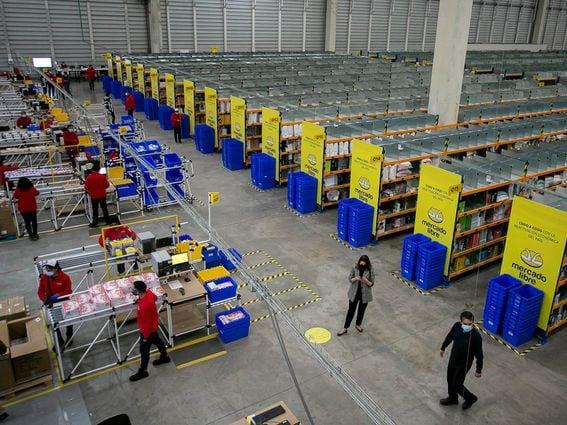
Customers of Mercado Libre digital bank subsidiary Mercado Pago will be able to buy and sell Meli Dollar with their Brazilian reais balances. Mercado Pago, the digital bank unit of Latin America's largest company, Mercado Libre (MELI), said on Wednesday that it is introducing a stablecoin in Brazil tied to the U.S. dollar. The company said Mercado Pago's users in Brazil will be able to buy and sell the Meli Dollar stablecoin using account balances in Brazilian reais without incurring any fees. The product, said the firm, "aims to provide a practical and stable option for financial management." In August 2022, Mercado Libre launched its cryptocurrency, Mercado Coin, to allow users to make purchases on the marketplace and receive cash back. Prior to that, Mercado Libre integrated Paxos' blockchain infrastructure with Mercado Pago to enable users in Brazil to buy, sell, and hold bitcoin, ether, and Paxos' stablecoin, Pax dollar (USDP). . Ripio, a Latin American crypto company, will serve as the market maker for transactions made on Mercado Pago, the company said. Ripio, which operates a trading platform and a wallet in the region, among other services, had worked with Mercado Pago to develop Mercado Coin. The move by Mercado Libre comes about one year after U.S.-based PayPal (PYPL) brought to market its dollar-based stablecoin, PYUSD, which in recent days has closed in on a $1 billion market cap. https://www.coindesk.com/business/2024/08/21/latin-american-e-commerce-giant-mercado-libre-launches-us-dollar-tied-stablecoin/
2024-08-21 16:00
Behind PKT are Hollywood talent who say they're sick of the black box that is the industry's film production process. PKT is a decentralized media network on Base co-founded by the producer of the blockbuster Oblivion. PKT aims to be a decentralized version of Roku or Apple TV. PKT, a decentralized media network built by three brothers frustrated with Hollywood’s film business, is becoming one of the first DePIN projects to launch on Base, Coinbase’s layer-2 blockchain built on Ethereum. Jesse Berger, one of PKT's founding community members and the producer of Hollywood blockbuster Oblivion and other million-dollar movie productions, said he had been looking for a way to bring more transparency to movie production. Although many of his movies were wildly successful and watched by millions of people worldwide, he had no transparency into the revenue flow and how much money he was owed as a producer, he told CoinDesk in an interview. That’s when he realized blockchain could be the solution. “I became enamored with blockchain on the basis of an immutable ledger so that you could see every transaction transparently and the idea of smart contracts to do programmatic money,” he said. The network, which aims to be a decentralized version of Roku or Apple TV, started in 2019 on its own proof-of-work, layer-1 blockchain. Its first streaming platform, BIA, a hub for TV and films, will enter operation later this year. “I think that the missing piece of anybody who's tried to attack the film industry to solve that problem has always been the aligned incentives of the audience, where they're part of this picture, and it's not just pay us over them,” said Josh Berger, another founding community member. Jesse Berger also said it's important for PKT to be accessible to the average retail consumer who knows little – and doesn't care to know – about crypto. Terms that can be useful to evangelize the project to stakeholders in the crypto industry, will make eyes glaze over elsewhere. “If we’re talking about the word 'DePIN' to a general population, I think we’ve lost to the game," he said. "That terminology is really relevant within the understanding of the crypto sphere and how we have to communicate with the crypto folks, but in reality if we're gonna win as a platform, we can't talk about any of that. That's not really gong to be relevant to the average consumer. If you’re talking about how it works, you’ve lost your audience.” One thing that PKT's crypto stakeholders will care about is the decision to use Base because PKT will be one of the first DePIN projects on the platform. The move has several reasons, including the introduction of a stake-to-earn protocol that allows users to earn daily and long-term staking rewards and yields. “We’ve always been focused on making this very user-friendly and adoptable and we wanted to be kind of a big fish in a small pond over at Base, and I really believe in Coinbase’s mission in what they’re trying to accomplish as a platform and lowering the barrier to entry to participate,” Jesse Berger said. Collectively, DePIN has a market cap of $18.3 billion, according to CoinGecko data, with around $5.5 billion of that on Solana. Base has less than $5 million. Another advantage of using Base, the team said in a release, is the technology upgrade that introduces smart contracts and Web3 features. Those simplify scaling and eliminate the need for maintaining an energy-intensive proof-of-work blockchain. PKT will distribute a 1:1 airdrop of its tokens on Base in three phases: During Wednesday's launch, Feb. 21, 2025 and Aug. 21, 2025. https://www.coindesk.com/tech/2024/08/21/depin-media-network-ptk-starts-up-on-coinbases-base/

2024-08-21 14:40
Eigen Labs helped its employees access lucrative airdrops. Its U.S. employees appear to have helped themselves to tokens U.S. residents were banned from claiming. Out of an abundance of legal caution, many cryptocurrency projects exclude U.S. residents from token airdrops. U.S. crypto users – even insiders at similarly cautious projects - regularly find ways to claim tokens anyway. This "hypocritical" behavior may undermine the effort by some in the industry to avoid U.S. jurisdiction, lawyers said. The U.S. presents a paradox to some cryptocurrency startups. They can't afford to ignore the tech-savvy American workforce. They also can't let their brand-new crypto tokens run afoul of the world's toughest financial regulatory regime. EigenLayer, one of Ethereum's hottest projects, embraced a solution common in crypto: it employed U.S. developers through a U.S. company. Meanwhile, a separate legal entity issued its EIGEN token from an island where U.S. securities and tax laws don't apply. Two projects in EigenLayer's realm, Renzo and Ether.Fi, went even further: they explicitly barred U.S. residents from claiming tokens in their respective airdrops. Apparently, It didn't work. Wallets with links to at least 10 U.S. employees of Eigen Labs – engineers, directors, a c-suite executive, the chief lawyer – claimed hundreds of thousands of dollars-worth of free money from Renzo and Ether.Fi, according to a CoinDesk analysis of blockchain data. CoinDesk generally does not report on individuals' personal finances. But many Eigen Labs employees chose to claim their crypto "out in public," according to a blog post that detailed the company's discontinued efforts to help EigenLayer ecosystem projects airdrop tokens to Eigen Labs staff. Furthermore, their on-chain activity suggests an attitude of selective compliance that crypto insiders said pervades the industry. "It's hypocrisy," said one U.S.-based founder of multiple crypto startups. "But it's driven by risk alignment – you're minimally at risk when receiving an airdrop. If it's you in the hot seat, different story." An open secret Few crypto teams believe the tokens associated with their inventions should be classified as securities. Still, fear of U.S regulators prompts most to distribute their brand-new (and often valuable) crypto-assets under terms that theoretically block out Americans. The theory may be closer to a farce. Over a dozen U.S.-based industry insiders who spoke on condition of anonymity said they have found ways to sidestep other projects’ safeguards in order to collect off-limits airdrops. Ignoring, bypassing, and flouting geoblocks is widespread in the American crypto scene, they said. One U.S.-based industry lawyer privately said he had previously claimed tokens from projects that had tried to protect their airdrops with geofencing. Messy compliance practices are "an unfortunate but predictable result of the lack of regulatory clarity the industry has been dealing with for years," this lawyer said. Risk-reward Given the U.S Securities and Exchange Commission’ years-long crackdown on the industry, most teams minting their own money would rather not draw attention to their airdrops. Projects try to avoid releasing their tokens into regulatory hazards. They bar U.S. claimants with restrictive terms-of-service agreements. They set up geofences that catch web traffic coming from the U.S. Seldom do projects conduct stringent know-your-customer (KYC) identity checks when distributing new tokens, as banks and other financial institutions are required to do when opening accounts. Perhaps unsurprisingly, the weaker safeguards don't work too well. Geofences "cover your ass," said one U.S. executive at a startup that issued tokens in a restricted airdrop via an off-shore entity – and who privately acknowledged using VPNs to claim off-limits airdrops from other projects. Terms of service agreements are an even weaker deterrent. EigenLayer's airdrop barred people who tried to claim EIGEN from within "prohibited jurisdictions" such as the U.S. and Canada, as well as anyone using a VPN. Sundel, a pseudonymous EigenLayer user who claimed his EIGEN tokens in Canada, called EigenLayer's geoblock a "silly" protection against the SEC's "overreach." Undeterred by EigenLayer's legalese, Sundel said he got his tokens with the help of a VPN and some web code configurations. One former employee of a well-known crypto company said the jurisdiction-avoidance tactics were "just posturing" for potential regulatory investigations. A European crypto consultant claimed companies deliberately set weak restrictions. "Banning U.S. users is always purely a legal protection. But you want and need U.S. users. You want U.S users to have the easiest possible way of getting" airdrops, the consultant said. U.S. crypto employees' own admission to CoinDesk that they commonly flout geoblocks may be indicative of what multiple people called a "wink, wink, nod, nod" attitude. "If you know that people are knowingly violating the terms and conditions and you know that people are lying about not being in the U.S., that's not going to help" if the regulators ever come knocking, said attorney Dan McAvoy, a co-chair of the Blockchain+ practice for Polsinelli PC. Offshore tokens EigenLayer's developer, Eigen Labs, is headquartered in Seattle, a city suffused with software developers. Eigen Foundation, the entity that ran EigenLayer's airdrop, is setting up office space in the Cayman Islands, whose friendly laws attract many crypto companies. Right down the hall (literally) from the foundation's future digs is Ether.Fi, one of the biggest restaking projects on EigenLayer. Its CEO, Canadian expat Mike Silagadze, moved to the Caymans to start Ether.Fi after his home country's regulations pushed him out, according to Canadian tech news site Betakit. When Ether.Fi launched its new crypto in March, it allocated lucrative chunks of ETHFI token to each employee of Eigen Labs. The project had previously asked Eigen Labs for a list of its employees' crypto wallets, Silagadze said. "We just got a list of 50 addresses, there [were] no names attached to them so we didn't know who it was going to," Silagadze said. (Eigen Labs confirmed it sent a list of all employees' wallets to projects interested in airdropping them tokens). In a follow-up interview he stated: "We block U.S. persons via geofencing, blocking VPNs and terms of service." Bullish, the parent company of CoinDesk, is an investor in Ether.Fi. Another EigenLayer ecosystem restaking project, Renzo, in April issued its token via offshore entities, and also geoblocked U.S. web traffic. "Our Terms of Service clearly state that US persons are not permitted to claim tokens," said Kratik Lodha, a representative for the token's issuer, the RestakeX Foundation. Dozens of wallets tied to Eigen Labs employees claimed valuable airdrops from Ether.Fi and Renzo, according to blockchain data. "Token airdrops claimed by Eigen Labs employees are subject to the same rigorous restrictions and verification processes as any other participant," Lodha said. Onshore treasure Despite Renzo's and Ether.Fi's stated efforts to ban claims by U.S. residents, their airdrops to employees of Eigen Labs may complicate matters: Most of the company's staff appears to live in the U.S. Well over half of Eigen Labs' workforce during the airdrop period currently live in U.S. cities such as Austin, San Francisco and Seattle, according to a review of their LinkedIn profiles. To understand if U.S. residents claimed off-limits airdrops, CoinDesk examined transaction records on the Ethereum blockchain. We compiled a list of all Eigen Labs employees. Then, we searched for crypto wallets with Ethereum Name Service (ENS) nicknames that resembled their names. We narrowed the list down to wallets that claimed at least one of the airdrops. Our final list of nearly a dozen wallets includes only those with apparent links to Eigen Labs staff members who claim to live in the U.S. CoinDesk has opted not to publicize individual employees' names. We are including just enough details so readers who want to can replicate our findings. None of the employees alluded to in this story responded to requests for comment. A wallet tied to Eigen Labs' general counsel is a notable apparent claimant of the Ether.Fi airdrop. In January 2022, the company's future chief lawyer tweeted an ENS nickname. Eleven months later, the wallet that controlled this nickname transferred the ENS to another wallet. On May 27 of this year, the second wallet claimed 10,490.9 ETHFI (then worth $52,000) from Ether.Fi. (The 2022 tweet with the ENS nickname was deleted hours after CoinDesk asked the general counsel for comment. We archived the tweet beforehand.) Eigen Labs' director of developer relations once disclosed his ENS on social media. A wallet bearing that ENS name claimed 10,490.9 ETHFI (then worth $33,000) on March 18 and claimed 66,667 REZ (then worth $12,000) on May 3. On April 12, a wallet whose ENS matches the name of Eigen Labs' chief operating officer claimed 10,490.9 ETHFI (then worth over $53,000) from Ether.Fi. Other wallets tied to Eigen Foundation's chief strategy officer, Eigen Labs' director of protocol development and a number of engineers collected hundreds of thousands of dollars worth of tokens combined from Ether.fi and Renzo. All of them are U.S. residents according to their respective LinkedIn profiles. Legal review How the Ether.Fi and Renzo allocations may intersect with U.S. securities law remains hypothetical. No regulator has accused the projects, Eigen Labs or its employees of wrongdoing. "All the lawyers have been advising everyone to follow securities laws, even the projects that are saying it's not a security" when issuing tokens, said an industry source who follows compliance trends. Renzo’s RestakeX Foundation said it sought to prevent claims by U.S. persons in order to remain "in full compliance with U.S. securities laws, including Regulation S." Regulation S allows issuers to sell securities without registration provided the buyers are not U.S. people. It may be harder for projects to claim securities exemptions if they knew their airdrops were going to employees of a U.S. company, said two industry lawyers who spoke on condition of anonymity. Generally speaking, crypto insiders' self-described disregard for geoblocks could complicate their protocols' attempts to avoid U.S. jurisdiction, a third lawyer said. Quick buck That Eigen Labs would help its U.S. employees gain access to restricted airdrops comes with more than a pinch of irony. EigenLayer made it difficult for the populations of entire countries to claim its airdrop, even after the protocol readily accepted their deposits. Eigen Labs did not return multiple requests for comment. "Working for a company that geoblocks U.S. persons from receiving airdrops while receiving airdrops from other companies certainly calls into question the strength of the belief in the purpose of geoblocking in the first place," one industry lawyer said. In the wake of the airdrops, Eigen Labs said it imposed "standardized blackout periods after airdrops," in other words a ban on employees selling their claimed assets for a certain time. Eigen Labs did not say when this policy came into effect. The wallet tied to Eigen Labs' general counsel claimed its Ether.Fi airdrop on May 27 at 9:46 P.M. Seattle time, according to public blockchain data. Eighteen minutes later, this wallet had already sold more than half its ETHFI for at least $21,000 in profit. Sam Kessler contributed reporting. https://www.coindesk.com/policy/2024/08/21/crypto-airdrops-ban-us-users-but-americans-are-claiming-tokens-anyway/