2024-08-13 06:47
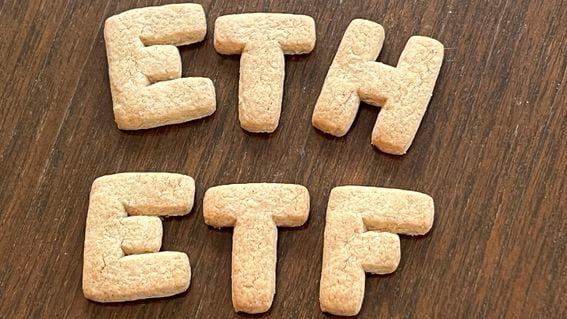
Many of the largest decentralized exchanges (DEX) tokens posted gains on Tuesday. Ether pulled ahead of bitcoin and the CD20 during the Tuesday trading day in Asia as ETH ETFs reversed their outflow trends. Many DEX tokens were also up as some of the largest protocols showed positive trends in fee generation. Ether (ETH) is up 4%, beating the CoinDesk 20 (CD20) index as inflow into the Ethereum exchange-traded funds (ETFs) picks up and the many of the largest decentralized exchanges (DEXs) show signs of growth. Data from SoSoValue shows that daily net inflow into the U.S.-listed spot ether ETFs his $4.93 million Monday, with Grayscale's two funds posting no flows, while Fidelity's FETH hit $3.98 million in inflow, Franklin Templeton's EZET posting $1 million in inflow, and Bitwise's ETHW clocking $2.86 million in positive flow. VanEck's ETHV was the only one that posted outflow at $2.92 million. Meanwhile, bitcoin ETFs posted a collective daily inflow of $27.87 million. Of the lot, Grayscale's GBTC had an outflow of $11.7 million, while Bitwise's BITB had an outflow of $17 million. CoinDesk data shows that bitcoin (BTC) was trading above $59,200 during the East Asia business day, up 1.25%. Many of the largest DEX tokens are up, helping ETH outperform BTC during Tuesday trading day. Market data shows that Uniswap's UNI is up 3.8%, DYDX is up 5.5% and Gnosis's GNO is 5.3%. Data from DeFi Llama shows that Ethereum fees hit $40.46 million for the first half of August, while Uniswap fees hit $23.64 million for the same period, putting it on track to beat July's $47.4 million in fees, and possibly challenge June's $54 million in total fees. Rounding out the trading day, one of the largest gains in tokens is Canto, up 41% according to CoinGecko data. The blockchain remains stuck, with data from block explorer Cantoscan showing that the last transaction was processed 16 hours ago. A fix was promised by the team for Monday, CoinDesk previously reported, but doesn't appear to have been implemented. https://www.coindesk.com/markets/2024/08/13/ether-beats-cd20-as-eth-etfs-post-positive-inflows-dex-tokens-rise/
2024-08-13 02:58
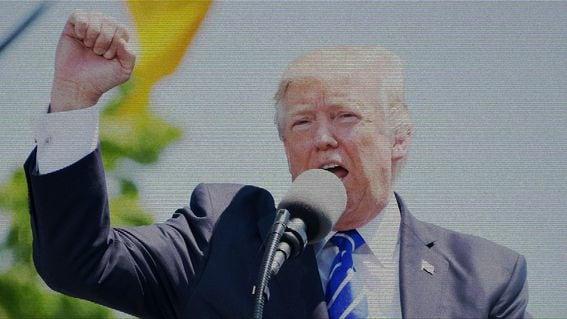
Bettors at one point gave an over 60 percent chance of Trump mentioning digital assets during the interview An interview between Elon Musk and Republican presidential candidate Donald Trump attracted over 1 million listeners on X. Crypto was not mentioned during the two-hour long event. Former President Donald Trump did not mention bitcoin (BTC) or crypto during an interview with X CEO Elon Musk on Monday evening. Over two hours, the wide-ranging interview covered a variety of topics including illegal immigration, the economy, AI and global warming. The interview attracted over 1 million listeners and was delayed for over 45 mins, due to what Musk called a "massive [distributed denial of service] attack on X". “As this massive attack illustrates, there’s a lot of opposition to people just hearing what President Trump has to say,” Musk said of the alleged attack. A report from The Verge called this into question, however, with a source telling the publication that this wasn't the case, saying there was a "99 percent chance Musk was lying" about the attack. An alert from cybersecurity watchdog organization Netblocks said X Spaces was experiencing international outages but did not confirm if it was a DDOS attack. Read More: Crypto Insiders Courting Vice President Harris Chase Whispers of Her Openness On Polymarket, bettors were giving a 65 percent chance of "crypto" being mentioned during the interview, with over $600,000 staked on the topic. The prediction market also added another market to ask bettors about the possibility of "bitcoin" being mentioned, which peaked at 69% with approximately $330,000 on the table. Each share pays out $1 in USDC, a stablecoin, or cryptocurrency that trades at par with the U.S. dollar, if the prediction comes true, and zero if not. Polymarket did not list out markets for mentions of other digital assets such as ether, solana, or dogecoin. Bettors had punted over $250,000 on Trump mentioning "Tesla," which peaked at 79%, however Trump dodged the specific word by referring to the electric vehicle brand from Musk as "your cars." Other words that bettors had punted on, which Trump ended up saying on X space, included "MAGA," "illegal immigrant," and "tampon." One user by the name of 'bama1234' walked away with just over $1 million for betting correctly on most of the words Trump did or did not say during the interview. Of all the words, their largest stake was in Trump not saying "crypto", which led him to cash out $336,918. The user did not correctly bet on Trump saying "MAGA" during the interview, which Trump said early on, or "Trans," which the user thought Trump would say, but the Republican candidate did not in the end. While crypto has become an election issue, with Trump appearing at recent BTC 2024 conference in Nashville to announce crypto policy, it continues to go unmentioned during mainstream events such as the first presidential debate in June. https://www.coindesk.com/policy/2024/08/13/bitcoin-and-crypto-go-unmentioned-during-trump-musk-x-space/
2024-08-12 19:24
The SEC alleges that the scheme raised money from over 200,000 investors worldwide, many of them Haitian-Americans, following a similar suit filed in June by the New York Attorney General. The U.S. SEC has filed a lawsuit against a crypto pyramid scheme and its operators. The regulator says they stole $650 million from 200,000 investors around the world. NovaTech largely preyed on affinity groups, including Haitian-American churchgoers via WhatsApp groups and promotional events. The U.S. Securities and Exchange Commission (SEC) filed suit against an alleged crypto pyramid scheme, NovaTech, and eight of its promoters on Monday, charging them with fraud and multiple violations of federal securities laws. NovaTech allegedly scammed investors out of around $650 million over a four-year period, the SEC said in its filing. The lawsuit comes two months after New York Attorney General Letitia James filed suit against NovaTech, its founders, and another alleged pyramid scheme with ties to NovaTech. According to the SEC’s complaint, NovaTech and its promoters preyed on certain affinity groups – largely, Haitian Creole-speaking churchgoers in the U.S. and abroad – via WhatsApp groups and promotional events, convincing over 200,000 investors around the world to fork over a collective $650 million between June 2019 and May 2023, when the scheme collapsed. The company’s founders, American married couple Cynthia and Eddy Petion, who are now believed to be living in Panama, and promoters – including Martin Zizi, James Corbett, Corrie Sampson, Dapilinu Dunbar, John Garofano and Marsha Hadley, all named defendants in the SEC’s lawsuit – used “religious overtones” when soliciting investors. Cynthia Petion dubbed herself the “Reverend CEO” in NovaTech promotional materials and on her social media profiles, and claimed that God sent her a “vision” of starting the company while she was brushing her teeth. NovaTech’s would-be investors believed that their investments would be pooled and then traded in the crypto and foreign exchange markets. NovaTech’s marketing materials promised investors 2-3% returns per week, according to the SEC, and purportedly never posted a weekly trading loss. But according to the SEC, only a small fraction of investors’ money was ever actually invested – and the money that was invested suffered “significant trading losses.” Instead, the Petions and their employees allegedly operated a Ponzi scheme, using new investors’ money to make payments to earlier investors. They also allegedly transferred millions of dollars of investor funds to themselves. The scheme began to unravel in October 2022, as investors began to experience significant delays when attempting to withdraw their funds from the site. Shortly after the withdrawal troubles began, several state securities regulators in the U.S. and Canada issued cease-and-desist orders against NovaTech. By May 2023, the Petions shut down NovaTech and took its website offline, leaving the remaining investors unable to withdraw their funds. The SEC’s complaint is alleging that NovaTech and the Petions violated the anti-fraud and securities-registration provisions of the federal securities laws. The assorted promoter defendants are accused of violating the antifraud, securities-registration and broker-registrations provisions of the federal securities laws. The SEC is seeking permanent injunctive relief, disgorgement plus prejudgment interest, and civil penalties. One defendant, Martin Zizi, has already agreed to a partial settlement. Without admitting or denying the charges against him, Zizi agreed to pay a $100,000 civil penalty and to be permanently enjoined from future securities violations. The partial settlement must still be approved by a judge. https://www.coindesk.com/policy/2024/08/12/sec-files-fraud-charges-against-promoters-of-novatech-alleged-650m-crypto-pyramid-scheme/

2024-08-12 16:00
Optimism-affiliated networks, including Coinbase's Base, that are part of the Superchain rely on Ethereum to communicate with each other in order to move assets, which tends to make such moves slow and expensive. To address that, Optimism is releasing its own interoperability roadmap. Optimism, which has been successful in building out an ecosystem of affiliated blockchain networks, is now looking to more tightly connect them all. “The Superchain needs to feel like one chain,” the Optimism team wrote in a blog post shared with CoinDesk. Optimism, a layer-2 blockchain ecosystem atop Ethereum that has been successful in attracting new projects to use its technology – notably including Coinbase's Base – is now looking to more intimately connect the affiliated networks. The ecosystem, built with the aim of allowing users to transact for cheaper on top of Ethereum, laid out its roadmap on Monday for what it's describing as a native interoperability solution, addressing issues of fragmentation between the various Optimism chains. The announcement comes as more layer-2 ecosystems release their own interoperability solutions, like rival Polygon’s AggLayer and the Elastic Chain from Matter Labs, which is the developer firm behind the ZKsync blockchain. Optimism’s own ecosystem has grown tremendously since its inception, partly due to its OP Stack, a customizable toolkit that lets developers build their own layer-2 networks based off of Optimism’s technology, like Coinbase’s Base chain or Worldcoin’s Worldchain. Among the top 20 layer-2 blockchains tracked by the data site L2Beat, nine are part of the Optimism ecosystem. Collectively, those have some $16 billion of total value locked, which exceeds the $15.1 billion boasted by the biggest individual layer-2 network, Arbitrum One. When teams launch their own networks using OP Stack, they agree to sign on to Optimism’s Superchain ethos: a series of economic and cultural agreements that contribute to Optimism’s ecosystem. “I think, like, the best way to think about the Superchain is that it's a set of people and organizations that are aligned towards the common goal of elevating humanity and upgrading capitalism,” said Mark Tyneway, the co-founder of OP Labs, the main developer firm behind Optimism, in an interview with CoinDesk. “All of the chains that are a part of the Superchain, they pay a part of the revenue that they make at running their sequencer to the Optimism governance, and Optimism governance does retroactive public goods funding,” meaning it distributes tokens and grants to those who contribute to Optimism’s ecosystem, Tyneway said. Relying on Ethereum One drawback stifling growth has been that the networks that are part of the Superchain rely on Ethereum to communicate with each other in order to move assets, which tends to make such moves slow and expensive. To address that, Optimism is coming out with its own native interoperability layer, so networks in the Superchain have an easier time communicating with each other. “The Superchain needs to feel like one chain,” the Optimism team wrote in a blog post shared with CoinDesk. “To achieve this, we're setting out to build a unified Superchain where users, assets, and developers move seamlessly across the network and beyond.” The Optimism team plans to have the native interoperability solution up and running on mainnet by early 2025. In the interim, the Optimism team will launch the interoperability layer on a developer network soon, followed by a launch on a test network. “So interoperability as a technology, it lets you basically read information from one chain and process that information on another chain,” Tyneway told CoinDesk. https://www.coindesk.com/tech/2024/08/12/optimism-pushes-for-interoperability-between-affiliated-blockchains/

2024-08-12 14:57
The whale has deposited 48,500 ETH, worth over $154 million, to OKX at an average price of $3,176 in the past 35 days. The wallet has deposited a total of 48,500 ETH to OKX in the past 35 days. Depositing to an exchange could mean the holder is preparing to sell tokens. The wallet continues to hold 15,600 ETH in a GnosisSafe wallet. A whale who received 1 million ether (ETH) tokens from participating in the network’s initial coin offering in 2014 deposited 5,000 ETH, worth $13.2 million to crypto exchange OKX earlier on Monday. The whale has deposited 48,500 ETH, worth over $154 million, to OKX at an average price of $3,176 in the past 35 days, blockchain data shows. They had acquired the ETH at a price of $0.31 per token in the ICO. The user has deposited funds into OKX deposit address “0x6eb6ae5f1027e190adcc7b66d3aa8f14a7677faf,” using a GnosisSafe wallet address, which had originally received funds, on-chain tracking tool AMLBot confirmed to CoinDesk in a message earlier Monday. The owner of the wallet is unknown. It continues to hold over 15,600 ETH, worth $41 million, in the GnosisSafe wallet. Such large movements from early participants are typically uncommon – but could mean the holder is preparing to sell tokens, stake on an exchange, or diversify their holdings for other tokens. These investors are colloquially known as "whales" because they hold large amounts of tokens in their digital wallets – which can influence the price or sentiment around a token because of the size of their holdings. ETH prices are down 14% in the past 30 days, CoinGecko data shows, compared to bitcoin’s 3% rise in the same period. (Oliver Knight contributed reporting.) https://www.coindesk.com/markets/2024/08/12/ether-ico-whale-moves-5k-eth-to-exchanges-bringing-monthly-total-to-154m/

2024-08-12 13:32
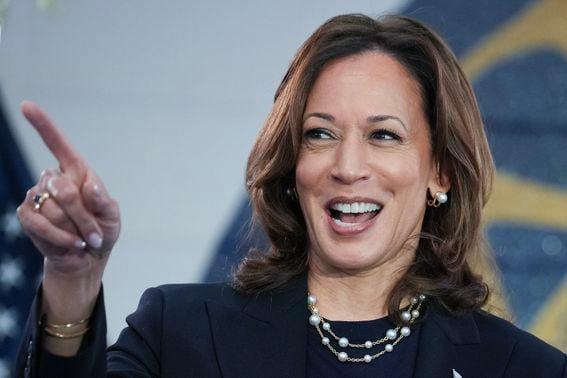
Plus: Will Trump mention crypto in Elon Musk interview?; don't hold your breath for OpenAI's Sora. This week in prediction markets: 🗳️ Harris pulls ahead on Polymarket 🎙️ MAGA and crypto are likely on the agenda for Trump's interview with Musk as the former president returns to X 🤖 Kalshi bettors see slim chance OpenAI's Sora is released to the public before 2025 U.S. Vice President Kamala Harris now has a seven-point lead over Donald Trump on Polymarket, after flipping the prediction market odds on Aug. 9 and tying the day before. "Yes" shares for Harris were trading at 52 cents on the crypto-based betting platform Monday during U.S. morning hours, meaning the market sees a 52% chance she will win the presidency. Each share pays out $1 in USDC, a stablecoin, or cryptocurrency that trades at par with the U.S. dollar, if the prediction comes true, and zero if not. Trump shares were changing hands at 45 cents. Less than a month ago, before President Joe Biden dropped out of the race and endorsed Harris, Trump's odds were as high as 72%. Since her ascension to the top of the Democratic ticket, Harris has received glowing coverage in the mainstream press and celebrity endorsements, while Trump's recent public performances have reportedly rattled his advisors. On the other hand, the idiosyncrasies of trading may overstate the magnitude of the reversal of fortune on Polymarket. One active political bettor who goes by the handle CSPTrading.eth said he's observed panic selling and groupthink in election markets. "Someone who bought Trump at 70 and keeps seeing the price fall [has been] dumping to get out," he said in an interview with CoinDesk. "It's also a bit of a self-fulfilling prophecy because market makers will buy directionally to hedge their exposure to the price movements and then dump into each other." CSPTrading.eth points to some of the state-level markets (which party will carry Alaska or Indiana, for example) where one trader will dump a "rapidly depreciating asset" and others follow suit. "They don't want to be holding the bag," he said. There are arbitrage opportunities on Polymarket's various balance-of-power contracts, where traders can buy exposure to a Trump presidency for less than what it costs in the main contract, CSPTrading.eth said. For instance, a contract that asks bettors to put a stake on the possibility of Republicans taking the Presidency and Senate, but the Democrats winning the House – with some models showing the Republicans having a 78% chance of winning the Senate – is currently trading for 12 cents (or a 12% chance) while a contract predicting a Republican sweep is at 28%. Together these would be trading at 40 cents, compared to the 46 cents Trump is trading for in the main contract. Will he say it? Elon Musk and Donald Trump are set to take to X's digital airwaves Monday night U.S. time, and there's a good chance the former President will mention crypto. Bettors are giving a 60% chance that Trump will do so during the interview, which seems like a safe bet considering that his appearance at the recent BTC 2024 conference was a sold-out affair with thunderous applause. There's a catch: Trump will need to say "crypto" specifically. Not bitcoin, not Ethereum, but rather the umbrella term itself. Any usage of the word, including plural or possessive forms, will count toward the market's resolution, the rules read. Compound words including "crypto" referring to decentralized currencies will also count. Bettors are also giving "MAGA," "censor" or "censorship," "Tesla," and "illegal Immigrant" a high chance of being said. Meanwhile, the former President also returned to X after a nearly year-long hiatus of tweeting. His last post on Musk's social media site was from Aug. 24, 2023 and featured his mugshot. Two contracts asked bettors about Trump's return to X, with one asking whether he would tweet again before the election and another asking if he would do so by the end of September. The former had nearly $150,000 in volume with a user going by the handle "BarronTrump" holding the most shares on the yes side, winning over $9,000. This trader has also taken a no position currently valued at $5,600 on a contract about Kamala Harris winning the election. A user holding the second-largest position on the Trump-Twitter question made off with $8,500. This trader also holds a sizable "yes" stake on the Harris side of the election question, currently worth over $35,000. On the smaller contract, which asked if Trump would return to X by Sept. 30, only two bettors held the "yes" side with $34 between them. On the "no" side, the largest user lost just over $5,100 – and only seems interested in betting on this contract and one about whether the Binance exchange will list the token of a self-described "crypto casino," Rollbit. When Sora? When OpenAI unveiled its text-to-video generative artificial intelligence model Sora earlier this year, the world was amazed. The demo promised that someday video as realistic as a high-end Playstation game could be generated in real-time. Missing from that initial demo was a launch date. Bettors on Kalshi, a U.S.-regulated platform where bets are settled in dollars, are giving it a 38% chance of Sora being launched before 2025, down from 75% when the contract was initiated in May. One of the problems OpenAI may be running into is the intense computational cost of generating real-time video. As CoinDesk reported earlier this year, research group Fractorial Funds estimates that 720,000 high-end Nvidia H100 GPUs would be required to serve the TikTok and YouTube creative community with AI-generated video. This amount of silicon would come at a cost of $21.6 billion, stats from the report show, and the total count of cards would be more than Meta, Microsoft, Google, Amazon, Oracle and Tencent – some of Nvidia's largest customers – have collectively. Bettors may also be factoring in that AI's massive demand for electricity could be straining the grid, and testing the political will to build more data centers. Research from SemiAnalysis shows that AI's demand for server capacity is expected to double, with global data center power needs jumping from 49 gigawatts in 2023 to 96 gw by 2026. This projected steep jump in power demands has meant that even Texas, which has historically embraced electricity-intensive bitcoin mining and data centers, is souring on the idea of building out more capacity. One hedge to all of this: China's ByteDance recently released its own version of a text-to-video generator, only available to users in China. There are limits to the amount of video each user can generate, but it does show that this whole thing isn't impossible. https://www.coindesk.com/news-analysis/2024/08/12/kamala-harris-pulls-well-ahead-of-trump-on-polymarket/