2024-10-29 17:42
The crypto exchange may also see lower staking revenue when it reports its Q3 earnings as ether underperformed in the quarter. Analysts expect a slowdown in spot trading volume to hurt Coinbase's revenue in the third quarter. The exchange reports Q3 earnings post-market on Wednesday. Third quarter revenue is forecasted to decline about 13% from the second quarter, according to FactSet. Wall Street analysts expect a further slowdown in spot trading volume for Coinbase (COIN) in the third quarter, partly triggered by a lack of catalysts for crypto and an uncertain regulatory environment heading into the presidential election. The crypto exchange, when it reports its earnings post-market on Wednesday, is expected to experience a revenue decline of about 13% in the third quarter, to $1.26 billion from $1.45 billion in the last quarter, according to estimates on FactSet. Meanwhile, the earnings per share (EPS) are forecasted to be $0.46, up from $0.14 in the second quarter. “Volumes continued to soften through the quarter and we shake out quite a bit below the Street, largely on weaker retail transaction revenues,” Barclays analyst Benjamin Buddish wrote in a note. He has an equal weight rating on the stock and raised its price target to $175 from $169 while cutting the EPS estimate to $1.05 from $1.62 in the third quarter. The third-quarter slowdown in trading volume is not just Coinbase-specific but an industry-wide phenomenon. Data from The Block shows that roughly $3.3 trillion was traded on all crypto exchanges, compared to $3.92 trillion in the second quarter. Coinbase competitor Robinhood (HOOD) is also set to report third quarter earnings after-market on Wednesday. Additionally, the data revealed that crypto exchange Crypto.com has been the most popular trading venue for investors in the North American region since July when it first overtook Coinbase as the exchange with the highest trading volume. One of the reasons why Coinbase might have fallen short in volume is due to Crypto.com’s offering of a wider range of tokens. Analysts also believe that regulatory uncertainty due to the upcoming presidential election results was one of the main drivers behind lower trading volumes on U.S. exchanges. According to Oppenheimer, the spot volume outside of North America increased 61% from the previous quarter. “We believe lack of catalysts and US election overhang have negatively impacted bitcoin,” Oppenheimer analyst Owen Lau wrote. “International volume was a bright spot.” The investment bank estimates that third-quarter revenue will be $1.29 billion and EPS will be $0.40. It has an outperform rating on Coinbase and a price target of $282 over the next 12 to 18 months. Lower staking revenue In addition to lower revenue from trading fees, which continues to be Coinbase’s main stream of income, J.P. Morgan’s Kenneth Worthington expects lower revenue from the exchange’s staking services. This is largely driven by ether (ETH) underperforming in the third quarter, down roughly 24% from Q2, according to the bank. Ether, the second-largest cryptocurrency by market cap, has been trading in the rough range of $2,330 to $2760 since August, with the current price at $2624 as of press time. In the months from April to June, that range was much higher, at $3,503 to $3,368. “Ether [has] particularly underperformed [during the quarter] despite seeing the launch of its spot ether ETPs intra-quarter,” Worthington wrote. “We see this market cap contraction particularly weighing on Coinbase’s staking revenue in 3Q and subscriptions and services revenue overall.” Subscription and services revenue was one of the bright spots in the second quarter, growing 17% from Q1. The main catalysts for the uptick were higher average USDC on-platform balances and USDC market capitalization. J.P. Morgan, which rates the stock neutral, raised its price target to $196 from $180. However, it sees EPS landing anywhere between $0.42 and $0.54 for the third quarter. Shares of the exchange are up nearly 30% year-to-date, but they are currently 21% down from their peak of $279.71 in March. As of press time, the stock was trading at $221.97. https://www.coindesk.com/business/2024/10/29/coinbase-revenue-may-be-hurt-by-lower-trading-volumes-regulatory-uncertainty-analysts-say/

2024-10-29 16:51
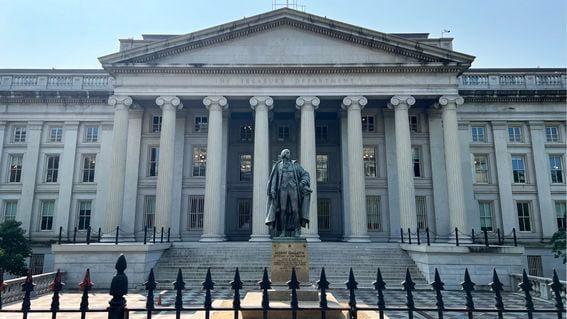
The report touts strategies to connect people with financial tools, but the only mention of crypto refers to its risks – a contrast to Kamala Harris' positive tone on the campaign trail. A new U.S. strategy to promote financial inclusion isn't leaning on crypto as an option, but it did briefly mention the technology as a risk. The Biden administration push comes as Vice President Kamala Harris has been warming up to crypto during her presidential election bid. The U.S. Treasury Department has a new strategy for financial inclusion to help people get access to the financial system, but the 35-page report references cryptocurrency only once – to tout Treasury's work on flagging the industry's hazards. While Vice President Kamala Harris has said on the campaign trail she'll encourage crypto as a part of her economic agenda, the administration she's currently working for is keeping digital assets at arm's length in what may be the Treasury's final mention of cryptocurrency before next week's election. The Biden administration's Treasury Department noted in the Tuesday report that it "cultivates financial inclusion by developing and promoting research," and — to that end — it had issued a report in 2022 on the "risks related to digital assets." "Access to safe, affordable financial products and unbiased information can help all Americans pursue financial security," Treasury Secretary Janet Yellen is set to say at a banking event in New York on Tuesday, according to her prepared remarks in which she'll call for the bankers' "active partnership" in the new strategy. From its start, the crypto sector has made a case for itself as a low-barrier entree into finance. That's been among the core selling points, for instance, from industry lobbyists as they explain digital assets to lawmakers and regulators. But while international remittances have been an obvious little-guy use case for crypto, Treasury doesn't seem to have been moved by the industry's inclusion arguments. Liberal-leaning groups such as the Center for American Progress have argued that the claim from crypto advocates about its benefits for financial inclusion "does not hold up to scrutiny," and the Brookings Institution also sought to debunk that narrative. It's unclear whether the vice president's office would have had any say in the Treasury's latest strategy, though it would seem to contrast with the crypto openness her campaign has been signaling. While Harris' election opponent, former President Donald Trump, has made his recent crypto enthusiasm a prominent part of his 2024 campaign, his own administration's Securities and Exchange Commission was the first to bring a major case that attacked the legal foundation of Ripple. https://www.coindesk.com/policy/2024/10/29/crypto-ghosted-in-us-treasury-departments-new-strategy-on-financial-inclusion/
2024-10-29 13:56
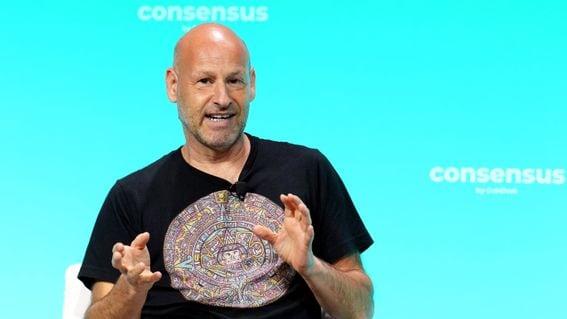
The main supporter of the Ethereum network has been in an ongoing battle with the Securities and Exchange Commission who most recently alleged the company of operating as an unregistered broker. Consensys, one of the main supporters of the Ethereum network, is laying off 20% of its workforce, blaming broader macroeconomic conditions and ongoing regulatory uncertainty, including the Securities and Exchange Commission’s (SEC) “abuse of power” in the space. “Multiple cases with the SEC, including ours, represent meaningful jobs and productive investment lost due to the SEC’s abuse of power and Congress’s inability to rectify the problem,” founder and CEO Joe Lubin said in a blog post. “Such attacks from the US government will end up costing many companies…many millions of dollars.” Consensys, the maker of the MetaMask wallet, has been in an ongoing battle with the financial regulator after it alleged the firm of operating as an unregistered broker that “engaged in the offer and sale of securities” in June through its MetaMask services. Other Ethereum staking services, which functioned as third-party platforms for the wallet, had also been sued. Many crypto companies have laid off part of its workforce in the past years as high interest rates have left marks on many balance sheets and came at a time when the SEC was doubling down its enforcements on crypto-native firms, leading to increased spending on legal fees. In an attempt to fight back against the regulator, Consensys earlier this year sued the SEC for regulatory overreach, arguing that it is attempting a power grab over Ethereum. The effort was part of a bigger trend seen in the crypto space of large companies willing to turn tables. Coinbase and Grayscale have both sued the SEC previously while Kraken and Uniswap have vowed to do the same. https://www.coindesk.com/business/2024/10/29/consensys-cuts-20-workforce-blames-secs-abuse-of-power/
2024-10-29 13:45
CoinDesk is first to report that the crypto exchange Kraken's decision to build on Optimism's OP Stack framework came with a big, previously undisclosed grant from the Optimism Foundation – of 25 million OP tokens, worth about $42.5 million at the current price. Crypto exchange Kraken announced last week that it will build a layer-2 network atop Optimism's OP Stack blockchain framework. The deal was reached early this year, involving a grant of 25 million OP tokens, at the time worth roughly $100 million. Kraken, a major U.S. crypto exchange, shared last week that it would launch a layer-2 called Ink, relying upon the Optimism's blockchain ecosystem's OP Stack framework – and become part of the fast-growing "Superchain" that also includes layer-2 networks from the crypto exchange Coinbase along with the electronics giant Sony and decentralized exchange Uniswap. But there was a price: Both projects have confirmed to CoinDesk that the Optimism Foundation agreed to provide grants to Kraken in the amount of 25 million OP tokens – worth roughly $100 million earlier this year, when the deal was struck, and now valued at about $42.5 million. The deal, which was finalized around January or February, paved the way for Kraken to use Optimism’s OP Stack, a customizable toolkit that lets users create their own layer-2 rollups based on Optimism’s technology. Kraken clarified with CoinDesk that under the deal, the token allocation would be paid to Kraken in grants over a time period. On Jan. 1 , the OP token was worth $3.99, according to CoinGecko, reaching a high of $4.06 on Feb. 20 during that time period. It now trades around $1.70. The Optimism Foundation confirmed the number of tokens involved in the deal and declined to comment further. According to Andrew Koller, founder of Ink, the number is similar to various other deals that are part of the Superchain ecosystem. “And it was actually Optimism that proposed that number first, and it was very in line with what other Superchain participants have gotten,” Koller told CoinDesk in an interview. Optimism's growth Layer-2 networks have been popping up all over the Ethereum ecosystem over the past year. Crypto exchange Coinbase famously launched their Base layer-2 network in August of 2023 with OP Stack. Since then, decentralized exchange Uniswap shared that it would launch a layer-2 on OP Stack called Unichain, and electronics giant Sony shared it was also coming out with a layer-2 called Soneium based on Optimism’s technology. AI pioneer Sam Altman’s blockchain project, World, known for its controversial iris-scanning orbs, went live with its layer-2 Worldchain in August, also built on OP Stack. In a series of posts on X after CoinDesk published this story, the Optimism Foundation's chief growth officer, Ryan Wyatt, wrote that the deal included "5M OP to help fund the engineering efforts for Ink, 20M for massive txn milestones to drive fees to the Collective." "The Collective is not going to stop investing in developers," Wyatt added. According to Koller, the grant with the Optimism Foundation is based on transactions per month, “each time you achieve one, then there's different tranches that get unlocked, and there's an initial unlock, and then the rest gets unlocked at each month.” Base has a slightly different setup, being one of the first in the space under this program. Base disclosed in a blog post in August 2023 that it would receive up to 2.75% of the OP token supply over a six-year period. The total supply of OP tokens is currently close to 4.3 billion, which makes Base eligible to receive up to 118 million OP tokens. For newer layer-2s in the Superchain, “it's just like a time-lock thing. And after them [Base], I think all Superchain participants are really driving that around activity,” Koller said. Paid deals Deals between layer-2 projects and big firms are not unheard of in the blockchain industry. In 2022, Polygon paid Starbucks $4 million in grants to build an NFT-powered loyalty program. The program was shuttered 18 months later. At the time of the Starbucks deal, Polygon was led by Wyatt, who was ousted in 2023, according to a CoinDesk report. Wyatt joined the Optimism Foundation in November 2023, where he is the chief growth officer, in charge of onboarding more developers to build across the Optimism ecosystem. “There's no blueprints of this stuff, so you're gonna make good decisions and bad decisions in this space. There's not a lot you can lend at,” Wyatt told CoinDesk in an interview this week, conducted before CoinDesk learned about the Kraken deal. https://www.coindesk.com/tech/2024/10/29/optimism-foundation-agreed-to-give-kraken-425m-of-op-tokens-in-layer-2-deal/

2024-10-29 10:55
U.S. listed spot ETF inflows continue to break records, as CME open interest spikes in the past 24 hours. Bitcoin futures' open interest on a one-day basis saw the biggest jump in 24 hours since June, an increase of over 20,000 BTC. Since Oct. 16, U.S listed spot ETFs have seen $2.7 billion of net inflows. Bitcoin (BTC)-tracked futures set a record high open interest (OI) in U.S. dollar terms early Tuesday as the asset broke past $71,000 for the first time since June, data shows. BTC futures recorded their biggest one-day jump in OI since June 3. As of Tuesday, OI jumped to over 20,000 BTC, worth $2.5 billion at current prices, to reach almost 600,000 BTC, or $42.6 billion. OI refers to the total number of outstanding derivative contracts, such as futures or options, that have not been settled. High open interest indicates that there is significant interest in a particular asset. When open interest increases along with rising prices, it suggests new money is coming into the market, indicating a strengthening trend - such as Tuesday’s. High open interest can lead to increased volatility, especially as contracts near expiration. Traders might rush to close, roll over, or adjust positions, which can lead to significant price movements. Research firm Kaiko said in an X post that while futures showed strong interest from traders, the funding rates for such positions remain well below March highs which indicate tempered demand. Funding rates in perpetual futures markets are periodic payments made between traders to ensure that the price of the perpetual contract remains close to the spot price of the underlying asset. Traders such as Singapore-based QCP Capital remain bullish on BTC in the near term, expecting price gains to continue in the weeks ahead. “With rising expectations around a potential Trump victory boosting both stocks and Bitcoin, we believe BTC is well-positioned for medium-term gains,” the firm wrote in a Tuesday broadcast on Telegram. Reasons why BTC OI has zoomed Contracts offered on the Chicago Mercantile Exchange (CME) have seen a 9% surge in 24 hours, taking their open interest to 171,700 BTC, worth over $12.22 billion, which gives CME a 30% dominance in the futures open interest market. As they maintain their number one spot in this market. In mid-October, bitcoin was trading around $67,000 and the OI on CME hit all-time highs in both notional open interest ($12.4 billion) which is the dollar value of the futures contracts and bitcoin denominated futures contracts (179,930 BTC), per Glassnode data. Second, the funding rate in perpetual markets has also soared in the past 24 hours to 15%, according to Coinglass data, this is one of the highest recorded levels in the past few months, which shows an extreme bias for bullish long trades. Finally, the third reason can be attributed to the strong inflows from the U.S. listed spot ETFs, which in recent weeks has seen a slight evolution from the institutional basis trade at the start of the year to now more bullish long directional plays. Since Oct. 16 bitcoin denominated futures contracts peaked on the CME exchange, it has since dropped by over 6%, which has been the opposite for the ETF inflows which have seen a cumulative net inflow of $2.7 billion. The charge has been led by BlackRock's iShares Bitcoin Trust (IBIT), which has seen $2.2 billion of net inflows in the same time period while achieving a new record of holding over 400,000 bitcoin in the ETF. Earlier in the year it was apparent that the basis trade or the cash and carry arbitrage was taking place which involves taking advantage of the price difference between the bitcoin spot and futures price. The basis trade involves taking a long position on the ETF and then taking a short position on the CME futures bitcoin price. This was one of the reasons bitcoin has been trading in a long sideways range since March, as not all the inflows from the ETFs were directionally long but overall a net neutral strategy. Checkmate, an analyst, also noted the recent divergence between the CME OI and the ETF inflows. “We have a divergence between Bitcoin ETF Inflows and CME Open Interest. ETF Inflows are ticking meaningfully higher. CME Open Interest is up, but not as much. GBTC outflows are also minimal. We're seeing true directional ETF inflows, and less so cash and carry trades,” Checkmate wrote. The recent purchase of the Grayscale Bitcoin Mini Trust (BTC) by the Emory University endowment could support Checkmate's point of view to be a directional long purchase, as one would not expect a University to start executing the basis trade. Emory University would be the first endowment to purchase a bitcoin ETF and while $15 million isn’t a large sum for an institutional investor the narrative and the directional play stand out in a similar fashion to the Wisconsin Pension Fund. However, Andre Dragosch, head of research at Bitwise, takes the other side of this view: he believes due to the increase in net short-positioning and an increase in CME open interest in the past 24 hours, that the basis trade has already started to pick up, he told CoinDesk in a note. “There was an increase in net short positioning judging by the change in net non-commercial positioning on CME since early September. This coincided with an overall increase in CME open interest which implies that net there has really been an increase in cash-and-carry trades," he wrote in a note to CoinDesk. "However, we only have weekly data up to 22/10 from the CFTC, so we don't have insights into the latest OI change yet”. https://www.coindesk.com/markets/2024/10/29/heres-three-reasons-why-bitcoin-futures-set-record-highs-amid-price-surge-to-71k/

2024-10-29 09:47
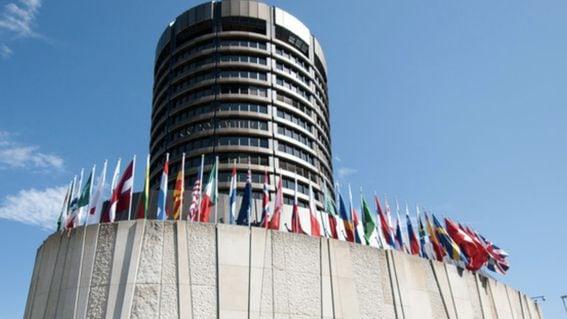
Putin's interest in an alternative international payments system has focused attention on mBridge. An international payments project backed by China, the UAE, Thailand and Hong Kong is raising concerns in Washington. mBridge uses decentralized ledger technology to make quicker payments that bypass intermediary banks. The future of the Swiss-based Bank for International Settlements’ (BIS) involvement in mBridge was cast into doubt on Oct 28. following a report from Bloomberg that top bank officials and financial executives discussed the possibility of shutting mBridge down during a meeting in Washington. The discussions, which took place last week, stemmed from concerns about comments made by Russian president Vladimir Putin during the opening of the BRICS Summit in Kazan, where he floated the idea of an alternative BRICS-led international payments system. Though Putin’s comments garnered a lukewarm response from fellow BRICS members, it has focused attention on projects like mBridge which are seeking to build alternatives to SWIFT. Run by the central banks of China, Thailand, the UAE and Hong Kong — with Saudi Arabia joining this year as a new member — and backed by the BIS Innovation Hub, mBridge is a cross-border payments system that aims to make transferring money internationally quicker and cheaper. It removes the need for correspondent banks, which act as intermediaries for payments between banks in different countries that don’t have formal relationships. In June this year, it reached its minimum viable product (MVP) stage, with participating banks deploying consensus nodes and commercial banks conducting transactions. The platform currently supports key functions for participants including CBDC issuance and redemption, FX payment versus payment (PVP), CBDC transfers, queue management and balance alerts, and information management systems. As of October 2024, the project had 32 observing members, including the Reserve Bank of Australia, the Bank of Korea FATF and the Banque Central du Luxembourg, according to the BIS Innovation Hub. A total of 39 commercial banks from China, Thailand, the UAE, Hong Kong and Saudi Arabia are also participating in its MVP stage. Between April and September 2024, the platform facilitated payments and transactions in four CBDCs (e-CNY, e-THB, e-AED and e-HKD), with transactions conducted by 35 commercial banks. To its proponents, mBridge is a potential solution for the major pain points that have long plagued traditional banking, particularly for underserved regions. It can allow countries to settle payments in their own currency instead of the more commonly used U.S. dollar and make transactions much quicker using distributed ledger technology. Speaking at Hong Kong Fintech Week, Li Shu-Pui, Advisor to H.E. The Governor at the Central Bank of the U.A.E., said that in a test in February they sent money from a bank in Abu Dhabi to one in Beijing in just ten seconds. “Middle Eastern, Central Asian, African countries and even South American countries are underserved [by traditional banking] because the correspondent banking network does not cover so many of these countries. Many of these countries are not served adequately so they're very excited about how they [can] make use of mBridge” he said. BIS’s own literature available through its BIS Innovation Hub stand at Hong Kong Fintech Week calls mBridge “a public good” and claims it can “help foster financial inclusion”. Countries like China have been taking steps to push for greater dedollarization of the global economy and the settlement of international payments in different currencies. During the BRICS summit, Putin claimed that nearly 95% of Russia-China trade is done in local currency. But mBridge’s detractors are worried about the geopolitical risk the project poses. Policymakers in the U.S. and Europe have warned against having an international financial system underpinned by China-developed technology, as well as the risk of reduced ability to enforce U.S. and European economic sanctions. In 2022, Yaya J. Fanusie, currently the Director of Policy for AML & Cyber Risk at the Crypto Council for Innovation, said that the announcement of the mBridge project should serve as a wakeup call to U.S. policymakers who wanted to maintain U.S. influence on the financial system. "[mBridge] likely will be built upon not only by nations seeking more efficient payment infrastructure, as all central banks should, but also by U.S. adversaries strategizing for ways around U.S. geopolitical influence, like China,” he wrote. The BIS did not respond to a request for comment and staff on the ground at Hong Kong Fintech Week said they could not discuss the matter. https://www.coindesk.com/policy/2024/10/29/as-bis-mulls-shutting-down-mbridge-its-innovation-hub-calls-the-project-a-public-good/