2024-10-15 21:57
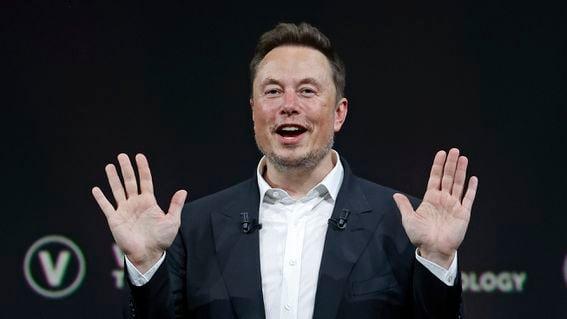
On-chain data shows wallets associated with Elon Musk's electric car company have been emptied. Wallets associated with Elon Musk's Tesla have moved $760 million worth of bitcoin (BTC). The funds were moved to unknown wallets. Tesla is the fourth-biggest bitcoin holder among public companies. Elon Musk's Tesla, one of the biggest corporate owners of bitcoin (BTC), transferred nearly all $760 million of the cryptocurrency it owns to unknown wallets, raising the possibility the carmaker is selling. Wallets associated with the electric car manufacturer on Tuesday moved more than 11,500 bitcoin to wallets whose ownership is unknown, according to crypto data firm Arkham Intelligence. The Tesla wallets only retain about $6.65 worth of BTC – essentially nothing. Tesla is the fourth-biggest holder of bitcoin among publicly traded U.S. companies, per BitcoinTreasuries data. Only software company MicroStrategy and bitcoin mining firms MARA Holdings and Riot Platforms have larger stockpiles. Tesla bought $1.5 billion worth of bitcoin in February 2021, and at some point owned as much as $2.5 billion worth, according to Arkham data. However, the firm sold 75% of its holdings in early 2022 at a loss. When Arkham Intelligence added the car maker's bitcoin wallet tracking feature to its dashboard in March, it held about 11,509 bitcoin, worth roughly $770 million. Musk had also previously announced, back when Tesla first acquired its stash, that the company would soon accept bitcoin payments, but the plans were dropped shortly after due to environmental concerns. While some of Musk's companies – including Tesla and SpaceX – hold bitcoin on their balance sheets, it is unclear how much the X (formerly Twitter) owner believes in the cryptocurrency himself. In an interview broadcast on YouTube in July, Musk said that he thinks "there's some merit in bitcoin, and maybe some other crypto," but that his soft spot was for dogecoin (DOGE). CORRECTION (Oct. 15, 2024, 22:30 UTC): Fixes name of MARA Holdings. https://www.coindesk.com/business/2024/10/15/is-elon-musk-selling-bitcoin-tesla-transfers-all-760m-of-its-btc-to-unknown-wallets/
2024-10-15 19:05
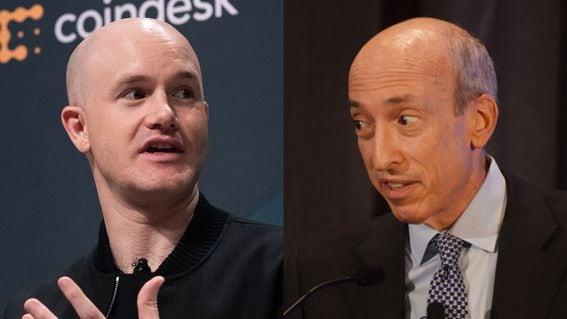
The company's go-between on a quest to see SEC documents – History Associates – told a court it intends to ask for an immediate judgment in the dispute over internal communications. A research firm Coinbase hired intends to ask a judge for a quick call on whether it should get key SEC documents that might reveal how the agency came to view crypto tokens as securities. The federal court could decide whether the company (and the public) get to see what the SEC officials said in private discussions as they tried to figure out whether digital assets like ETH should be counted as securities. An intermediary for the biggest U.S. crypto exchange, Coinbase Inc. (COIN), is cranking up its legal fight over the Securities and Exchange Commission's unwillingness to produce documents revealing the regulator's internal thinking on whether to pursue Ethereum's ether (ETH) and other tokens as illegal securities. Coinbase hired History Associates Inc. to pursue SEC communications under the Freedom of Information Act – a process that initially concluded with the agency denying the request by citing that the documents were connected to an ongoing investigation. Coinbase's hired gun eventually sued over the denial, and History Associates is preparing to ask the U.S. District Court for the District of Columbia to force the hand of the agency, which has since suggested the reason for its initial denial may no longer be valid. "Lacking reasonable alternatives, History Associates intends to move for partial summary judgment on the SEC-generated documents," the company said in a notice filed on Monday with the court, detailing that plan to ask for a court ruling. A spokesperson for the SEC told CoinDesk the agency declines to comment "beyond our public filings." "Over a year ago we made FOIA requests aimed at files on ETH 2.0 and other mysteries," Coinbase Chief Legal Officer Paul Grewal said in a posting on X, arguing that the internal agency communications "belong to all of us," not the SEC. "We then sued to end their stall, only to get an entirely new set of excuses." Read More: Coinbase Accuses U.S. SEC, FDIC of Improperly Blocking Document Requests Coinbase has been conducting a multi-front legal fight with the SEC, including battling over an SEC enforcement action that accused the company of running an illegal securities business, a petition by the company to force the agency to make crypto-specific regulations and this conflict over whether insider messages on the SEC's crypto thinking should be subject to public review. These disputes could – in the absence of swift congressional action – eventually form some legal foundation for how the digital assets industry may proceed in the U.S. https://www.coindesk.com/policy/2024/10/15/coinbase-escalates-sec-fight-over-the-agencys-inside-chatter-on-eth/
2024-10-15 18:11
The stablecoin market isn’t unlike Berkshire Hathaway’s enormous cash stash – it’s sitting there ready to be deployed, according to CoinMarketCap’s Alice Liu. Stablecoin market capitalization is almost back to its all-time high. That means there’s a lot of sidelined capital ready to be deployed when momentum picks up again, according to analyst Alice Liu. Liu compared stablecoins to Berkshire Hathaway’s cash holdings. Crypto markets are sitting on a powder keg that could soon blast prices higher. That’s according to Alice Liu, lead researcher at crypto data firm CoinMarketCap, who told CoinDesk that crypto investors should view the $172 billion stablecoin market as a huge reserve of cash ready to be deployed into cryptocurrencies the moment bitcoin (BTC) rises again and momentum picks up. “A lot of people want to keep cash on the side – both crypto degens and institutions,” Liu said. “It’s almost similar to Warren Buffett holding cash on the side, waiting to buy at any point.” Berkshire Hathaway, the investment firm run by billionaire Buffett, reported holding nearly $277 billion in cash at the end of the second financial quarter. That’s a 46% increase from the $189 billion that it was sitting on in the first quarter. Dry powder Stablecoins are cryptocurrencies designed to stay at par with a government-issued currency, typically the U.S. dollar. Some cryptocurrencies – like ether (ETH), the second largest coin by market capitalization – are still languishing way below their 2021 all-time highs, but the stablecoin market has almost regained its former strength, down just 8% from its $187 billion peak of spring 2022. Even more striking, stablecoins account for about 50% of all value settled on public blockchains. Bitcoin, the largest cryptocurrency by value, only accounts for 25% of such transactions. Liu said that while a portion of that capital is being used for other purposes – for example, to earn yield through DeFi protocols – the sheer size of the available liquidity meant that, if crypto prices start rising again, stablecoins will likely add fuel to the fire. It's not just the total stablecoin market capitalization that's important, but where these tokens are located. For example, stablecoins held on crypto exchanges are easier to deploy into the market rapidly – and historical data suggests that an increase in stablecoins on exchanges tends to precede higher prices. According to CryptoQuant, stablecoins on exchanges have grown by 20% this year. That metric has grown by 20% this year, according to data analytics firm CryptoQuant. “This is probably going to be one of the main drivers for us in a bull market,” Liu said. https://www.coindesk.com/markets/2024/10/15/why-the-172b-stablecoin-market-could-send-crypto-prices-higher/

2024-10-15 15:16
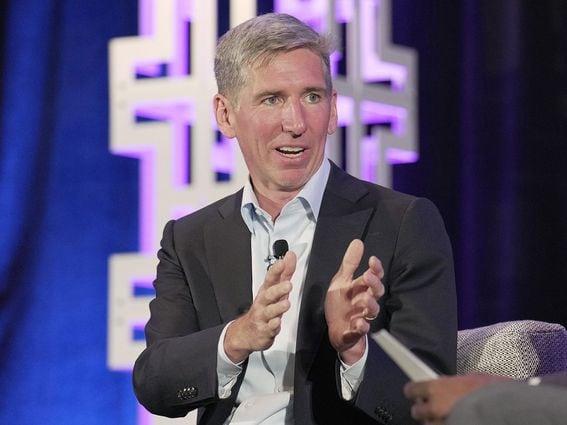
If Vice President Kamala Harris beats Donald Trump in the U.S. presidential election, that could be good for Ethereum, though crypto is in good shape either way, Bitwise's Matt Hougan says. The crypto ETF era is just getting started, according to Matt Hougan, the chief investment officer of crypto fund issuer Bitwise. Crypto-native investors that have soured on Ethereum's ether (ETH) are underestimating its appeal to TradFi investors and developers. Crypto is in a great spot no matter who wins the U.S. election, he argues. It’s been a great year for Bitwise Asset Management. The specialist in developing crypto investment products launched two of the most successful exchange-traded funds (ETFs) of all time. Its spot bitcoin ETF has amassed more than $2.7 billion in the span of nine months, while its spot ether ETF has raked in over $250 million in 84 days. “We’re holding our own against BlackRock and Fidelity,” Bitwise Chief Investment Officer Matt Hougan told CoinDesk, referring to two giants of traditional finance that have vastly larger operations than Bitwise. “There are people who want a crypto-native asset manager to survive.” That’s not all. The company grew its assets under management from roughly $1 billion to $5 billion, Hougan said, and Bitwise’s acquisition of ETC Group – Europe’s largest bitcoin exchange-traded product (ETP) issuer – means the firm now has a solid footing on the old continent. If you listen to Hougan, they’re just getting started. “We’ve entered the ETF era of crypto,” he said. That means crypto is going to be normalized in people’s portfolios, and a growing cohort of investors will want access to a wide array of crypto investment vehicles, be it single-asset (like the spot bitcoin ETFs) or multi-asset products (which could combine bitcoin and ether, for example). Case in point, on Oct. 7 Bitwise filed to convert three of its crypto futures ETFs into strategy-based trend-following funds, which rotate out of the market when it loses momentum, with the goal of providing exposure to volatility to investors while minimizing downside risk. Bitwise’s ascent is happening in a context of quick technological innovation in crypto, with settlement times and transaction fees getting ever lower – which means crypto applications can now become mainstream much faster than people think, according to Hougan. And shifting political tides in Washington could indicate that, as far as regulatory roadblocks go, the worst is behind us. “It won’t be all sunshine and roses, it will still be imperfect. I just think it will be better than in the past,” Hougan said. Ethereum’s appeal If the tremendous success of bitcoin ETFs is the story of the year, the comparatively disappointing ether ETF flows has turned sentiment – at least on Crypto Twitter – against the second-largest cryptocurrency by market capitalization. “Inside crypto, many people look at Ethereum as old tech and would rather talk about Solana or Sui or Monad or Aptos or whatever,” Hougan said. But for him, they’re missing the bigger picture. The bulk of the $170 billion stablecoin market is issued on Ethereum, Hougan pointed out, and the majority of tokenization projects – like BlackRock’s BUIDL fund or DeFi protocol Ondo – are being built on it, too. Same with the most popular crypto apps, like Uniswap or Aave. “It’s the Microsoft of blockchains, because Microsoft is like this really boring old tech company from the '70s and it's still the third-largest company in the world,” Hougan said. “If you work at a large bank and you're trying to tokenize an asset, you're not going to get fired for putting it on Ethereum.” In that sense, Ethereum is the platform for killer crypto applications. So, the network is being sold to investors because it has utility – the fact that it also produces cash flow doesn’t hurt at all. In fact, Hougan said that among clients, interest for bitcoin (BTC) and Ethereum's ether (ETH) is neatly divided in half. Those with concerns about the monetary situation and the fate of the U.S. dollar will naturally gravitate toward bitcoin, while the rest tend to be much more excited about everything being built on top of Ethereum. “One thing that I'm really confident about is that 2025 flows in ether ETFs will exceed 2024 flows. And I bet 2026 flows will exceed 2025 flows,” Hougan said. “I just think Ethereum takes somewhat more education than bitcoin, but that education is happening.” The complexities of Washington Another major development this year? The feeling that in Washington, crypto isn’t taboo anymore. The White House took an adversarial stance towards crypto through most of U.S. President Joe Biden’s term – for example, going out of its way to veto a controversial accounting measure, SAB 121, which makes it hard for banks to custody crypto. But things started to change when former President Donald Trump said in May that he’d champion the industry. He then doubled down by vowing to constitute a strategic bitcoin reserve, to free Silk Road creator Ross Ulbricht from prison and to help the bitcoin mining industry develop in the U.S. Trump’s promises stood in stark contrast to the Biden administration’s cold antagonism. And with half of all corporate election spending coming from crypto companies, the Democratic Party softened its stance. Vice President Kamala Harris, the party’s candidate for the presidential election, pithily expressed support toward blockchain technology in September. The important thing for crypto investors to understand is that, no matter who wins the presidential election in three weeks, things are never completely black and white, Hougan said. It’s not that “Washington is either pro-crypto or anti-crypto,” Hougan said. “Politicians can be overtly hostile and absurdly positive … and they can be anything in between.” For example, in 2024 the crypto industry obtained the approval of bitcoin ETFs and ether ETFs, Hougan said, and suffered in September from a “lighter SEC enforcement season than we have in any of the past three years.” “Compare that track record to what we got in 2022 or 2023. In those years, we just got kicked in the shins, and in this year, we got some wins,” Hougan said. “Did we get a solana ETF? No, but it’s a spectrum.” That’s why a Harris presidency probably wouldn’t be as bad for crypto as the Biden administration has been – even if she doesn’t end up really supporting blockchain development. Moving forward, questions may revolve more around which sectors of the industry benefit over others. For example, Congress is likely to pass a stablecoin bill no matter who wins the election. But under Harris, the bill may favor large banks, whereas under Trump, the bill may foster “entrepreneurial creativity,” Hougan said. Similarly, a Harris win may end up benefiting Ethereum at the expense of other smart contract platforms like Solana (SOL) or Avalanche (AVAX), simply because these newer blockchains haven’t cleared the same regulatory hurdles. “Crypto will do well regardless of the outcome,” Hougan said. “Like, Bitcoin doesn't need Washington. It just needs Washington to get out of the way.” https://www.coindesk.com/business/2024/10/15/why-this-etf-expert-is-bullish-on-ethereum-and-says-washingtons-crypto-stance-is-misunderstood/
2024-10-15 14:21
Digital assets are finally beginning to pay attention to not just the growing chance of a Trump victory in November, but also a GOP sweep, said Standard Chartered's Geoff Kendrick. The price of bitcoin (BTC) put in an "upside down V" during the U.S. morning hours on Tuesday, surging to a nearly three month high of $67,800 before tumbling back to the $65,000 level. At press time, the world's largest crypto was trading at $65,500, down 0.6% over the past 24 hours and 3.3% lower than its session high touched only an hour ago. The broader CoinDesk 20 Index was lower by 1.3% over the last 24 hours, with solana (SOL) and cardano (ADA) among the index constituents underperforming BTC. Despite the unsettling action this morning, bitcoin remains higher by 8% over the past week, with continued momentum for crypto-friendly Republican presidential candidate Donald Trump possibly behind that rally, said Standard Chartered analyst Geoff Kendrick in a Tuesday note. The former president now has a 56% chance of winning in November, according to Polymarket, said Kendrick (now 56.9%). It's his highest probability of winning since Joe Biden dropped out as the Democratic candidate. The odds of a GOP sweep of Congress are also on the rise, Kendrick pointed out. According to his calculations, if Trump wins the presidency, there is a 70% chance he will be dealing with a Republican-led House and Senate. Liquidations Bitcoin's rise over the past few weeks has been very gradual, but the quickness of this morning's gains then losses led to over $127 million in both short and long leveraged bets to be liquidated over the past four hours. Liquidation happens when a trader has insufficient funds to keep a leveraged trade open, leading to the forced closure of bullish long and bearish short positions - causing a brief spike or plunge in prices. Traders at QCP Capital attributed the spike to several reasons from earlier this week. The firm said in a Telegram broadcast that the rally may be election-driven, initially sparked by Republican Donald Trump’s lead in prediction markets and polls, and further boosted by Democrat Kamala Harris’s pledge for a crypto regulatory framework signals a friendlier stance toward the industry. "Disappointment with China’s latest stimulus may have led some speculators to shift capital from Chinese equities back into Bitcoin—a scenario we first anticipated in our October 8," QCP added. Finance Minister Lan Fo’an promised new steps to support the property sector and hinted at greater government borrowing at a Saturday briefing. However, the announcement fell short of expectations and suggested a low probability of continued outflows into China-linked assets. Updated (10/15/24, 15:30 UTC): Added the new price action following the big jump in price. https://www.coindesk.com/markets/2024/10/15/bitcoin-jumps-just-shy-of-68k-highest-since-late-july/

2024-10-15 13:18
A blockchain wallet connected to the token holds nearly $4 million worth of ether (ETH), $1.2 million of tether (USDT) and around $250,000 USD Coin (USDC) tokens. The Trump family-backed World Liberty Financial's WLFI token sale went live at 12:40 UTC. The token sale website suffered numerous outages shortly after going live, and as of 15:41 UTC, some 344 million tokens had been sold to around 3,000 unique wallets. Still, the amount represented just 1.7% of the 20 billion tokens allocated to the public sale. WLFI serves as a governance token for the platform, enabling users to participate in DeFi activities like borrowing, lending, and creating liquidity pools. Republican Donald Trump holds the role of "chief crypto advocate," with his sons Eric and Donald Jr. as "web3 ambassadors," and Barron as the "DeFi visionary," highlighting the family's deep involvement in the project. A new crypto project promoted by U.S. Republican presidential candidate Donald Trump and his family got off to a bumpy start on Tuesday, as the website crashed and sales of a new digital token fell far short of the $300 million fundraising target during the first few hours. The public token sale for the crypto project, World Liberty Financial, appeared to go live around 12:40 UTC (8:40 a.m. ET), and almost 2,900 investors bought the token despite the site suffering numerous outages during its first hour. Blockchain data shows that about 344 million of the platform's WLFI tokens were sold in the first hour to around 3,000 unique wallets. But that amount still represented just 1.7% of the 20 billion tokens allocated to the public sale. Sandy Peng, a WLFI advisor and co-founder of the Scroll blockchain network, attributed the website outages to excessive traffic. "The team wasn’t expecting this level of interest," said Peng, whose Scroll network is set to host World Liberty Financial's blockchain application. According to Peng, the World Liberty Financial website—which serves as the official portal to the WLFI token sale—received 72 million unique visits in its first hour. The site fell offline due to the excessive traffic but has come back online intermittently, apparently having switched to a new web hosting service. WLFI token sales appeared to ramp up around 17:30 UTC, when the website came back online for about an hour. By 18:10 UTC, an Ethereum blockchain wallet connected to the token sale held nearly $5.7 million worth of ether (ETH), $1.6 million of tether (USDT) and around $300,000 USD Coin (USDC) tokens. According to project officials, the WLFI token will be used to govern the World Liberty Finance platform, which is designed to let users engage in borrowing, lending and other DeFi activities. The token, which will be non-transferable for the time being, will give users a vote in matters such as protocol upgrades, technical changes, promotional partnerships and oversight of security risks. Trump is described in materials for the project as World Liberty Financial's "chief crypto advocate." His three sons, Eric, Barron, and Donald Jr. are listed as "Web3 ambassadors." Some 20 billion tokens were allocated to the public sale, offered at a fixed price of $0.015, or 1.5 cents each, amounting to a total fundraising goal of $300 million. The overall supply of the tokens, including those not available through the public sale, is 100 billion. The WLFI token sale is restricted exclusively to non-U.S. persons and accredited U.S. investors. Top officials behind World Liberty Financial disclosed Monday that the project had whitelisted over 100,000 accredited U.S. investors ahead of the token launch. The U.S. restrictions are designed to protect WLF from violating U.S. securities regulations. In the U.S., an accredited investor is authorized by the Securities and Exchange Commission to invest in unregistered securities such as pre-IPO shares. They must meet specific income and net worth criteria, such as $200,000 in annual earnings and total assets over $1 million. What is World Liberty Finance and WLFI? A "gold paper" about the token released Tuesday morning shed more details on WLFI, including its distribution and exact role in the platform. World Liberty Financial is described as a unified platform where users can borrow and lend cryptocurrencies, create liquidity pools and transact with stablecoins. The token will allow holders to propose future changes to the platform. However, all $WLFI will be non-transferable – meaning they will be locked indefinitely in a wallet, or "smart contract," and impossible to trade unless the rules are modified in the future. All governance decisions will be in line with U.S. regulations to ensure any changes are complaint with laws, according to the WLF team. "WLF strongly believes in supporting US dollar-based stablecoins and DeFi applications that seek to preserve the US Dollar’s status, ensuring it remains the global reserve currency for the next century—without compromising the freedoms that decentralized assets provide," an excerpt from the gold paper reads. "A key part of our mission at World Liberty Financial is to leverage the global reach and recognition of the Trump brand to bring as many Web2 users into the world of Web3 as possible," it added. https://www.coindesk.com/markets/2024/10/15/trump-familys-world-liberty-finance-token-sale-appears-to-go-live-selling-220m-wlfi-in-minutes/