2025-09-01 06:52
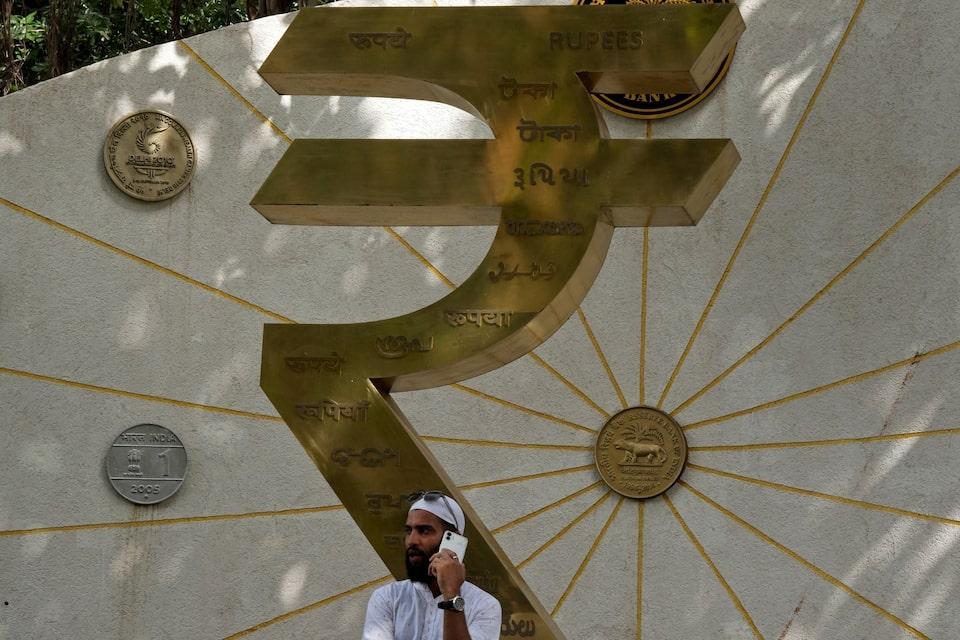
MUMBAI, Sept 1 (Reuters) - The Indian rupee dipped on Monday, hovering near an all-time low, with analysts expecting its underperformance versus other Asian currencies to persist amid high U.S. tariffs. The rupee was quoting at 88.27 to the U.S. dollar, just shy of its lifetime low of 88.3075 hit on Friday. The unit is the worst performing Asian currency year-to-date, down about 3% against the dollar. Sign up here. In comparison, the Thai baht, Singapore dollar, and Korean won have rallied more than 6% and the offshore Chinese yuan has risen 3%. The rupee's underperformance is expected to continue as India faces the highest U.S. tariffs on its exports among Asian countries. With "the latest U.S. tariff developments, their macroeconomic impact, and the flow picture, we think the rupee should remain under pressure and underperform other carry candidates" and its Asian peers in the near-term, Goldman Sachs said in a note. Economists at Goldman Sachs estimate that the total effective U.S. tariff rate is now around 32% on India goods. The tariffs could widen the trade deficit by constraining shipments in key sectors such as textiles and gems and jewellery. Slower export growth could dampen GDP growth, which in turn would hurt portfolio flows and amplify pressure on the rupee. Foreign investors have pulled out $2.4 billion from Indian equities over the past three sessions, including nearly $950 million on Friday, when the rupee hit a record low of 88.3075. Continued outflows are expected to exacerbate volatility in the currency and equity markets. https://www.reuters.com/world/india/rupee-hovers-near-all-time-low-likely-keep-underperforming-asia-2025-09-01/
2025-09-01 06:41
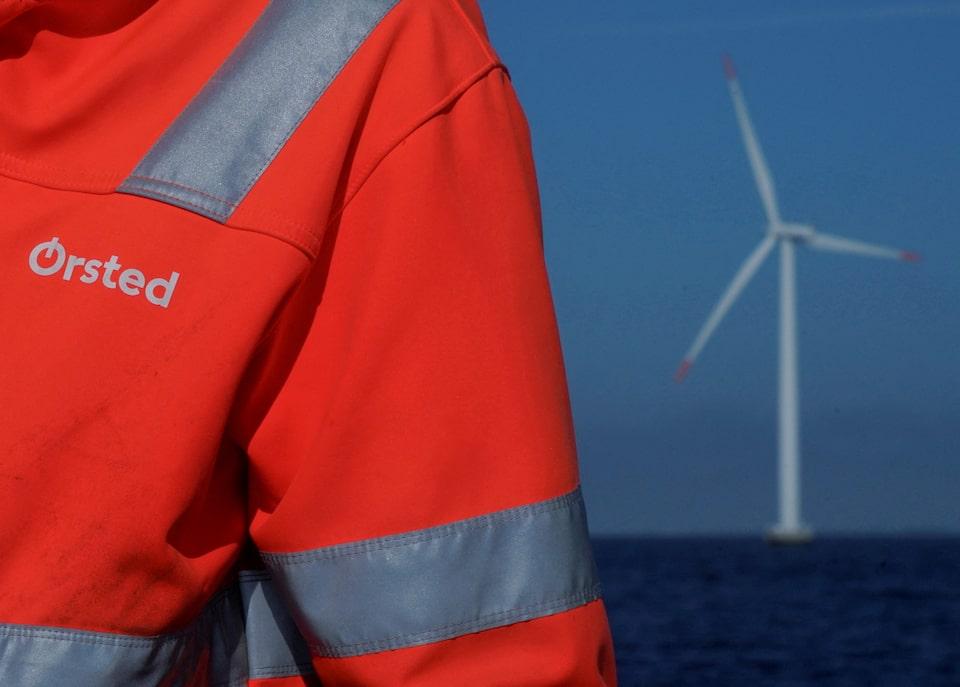
Equinor supports Orsted's rights issue Will subscribe for shares worth up to $941 million Equinor sees value in strategic collaboration with Orsted Will nominate candidate to Orsted’s board COPENHAGEN, Sept 1 (Reuters) - Norway's Equinor (EQNR.OL) , opens new tab pledged on Monday to support Orsted's (ORSTED.CO) , opens new tab planned $9.4 billion rights issue as the Danish offshore wind developer seeks to bolster its balance sheet in the face of President Donald Trump's hostility to wind power. The move by the Norwegian energy group, in which the state owns a 67% stake, signals its ambition to strengthen ties with Orsted as both companies navigate regulatory hurdles in the U.S. offshore wind market. Sign up here. "In response to the challenges facing offshore wind, the industry will see consolidation and new business models," Equinor said in a statement. "Equinor believes that a closer industrial and strategic collaboration between Orsted and Equinor can create value for all shareholders in both companies," it added. Orsted will ask shareholders at an extraordinary general meeting on Friday to approve the capital raise, citing "material adverse developments" in the U.S. sector. Equinor, which holds a 10% stake in Orsted, said it plans to subscribe for new shares worth up to 6 billion Danish crowns ($941 million) and expressed confidence in Orsted’s business and the competitiveness of offshore wind energy. Equinor also plans to nominate a candidate to Orsted’s board ahead of its next annual general meeting. The U.S. Bureau of Ocean Energy Management (BOEM) last month issued a work-stop order for Orsted's $1.5 billion Revolution Wind project, which was 80% complete, marking its second major suspension of an offshore wind project this year. BOEM previously halted Equinor's Empire Wind 1 project off New York in April. Equinor said it was monitoring the situation in the U.S. closely and will remain in dialogue with Orsted as developments unfold. Despite the U.S. setback, Orsted, which is 50.1% owned by the Danish state, reiterated plans for the rights issue, and the Danish finance ministry has confirmed its commitment to participate. ($1 = 6.3751 Danish crowns) https://www.reuters.com/sustainability/climate-energy/norways-equinor-backs-orsteds-plans-raise-capital-following-us-offshore-wind-2025-09-01/
2025-09-01 06:24
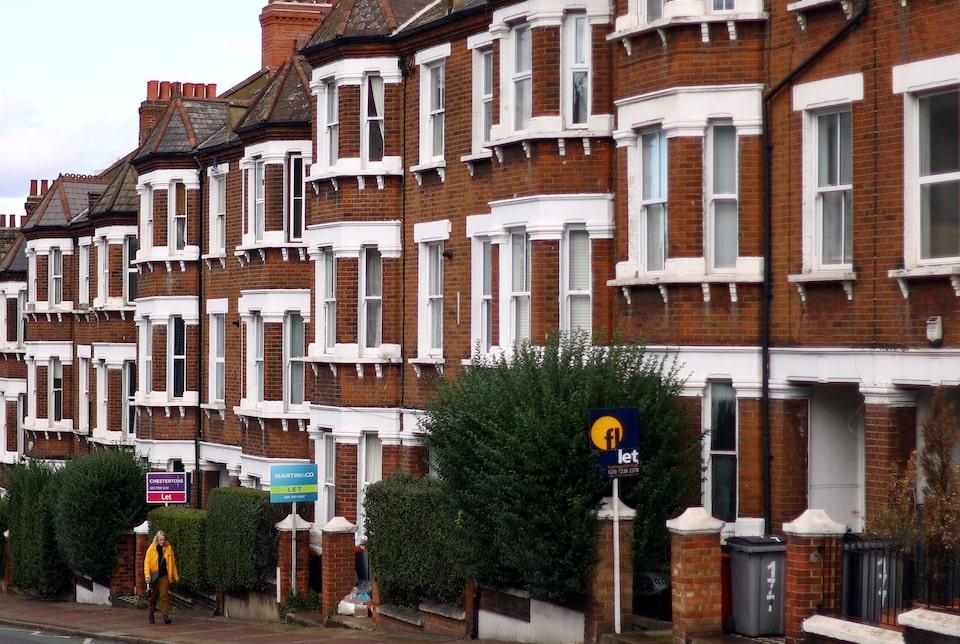
LONDON, Sept 1 (Reuters) - British house prices unexpectedly fell in August as buyers struggled to afford high valuations, mortgage lender Nationwide Building Society said on Monday. Property prices slipped by 0.1% last month from July, Nationwide said, the third month-on-month fall since April when a tax break expired for buyers of many lower-value homes. Sign up here. Compared with 12 months earlier, prices in August were up by 2.1%, the joint weakest rate of growth since June of last year. Economists polled by Reuters had forecast a 0.2% monthly rise and a 2.8% annual increase. Prices were rising by almost 5% in annual terms at the end of last year ahead of the end of the stamp duty land tax exemption. "The relatively subdued pace of house price growth is perhaps understandable, given that affordability remains stretched relative to long-term norms," Nationwide Chief Economist Robert Gardner said. An average earner buying a typical first-time home with a 20% deposit currently faces a monthly mortgage payment equivalent to around 35% of take-home pay, well above the long run average of 30%, he said. The Bank of England cut its benchmark interest rate to 4% from 4.25% on August 7 but it also signalled concern about inflation pressures in the economy that could slow the pace of further reductions in borrowing costs. Last month, the Royal Institution of Chartered Surveyors said a recovery in the housing market had lost steam as some buyers worried about possible tax increases in finance minister Rachel Reeves' next budget. "The risk is that speculation over possible property tax rises in the autumn Budget, such as a mansion tax, hits buyer sentiment further in the coming months," Ashley Webb, UK economist with consultancy Capital Economics, said. ($1 = 0.7572 pounds) https://www.reuters.com/business/finance/uk-house-prices-unexpectedly-fell-august-nationwide-data-shows-2025-09-01/
2025-09-01 06:09
Rescuers comb rubble of homes in remote mountainous area Helicopters ferry the injured to hospital Midnight quake hit at a depth of 10 km (6 miles) KABUL, Sept 1 (Reuters) - About 622 people were killed and more than 1,500 injured in an earthquake that struck eastern Afghanistan, authorities said on Monday, as helicopters ferried the wounded to safety from rubble being combed in the hunt for survivors. The disaster will further stretch the resources of the South Asian nation already grappling with humanitarian crises, from a sharp drop in aid to a huge pushback of its citizens from neighbouring countries. Sign up here. The quake of magnitude 6 injured more than 1,500, the Taliban-run Afghan interior ministry said in a statement that put the death toll at 622. Earlier state-run broadcaster Radio Television Afghanistan (RTA) put the toll at about 500. In Kabul, the capital, health authorities said rescuers were racing to reach remote hamlets dotting an area with a long history of earthquakes and floods. "Figures from just a few clinics show over 400 injured and dozens of fatalities," ministry spokesperson Sharafat Zaman said in a statement that warned of higher casualties. Images from Reuters Television showed helicopters ferrying out the affected, while residents helped soldiers and medics carry the wounded to ambulances. Three villages were razed in the province of Kunar, with substantial damage in many others, the health ministry said. Reports showed 250 dead and 500 injured, said Najibullah Hanif, the provincial information head of Kunar, adding that the tally could change. Early reports showed 30 dead in a single village, with hundreds of injured taken to hospital, authorities said. Rescuers were scrambling to find survivors in the area bordering Pakistan's Khyber Pakhtunkhwa region, where homes of mud and stone were levelled by the midnight quake hit at a depth of 10 km (6 miles). "So far, no foreign governments have reached out to provide support for rescue or relief work," a foreign office spokesperson said. Afghanistan is prone to deadly earthquakes, particularly in the Hindu Kush mountain range, where the Indian and Eurasian tectonic plates meet. A series of earthquakes in its west killed more than 1,000 people last year, underscoring the vulnerability of one of the world's poorest countries to natural disasters. https://www.reuters.com/world/asia-pacific/afghanistan-earthquake-kills-622-with-more-than-1500-injured-2025-09-01/

2025-09-01 06:04
CAIRO, Sept 1 (Reuters) - Yemen's Houthis said on Monday they launched a missile towards the Liberia-flagged Israeli-owned tanker 'Scarlet Ray' ship near Saudi Arabia's Red Sea port city of Yanbu. British maritime security firm Ambrey said on Sunday that a the tanker reported an explosion nearby, southwest of Yanbu. Sign up here. A vessel reported "a splash in close proximity from an unknown projectile and heard a loud bang", the United Kingdom Maritime Trade Operations (UKMTO) said, adding that the vessel's crew were all safe and it was continuing to its next voyage. In a later update, Ambrey said it assessed the vessel to be "aligned with" the targets of Yemen's Iran-aligned Houthis' profile given that it was publicly Israeli-owned. Since 2023, the Houthis have been attacking vessels in the Red Sea that they deem to be affiliated with Israel in what they describe as support of Palestinians in Gaza. UKMTO did not identify the party responsible, but said authorities were investigating. Saudi Arabia led a coalition that launched a military campaign in Yemen from early 2015 to support the Gulf-backed government against the Houthis, who had seized the capital Sanaa in 2014. The coalition has in the past foiled attempted assaults using explosive-laden boats it says were launched by the Houthis. https://www.reuters.com/world/middle-east/houthis-say-they-launched-missile-israeli-owned-tanker-near-saudi-arabias-yanbu-2025-08-31/

2025-09-01 05:51
Asian stock markets: Nikkei slips, China holds recent hefty gains Gold rises as dollar slips, oil gives ground Raft of US data to test market wagers on Fed rate cuts Trump tariff policy in doubt after court ruling SYDNEY, Sept 1 (Reuters) - Asian shares were mostly downbeat on Monday as profit-taking hit some high-flying Japanese tech groups, though China remained well supported by optimism over its home-grown AI ventures. A holiday in the U.S. made for thin trading, with Wall Street and European share futures managing minor gains after retreating on Friday. Sign up here. The dollar and bonds were under some pressure ahead of a busy week for U.S. data which includes surveys of manufacturing and services, and a range of labour numbers culminating in the August payrolls report on Friday. Median forecasts are for an increase of 75,000, though estimates range widely from zero to +110,000 due to the uncertainty caused by July's surprisingly weak report, while the jobless rate is seen ticking up to 4.3%. Analysts also cautioned the August report has shown a bias to undershoot forecasts over the past decade. A result in line or softer would cement market expectations for the Federal Reserve to cut rates at its meeting on September 17, which futures imply is a near 90% probability. "Although inflation and growth data don't scream out for a rate cut, at this stage it would likely require a significant positive employment surprise to stop the Fed from moving forward, given their concern about the sharp recent deceleration in job growth," said Michael Feroli, chief U.S. economist at JPMorgan. The prospect of lower borrowing costs has underpinned Wall Street near record highs, and would be timely given September has been the worst performing month of the year for the S&P 500 over the past 35 years. S&P 500 futures and Nasdaq futures both dipped 0.1%. EUROSTOXX 50 futures firmed 0.1%, while FTSE futures were flat and DAX futures gained 0.1%. Japan's Nikkei (.N225) , opens new tab fell 1.6%, led by a 9% slide in chip group Advantest (6857.T) , opens new tab which finally ran into selling after climbing 49% in the past three months. South Korea's market (.KS11) , opens new tab slipped 0.7%. Indonesian markets (.JKSE) , opens new tab lost 1.5% after protests shook the government and forced the central bank to defend the rupiah. CHINA BULLS MSCI's broadest index of Asia-Pacific shares outside Japan (.MIAPJ0000PUS) , opens new tab added another 0.4%, after hitting a four-year high last week on the back of a bull run in Chinese stocks. Chinese blue chips (.CSI300) , opens new tab also gained 0.4%, having surged 10% over August as abundant liquidity sought capital returns in an otherwise low-yield environment. The RatingDog China General Manufacturing PMI, compiled by S&P Global, rose to 50.5 in August, up from 49.5 in July and outpacing the official survey. Hong Kong shares of Alibaba (9988.HK) , opens new tab jumped almost 19% in the biggest one-day rise since early 2022 on optimism over its cloud business. There were also reports that DeepSeek had opted for Huawei (HWT.UL) chips to train some of its AI models. U.S. tariff policy remained a concern after a Court of Appeals ruled many of President Donald Trump's sweeping levies were illegal, but left them in place until mid-October awaiting an appeal to the Supreme Court. The White House has other means to apply sectoral levies but it puts a question mark over trade agreements already reached or being negotiated. Talks with Japan have hit a stumbling block over rice, while negotiations with South Korea have become bogged down. "If the Supreme Court upholds the ruling, the Treasury would still need to return most of the now close to $100 billion in additional customs duties collected over the past five months, and there is a danger that other countries would backtrack on any preliminary agreements," noted Paul Ashworth, chief North America economist at Capital Economics. Investors will also be wary of Trump's attacks on the independence of the Fed this week, with Fed Governor Lisa Cook set to file fresh arguments against her firing on Tuesday. A confirmation hearing for Stephen Miran, Trump's pick for another Fed position, is scheduled for Thursday. The political pressure for faster rate cuts has been a drag on the U.S. dollar, which was pinned at 97.791 having shed 2.2% last month. The euro edged up 0.3% to $1.1710 , while the dollar held at 146.93 yen . In commodity markets, gold has benefited from the dollar's decline and the outlook for lower rates to rise 2.2% last week. The metal added another 1.0% to a four-month top of $3,481 an ounce . Oil prices were on the defensive ahead of a planned increase in output from OPEC+ in coming months. Brent dropped 0.4% to $67.21 a barrel, while U.S. crude eased 0.4% to $63.78 per barrel. https://www.reuters.com/world/china/global-markets-wrapup-3-2025-09-01/