2025-09-01 05:37
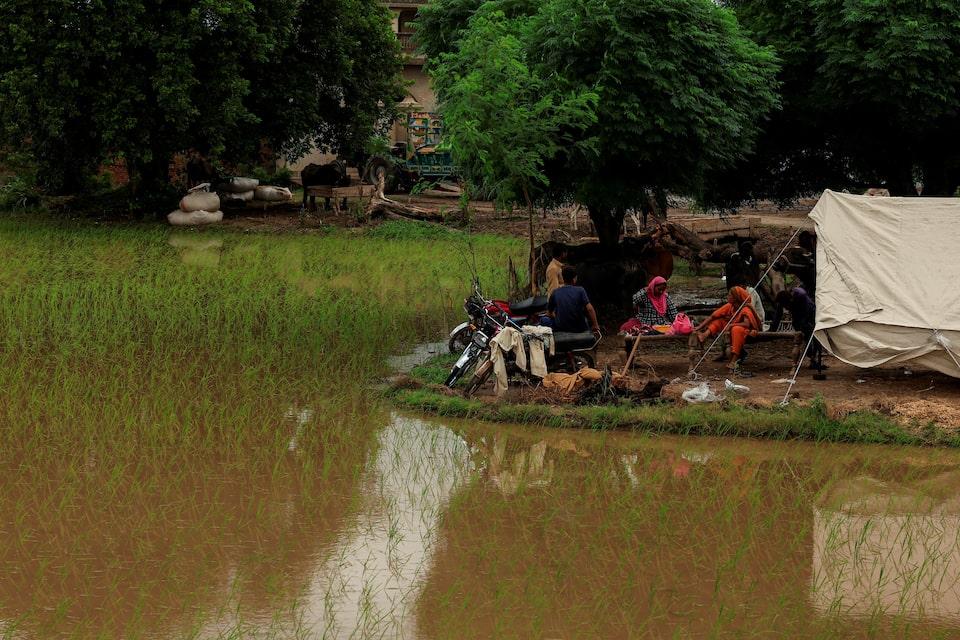
Punjab floods submerge 2,000 villages, two million affected Hundreds of muddy tent camps now home to flood refugees Livelihoods washed away in the worst floods since 1988 Destroyed crops threaten food security and fuel inflation CHINIOT, Pakistan, Sept 1 (Reuters) - Across the fertile plains of Pakistan's Punjab, families are struggling to rebuild their lives after the worst flooding in decades swept away homes, destroyed crops, and drowned livestock. "Thirteen of my 15 acres are gone," said Muhammad Amjad, 45, a rice and potato farmer in Chiniot, as he stood by submerged fields. "Our rice is completely destroyed. Women and children have evacuated. Men are left guarding what remains." Sign up here. The provincial disaster management authority said more than two million people have been affected, with more than 2,000 villages inundated. Approximately 760,000 people and 516,000 animals have been evacuated, and at least 33 people have died in less than a week. Amish Sultan, 50, lost his only source of income. "I have 10 buffaloes. They're so weak there's no milk left for my children, let alone to sell. I used to earn 100,000 to 150,000 rupees a month. That stability is gone." Farm labourer Mehdi Hassan, 40, said entire neighbourhoods were washed away. "My home is completely destroyed. We’ve been left on the roadside with whatever we could carry. We tried to build our own dams but the water still took everything." Officials say the floods are the worst in decades, with major dams near capacity, and more rain is forecast. BUMPER TO BUST Farmers and exporters warn the impact on agriculture will be staggering. Rice, sugarcane, maize, vegetables, and cotton fields across Punjab are under water. "We were expecting a bumper rice crop this year," said Ibrahim Shafiq, export manager at Latif Rice Mills. "Paddy was forecast to open at 3,200–3,600 rupees per 40kg, but with flood damage, prices could rise to 5,000–5,500. That will push rice prices up for local consumers and make us uncompetitive against India internationally." Cotton losses also threaten the textile industry, which makes up more than half of Pakistan’s exports, at a time when the country faces a 19% U.S. tariff in its biggest market. Agriculture technology firm Farmdar said the damage is likely to be exponential, given the vast stretches of farmland along the rivers now under water. Ghasharib Shoukat, co-founder of commodities platform Zarai Mandi warned wheat, vegetable, and cotton shortages would ripple through supply chains, hurting exports and household budgets. The disaster comes at a sensitive moment for Pakistan’s fragile economy. Inflation had cooled to 4.1% in July from 11.1% a year earlier, and food inflation, which spiked above 50% in 2023, had eased. Officials now expect the August inflation reading, due Monday, to come in at 4–5%, with food shortages already driving prices higher. Analysts say delayed wheat sowing, shrinking rice exports and the need to import cotton will deepen the pressure. TENTS NOW, TOMORROW UNKNOWN The destruction extends beyond fields. In Lahore, 38-year-old rickshaw driver Aslam said he waded through six feet (two metres) of water to pull his three-wheeler vehicle to safety. "I’ve lived near the Ravi all my life and it never flooded my home before. This time it came inside in hours. If I hadn’t saved my rickshaw, we would have lost everything. It is my only livelihood," said Aslam, who is now living in a relief tent. A muddy tent city has been erected near the Ravi River, where families huddle under tarpaulins and tents, some beside foul-smelling drains. About 150 to 200 camps have been set up for the displaced just in that area, said Dr. Ijaz Nazeer of Al Khidmat Foundation. Each tent is home to around five to eight people. With three of Pakistan’s main rivers in flood, authorities in the Punjab have set up 511 relief camps, 351 medical sites, and 321 veterinary facilities, evacuating nearly 481,000 people and 405,000 animals so far. More than 15,000 police officers have been deployed as monsoon rains continue. Farmers and experts warn the cost of recovery will run into billions of rupees to rebuild homes and re-establish farms. Farmer and activist Aamer Hayat Bhandara said unless the recovery is supported, food insecurity will deepen. “Farmers grow the food that sustains us all. If they are left alone in times of disaster, the whole nation will suffer,” he said. https://www.reuters.com/sustainability/climate-energy/punjab-floods-washed-away-thousands-villages-farms-now-devastation-threatens-2025-09-01/
2025-09-01 05:26
US dollar index hits 5-week low ahead of US data Robust figures could challenge current Fed rate cut expectations Trade policy and Fed independence still in focus Yuan underpinned by central bank fixings, Chinese stock rally Sept 1 (Reuters) - The dollar hit a 5-week low on Monday as investors looked ahead to a raft of U.S. labour market data this week that could affect expectations for the Federal Reserve's monetary easing path. Traders were also assessing Friday's U.S. inflation figures and a court ruling that most of Donald Trump's tariffs are illegal, as well as the U.S. president's ongoing tussle with the Fed over his attempt to fire Governor Lisa Cook. Sign up here. Money markets have recently priced an around 90% chance of a 25-basis-point Fed rate cut in September and around 100 bps of easing by autumn 2026, according to the CME FedWatch tool. Against a basket of currencies, the dollar eased 0.22% to 97.64 , after hitting 97.552, its lowest level since July 28. It clocked a monthly decline of 2.2% on Friday. Investors will be focussed on Friday's U.S. nonfarm payrolls report, which will be preceded by data on job openings and private payrolls. Analysts said the U.S. economy is no longer outperforming as it did for much of the past decade, justifying a weaker dollar, and further signs of a softening labour market are expected to bolster that narrative. "Severe weakness (in economic data) would point to an even more forceful Fed response than market pricing predicts, but if May/June weakness is revealed as a statistical mirage, rate cuts would seem unwarranted given the almost certain prospect of rising inflation over the next year or so," Societe Generale economist Klaus Baader said. Some analysts still see the chance of a 50-bp move by the Fed later this month. The euro was up 0.35% to $1.1724, while sterling edged 0.18% higher to $1.3528. U.S. markets are closed for a holiday on Monday. Political risks are in focus as the French government faces likely defeat in a confidence vote over plans for sweeping budget cuts. Analysts noted that such risks tend to weigh on the currency only when there are clear signs of contagion within the euro area, something that is not evident at the moment. Investors are keeping a close eye on trade policy while the U.S. continues negotiations with key trading partners. "We do not see much market impact from the court ruling," Jefferies economist Mohit Kumar said. "The matter would pass on to the Supreme Court which is likely to rule in favour of Trump." The greenback has also been weighed down by worries over Fed independence, as Trump steps up his campaign to exert more influence over monetary policy. "Fiscal dominance risks should be more clearly apparent in both higher long-end U.S. inflation break-evens and a higher risk discount on the dollar, none of which is materializing yet," George Saravelos, head of forex strategy at Deutsche Bank, said. "Fiscal dominance" refers to a scenario where central banks are pressured to ease monetary policy to help finance large budget deficits. The dollar was flat at 147.00 against the yen after a monthly decline of 2.5% in August. The onshore yuan steadied near Friday's roughly 10-month high and last stood at 7.1326 per dollar. The yuan has drawn support from firm central bank fixings in the onshore market and a buoyant domestic stock market, even as China's economy struggles to mount a solid recovery. China's factory activity in August expanded at the quickest pace in five months on the back of rising new orders, a private-sector survey showed on Monday, contrasting with an official survey released on Sunday that showed factory activity shrinking for the fifth straight month. https://www.reuters.com/world/africa/dollar-hits-lowest-since-end-july-ahead-us-jobs-data-2025-09-01/
2025-09-01 04:49
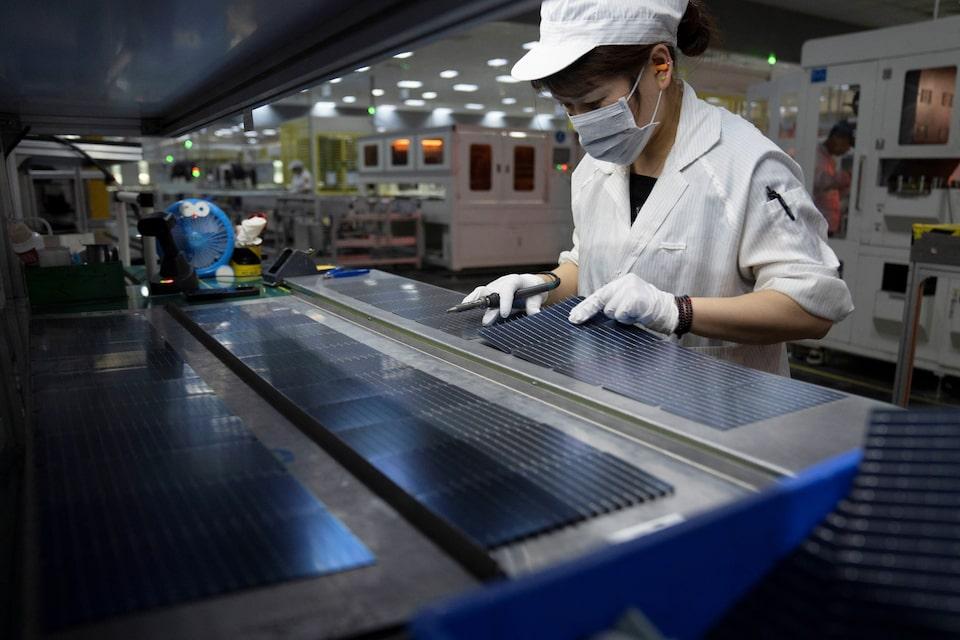
BEIJING, Sept 1 (Reuters) - A GCL Technology Holdings (3800.HK) , opens new tab official signalled in a call with investors on Sunday that more information on a plan to restructure China's polysilicon industry would be released soon. "We believe that clearer information should come out soon about the reform, and we will have a better grasp of how our future cash flow will go," GCL's Chief Financial Officer Yang Wenzhong said in response to a question about a proposed acquisition fund. He added it was "not 100 percent certain" that reform would happen this year. Sign up here. Yang said GCL may use some of its own cash to support the reform but did not yet know how much, so was being very careful in managing its funds. A previous proposal by GCL to restructure the industry, of which management did not provide further details in the meeting, would see GCL and other top producers buy up and shut down about one-third of the industry's capacity. Expectations are that would increase prices and the higher prices would be passed on to the loss-making solar panel industry downstream. Analysts have said it is unclear where the money would come from in the highly indebted industry, although banks were likely to be one source of financing for the restructuring. Yang also told investors GCL Technology would likely make a profit in August and September. Polysilicon spot prices have risen as Chinese regulators have signalled they would crack down on companies selling at overly low prices. GCL's losses for the first half of 2025, before the anti-price war movement, widened to 1.78 billion yuan ($249.6 million), the company reported on Friday. https://www.reuters.com/sustainability/boards-policy-regulation/chinas-gcl-expects-more-information-soon-polysilicon-restructuring-2025-09-01/
2025-09-01 04:36
Sept 1 (Reuters) - A look at the day ahead in European and global markets from Wayne Cole. It's been a resistant start to September with much of Asia in the red and Wall Street on holiday, leaving S&P 500 futures flat in what is typically a bad month for the market. European share futures have hardly budged, but China's market remains well supported by a tide of liquidity looking for a home in a low-yield world. Sign up here. Chinese blue chips (.CSI300) , opens new tab climbed more than 10% last month, helped in part by talk Beijing was pushing firms to develop a home-grown alternative to Nvidia's (NVDA.O) , opens new tab AI chips. Hong Kong shares of Alibaba (9988.HK) , opens new tab jumped almost 19% in the biggest one-day rise since early 2022 on optimism over its cloud business. There were also reports DeepSeek had opted for Huawei (HWT.UL) chips to train some of its AI models. That may have sparked some profit taking in Japanese chip group Advantest (6857.T) , opens new tab, which dived 9.1%, giving back some of the near-50% gains made in the past three months. AI-focused investor SoftBank Group (9984.T) , opens new tab also dropped 6% and contributed to a 2% loss for the Nikkei (.N225) , opens new tab. Chinese investors might also be encouraged that President Trump is running into legal challenges to his tariff policies. While the levies remain in place pending an assumed appeal to the Supreme Court sometime in October, the ruling could lead trading partners to drag their feet on negotiations with the White House. Indeed, of the trade "deals" supposedly already agreed, few if any have been signed or ratified - more concepts of a plan for a framework of a deal. Talks with Japan have hit a stumbling block over rice, while negotiations with South Korea are bogged down despite the recent leaders' meeting. Markets seem to be assuming the conservative majority on the Supreme Court will find a way for trump to keep the tariffs in place. Were the judges to actually uphold the appeals court ruling, then presumably many of the deals would be defunct and Trump's leverage for new ones greatly diminished. Treasury would also have to repay the more than $100 billion collected, which, since it is likely being spent, will have to be borrowed. Apart from it being a logistical nightmare, the money would go to the importers who paid the tariffs, not the American consumers who paid higher prices. Would the importers roll back any price hikes to pre-tariff levels, or keep them up to fatten margins? And what happens to the $3 trillion or more the taxes were supposed to bring in to cover tax cuts? Who knew trade law could be so much fun? Key developments that could influence markets on Monday: - European PMIs for August, EU unemployment for July - speech by ECB President Christine Lagarde. Appearances by ECB Board members Piero Cipollone and Isabel Schnabel https://www.reuters.com/world/china/global-markets-view-europe-2025-09-01/
2025-09-01 04:14
Metaplanet shares surged 760% in past year Metaplanet plans to sell up to 550 million shares for about $884 million Eric Trump named adviser to Metaplanet in March TOKYO, Sept 1 (Reuters) - Eric Trump is expected to attend a shareholder meeting of Japanese bitcoin treasury company Metaplanet (3350.T) , opens new tab in Tokyo on Monday, as the U.S. president's family expands its crypto ventures internationally. The second son of President Donald Trump was named in March as an adviser to Metaplanet, which holds more than $2 billion in bitcoin, and his attendance would follow an appearance last week at the Bitcoin Asia conference in Hong Kong. Sign up here. Metaplanet stockholders were asked to approve a plan that would sell up to 550 million new shares overseas for 130.3 billion yen ($884.41 million), with the bulk of the proceeds to be spent on buying more bitcoin. Three people who came out of the meeting held in the Shibuya area of central Tokyo said the capital-raising plan was approved, and that Eric Trump was due to speak at a fireside chat at the same venue later in the day. Metaplanet declined to comment on Eric Trump's involvement in the meeting, when Reuters contacted the company before the meeting began. A representative for him did not respond to requests for comment. Donald Trump has promised to be the "crypto president", saying he backs the asset class because it can improve the banking system and increase the dominance of the U.S. dollar. Some of Trump's businesses in areas such as crypto, which have added substantially to his wealth, benefit from U.S. policy shifts under him and have invited criticism. American Bitcoin, a miner of the cryptocurrency founded by Eric Trump and his brother Donald Trump Jr., is aiming to list on the Nasdaq this month. Asher Genoot, CEO of the company that presently holds 80% of American Bitcoin, said Eric Trump would attend the Metaplanet event, which was previously reported by Bloomberg. COSTUMES AND FOOD TRUCKS At the meeting venue, it was a festive scene, with people in costumes lined up at the entrance, food trucks assembled, and a K-Pop band due to perform. Media were not allowed to observe the meeting, which is due to run till late afternoon. Previously a hotel operator, Metaplanet's pivot into crypto has paid off handsomely. Citing Michael Saylor's bitcoin treasury firm Strategy MSTR.O , opens new tab as an inspiration, founder and chief executive Simon Gerovich liquidated most of Metaplanet's hotel assets, already in the doldrums due to the COVID-19 pandemic, and piled into the cryptocurrency. Selling bonds and warrants, Metaplanet has continued to buy bitcoin and is now the seventh-largest holder among public treasuries globally, according to BitcoinTreasuries.net. It announced on Monday it added another 1,009 coins to bring its total hoard to 20,000. Its shares have surged nearly 760% in the past 12 months, compared with a 14% advance in the Topix (.TOPX) , opens new tab. The stock was down 3.9% in Monday afternoon trading in Tokyo. Metaplanet appointed Eric Trump earlier this year to a newly formed board of advisers, calling him a "leading voice and advocate of digital asset adoption worldwide". The company, which trades on the Standard section of the Tokyo Stock Exchange, was previously known as Red Planet Japan and focused on hotel operations. Before that, it was a wholesaler of music CDs. The company's subsidiary, Red Planet Hotels Japan, filed for bankruptcy in May 2024. ($1 = 147.3300 yen) https://www.reuters.com/world/asia-pacific/eric-trump-advised-japanese-bitcoin-firm-metaplanet-vote-capital-raising-plan-2025-09-01/

2025-09-01 03:02
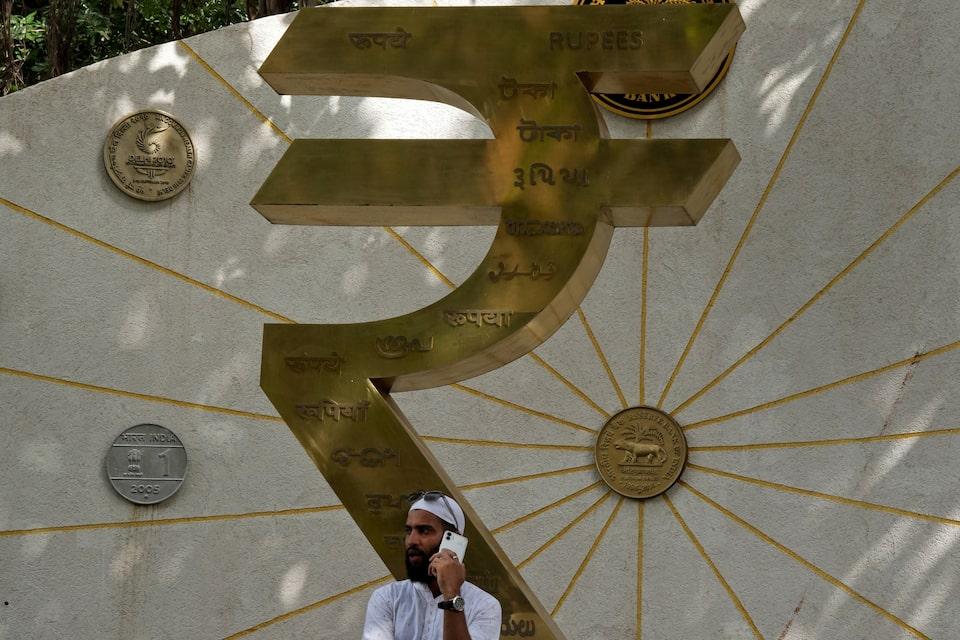
MUMBAI, Sept 1 (Reuters) - The Indian rupee is likely to remain under stress on Monday after falling past the 88-per-dollar barrier last week, with traders saying the move has emboldened speculators to press harder against the currency and keep downside risks alive. The 1-month non-deliverable forward suggests the rupee will open little changed from 88.1950 on Friday, when the currency sank to a record low of 88.3075. Sign up here. The rupee's slip past 88 on Friday surprised most market participants, who had expected the Reserve Bank of India to step in more forcefully following the imposition of additional U.S. tariffs last week. One banker said the RBI may have opted against defending the 88 level too aggressively in the wake of heavy equity outflows and dollar demand from speculators. Another suggested the central bank may have been signalling that it would not defend particular levels at any cost. Nearly $950 million of equity sales by foreign investors on Friday, coupled with heavy importer and speculative dollar demand, plus "macro considerations" may have led the RBI to allow the rupee to drop past 88, a senior treasury official at a mid-sized private sector bank said. With the breach behind it, the risk-reward on the rupee is now decisively skewed to the downside, he said. "The next focus for markets is identifying the level where the RBI signals it will not tolerate further losses." Meanwhile, India’s June-quarter GDP beat forecasts, though traders said the surprise is unlikely to aid the rupee. Madhavi Arora, lead economist at Emkay Global, said the upside reflected exceptionally soft deflators, front-loaded government spending and pre-tariff export frontloading, warning these supports may reverse in coming quarters. ASIA WEAK Most Asian currencies weakened at the beginning of the week, offering little support to the rupee. The focus this week is on a raft of U.S. labour data that will guide expectations for how deep the Federal Reserve cuts rates this year. Investors will parse U.S. job openings and private payrolls before Friday’s critical nonfarm payrolls data. https://www.reuters.com/world/india/rupee-likely-stay-under-pressure-after-breach-critical-88usd-mark-2025-09-01/