2025-08-29 16:03
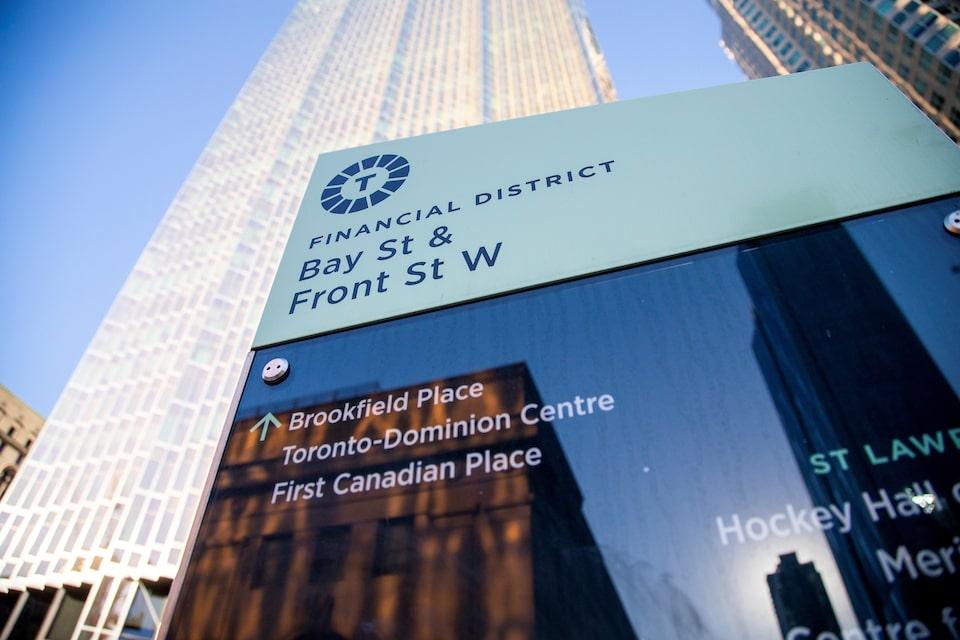
OTTAWA, Aug 29 (Reuters) - Canada recorded a higher budget deficit of C$3.34 billion ($2.42 billion) over the first three months of the 2025/26 fiscal year as government expenditures grew faster than revenues, the finance ministry said on Friday. By comparison, the deficit in the same period a year earlier had been $2.88 billion, it said in a statement. Sign up here. Program expenses rose 4.6% on increases on major transfers to persons and provinces. Public debt charges decreased by 0.6% on lower interest rates on treasury bill but this was partly offset by higher average effective rates on an increased stock of marketable bonds, the ministry said. Year-to-date revenues grew by 2.9%, largely reflecting higher personal income tax revenue, revenue from other taxes and higher custom import duties. Duties collected through import taxes jumped 183% for the first three months through June to C$3.57 billion, mainly on account of counter-tariffs imposed on U.S. imports. On a monthly basis, Canada posted a surplus of C$3.63 billion in June, compared to a surplus of C$939 million in June 2024. ($1 = 1.3817 Canadian dollars) ((Reuters Ottawa bureau; [email protected] , opens new tab)) Keywords: CANADA BUDGET/ https://www.reuters.com/world/americas/canada-budget-deficit-over-first-three-months-202526-increases-c334-bln-2025-08-29/
2025-08-29 16:02
Second-quarter annualized GDP contracts by 1.6%, StatsCan said Analysts had forecast 0.6% second-quarter drop, growth of 0.1% in June GDP pulled down by big drop in exports, business investments Household and government spending hold up, helping the economy OTTAWA, Aug 29 (Reuters) - Canada's economy contracted in the second quarter much more than anticipated on an annualized basis as U.S. tariffs squeezed exports, but higher household and government spending cushioned the impact, data showed on Friday. The GDP for the quarter that ended June 30 decelerated by 1.6% from downwardly revised growth of 2.0% in the first quarter, Statistics Canada said, taking the total annualized growth in the first six months of the year to 0.4%. Sign up here. This was the first quarterly contraction in seven quarters. A larger-than-expected deceleration increases the chances of a Bank of Canada rate cut in September. The BoC has kept rates steady at 2.75% at its last three meetings. Money markets increased their September 17 rate cut bets to 48% after the GDP data was released from 40% before. StatsCan said the economy contracted by 0.1% in June, mainly led by a decline in output from goods-producing industries that account for a quarter of the country's GDP. "That weaker than expected trend in the monthly figures makes today's release supportive for our forecast of a September interest rate cut," Andrew Grantham, senior economist at CIBC Capital Markets, wrote in a note. However, he added that jobs and inflation data for August would be critical for the rates decision. The quarterly GDP is calculated based on income and expenditure, while the monthly GDP is derived from industrial output. This is the third month in a row that GDP, based on industry output, declined and was the first time in three years that the economy contracted for three consecutive months. Analysts polled by Reuters had forecast second-quarter GDP would contract by 0.6% and the June monthly GDP would expand by 0.1%. THIRD QUARTER LIKELY TO BE FLAT An advance estimate for July showed the economy could grow by 0.1% on a month-on-month basis, meaning the third quarter would mark an improvement. Still, economists said that slim growth in July would be worse than the BoC had predicted, which could bolster chances that it steps in to support growth. "So while the July flash showed that the economy largely recovered the lost ground from June, our early tracking points to a flat-to-slightly-negative estimate for Q3 GDP," said Royce Mendes, managing director at Desjardins. The BoC had said last month that after a substantial contraction in the second quarter, Canada's economy would likely grow by around 1% in the second half under the current tariff scenario. The Canadian dollar traded down 0.17% to 1.3771 to the U.S. dollar, or 72.62 U.S. cents. Yields on the two-year government bonds dropped further after the data, by 2.8 basis points to 2.664%. Exports declined 7.5% in the second quarter, the statistics agency said, adding this was the biggest drop in five years. Business investment in machinery and equipment also contracted for the first time since the COVID-19 pandemic, with investments falling 0.6% in the second quarter. Domestic demand, however, grew by 3.5%, indicating health in the domestic economy. The boost came mainly from household final consumption expenditure, which jumped by 4.5% on an annualized basis, residential investments, which rose 6.3%, and government final consumption expenditure, which surged by 5.1%, StatsCan noted. https://www.reuters.com/world/americas/canadas-second-quarter-gdp-contracts-rate-cut-bets-increase-2025-08-29/

2025-08-29 13:06
TORONTO, Aug 28 (Reuters) - Canada's economy contracted in the second quarter by a much larger degree than anticipated on an annualized basis as U.S. tariffs squeezed exports, but higher household and government spending cushioned some of the impact, data showed on Friday. Market reaction: CAD/ Sign up here. LINK: https://www150.statcan.gc.ca/n1/daily-quotidien/250829/dq250829a-eng.htm?HPA=1&indid=3278-1&indgeo=0 , opens new tab COMMENTS JIMMY JEAN, CHIEF ECONOMIST AT DESJARDINS GROUP "It's a mixed bag... because when we look into the details, it's not a report that's screaming a recession has started in the second quarter. Now it doesn't mean that there might not be more pain ahead on the domestic side in later quarters, but this is really uniquely focused on exports." "Inflation surprise in latest report, and ever since we've had that news of reduction in counter tariffs. All those elements joined together make a pretty strong case to resume cutting rates in September." DEREK HOLT, VICE PRESIDENT OF CAPITAL MARKETS ECONOMICS AT SCOTIABANK "The headline number is the sticker shock is pretty large, I mean the GDP across the gauge is all disappointing, but I think the devil is in the details. Key to me is that the domestic economy performed very strongly. So the measure that I look at is the final domestic demand, it adds consumption, investment to government spending. It was up 3.4% quarter over quarter, annualized in inflation adjusted terms." "If anything they have even weaker case to be cutting rates because you are seeing that strength in the domestic economy over which monetary policy has greater influence than the volatility of trade and inventory numbers. So I still want to see job's data and CPI report after that before coming to a hard decision (on rate cut possibilities)." https://www.reuters.com/world/americas/view-canadas-economy-shrinks-by-more-than-expected-second-quarter-2025-08-29/

2025-08-29 12:35
Second quarter annualized GDP contracts by 1.6%, StatsCan said Analysts had forecast 0.6% drop in Q2, growth of 0.1% in June GDP pulled down by big drop in exports, business investments Household and government spending hold up, helping the economy OTTAWA, Aug 29 (Reuters) - Canada's economy contracted in the second quarter by a much larger degree than anticipated on an annualized basis as U.S. tariffs squeezed exports, but higher household and government spending cushioned some of the impact, data showed on Friday. The GDP for the quarter that ended June 30 decelerated by 1.6% on an annualized basis from a downwardly revised growth of 2.0% posted in the first quarter, Statistics Canada said, taking the total annualized growth in the first six months of the year to 0.4%. Sign up here. This was the first quarterly contraction in seven quarters. A larger-than-expected deceleration in growth could boost chances of rate cut by the Bank of Canada in September. The BoC has kept rates steady at 2.75% at its last three meetings. Money markets were predicting chances of a rate cut on Sept. 17 at close to 40% before the GDP figures were released. StatsCan said the economy contracted by 0.1% in June, mainly led by a decline in output from goods-producing industries, which accounts for a quarter of the country's GDP. The quarterly GDP is calculated based on income and expenditure while the monthly GDP is derived from industrial output. This is the third month in a row that the GDP, based on industry output declined and was the first time in three years that the economy contracted for three consecutive months. Analysts polled by Reuters had forecast second quarter GDP to contract by 0.6% and the June monthly GDP to expand by 0.1%. An advance estimate for July showed the economy could likely grow by 0.1% on a month-on-month basis, signaling that the third quarter might not be as bad as the previous one. Exports, mainly responsible for sinking the economy in Q2, declined 7.5% in the second quarter, the statistics agency said, adding this was the biggest drop in five years. Business investment in machinery and equipment also contracted for the first time since the pandemic, with investments falling 0.6% in Q2. However, some silver lining in the second quarter came from a 3.5% growth in the final domestic demand, an indicator of the health of the domestic economy. This was mainly boosted by household final consumption expenditure which jumped by 4.5% on an annualized basis, residential investments which rose 6.3% and government final consumption expenditure which surged by 5.1%, Statscan noted. https://www.reuters.com/world/americas/canadas-annualized-q2-gdp-contracts-more-than-expected-tariffs-choke-exports-2025-08-29/

2025-08-29 12:24
Investors brace for US inflation data Legal tussle between Trump and Fed's Cook to weigh on sentiment Investors jittery about Fed's independence New Zealand dollar slips after RBNZ Chairman resigns SINGAPORE, Aug 29 (Reuters) - The dollar nudged higher on Friday heading into a key U.S. inflation measure that may influence bets on a rate cut by the Federal Reserve next month which have put the currency on course for a 2% decline in August against a basket of peers. The euro was down 0.2% at $1.1662 and sterling fell 0.4% to $1.3450. Against the yen , the dollar was up 0.2% to 147.255 yen. Sign up here. Money markets are currently pricing in an 86% chance of a rate cut in September, up from 63% a month earlier, CME's FedWatch tool showed. The U.S. core personal consumption expenditure price index is expected to show a 0.3% month-on-month rise for July, according to forecasts by economists polled by Reuters. While the data may contain limited fresh cues on the impact of tariffs, disappointments on personal income and personal spending measures are likely to garner the larger market reaction, given the focus on the health of the U.S. consumer, analysts at Goldman Sachs said in a note. Alongside expectations of rate cuts, President Donald Trump's campaign to exert more influence over monetary policy, including this week's attempt to fire Lisa Cook, one of the Fed's governors, has weighed on the dollar. Cook filed a lawsuit claiming Trump has no power to remove her from office and also filed a motion for a temporary restraining order, the hearing for which is scheduled for Friday. EU INFLATION The legal battle is the latest chapter in Trump's attempts to reshape the central bank after repeatedly criticising the Fed and its Chair Jerome Powell for not cutting interest rates. "While markets remain reluctant to speculate on this Fed story and continue to focus on data-driven short-term developments, the downside risks for the dollar have undoubtedly grown," Francesco Pesole, an FX strategist at ING, said in a note. Fed Governor Christopher Waller said on Thursday he wanted to start cutting rates next month and "fully expects" more rate cuts to follow to bring the central bank's policy rate closer to a neutral setting. Elsewhere, euro zone consumers kept their inflation expectations mostly stable at or above the European Central Bank's 2% target in July, according to an ECB poll released on Friday. Data released on Friday also showed that French consumer prices rose slightly less than anticipated in August while Spain's European Union-harmonised 12-month inflation rate was steady at 2.7%. "We don’t think there will be much in the data to convince markets to materially reprice ECB rate expectations just yet," Pesole said. Among other currencies, the New Zealand dollar , was slightly stronger after Reserve Bank of New Zealand Chairman Neil Quigley tendered his resignation, citing the fallout over the handling of the sudden resignation of the central bank's governor earlier this year. China's yuan hit its strongest level in 10 months against the dollar as steady central bank fixings and a hot domestic stock market drive the currency higher, while the Indian rupee dropped to a record low, weighed down by worries about the economic impact of steep U.S. tariffs on Indian imports. https://www.reuters.com/world/africa/dollar-nudges-ahead-up-inflation-data-course-monthly-drop-2025-08-29/
2025-08-29 12:22
Indians worry new ethanol-blended fuel will hit car performance Government offering no fuel choice to consumers at most pumps India says E20 lowers carbon emissions, concerns unjustified Automakers try to assuage concerns of car owners, issue FAQs NEW DELHI/LUCKNOW, Aug 29 (Reuters) - The Indian government is facing a backlash from motorists after the nationwide rollout of fuel blended with 20% ethanol, amid fears - stoked by a lack of clarity from some automakers - that it may affect the performance of particularly older vehicles. India, the world's third largest car market, set a 2025 target years ago for 20% ethanol blending in fuel, called E20, as part of Prime Minister Narendra Modi's focus on clean energy. Sign up here. But in recent weeks it has become the only choice at nearly all of the country's 90,000 fuel stations. Older blends, like E5 and E10, typically seen as more compatible with old cars, have mostly been removed, leaving drivers with just one choice. The government says E20 lowers carbon emissions, but has conceded in press statements addressing consumer worries that there could be a "marginal" hit on fuel efficiency of old cars. Automakers, already battling slower sales and shortages of rare-earth magnets, have provided mixed guidance, adding to consumer anger over the lack of choice. Public interest litigation against the move will be heard in the Supreme Court on Monday. Two fuel station managers in the northern city of Lucknow told Reuters that drivers were getting so angry that some stations had stopped providing information about the change. "People hurl abuse at us. We then decided to not tell people about it," said one manager, Ramesh Pandey. The ministries of petroleum and road transport did not respond to requests for comment. "India's ethanol journey is unstoppable," petroleum minister Hardeep Singh Puri said on August 8, adding that "some lobbies with vested interests are actively attempting to create confusion." Days later, Puri's ministry said "in case of certain older vehicles, some rubber parts and gaskets may require replacement" calling it a "simple process". 'GIVE ME THE RIGHT FUEL' Automakers are racing to assuage concerns, but there is little clarity on the future of old cars in particular. Skoda has issued an FAQ on its website saying that components of its cars sold in India before April 2020 "are not evaluated" for E20. In a statement to Reuters on Friday, it said vehicles sold after that date were "fully material-compatible", without explaining what happens to older cars. Toyota (7203.T) , opens new tab said in a statement that "a modest variation" in fuel economy in its cars was likely with E20. On Monday, Renault (RENA.PA) , opens new tab told tech consultant Ankur Thakur, 28, via email that his 2022 Renault Triber had "not been tested" for E20 and it was "not advisable" to use the fuel. He posted the screenshot of the email on X, which went viral and attracted more than 700,000 views. Renault then told Thakur - and Reuters in a statement on Friday - that based on government tests E20 poses "no serious challenges" for old cars. Thakur, unconvinced, is now using a pricey no-ethanol fuel still available at select pumps. "Just give me the right fuel my car was originally made for," he told Reuters. A Reuters review of a fuel tank flap and user manual of an Audi Q3 purchased last year in India showed it recommended only E5 and E10 fuel. The fuel tank of a 2024 Mahindra (MAHM.NS) , opens new tab Scorpio was pasted with a warning sticker: "CAUTION. PETROL/E10 FUEL ONLY". Mahindra and Audi did not respond to Reuters queries. https://www.reuters.com/sustainability/climate-energy/indias-push-ethanol-mixed-fuel-sparks-driver-backlash-leaves-carmakers-2025-08-29/