2025-08-29 07:10
Aug 29 (Reuters) - Crypto exchange Binance said on Friday that it resumed all futures trading on the platform after an issue prompted a brief suspension of the service earlier. "The issue affecting Futures UM trading on Binance has been resolved," Binance said, referring to the service that allows users to settle crypto futures in stablecoins USDC and USDT. Sign up here. "All futures trading is now fully operational." https://www.reuters.com/technology/binance-resumes-futures-trading-after-brief-pause-2025-08-29/
2025-08-29 07:05
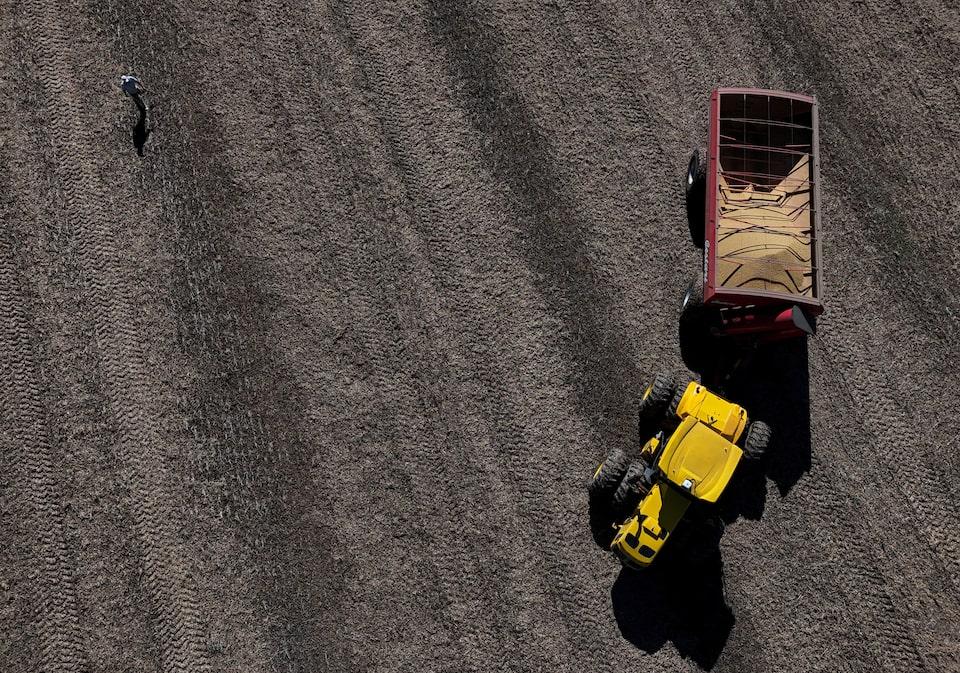
China 2025/26 soybean imports from Argentina, Uruguay may reach up to 10 million tons LatAm suppliers benefit from China's reduced reliance on U.S. China has yet to book US soybean imports for fourth quarter SINGAPORE/BEIJING, Aug 29 (Reuters) - China's soybean importers are boosting purchases from Argentina and Uruguay over the next year to fill the supply gap left by the absence of U.S. shipments as the trade war drags on between Washington and Beijing, according to two trade sources. Chinese processors may buy up to 10 million metric tons of soybeans from the two South American exporters during the 2025/26 marketing year ending next August, which would be a record, said the sources, a Singapore-based trader at an international company which sells soybeans to China and a second person who trades soybeans for China. Sign up here. They have already booked 2.43 million tons from Argentina and Uruguay for shipment from September to May next year, the sources said. From September 2024 to July 2025, China imported 5 million tons of soybeans from the two countries, according to data from the General Administration of Customs. The rise in supply from the two Latin American producers will add to large imports from Brazil to China, dealing another blow to U.S. exporters as the world's biggest soybean importer reduces its dependence on U.S. farm products. With more soybean suppliers to China, the country will need less from the U.S., which will help in the trade war, said the Singapore-based trader. This year, China has not booked any U.S. soybean purchases for shipment in the fourth quarter, which is typically the key sales period for the United States as freshly harvested supplies reach the market. The world's top two economies have imposed tit-for-tat import tariffs that have taken a toll on commerce, particularly agricultural goods such as soybeans. By mid-August, Chinese buyers had booked 1.575 million tons for September loading from Argentina and Uruguay, 660,000 tons for October, and smaller volumes of 66,000 tons each for November, December, and May 2026, the traders said. Since the trade war with China in U.S. President Donald Trump's first term, Beijing has taken steps to reduce its reliance on American farm goods to bolster its food security. The U.S. supplied 12% of China's agricultural imports in 2024, down from 20% in 2016, while Brazil supplied 22% last year, up from 14% in 2016, according to Chinese customs data. The second trader said the higher imports from Argentina and Uruguay are primarily because China is not buying U.S. beans and also because both countries have had bumper harvests. Argentina's 2024/25 soybean harvest was 50.9 million tons, U.S. Department of Agriculture data showed, up from 48.2 million tons a year ago and 25 million tons in 2022/23 when a severe drought curbed yields. In Uruguay, soybean output was 4.2 million tons in the 2024/25 period, up from 3.3 million tons a year ago, the USDA data showed. https://www.reuters.com/world/china/china-boosts-soybean-buys-argentina-uruguay-amid-us-trade-war-sources-say-2025-08-29/
2025-08-29 06:49
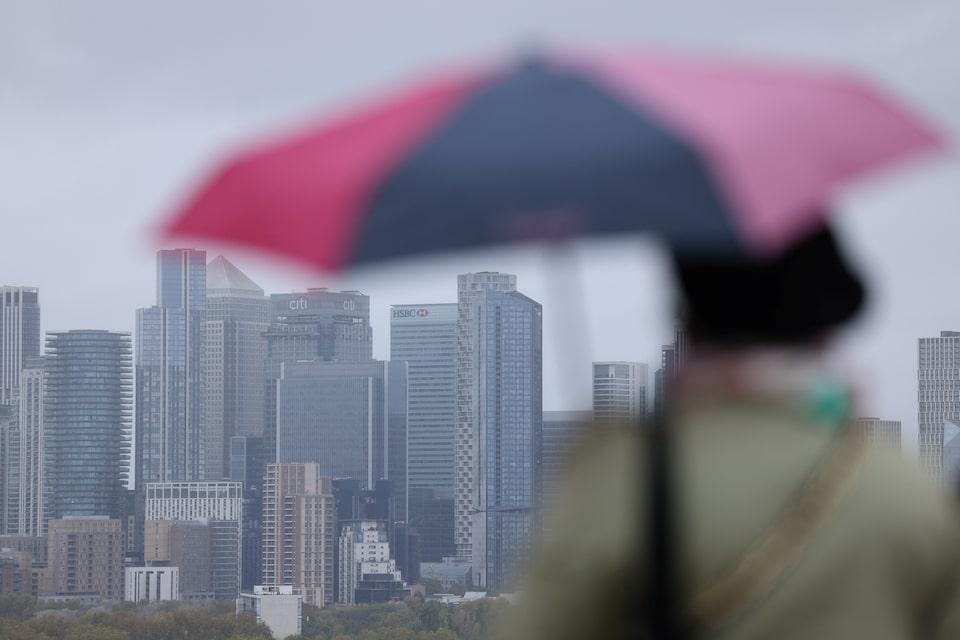
IPPR says Britain is subsidising banks Others have called for changes to interest system Reeves under pressure to raise revenues in budget Bank shares fall in early trade LONDON, Aug 29 (Reuters) - British finance minister Rachel Reeves should use her autumn budget to tax banks on the billions of pounds they receive in interest from the Bank of England on reserves they hold at the central bank, a think-tank recommended on Friday. Around 22 billion pounds ($29.7 billion) a year, which goes to the banks as a result of the BoE's bond-buying programme, represents a subsidy to the lenders, the Institute for Public Policy Research said. Sign up here. Echoing calls made by other commentators in recent years, the IPPR said a new tax on the interest the banks receive would give Reeves more room to meet her fiscal rules. Reeves is widely expected to increase taxes again after raising them on employers in her first budget last year. "What started as a programme to boost the economy is now a massive drain on taxpayer money," Carsten Jung, associate director for economic policy at IPPR, said. British bank shares were the worst performers among the STOXX 600 (.STOXX) , opens new tab index of large European companies after the Financial Times said fears were growing in the finance industry that Reeves would target banks in her budget. NatWest (NWG.L) , opens new tab was down 3.5% and Lloyds (LLOY.L) , opens new tab down 2.6%. Barclays (BARC.L) , opens new tab dropped 2% against a flat FTSE 100 (.FTSE) , opens new tab. A spokesperson for Britain's finance ministry said the best way to strengthen public finances was to speed up economic growth. "Changes to tax and spend policy are not the only ways of doing this, as seen with our planning reforms," the spokesperson said. QUANTITATIVE EASING British banks hold hundreds of billions of pounds of reserves at the BoE, largely as a result of its quantitative easing - or bond-buying - that was launched during the 2008-09 global financial crisis and is now being run down. Banks are paid interest on reserves at the BoE's benchmark rate, which is higher now than during the QE programme. BoE losses are covered by the Treasury and, ultimately, taxpayers. BoE Governor Andrew Bailey has said the system was essential to transmit changes in official interest rates to the economy. In June, Bailey again defended the programme after it came under fire from some politicians - including from within Brexit campaigner Nigel Farage's Reform UK party - for its cost. In May, Bailey and Reeves raised the prospect of the BoE making money from its new system for providing reserves to banks after racking up huge losses from its bond-buying programme. A spokesperson for UK Finance, an industry group, said banks paid almost 45 billion pounds in tax last year, including a corporation tax surcharge and a bank levy. "Adding another tax would make the UK less internationally competitive and run counter to the government’s aim of supporting the financial services sector to help drive growth and investment in the wider economy," the spokesperson said. Calls for a rethink of the system date back years. Former BoE deputy governor Paul Tucker said in 2022 the government should review it. In the run-up to Reeves' first budget last year, banks expressed concern that they might be hit with higher taxes. Industry sources said at the time that an increase in an existing surcharge on banks would be simpler than changing the system of paying interest on reserves at the BoE. ($1 = 0.7402 pounds) https://www.reuters.com/business/finance/uk-should-tax-banks-reserves-held-boe-think-tank-says-2025-08-29/
2025-08-29 06:48
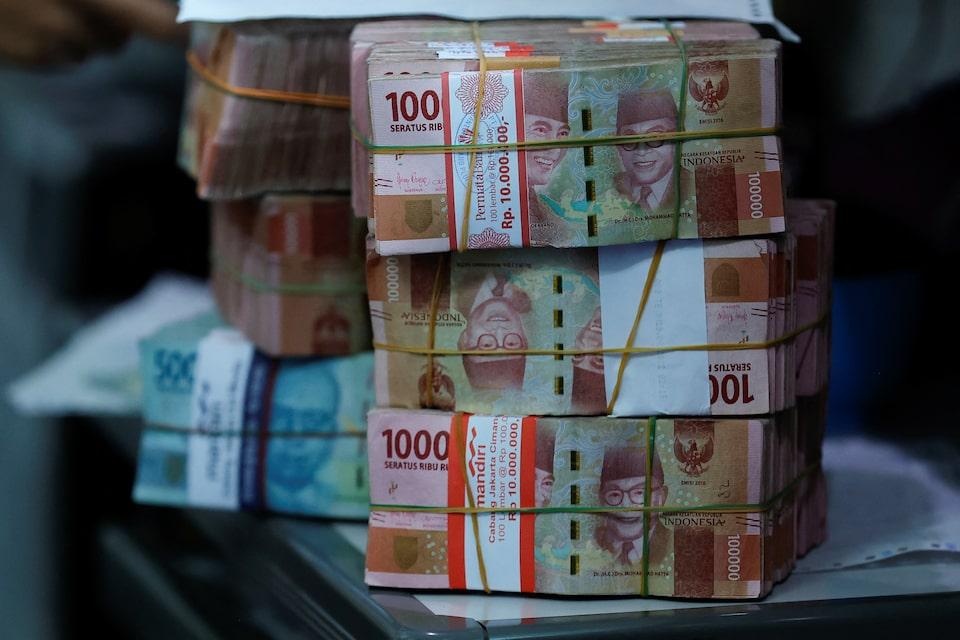
Jakarta stock index drops more than 2% Rupiah falls nearly 1%, central bank steps in Students and workers protest lawmakers' pay, education funding JAKARTA, Aug 29 (Reuters) - A steep selloff in Indonesia's stocks and currency on Friday prompted regulators to step in to calm the markets following several days of student protests that have stung investor sentiment. Indonesia's central bank said on Friday it would remain active in the foreign exchange market to stabilise the rupiah, while the stock exchange regulator said market fundamentals remained strong despite a sudden fall in prices. Sign up here. The rupiah dropped nearly 1% to its weakest level since August 1, before regaining some of the losses, and was last at 16,475 per dollar. The stock index (.JKSE) , opens new tab fell more than 2% to its lowest in over two weeks. Indonesian students said they would protest at Jakarta's police headquarters on Friday after a motorcycle rider died when he was hit by a police vehicle during violent clashes following a demonstration outside the parliament the day before. Students and workers have been protesting this week on a number of issues including lawmakers' pay, education funding and the government's school meals programme. DBS senior economist Radhika Rao said the escalating street protests in the capital have hurt rupiah assets as investors weigh the risk of broader unrest and policy uncertainty. "The central bank showed their hand to arrest volatility in the domestic markets, especially the currency, which weakened sharply, bucking the regional trend," Rao said. Heavy selling of the rupiah by foreign investors had caused dollar/rupiah non-deliverable forward (NDF) rates to spike, signalling expectations of further rupiah depreciation, a trader said. Bank Indonesia (BI) will continue to take action to stabilise the rupiah by intervening in offshore and onshore non-deliverable forward markets and the spot market, said Erwin Gunawan Hutapea, the head of the bank's monetary department. It will also continue buying government bonds on the secondary market, he told Reuters. In response to the steep drop in the stock market, the director of Indonesia's stock exchange regulator, Jeffrey Hendrik, told Reuters that market fundamentals remained strong and technical corrections are normal. Indonesian stocks have been on a tear recently and struck a record high on Thursday but were last down 2.27% on Friday afternoon. The benchmark index is still up 3.8% this month. "We think the recovery of Indonesian equities and bonds would remain on track, despite the increased volatility in Indonesia's markets," said Daniel Tan, portfolio manager at Singapore-based Grasshopper Asset Management. https://www.reuters.com/world/asia-pacific/indonesia-stocks-rupiah-dive-political-unrest-jolts-investors-2025-08-29/
2025-08-29 06:46
Aug 29 (Reuters) - Crypto exchange Binance said on Friday that futures trading is temporarily unavailable on its platform, adding that it is working to resolve the issue. Sign up here. https://www.reuters.com/technology/binance-says-all-futures-trading-is-temporarily-unavailable-2025-08-29/
2025-08-29 06:45
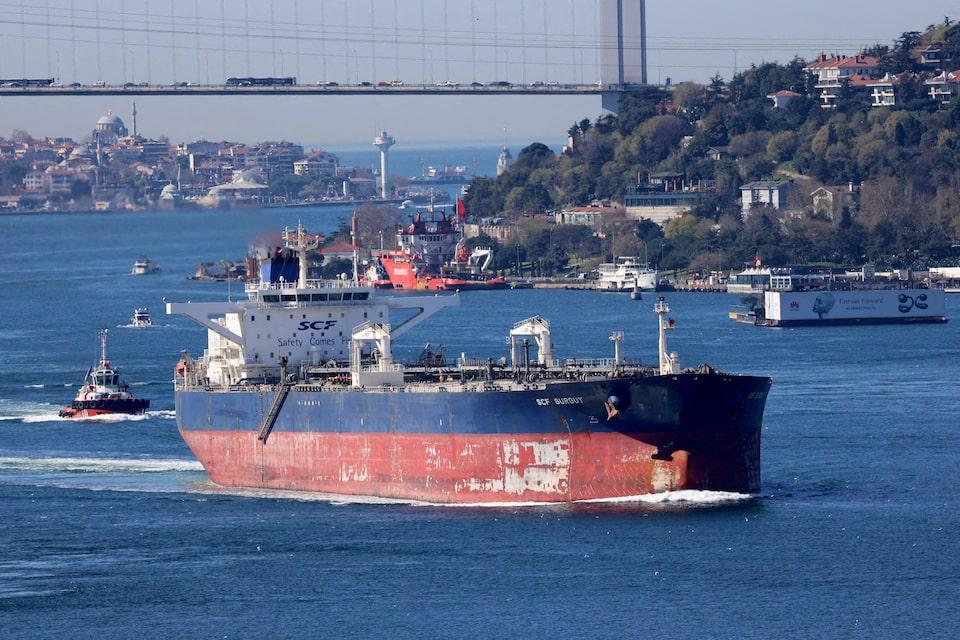
U.S. fuel demand expected to ease post-Labor Day Uncertainty over Russian supply impacts market sentiment Russian oil exports to India set to rise despite US pressure Aug 29 (Reuters) - Oil prices fell on Friday but are set for a weekly gain, caught between expectations of lower demand as the end of summer nears in the United States, the world's biggest consumer, and uncertainty about the availability of Russian supply. Brent crude futures for October delivery , which will expire on Friday, fell 39 cents, or 0.6%, at $68.23 at 0641 GMT, while the more active contract for November slid 38 cents, or 0.6%, to $67.60. West Texas Intermediate (WTI) crude futures were down 39 cents, or 0.6%, at $64.21. Sign up here. Brent is set for a weekly gain of 0.6%, while WTI is set to climb by 0.8%. Prices gained due to Ukrainian attacks on Russian oil export terminals earlier this week and after German Chancellor Friedrich Merz said on Thursday there will be no meeting between Russian President Vladimir Putin and Ukrainian President Volodymyr Zelenskiy. However, the end of the U.S. summer driving demand period with the Labor Day holiday on Monday and more supply from major producers becoming available with the end of voluntary output cuts have weighed on prices. "We expect rising OPEC+ supply and a seasonal fall in global refining activity from September will result in a pick-up in global oil stockpiles in coming months. We forecast Brent oil futures falling to $63/bbl in Q4 2025," Commonwealth Bank of Australia commodities analyst Vivek Dhar said in a note. Russian attacks on the Ukrainian capital Kyiv early on Thursday that killed 23 people have raised concerns the U.S. may respond with tighter sanctions. "Uncertainty lingers over whether U.S. and Europe may tighten sanctions against Russia following its attack on Ukraine, and over the potential impact of U.S. tariffs on India, making investors reluctant to take large positions," said Hiroyuki Kikukawa, chief strategist of Nissan Securities Investment, a unit of Nissan Securities. Investors are also watching for India's response to pressure from the U.S. to stop buying Russian oil, after Trump doubled tariffs on imports from India to as much as 50% on Wednesday. Still, Russian oil exports to India are set to rise in September, traders said, defying the U.S. pressure. Saudi Arabia, the world's biggest oil exporter, may cut October crude oil prices for Asian buyers amid ample supply and weaker demand, refining sources said. Russian crude supplies to Hungary and Slovakia through the Druzhba pipeline have restarted after an outage caused by a Ukrainian attack in Russia last week, Hungarian oil company MOL and Slovakia's economy minister said on Thursday. https://www.reuters.com/business/energy/oil-prices-fall-demand-concerns-head-weekly-gain-2025-08-29/