2025-08-29 06:28
SHANGHAI, Aug 29 (Reuters) - Thousands of people flocked to one of the world's largest indoor ski resorts in Shanghai on Thursday, seeking to beat the heat as temperatures hit around 37 degrees Celsius (98.6°F) in the Chinese city. Visitors snowboarded, skied and had snowball fights on the slopes of the 98,000 square-metre (117,207 square yard) Shanghai L+SNOW Indoor Skiing Theme Resort, where temperatures are maintained at 5°C (41°F) or less all year round. Sign up here. Tang Junqi was among those who spent the day there with her mother. "It was so hot outside and feels like being in a pot. But it feels like in a fridge inside,” the 10-year-old said. Shanghai on Friday experienced its 24th consecutive day of temperatures at 35 degrees Celsius (95°F) or above in August, tying a heat run record that has stood since 1926. The eastern city declared an orange alert, the second highest on its three-tier heatwave warning system, with high temperatures expected to continue for the rest of the month, according to the Shanghai Meteorological Bureau. Scientists say extreme weather has been made increasingly likely by man-made climate change, caused by carbon emissions and exacerbated by energy-intensive activities, which include maintaining indoor temperatures at an artificially low level. https://www.reuters.com/business/environment/shanghai-locals-seek-beat-heat-indoor-skiing-resort-2025-08-28/

2025-08-29 06:14
India prices hover near all-time highs China premiums were at par to $5/oz this week Indian dealers charge premiums up to $4/oz Aug 29 (Reuters) - Demand for physical gold in India picked up slightly this week, despite a recovery in prices, as jewellers stocked up ahead of the festive season, while activity remained subdued elsewhere. Indian dealers were charged a premium of up to $4 per ounce over official domestic prices, inclusive of 6% import and 3% sales levies, compared to last week's offers that ranged from a $2 discount to a $3 premium. Sign up here. "Jewellers were sitting on the sidelines for weeks, but with prices refusing to correct much, they've now started buying for the upcoming festive season," said a Chennai-based bullion dealer. The Dussehra and Diwali festivals, when gold buying is considered auspicious, will be celebrated in October this year. Domestic gold prices were at around 102,000 rupees per 10 grams on Friday, after hitting a record high 102,250 rupees earlier this month. "Gold's been stuck around 100,000 rupees for three months now, and shoppers are finally getting used to it - they're slowly coming back to the market," a Mumbai-based bullion dealer with a private bank said. In top consumer China, bullion traded at par to a $5 premium per ounce over the global benchmark spot price . Last week, dealers charged premiums between $3 and $8 an ounce. "Volume in Shanghai Gold Exchange has been lacklustre, with only light participation from speculators and retail investors," said Bernard Sin, regional director of Greater China at MKS PAMP. "Gold in RMB terms remains at high levels, and with no clear catalyst to buy, there has been little follow-through demand. The absence of new import quotas has further dampened physical flows." In Hong Kong and Singapore, gold was sold at par to a premium of $2.50, respectively. In Japan, bullion changed hands at par with spot prices, according to a Tokyo-based trader. "We are seeing more clients coming to sell. Buying has really gone down quite a bit because prices are at multi-week highs," said Brian Lan, managing director at GoldSilver Central. https://www.reuters.com/world/china/asia-gold-indian-jewellers-stock-up-festive-season-activity-muted-elsewhere-2025-08-29/

2025-08-29 06:08
NEW DELHI, Aug 29 (Reuters) - India is taking steps to diversify its exports and boost domestic demand to support exporters hit by "unilateral action" taken by a country, trade minister Piyush Goyal said on Friday. It was Goyal's first public comment since the doubling of U.S. tariffs on Indian goods to up to 50% took effect this week. Sign up here. https://www.reuters.com/world/india/india-taking-steps-diversify-exports-boost-demand-trade-minister-says-2025-08-29/

2025-08-29 06:08
LONDON, Aug 29 (Reuters) - The world is going to need a lot of copper and other critical metals if it is going to pivot away from fossil fuels. But can the mining industry deliver? The challenges are huge. Ore grades at existing copper mines are steadily falling, big new discoveries are becoming rarer and development times can stretch up to a decade. Sign up here. Part of the solution is to increase the efficiency of the mining process, which has historically been both highly polluting and wasteful. BACK TO THE FUTURE The world dug up 650 million metric tons of copper between 1910 and 2010 but 100 million tons never made it to market, according to a 2020 research paper by Germany's Fraunhofer Institute. All that metal is still there lying in tailings ponds, a potentially massive resource awaiting the right technology to unlock it. Rio Tinto (RIO.L) , opens new tab has already successfully separated critical metals such as scandium and tellurium from waste streams at existing operations. Others are now looking at ways to extract value from the vast legacy of past mining activity. Hudbay Minerals (HBM.TO) , opens new tab, for example, is evaluating , opens new tab the potential for re-mining tailings at the Flin Flon site in Canada's Manitoba. The mine closed in 2022, leaving nearly a century's worth of minerals-rich waste. Australia's Cobalt Blue Holdings (COB.AX) , opens new tab, which has been collaborating on the Flin Flon project, has also signed an agreement , opens new tab with the Mount Isa city council in Queensland to explore re-working pyrite tailings as a potential alternative source of sulphur once the town's copper smelter closes. These and many similar projects are still only at conceptual or pilot stage but India's Hindustan Zinc (HZNC.NS) , opens new tab is scaling up with a $438 million , opens new tab commitment to process 10 million tons per year of tailings at its Rampura Agucha mine, the world's largest zinc mine. LESS WASTE While miners are collectively reassessing the value of legacy waste, they are also working out how to produce less waste in the first place. This comes with both economic and environmental upside. The mining industry currently generates over seven billion tons of tailings per year and the amount is rising as ore grades fall. Much of the work in this area is incremental in nature. Glencore Technology, for example, has been steadily improving its ISAMill , opens new tab grinder to handle increasingly coarser particle sizes. The aim is to reduce the amount of ore grinding to save water and reduce tailings waste. The company's Albion Process , opens new tab for leaching can lift copper recovery rates to over 99% and reduce operating costs by up to a third, allowing development of complex ore-bodies that wouldn't be viable with traditional technologies. Others such as Allonnia, which describes itself as a bio-ingenuity company, are pioneering more revolutionary approaches. The company's D-Solve technology uses microbes to selectively extract impurities such as magnesium from concentrates. Allonnia has just partnered , opens new tab with the Eagle nickel mine in the United States for an onsite unit to pilot technology that in laboratory tests can improve nickel grades by 18% and cut magnesium impurities by 40%. BIG TECH MEETS OLD TECH The new overarching technology that can bind all these innovations together is artificial intelligence (AI). Majors such as Rio Tinto and BHP are already using AI in autonomous haulage systems and to predict maintenance downtime rather than reacting to equipment failures. Generative AI is the next big leap forward. BHP (BHP.AX) , opens new tab uses it in combination with "digital twin" technology, a real-time virtual replica of the mining process, at its South Australian copper mine and the giant Escondida mine in Chile. GenAI models at Escondida "inform ore blasting and blending strategies, identify mine areas with challenging ore characteristics, and support the implementation of SAG mill model predictive control," according to BHP , opens new tab. U.S. copper producer Freeport-McMoRan (FCX.N) , opens new tab has partnered with consultancy group McKinsey to use AI to boost production , opens new tab at its North American operations, which were facing declining output due to mature mines and aging process technology. Integrating traditional mining with data engineering allows for real-time adjustments to processing rates to handle variable ores. When AI was trialled at the Baghdad mine in Arizona, it led to a 5%-10% increase in copper production. Rolling it out across the company's other American operations is projected to lift output by 90,000 tons each year. That's equivalent to a new processing plant, which would come at a cost of over $1.5 billion and a timeline of eight to ten years for planning, construction and commissioning. FUTURE MINING Mining, it is often said, is a dirty business. The proof lies in the billions of tons of sludge sitting in tailings ponds around the world. The consequence is public antipathy to new mine projects, which is one of the reasons it takes so long to build and commission a new one. Mining has also been a highly inefficient business in the past. Too much mineral value has been either discarded as waste or simply left in the ground because the technology didn't exist to treat such low-grade ore. That's changing as one of the world's oldest industries rapidly modernizes, combining innovations in traditional processing with new technologies such as bio-engineering and AI. This is a quiet revolution playing out in multiple laboratories, pilot plants and data centres around the world. But the promise is one of a much cleaner and more efficient sector, which may just mean the world isn't going to run out of copper after all. The opinions expressed here are those of the author, a columnist for Reuters. https://www.reuters.com/markets/commodities/quiet-revolution-is-unfolding-mining-sector-2025-08-29/

2025-08-29 06:03
Tariff exemption removal to disrupt e-commerce supply chains CBP collects duties on all global parcel imports Retail analysts predict higher prices for e-commerce goods Many postal services around world have suspended shipments of parcels to U.S. WASHINGTON, Aug 29 (Reuters) - The U.S. tariff exemption for package shipments valued under $800 ended on Friday, raising costs and disrupting supply chain models for e-commerce companies, small businesses using online marketplaces and consumers alike. The U.S. Customs and Border Protection agency began collecting normal duty rates on all global parcel imports, regardless of value, country of origin, or mode of transportation at 12:01 a.m. EDT (0401 GMT) on Friday. It offered a flat-rate duty option of $80 to $200 per package shipped from foreign postal agencies for six months. Sign up here. The change broadens the Trump administration's cancellation of the de minimis exemption for packages from China and Hong Kong in May as part of an effort to halt shipments of fentanyl and its precursor chemicals into the U.S.. "President Trump's ending of the deadly de minimis loophole will save thousands of American lives by restricting the flow of narcotics and other dangerous prohibited items, and add up to $10 billion a year in tariff revenues to our Treasury," White House trade adviser Peter Navarro told reporters on Thursday. A senior administration official said the change was permanent, adding that any push to restore the exemptions for trusted trading partner countries was "dead on arrival." The de minimis exemption has been in place since 1938, starting at $5 for gift imports and was raised from $200 to $800 in 2015 to foster small business growth on e-commerce marketplaces. But direct shipments from China surged after President Donald Trump raised tariffs on Chinese goods during his first term, creating a new direct-to-consumer business model for e-commerce firms Shein and Temu (PDD.O) , opens new tab. The National Coalition of Textile Organizations hailed a "historic win" for U.S. manufacturing following the closing of a loophole that allowed foreign fast-fashion firms to avoid tariffs and import apparel sometimes made with forced labor, undercutting American jobs. "The administration’s executive action closes this channel and delivers long overdue relief to the U.S. textile industry and its workers," the group said. CBP has estimated that the number of packages claiming the de minimis exemption jumped nearly 10-fold , opens new tab from 139 million in fiscal 2015 to 1.36 billion in fiscal 2024 - a rate of nearly 4 million per day. HIGHER COSTS, MORE PAPERWORK Retail analysts say that the end of de minimis is likely to raise prices for many goods sold through e-commerce companies as those that previously avoided tariffs because of the exemption will ultimately be charged duties. This may put such firms on a par with costs for more established retailers like Walmart (WMT.N) , opens new tab that tend to import merchandise in bulk containers that are subject to tariffs. It is also likely to curb trade on peer-to-peer platforms, such as eBay (EBAY.O) , opens new tab and Etsy (ETSY.O) , opens new tab, used by small businesses to sell secondhand, vintage or handmade items. CBP has collected more than $492 million in additional duties on packages shipped from China and Hong Kong since their exemptions were eliminated on May 2, another Trump administration official said. The official said that full tariff rates will apply to all packages shipped by express carriers such as FedEx (FDX.N) , opens new tab, United Parcel Service (UPS.N) , opens new tab and DHL. These companies are better set up to collect duties and process customs data than traditional postal agencies. Foreign postal agencies can opt to collect and process the duties based on the value of the package contents, or opt for the flat rate method by collecting a flat tax based on Trump's tariff rates currently in place on goods from the country of origin. Based on CBP guidance , opens new tab issued on Thursday, parcels would be charged $80 from countries with Trump-imposed duty rates below 16%, such as Britain and the European Union, $160 from countries between 16% and 25%, such as Indonesia and Vietnam, and $200 from countries above 25%, including Brazil, Canada, China and India. But postal services must shift to full "ad valorem" duty collection based on the value of the shipments by February 28, 2026, the second official said. This official said some foreign postal services have suspended mail to the U.S. but that the administration was working with foreign partners and the U.S. Postal Service to minimize disruptions. European postal groups including Germany's DHL (DHLn.DE) , opens new tab and Norway's Posten Bring on Friday were seeking ways to handle the new fees and extra paperwork. DHL has suspended shipments of standard parcels for businesses and Posten Bring paused shipments of packages under $800. "We are now working together with other postal companies in Europe and the world to find a solution for paying customs duties on the packages," said Posten Bring. Britain's Royal Mail resumed shipments on Thursday, saying customers can send parcels paying any duties upfront, as well as a handling fee to cover additional costs of clearance into the U.S.. Kelly Ann Shaw, a former senior White House trade official during Trump's first term, said she expected the removal of the de minimis exemption to cause some initial turmoil. "I think there will be growing pains as this unfolds, but it is U.S. law," said Shaw, now with the Akin Gump law firm in Washington. "There will be a bit of a transition time while CBP figures out how to process these low-value shipments, which it hasn't had to do in many years." https://www.reuters.com/world/china/us-low-value-package-tariff-exemption-ends-raising-costs-shippers-consumers-2025-08-29/

2025-08-29 05:49
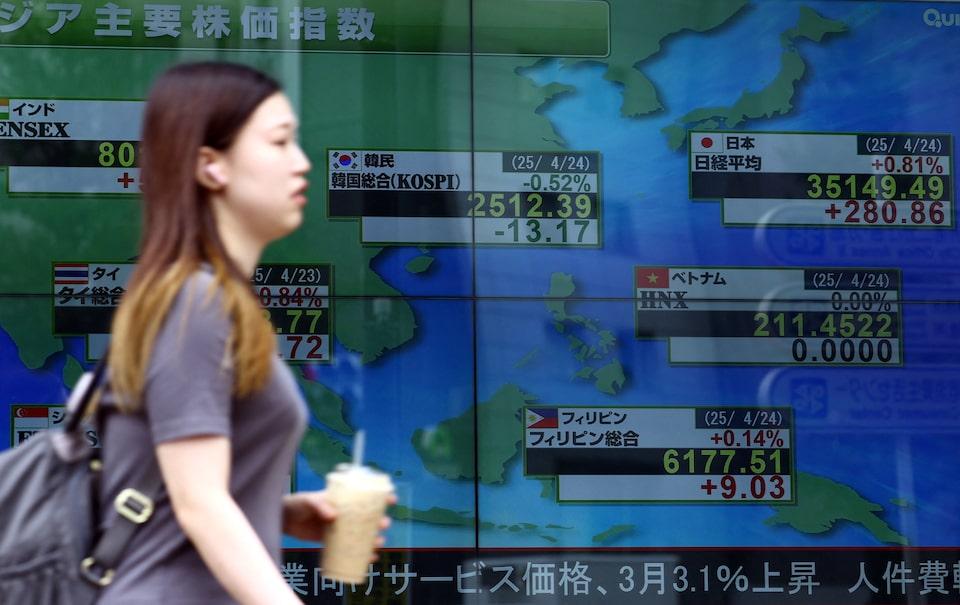
Stocks hesitant ahead of US PCE inflation data Shares of China's Cambricon Technologies slide after company issues risk alert Dollar headed for monthly fall on rate cut bets, worries over Fed independence SINGAPORE, Aug 29 (Reuters) - Asian stocks edged higher on Friday, riding a tech-driven rally on Wall Street, with investor focus now turning to a key U.S. inflation reading due later in the day for further clues on the Federal Reserve's rate outlook. Results from artificial intelligence heavyweight Nvidia (NVDA.O) , opens new tab this week fell short of investors' lofty expectations but still confirmed that AI infrastructure spending remains strong and helped lift the S&P 500 and Dow Jones Industrial Average to record high closes on Thursday. Sign up here. Markets in Asia latched on to the positive momentum on Friday as MSCI's broadest index of Asia-Pacific shares outside Japan (.MIAPJ0000PUS) , opens new tab rose 0.26%, though European and U.S. stock futures were mixed. EUROSTOXX 50 futures fell 0.1% while FTSE futures gained 0.06%. S&P 500 futures dipped 0.12% and Nasdaq futures lost 0.21%. "Despite the uncertainty around China for Nvidia, the headline revenue growth numbers don't really suggest that the overall AI story is faltering much. Expectations are just already very high," said Thomas Mathews, head of markets for Asia-Pacific at Capital Economics. "The big picture though is that earnings are still growing very rapidly for U.S. tech companies, and unless that changes materially, the stock market there will probably keep doing ok." In China, the tech-focused STAR 50 Index (.STAR50) , opens new tab slid 3% after a jump of more than 7% in the previous session. Shares of Chinese chip firm Cambricon Technologies (688256.SS) , opens new tab tumbled more than 7% after the company on Thursday issued a risk alert to investors in a stock exchange filing, citing a sharp rise in its stock prices since late July. "Certainly, when you see such a very, very large move, and then some warning coming from the company, you could think that there has been a little bit of overshooting," said Frank Benzimra, head of Asia equity strategy at Societe Generale. "But for me, that is a very normal way of the market functioning, because we all know that the market is going to undershoot on the downside and to overshoot on the upside." Still, the CSI300 blue-chip index (.CSI300) , opens new tab was up 0.5% and Hong Kong's Hang Seng Index (.HIS) , opens new tab gained 0.8%. Japan's Nikkei (.N225) , opens new tab slipped 0.33%. WAITING ON PCE In the broader market, focus now turns to the release of the U.S. PCE price index data - the Fed's preferred measure of inflation - later on Friday. "The market will be on the lookout for any signs of whether or not some of these tariff pass-throughs are starting to filter through into the PCE deflator," said Khoon Goh, head of Asia research at ANZ. "There are three important pieces of data ahead of the September FOMC. So there's the PCE, then there's the payrolls number next week, and then the CPI reading." Traders are currently pricing in an 85% chance of a rate cut in September, up from 63% a month earlier, according to the CME FedWatch tool. Fed Governor Christopher Waller on Thursday said he wants to start cutting interest rates next month and "fully expects" more rates cuts to follow to bring the Fed's policy rate closer to a neutral setting. The heightened expectations of imminent Fed rate cuts left the dollar headed for a monthly fall of 2% against a basket of currencies on Friday. The euro was last down 0.16% at $1.1664, pressured in part by political and fiscal worries in France, while sterling eased 0.09% to $1.3495, though was set for a monthly gain of more than 2%. The dollar was also battling headwinds from worries about Fed independence as President Donald Trump steps up his campaign to exert more influence over monetary policy, including his latest attempt to fire Fed Governor Lisa Cook. Cook filed a lawsuit on Thursday claiming Trump has no power to remove her from office. Elsewhere, oil prices fell on Friday, with Brent crude futures last down 0.55% to $68.24 a barrel, while U.S. crude slid 0.6% to $64.21 per barrel. Spot gold was down 0.23% to $3,408.78 an ounce. https://www.reuters.com/world/china/global-markets-wrapup-2-2025-08-29/