2025-08-28 10:54
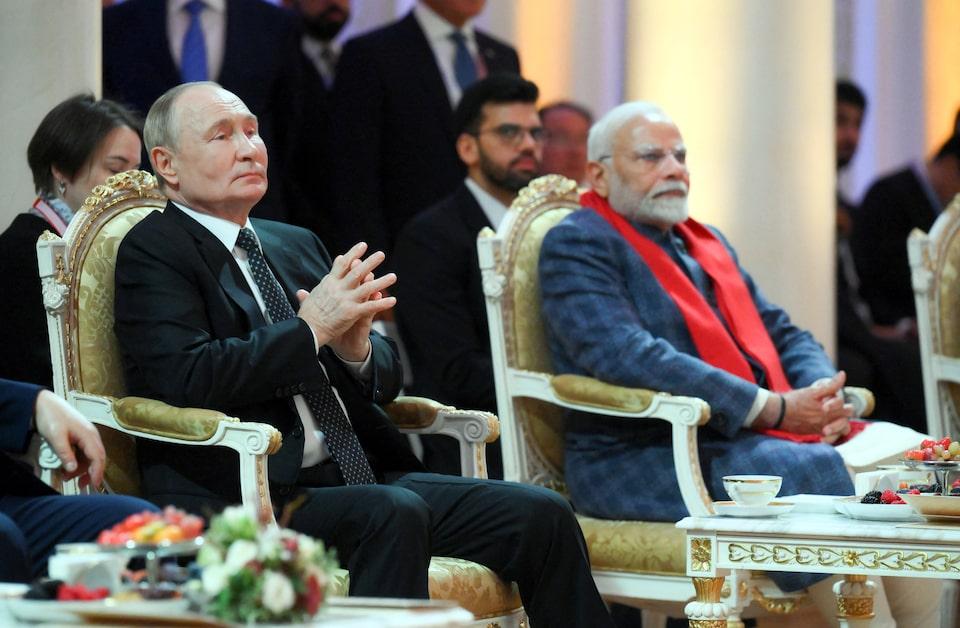
US tariffs on India for Russian oil take effect India to raise imports by 10-20% in September, traders say Russian refining drops because of maintenance and attacks Russian exporters sell oil at wider discounts MOSCOW/LONDON, Aug 28 (Reuters) - Russian oil exports to India are set to rise in September, traders said, as producers cut prices to sell more crude because they cannot process as much in refineries that were damaged by Ukrainian drone attacks on energy infrastructure. India has become the biggest buyer of Russian oil supplies that were displaced by Western sanctions after Moscow invaded Ukraine in 2022. This has allowed Indian refiners to benefit from cheaper crude. Sign up here. But the purchases have drawn condemnation from the government of U.S. President Donald Trump, which increased U.S. tariffs on Indian imports to 50% on Wednesday. New Delhi says it is relying on talks to try to resolve Trump's additional tariffs, but Prime Minister Narendra Modi has also embarked on a tour to develop diplomatic ties elsewhere, including meeting Russian President Vladimir Putin. U.S. officials have accused India of profiteering from discounted Russian oil, while Indian officials have accused the West of double standards because the European Union and the U.S. still buy Russian goods worth billions of dollars. The Indian oil ministry did not immediately respond to a request for comment on Thursday. Without India, Russia would struggle to maintain exports at existing levels, and that would cut the oil export revenues that finance the Kremlin's budget and Russia's continued war in Ukraine. Three trading sources involved in oil sales to India said Indian refiners would increase Russian oil purchases in September by 10-20% from August levels, or by 150,000-300,000 barrels per day. The sources, who cited preliminary purchases data, could not be named because they were not authorised to speak publicly on the issue. The two biggest buyers of Russian oil for India, Reliance and Nayara Energy, which is majority Russian-owned, did not immediately respond to a request for comment. Russia has more oil to export next month because planned and unplanned refinery outages have cut its capacity to process crude into fuels. Ukraine has attacked 10 Russian refineries in recent days, taking offline as much as 17% of the country's refining capacity. In the first 20 days of August, India imported 1.5 million barrels per day of Russian crude, unchanged from July but slightly below the average of 1.6 million bpd in January-June, according to data from Vortexa analysts. The volumes are equal to around 1.5% of global supply, making India the largest buyer of seaborne Russian crude, which covers some 40% of India's oil needs. China and Turkey are also big buyers of Russian oil. INDIA SET TO CARRY ON BUYING? India's increased buying of Russian oil over recent years has been to the detriment of more expensive supplies from the Organization of the Petroleum Exporting Countries. OPEC's share edged up in 2024 after an eight-year drop. Russian exporters sold Urals crude loading in September at discounts of $2–$3 per barrel to benchmark dated Brent, the three traders said. The levels are cheaper than discounts of $1.50 per barrel in August, which were the narrowest since 2022, the traders said. "Unless India issues a clear policy directive or trade economics shift significantly, Russian crude will likely remain a core part of its supply mix," said Sumit Ritolia from Kpler. Brokerage CLSA in a note also predicted only "a limited chance of India stopping Russian imports" unless a global ban is imposed. It also said that if Indian imports of Russian crude were halted, the knock-on impact could be to reduce global supplies by around one million bpd and lead to a short-term spike in global prices to nearly $100 a barrel. Traders said the full impact of sanctions and tariffs may only be visible in cargoes arriving to India in October, which will begin to trade in the next few days. In addition to the U.S. tariffs, the European Union has also tightened its price cap designed to limit Russia's oil revenues, which will complicate sales later this year. The EU has set the cap at $47.60 per barrel from September 2 - 15% below the Russian crude market price - restricting access to Western services for cargoes sold above the cap. https://www.reuters.com/business/energy/indias-russian-oil-imports-set-rise-september-defiance-us-2025-08-28/
2025-08-28 10:51
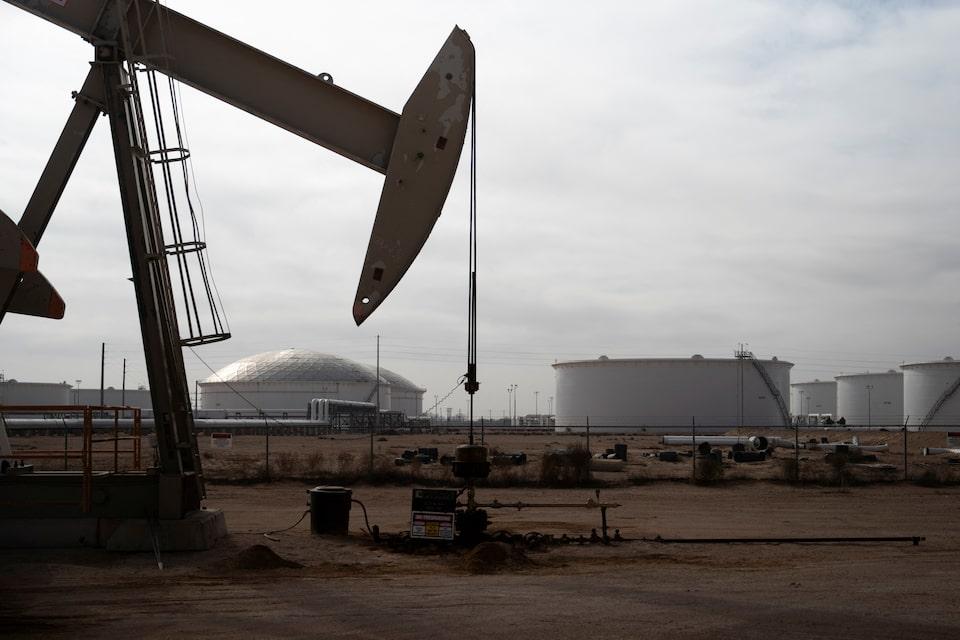
Crude falls after 1% gain in previous session US demand to ease at the end of summer driving season Russian oil supplies through Druzhba pipeline restart Indian buying pattern of Russian oil in focus LONDON, Aug 28 (Reuters) - Oil fell on Thursday after rising in the previous session, pressured by expectations of lower U.S. fuel demand at the end of the summer travel season and by the restart of Russian supply to Hungary and Slovakia through the Druzhba pipeline. Crude had risen on Wednesday after official data showed U.S. crude inventories fell by 2.4 million barrels in the week ended August 22, compared with analysts' expectations in a Reuters poll for a 1.9-million-barrel draw, a sign of strong demand. Sign up here. However, oil market participants see the upcoming U.S. Labor Day long weekend as the unofficial end of the summer driving season, and the onset of lower U.S. demand for gasoline. Brent crude futures dropped 8 cents, or 0.1%, to $67.97 at 1156 GMT, and West Texas Intermediate (WTI) crude futures was down 4 cents at $64.11. "This weekend's U.S. bank holiday marks the end of the driving season and gasoline has hardly been the panacea hoped for in terms of demand," said John Evans of oil broker PVM. "Any short-term reasons to be friendly towards oil prices are diminishing," he added, citing the Druzhba resumption. Russian crude supplies to Hungary and Slovakia through the Druzhba pipeline have restarted after an outage caused by a Ukrainian attack in Russia last week, Hungarian oil company MOL and Slovakia's economy minister said on Thursday. Traders are also watching out for how New Delhi responds to pressure from Washington to stop buying Russian oil, after U.S. President Donald Trump doubled tariffs on imports from India to as much as 50% on Wednesday. "India is expected to continue purchasing crude oil from Russia at least in the short term, which should limit the impact of the new tariffs on global supply," IG market analyst Tony Sycamore said. Lending some support to prices, Russia and Ukraine have stepped up attacks on each other's energy infrastructure. Russia launched a massive drone attack on energy and gas transport infrastructure across six Ukrainian regions overnight, leaving more than 100,000 people without power, Ukrainian officials said on Wednesday. https://www.reuters.com/business/energy/oil-falls-end-driving-season-looms-druzhba-restarts-2025-08-28/
2025-08-28 10:43
LONDON, Aug 28 (Reuters) - What matters in U.S. and global markets today By Mike Dolan , opens new tab, Editor-At-Large, Finance and Markets Sign up here. Sky-high expectations left Nvidia shares in the red overnight despite another earnings beat from the world's most valuable company, as the market grumbled about slowing growth in core areas and ongoing geopolitical obstacles. * The chip giant’s shares were down about 2% ahead of Thursday's open. Doubts about the fate of Nvidia’s China business amid the U.S.-China trade war overshadowed the company’s outlook for a still whopping $54 billion of third quarter sales. The firm said its outlook assumed no shipments of its H20 chips to China despite having received some licenses to sell them. Ripples from the AI behemoth's share price stumble were limited across the global chip sector, with Nvidia boss Jensen Huang saying the artificial intelligence spending boom was far from over. And S&P 500 futures remained steady after a record close for the index on Wednesday. * Federal Reserve board governor Christopher Waller, tipped by many as President Donald Trump's pick for the next Chair and advocate of immediate Fed rate cuts, is due to speak later today with intensifying political pressure on the central bank the main focus. With Fed futures pricing for a rate cut next month creeping back up toward 90%, two-year Treasury yields slipped further to four-month lows of 3.61% and two-year inflation-linked swaps closed in on 3% for the first time in three months. Yields across the curve fell back too after a reasonable 5-year note auction, with the dollar under renewed pressure as China's offshore yuan surged to its highest levels of the year and Chinese stocks rallied. * Elsewhere, what's almost become an annual budget-related crisis for the French government - one that could see it collapse next month - smouldered but French and euro zone stocks rallied and 30-year French government debt yields fell back from Wednesday's 13-year high. U.S. second-quarter GDP revisions and weekly jobless updates top the economic diary later, with more big retailers reporting earnings. Today's column looks at the Fed independence row , opens new tab and how Trump's growing control of the central bank could result in a resumption of dollar weakness that the administration would likely welcome. Today's Market Minute * Nvidia (NVDA.O) shares dipped on Wednesday as the fate of its China business hung in the balance, caught up in the trade war between Washington and Beijing. * The U.S. government's new stake in Intel (INTC.O) is making some investors nervous that President Donald Trump's deal heralds an era of government meddling in private industry, particularly as the arrangement followed Trump's call for the resignation of the computer chip maker's CEO. * Nvidia (NVDA.O) CEO Jensen Huang on Wednesday dismissed concern about an end to a spending boom on artificial intelligence chips, projecting opportunities will expand into a multi-trillion-dollar market over the next five years. * European gas traders have faced a stressful race against the clock in recent summers as they have scrambled to refill depleted gas storage facilities ahead of winter. But, writes ROI energy columnist Ron Bousso, the continent’s traders and governments should have a lot more breathing room this year. * Almost everyone agrees that overt politicization of monetary policy is dangerous. Why is that? ROI markets columnist Jamie McGeever’s provides five examples of where excessive political interference in central banking can lead. Chart of the day Nvidia's stellar earnings beats are almost inevitably becoming less meaty. The chipmaker expects revenue of $54 billion, plus or minus 2%, in the third quarter, compared with average estimates of $53.14 billion. But its fiscal second-quarter results came up short of some analyst expectations in its important data center segment, with some analysts suggesting cloud computing providers may be more cautious about spending. Nvidia also said it has not assumed any shipments of its H20 chips to China in its outlook, despite having earlier this month received some licenses to sell them. If geopolitical issues subside and it gets more orders, Nvidia said it could add $2 billion to $5 billion in H20 revenue in the third quarter. The overall picture sent its shares down 2-3% in after-hours trading, clipping about $110 billion from Nvidia's unrivalled $4.4 trillion market capitalization. Today's events to watch * U.S. Q2 GDP revision, Q2 corporate profits (8:30 AM EDT), weekly jobless claims (8:30 AM EDT), July pending home sales (10:00 AM EDT), Kansas City Fed's August business surveys (11:00 AM EDT) * Federal Reserve Board Governor Christopher Waller speaks * U.S. corporate earnings: Best Buy, Dollar General, Dell, Autodesk, Hormel Foods, Ulta Beauty, Brown-Forman * U.S. Treasury sells $44 billion of 7-year notes * 25th Franco-German Council of Ministers in Toulon Want to receive the Morning Bid in your inbox every weekday morning? Sign up for the newsletter here. You can find ROI on the Reuters website , opens new tab, and you can follow us on LinkedIn , opens new tab and X. , opens new tab Opinions expressed are those of the author. They do not reflect the views of Reuters News, which, under the Trust Principles , opens new tab, is committed to integrity, independence, and freedom from bias. https://www.reuters.com/business/finance/global-markets-view-usa-2025-08-28/

2025-08-28 10:35
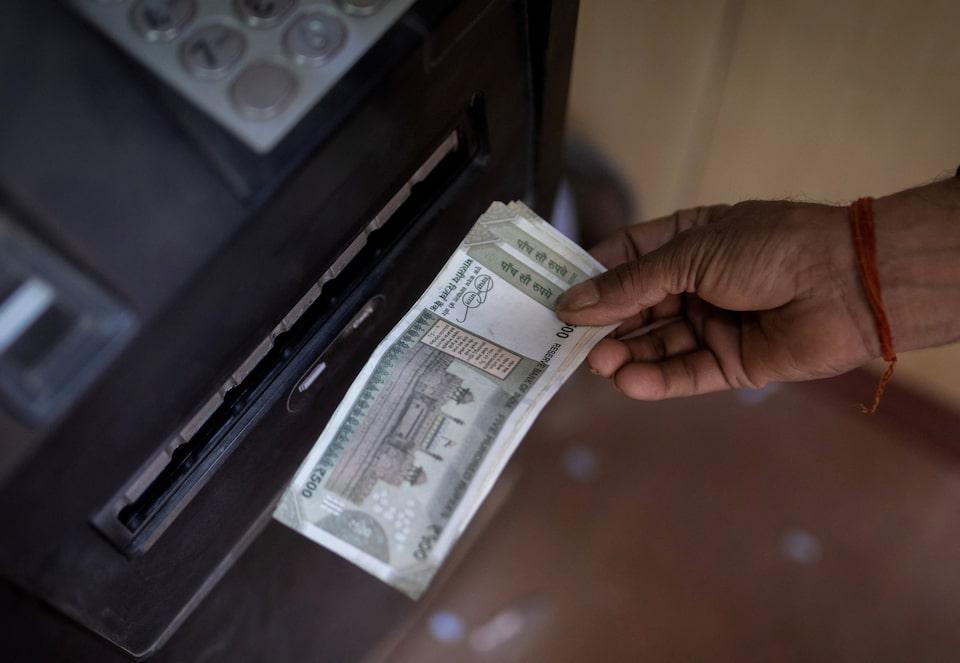
MUMBAI, Aug 28 (Reuters) - The Indian rupee advanced on Thursday after five straight sessions of logging losses, as a weaker dollar and bets of central bank intervention outweighed the impact of additional U.S. tariffs. The rupee (.MERCINR) , opens new tab closed marginally up 0.06% at 87.6250 against 87.6800 on Tuesday. Indian markets were closed on Wednesday for a local holiday. Sign up here. The currency had appreciated to as much as 87.5250 in early trade on Thursday before drifting weaker on what bankers said was broad-based dollar demand, as importers stepped up hedges on the conviction that steep U.S. tariffs leave little room for upside for the rupee. The Reserve Bank of India likely stepped in on Tuesday to curb losses after the rupee came under pressure and dipped to an intraday low of 87.80, when Washington confirmed additional tariffs on Indian goods. Bets of further central bank intervention supported the rupee on Thursday. “The rupee is expected to face more pressure as risks from U.S. tariffs mount,” said Jigar Trivedi, a senior currency analyst at Reliance Securities. Meanwhile, the U.S. dollar index (.NYICDX) , opens new tab edged 0.16% lower as on 1557 IST, in its third straight session of decline, as investors positioned for a Federal Reserve interest rate cut next month after New York Fed President John Williams signalled a reduction was possible. The dollar has faced additional pressure this week from President Donald Trump's intensified campaign to influence monetary policy, including his attempt to remove Fed Governor Lisa Cook and install a loyalist. Asian currencies gained against a weak dollar with Korean won and Malaysian ringgit leading the advances. Indian equity indexes, Sensex and Nifty were both down 0.8% on Thursday on the back of weak risk appetite among investors . https://www.reuters.com/world/india/rupee-snaps-losing-streak-against-weak-dollar-despite-tariff-pressure-2025-08-28/
2025-08-28 10:25
Trump's attacks on Fed could impact global markets, Rehn says Rehn says Europe's strong institutions likely to prevent similar problems Euro zone inflation linked to ECB's independent decision-making - Rehn HELSINKI, Aug 28 (Reuters) - U.S. President Donald Trump's escalating attacks on the Federal Reserve could have substantial and global knock-on effects on the financial markets and the real economy, including higher inflation, ECB policymaker Olli Rehn said on Thursday. Questions over the independence of the Fed, the world's most important monetary authority, have arisen this year as Trump repeatedly criticised its Chair Jerome Powell and on Monday announced he was firing one of its governors, Lisa Cook. Sign up here. "If the central bank's independence were truly to crumble, and the U.S. Federal Reserve began making decisions on grounds other than sound monetary policy principles — for example, because the president demands lower interest rates — the inevitable consequence would be inflation picking up," Rehn said in a panel discussion on democracy held in Turku, Finland. The Bank of Finland governor said Trump had exerted strong pressure on the Fed to cut interest rates for quite some time, despite its independence having been an inviolable principle since the beginning of the 1980s. "Now, however, this principle is wobbling badly. This could have substantial, global knock-on effects on both the financial markets and the real economy," Rehn said. He considered a similar development in Europe unlikely thanks to strong institutions, although he said the pressure could "spill over" across the Atlantic through certain countries and through the financial markets. Europeans should take action to boost global confidence in the euro as a safe currency in order to avoid a similar deterioration of central bank autonomy in Europe, he said. "It's no mere coincidence that euro area inflation is now at the 2% target — it is indeed connected to the central bank's independent decision-making," he said. The dollar's global hegemony as a reserve currency has proven resilient, and therefore Rehn said he considered its rapid weakening unlikely. "I say this, however, with one important caveat: if the dollar's institutional foundations were to crumble — I am referring to the principles of the rule of law and democracy, as well as civil liberties — we could find ourselves in a different situation." While the euro zone's growth has proved more resilient than expected, Rehn said inflation was set to slow below the 2% target in the short term, due to cheaper energy, a stronger euro, and a slowdown in services inflation. "In the ECB's Governing Council, we are closely monitoring the economic situation and stand ready to act if needed," Rehn said. https://www.reuters.com/business/finance/erosion-fed-independence-would-lead-higher-inflation-ecbs-rehn-says-2025-08-28/

2025-08-28 10:22
American Bitcoin expected to trade on Nasdaq in September Gets investment from crypto, traditional investors, Hut 8 says Co-founder Eric Trump focusing on American Bitcoin's strategy HONG KONG, Aug 28 (Reuters) - American Bitcoin, the bitcoin miner backed by two of U.S. President Donald Trump's sons, has locked in crypto and traditional investors to back an all-stock merger that will allow the firm to soon start trading on the Nasdaq, the company's largest investor said. The unlisted firm's merger with Gryphon Digital Mining (GRYP.O) , opens new tab is set to be finalised shortly, and the goal is to start trading in early September, according to Asher Genoot, the CEO of Hut 8 (HUT.O) , opens new tab, which holds 80% of American Bitcoin. Sign up here. Anchor shareholders in the listing have been finalised, he said, adding crypto exchange Gemini's co-founders Tyler and Cameron Winklevoss had invested in the new firm. Gemini did not immediately respond to Reuters' requests for comment. American Bitcoin's co-founder, Eric Trump, his brother Donald Trump Jr and Hut 8 (HUT.O) , opens new tab, will own a combined 98% of the newly formed entity, which will retain the name American Bitcoin and trade under the stock code ABTC. "Instead of going public directly via IPO, we thought that there was a lot more advantages to financing if we had an existing company that already had access to different financing too," Genoot told Reuters at the Bitcoin Asia conference in Hong Kong. Eric Trump is also in Hong Kong and will travel to Tokyo at the weekend for an event for Metaplanet, a Japanese bitcoin treasury firm, Genoot said. American Bitcoin is hunting for crypto assets to buy in Hong Kong and Japan to build out its global business, the Financial Times reported two weeks ago. Genoot said American Bitcoin could take stakes in companies outside the U.S. to give people access to publicly listed bitcoin assets, as some investors were prevented from buying Nasdaq-listed stocks. "Right now it's very early. So we haven’t been committed to anything," he said. Launched in March 2025 by Hut 8, together with Eric Trump and Donald Trump Jr, American Bitcoin has vowed to become "the world’s largest, most efficient pure-play bitcoin miner." The creation of the firm comes as the U.S. accelerates crypto-related legislation to support the growth of the industry under President Donald Trump. Genoot said the new firm would accumulate the cryptocurrency through both mining and buying. "Instead of just a treasury strategy where companies raise money to buy bitcoin or just a mining company... we ebb and flow between which one is the best return at different times," he said. Miami-based Hut 8 was also a crypto miner but has shifted its focus to energy infrastructure and data centers after launching American Bitcoin with the Trump sons. Hut 8 will lease data centers to American Bitcoin, Genoot said. President Trump's critics have accused him of conflicts of interest in promoting the crypto industry at a time when his family is involved in the sector, allegations which the White House has brushed aside. Genoot said American Bitcoin's business had nothing to do with government, and Eric Trump was mainly involved in strategy, such as in relation to bitcoin mining, new site development and treasury strategy. Separately, at the same conference, Nakamoto Holdings, a bitcoin treasury company led by crypto advocate David Bailey, said it was looking across Asia's crypto startup scene and planned to support early-stage companies to grow the crypto ecosystem. "We're also going to be looking at other opportunities where we can incubate and do M&As," said Kevin Zhang, head of Asia at Nakamoto. https://www.reuters.com/world/asia-pacific/american-bitcoin-backed-by-trump-sons-aims-start-trading-september-2025-08-28/