2025-08-28 06:48
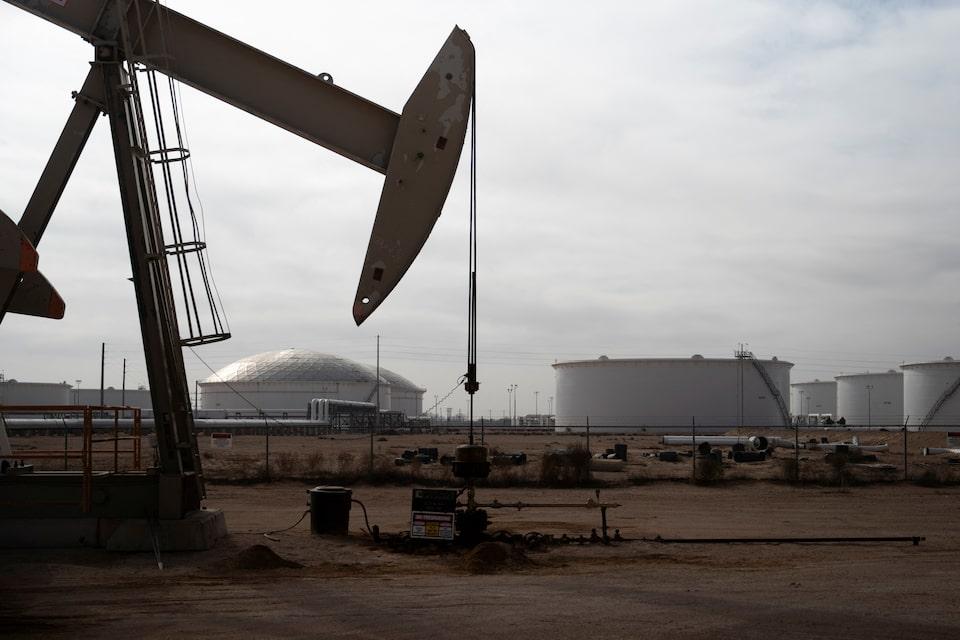
Brent, WTI fall after 1% gain in previous session US demand to ease at the end of summer driving Indian buying pattern of Russian oil in focus Aug 28 (Reuters) - Oil prices fell on Thursday after rising in the previous session as investors weighed expectations for lower U.S. fuel demand with the end of the summer demand season nearing and awaited India's response to punitive U.S. tariffs. Brent crude futures dropped 50 cents, or 0.73%, to $67.55 at 0643 GMT, and West Texas Intermediate (WTI) crude futures declined 51 cents, or 0.80%, to $63.64. Sign up here. Both contracts climbed in the prior session after the U.S. Energy Information Administration reported that U.S. crude inventories fell by 2.4 million barrels in the week ended August 22, compared with analysts' expectations in a Reuters poll for a 1.9-million-barrel draw. "Oil prices are pulling back this morning as traders reassess yesterday’s rally driven by the EIA report," said Priyanka Sachdeva, a senior market analyst at Phillip Nova. "While U.S. crude inventories did post another drawdown, the pace of declines slowed compared with last week’s sharper drop, tempering bullish momentum," she added. The drop signaled strong demand ahead of the upcoming U.S. Labor Day long weekend. However, this typically marks the unofficial end of the summer driving season and the onset of lower U.S. demand, IG market analyst Tony Sycamore said. Traders are watching out for how New Delhi responds to pressure from Washington to stop buying Russian oil, after U.S. President Donald Trump doubled tariffs on imports from India to as much as 50% on Wednesday. "India is expected to continue purchasing crude oil from Russia at least in the short term, which should limit the impact of the new tariffs on global supply," said Sycamore. Also weighing on the market is the increasing supply coming to the market as major producers have removed some voluntary cuts, which offset some of the supporting factors, including that Russia and Ukraine have stepped up attacks on each other's energy infrastructure. Russia launched a massive drone attack on energy and gas transport infrastructure across six Ukrainian regions overnight, leaving more than 100,000 people without power, Ukrainian officials said on Wednesday. The prospect of a near-term interest rate cut in the U.S. has also supported the oil market, as that would potentially boost economic activity and oil demand. New York Federal Reserve Bank President John Williams said on Wednesday rates will likely fall at some point, but policymakers will need to see upcoming economic data before deciding whether it is appropriate to make a cut at the Fed's September 16-17 meeting. https://www.reuters.com/business/energy/oil-falls-market-weighs-end-us-summer-demand-2025-08-28/
2025-08-28 06:45
Aug 28 (Reuters) - Drax Group (DRX.L) , opens new tab said on Thursday that Britain's financial watchdog is investigating its biomass sourcing statements from January 2022 to March 2024, following a similar probe by the country's energy regulator last year. The Financial Conduct Authority (FCA) is also looking into the compliance of Drax's 2021–2023 annual reports with financial disclosure rules. Sign up here. The FCA's probe intensifies scrutiny of Drax, which was penalised 25 million pounds ($33.77 million) by British energy regulator Ofgem in 2024 over misreporting biomass data, particularly concerning sourcing from Canadian forests. The energy company, which supplies about 5% of Britain's electricity via biomass-converted coal plants, said it is cooperating with the FCA, but provided no further details. Drax reported a half-year profit drop in July due to weak UK wholesale power prices, but saw strong wood pellet production, a key fuel for renewable electricity generation. ($1 = 0.7402 pounds) https://www.reuters.com/sustainability/uk-financial-watchdog-probes-drax-over-past-biomass-disclosures-2025-08-28/
2025-08-28 06:37
KYIV, Aug 28 (Reuters) - Ukraine struck Russia's Afipsky oil refinery in Krasnodar region and Kuybyshevskyi oil refinery in Samara region overnight, commander of Ukrainian drone forces said on Thursday. Sign up here. https://www.reuters.com/markets/commodities/ukraine-says-it-attacked-two-russian-oil-refineries-overnight-2025-08-28/

2025-08-28 06:36
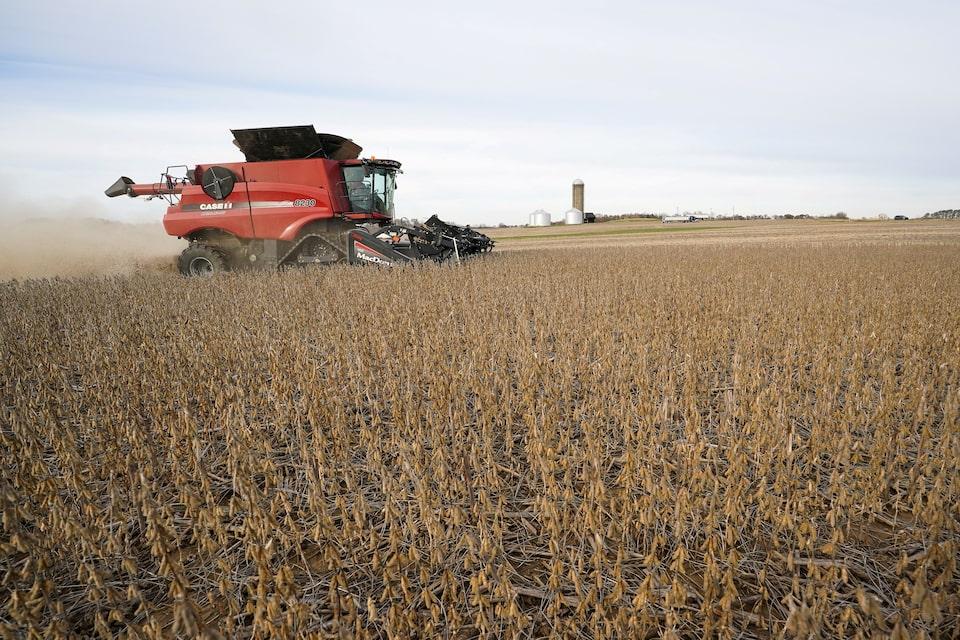
BEIJING/SINGAPORE, Aug 28 - Grains traders globally are closely watching talks between the United States and China for signs of progress on agricultural tariffs, a key test for American farmers to regain a foothold in their top export market. Senior Chinese trade negotiator Li Chenggang is visiting Washington this week for talks with U.S. officials. Sign up here. WHY DOES AGRICULTURE MATTER FOR TIES? Farm products are the biggest U.S. export to China and a commitment by Beijing to increase purchases is likely to feature in a broad trade deal. President Donald Trump has already urged it to quadruple soybean purchases. But looming over the talks is the memory that parts of the 2020 "Phase 1" deal, struck during Trump's first term, went unfulfilled, in particular a commitment by Beijing to buy an additional $200 billion worth of U.S. goods over 2020 and 2021. China is the top market for U.S. farmers, taking $29.25 billion of their goods last year, and buying more is a powerful lever for Beijing to help close the huge trade deficit Trump frequently uses to justify tariffs. With China the world's largest soybean importer and the United States the second-largest grower, U.S. sales of the oilseed were worth $12.8 billion and China bought roughly half of all U.S. exports. Much of that trade is now frozen, thanks to Chinese tariffs on U.S. soybeans and other farm products. A deal could see China ramp up purchases beyond last year's levels. Agricultural imports have fallen by more than a quarter since peaking at just over $40 billion in 2022, roughly equal to the annual commitment in the Phase 1 deal. WHAT COULD HOLD UP A DEAL? However, reaching or exceeding those levels will require U.S. exporters to displace competitors, especially in Latin America, where China increasingly buys agricultural products. The U.S. share of China's agricultural imports slid to 12% in 2024 from 20% in 2016, while that of Brazil rose to 22% from 14%, Chinese customs data shows. A major shift back towards U.S. supply would reverse a years-long campaign to diversify away from Washington that began after Trump's first trade war. Part of that campaign is a push to cut reliance on overall food imports, which would complicate prospects for any ramp-up in buying. In April, China unveiled a plan to trim by 10% soymeal inclusion in animal feed by 2030 - a move that could slash annual soybean imports by about 10 million tons, or nearly half of U.S. soybean exports to China last year. WHAT ROLE WILL SOYBEANS HAVE? The size of the soybean trade is likely to make it a big part of any Chinese commitment to buy more U.S. agricultural products. But the window is rapidly closing for purchases of this year's U.S. crop. China normally imports U.S. soybeans between September and January, but it has not pre-booked any cargoes yet - a delay traders warn risks U.S. exporters missing out on billions if Chinese crushers keep opting for South American cargoes instead. Benchmark Chicago soybeans are trading close to their lowest since 2020, weighed down by a lack of Chinese buying and expectations of a bumper U.S. harvest. U.S. soybean farmers wrote to Trump this month pleading for a deal with Beijing and warning of dire economic consequences if China continues to shun American crops. https://www.reuters.com/world/china/what-role-do-farm-products-have-us-china-trade-deal-2025-08-28/
2025-08-28 06:34
HONG KONG, Aug 28 (Reuters) - American Bitcoin, the bitcoin miner backed by U.S. President Donald Trump's two sons, has locked in crypto and traditional investors to back an all-stock merger that will allow the firm to soon start trading on the Nasdaq, the company's largest investor said. The unlisted firm's merger with Gryphon Digital Mining (GRYP.O) , opens new tab is set to be finalised shortly, and the goal is to start trading in early September, according to Asher Genoot, the CEO of Hut 8 (HUT.O) , opens new tab, which holds 80% of American Bitcoin. Sign up here. Anchor shareholders in the listing have already been finalised, he added. The company's co-founder, Eric Trump, his brother Donald Trump Jr and Hut 8 (HUT.O) , opens new tab, will own a combined 98% of the newly formed entity, which will retain the name American Bitcoin and trade under the stock code ABTC. "Instead of going public directly via IPO, we thought that there was a lot more advantages to financing if we had an existing company that already had access to different financing too," Genoot told Reuters in an interview at the Crypto Asia conference in Hong Kong. Eric Trump is also in Hong Kong and will travel to Tokyo on the weekend for an event for Metaplanet, a Japanese bitcoin treasury firm, Genoot said. American Bitcoin is hunting for crypto assets to buy in Hong Kong and Japan to build out its global business, the Financial Times reported two weeks ago. Genoot said American Bitcoin could take stakes in companies outside of the U.S. to give people access to publicly listed bitcoin assets, as some investors were prevented from buying Nasdaq-listed stocks. "Right now it's very early. So we haven’t been committed to anything," he said. Hut 8 was also a crypto miner but has shifted its focus to energy infrastructure and data centers after launching American Bitcoin with Trump sons, he added. https://www.reuters.com/world/asia-pacific/american-bitcoin-backed-by-trumps-sons-aims-start-trading-september-2025-08-28/

2025-08-28 06:24
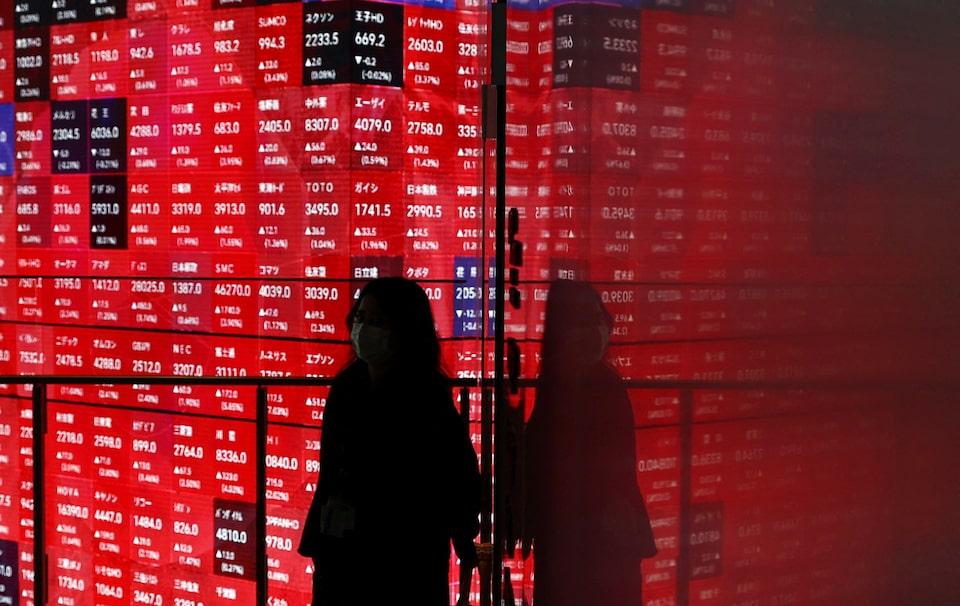
Surge in Chinese chipmaking stocks as U.S. futures fall Nvidia's shares retreat as investors assess earnings, China outlook Bank of Korea holds rates as expected SINGAPORE, Aug 28 (Reuters) - Asian stocks experienced a volatile session on Thursday as worries over the outlook for artificial intelligence bellwether Nvidia's (NVDA.O) , opens new tabChina business , opens new tab hit its regional suppliers, while igniting outsized gains in its Chinese rivals. MSCI's broadest index of Asia-Pacific shares outside Japan (.MIAPJ0000PUS) , opens new tab swung between gains and losses, and was last down 0.4%, as U.S. equity futures were dragged lower by an after-hours decline of 3.1% in shares of the chip designer, which has become the world's most valuable company. Sign up here. "After such a strong run, investor exposure was stretched, leaving little margin for disappointment," said Charu Chanana, chief investment strategist at Saxo in Singapore. "We should expect some spillover," she added, even though it is unlikely to hurt wider investor confidence. "Asian chipmakers — especially in Korea and Taiwan — are the cleanest beta to Nvidia and will likely feel the drag." In early European trades, pan-region futures were last flat, German DAX futures gained 0.1% and FTSE futures were up 0.1%. The European single currency was unchanged on the day at $1.1642, holding on to a three-week winning streak that bumped up its gains this month to 2%, as traders dialled back expectations of the hit to French government borrowing costs stemming from the country's deepening political crisis. Following a two-day string of gains that has pushed U.S. markets to a record high, S&P 500 e-mini futures fell 0.1% and Nasdaq futures tumbled 0.3% after Nvidia's results. Investor concerns about Nvidia centred on its China business, which hung in the balance, caught up in the trade war between Washington and Beijing. "We expect the stock to trade down modestly following an in-line quarter and guidance against a backdrop of elevated expectations heading into the call," analysts from Goldman Sachs wrote in a research report. "Management noted that it did not ship any H20 products to China in the quarter." What also caused concern was that data centre revenues of $41.1 billion fell short of analyst expectations of $41.3 billion, said Mark Matthews, head of research for Asia at Bank Julius Baer in Singapore. "Granted it was minor, but a miss is odd for this company," he said. The chill was felt across the Asian tech sector, as Taiwan Semiconductor Manufacturing Company (2330.TW) , opens new tab tumbled 2.5%, while Samsung Electronics (005930.KS) , opens new tab slipped 1%. Nvidia's Chinese competitors surged, with SMIC (0981.HK) , opens new tab gaining as much as 9.3%, and Cambricon Technologies , shares, which have almost tripled since mid-July, adding as much as 8.2%. The two chipmakers pushed the STAR 50 Index of Chinese growth stocks to a gain of as much as 5%. Japanese stocks fluctuated between gains and losses after Kyodo news agency reported on Thursday that Japan's top trade negotiator Ryosei Akazawa cancelled a planned visit to the United States, where he was expected to iron out details of the trade deal agreed last month. The Nikkei 225 (.N225) , opens new tab was last up 0.7%. Shares in Mitsubishi Corp (8058.T) , opens new tab rose as much as 3.2% after a unit of Warren Buffett's Berkshire Hathaway (BRKa.N) , opens new tab said it had increased its stake in the company. Korean stocks advanced 0.4% after the Bank of Korea kept rates on hold at 2.5%, as widely expected by economists. Hong Kong stocks slumped, with the Hang Seng Index (.HSI) , opens new tab falling 0.9%, led by a decline of as much as 11.4% in Meituan (3690.HK) , opens new tab shares, after the Chinese food delivery giant reported a drop in second-quarter profit on Wednesday. In the currency markets, the dollar was on the defensive as traders ramp up bets of an interest rate cut next month, following Federal Reserve Chair Jerome Powell's recent dovish pivot and as President Donald Trump moves to assert control of the world's biggest central bank. Earlier this week, Trump said he is firing Federal Reserve Governor Lisa Cook, leaving some investors worried about the Fed's independence. Cook's lawyer said she will file a lawsuit against the White House. Trump pressured the Fed to lower interest rates during his first term in the White House and he has escalated that campaign in recent months while seeking to make appointments to key positions on the U.S. central bank. The president has demanded that rates be cut by several percentage points and threatened to fire Powell, although he recently backed down from that. The yield on benchmark 10-year Treasury notes fell to 4.2227% compared with its U.S. close of 4.238% on Wednesday. The market is currently pricing a 88.7% probability of a 25-basis point rate cut at Fed's policy meeting on 17 September, up from 61.9% a month ago, according to the CME Group's FedWatch tool. The dollar dropped 0.2% against the yen to 147.135 . In commodities markets, Brent crude fell 0.8% to $67.49 per barrel. Gold was slightly lower. Spot gold was traded down 0.2% at $3391.60 per troy ounce. https://www.reuters.com/world/china/global-markets-update-1-wrapup-2-2025-08-28/