2025-12-03 23:53
Dec 4 (Reuters) - Australian telecom company Optus has fully restored its National Broadband Network (nbn) services in Brisbane and other affected areas of Queensland following a recent outage, according to an update on its website on Thursday. Optus, owned by Singapore Telecommunications (SingTel) (STEL.SI) , opens new tab, did not immediately respond to a Reuters' request for comment, while SingTel is also yet to respond. Sign up here. The outage on Wednesday left almost 100,000 Optus customers across Brisbane and southeast Queensland unable to dial "000", Australia's emergency number, after an nbn disruption, according to media reports , opens new tab. The outage also prevented some landline users from reaching emergency services, the reports added. Media outlets also reported that a spokesperson of the company told Brisbane radio the disruption had been caused by a network server failure. https://www.reuters.com/business/media-telecom/optus-restores-nbn-services-across-brisbane-parts-queensland-website-shows-2025-12-03/

2025-12-03 23:33
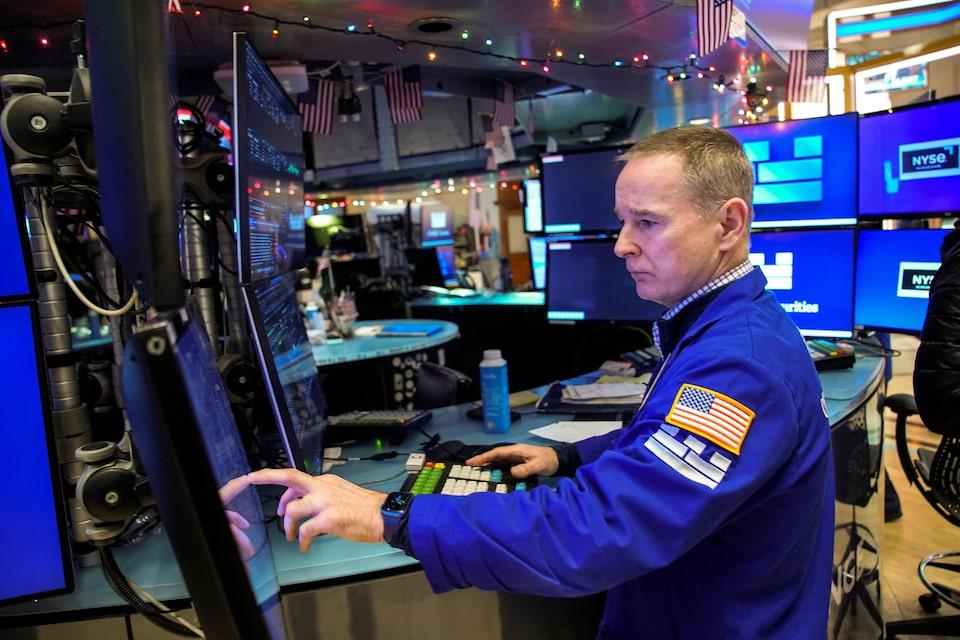
Investors assess ADP employment and ISM services reports Microsoft pares declines after disputing report about AI sales quotas Small caps outperform Indexes up: Dow 0.86%, S&P 0.30%, Nasdaq 0.17% NEW YORK, Dec 3 (Reuters) - U.S. stocks advanced to close higher on Wednesday, as a flurry of economic data kept expectations elevated for an interest rate cut by the Federal Reserve next week, while a fall in Microsoft's shares curbed the advance. The record-long 43-day U.S. government shutdown kept investors in the dark about official data and hampered the ability to gauge the Fed's likely path on interest rates. But the backlog is now being cleared along with data from non-governmental sources. Sign up here. The Institute for Supply Management said U.S. services activity was little changed in November at 52.6 versus 52.4 in October while the prices paid component dipped but remained elevated. The reading comes ahead of the delayed personal consumption expenditures report, the Fed's preferred inflation gauge, on Friday. Separately, the ADP National Employment Report showed U.S. private payrolls unexpectedly declined in November. With official employment reports for October and November due only after the central bank's policy announcement, market participants have placed more weight than usual on private-sector data. "For market participants, at least, the Federal Reserve will have ammo to lay off the hawkish tone that we saw a couple of weeks ago and perhaps lean more dovish into what looks to be disappointing and weakening labor data as we get this kind of real-time restart of the data cadence that we're used to," said Keith Buchanan, senior portfolio manager at Globalt Investments in Atlanta. "That's something that the markets are obviously receiving really well today, and we'll see as the onslaught of data continues if it will continue with this tone, and the markets will continue to receive it in the same way." The Dow Jones Industrial Average (.DJI) , opens new tab rose 408.44 points, or 0.86%, to 47,882.90, the S&P 500 (.SPX) , opens new tab gained 20.35 points, or 0.30%, to 6,849.72 and the Nasdaq Composite (.IXIC) , opens new tab gained 40.42 points, or 0.17%, to 23,454.09. Microsoft (MSFT.O) , opens new tab fell as much as 3% after a report said the tech giant has cut AI software sales quotas after many sales staff missed their targets in the fiscal year that ended in June. But shares bounced off session lows to decline by as little as 1.2% after CNBC said Microsoft denied the report, which helped pull the S&P 500 and Nasdaq into positive territory. Microsoft closed down 2.5%. The tech sector (.SPLRCT) , opens new tab finished 0.4% lower, one of two S&P 500 sectors in the red. Energy (.SPNY) , opens new tab, up 1.8%, was the best performing sector, lifted in part by a rise in oil prices. Traders' expectations for a 25-basis-point cut at next week's Fed meeting inched up to 89% after the data, up from around 87% earlier in the day, according to CME's FedWatch Tool , opens new tab. Investors weighed a report that President Donald Trump's administration has abruptly canceled interviews with finalists for the Fed chair role. This fueled expectations that Kevin Hassett - seen as likely to favor aggressive interest rate cuts - will replace Jerome Powell next May. Rate cut expectations have also lifted small caps recently, with the Russell 2000 index (.RUT) , opens new tab gaining nearly 2% on the session, following last week's 5.5% surge - its strongest weekly performance in more than a year. "We expect small caps to outperform in 2026, with earnings to drive returns," said Jill Carey Hall, equity and quant strategist at BofA Securities, adding that Fed rate cuts and a strong capex cycle would be strong drivers. Marvell Technology (MRVL.O) , opens new tab jumped 7.9% after the chipmaker said it will buy semiconductor startup Celestial AI in a deal worth $3.25 billion. Microchip Technology (MCHP.O) , opens new tab rallied 12.2% after the chipmaker raised its expectations for third-quarter results. American Eagle Outfitters (AEO.N) , opens new tab surged 15.1% after raising its annual comparable sales forecast, betting on strong demand during the holiday season. Advancing issues outnumbered decliners by a 2.88-to-1 ratio on the NYSE and by a 2.73-to-1 ratio on the Nasdaq. The S&P 500 posted 27 new 52-week highs and two new lows while the Nasdaq Composite recorded 108 new highs and 96 new lows. Volume on U.S. exchanges was 15.44 billion shares, compared with the 18.19 billion average for the full session over the last 20 trading days. https://www.reuters.com/business/retail-consumer/wall-st-futures-edge-higher-rate-cut-hopes-data-focus-2025-12-03/
2025-12-03 22:03
ORLANDO, Florida, Dec 3 (Reuters) - Stocks rose while U.S. bond yields and the dollar fell on Wednesday, after surprisingly weak private sector jobs data increased the likelihood that the Federal Reserve will lower interest rates again next week. More on that below. In my column today, I look at China's seemingly incongruous twin strategy of allowing its currency to strengthen and boosting exports. There are good reasons to believe it will work. Sign up here. If you have more time to read, here are a few articles I recommend to help you make sense of what happened in markets today. Today's Key Market Moves Today's Talking Points * Bill yields tumble If ultra short-dated U.S. T-Bill yields are the best proxy for near-term Fed rate expectations, the signals being sent out now could not be clearer. The one-month bill yield on Wednesday slumped nearly 8 basis points below 3.77%. Remarkably, it has fallen nearly 25 basis points since Friday, meaning bills traders have effectively moved to fully price in a quarter-point rate cut from the Fed next week in the last four days. * When low hiring drifts to firing Expectations for a Fed rate cut next week have been strengthening for days, but Wednesday's ADP jobs data looks to have sealed the deal. The 32,000 fall in private sector jobs in October was a surprise - economists had expected a slight rise - marking the worst month since early 2023. Many economists and investors have long looked down on the ADP report, saying it bears little correlation to the broader official non-farm payrolls data. But post-government shutdown, perhaps ADP will be scrutinized more closely - and if low hiring morphs into outright firing, Houston, we have a problem. * Small cap resilience After rallying 5.5% last week - its best week in over a year - the Russell 2000 strongly outperformed again on Wednesday, surging nearly 2%, more than six times the benchmark S&P 500's 0.3% rise. This may seem a little surprising, given that the bulk of surprise ADP 32,000 job losses were reported by small businesses. With AI bubble fears refusing to die down, the rotation into small caps that has played out in recent months may have further to run. Rising yuan won't slow China's export boom China's desire to keep its export growth engine roaring seems at odds with the steady appreciation of its currency. But these trends can continue to co-exist, highlighting the tenuous relationship between a country's exchange rate and trade flows. The People's Bank of China has steered the yuan 3% higher since April to 7.07 per dollar, its strongest point in over a year. The currency is expected to stay on that path, with many analysts predicting the dollar will break below 7.00 yuan next year, perhaps to 6.60 yuan. That would imply a further 7% appreciation to levels last seen in 2022. Yet one clear takeaway from the Communist Party leadership's October planning meeting, or plenum, was Beijing's reluctance to wean itself off its export-oriented growth model. On the one hand, that makes sense given China's domestic economy is still struggling with a burst property bubble, deflation and weak demand. Exports have contributed more than half of headline real GDP growth over the last two years, according to Goldman Sachs. But shouldn't a strengthening currency make China's goods more expensive, and therefore uncompetitive, on the global market? In theory, yes. But in practice, the robust yuan certainly doesn't appear to be stemming the flow of China's export volumes. Brad Setser, senior fellow at the Council on Foreign Relations and a long-standing China watcher, notes that China's export volumes have risen a cumulative 40% since the end of 2019, while imports have increased just 1%. ECONOMIES OF SCALE The fact is, China's goods are still relatively cheap. Indeed, on a real effective exchange rate (REER) basis - which adjusts for inflation differences between countries - the yuan is roughly at its weakest level in 15 years, down almost 20% since early 2022 and nearly 50% since 2012. A housing crash, economic slump, capital flight and unfavorable interest rate differentials have accelerated the currency's slide in recent years, and most analysts agree it is substantially undervalued. What's more, China can absorb a modest exchange rate appreciation because of its presence, expertise and dominance across global supply chains in a range of industries such as electric vehicles, solar panels and batteries. China is no longer the world's cheap consumer goods factory, instead operating at the higher end of the economic, technological and strategic value chains. "China's sheer scale is very daunting," says Marc Chandler, managing director at Bannockburn Capital Markets and another veteran China watcher. Given the size of China's footprint in many advanced sectors, how sensitive are its exports to fluctuations in its currency? Not very, it turns out. Consider German automaker Volkswagen, which has invested billions in its plant in the Chinese city of Hefei. The company said last month that a new EV model in China can cost up to 50% less than elsewhere. It will take more than another 5-10% rise in the yuan's value to really dent that level of competitiveness. WEAK FX, TRADE LINKS Of course, the exchange rate is not the sole or even most important input influencing a country's trade balance. Domestic demand, global growth, changes in commodity prices, and trade policy all play a role. And now, tariffs and other trade measures must be added to that mix. Take Switzerland. The Swiss franc is currently near its strongest level in 15 years on a 'REER' basis. Yet Switzerland continues to post a substantial trade surplus, which has exceeded 10% of GDP in each of the last three calendar years. On the flip side is Japan. The yen has been on the slide for years, and is currently hovering around its weakest levels ever in 'REER' terms, yet the country has posted a trade surplus every year for the past five years. It looks like Beijing will continue its strategy of managed currency appreciation which, on the margins at least, should help cool simmering trade tensions with Washington and deflect criticism from competitor nations in Asia that China is muscling into its markets. Though, ultimately, "muscling in" is exactly what China wants to do - and a firmer yuan shouldn't stand in its way. What could move markets tomorrow? Want to receive Trading Day in your inbox every weekday morning? Sign up for my newsletter here. Opinions expressed are those of the author. They do not reflect the views of Reuters News, which, under the Trust Principles , opens new tab, is committed to integrity, independence, and freedom from bias. https://www.reuters.com/world/china/global-markets-trading-day-graphic-2025-12-03/

2025-12-03 21:50
COP30 summit outcome disappointing but shows multilateralism works, Guterres says Guterres concerned about missing 1.5 C temperature goal, urges emission reductions Dec 3 (Reuters) - The final outcome of the COP30 climate summit in Brazil last month was "disappointing," but showed multilateralism still works in the absence of the United States' participation and amid growing geopolitical tensions, UN Secretary-General Antonio Guterres told the Reuters Next conference in New York on Wednesday. "I have mixed feelings about the COP," Guterres said about the annual UN climate negotiations that took place on the edge of the Amazon rainforest. Sign up here. "On one hand, I think it is remarkable that with the United States out and campaigning against it and the fossil fuel industry clearly determined to make sure that things would not move forward ... with all these movements against it, it was possible to have an agreement, and this shows that multilateralism works," he said. WORRIED ABOUT MISSING TEMPERATURE GOAL Brazil's COP30 presidency pushed through a compromise climate deal after over two weeks of negotiating that would boost finance for poor nations coping with global warming. Still, it omitted any mention of the fossil fuels driving it, which critics say showed the world was backtracking on the previous consensus that the world should phase down their use. Several countries objected to the summit ending without stronger plans to rein in greenhouse gases or address fossil fuels. "What worries me more is that we are at the present moment in a situation in which the scientific community is already unanimous in recognizing that we are going to go above 1.5 C," he said, referring to the temperature threshold world governments set at a landmark 2015 climate agreement in Paris. "This overshoot means that all these things that we are witnessing will get more frequent, more dramatic," he said, referring to devastating storms and floods, adding that countries need to strive to cap greenhouse gas emissions now and undertake a drastic reduction over the next few years. CHINA STEPPING UP Guterres said the disengagement of the U.S. from climate action has left the door wide open for China, which dominates the global market for renewable energy and electric vehicles. He said China set a low-ball climate target this year by pledging to reduce its greenhouse gas emissions by only up to 10% from an unspecified peak, but he expects the world's largest greenhouse gas emitter to outperform its goal. "An acceleration of reduction of emissions is essential in China, from the point of view of the world, because they represent 30% of (global) emissions," he said. He urged developed countries to step up their investments in the next generation of clean technologies beyond solar and wind, such as green hydrogen, to leapfrog China. "Green hydrogen is probably an important bet that Western countries should be doing to gain in relation to the next market dispute," he said. View the live broadcast of the World Stage here and read full coverage here. https://www.reuters.com/sustainability/climate-energy/multilateralism-still-works-even-us-oil-industry-abandon-climate-action-un-chief-2025-12-03/

2025-12-03 21:48
NEW YORK, Dec 3 (Reuters) - The Colonial Pipeline on Wednesday requested the U.S. Federal Energy Regulatory Commission reconsider its earlier decision rejecting changes proposed by the company to the way the largest U.S. fuel conduit handles gasoline shipments. The company asserted the regulator had erred in a November 3 order blocking Colonial from modifying delivery specifications, ending overlapping shipments of different grades of gasoline, and discontinuing shipments of so-called "Grade 5" gasoline sold in some Northeastern states during the winter. Sign up here. Colonial says the changes are part of its efforts to mitigate wear and tear of the over 60-year-old pipeline system, improve safety and efficiency. The changes will also help the company move more gasoline to markets that need it, the company said. However, a group of Colonial shippers, including oil majors Exxon Mobil (XOM.N) , opens new tab and BP (BP.L) , opens new tab, had protested the proposed changes, arguing they would harm their businesses by shifting blending margins away from them to Colonial. FERC, siding with the protesting shippers, ruled last month that Colonial had failed to show its proposal was just and reasonable. The regulator also found Colonial's plan would impose additional costs on shippers, degrade the quality of gasoline they move through the pipeline without compensating them, and create an undue advantage for Colonial. In its request for a rehearing, Colonial said that a separate proposal by the company, eliminating shipments of M grade and V grade gasoline in the Midwest, was approved by FERC. Since that filing went into effect on April 1, Colonial has realized 3.6 million barrels of incremental capacity, it said. Capacity benefits from the proposal that FERC rejected would be similar, while safety, integrity and operational benefits will be even bigger, Colonial said. The United States is the world's largest gasoline consumer, and last week burnt over 8.3 million barrels of the motor fuel on a daily basis. https://www.reuters.com/business/energy/colonial-pipeline-seeks-rehearing-proposal-modify-gasoline-shipments-2025-12-03/

2025-12-03 21:23
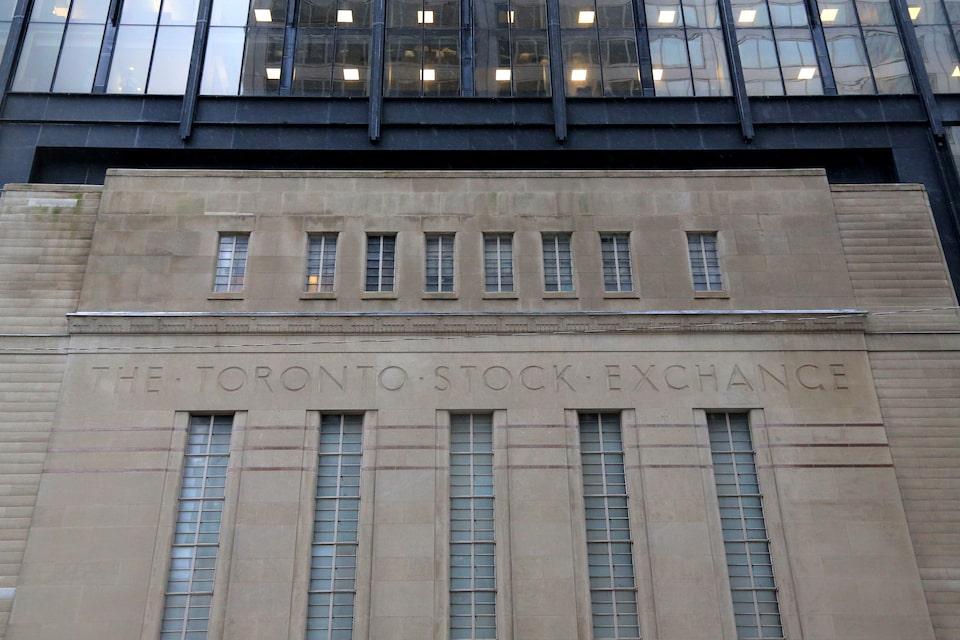
Dec 3 (Reuters) - Canada's main stock index rose on Wednesday as higher oil prices boosted energy shares and the major banks continued to beat earnings estimates. The S&P/TSX Composite index (.GSPTSE) , opens new tab ended up 111.26 points, or 0.4%. It follows two consecutive days of losses for the index, retreating from a record closing high on Friday. Sign up here. "Part of the reason we experienced a bit of a pullback was concerns around AI spend and the technology sector in the United States," said Devin Cattelan, a portfolio manager at Verecan Capital Management. "The market is trying to digest and figure out what the actual payoff on the spend will be long-term and what the valuations are that would justify it." U.S. stocks also moved higher as a flurry of economic data kept expectations elevated for an interest rate cut by the Federal Reserve next week. Canada's stock market has a lower weighting than Wall Street in technology stocks that have spent heavily on AI but a relatively high exposure to metal mining shares. "It's going to require a lot of commodities and base metals to go into these infrastructure projects and these data center projects and so that's been increasing the demand on the commodity side and it's been a positive for the Toronto Stock Exchange," Cattelan said. The energy sector (.SPTTEN) , opens new tab rose 2% as the price of oil settled 0.5% higher at $58.95 a barrel. The U.S. and Russia failed to reach a deal to end the war in Ukraine that could have eased sanctions on Moscow's oil sector. Gains for railroad shares helped lift the industrials sector. It added 1.2% and technology ended 0.7% higher. Financials inched up 0.1%, with shares of Royal Bank of Canada (RY.TO) , opens new tab rising 1.1% to a record high after the bank topped analysts' estimates for fourth-quarter earnings. National Bank of Canada also reported earnings ahead of analysts' estimates but its shares ended 1.6% lower. On Tuesday, Scotiabank was the first of the major banks to report earnings and it too beat estimates. https://www.reuters.com/business/rising-oil-prices-buoy-tsx-futures-2025-12-03/