2025-08-26 18:29
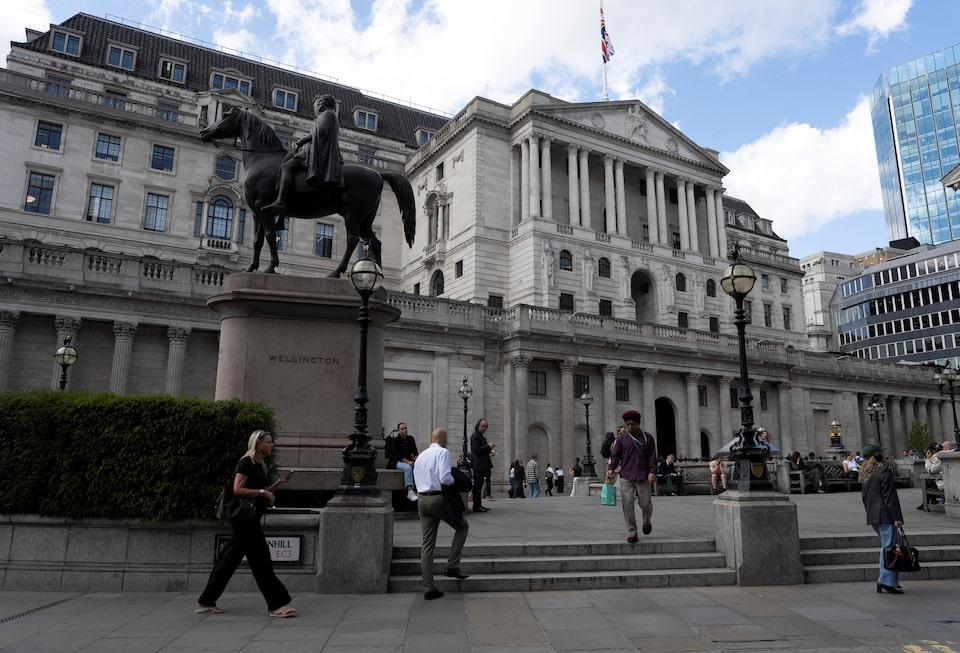
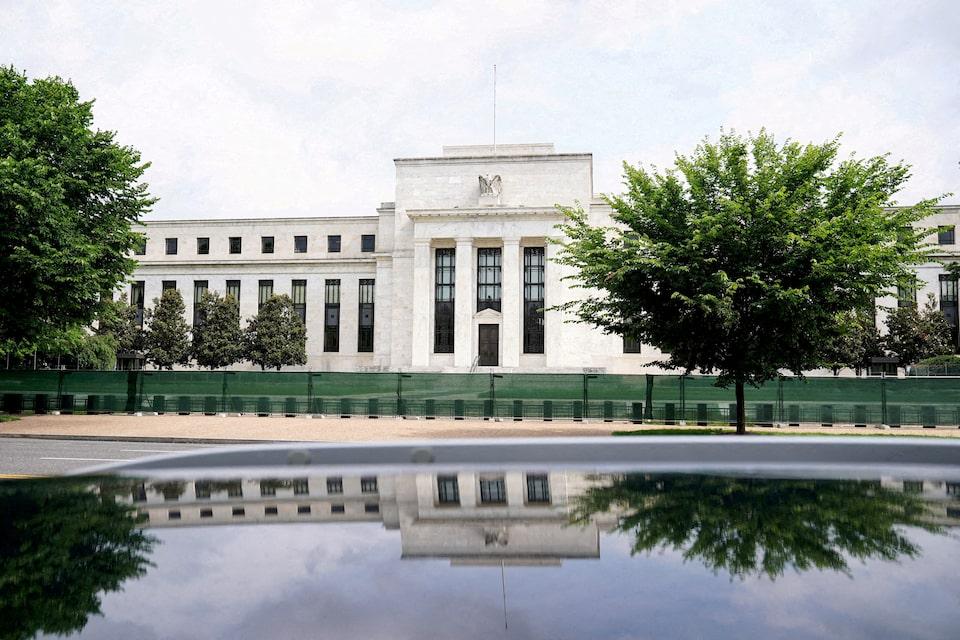
Trump says he is firing Fed governor Lisa Cook President's move fans concerns over Fed independence French markets hit by political turmoil NEW YORK, Aug 26 (Reuters) - Shorter-dated U.S. Treasury yields and the dollar fell on Tuesday, with President Donald Trump's attempt to fire a Federal Reserve governor raising concerns about the U.S. central bank's independence, while Wall Street stocks edged higher. Trump said on Monday he was firing Fed Governor Lisa Cook over claims of mortgage borrowing impropriety. Cook said Trump has no authority to fire her, and that she would not resign. Her term was due to end in 2038. Sign up here. The unprecedented move by Trump could lead to a protracted legal battle that risks resetting norms for the central bank's independence and a president's involvement in monetary policy. Cook's exit from the Fed could speed up Trump's efforts to reshape the Federal Open Market Committee, which sets interest rate policy. Trump has been pushing the Fed to cut rates to stimulate growth and reduce borrowing costs. Expectations of a potentially more dovish Fed helped to send shorter-dated U.S. yields lower. But a politically influenced Fed that keeps rates lower than they otherwise might could increase inflation concerns and reduce foreign demand for the debt on credibility fears. Those factors will weigh on longer-dated debt. "President Trump is undertaking a risky and possibly ineffective battle against the Fed. To get a majority of the FOMC to toe the Trump line would take seven voters, not just two or even four," Brian Jacobsen, chief economist at Annex Wealth Management, wrote. Trump has regularly threatened to dismiss Fed Chair Jerome Powell, and this month he fired a top Labor Department official after accusing her, without evidence, of manipulating jobs data that had disappointed him. Trump has backed away from that threat as Powell gets closer to the expiration of his term next May. INFLATION REPORT The dollar fell against major currencies on the Cook news, and a global stock index was lower as European shares dropped, led by losses in France as political uncertainty deepened in the country. France's CAC 40 .FCHI , opens new tab fell 1.7% as the country's minority government looked increasingly likely to be ousted next month. U.S. stocks edged higher, with investors awaiting Nvidia's NVDA.O , opens new tab results on Wednesday and a key inflation report later this week. "The market is very much focused on inflation, the labor market, consumer spending and corporate earnings. That - pun intended - trumps everything," said Oliver Pursche, senior vice president and adviser for Wealthspire Advisors in Westport, Connecticut. The Dow Jones Industrial Average (.DJI) , opens new tab rose 3.22 points to 45,285.69, the S&P 500 (.SPX) , opens new tab climbed 5.71 points, or 0.09%, to 6,445.03 and the Nasdaq Composite (.IXIC) , opens new tab advanced 30.17 points, or 0.14%, to 21,479.47. MSCI's gauge of stocks across the globe (.MIWD00000PUS) , opens new tab fell 2.37 points, or 0.25%, to 950.59. The pan-European STOXX 600 (.STOXX) , opens new tab index ended 0.83% lower. The dollar index , which measures the greenback against a basket of currencies including the yen and the euro, fell 0.29% to 98.19, with the euro up 0.27% at $1.1649. Against the Japanese yen , the dollar weakened 0.31% to 147.31. The 2-year note US2YT=RR , opens new tab yield typically moves in step with interest rate expectations. It was last down 4.3 basis points to 3.687%, from 3.73% late on Monday. The benchmark U.S. 10-year note yield fell 1.7 basis points to 4.258%. Investors anxiously await Friday's U.S. personal consumption prices reading, considered the Fed's preferred inflation gauge. Morgan Stanley on Tuesday became the to forecast a U.S. interest rate cut in September, joining global peers after Powell hinted at policy-easing next month in a speech last week. Oil prices fell more than 2%, while gold rose. U.S. crude fell 2.31% to $63.29 a barrel and Brent fell to $67.23 per barrel, down 2.28% on the day. Spot gold rose 0.57% to $3,385.53 an ounce. https://www.reuters.com/world/china/global-markets-wrapup-4-graphic-2025-08-26/
2025-08-26 18:10
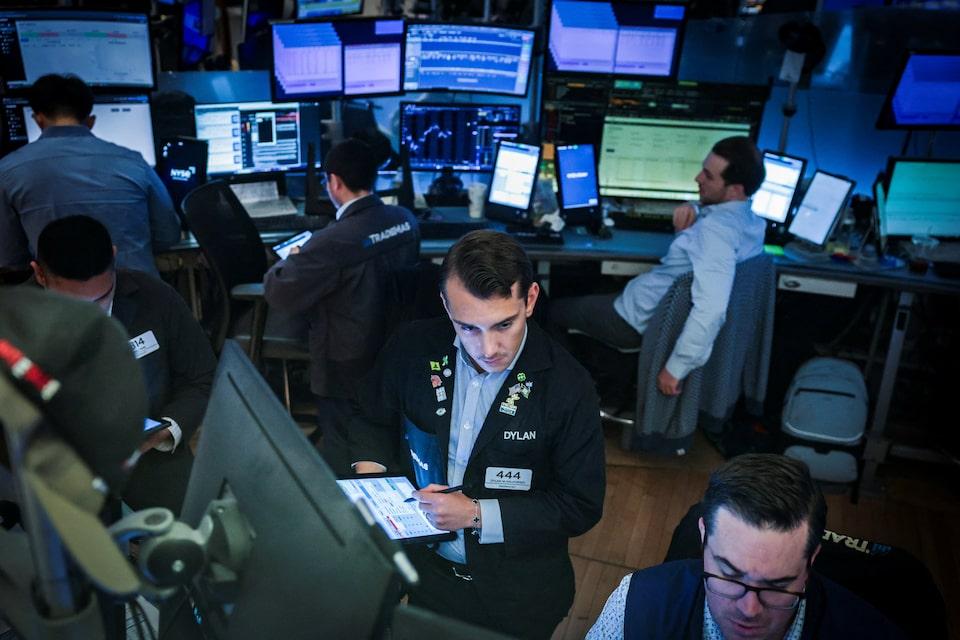
Aug 26 (Reuters) - Polymarket said on Tuesday it secured an investment from Donald Trump Jr-backed venture capital firm 1789 Capital, as prediction markets gain traction in the United States. The Trump brothers, Eric and Donald, have announced a series of new business ventures over the past year, serving as advisers on corporate boards. They have also expanded their investments in a financial firm, golf courses, hotels, telecom and crypto miners - ventures they say reflect U.S. President Donald Trump's policies and agendas. Sign up here. Polymarket did not disclose the terms of the investment by 1789 Capital, but a source familiar with the matter told Reuters it was in the double-digit millions of dollars. Trump Jr is also set to join Polymarket as a strategic adviser. America-first investing as a strategy has broadly gained traction under the Trump administration, with fund managers rolling out products that emphasize U.S.-based assets and operations. 1789 Capital, launched in 2022 by Omeed Malik and Chris Buskirk, carries the tagline "funding the next chapter of American exceptionalism" on its website. It counts the eldest son of the U.S. president among its partners. The Palm Beach, Florida-based firm has backed ventures aligned with conservative values and brands itself as an anti-ESG investor. Malik, a former Bank of America (BAC.N) , opens new tab executive, was a prominent donor to U.S. President Donald Trump's campaign. BURGEONING POPULARITY Event derivatives trading involves buying and selling contracts tied to specific outcomes and has surged in popularity since the 2024 U.S. presidential election. While traditional media polls ahead of the election showed Democrat Kamala Harris having a narrow lead, prediction markets consistently priced in a greater probability of a Trump victory. Proponents of prediction markets say event derivatives provide a more accurate gauge of real-world outcomes by harnessing the collective intelligence of traders with money riding on their predictions. "Polymarket cuts through media spin and so-called 'expert' opinion by letting people bet on what they actually believe will happen in the world," Trump Jr said in a statement. Some trending markets currently on its platform include "Fed decision in September?" and "Will Trump try to fire Powell in 2025?" Critics, on the other hand, say prediction markets are little more than gambling, raising concerns about speculation on sensitive topics such as elections and public policy. Platforms such as Polymarket, once seen as experimental, now draw a wide mix of retail traders and institutional interest, signaling the sector has outgrown its nascent phase. Last month, the company agreed to buy Commodity Futures Trading Commission-licensed derivatives exchange and clearinghouse QCEX for $112 million. Its platform has seen trades worth about $6 billion in the first half of the year, Polymarket said. "Prediction markets have completely changed the way people follow the news," Trump Jr said in a post on social media platform X. He also serves as a strategic adviser to rival prediction market Kalshi. https://www.reuters.com/business/polymarket-secures-investment-trump-jr-backed-1789-capital-2025-08-26/
2025-08-26 17:41
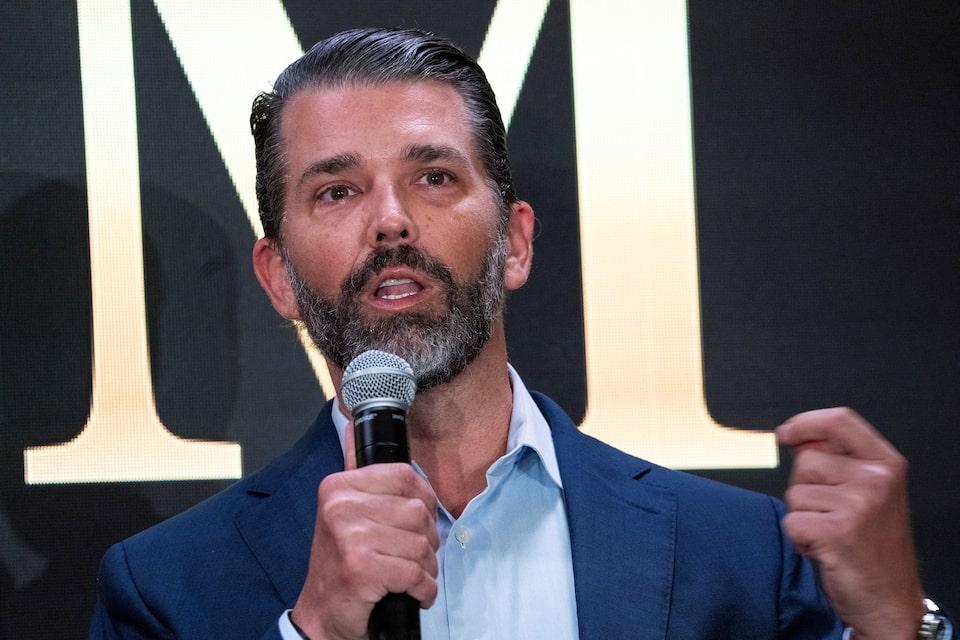
Trump Media strikes deal with Yorkville SPAC to form new crypto venture Trump Media's CRO strategy mirrors Strategy's bitcoin approach Trump Media's CRO venture follows recent SPAC crypto deals NEW YORK, Aug 26 (Reuters) - Trump Media & Technology Group (DJT.O) , opens new tab and Crypto.com on Tuesday agreed to a deal with a blank-check acquisition company to launch a new venture that will pursue a treasury-style strategy to accumulate the cryptocurrency platform's native token CRO, deepening the ties of U.S. President Donald Trump to the industry. The two companies are the latest to seek to incorporate the playbook of Michael Saylor's Strategy (MSTR.O) , opens new tab, formerly known as MicroStrategy, a software company that began accumulating bitcoin in 2020. The company's bitcoin holdings are now worth about $100 billion, based on current prices. Its shares soared fivefold alongside bitcoin's price in 2024. Sign up here. Trump Media shares were up 6.6% at $18.36 on Tuesday afternoon. The new company, Trump Media Group CRO Strategy, will go public via a merger with blank-check firm Yorkville Acquisition Corp (YORK.O) , opens new tab and be listed on the Nasdaq under the symbol MCGA. Following the announcement, the CRO token shot up 29.6% to 20 cents, according to CoinGecko. Yorkville's shares were down 2.2% at $10.42. Cronos has a market value of $6.8 billion, a fraction of the $3.9 trillion global crypto market cap, according to CoinGecko. Trump Media, which runs Donald Trump's Truth Social streaming and social media platform, said earlier this year it was partnering with Crypto.com to launch exchange-traded funds and products through its Truth.Fi brand. "By anchoring Truth Social’s rewards economy and corporate reserves in CRO, Trump Media is effectively institutionalizing the token. At the same time, it marks another example of a corporate entity treating a native token as part of its treasury strategy," said Alice Liu, head of research at crypto data provider CoinMarketCap. BITCOIN TREASURY BOOM The latest move from Trump Media comes weeks after holders of digital tokens issued by World Liberty Financial, one of the crypto ventures of the Trump family, voted to make them tradable, paving the way for their wide sale and purchase - a deal that potentially boosted the value of the president's holdings. The crypto industry has lately been booming in the U.S., buoyed in part by friendly regulations under the Trump administration. On Tuesday, digital asset manager Canary Capital filed to list an exchange-traded fund tracking the price of the $TRUMP meme coin, the crypto token whose fortunes are tied to Trump. Deals similar to Trump Media's CRO venture have also been occurring in recent months by a handful of other companies with sizable reserves of bitcoin or other cryptocurrencies. Most companies have followed a similar strategy of seeking listings on U.S. exchanges through deals with Special Purpose Acquisition Companies, or SPACs, as markets have valued bitcoin at a premium. In April, a blank-check firm backed by Cantor Fitzgerald teamed up with Tether and Japanese technology conglomerate SoftBank Group (9984.T) , opens new tab to create a $3.6 billion company focused on accumulating bitcoin. Funding , opens new tab for the Trump Media crypto venture will consist of $1 billion in Cronos tokens, $200 million in cash, $220 million in warrants, and an additional $5 billion equity line of credit from a Yorkville affiliate. Trump Media also agreed to buy $105 million in Cronos for its balance sheet, while Crypto.com said it would purchase $50 million of Trump Media's common stock. Separately on Tuesday, investment firm 1789 Capital, which was launched by former Bank of America executive Omeed Malik and counts Donald Trump Jr. as a partner, agreed to invest in predictions market platform Polymarket. As part of the deal, Trump Jr. is joining Polymarket's advisory board. https://www.reuters.com/legal/government/trump-media-cryptocom-launch-new-crypto-treasury-firm-via-spac-deal-2025-08-26/

2025-08-26 16:34
New head of central bankers' central bank backs independence Speech comes as US Fed faces Trump's criticism Central banks need to continue cooperation, remain flexible LONDON, Aug 26 (Reuters) - The new head of the Bank for International Settlements on Tuesday stressed the need for central banks to focus on inflation and, amid Donald Trump's escalating attacks on the Fed, for their independence to be protected. Uncertainty surrounding the world's most important monetary authority, the Federal Reserve, has risen this year as the U.S. President has repeatedly criticised its Chair Jerome Powell and on Monday announced he was firing one of its governors, Lisa Cook. Sign up here. "A clear price stability mandate, independence and accountability are the anchor, hull and mast of the monetary policy vessel," Pablo Hernandez de Cos, who in July took over as General Manager of BIS, often dubbed the central bankers' central bank, said in a speech in Mexico. In his first prominent speech in the new role, de Cos did not mention Trump or the Fed directly but laid out what he described as the "foundations" for central bank credibility. Independence was vital so central bankers are able to set interest rates and use tools, such as quantitative easing, "based on economic considerations in the long-term public interest, free from short-term political interference," the former Bank of Spain Governor said. He said there needed to be "institutional, functional, personal and financial independence, all of which must be underpinned by a robust legal framework". Trump's interventions this year, which included him calling for Powell to be replaced and questioning the central bank's refurbishment costs, have marked an unprecedented assault on the Fed's independence. Monday's proposed firing of Cook triggered a selloff in U.S. longer-term government debt on Tuesday, pushing the gap between 30-year yields and those on 2-year Treasuries to its widest in over three years. De Cos also stressed the need for "accountability", calling it a key counterpart to independence and the factor that "underpins the legitimacy of central bank policies." He pointed to how central banks had initially underestimated the post-COVID surge in inflation. That had posed a "major test" to monetary policy frameworks and their institutional pillars, de Cos said. They have been largely successful bringing inflation back down since then with "forceful" interest rate rises, albeit after a painful cost of living shock. He also outlined the shared challenges economies face, such as rising geopolitical tensions, debt, trade tariffs, aging populations, artificial intelligence and climate change. That difficult outlook means central banks will need frameworks that are "robust" in very different scenarios and forums such as the BIS, which holds regular behind-closed-doors meetings of the world's top central bankers. "Such a forum is particularly valuable in these uncertain times," de Cos said. https://www.reuters.com/business/finance/new-bis-head-stresses-importance-central-bank-independence-accountability-2025-08-26/
2025-08-26 16:30
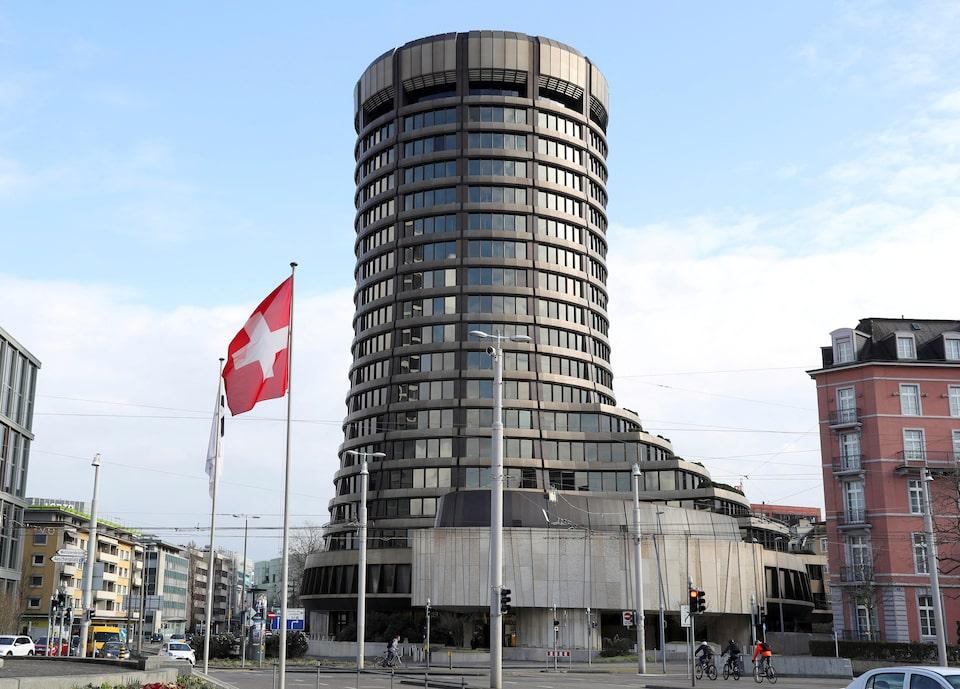
Independent central banks achieve lower inflation Credibility keeps investors, public on side Past money-printing opens flank to criticism FRANKFURT, Aug 26 (Reuters) - U.S. President Donald Trump's attacks on Federal Reserve policymakers are emerging as the biggest threat in decades to central bank independence, which is widely seen as key to keeping down inflation and maintaining stability in the global financial system. Trump's unprecedented threat to fire Fed governor Lisa Cook over alleged mortgage-related improprieties and his relentless pressure on Fed chair Jerome Powell to cut interest rates are already testing the boundaries of presidential power over the U.S. central bank. Sign up here. They are also leading central bankers worldwide to worry about their independence from governments and calling into question a principle that has helped them keep inflation lower and more stable since the mid-1980s. That was when Fed chair Paul Volcker established the Fed's inflation-fighting credibility and independence from the Treasury, reining in price growth with high interest rates and setting an example that would be followed by scores of central banks in subsequent decades. "People don't realize how different the world has been in the past 30 years from what it was before in terms of inflation stability," Jordi Galí, a professor at the Barcelona School of Economics, said. The world's biggest central banks such as the Fed, the European Central Bank and the Bank of Japan are unique institutions in that they are typically led by political appointees and yet they don't take orders from their governments. This is because they have a very specific mandate, which is typically to keep inflation around 2% although some central banks like the Fed are also tasked with taking employment into account. This set-up leaves them free to set interest rates at the levels they see fit to achieve that goal. But independence is a relatively new concept and some central banks, like those of China, Turkey and other developing countries, are still influenced by their governments when setting policy. The Fed itself has been formally independent since 1951 but it only established its reputation in the 1980s when Volcker raised interest rates to double digits to stop runaway prices, which had been the result of energy shocks and Fed mismanagement of the supply of money. Since then, more than a hundred central banks, including the Bank of England in 1998, have been granted increasing degrees of formal independence, such as the ability to make decisions irrespective of government wishes and a prohibition to lend to the government. The results have been striking. Central banks that went all the way from being part of the government to fully independent saw a long-run reduction in annual inflation of approximately 3.7 percentage points in rich countries, according to a study published earlier this year by the Centre for Economic Policy Research. That reduction is even greater in poorer countries at 10.3 percentage points. These results account for the fact that inflation was falling anyway as a result of structural trends such as globalisation, weaker labour power and technological advances. In the latest example, most independent central banks have brought the post-pandemic surge in inflation under control in two or three years. By contrast, the Great Inflation period of the 20th century lasted from 1965 to 1982, with increasingly vicious relapses. "Even the recent inflationary surge was dealt with very well," professor Gali added. "The proof is that inflation has come down -- not fully, in some places more than others -- but to me, it's been the clearest demonstration up to now of the success of the frameworks that central banks all over the world have been adopting." Other studies show that inflation tends to be more stable and commercial banks less risky where the central bank is independent. This is because the public and investors have faith in the central bank keeping inflation in check and therefore they don't raise their demands in terms of wages, prices and returns. By contrast, investors have started demanding a greater premium for owning U.S. government bonds since Trump said he planned to sack Cook, with the 10-year debt rising 2.5 basis points to 4.30% on Tuesday . PRINTING MONEY Central banks also have the power to print money, particularly at times of financial turmoil or when prices risk falling into a downward spiral, known as deflation. At such times, some degree of coordination with governments over crisis-fighting measures tends to take place, whether publicly or behind the scenes. These coordinated efforts helped bring the global financial crises of the late-2000s to an end and allowed European Central Bank President Mario Draghi to quash speculation on a demise of the euro in 2012, when he pledged to do "whatever it takes" to preserve the euro. "During crises in particular, the independence and the credibility of the central bank is the most valuable asset," Frederik Ducrozet, head of macroeconomic research at Pictet Wealth Management, said. "It would be a very serious issue if the Fed, or any central bank, were to be given orders by the president." In the last decade as the economy was recovering from the financial crisis, inflation was too low and rates were already at zero, central banks collectively bought several trillion dollars' worth of government debt and other assets. This had a number of effects, from juicing up returns on stocks, bonds and real estate to breaking a taboo about central banks financing -- albeit indirectly -- their governments. Central bankers were criticised for worsening economic inequality by enriching the owners of those assets, who tend to be wealthy. And that display of financial power may also have whetted politicians' appetite for more direct control. "In some sense, the central banks revealed themselves as the mega powers that they really are, and that raises more questions about control, independence, the legitimacy of technocrats who operate in a sort of insulated bubble of political process," said Maurice Obstfeld, a former chief economist at the International Monetary Fund and now senior fellow at the Peterson Institute. https://www.reuters.com/business/finance/mantra-central-bank-independence-shaken-by-trump-moves-fed-2025-08-26/
2025-08-26 14:43
LONDON, Aug 26 (Reuters) - Bank of England Monetary Policy Committee member Catherine Mann said on Tuesday that she saw a strong case to keep Bank Rate on hold for a prolonged period but stood ready to cut rates forcefully if downside risks to growth materialise. Mann voted against this month's quarter-point rate cut to 4% - as she has against most of the BoE's rate cuts over the past year - and said she believed that upside risks to inflation identified by the BoE in May were now beginning to crystallise. Sign up here. "A more persistent hold on Bank Rate is appropriate right now, to maintain the tight - but not tighter - monetary policy stance needed to lean against inflation persistence persisting," Mann said in remarks released by the BoE. "However, I stand ready for a forceful policy action, in the form of larger, more rapid Bank Rate cuts, should the downside risks to domestic demand start materialising," she added in the speech to be given later on Tuesday at a conference to mark the Bank of Mexico's 100th anniversary. Earlier this month the BoE revised up its near-term inflation forecast to 4% for September and forecast that inflation would not be back at its 2% target until the second quarter of 2027. In March, Mann talked about U.S. research showing that households became more focused on inflation once it reached 4%, but she said on Tuesday that subsequent BoE research showed this threshold was lower in Britain at 3.0-3.6%. Mann also highlighted how wage growth in Britain was running faster than could easily be explained by the central bank's models of supply and demand in the labour market and that forecast pay growth of 3.5-4.0% for the end of this year was too high to bring inflation back to 2%. Higher interest rates would bring inflation back to target sooner, but Mann said tightening monetary policy was not the right choice due to the weak growth outlook and her desire to avoid raising rates only to then have to cut them soon after. "The trade-off between persistent inflation persistence and quite weak GDP growth remains," she said. https://www.reuters.com/world/uk/bank-englands-mann-sees-case-persistent-hold-rates-2025-08-26/