2025-08-26 06:11
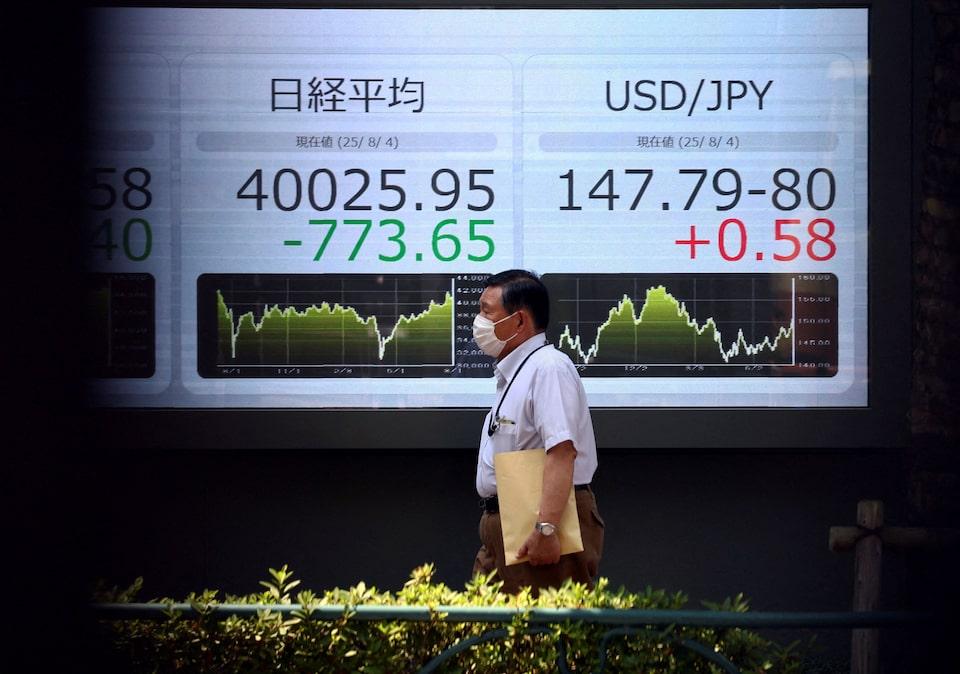
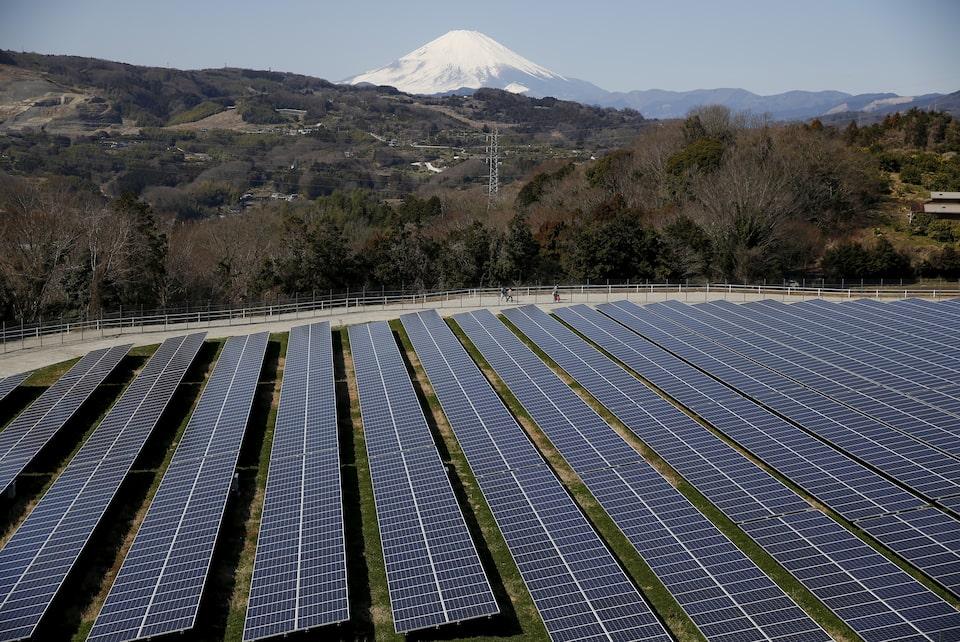
LITTLETON, Colorado, Aug 26 (Reuters) - Fossil fuels generated a record low share of Japan's utility-scale electricity supplies over the first half of 2025, marking an important milestone in the energy transition momentum of one of the world's largest fossil fuel consumers. Japan is a top-10 consumer and importer of coal, natural gas and crude oil, which are used to generate a majority of the energy needed in the world's fourth-largest economy. Sign up here. However, the share of fossil fuels has steadily declined within Japan's electricity generation, and accounted for less than 60% of utility-scale electricity supplies for the first time during January to June, data from Ember shows. Clean energy sources - especially solar farms and nuclear power plants - have supplied the remaining electricity, and have sharply outpaced the growth in fossil fuel power sources so far this decade. If clean electricity supplies continue to expand at the average rate seen since 2019, and fossil fuel supplies continue to contract at the pace seen over that same period, then clean electricity will surpass fossil electricity supplies by 2033. The prospect of home-grown clean energy sources supplying a majority of Japan's electricity within the next decade will be a cause for concern for fossil fuel exporters, who have relied heavily on Japan's demand growth for decades. CLEAN RECOVERY Japan's clean electricity supplies during January to June totalled 188 terawatt hours (TWh), Ember data shows. That total is 47% more than during the same months in 2019, and marks the highest clean supply output level during the opening half of the year in over a decade. However, clean electricity supplies remain well below their all-time peak set in the early 2000s due to the still-diminished level of nuclear power generation in the country following the 2011 Fukushima disaster. Worries about the safety of nuclear power sparked widespread shuttering of Japan's nuclear fleet since 2011, and nuclear electricity supplies in 2024 remained roughly 70% below where they were in 2010, the year before the Fukushima meltdown. However, while nuclear has remained largely sidelined, Japanese utilities have rapidly lifted generation from other clean sources over the past decade or so. Since 2010, solar generation has scored a 25-fold rise, while output from wind farms and bioenergy power plants has more than doubled. These clean power additions have allowed non-nuclear clean electricity supplies to scale new records in eight of the past 10 years, and lifted clean electricity's share of the total generation mix to 31% in 2024 from just 12% in 2012. That clean generation share has jumped to an average of 41% for the first half of 2025, thanks to record output from wind farms and bioenergy plants, and a continuing recovery in nuclear plants as reactors gradually return to service. FOSSIL FIX Japan's utilities have made cuts to fossil fuel use in electricity generation as they have boosted supplies of clean power. The total amount of electricity generated from natural gas plants during January to June of 2025 was the lowest for that six-month period since at least 2019, as high natural gas prices stifled gas use in the country. Coal-fired generation climbed by around 4% from the same months in 2024 to make up the drop in gas power, and overall fossil fuel electricity supplies were largely flat compared to a year ago. The cuts to fossil fuel use are more evident compared to the generation levels seen during the first half of 2019. Coal-fired electricity supplies in the first half of 2025 were 9% below those of the first half of 2019, while gas-fired electricity output was 25% lower. Given Japan's ambitions to cut greenhouse gas emissions by 46% by 2030 from 2013 levels - when there was a surge of fossil fuel power generation - additional reductions to coal and gas-fired power are expected in the coming years, alongside the shuttering of outdated fossil power plants. Between 2019 and 2024 Japan's fossil fuel electricity supplies contracted by an average of 3% a year, which if sustained would result in a 30% drop in fossil generation by around 2040. At the same time, clean electricity supplies have expanded by around 6% a year since 2019, which if sustained would result in a doubling in clean electricity supplies by around 2036. More importantly for climate trackers, that growth pace would mean that clean electricity supplies would likely account for a majority share of Japan's electricity from 2033 onwards. For fossil fuel exporters, however, the diminishing role of coal and gas in the electricity system of such a major economy represents a threat to their long-term prospects, especially as other major economies also phase out fossil fuel use. The opinions expressed here are those of the author, a columnist for Reuters. Enjoying this column? Check out Reuters Open Interest (ROI), your essential new source for global financial commentary. ROI delivers thought-provoking, data-driven analysis of everything from swap rates to soybeans. Markets are moving faster than ever. ROI can help you keep up. Follow ROI on LinkedIn , opens new tab and X , opens new tab. https://www.reuters.com/markets/commodities/japans-utilities-cut-fossil-fuel-electricity-share-new-lows-2025-08-26/
2025-08-26 06:05
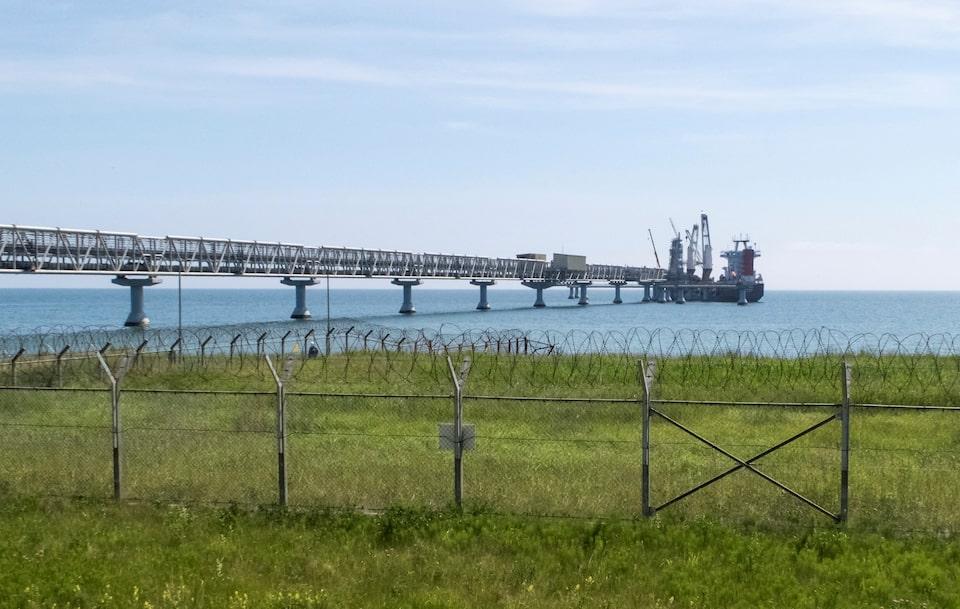
Discussions included whether Exxon Mobil would re-enter Sakhalin-1 project Talks also covered Russia's possible purchase of US equipment Possible deals were also discussed inside the White House LONDON, Aug 26 (Reuters) - U.S. and Russian government officials discussed several energy deals on the sidelines of negotiations this month that sought to achieve peace in Ukraine, according to five sources familiar with the talks. These deals were put forward as incentives to encourage the Kremlin to agree to peace in Ukraine and for Washington to ease sanctions on Russia, they said. Sign up here. Russia has been cut off from most international investment in its energy sector and from striking major deals due to sanctions following the Ukraine invasion that began in February 2022. The officials discussed the possibility of Exxon Mobil (XOM.N) , opens new tab re-entering Russia’s Sakhalin-1 oil and gas project, three of the sources said. Exxon, the top U.S. oil producer, has held numerous discussions with Russian state-controlled oil firm Rosneft about re-entering the project after receiving approval from the U.S. Office of Foreign Assets Control under the administrations of both former President Joe Biden and President Donald Trump, said a separate source familiar with the matter. Government officials also raised the prospect of Russia purchasing U.S. equipment for its LNG projects, such as Arctic LNG 2, which is under western sanctions, four sources said. None of the sources could be named because they were not authorised to speak publicly on the negotiations. Another idea was for the U.S. to purchase nuclear-powered icebreaker vessels from Russia, Reuters reported on August 15. The talks were held during U.S. envoy Steve Witkoff’s trip to Moscow earlier this month when he met with Russian President Vladimir Putin and his investment envoy Kirill Dmitriev, three of the sources said. They were also discussed within the White House with Trump, two of the sources said. These deals were also briefly discussed at the Alaska summit on August 15, one source said. “The White House really wanted to put out a headline after the Alaska summit, announcing a big investment deal,” said one of the sources. “This is how Trump feels like he’s achieved something.” Trump and his national security team continue to engage with Russian and Ukrainian officials towards a bilateral meeting to stop the killing and end the war, a White House official said in response to questions about the deals. It is not in the national interest to further negotiate these issues publicly, the official said. A spokesperson for Dmitriev declined to comment. Exxon Mobil declined to comment. Rosneft and Novatek did not respond to requests for comment. TALKS COINCIDE WITH THREATS Trump has threatened to impose more sanctions on Russia unless peace talks make progress and to place harsh tariffs on India, a major buyer of Russian oil. Those measures would make it difficult for Russia to maintain the same level of oil exports. Trump’s dealmaking style of politics has been on display before in the Ukraine talks, when earlier this year the same officials explored ways for the U.S. to revive Russian gas flows to Europe. These plans have been stalled by Brussels, which put forward proposals to fully phase out Russian gas imports by 2027. The latest discussions have shifted to bilateral deals between the U.S. and Russia, pivoting away from the European Union, which, as a bloc, has been steadfast in its support for Ukraine. On the same day as the Alaska summit, Putin signed a decree that could allow foreign investors, including Exxon Mobil, to regain shares in the Sakhalin-1 project. It is conditional on the foreign shareholders taking action to support the lifting of Western sanctions on Russia. Exxon exited its Russian business in 2022 after the Ukraine invasion, taking a $4.6 billion impairment charge. Its 30% operator share in the Sakhalin-1 project in Russia's far east was seized by the Kremlin that year. The U.S. has placed several waves of sanctions on Russia’s Arctic LNG 2 project, starting in 2022 and cutting off access to ice-class ships that are needed to operate in that region for most of the year. The project is majority-owned by Novatek, which started working with lobbyists in Washington last year to try to rebuild relations and lift the sanctions. The Arctic LNG 2 plant resumed natural gas processing in April, albeit at a low rate, Reuters reported. Five cargoes have been loaded from the project this year onto tankers under sanctions. A production train was previously shut down due to the difficulties in exporting given the sanctions. This project was intended to have three LNG processing trains. The third is in planning stages, with technology expected to be supplied by China. Washington is seeking to prompt Russia to buy U.S. technology rather than Chinese as part of a broader strategy to alienate China and weaken relations between Beijing and Moscow, one of the sources said. China and Russia declared a "no limits" strategic partnership days before Putin sent troops into Ukraine. Xi has met Putin over 40 times in the last decade and Putin in recent months described China as an ally. https://www.reuters.com/business/energy/us-russian-officials-discussed-energy-deals-alongside-latest-ukraine-peace-talks-2025-08-26/
2025-08-26 06:00
Japan could invest in chips, antibiotics, rare earths in US, Lutnick says Japan's Akazawa to visit U.S. to seal investment returns split, source says Tokyo wants Trump orders to cut tariffs on Japanese goods soon TOKYO, Aug 26 (Reuters) - The United States will make an announcement this week on Japan's $550 billion investment in the U.S., Commerce Secretary Howard Lutnick said, with a top Japanese trade envoy planning to visit Washington to formalise the package. "The Japanese agreement, which we're going to announce later this week, that's $550 billion at the hand of Donald Trump," Lutnick told the Ingraham Angle show on Fox News on Monday night. Sign up here. The Japanese funds could be used for the manufacturing of products such as semiconductors, antibiotics or rare earths in the U.S., Lutnick added. Tokyo's top trade negotiator Ryosei Akazawa plans to visit the U.S. this week to craft a written confirmation on the financial details of the package, such as the split of investment returns between the U.S. and Japan, a government source close to the negotiations told Reuters. Washington and Tokyo agreed in July to set a reduced 15% tariff on imports from Japan in exchange for a $550 billion package of U.S.-bound investment through government-backed loans and guarantees, but details of its contents remain obscure. While Trump has touted the package as "our money to invest" and said the U.S. would retain 90% of the profits earned, Japanese officials have stressed that the investments will be determined based on whether they will also benefit Japan. SoftBank Group's (9984.T) , opens new tab $2 billion investment in Intel (INTC.O) , opens new tab announced last week was not part of the package at the moment, a Japanese government source has said. Akazawa, speaking at a regular Tuesday briefing, said his next U.S. trip was not decided and declined to comment on Lutnick's remarks. Tokyo will keep pressing Washington to implement the deal to cut U.S. tariffs on Japanese goods soon, he added. The U.S. has urged Japan to have a written agreement on the investment plans, but Japan would prefer to keep the deal less legally-binding, the Nikkei business daily reported earlier on Tuesday. The lack of a clear document on the trade agreement had created confusion in Tokyo about tariff rates until Lutnick and U.S. Treasury Secretary Scott Bessent clarified earlier this month that Japanese goods were exempt from overlapping levies and an earlier presidential order would be amended. Lutnick and Bessent also promised, during Akazawa's previous visit on August 7, that Trump would issue another order to lower tariffs on Japanese cars to 15% from 27.5%, but did not specify when. Japanese Prime Minister Shigeru Ishiba has said Tokyo did not seek a written trade agreement with Washington because it wanted a swift resolution and to ensure Trump's tariffs on key Japanese exports such as autos were lowered quickly. Ishiba's support rate has surged in recent polls thanks in part to the trade deal, even after his ruling coalition lost its majority in an upper house election last month. https://www.reuters.com/business/lutnick-says-update-japans-550-billion-us-investment-coming-this-week-2025-08-26/

2025-08-26 05:45
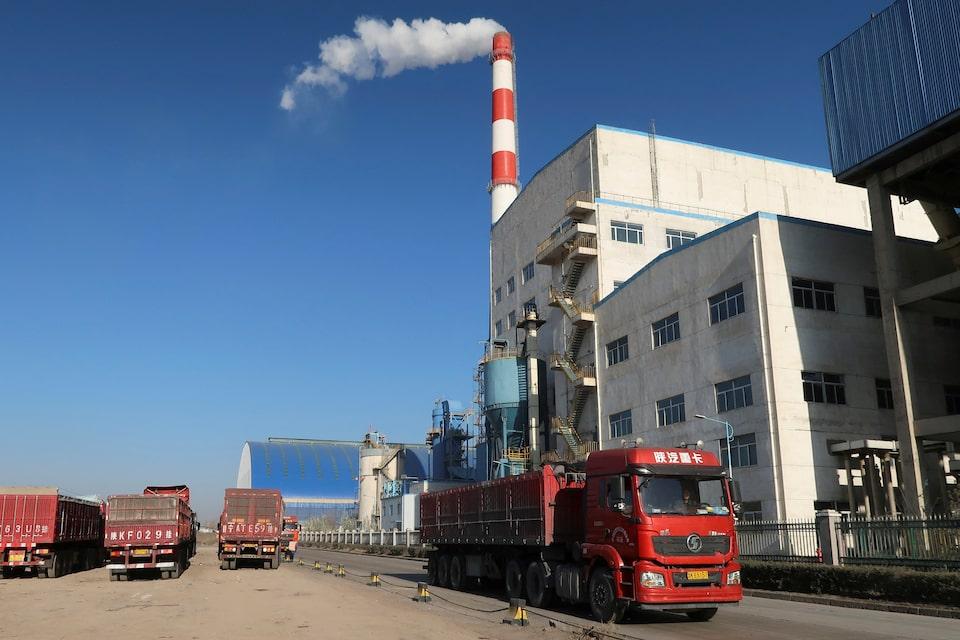
BEIJING, Aug 26 (Reuters) - China will tighten its carbon trading market by introducing absolute emissions caps in some industries for the first time starting by 2027, the cabinet said on Monday evening. The caps will be implemented first in industries with relatively stable carbon emissions by 2027, according to a statement by the State Council and Central Committee of the Communist Party. By 2030, China's nationwide carbon market or emissions trading scheme (ETS) will be basically established. Sign up here. "Policymakers are now actively tightening the system," said Xuewan Chen, senior research analyst at LSEG. The national carbon market, which would replace the current system of eight pilot markets launched in 2021, would have absolute emissions caps and a combination of free and paid carbon emissions allowances (CEAs), the statement said. Currently, CEAs are based on carbon intensity benchmarks that are reduced over time, rather than absolute emissions caps. Firms are granted a quota of free CEAs and if actual emissions exceed a company's quota during a given compliance period, it must buy more allowances from the market to cover the gap. If its emissions are lower, it can sell its surplus CEAs. "The (cabinet) document provides much-needed transparency for the development timeline for China's carbon markets," said Mai Duong, Asia-Pacific carbon markets analyst with Veyt, adding it showed China considered carbon markets "the key tool" in meeting its decarbonisation goals. The ETS will expand by 2027 to basically cover major carbon emitting industries, the statement said, without detailing the specific industries. Analysts have said chemicals, petrochemicals, papermaking and domestic aviation would be among those included in China's scheme. The regulation also broadens market participation to banks and financial institutions, which will help increase liquidity, Duong said. In September last year China said it would broaden the carbon market beyond the power sector to include steel, cement and aluminium - which would cover about 60% of the country's greenhouse gas emissions. But analysts said the large amount of free allowances means that the market has so far had little effect on China's carbon emissions. "It is positive that China now has a clear timeline for the full scope expansion – but whether this will deliver significant effectiveness in reducing the country’s giant emissions remains to be seen," Duong said. https://www.reuters.com/sustainability/climate-energy/chinas-carbon-market-introduce-absolute-emissions-caps-2027-2025-08-26/
2025-08-26 05:43
Focus on US PCE data due on Friday SPDR Gold Trust holdings rose 0.2% on Monday Aug 26 (Reuters) - Gold touched a two-week high on Tuesday, as the dollar slipped after U.S. President Donald Trump said he was removing Federal Reserve Governor Lisa Cook, a move that undermines confidence in U.S. assets and the central bank's independence. Spot gold gained 0.2% to $3,374.49 per ounce, as of 0644 GMT, after hitting its highest level since August 11 earlier in the session. Sign up here. U.S. gold futures for December delivery rose 0.1% to $3,421.50. "Trump has put traders a little bit on edge once again with his comments about Cook, which has resulted in gold picking up additional safe-haven flows today," KCM Trade chief market analyst Tim Waterer said. "There is a sense that Trump may be reshaping the Fed into a more dovish-leaning body, and any resulting dollar depreciation or move lower in yields would likely suit gold." The U.S. dollar index (.DXY) , opens new tab fell 0.2% against its rivals, making gold less expensive to overseas buyers. Trump on Monday took the unprecedented action of firing Cook, the first African-American woman to serve as a Fed governor, over claims of mortgage borrowing impropriety. On Friday, Fed Chair Jerome Powell signalled a possible rate cut at the Fed's meeting next month, saying that risks to the job market were rising but inflation remained a threat, and that a decision wasn't set in stone. Non-yielding gold tends to appreciate in a low-interest-rate environment, which reduces the opportunity cost of holding bullion. Focus now shifts to the Personal Consumption Expenditures Price Index, the Fed's preferred inflation gauge, for more cues on U.S. rate-cut path. The report is due on Friday. SPDR Gold Trust , the world's largest gold-backed exchange-traded fund, said its holdings rose 0.18% to 958.49 metric tons on Monday from 956.77 tons on Friday. Elsewhere, spot silver rose 0.4% to $38.71 per ounce, platinum eased 0.2% to $1,340.10 and palladium climbed 0.7% to $1,093.95. https://www.reuters.com/world/india/gold-hits-2-week-high-dollar-dips-after-trump-fires-feds-cook-2025-08-26/

2025-08-26 05:29
Trump fires Fed governor Lisa Cook, impacts dollar and Treasuries Trump's actions raise concerns over Fed's independence Market uncertainty rises over Fed policy and potential rate cut Major brokerages predict 25-basis-point Fed rate cut in September TOKYO, Aug 26 (Reuters) - The dollar and longer-dated U.S. Treasuries slid on Tuesday after President Donald Trump announced he was firing a Federal Reserve governor, an unprecedented move that further undermines confidence in the Fed's independence and U.S. assets. The U.S. currency fell against the euro after Trump said he was removing Lisa Cook from her position on the Fed's board of directors, citing allegations of improprieties in obtaining mortgage loans and escalating the president's battle against the central bank. Sign up here. Stock markets in Asia followed declines on Wall Street as the news muddied the outlook for Fed policy and stoked uncertainty over prospects for a rate cut next month. Gold touched a two-week high and U.S. equity futures fell, as Trump also renewed tariff threats on trade partners. "All of this, tariffs included, is just another reason the U.S. can't be trusted," said Bart Wakabayashi, the Tokyo Branch Manager of State Street. "There's no credibility. That's the basis of the U.S. being the safest investment in the world. If you're a responsible investor, it gives you pause." The euro added 0.1% to $1.1631. The yen was flat at 147.82 per dollar after earlier jumping more than 0.5%. The dollar index , which tracks the greenback against a basket of currencies, retreated 0.1% after a 0.7% gain on Monday. The yield on the benchmark U.S. 10-year Treasury note rose 3.1 basis points (bps) to 4.306%. The yield on the 30-year bond rose 4.7 bps to 4.936%. The two-year Treasury yield, which typically moves in step with interest rate expectations for the Fed, fell 1.3 bps to 3.717%. Trump has regularly threatened to dismiss Fed Chair Jerome Powell, and earlier this month he fired a top Labor Department official after accusing her, without evidence, of manipulating jobs data that had disappointed him. "I have determined that there is sufficient cause to remove you from your position," the president said in a letter to Cook posted on his Truth Social platform, claiming there was enough evidence that Cook had made false statements on mortgage applications. Trump, who lacks the legal authority to fire the Fed chair except "for cause", has backed away from that threat as Powell gets closer to the expiration of his term as Fed chief next May. Cook's exit from the central bank could speed up the president's reshaping of the Fed and the rate-setting Federal Open Market Committee (FOMC). Her term had been due to end in 2038. "The move is another example of concerns over Fed independence weighing on the dollar and has implications for the potential makeup of the FOMC going forward," said OCBC currency strategist Christopher Wong. "That adds to rate cut prospects and a softer dollar outlook." MSCI's broadest index of Asia-Pacific shares outside Japan (.MIAPJ0000PUS) , opens new tab was down 0.5%, after U.S. stocks ended the previous session with mild losses. Japan's Nikkei (.N225) , opens new tab index sank 0.9%. Futures markets pointed to a nervous day ahead for Europe and the U.S. Euro Stoxx 50 futures were down 0.53%, German DAX futures were down 0.45% and FTSE futures fell 0.35%. The U.S. S&P 500 e-minis slid 0.07%. Major brokerages, including Barclays, BNP Paribas and Deutsche Bank, now expect a 25-basis-point Fed rate cut in September. Fed funds futures traders are pricing in 83% odds of a September cut, according to the CME Group's FedWatch Tool. Data for August due before the Fed's September 16-17 meeting could still sway policy. The U.S. personal consumption prices reading, due on Friday, is considered the Fed's preferred inflation gauge. Hotter-than-expected U.S. producer price data last month raised some questions over the certainty of a cut. Extending months of turmoil over on-again, off-again tariff policies, Trump also threatened "subsequent additional" import duties on countries with digital taxes. U.S. crude dipped 0.5% to $64.48 a barrel. Gold rose 0.2% to $3,373.32 per ounce after touching $3,386.27, the highest since August 11. https://www.reuters.com/world/china/global-markets-global-markets-2025-08-26/