2025-08-25 20:51
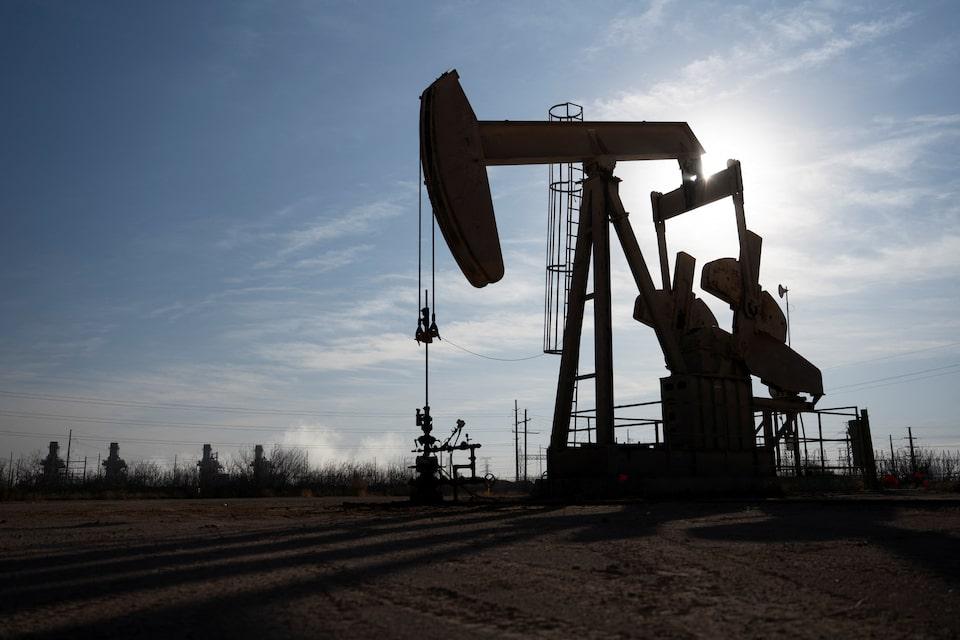
TSX down 0.58% as seven sectors decline Canadian banks to set aside C$5.22 billion in loan-loss provisions NovaGold and Energy Fuels Inc gain amid sector declines Aug 25 (Reuters) - Canada's main stock index closed in the negative on Monday as investors get ready for a week of earnings from top domestic lenders. Despite U.S. Federal Reserve Chair Jerome Powell's hints about interest rate cuts propelling the market to new heights in the previous session, investors remained cautious. Sign up here. At the end of Monday's trading, the Toronto Stock Exchange's S&P/TSX composite index (.GSPTSE) , opens new tab closed down 0.58% at 28,169.94 points. Of the 10 sectors, seven closed in the red, the healthcare index (.GSPTTHC) , opens new tab fell the most with a 2.22% decline, followed by industrials (.GSPTTIN) , opens new tab. The Canadian banks will kick off earnings season on Tuesday, beginning with Bank of Montreal (BMO.TO) , opens new tab and Bank of Nova Scotia (BNS.TO) , opens new tab. Canada's big six banks are expected to set aside a total of C$5.22 billion in loan-loss provisions for the third quarter, compared to C$6.37 billion in the second quarter, according to data compiled by LSEG. Most resources and energy stocks fared well, with NovaGold (NG.TO) , opens new tab and Energy Fuels Inc gaining 5.6% and 3.55% respectively. Big banks are expected to have cut third-quarter loan-loss provisions from the prior quarter, according to data compiled by LSEG, as the hit from U.S. tariffs on loan portfolios appears less than feared. Chipmaker Nvidia's (NVDA.O) , opens new tab results on Wednesday will attract global attention as it could determine the future of the tech-driven rally. The Personal Consumption Expenditures Price index - the Fed's preferred inflation gauge - is due on Friday, and will be a key indicator for expectations around rate cuts. In Canada, second-quarter GDP numbers on Friday will be watched to evaluate the impact of tariffs on the economy. https://www.reuters.com/world/americas/tsx-closes-down-ahead-bank-earnings-2025-08-25/

2025-08-25 20:44
SANTIAGO, Aug 25 (Reuters) - Chile's mining regulator Sernageomin has added requirements for Codelco to restart areas affected by a deadly collapse at its El Teniente copper mine in July, according to a Sernageomin document seen by Reuters on Monday. The company will now have to have a monitoring and control plan overseeing the stability and safety of mining operations in all of its underground deposits in the mine to resume operations in the areas that remain shuttered, the document said. Sign up here. https://www.reuters.com/world/americas/chile-regulator-ups-requirements-restart-areas-affected-by-copper-mine-collapse-2025-08-25/

2025-08-25 20:08
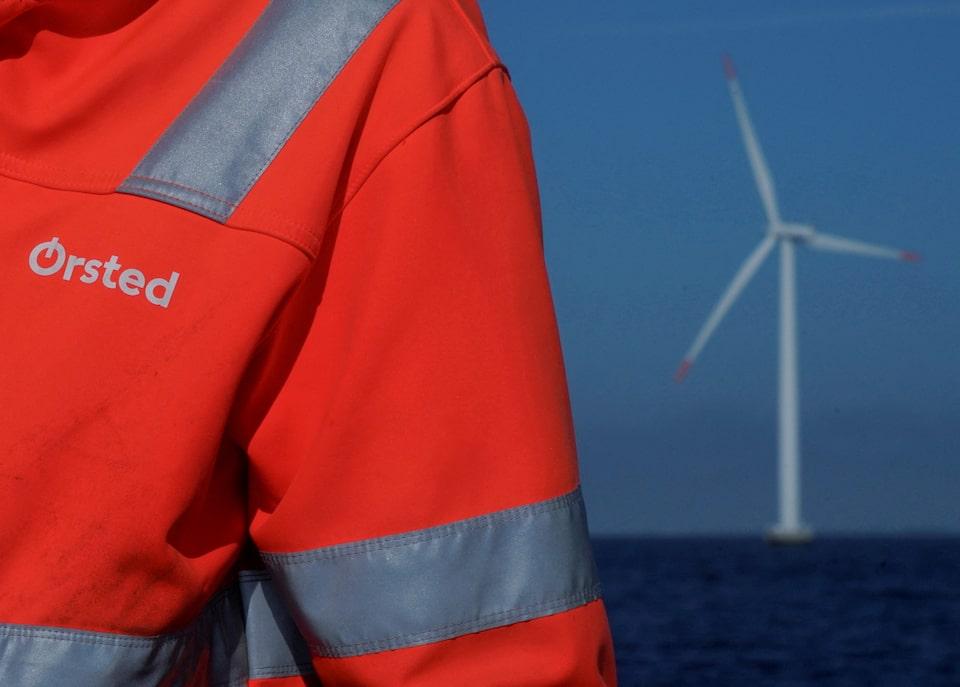
State leaders demand explanation for stop-work order on wind project Grid operator warns delay risks reliability for 15 million people Green Oceans group supports halt, citing flawed permitting process Aug 25 (Reuters) - The Trump administration's order to halt work on a nearly completed wind farm off the coast of Rhode Island threatens grid reliability and jobs and defies explanation, business and government leaders from New England said on Monday. State leaders in Connecticut and Rhode Island demanded details from the administration about why it issued a stop-work order to the Revolution Wind project late on Friday. In its letter to project developer Orsted (ORSTED.CO) , opens new tab , the Bureau of Ocean Energy Management cited unspecified national security concerns. Sign up here. "They say there are national security interests here. Come clean, reveal them," Senator Richard Blumenthal, a Democrat from Connecticut, said at a press conference with fellow state leaders on Monday. "And if you can't do it in public, give us a briefing in private. We have top secret clearance." A spokesperson for the Interior Department, which oversees BOEM, declined to comment on the stop-work order. ISO New England, which operates the grid in six states, and North America's Building Trades Unions, an alliance of building and construction unions, also raised concerns. "The ISO is expecting this project to come online and it is included in our analyses of near-term and future grid reliability," the grid operator for 15 million people said. "Delaying the project will increase risks to reliability." NABTU said the order affected the jobs of 1,000 members. "A 'stop-work order' is the fancy bureaucratic term, but it means one thing: throwing skilled American workers off the job after they've spent a decade training, building, and delivering," NABTU President Sean McGarvey said in a statement. Revolution Wind was scheduled to be completed next year and produce enough electricity to power 350,000 homes in Rhode Island and Connecticut. Shares of Orsted, which is based in Denmark, sank to record lows on Monday. U.S. President Donald Trump, a Republican, has repeatedly criticized wind energy as ugly, unreliable and expensive. His administration has taken steps to rein in wind development, including launching a national security investigation into imports of wind turbines and components. Green Oceans, a Rhode Island group that opposes the project due to concerns about its impact on coastal communities and ocean habitats, said it was pleased with the order. "This decisive action demonstrates that the federal government finally recognizes the seriously flawed permitting process that allowed this project and others to move forward," the group said. https://www.reuters.com/sustainability/climate-energy/us-halt-wind-project-defies-explanation-new-england-officials-say-2025-08-25/
2025-08-25 19:53
Critics warn government stakes limit corporate strategy, market agility Analysts question how Intel deal will affect customers White House says US needs to develop more production capacity in critical industries Trump weighs in on issues from Apple and chipmakers to jeans WASHINGTON, Aug 25 (Reuters) - U.S. President Donald Trump said he wants to make more investments in healthy U.S. companies on Monday. Whether Corporate America is on board is another story. The White House announced a near-10% stake in chipmaker Intel (INTC.O) , opens new tab on Friday that converts government grants into an equity share. Sign up here. Trump doubled down on the idea of similar deals in other sectors on Monday, telling reporters at the White House, "I hope I'm going to have many more cases like it." The administration's approach upends a decades-old view of the U.S. economy, in which the government only took corporate stakes in rare emergencies like the 2008 global financial crisis and the subsequent bailout of U.S. auto companies. Intel is struggling, but still has a cash cushion of $9 billion and a market value of $105 billion. To critics, the Intel move - along with the White House's pressure on the U.S. Federal Reserve to lower interest rates, its use of emergency powers to slap tariffs on imported goods and involvement in various mergers - threatens the U.S. business world's nimbleness. "We're moving from a pure capitalistic economy to a much more state-engaged economy... That's a huge change for America and over where we've been. I've never seen an era like this," said Bill George, former Medtronic CEO and executive education fellow at Harvard Business School. Trump said in a social media post on Monday that he would help companies that make similar "lucrative" deals with U.S. states, but did not provide details. Columbia Business School professor Shivaram Rajgopal said on balance he thinks the Intel deal is a good way to support the chipmaking industry, noting how other companies benefit from favorable policies, such as Amazon (AMZN.O) , opens new tab not having to collect sales tax in many states for years. "That enabled Amazon to become a giant. Why is taking a 10% equity stake in Intel any worse?" Rajgopal said via e-mail. However, the risks of the government's involvement were apparent in Intel's own regulatory filing on Monday, in which it laid out how the government's investment could potentially harm international sales, make it harder to win additional government grants, or subject it to additional regulations or restrictions in other countries. In a video posted on Monday by the Commerce Department, Intel CEO Lip-Bu Tan said: "I don't need the grant," adding, "but I really look forward to having the U.S. government be my shareholder." Some Republicans criticized the move, with Kentucky Senator Rand Paul calling the Intel stake a terrible idea. "If socialism is government owning the means of production, wouldn’t the government owning part of Intel be a step toward socialism?" Paul said. Analysts also questioned how the Intel deal will affect its customers, who might be subject to entreaties to buy Intel products in lieu of others. "Is it conceivable that as part of something like this the administration might 'encourage' customers to use Intel’s capacity?" Bernstein analyst Stacy Rasgon wrote in a note last week. INVOLVEMENT IN OTHER SECTORS Intel is not the only company in which Trump has become personally involved. The White House intervened to complete the purchase of U.S. Steel by Japan's Nippon Steel in June, taking what Trump called a "golden share" that gives Washington say over its operations. It took a stake in rare earths company MP Materials (MP.N) , opens new tab, and brokered a deal with chipmakers Nvidia (NVDA.O) , opens new tab and AMD to take 15% of revenue from sales to China of chips that had previously been prohibited. On Monday, White House economic advisor Kevin Hassett said the government could take additional stakes in other companies. Companies beyond chips and defense could also end up issuing shares to the government, said Douglas Chia, an independent consultant at Soundboard Governance. "It's a step in the direction of turning publicly-held companies into state-controlled enterprises whenever the government feels like it, using 'national security' as the justification," Chia said. No business issue seems too small to escape Trump's eye. He applauded American Eagle's controversial ad campaign for jeans featuring actress Sydney Sweeney, which some criticized for possibly raising genetic traits in a racial context. He suggested Goldman Sachs hire a new economist after the firm said consumers would eventually bear the brunt of Trump's import tariffs. "The president of the United States is telling Goldman Sachs they should fire an employee? That's crazy," said Nell Minow, chair of Portland, Maine-based ValueEdge Advisors. Numerous CEOs met with Trump shortly after his re-election in November 2024, and that parade of visitors has continued into his term. Representatives from industry groups say their ability to find an audience with the administration comes through having CEOs from the largest companies reach out to the White House. Even so, they have still found themselves blindsided at times, particularly around trade, where Trump has levied heavy tariffs on importers of overseas goods. A retail industry lobby group source said members are largely frustrated with Trump's trade policy. The CEO meetings have yielded moments of spectacle, such as earlier this month when Apple CEO Tim Cook gifted Trump a customized souvenir plaque with a 24-karat gold base mined from Utah. The smartphone giant, valued at more than $3 trillion, has been trying to shift production from China, which Trump targeted in his first-term trade war, to India, a move Trump has also criticized. Apple has announced roughly $600 billion in planned investment in the United States, though the White House has suggested it could also build smartphones domestically. The United States does not have significant capacity to make smartphones. "I think companies are just starting to realize, how much control do you want to give up and how much ownership do you want to give up to the government?" Harvard Business School's George said. https://www.reuters.com/world/us/trump-wants-more-deals-like-intels-worrying-business-community-2025-08-25/

2025-08-25 19:41
Alberta may help pay for a coker in a Japanese refinery Canada aims to diversify oil export markets beyond U.S. Refining upgrade could help Japan process Canadian heavy crude CALGARY/HOUSTON, Aug 25 (Reuters) - Canada's main oil-producing province of Alberta is considering a financial investment in Japan's refining sector, two sources familiar with the matter said, an attempt to reduce its overwhelming dependence on top trade partner the United States for oil exports. Alberta's government is in early-stage talks with several Japanese crude oil refiners to explore a joint venture in which it could help fund the construction of a coker unit that would enable one or more Japanese companies to process heavy crude produced in Alberta's oil sands, the sources said. Sign up here. Any deal would be unprecedented for Alberta, which has not previously made energy infrastructure investments in foreign countries but which is keen to increase its oil exports since the opening of last year's Trans Mountain pipeline expansion, which increased Canada's capacity to ship oil via the Pacific Coast. A deal with Japan would help bolster oil flows on Trans Mountain — Canada's only east-west oil pipeline — and would also help make the case for a new export pipeline that the Alberta government is lobbying for. Canada and Japan's talks about an investment are in very early stages, and nothing has been finalized, one of the sources said. For Japan, a coker would buoy the amount of heavy crude, like Canadian oil, that can be processed in the country. Heavy, high-sulfur Canadian crude is currently incompatible with most of Japan's existing refining facilities, and the country now imports the bulk of its oil from the Middle East. Higher purchases of Canadian crude that can transit straight across the Pacific Ocean would also cut Japan's dependence on shipments through the South China Sea, a maritime choke point if regional tensions arise. Canada is the world's fourth-largest oil producer, but its main oil-producing province of Alberta is landlocked, with limited access to tidewater ports. That means the bulk of Canadian oil — about 4 million barrels per day or 90% of its total exports — is sent to the U.S. via pipelines that run north-south. Alberta government representatives have made several trips to Asia, in particular Japan and South Korea, with the aim of drumming up interest in Canadian oil. "Alberta is exploring opportunities in Japan to sell our light and heavy oil," said Alberta Energy Minister Brian Jean in an emailed statement. He declined to comment on whether Alberta's government was in talks to invest in Japan's refining sector. Canada's federal government is aware of current opportunities for Japan to purchase additional volumes of Canadian oil, a spokesperson for federal Natural Resources Minister Tim Hodgson said. "Natural Resources Canada (NRCan) is closely monitoring developments and remains open to partnering with provinces and industry to support strategic energy projects that advance Canada's national interests," the spokesperson said in an email. NEW OPPORTUNITIES An expansion to the Trans Mountain pipeline last year tripled its capacity to 890,000 barrels per day and opened opportunities for Canadian oil along the U.S. West Coast and in Asian markets. China has emerged as the top buyer of Canadian crude shipped via the Trans Mountain pipeline, followed by the U.S. West Coast. South Korea has recently stepped up purchases, cinching the third spot, while Japan, India, Singapore, Brunei and Taiwan have bought cargoes on rare occasions. Since the expansion, Japan's Eneos Holdings (5020.T) , opens new tab bought one 250,000-barrel cargo last year and so far this year has bought one 550,000-barrel cargo, according to Kpler ship tracking data. The operator of the Trans Mountain pipeline is also eying a series of projects aimed at increasing the system's capacity by 200,000 to 300,000 bpd. Meanwhile, the Alberta government is keen to increase the province's oil production and has been lobbying pipeline companies in hopes of enticing a private-sector company to build a new crude oil export conduit to Canada's northwest coast. Canada exported an average of 4.2 million bpd of oil in 2024, about 80% of its total production. https://www.reuters.com/business/energy/canadas-alberta-eyes-investment-japans-refining-boost-oil-exports-sources-say-2025-08-25/
2025-08-25 19:39
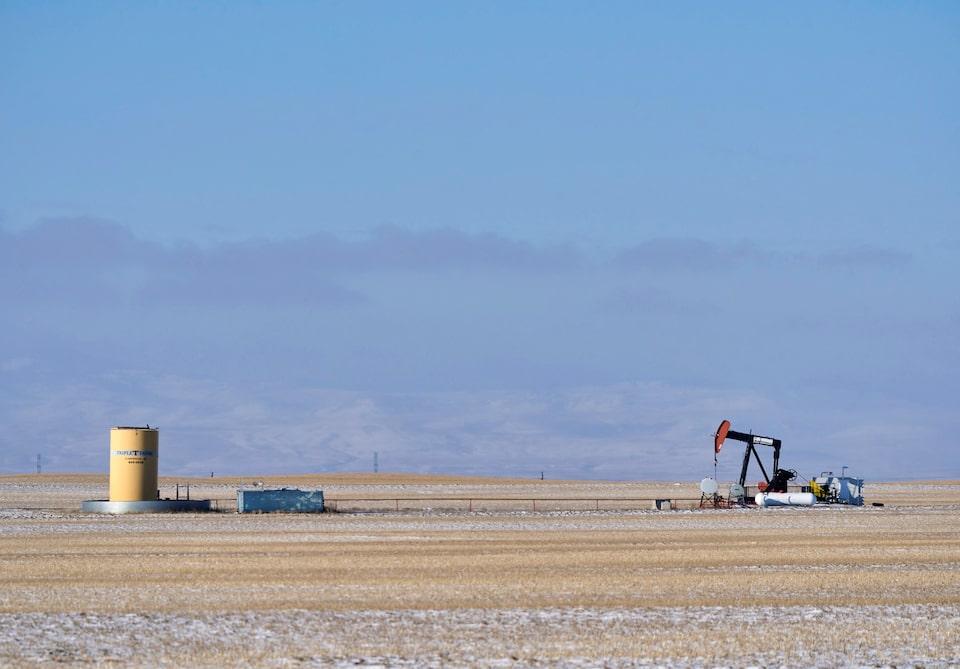
Ukraine drone attacks target Russian energy infrastructure US vice president says Russia has made 'significant concessions' Federal Reserve Chair Powell signals possible September rate cut NEW YORK, Aug 25 (Reuters) - Oil prices climbed around 2% on Monday, continuing last week's gains, as traders anticipated more U.S. sanctions on Russian oil and Ukrainian attacks on Russian energy infrastructure that could disrupt supplies. Brent crude futures settled up $1.07, or 1.58%, at $68.80, while West Texas Intermediate crude futures gained $1.14, or 1.79%, to $64.80. Sign up here. The U.S. is trying to broker a peace deal between Ukraine and Russia to bring an end to the 3-1/2-year war. "There seems to be a sense the peace talks are dragging on," said Phil Flynn, senior analyst with the Price Futures Group. "There could be sanctions on Russia if these talks don't go well." U.S. President Donald Trump said again on Friday that he would impose sanctions on Russia if there was no progress toward a peaceful settlement in Ukraine in two weeks. He has also said he may hit India with harsh tariffs over its purchases of Russian oil. Over the weekend, U.S. Vice President JD Vance said Russia had made "significant concessions" toward a negotiated settlement in the war. Ukraine, which has stepped up attacks on Russian energy infrastructure, launched a drone attack on Sunday that caused a huge blaze at the Ust-Luga fuel export terminal, Russian officials said. A fire at Russia's Novoshakhtinsk refinery, following a Ukrainian drone attack, burned for a fourth day on Sunday, the region's acting governor said. The refinery sells fuel mainly for export and has an annual capacity of 5 million metric tons of oil, or about 100,000 barrels per day. The market impact of possible Russian supply disruptions was offset by OPEC+'s reversal of a series of production cuts, which is adding millions of barrels to the market, said Ole Hansen, head of commodity strategy at Saxo Bank. Eight members of the oil exporters' group are scheduled to meet on September 7, when they are set to approve another boost. Investors' risk appetite increased after Federal Reserve Chair Jerome Powell on Friday signalled a possible interest rate cut at the U.S. central bank's meeting in September. Both oil benchmarks, however, appear to lack momentum, said Priyanka Sachdeva, senior market analyst at brokerage Phillip Nova, adding that markets seem increasingly convinced that Trump's tariffs will hit economic growth, which would limit fuel demand. https://www.reuters.com/business/energy/oil-prices-rise-russia-ukraine-war-threatens-supply-disruption-2025-08-25/