2025-08-25 04:15
Fed capitulation would set dangerous precedent ECB, BOJ have faced questions about independence Central bank independence seen as crucial for price stability JACKSON HOLE, Wyoming, Aug 25 (Reuters) - Global central bankers gathered at a U.S. mountain resort over the weekend are starting to fear that the political storm surrounding the Federal Reserve may engulf them too. U.S. President Donald Trump's efforts to reshape the Fed to his liking and pressure it into interest rate cuts have raised questions about whether the U.S. central bank can preserve its independence and inflation-fighting credentials. Sign up here. Trump, frustrated by the legal protections given to the Fed's leadership and the long terms for Board of Governors members meant to outlast any given president, has put intense pressure on Chair Jerome Powell to resign and is pushing to oust another board member, Governor Lisa Cook. If the world's most powerful central bank were to yield to that pressure, or Trump finds a playbook for removing its members, a dangerous precedent would be set from Europe to Japan, where established norms for the independence of monetary policy may then come under new attack from local politicians. "The politically motivated attacks on the Fed have a spiritual spillover to the rest of the world, including Europe," European Central Bank policymaker Olli Rehn, from Finland, said on the sidelines of the Fed's annual symposium in Jackson Hole, Wyoming. That's why Rehn and colleagues were enthusiastically backing Powell to stand his ground, even after he signaled a possible rate cut in September. Powell was met by a standing ovation when he took the podium at the conference. 'NOT BE TAKEN FOR GRANTED' Conversations with a dozen central bankers from across the world on the sidelines of the Fed's getaway in the shadows of the Grand Teton Mountains revealed that a scenario in which the Fed sees its ability to counter inflation jeopardized by a loss of independence was taken as a direct threat to their own standing and to economic stability more broadly. It would likely entail major turmoil in financial markets, they said, with investors demanding a greater premium to own U.S. bonds and reassessing the status of Treasury securities as the lifeblood of the global financial system. Central banks around the world have already started preparing for the fallout, telling lenders on their watch to watch their exposure to the U.S. currency. More fundamentally, a Fed capitulation would end a regime that has brought relative price stability and has lasted at least since late Chair Paul Volcker vanquished high inflation 40 years ago. Since then, more and more central banks followed the Fed's model of political independence and a single-minded focus on their mandate - for most, keeping inflation near 2%. "It’s a reminder that independence should not be taken for granted," Bundesbank President Joachim Nagel, also a member of the ECB's Governing Council, said. "We have to deliver on our mandate and make clear that independence is the conditio sine qua non for price stability." POLITICAL FOOTBALL Markets so far have not registered deep concerns about the Fed's independence. U.S. equity markets are roaring, and there hasn't been the sort of jump in Treasury yields or inflation expectations that would be emblematic of the Fed's credibility being seen at risk. While Trump can name a new chair when Powell's term as the chief policymaker ends in May, he needs more departures among the Fed's seven-member board for his appointees to gain majority control. The Fed's network of 12 regional reserve banks, whose leaders take turns voting on interest rate policy, is a further counterweight, hired by local boards of directors as a way to distance them from Washington's influence. Yet Trump's soured relationship with the Fed, set in a country perceived to have strong institutional and legal traditions, has made other central bankers all too aware of how fragile their independence may be. Even the ECB, whose autonomy from the 20 governments of the euro zone is sanctioned by European Union treaties, has had to fight hard to prove it. It was accused of bankrolling governments when it launched its massive bond-buying scheme a decade ago with the aim of staving off deflation, and survived multiple court challenges seeking to block those purchases. Right- and left-wing parties in countries such as Italy, Germany and France have also periodically criticised the central bank. Other countries have turned the appointment of their national governor into a political football. Latvian central bank governor Martins Kazaks was criticised by national politicians for not catering to the government's wishes during his fractious reappointment process. Slovenia hasn't had a governor since January amid party bickering. In Japan, the late Prime Minister Shinzo Abe blasted then central bank governor Masaaki Shirakawa for doing too little to beat deflation, and hand-picked Haruhiko Kuroda in 2013 to take the helm when Shirakawa stepped down weeks before his term ended. Kuroda then deployed a massive asset-buying programme, which helped weaken the yen and reflate growth, but raised eyebrows among conventional central bankers for making the BOJ the main creditor of its own government. SETTING A BAD EXAMPLE Trump has said the end of Powell's term next May could not "come fast enough" and very publicly started the process of choosing a successor. "It's as if Trump learned from Abe," said one source familiar with the BOJ's thinking who declined to be named due to the sensitivity of the matter. In turn, Trump's moves could embolden governments around the world, particularly those with populist inclinations, to assert control over their central banks. That could set the stage for globally higher inflation rates and more volatile markets. "Taking over the Fed is one development that would set a very bad example for other governments," said Maury Obstfeld, a senior fellow at the Peterson Institute for International Economics and former chief economist at the International Monetary Fund. "How do you look at this happening in the United States, which was thought to be the bastion of institutional checks and balances and the rule of law, and not conclude that other countries are easier targets?" https://www.reuters.com/business/finance/worlds-central-bankers-fear-being-caught-feds-storm-2025-08-25/
2025-08-25 03:03
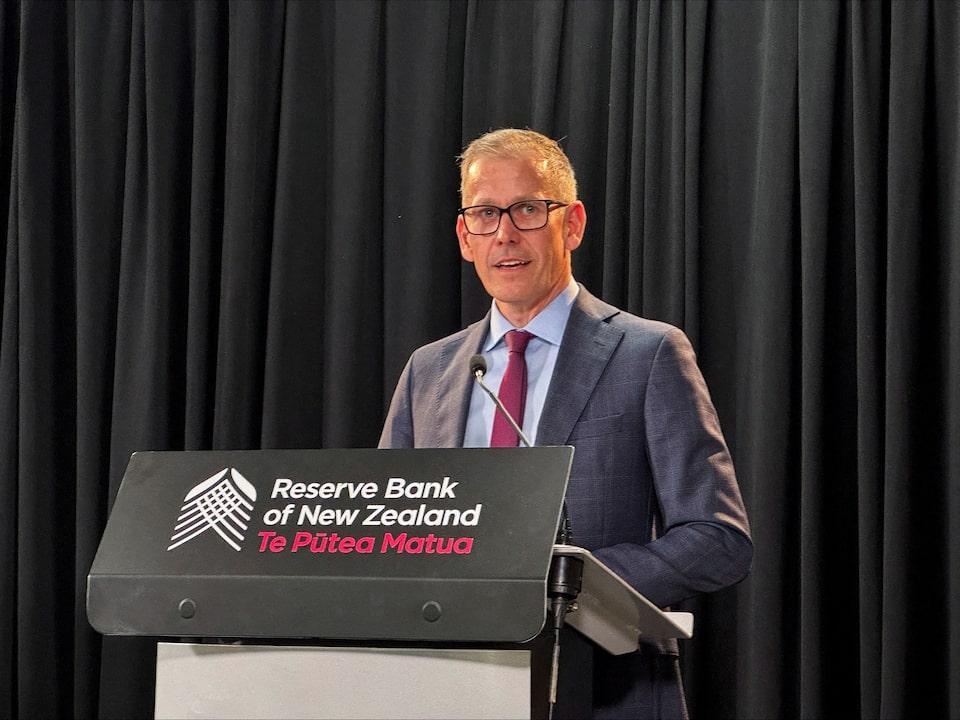
NZ central bank to consult on bank capital requirement proposal Proposes reducing minimum capital requirements to be a licensed deposit taker Current capital requirements criticised as costly for borrowers WELLINGTON, Aug 25 (Reuters) - New Zealand's central bank proposed an easing of lenders' capital requirements, after criticism that the regulations reduced availability of funds in the economy and led to extra costs for borrowers. In a consultation document released on Monday, the Reserve Bank of New Zealand (RBNZ) proposed two alternative capital requirement scenarios for deposit-taking institutions that would result in lower minimum overall capital levels. Sign up here. The current, rising capital requirements were announced in 2019 with full implementation not expected before 2028. But in March, the central bank said it would be reviewing the requirements. The requirements have been faulted by some politicians and groups such as farmers, and the lenders themselves, as contributing to higher interest rates. "It's essential we strike the right balance - protecting depositors and the wider economy, while supporting competition and economic efficiency," RBNZ Governor Christian Hawkesby said in a statement. New Zealand's banking system is dominated by four large Australian-owned banks: Westpac Banking Corp (WBC.AX) , opens new tab, ASB Bank, which is part of Commonwealth Bank of Australia (CBA.AX) , opens new tab, Bank of New Zealand, which belongs to National Australia Bank (NAB.AX) , opens new tab, and Australia and New Zealand Banking Group (ANZ.AX) , opens new tab. Under one of the options being studied, the capital buffer over and above the minimum capital requirements for the lenders would be reduced to 8% for the top four Australian-owned banks and to 5% for mid-sized banks. The 2019 regulations required the big banks to hold 9% and the mid-sized banks to hold 7% above the minimum. Under a second option, the capital buffers for the biggest banks will be at 6% but requirements will be introduced for debt instruments that are able to absorb losses and can be turned into capital if an entity is in distress. Banking Association Chief Executive Roger Beaumont said the announcement was a step in the right direction, and it was currently working with its 17 members to develop a response to the proposals. The central bank hopes to reach a final decision on the lower capital requirements by the end of the year. It noted in the consultation document that any shift in regulation is not expected to cause a significant economic change. New Zealand Finance Minister Nicola Willis said she welcomed the review of lenders' capital requirements, and said she saw it as lowering lending rates to New Zealanders. RBNZ also proposed to reduce the minimum capital that deposit takers needed to hold to become licensed to NZ$5 million ($2.93 million) from NZ$30 million, which it said "reduced barriers to entry". ($1 = 1.7056 New Zealand dollars) https://www.reuters.com/world/asia-pacific/new-zealand-central-bank-proposes-lowering-lenders-capital-requirements-2025-08-24/
2025-08-25 03:00
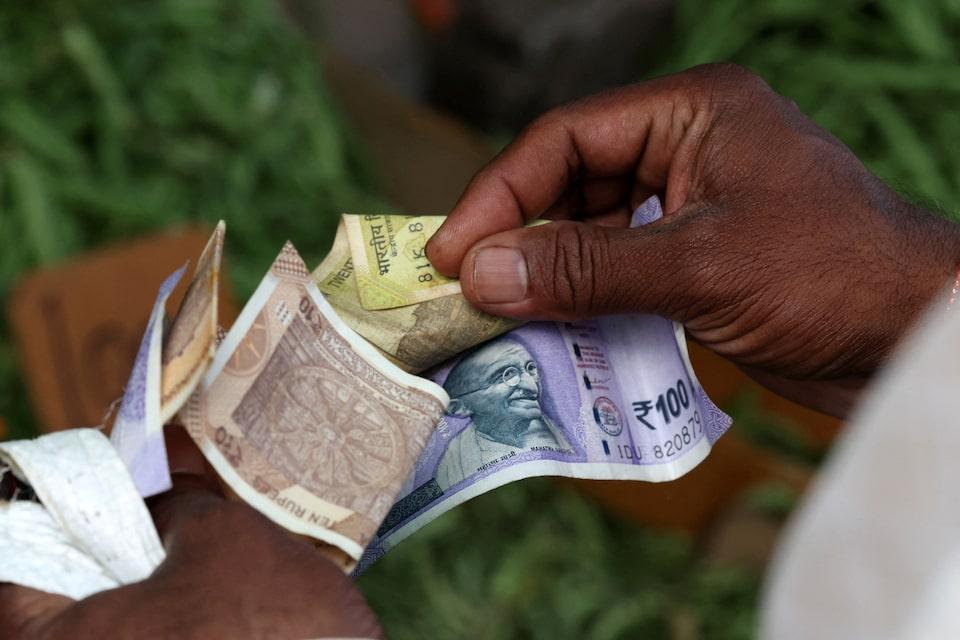
MUMBAI, Aug 25 (Reuters) - The Indian rupee is poised to open higher on Monday after the Federal Chair Jerome Powell signalled a September rate cut, though looming U.S. tariff uncertainty may mean that the advance is unlikely to sustain, traders said. The 1-month non-deliverable forward indicated the rupee will open in the 87.36 to 87.38 range versus the U.S. dollar, compared with 87.53 on Friday. Sign up here. The rupee briefly rose past 87 last week before finishing near the lows. A currency trader at a bank said he does not see that move past 87 materialising "again anytime soon", with the risk that the steep U.S. tariffs will remain in place. The possibility that the rupee will see an all-time low this week "is not negligible", said a Mumbai-based trader at a private bank. Indian goods face additional U.S. tariffs of up to 50% with effect from Wednesday. Washington has already imposed 25% duties on shipments from India, higher than those on several other major trading partners. The additional tariffs are being imposed for India's purchase of Russian oil. Rupee traders have been tracking developments from the Trump-Putin talks for signals on a potential Ukraine-Russia peace deal, which could reduce the likelihood of additional tariffs. However, sentiment would be cautious after U.S. President Donald Trump on Friday warned he would impose sanctions on Russia within two weeks unless there is progress toward a settlement. DOLLAR STUMBLES The dollar index dropped 0.9% on Friday to below 98 after Powell pointed to a possible rate cut at the central bank's September meeting. Treasury yields dropped while U.S. equities rallied. Market odds of a September cut rose, and investors increased the amount of cuts priced in for 2025. "This was dovish than we in rates strategy thought he'd be. He did not object to a rate cut at all. He effectively chose to endorse the market discount for a rate-cutting phase ahead," Padhraic Garvey, regional head of research - Americas, at ING Bank, said in a note. KEY INDICATORS: ** One-month non-deliverable rupee forward at 87.46; onshore one-month forward premium at 12 paise ** Dollar index at 97.91 ** Brent crude futures up 0.1% at $67.8 per barrel ** Ten-year U.S. note yield at 4.27%; dropped 7 basis points on Friday ** As per NSDL data, foreign investors sold a net $64.7mln worth of Indian shares on Aug. 21 ** NSDL data shows foreign investors sold a net $16.1mln worth of Indian bonds on Aug. 21 https://www.reuters.com/world/india/powell-boost-rupee-may-not-last-tariff-worries-loom-2025-08-25/
2025-08-25 00:49
Exclusivity period extended to September 19 HY profit falls 22.3% but beats analysts' estimates Interim dividend 13.4 cents per share Aug 25 (Reuters) - Australian gas producer Santos (STO.AX) , opens new tab on Monday agreed to further extend the exclusivity period for an $18.7 billion takeover bid from a group led by Abu Dhabi National Oil Co (ADNOC), and reported a better-than-feared 22% drop in first-half profit. Its shares rose 1% in early trading after extending the due diligence period to September 19 to give the consortium led by ADNOC's investment arm XRG more time to secure required internal approvals before making a binding takeover offer. Sign up here. Santos said the consortium had on Sunday "again confirmed it has not found anything in due diligence that would lead it to withdraw its indicative proposal". Analysts said the shares would likely be supported on Monday by confirmation the deal was still progressing despite the delays. The company reported its first-half underlying earnings fell to $508 million from $654 million a year earlier, hurt by weaker realised prices for its liquefied natural gas (LNG) and oil. The result was 3% above Visible Alpha forecast consensus. While Santos shares rose to A$7.81 per share in early trading after the two announcements, they remain more than a dollar below the consortium's proposed offer of A$8.89 apiece. The gain outpaced a 0.75% rise in the broader S&P/ASX200 (.AXJO) , opens new tab index. Santos last week flagged the consortium, which includes Abu Dhabi Development Holding Company (ADQ) and private equity firm Carlyle, would face a delay in finalising the offer for at least a month. The deadline for the exclusive talks between Santos and the consortium expired last Friday. Santos can engage with a bidder if a higher offer is made, but is prevented from talks with any parties who match the XRG offer. The proposed offer requires approval from regulators in Australia, Papua New Guinea, and the U.S. given Santos holds assets in each of those jurisdictions. https://www.reuters.com/business/energy/santos-extends-exclusivity-187-billion-adnoc-led-offer-profit-declines-2025-08-24/
2025-08-25 00:41
Powell opened door to September rate cut in Jackson Hole speech U.S. currency dropped to four-week low versus euro on Friday Trump's threat to fire Fed Governor Cook also weighs on greenback TOKYO, Aug 25 (Reuters) - The U.S. dollar attempted on Monday to pull itself up from a four-week low on the euro after a dovish pivot from Federal Reserve Chair Jerome Powell sent it tumbling more than 1%. The greenback added 0.2% to $1.1699 per euro early in the Asian day, but remained not far from Friday's low of $1.174225, a level not seen since July 28. Sign up here. It rose 0.1% to $1.3502 versus sterling following a 0.8% slide in the prior session. It added 0.4% to 147.46 yen , clawing back part of Friday's 1% tumble. The risk-sensitive Australian dollar briefly leapt to a one-week high of $0.6523 on Monday before pulling back to trade slightly down at $0.6484. In the previous session, it surged 1.1%. Powell in a closely watched speech at the Fed's annual Jackson Hole symposium on Friday opened the door to an interest rate cut at the central bank's September meeting. "Downside risks to employment are rising," he told an audience of international economists and policymakers. "And if those risks materialize, they can do so quickly." Traders are now pricing in 80% odds of a quarter-point rate cut at the September 17 policy meeting, and a cumulative 48 basis points of reductions by year-end, according to LSEG data. Traders had ramped up bets on a September cut early this month after an unexpectedly weak monthly payrolls report, but hotter-than-expected producer price inflation and strong business activity surveys forced a paring back in the run-up to Jackson Hole. "Chair Powell's Jackson Hole message cleared the market's low bar for dovishness following a steady erosion in Fed cut pricing," Goldman Sachs analysts wrote in a client note. "It will be up to the data to determine the pace and depth of cuts." Key upcoming data points include the Fed's preferred inflation gauge, the PCE deflator, on Wednesday, and monthly payrolls figures for August, due on Friday of next week. The dollar has been under additional pressure in recent weeks as U.S. President Donald Trump's attacks on Powell and other Fed policymakers raised concerns about central bank independence. Fed Governor Lisa Cook became Trump's latest target last week, and on Friday he said he would fire her if she does not resign over allegations about mortgages she holds in Michigan and Georgia. Trump has repeatedly criticized Powell, first because he has not cut rates this year, and more recently over cost overruns on a renovation of the Federal Reserve building. https://www.reuters.com/world/africa/dollar-struggles-recover-dovish-powell-gut-punch-2025-08-25/
2025-08-25 00:38
Asian stock markets : Nikkei gains, Wall St futures flat ahead of Nvidia Market implies 84% chance of Fed rate cut in Sept Dollar and yields steady after Friday's fall SYDNEY, Aug 25 (Reuters) - Asian share markets rallied on Monday as investors celebrated the likely resumption of interest rate cuts in the United States, while hoping AI-superstar Nvidia's results this week will help justify the sector's stratospheric valuations. Federal Reserve Chair Jerome Powell's dovish change of course has seen futures price in an 84% chance of a quarter-point rate cut in September, and at least 100 basis points of easing to 3.25-3.5% by the middle of next year. Sign up here. The shift shoved Treasury yields and the dollar lower, flattering the outlook for corporate earnings, though it also implies policymakers now see more danger of a downturn in employment and the economy. "The news reinforces our view that the Fed will ease in response to softening labor demand and that risk to our forecast for a material downshift in global growth this quarter is skewed to the upside," said Bruce Kasman, global head of economic research at JPMorgan. The market's euphoria will also be tested by a reading on U.S. personal consumption prices on Friday that is expected to show core inflation creeping up to its highest since late 2023 at 2.9%. "The report should reinforce the message that a rebound in service price inflation is combining with tariff-related pressures to push core inflation towards a 4% annualised rate," warned Kasman. Any upside surprise to inflation would also challenge the rally in longer-dated Treasuries, especially given a whopping $183 billion in new debt is being sold this week. Yields on 10-year notes held steady at 4.263%, having dived 7 basis points on Friday. For now, investors were content to follow Wall Street's lead and Japan's Nikkei (.N225) , opens new tab rose 0.8%. South Korean stocks (.KS11) , opens new tab gained 0.7% and Australia's index (.AXJO) , opens new tab 0.9%. MSCI's broadest index of Asia-Pacific shares outside Japan (.MIAPJ0000PUS) , opens new tab added 0.4%. EYEING NVIDIA EUROSTOXX 50 futures and DAX futures were flat. S&P 500 futures and Nasdaq futures were both little changed after climbing in Friday. All eyes are on Nvidia's (NVDA.O) , opens new tab results on Wednesday when it is forecast to boast a 48% rise in earnings per share on revenue of $45.9 billion for its second fiscal quarter. Options imply the shares could swing almost 6% in either direction depending on the outcome, causing waves in the broader market given the company's $4 trillion valuation. Analysts will be keen to hear more on the outlook for shipments to China and details of the deal with President Donald Trump to pay the U.S. government 15% of the revenue from sales of some advanced chips in the Asian giant. Trump on Friday announced the U.S. will also purchase a 9.9% stake in Intel (INTC.O) , opens new tab for $8.9 billion, or $20.47 per share, which represents a discount of about $4 from Intel's closing share price of $24.80. In currency markets, the dollar had steadied for the moment at 147.28 yen after dropping 1% on Friday from a top of 148.77. The euro stood at $1.1702 , having bounced from a trough of $1.1583 on Friday. The European Central Bank is still expected to hold interest rates unchanged at its policy meeting in September, though sources told Reuters that discussions about further cuts may well resume in the autumn if the economy weakens. Commodity markets were encouraged by the drop in the dollar, with gold at $3,365 an ounce after jumping 1% late last week. Oil prices were further supported by the lack of progress on talks between Russia and Ukraine, which keeps sanctions on Russian supplies. Brent was a fraction firmer at $67.31 a barrel, while U.S. crude added 0.2% to $63.78 per barrel. https://www.reuters.com/world/china/global-markets-wrapup-1-2025-08-25/