2025-08-22 19:05
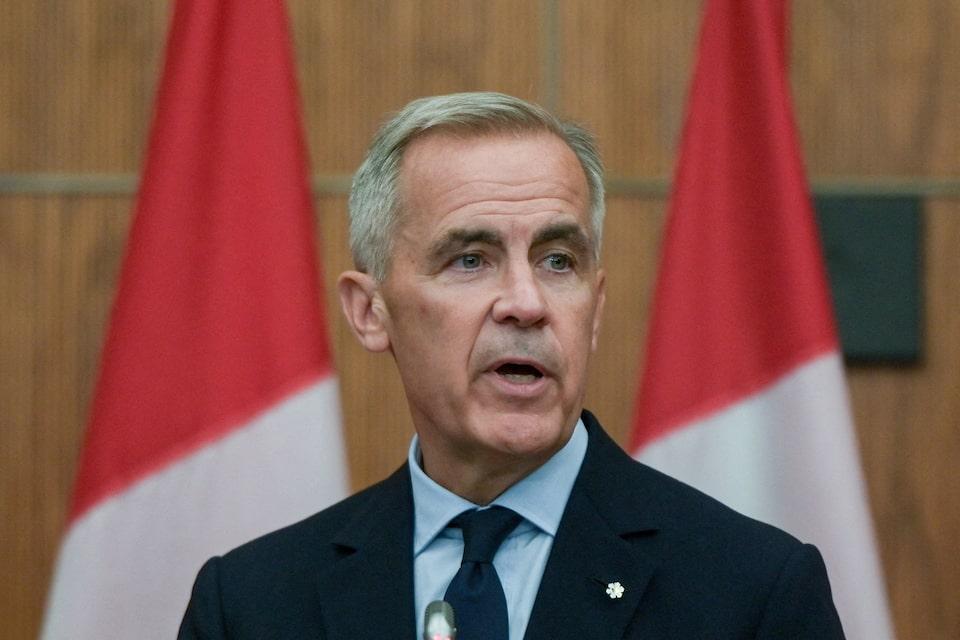
Carney says announcement reflects a recent similar U.S. move Canadian tariffs on US autos, steel, aluminum remain Carney's softer tone contrasts with earlier tough stance on U.S. tariffs Political challenge for Carney as opposition criticizes soft approach OTTAWA, Aug 22 (Reuters) - Canada will remove many retaliatory import tariffs on U.S. goods and intensify talks with the United States on striking a new trade and security relationship, Prime Minister Mark Carney said on Friday. Canadian tariffs on U.S. autos, steel and aluminum will remain for now, he told a press conference. Sign up here. Carney noted that the United States had recently made clear that it would not impose tariffs on Canadian goods that were compliant with the three-nation U.S.-Mexico-Canada free trade agreement, something he called a positive development. "In this context and consistent with Canada's commitment to USMCA, I am announcing today that the Canadian government will now match the United States by removing all of Canada's tariffs on U.S. goods specifically covered under USMCA," he said. "Canada and the U.S. have now re-established free trade for the vast majority of our goods," he added, reiterating that compared with its trading partners, Canadian exports were still subject overall to a low level of U.S. tariffs. The news helped the Canadian dollar extend its gains. Canada has been holding talks with the United States on a new economic and security relationship for months but the two sides are not close to a deal. Canada and China are the only nations to strike back at the United States with counter-tariffs, much to the irritation of the U.S. administration. Carney spoke to Donald Trump on Thursday. Asked whether the U.S. president had told him that lifting the tariffs would kick -start the talks, Carney responded "Yes." Trump, when asked about Carney's decision to remove tariffs, called it a "nice thing" while addressing journalists in the Oval Office. "We are working on something. We want to be very good to Canada. I like Carney a lot," he said. Carney won an April election promising to stand up to Trump's tariffs but since then has gradually taken a softer tone. Carney scrapped a proposed digital services tax in late June that U.S. companies strongly disliked and in July dropped talk of further sanctions if the two sides could not reach a deal by August 1. He also held steady on tariffs on steel and aluminum products imported from the United States at 25% when Trump increased tariffs on steel and aluminum from Canada to 50%. Carney's predecessor as prime minister, Justin Trudeau, imposed 25% tariffs on C$30 billion ($21 billion) in goods imported annually from the United States on March 6 in response to Trump's initial duties. The C$30 billion was part of an overall retaliation plan to target C$155 billion worth of imported goods from the United States, though the remaining C$125 billion has been delayed. However, despite concessions, a deal with the United States could be a far cry, a former government official said. "Getting to a final deal isn't going to be easy. The list of U.S. demands is long," said Brian Clow, who was in charge of U.S. relations inside Trudeau's office for several years. MODERATE APPROACH Carney said the time had come for a more moderate approach rather than continuing to take an aggressive stance. "Let's be clear, we have the best deal of anyone in the world right now," he said. "Nobody has a deal with the United States that they used to have." Carney said Canada will primarily focus on strategic sectors that are still facing tariffs including steel, aluminum, autos and lumber, as well as on the review of the free trade USMCA deal, called CUSMA in Canada. The USMCA officially comes up for review in July 2026, six years after it entered force on July 1, 2020. Carney said the review is likely to start in the spring but preparations will begin shortly. Business leaders have called on the government to focus on getting a solid deal under the USMCA free trade agreement as this pact has been critical in protecting Canadian companies and the economy from broader tariffs. "While there is more work to be done to resolve tariffs in strategic sectors, Canada's priority must be the successful review and renewal of the U.S.-Mexico-Canada Agreement," said Goldy Hyder, president and CEO of the Business Council of Canada. The news could be a political challenge for Carney, whose ruling Liberals only have a minority of seats in the House of Commons elected chamber and rely on opposition parties to survive votes of confidence. The leader of the Conservatives, the largest opposition party, this week accused Carney of taking too soft an approach with the United States. https://www.reuters.com/world/americas/canada-remove-many-retaliatory-tariffs-us-carney-says-2025-08-22/
2025-08-22 18:24
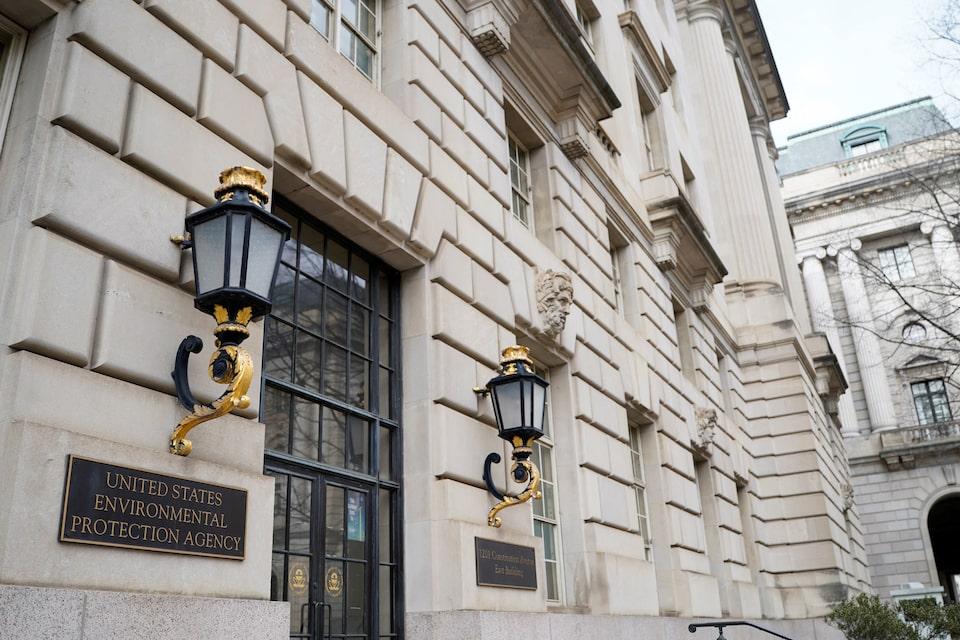
WASHINGTON, Aug 22 (Reuters) - The U.S. Environmental Protection Agency on Friday approved most of its backlog of requests by small oil refineries for biofuel law exemptions, raising concerns among biofuels advocates over a potential hit to demand. The approvals are also a mixed blessing for the cohort of small U.S. refiners who have argued for years they are hurt financially by the federal mandate to blend biofuels like ethanol into the country's fuel supply. Many of their requests have now become so old that the waivers they have secured are worthless. Sign up here. The EPA said in its announcement that it granted 63 small refiner requests in full, 77 in part, and denied just 28, clearing nearly all of the 204 that had accumulated since 2016 amid a decade of legal and political wrangling. The approved exemptions amounted to about 5.34 billion RINS, the tradable compliance credits generated by blending biofuels into the nation's fuel pool, according to data posted to the EPA's website. But because RINS have just a two-year lifespan, only 1.39 billion can still be used for compliance and retain any value, according to the EPA announcement. The American Fuel and Petrochemical Manufacturers trade group, which represents oil refiners, did not immediately comment on the EPA announcement. Growth Energy, a biofuel trade group, said it was calling on the EPA to ensure that all exempted blending obligations are balanced out by increased obligations for other refiners - a concept called reallocation. "It is imperative that EPA reallocates each and every exempt gallon in a forthcoming rule to mitigate the potentially devastating impact on biofuel demand," said Growth Energy CEO Emily Skor. The EPA said it would issue a proposal soon on how to reallocate the exempted volumes. The supplemental rule is expected late next week, sources familiar with the planning told Reuters. The EPA did not comment on timing. Renewable fuel credits tied to ethanol blending jumped above $1.16 each in afternoon trade following the announcement, up from about $1.07 on Thursday. Under the Renewable Fuel Standard, U.S. refiners must blend billions of gallons of biofuels such as ethanol into the nation's fuel or buy RINS generated by those that do - a policy designed to help farmers and increase the U.S. energy supply. Small refiners, however, can ask for waivers if they can prove the obligation would cause them financial hardship. There are now just 13 pending waiver requests, according to the EPA data. https://www.reuters.com/sustainability/climate-energy/us-epa-approves-biofuel-waivers-small-refiners-stirring-concerns-over-demand-2025-08-22/
2025-08-22 18:14
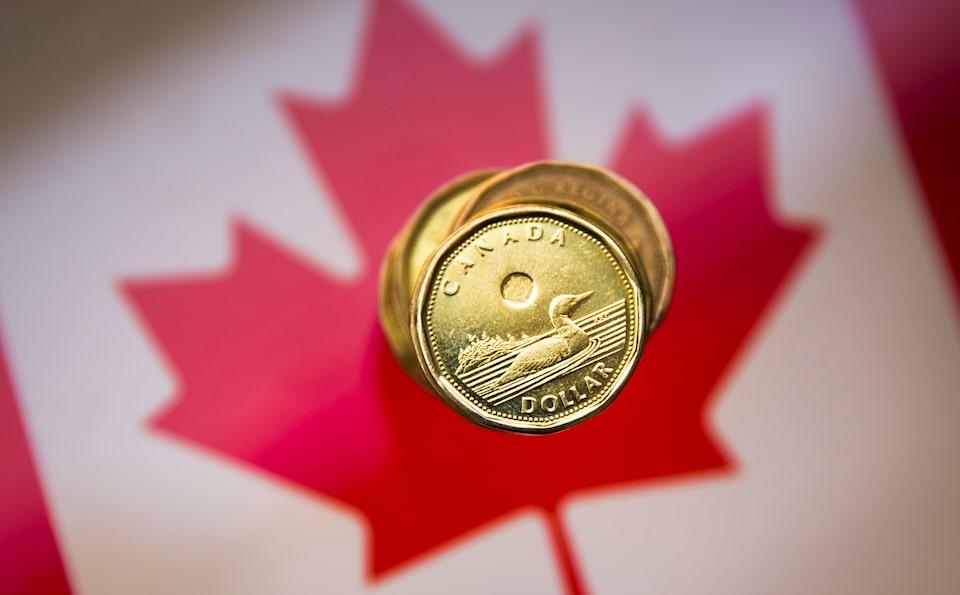
Canadian dollar gains 0.7% against the greenback For the week, the currency was barely changed Retail sales increase 1.5% in June Bond yields fall across the curve TORONTO, Aug 22 (Reuters) - The Canadian dollar recouped all of its weekly decline against the U.S. dollar on Friday as Federal Reserve Chair Jerome Powell opened the door to interest rate cuts and Canada made a move to ease trade tensions with the United States. The loonie was trading 0.7% higher at 1.3815 per U.S. dollar, or 72.39 U.S. cents, putting the currency on track for its largest gain since May 23. Sign up here. For the week, the loonie was barely changed after it was pressured on Tuesday by cooler-than-expected domestic inflation data that raised expectations the Bank of Canada would resume its easing campaign over the coming months. "The CAD had been roughed up somewhat by the USD over the past few days but is heading into the end of the week on a solid rebound following cautiously dovish comments on the policy outlook by Fed Chair Powell at the Jackson Hole symposium," Shaun Osborne and Eric Theoret, strategists at Scotiabank, said in a note. Powell pointed to a possible interest rate cut at the U.S. central bank's meeting in September but stopped short of committing to it, in remarks acknowledging both the growing risks to the job market and upward pressure on prices from tariffs. Canada will remove many retaliatory import tariffs on U.S. goods and intensify contacts with the United States on striking a new trade and security relationship, Prime Minister Mark Carney said. The step could ease pressure on some items in the consumer price index, such as groceries, but also cut into the tariff revenue that the government was expecting, Doug Porter, chief economist at BMO Capital Markets, said in a note. Canadian shoppers bought more food and beverages in June, which helped lift retail sales by 1.5%, matching expectations. A preliminary estimate for July was less upbeat, showing a decline of 0.8%. Canadian bond yields moved lower across the curve, tracking moves in U.S. Treasuries. The 10-year was down 5.3 basis points at 3.434%. https://www.reuters.com/world/americas/canadian-dollar-rallies-most-three-months-feds-powell-turns-more-dovish-2025-08-22/
2025-08-22 16:53
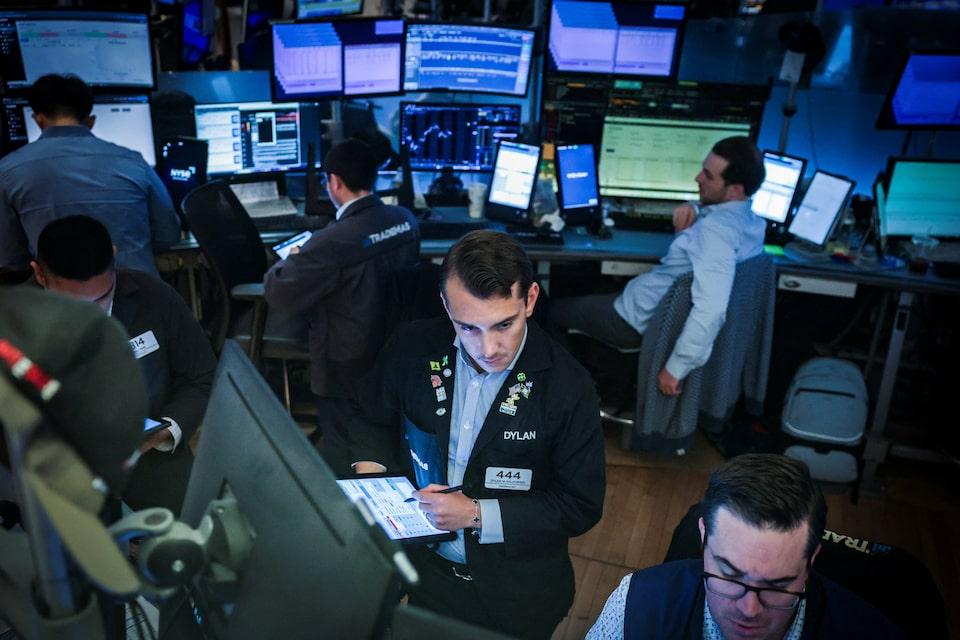
Powell opens door to September rate cut but does not commit Fed chair has faced barbs from President Trump Shares rally over 1%, 2-year Treasury yields down 10 basis points Dollar falls, oil edges up LONDON/SAN FRANCISCO, Aug 22 (Reuters) - Stocks climbed and U.S. Treasury yields and the dollar fell on Friday after Federal Reserve Chair Jerome Powell pointed to a possible rate cut at the central bank's September meeting. Wall Street shares rallied after Powell stopped short of committing to cutting interest rates as he acknowledged growing risks to the job market while also saying risks of higher inflation remain. Sign up here. His remarks, to the annual central banking symposium at Jackson Hole, are his final address as chair of the Fed. The S&P 500 (.SPX) , opens new tab and Nasdaq Composite (.IXIC) , opens new tab rose 1.5% and 1.7%, respectively. The Dow Jones Industrial Average (.DJI) , opens new tab jumped 2.2% to a record intraday high. Government bonds also welcomed the news with the rate-sensitive two-year Treasury yield down nearly 10 basis points at 3.69% . Benchmark 10-year yields fell 6 bps to 4.27%. Powell's past speeches at the event have often moved markets, and this year's remarks are under particularly close scrutiny as his position has come under heavy criticism from U.S. President Donald Trump, sparking concerns about potential threats to the Fed's independence. His comments open the door to a rate cut at the Fed’s September 16-17 meeting, and while he put heavy weight on jobs and inflation reports that will be received before then, analysts said Powell appeared to be putting greater weight on the former. “Given Powell's surprisingly dovish comments, it makes sense that both stocks and bonds are up significantly today," said Tom Graff, chief investment officer at Facet. "However, looking over the next couple months, rate cuts alone won't be enough to sustain strength in stocks. The rate cuts will have to ‘work’ in the sense that the economy regains momentum,” Graff added. Powell offered little guidance about how soon or how quickly rates might continue to move lower, likely stoking further pressure from Trump, who contends there is no risk of inflation and that the Fed should slash rates immediately. European markets echoed the moves by their U.S. peers, but in a more muted manner. Europe's broad STOXX 600 index (.STOXX) , opens new tab climbed 0.4%, while Germany's 10-year yield, the euro zone benchmark, was down 3 bps at 2.72%. The dollar index , which measures the greenback against a basket of currencies including the yen and the euro, was last down 0.89% on the day at 97.73, after trading around 98.7 before Powell's comments. The euro gained 0.97% to $1.1717. Against the Japanese yen , the dollar weakened 1.1% to 146.74. CHINA TECH Earlier in the day, the focus was on Chinese shares and the CSI 300 Index (.CSI300) , opens new tab gained 2.1%, after DeepSeek released an upgrade to its flagship V3 AI model and Reuters reported that Nvidia (NVDA.O) , opens new tab had asked Foxconn (2317.TW) , opens new tab to suspend work on the H20 AI chip, lending support to Chinese rivals. Tech stocks listed in Hong Kong (.HSTECH) , opens new tab rose 2.7%. Also in Asia, Japanese data showed core consumer prices slowed for a second straight month in July but stayed above the central bank's 2% target, keeping alive expectations for a rate hike in the coming months. Oil prices nudged up, with Brent crude futures up 18 cents at $67.85 a barrel following strong gains on Thursday as Russia and Ukraine blamed each other for a stalled peace process. U.S. crude was up a similar amount at $63.78. Gold also gained, with spot bullion up about 1% at $3,370 per ounce. https://www.reuters.com/world/china/global-markets-wrapup-5-2025-08-22/
2025-08-22 16:38
Newest sectors at El Teniente need review after accident Codelco's own production up 9% in first half of 2025 Pre-tax profit drops 34% SANTIAGO, Aug 22 (Reuters) - Chile's Codelco [RIC:RIC:COBRE.UL], the world's largest copper producer, on Friday lowered its 2025 production guidance following a tunnel collapse at its flagship El Teniente mine and said it will revise plans for sectors that were part of an expansion. The state-run miner now expects 2025 production of 1.34-1.37 million metric tons of copper, down from a March estimate of 1.37-1.40 million tons - a trim of 30,000 tons on both ends. Sign up here. Codelco's output hit a quarter-century low in 2023, and the company has been struggling to compensate for aging deposits and delays in major expansion projects. The accident on July 31 at El Teniente, Codelco's most profitable mine, marked a new blow, forcing mining activity and smelting to go offline for several days and causing a loss of 33,000 metric tons of copper, equivalent to $340 million. Six people died in the sudden collapse of underground tunnels that packed an impact equivalent to a 4.2 magnitude earthquake. Codelco on Friday flagged the possibility of further delays at the mine, saying sectors that were part of an expansion plan "need to be revised" after the accident, which hit the Andesita unit. Andes Norte, started initial production in May, and Diamante had yet to begin production. CEO Ruben Alvarado said the company had improved management and production this year up until the accident, and would prioritize safety along with the need for recovering operations. "We are focused on our plan for a safe and gradual return to operations at El Teniente," Alvarado said in a statement. Half of El Teniente's 12 divisions have been re-opened so far. The accident also prompted the company to postpone its announcement of financial results for the first half of the year, originally scheduled for Aug. 1. Between January and June, Codelco recorded pre-tax profit of $429 million, down 34% from the $653 million reported in the same period last year. The state-owned miner said its own output totaled 634,000 metric tons, up 9% from the same period last year, helped by higher production at Ministro Hales and El Teniente, and the Salvador mine's Rajo Inca project, which is in ramp-up. Accounting for production from Codelco's stakes in El Abra, Anglo American Sur and Quebrada Blanca mines, total production reached 689,000 tons, 9.6% higher than in the same period of 2024. By the end of June, Codelco had spent $2.512 billion of its annual budget of $5.638 billion, it said. Direct production costs in the period increased 6% to $2.157 per pound, and Codelco forecast that this year they will range between $2.09 and $2.14 per pound of copper. https://www.reuters.com/world/americas/chiles-codelco-cuts-2025-copper-forecast-after-el-teniente-mine-collapse-2025-08-22/
2025-08-22 13:39
Retail sales in June grows 1.5%, might contract 0.8% in July Excluding sales of automobiles and parts, retail sales up 1.9% 27% retailers hurt by trade war in June, down from 32% in May OTTAWA, Aug 22 (Reuters) - Canada's retail sales rose as expected in June as shoppers bought more food and beverages, official data showed on Friday, indicating a rebound from a slump the month before. Retail sales in June increased by 1.5% on a monthly basis to C$70.25 billion ($50.49 billion) compared with a contraction of 1.2% in May, Statistics Canada said, adding that sales increased by a similar rate in volume terms as well. Sign up here. The outcome was in line with analyst expectations in a Reuters poll. However, excluding sales at automobiles and parts dealers, retail sales rose 1.9%, beating the poll forecast of 1.1%. In a flash estimate - often prone to changes - Statscan projected that retail sales in July would fall 0.8%. Retail sales, which include sales of cars, furniture, food, gasoline and many other items, are considered an early indicator of gross domestic product growth and contribute around 40% to total consumer spending, a prime contributor to economic growth. Analysts and economists track the retail sales number closely to gauge the health of the domestic economy. "The big picture suggests consumers are holding up despite ongoing labour market slack and elevated trade uncertainty," senior economist Shelly Kaushik at BMO Capital Markets wrote in a note. Canada's retail sales have been on a volatile path since U.S. President Donald Trump imposed tariffs on Canada and it retaliated with its counter levies. But lately, the impact of tariffs has been subdued and largely isolated within the impacted sectors of steel, aluminum and automobiles. Statscan said 27% of retail businesses were impacted by the trade tensions in June, compared with 32% in May, with the most common impacts being price increases, change in demand for product and delays in the supply chain. Sales at motor vehicles and parts dealers, which is the biggest contributor to retail sales at over 27%, grew the least, inching up 0.2% in June after a slump of 3.4% in May. This sector had taken a beating after the U.S.-Canada trade war as consumers curtailed spending on big ticket items fearing economic uncertainty. Food and beverage sales, which accounts for nearly a fifth of total retail sales, registered a solid increase in June of 2.3% as robust sales were observed at supermarkets, convenience retailers and liquor stores, Statscan said. ($1=$1.3914 Canadian) https://www.reuters.com/world/americas/canadas-retail-sales-rebound-june-likely-drop-again-july-2025-08-22/