2025-08-22 10:35
LONDON, Aug 22 (Reuters) - What matters in U.S. and global markets today By Mike Dolan , opens new tab, Editor-At-Large, Finance and Markets Sign up here. As investors wait anxiously for Federal Reserve Chair Jerome Powell’s keynote speech at the Jackson Hole symposium today, the rates market is responding to a mix of robust economic and price signals and hawkish statements from Powell's colleagues. The Fed futures market has reduced the chances of a rate cut next month to just 70% from almost a sure thing not that long ago. Two-year Treasury yields have also matched their highest level since August 1 as some Fed officials - including Cleveland Fed boss Beth Hammack, Atlanta's Raphael Bostic and Kansas City's Jeffrey Schmid – expressed doubts about the wisdom of a September cut, with inflation still well above target and business surveys showing renewed vigour in the U.S economy. U.S. stock futures steadied early Friday but only after this week’s tech stock wobble resulted in five straight daily loss in the S&P 500. The dollar notched its best level in about 10 days, with the yen at its weakest since August 1 on softer Japanese inflation data. * Powell's Jackson Hole speech is typically a scene-setter for Fed policy over the year ahead and is expected to touch on changes to the average inflation targeting strategy as well as defending Fed independence - something in the spotlight again this week after administration demands for board member Lisa Cook to resign over alleged mortgage fraud. With minutes from the latest meeting and the latest Fed speeches showing no consensus on an urgent shift of stance, Powell is unlikely to signal a resumption of easing just yet - with no cast-iron case emerging from the latest sweep of economic data. * Chinese stocks appear to be on a roll, with the Shanghai benchmark reclaiming 3,800 for the first time in a decade on domestic tech excitement. Tokyo's Nikkei was flat and the yen weaker on the inflation update there, but political paralysis in Japan is putting pressure on the bond market, with 10-year bond yields hitting the highest since 2008 and 30-year yields rising further to all-time peaks. With persistent calls for Prime Minister Shigeru Ishiba to step down after recent elections, things could come to a head next week when the ruling Liberal Democratic Party releases a report on reasons for the poor poll. * Even as last weekend's excitement about a Ukraine peace deal has gone cold and Germany's second-quarter GDP was revised lower, European stocks were firmer on Friday - with some optimism about details of the U.S.-EU framework trade agreement released on Thursday and what it means for auto and pharma stocks. But Poland's WIG index posted its biggest decline in more than four months, falling 2.9% after the government proposed a hike to corporate income tax. Today's Market Minute * Investors are bracing for volatility as Federal Reserve Chair Jerome Powell walks a fine line between curbing inflation and supporting the labor market, with thin August trading poised to magnify any market moves from his Jackson Hole speech on Friday. * Vladimir Putin is demanding that Ukraine give up all of the eastern Donbas region, renounce ambitions to join NATO, remain neutral and keep Western troops out of the country, three sources familiar with top-level Kremlin thinking told Reuters. * The Trump administration is considering a plan to reallocate at least $2 billion from the CHIPS Act to fund critical minerals projects and boost Commerce Secretary Howard Lutnick's influence over the strategic sector, two sources familiar with the matter told Reuters. * Is the U.S. economic outlook so weak that it warrants multiple interest rate cuts? Or are U.S. markets pulling in huge inflows from abroad because the country's outlook is so attractive? ROI markets columnist Jamie McGeever explores this conundrum in his latest piece. * Lambasting credit rating agencies is a favorite pastime of many debt market participants. However, writes Income Securities Advisor , opens new tab publisher Marty Fridson, self-interest appears to drive many of the most common criticisms, and history suggests these much-maligned appraisers actually do a pretty good job. Chart of the day Helping Shanghai's index to 10-year highs, Chinese tech stocks are surging - with the tech-focused STAR 50 index (.STAR50) , opens new tab up almost 8% on Friday and up almost 25% over the past month. Beijing is pushing development of its domestic chipmaking sector amid standoffs with Washington, AI startup DeepSeek released its latest model to fit with the local tech ecosystem and there were sharp gains in fintech and stablecoin-concept shares after a Reuters report signalled a major shift in Beijing's stance on digital assets. Weekend reads GEOGRAPHY MATTERS: San Francisco Fed , opens new tab economists look into U.S. state level jobless claims to assess the health of the national labor market and conclude that as of mid-2025 employment conditions were pretty stable. Developing a new 'Labor Market Stress Indicator' from these state datasets and adjusting for the size of the states and their overall shares, the model shows why apparent labor market weakness in the summer of 2024 was a false signal on the overall economy and stability through the middle of this year indicates only a 5% chance of recession ahead. HUBBARD ON FED REFORM: Once tipped as a candidate for the Fed Chair, Glenn Hubbard - former Council of Economic Advisers chair under George W. Bush - writes that the next Fed leader "will have to confront fundamental questions about the institution's approach to policymaking , opens new tab". In a piece on Project Syndicate, Hubbard said Trump is wrong to impugn the motives of standing Fed Chair Jerome Powell but the Fed had made serious mistakes and needed an overhaul of its processes, forecasting, stance on regulation and structure. WHAT TRUMP SHOULD HAVE DONE: Sketching how they think President Donald Trump should be handling explosive U.S. trade deficits, , opens new tab economists Vijay Joshi and David Vines reckon weakening the dollar substantially - by more than 30% - should be central to any plan. However, in a piece on CEPR's VoxEU site, they reckon that to do this successfully over time will require much more fiscal consolidation and, ideally, some global agreement - a very different pact to the 'Mar a Lago Accord' proposed by some of Trump's team. GERMAN AGEING AND MIGRATION: OECD economists model how a shrinking working age population in Germany , opens new tab and its main trading partners cuts GDP noticeably until 2030 and German manufacturers experience a significant deterioration in their position on global markets. However, it also shows that if net migration inflows increase moderately compared to a 2010-2019 average, particularly workers with vocational education and training degrees, the negative effects of ageing on the competitiveness of the manufacturing sector can be reduced to a large extent. NUCLEAR-ARMED JAPAN?: A contingent of senior Japanese lawmakers are beginning to think the unthinkable in the only nation to have suffered an atomic bomb attack. Surrounded by nuclear-armed neighbours China, North Korea and Russia, a Reuters Special Report details how Japan too may have to deploy weapons of mass destruction given the serious doubts sown about the United States' commitment to defend its allies. Today's events to watch * Canada June retail sales (8:30 AM EDT) * Federal Reserve Chair Jerome Powell speaks on "Economic Outlook and Framework Review" at 2025 Jackson Hole Economic Policy Symposium (9:00 AM EDT); Boston Fed President Susan Collins speaks * U.S. corporate earnings: Workday Want to receive the Morning Bid in your inbox every weekday morning? Sign up for the newsletter here. You can find ROI on the Reuters website , opens new tab, and you can follow us on LinkedIn , opens new tab and X. , opens new tab Opinions expressed are those of the author. They do not reflect the views of Reuters News, which, under the Trust Principles , opens new tab, is committed to integrity, independence, and freedom from bias. https://www.reuters.com/business/finance/global-markets-view-usa-2025-08-22/
2025-08-22 10:25
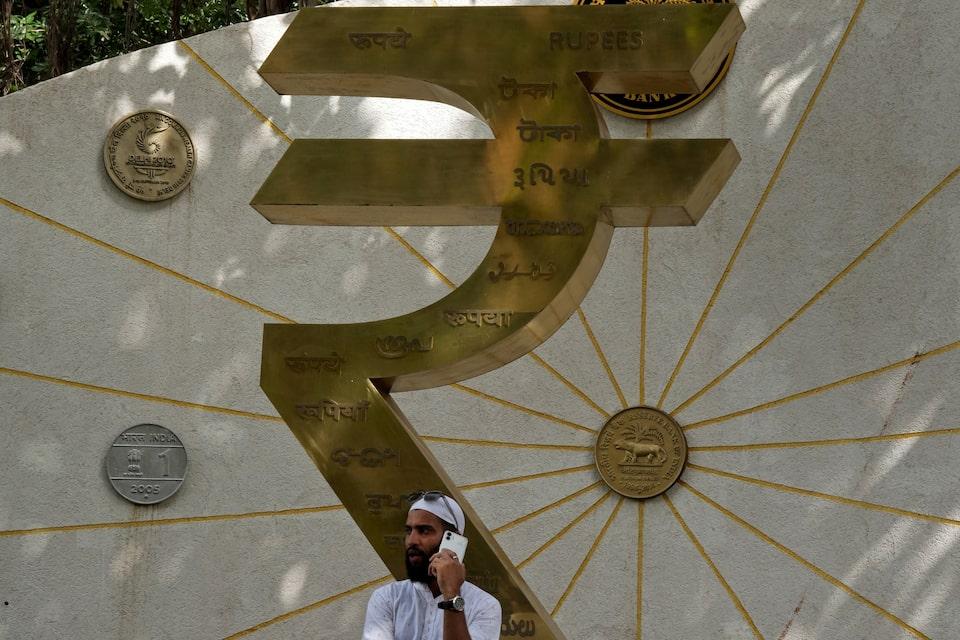
MUMBAI, Aug 22 (Reuters) - The Indian rupee weakened further on Friday against a stronger dollar ahead of a speech by Federal Reserve Chair Jerome Powell, capping a volatile week for the Asian currency that has been pressured by U.S. tariff-related uncertainties. The currency closed 0.3% lower on Friday at 87.5300, against its close of 87.27 in the previous session. It was down 0.02% for the week. Sign up here. The local unit, which opened at 87.4575 on Monday, saw sharp swings through the week due to domestic and geopolitical developments. Talks between the U.S. President Donald Trump and the Russian and Ukrainian presidents, coupled with the Indian government’s proposed tax cuts, pushed the rupee above the 87 handle for the first time this month on Tuesday. However, concerns over tariffs on Indian goods, which are set to take effect on August 27, and importers’ demand for the greenback weighed on the currency on Thursday when it posted its biggest single-day decline in a month. “Looming U.S. tariffs on Indian goods and criticism over Russian oil purchases kept sentiment weak, with continued downside risk (expected in) the rupee through September,” said Jigar Trivedi, senior currency analyst at Reliance Securities. Meanwhile, the dollar index was up 0.14% at 98.742, as of 3:37 p.m. IST, and inched towards the 99-mark ahead of Powell's speech at the Jackson Hole symposium later in the day. His comments will be scrutinised for clues on a September rate cut and the policy trajectory for the rest of the year. Investors are pricing in an over 80% chance of a cut next month, but the question is whether Powell will push back against such aggressive expectations. While his recent comments have leaned hawkish, they came before the weaker July jobs report. Most Asian currencies traded lower on Friday, with the Taiwan dollar and Indonesian rupiah falling sharply against the dollar and leading losses, while the Korean won and Philippine peso climbed in intraday trade. https://www.reuters.com/world/india/rupee-continues-slide-looming-us-tariffs-posts-marginal-weekly-loss-2025-08-22/
2025-08-22 09:58
Aug 22 (Reuters) - Sterling steadied after dipping to a two-week low against the dollar on Friday as traders pared wagers on a rate cut by the U.S. Federal Reserve next month. Sterling was flat against the dollar at $1.3416 after touching its weakest level since August 7. It was slightly higher on the euro at 86.46 pence to the common currency . Sign up here. It was on course for a 0.9% decline for the week, reversing course after gaining over the previous two weeks on the back of a hawkish repricing of the Bank of England's monetary policy path and upbeat economic data. While better than expected business survey data and a comforting public borrowing update released on Thursday helped buoy the pound this week as well, analysts remain cautious heading into the autumn budget announcement. "Until we know what's in the budget, sterling could be subject to some headwinds," said Jane Foley, head of FX strategy at Rabobank. "It's still going to be difficult for the chancellor to avoid significant tax hikes in order for the Labour government to meet its spending commitments through the next fiscal year," Foley said. The tax hikes could dent recently improved consumer confidence, presenting a headwind to growth, she said. The benchmark 10-year gilt yield on Friday rose to its highest level since May 29 and was last up four basis points at 4.7660%. Meanwhile, the dollar was a touch firmer against a basket of peers at 98.71. Investors trimmed rate cut wagers ahead of an eagerly anticipated speech from Fed Chair Jerome Powell scheduled for 1400 GMT. Money markets are currently pricing in a 73% chance of 25 basis point rate cut next month, down from 85% a week earlier, per CME's FedWatch tool. https://www.reuters.com/world/uk/sterling-track-weekly-fall-outlook-clouded-by-fiscal-risks-2025-08-22/

2025-08-22 09:54
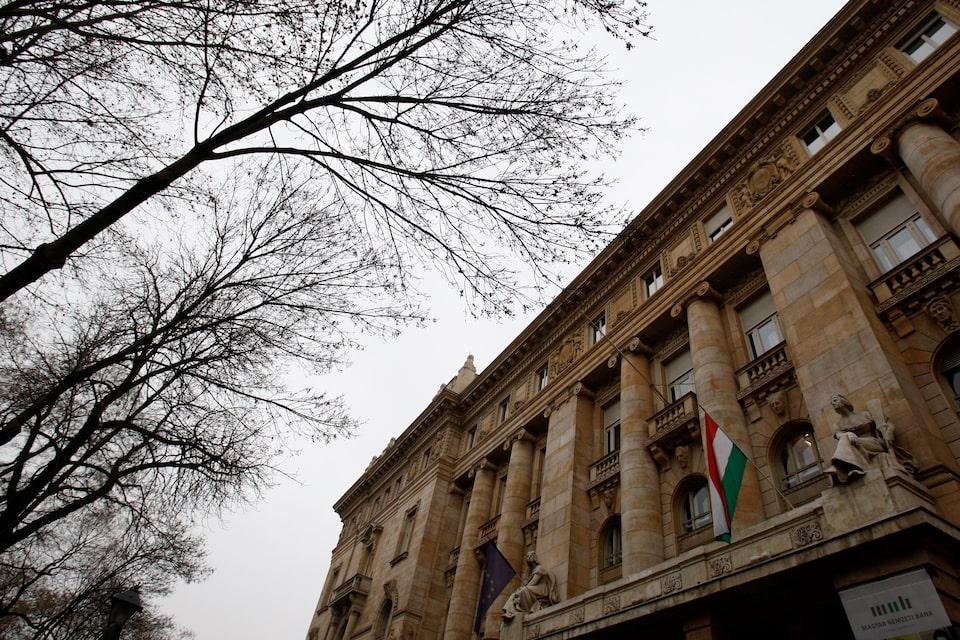
Base rate seen unchanged at 6.5% Median forecast sees one 25-bp rate cut this year Analysts split over room for easing this year Reuters Hungary central bank rate forecasts: Reuters Hungary average inflation forecasts: BUDAPEST, Aug 22 (Reuters) - Hungary's central bank is expected to leave its base rate steady at 6.5% for the 11th consecutive month on Tuesday despite a sputtering recovery, as inflation exceeds the bank's 2% to 4% tolerance band even though price growth slowed last month. All 21 analysts surveyed between August 18 and 22 projected that the National Bank of Hungary would leave its base rate unchanged at 6.5% at its meeting. The median projection still sees a 25-basis-point rate cut by the end of this year, although analysts were divided over the room for policy easing. Sign up here. "We still do not expect any rate cuts this year, as the Monetary Council remains focused on tackling persistently high inflation expectations," ING analyst Peter Virovacz said, adding that the only game changer would be if geopolitical tensions eased as the result of a ceasefire between Russia and Ukraine. The bank's governor, Mihaly Varga, reiterated in a statement on Friday that with inflation risks still pointing upwards, the bank would "place special emphasis on cautious and patient monetary policy and an anchoring of inflation expectations". The bank left its base rate on hold at 6.5% in July. The NBH, which predicts average inflation at 4.7% this year, expects to reach its 3% inflation target only in early 2027, projecting mostly upside risks to inflation from tariffs, food and services, and downside risks to Hungary's economic growth, which it forecasts at a mere 0.8% this year. Hungary's headline inflation slowed to 4.3% in July from 4.6% in June but exceeded analysts' median forecast for 4.1%, as energy and food prices stayed high. July core inflation slowed to 4.0% year-on-year from 4.4% in June. "Although lower inflation argues for lower interest rates, heightened external uncertainties provide a reason for monetary policy caution. In our view, policy rates across the CEE-4 are likely to fall considerably further, but the timing and speed of rate cuts remain uncertain," Goldman Sachs analysts said in a note, projecting 50 bps easing for Hungary this year. The bank also forecasts rate cuts in Poland and the Czech Republic before the end of the year. "We expect that stronger exchange rates – combined with milder external inflationary forces – will weigh on inflation during the remainder of 2025 and into 2026," the analysts added. https://www.reuters.com/markets/europe/hungary-leave-base-rate-hold-65-again-despite-sputtering-economy-2025-08-22/
2025-08-22 09:12
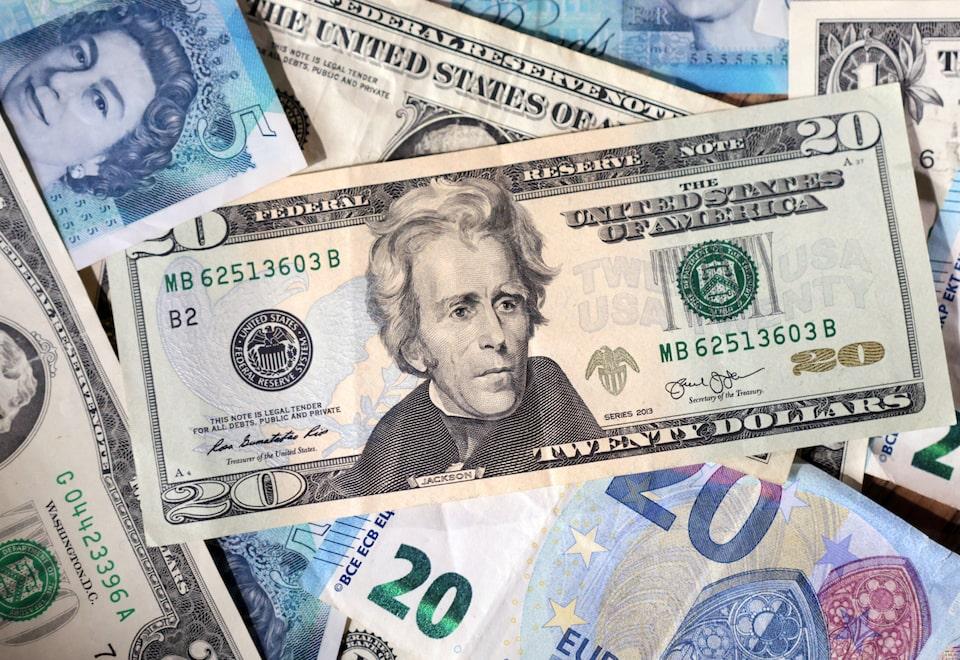
Euro, sterling touch two-week low ahead of Powell speech Powell's tone may sway markets as traders trim rate cut bets Odds of 25 basis point cut in September at 69% German GDP contracts 0.3% q/q in Q2, revised from 0.1% MUMBAI, Aug 22 (Reuters) - The U.S. dollar hovered near a two-week high against a basket of other major currencies on Friday as investors scaled back rate cut bets ahead of Federal Reserve Chair Jerome Powell's speech at the Jackson Hole symposium. The euro and sterling touched their weakest levels versus the dollar since early August and were last steady at $1.1160 and $1.3413, respectively. Sign up here. The dollar index edged up 0.1% to 98.72, on course for a 0.9% rise on the week to snap a two-week losing streak. While indications of U.S. labour market weakness had bolstered hopes of an reduction in borrowing costs next month, expectations have been tempered by economic data flashing inflationary risks and cautious comments from Fed policymakers. Traders are currently pricing in , opens new tab just under a 70% chance of a 25 basis point rate cut in September, down from 75% on Thursday, CME's FedWatch tool showed. "The dollar has been reflecting the risk that (Powell) could stick to his guns and become more cautious," said Jane Foley, head of FX strategy at Rabobank. Fed officials on Thursday appeared lukewarm to the idea of a rate cut next month, setting the stage for Powell's speech at 10 a.m. EDT (1400 GMT) at the annual Jackson Hole conference in Wyoming. Chicago Fed president Austan Goolsbee acknowledged the upcoming meeting is "live" and could bring a change in interest rate policy, although he noted mixed economic data and unexpectedly high inflation data gave him pause about the prospect of an imminent easing. The 2-year U.S. Treasury yield, sensitive to interest rate expectations, nudged up to 3.80%, adding to a 5-basis-point rise in the previous session. Bond prices move inversely to yields. Data showed Germany's economy shrank by 0.3% in the second quarter from the first as demand from the U.S. faded following months of accelerated buying in anticipation of U.S. tariffs. "While financial markets seem to have grown numb to tariff announcements, let’s not forget that their adverse effects on economies will gradually unfold over time," Carsten Brzeski, global head of macro at ING Research, said in a note. U.S. tariffs and a stronger euro exchange rate against multiple currencies make it hard to see how the German economy would recover from a "seemingly never-ending stagnation" in the second half of the year, the note said. The single currency is up 12% so far this year versus the dollar, benefiting from a decline in the U.S. currency. Analysts at BofA Global Research said that although they saw modest near-term upside potential for the dollar going into Powell's speech, they continued to hold an overall bearish outlook amid rising stagflation risks for the U.S. economy. The yen weakened 0.16% against the dollar but Japanese 30-year government bond yields hit new highs and 10-year yields touched a 17-year high after core inflation data kept expectations of a Bank of Japan interest rate hike in the coming months alive. The Swedish crown and Norwegian crown were down about 0.2% each in the face of a firmer dollar. https://www.reuters.com/world/africa/dollar-firms-traders-pare-rate-cut-bets-ahead-powell-speech-2025-08-22/
2025-08-22 09:10
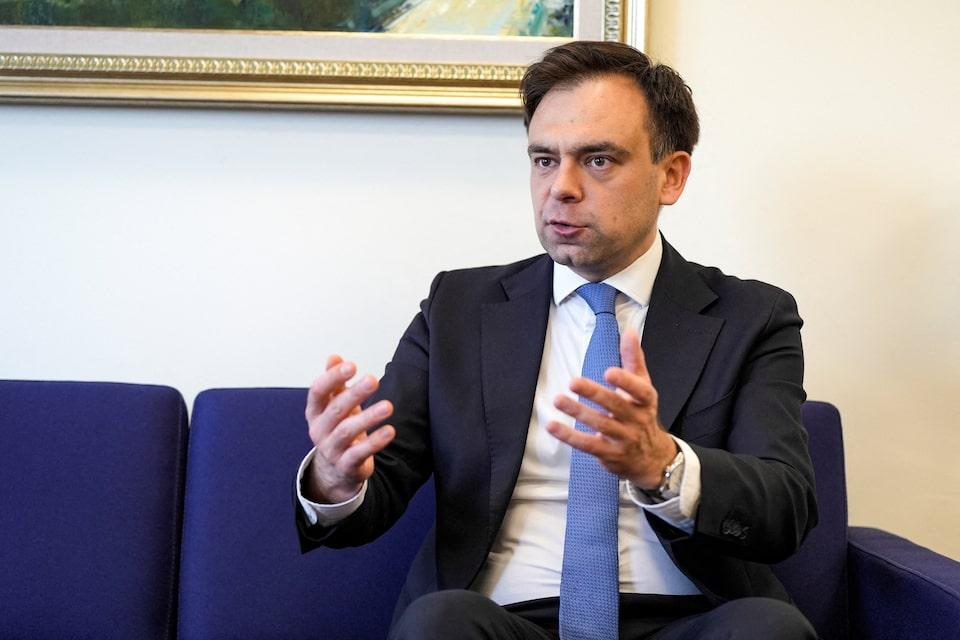
WARSAW, Aug 22 (Reuters) - Poland's Finance Ministry said on Friday it was not working on a previously floated idea of taxing interest on banks' required reserves, as banks' shares tumbled following an announcement of plans to hike the corporate income tax they pay. Warsaw's WIG Banks index (.BKNI) , opens new tab fell about 8% in morning trade on Friday after the ministry said Poland planned to raise the corporate income tax levied on banks to 30% in 2026, from the current 19%, to finance increased defence spending. Sign up here. The rate would be lowered to 26% in 2027 and further to 23% in subsequent years, the ministry said. In June, Finance Minister Andrzej Domanski said the ministry was working on a new tax which could target interest on required reserves held in the central bank, potentially bringing in 1.5 billion-2.0 billion zlotys ($408 million-$544 million). However, the ministry said in a post on X on Friday that it was "not currently working on the previously considered solution regarding the taxation of mandatory reserves held at the National Bank of Poland". Erste Securities analyst Lukasz Janczak said that plan would have had a less severe impact on banks' profits than the increase in corporate income tax, which was announced by the Finance Ministry on Thursday. It said the changes to corporate income tax for banks would increase revenues by about 6.5 billion zlotys in 2026. ($1 = 3.6759 zlotys) https://www.reuters.com/business/finance/poland-is-not-working-tax-interest-banks-required-reserves-ministry-says-2025-08-22/