2025-08-22 03:03
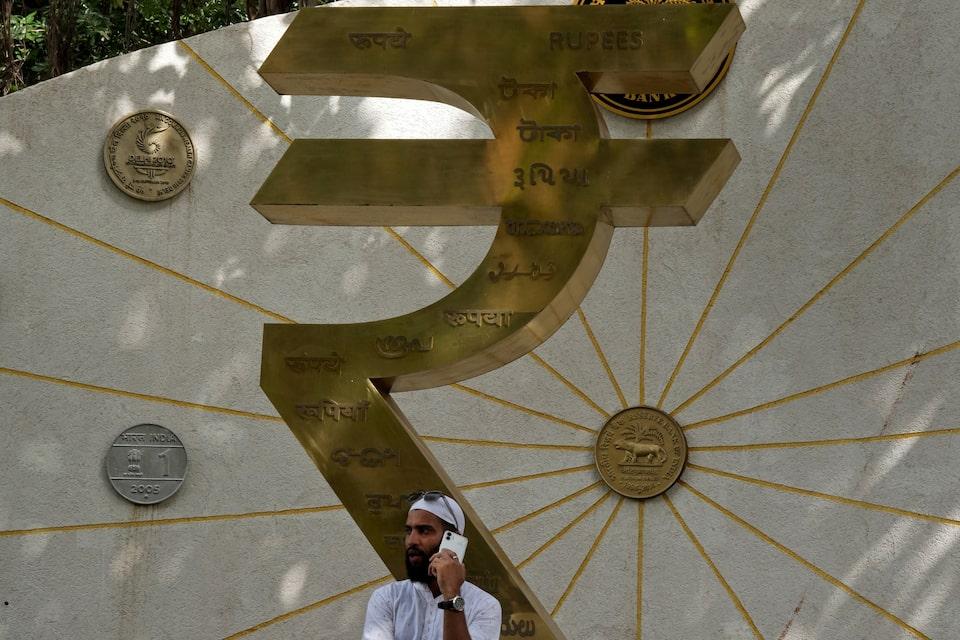
MUMBAI, Aug 22 (Reuters) - The Indian rupee is expected to open largely flat to slightly weaker on Friday, with near-term sentiment titled bearish ahead of Federal Reserve Chair Jerome Powell's speech post market that may offer cues on the interest rate outlook. The one-month non-deliverable forward indicated the rupee will open in the 87.26-87.30 range versus the U.S. dollar, compared with 87.27 on Thursday. Sign up here. The rupee rose past the 87 per dollar mark in the last session before coming under pressure throughout the afternoon. The currency posted its biggest one-day percentage decline in a month, with traders attributing the drop to heavy dollar demand from oil companies and other importers. Before Thursday's decline, the rupee had been surprising markets, moving higher despite what most consider a challenging backdrop. The rupee traded "to an extent like a U.S. tariff-vulnerable currency" on Thursday, a currency trader at a private bank said, pointing to heavy importer dollar demand. The comment referred to the possibility of Washington imposing additional tariffs of up to 50% on Indian goods from August 27. The bias on the rupee now is "definitely" towards more declines, he said. POWELL TAKES CENTRE STAGE Jerome Powell's speech at Jackson Hole later in the day will be scrutinised for clues on the likelihood of a September rate cut and for rest of the year. The key will be whether Powell pushes back on the more than 80% probability priced in for a rate cut next month. While his recent comments have leaned hawkish, they preceded the weaker July jobs report. "We expect some modest dovish tilt, though certainly not a 180-degree shift in tone, given the continued uncertainty around the tariff impact on inflation," MUFG Bank said in a note. KEY INDICATORS: ** One-month non-deliverable rupee forward at 87.44; onshore one-month forward premium at 12.25 paise ** Dollar index up at 98.64 ** Brent crude futures falls 0.2% to $67.5 per barrel ** Ten-year U.S. note yield at 4.32% ** As per NSDL data, foreign investors sold a net $34.2 million worth of Indian shares on August 20 ** NSDL data shows foreign investors bought a net $38.7 million worth of Indian bonds on August 20 https://www.reuters.com/world/india/rupee-momentum-falters-downside-risks-re-merge-ahead-powells-speech-2025-08-22/
2025-08-22 00:57
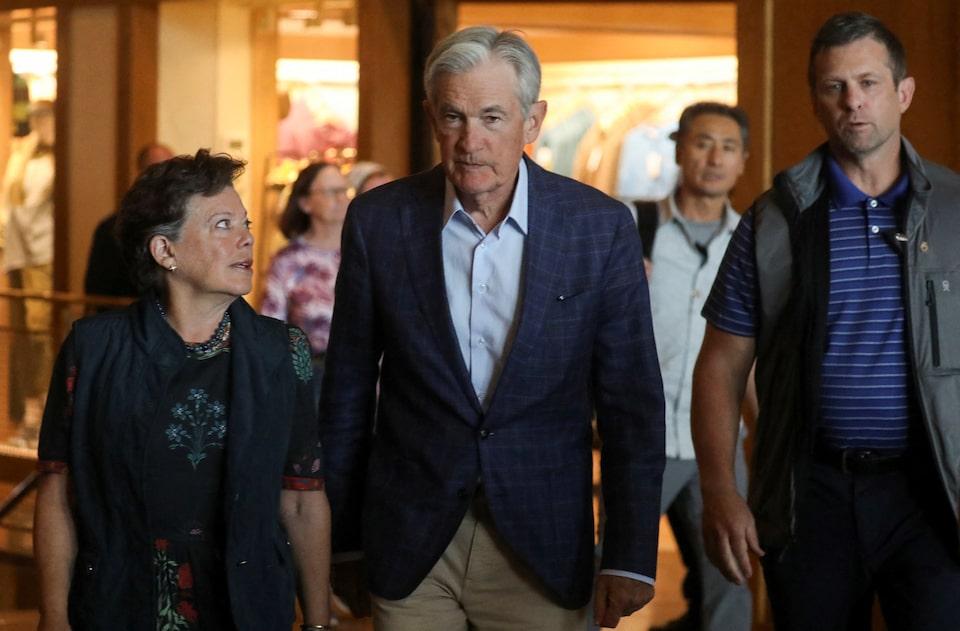
Inflation concerns tied to tariffs complicate rate-cut outlook Markets put chance of Fed rate cut next month at 70% Investors hope for clear signal from Fed chief Powell on Friday NEW YORK/JACKSON HOLE, Wyoming, Aug 21 (Reuters) - Federal Reserve officials appeared lukewarm on Thursday to the idea of an interest rate cut next month, as investors geared up for U.S. central bank chief Jerome Powell's speech to the annual Jackson Hole conference in Wyoming. "I walk into every meeting with an open mind," Cleveland Fed President Beth Hammack said in an interview with Yahoo Finance on the sidelines of the three-day symposium, which is hosted by the Kansas City Fed. "But with the data I have right now and with the information I have, if the meeting was tomorrow, I would not see a case for reducing interest rates," Hammack said. Sign up here. Speaking on CNBC, Kansas City Fed President Jeffrey Schmid said, "I think we're in a really good spot and I think we really have to have very definitive data to be moving that policy right now." In a separate public appearance, Atlanta Fed President Raphael Bostic said he still has a rate cut penciled in for this year, but added that any forecast is surrounded by uncertainty and "I'm not stuck on anything." Meanwhile, Chicago Fed leader Austan Goolsbee acknowledged the upcoming meeting is "live" and could bring a change in interest rate policy, although he noted mixed economic data and recent unexpectedly high inflation data give him pause about the prospect of an imminent easing in interest rates. "The last inflation report that came in, where you saw services inflation, which is probably not driven by the tariffs, really start shooting up, is a danger, it's a dangerous data point," he said in a Bloomberg TV interview. One Fed official, Boston Fed President Susan Collins, speaking in a Wall Street Journal interview, took a different path and highlighted job market challenges. She said if the data going into the next Fed meeting shows “the risks of worsening labor market conditions relative to those risks of elevated inflation…then it may be appropriate soon to begin dialing back” interest rates. The Fed officials spoke ahead of Powell's highly anticipated keynote address on Friday, which investors hope will offer firm clues on whether the central bank plans to cut rates at its September 16-17 meeting. Financial markets are betting that the Fed will lower its benchmark interest rate by a quarter of a percentage point at the meeting next month, and it's possible that Powell will in fact send such a signal. Unexpectedly weak July hiring data coupled with big downward revisions to hiring in May and June bolstered hopes of a coming reduction in borrowing costs. Futures markets currently put a 70% probability on a quarter-percentage cut next month in the Fed's policy rate, currently set in the 4.25%-4.50% range. Goldman Sachs researchers said they did not expect Powell's remarks on Friday "to decisively signal a September cut, but the speech should make it clear to markets that he is likely to support one." TWO-SIDED RISKS The challenge for Fed policymakers is that even as there have been signs of labor market weakening, which on its own would call for lower rates, inflation remains above the central bank's 2% target and could well go higher due to the Trump administration's aggressive hiking of tariffs on imports. Although the tariffs are widely expected to increase prices, that effect is only starting to be seen in the data. There's an active debate within the Fed as to whether any jump in inflation will be a one-off hit that can be ignored by policymakers, or the making of something more persistent. "My biggest concern is that inflation has been too high for the past four years, and right now it's been trending in the wrong direction," Hammack said. She added that firms have been trying to hold off on tariff-related price hikes, but that trend can only go on for so long. Hammack added that the full impact of the tariffs won't be known until next year. Some Fed policymakers, including Governor Christopher Waller, have argued that everything the economics profession knows about tariffs suggests the hit will be a one-time adjustment. But Hammack noted in her interview that "theory and practice can be quite different," underscoring her caution about a rate cut now. Atlanta Fed economists said in a report released on Thursday that "we find evidence for the potential of tariffs to touch off another bout of high inflation," in part because even firms that are not exposed to tariff costs are expecting stronger price pressures. Schmid noted in his interview that with inflation well above the Fed's target, officials would need to take into account how reducing rates now might influence public expectations. "I think we've got to be careful about what lowering short-term rates would do to the inflation mentality," he said. https://www.reuters.com/sustainability/boards-policy-regulation/fed-officials-lukewarm-september-rate-cut-markets-await-powell-speech-2025-08-21/
2025-08-21 23:39
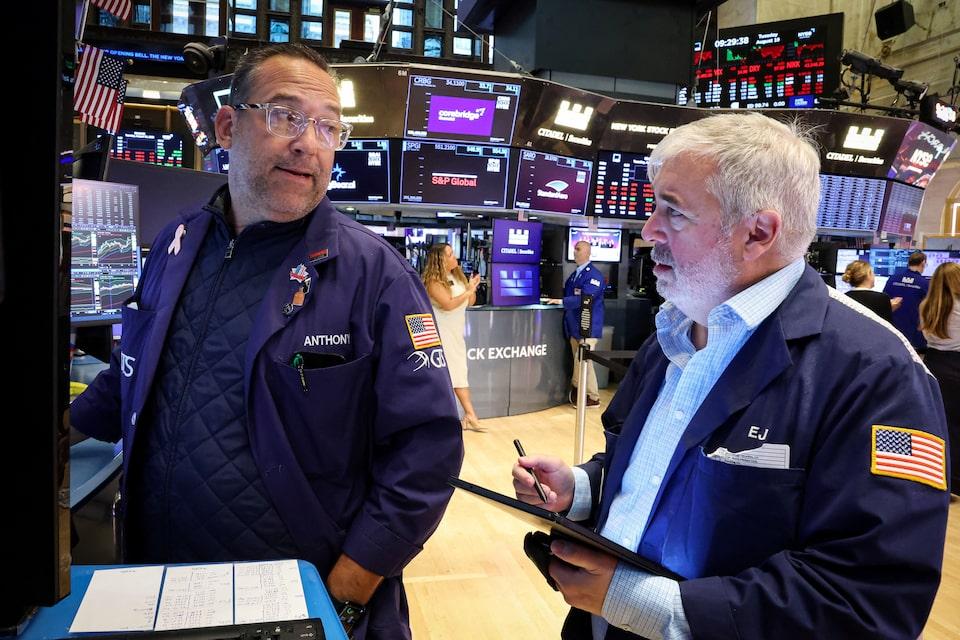
Indexes off: S&P 0.4%, Nasdaq 0.34%, Dow 0.34% Walmart slides after missing quarterly profit expectations July sales of existing U.S. homes unexpectedly rose Coty plunges on weak U.S. spending forecast Aug 21 (Reuters) - Wall Street's main indexes fell on Thursday as investors feared potentially hawkish remarks by the Federal Reserve chair on Friday that could spark volatility, while big-box retailer Walmart's quarterly results dampened sentiment. All eyes are on the Jackson Hole Economic Policy Symposium where Fed Chair Jerome Powell is scheduled to speak on Friday at 10 a.m. ET. Traders will closely monitor his speech for any clues on U.S. interest rate cuts in September following recent job market weakness. Sign up here. "We still have roughly 80% likelihood that the Fed will cut interest rates, but that is now being brought into question. So that is, in a sense, being worked into investors' forecasts," said Sam Stovall, chief investment strategist at CFRA Research. "Investors are saying, 'You know what? Let's take some profits right now.'" Traders have pared down bets on a 25-basis-point interest rate cut in September to 79% from 99.9% last week, according to data compiled by LSEG. Thin August trading volumes are likely to magnify any market moves following Powell's comments. Volume on U.S. exchanges was 12.28 billion shares on Thursday, compared with the 17.08 billion average for the full session over the last 20 trading days. "Jitters over what's going to transpire tomorrow at Jackson Hole is certainly weighing on risk appetite a little bit with Chair Powell's speech," said Adam Turnquist, chief technical strategist for LPL Financial. "There could be a decent selloff if we get a more hawkish than expected event." Multiple policymakers, including Cleveland Fed President Beth Hammack, Atlanta President Raphael Bostic and Kansas City Fed President Jeffrey Schmid, have struck a cautious tone and acknowledged the need to stay data-dependent. The Dow Jones Industrial Average (.DJI) , opens new tab fell 152.81 points, or 0.34%, to 44,785.50, the S&P 500 (.SPX) , opens new tab lost 25.61 points, or 0.40%, to 6,370.17 and the Nasdaq Composite (.IXIC) , opens new tab lost 72.54 points, or 0.34%, to 21,100.31. A private report indicated business activity picked up pace in August, reflecting a complex environment for the U.S. central bank, which will deliberate on interest rates next month. Another report also showed July sales of existing U.S. homes unexpectedly ticked higher. Yields on U.S. Treasuries rose following the reports, also putting pressure on stocks. Nine of the 11 S&P 500 sectors were down, led by consumer staples, which declined 1.18% after Walmart (WMT.N) , opens new tab raised its fiscal year sales and profit, driven by strong demand from shoppers across all income levels, but missed quarterly profit estimates and flagged higher costs from tariffs. Shares of the retailer tumbled 4.5%. The spotlight was on reports from retailers, including Target (TGT.N) , opens new tab and Home Depot (HD.N) , opens new tab, this week as investors gauged the impact of U.S. tariffs on consumer spending. "There's a bit of a mixed picture within the consumer space and there's uncertainty in the economy - whether that's the job market or whether that's prices (increasing) from a tariff pass-through," said Chris Zaccarelli, chief investment officer at Northlight Asset Management. A technology stocks selloff earlier this week appeared to lose some steam, but Nvidia (NVDA.O) , opens new tab, Meta (META.O) , opens new tab, Amazon.com (AMZN.O) , opens new tab and Advanced Micro Devices (AMD.O) , opens new tab remained weaker. The selloff signaled investor fears that tech stocks, which have soared from April lows, are overvalued, while Washington's growing interference in the sector has also raised alarms. Among other market movers, Coty (COTY.N) , opens new tab shares plummeted 21.4% after the beauty products maker forecast lower current-quarter sales on weak U.S. spending. Declining issues outnumbered advancers by a 1.6-to-1 ratio on the NYSE. There were 124 new highs and 46 new lows on the NYSE. The S&P 500 posted six new 52-week highs and no new lows while the Nasdaq Composite recorded 63 new highs and 101 new lows. https://www.reuters.com/business/wall-street-closes-down-investors-brace-powells-speech-2025-08-21/
2025-08-21 23:14
Aug 21 (Reuters) - The U.S. is seeking to procure cobalt worth up to $500 million for defense stockpiles amid the country's move to boost its critical mineral supplies. Companies have been scrambling to source rare earths after China imposed restrictions, leading to a 75% drop in rare earth magnet exports from the country in June and causing some auto companies to suspend production. Sign up here. U.S. President Donald Trump in March invoked emergency powers to boost domestic production of critical minerals as part of a broad effort to offset China's near-total control of the sector. In July, Reuters reported that the White House tapped a former mining executive, David Copley, to head an office at the National Security Council focused on strengthening supply chains. According to the tender document published by the U.S. Department of Defense and the Defense Logistics Agency (DLA) on Wednesday, they are looking for offers for alloy-grade cobalt of about 7,480 tonnes over the next five years. Cobalt, mostly imported by the U.S., is used in batteries, a component in nickel superalloys for high temperature sections of jet engines and industrial gas turbines, among others. However, the defense department was seeking offers from only three companies - units of Vale SA in Canada, Japan's Sumitomo Metal Mining and Norway's Glencore Nikkelverk. The document also said the purchase amount can range from between $2 million and $500 million in the five-year period. https://www.reuters.com/world/us/us-defense-department-buy-cobalt-up-500-million-2025-08-21/
2025-08-21 23:08
LONDON, Dec 19 (Reuters) - British consumer confidence edged up in December to its joint-highest level this year after finance minister Rachel Reeves' annual budget imposed few immediate tax rises on households, but morale remains subdued, according to a monthly survey. The GfK consumer confidence index, Britain's longest-running such measure, rose to -17 from -19 in November, matching levels seen in October and August. The index was last higher in August 2024, just after the Labour government took office. Sign up here. "Consumers resemble a family on a festive winter hike, crossing a boggy field - plodding along stoically, getting stuck in the mud and hoping that easier conditions are not far off," said Neil Bellamy, consumer insights director at GfK. Households' assessment of the general economy rose more sharply than their perception of their own financial wellbeing, while their willingness to make major purchases rose the most. Consumer price inflation slowed more than expected in November to 3.2%, its lowest since March, and Reeves' budget promised to shift climate change costs away from household energy bills into general taxation. Overall, the budget will increase Britain's tax burden by 26 billion pounds ($35 billion) a year, less than the 40 billion-pound increase announced in 2024, and most of that will not take effect this year or next. Despite wages rising faster than inflation this year, British consumer spending - like that in much of Europe - has been slow while savings rates have remained high by historic standards, puzzling many economists. The BoE cut interest rates on Thursday, its sixth reduction in borrowing costs since August 2024, but the central bank said future cuts were likely to be a closer call. The GfK survey was based on a sample of 2,003 people aged 16 and over polled between December 1 and December 11. ($1 = 0.7493 pounds) https://www.reuters.com/world/uk/uk-consumers-gain-confidence-after-bank-england-rate-cut-gfk-says-2025-07-24/
2025-08-21 22:38
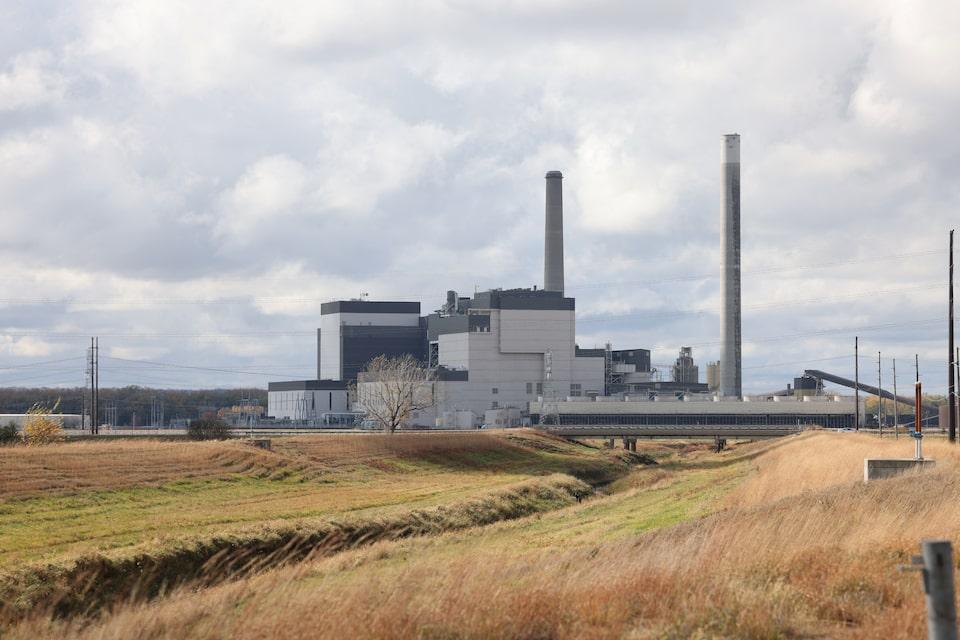
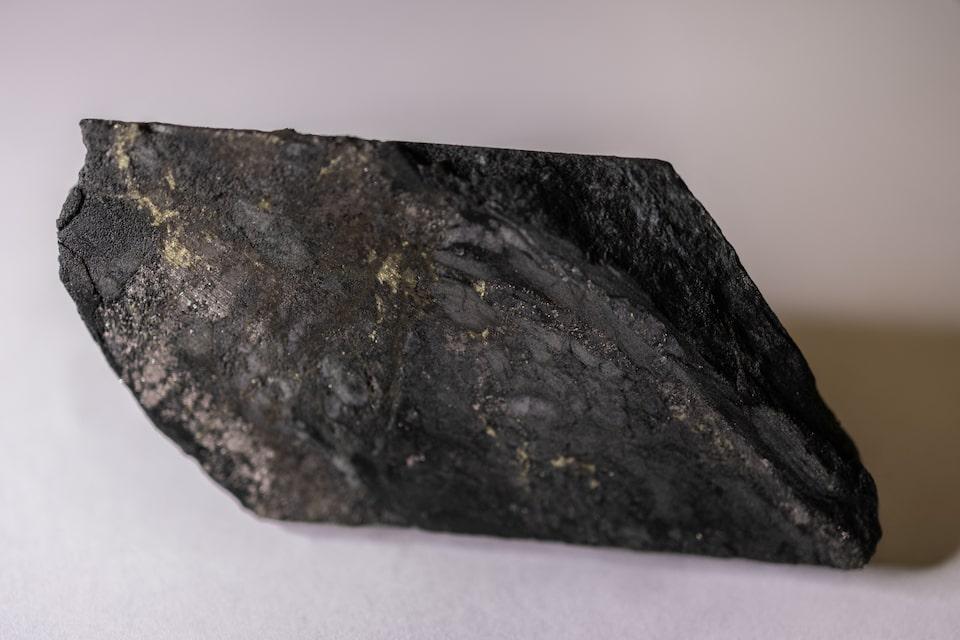
US extends order to keep coal plant open through mid-November Owner of plant says order already has cost tens of millions of dollars Homeowners, businesses could foot the bill Move is latest by Trump administration to support fossil fuels WASHINGTON, Aug 21 (Reuters) - The U.S. Energy Department on Thursday extended an order for a Michigan coal plant to stay open through November 19, even though it had been planning to shut permanently for economic reasons and complying with the original order has already cost the company tens of millions of dollars. In May, the Energy Department issued the original order, normally reserved for natural disasters, for the 1,500 megawatt J.H. Campbell plant in West Olive, Michigan to stay open. The order came a week before Consumers Energy, the majority owner of the plant, planned to shut and after it had depleted its coal stockpile and reassigned staff. Sign up here. Thursday's order is the latest in a string of U.S. moves to support fossil fuels, after President Donald Trump declared an energy emergency on the first day of his second term. In April, he signed executive orders aiming to boost coal production, in one of a series of actions that run counter to global efforts to curb carbon emissions, saying the administration was "going to put the miners back to work." Chris Wright, the U.S. energy secretary, said the order "will help ensure millions of Americans can continue to access affordable, reliable, and secure baseload power regardless of whether the wind is blowing or the sun is shining.” Trump claims that rapid adoption of solar and wind power has made U.S. electricity unstable and expensive, justifying his bid to end most subsidies for them. But reliability has improved in Texas, the U.S. grid with the most renewable energy, according to regulatory filings and price data reviewed by Reuters. Consumers Energy said in a financial filing that staying open cost $29 million over the first 38 days since the first order. A report commissioned by environmental groups said this month that keeping Campbell open would cost $279 million annually. It said if the U.S. mandates keeping open fossil fuel plants that had been slated to retire by the end of 2028, it could cost $3 billion or more per year. The costs, it said, would be distributed across homeowners and businesses that pay power bills in all regions but the U.S. Northeast. The Federal Energy Regulatory Commission ruled last week that the costs for keeping Campbell open could be spread across 10 states across the Midwest. Consumers Energy spokesperson Brian Wheeler said the company expects to continue operating the plant as required. Consumers was pleased that FERC approved its request to recover costs by allocating them across the region, Wheeler said. https://www.reuters.com/sustainability/boards-policy-regulation/us-prolongs-michigan-coal-plants-operation-until-november-despite-costs-2025-08-21/