2025-08-21 22:02
OTTAWA, Aug 21 (Reuters) - Scott Moe, premier of the major grain-growing Canadian province of Saskatchewan, said on Thursday he will travel to China soon for talks to persuade Beijing to drop new tariffs on canola. China hit Canadian canola seed imports with preliminary 75.8% duties last week following an anti-dumping investigation, escalating a year-long trade dispute. China is by far Canada's biggest canola seed market. Sign up here. Canadian Federal Agriculture Minister Heath MacDonald also pledged support for farmers and the industry, which says it employs 200,000 people and produces C$43 billion in economic value. "We're working diligently alongside them," MacDonald said in a phone interview after the meeting ended. Canada, the world's largest exporter of canola, shipped almost C$5 billion ($3.63 billion) of canola products to China in 2024, about 80% of which was seed. The steep duties on canola seed, if they remain in place, would likely all but end those Chinese imports. China objected when Canada imposed 100% tariffs on Chinese electric vehicles a year ago, and launched an anti-dumping investigation into canola seed shortly thereafter. In February, it imposed a tariff on Canadian canola oil and meal, as well as a number of other agricultural products. This month's addition of canola seed to China's tariff targets came shortly after Canada imposed tariffs on steel in July, which also upset Beijing. "Myself will be in China in the next couple of weeks with potentially another opportunity for engagement before the end of the calendar year," Moe told a news conference after a meeting with industry officials and MacDonald. Moe also reiterated a call for federal aid for the industry. MacDonald said it was too early to decide what help farmers might need, but "it could be there some day" if the dispute drags on. He added that it was difficult to assess all of China's motives in the dispute. "You're dealing with a partner that you're not 100% sure all of the time what their prerogatives are. Are they just political, or is it something else?" MacDonald said. ($1 = 1.3905 Canadian dollars) https://www.reuters.com/world/china/saskatchewan-premier-go-china-bid-end-canola-tariffs-2025-08-21/

2025-08-21 21:39
Closure could push scientists to resign, critics warn BARC research includes pests, blight, crop genetics USDA lacks data supporting reorganization plan, lawmakers say WASHINGTON, Aug 21 (Reuters) - The U.S. Department of Agriculture's plan to close its flagship laboratory near Washington, D.C., could undermine research on pests, blight and crop genetics crucial to American farms, according to lawmakers, a farm group, and staff of the facility. The USDA has already lost thousands of research staff to President Donald Trump's effort to shrink the federal government, even as Agriculture Secretary Brooke Rollins has said farm research is a pillar of national security. Sign up here. Rollins said in July that the USDA will close the Beltsville Agricultural Research Center, which occupies nearly 7,000 acres in the Maryland suburbs outside Washington, as part of an agency reorganization effort that will also move roughly half its Washington-area staff to hubs in North Carolina, Utah and elsewhere. The agency has said it is closing BARC and several other USDA buildings because of costly necessary renovations and underutilized space. Workers at BARC in 2023 filed whistleblower complaints about unsafe working conditions there. But critics of the plan to close BARC say it could backfire by interrupting the facility's ongoing research, and by pushing the scientists conducting it to resign. "It is unlikely that senior scientists of this caliber with mature research partnerships and rich professional lives will simply move somewhere else," said Donnell Brown, president of the National Grape Research Alliance, which depends on BARC research into vine stress and water usage. U.S. Senator Chris Van Hollen, a Maryland Democrat, also slammed the plan. "You have a lot of people who have invested their time and effort in research for farmers across the country, and this plan would destroy that ongoing research," he said. Three staff at the facility, who requested anonymity out of fear of retribution, said the co-location of many labs at BARC allows for economies of scale and cost savings, and that the proximity to Washington enables researchers to easily brief lawmakers or other parts of the USDA. A USDA spokesperson said the $500 million required to modernize the BARC facility, plus another $40 million in annual maintenance, was not a wise use of taxpayer funds and that the agency's other laboratories could house BARC research. Rollins said in a July memo outlining the relocation effort that the BARC facility would be closed over several years to avoid disruptions to critical research. The USDA on July 25 told the House of Representatives and Senate agriculture and appropriations committees that it did not have data or analysis underpinning its reorganization plan to share with members of Congress or their staff, according to a letter sent from Democrats on the House Agriculture Committee to Rollins on August 14. "Ostensibly they’re saying it would save money, but I haven’t seen any study that suggests that’s the case," said U.S. Representative Glenn Ivey, whose Maryland district contains the BARC site. https://www.reuters.com/world/us/us-farm-agency-plan-close-flagship-research-site-threatens-critical-research-2025-08-21/
2025-08-21 21:18
Powell to walk tightrope between inflation, softening job market Thin August market liquidity could exacerbate volatility Pushback against imminent easing seen as biggest market risk NEW YORK, Aug 21 (Reuters) - Investors are bracing for volatility as Federal Reserve Chair Jerome Powell walks a fine line between curbing inflation and supporting the labor market, with thin August trading poised to magnify any market moves from his Jackson Hole speech on Friday. Wall Street largely expects Powell will signal an imminent easing in monetary policy, but concerns that U.S. President Donald Trump's tariffs could reignite price pressures may force him to tread carefully. Meanwhile, Powell faces relentless pressure from the Trump administration to cut interest rates, turning his final address as Fed boss at the Jackson Hole economic symposium into a test of Fed independence. Sign up here. "There is a market tightrope here from a macroeconomic perspective between the inflation data and what's happening in the employment market," said Tony Rodriguez, head of fixed income strategy at Nuveen. "And now you combine that with the political tightrope that's not usually there that he has to navigate. It makes for an incredibly difficult, tricky situation," he said. Adding to the drama, Trump on Wednesday urged Fed Governor Lisa Cook to resign over mortgage allegations raised by one of his political allies, intensifying his effort to gain influence over the U.S. central bank. Cook said she had "no intention of being bullied" out of her post. "This (Jackson Hole) would be a good opportunity for Powell to speak about the importance of independence," said Idanna Appio, portfolio manager at First Eagle Investments, noting that the pressure could eventually lead to a more dovish rate-setting Fed board. A soft July jobs report and hefty downward revisions to earlier job figures fueled bets the U.S. central bank would cut interest rates from the current 4.25%-4.5% range later this year. But a surge in wholesale prices in July dimmed investor hopes for a half-point move at the Fed's next rate-setting meeting in September, leaving markets braced for about two 25 basis point cuts for the rest of the year. So far, consumers have been spared a sharp jump in prices despite Trump's escalating import tariffs, but doubts linger over how much of those duties will filter through to households in the months ahead. "I expect that Powell will signal a change in monetary policy that suggests that we'll resume the rate-cutting cycle on September 17, and markets will welcome that news," said Michael Arone, chief investment strategist at State Street Investment Management. "But I think he'll be reluctant to give too much transparency on the future path of rate cuts, because he knows what he doesn't know," Arone said, referring to the inflationary impact of tariffs. 'EXPECT VOLATILITY' Investors see any pushback from Powell against an imminent shift to monetary policy easing as the biggest risk heading into the Jackson Hole, Wyoming, event, with poor liquidity in summer trading expected to exacerbate the market reaction. "It's next to the last week of August, it's Friday, markets might be a little more susceptible to some volatility as a result of a little bit less liquidity ... (this) might lead to something of an unexpected move," said Rodriguez at Nuveen. Powell's speech comes amid market concerns of stagflation, a dreaded mix of sluggish growth and sticky inflation that could limit the Fed's ability to ride to Wall Street's rescue, just as a tech stock selloff this week highlighted long-standing worries over steep stock valuations. "Stagflation is a risk," said James Ragan, co-chief investment officer and director of investment management research at D.A. Davidson. "If Powell pulls back on the expectation for a rate cut in September, I think stocks would fall in that scenario and you obviously would see probably bond yields rise at least at the short end," he said. To be sure, Powell's address may ultimately be underwhelming for markets. Hot producer prices data in July removed the possibility that the Fed could deliver a jumbo-sized cut in September, limiting the scope for resistance from an inflation-focused Powell against those expectations. At the Jackson Hole conference in 2022, Powell echoed late Fed chair Paul Volcker with a hardline vow to crush inflation. This time, with inflation about 1 percentage point above the Fed's 2% target and a softening but still healthy job market, a subtler balance could be in the cards. Still, a balanced message could be perceived as hawkish, sparking price fluctuations in stocks and bonds over the next few weeks, said Shannon Saccocia, chief investment officer for wealth management at Neuberger Berman. "Our advice to clients has been to expect volatility," she said. https://www.reuters.com/business/investors-see-risks-market-powell-walks-tightrope-jackson-hole-2025-08-21/
2025-08-21 21:15
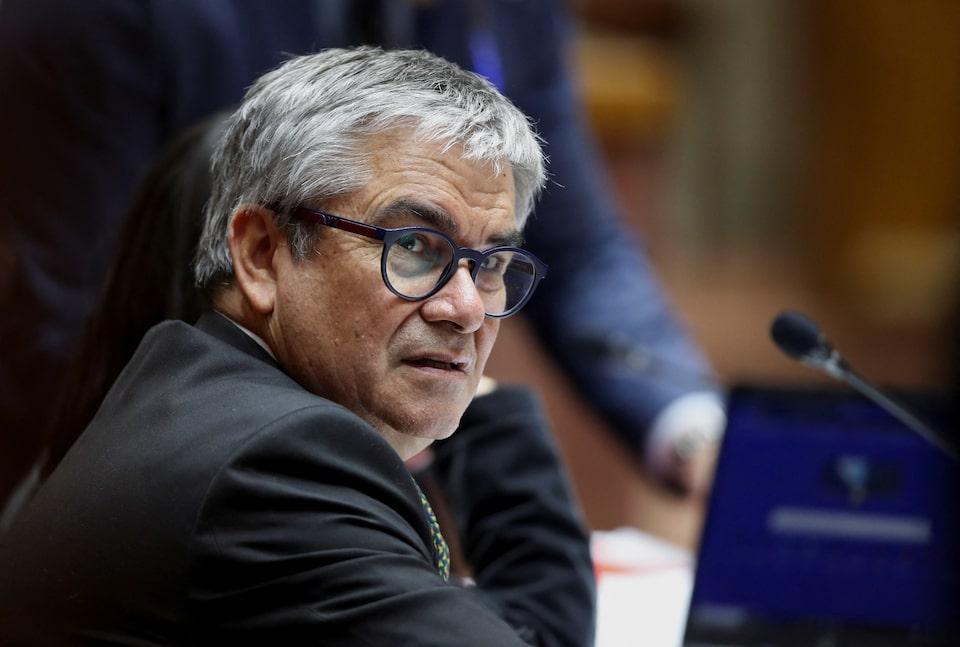
SANTIAGO, Aug 21 (Reuters) - Chile's finance minister Mario Marcel, considered a stabilizing and pragmatic figure in President Gabriel Boric's administration, resigned on Thursday amid a wider cabinet reshuffle. In a ceremony at the presidential palace in Santiago, Boric said Marcel was resigning due to personal reasons and replaced him with Economy Minister Nicolas Grau. Sign up here. "Our government is going to keep advancing with fiscal responsibility," Boric said, adding that his goal was to provide long-term stability to the country. "In this change, there's also continuity." A close political ally of Boric, Grau was the president of Chile's Federation of University Students from 2005 to 2006 during a time of widespread student protests. He later earned a master's degree in economy from the University of Chile and a doctorate in economy from the University of Pennsylvania. He then worked in academia and politics, including Boric's 2021 presidential campaign. As economy minister, Grau's purview included foreign investment and lithium contracts, an area he has faced criticism for due to delays in securing projects like a planned lithium cathode plant by Chinese metals group Tsingshan and automaker BYD. Grau, who resigned as economy minister on Thursday to take his new position, will be replaced by Alvaro Garcia. Boric also announced he was accepting the resignation of Esteban Valenzuela, the country's agricultural minister and replaced him with Maria Ignacia Fernandez. Both Grau and Marcel had served as ministers since the beginning of Boric's administration in 2022, surviving a number of cabinet reshuffles. After a polarizing election campaign during which Boric promised to upend Chile's free-market economic system, markets and investors breathed a sigh of relief when he picked Marcel, who was then serving as the head of the central bank. The economy quickly became a focal point of Boric's government as high inflation and tepid economic growth in the wake of the pandemic hampered his ambitious reforms. Marcel is attributed with stabilizing the economy and helping pass a number of the government's legislative victories, including a mining royalty and pension reform. Boric has seven months left in his administration and the country will host presidential elections in November. https://www.reuters.com/world/americas/chiles-boric-taps-close-ally-grau-finance-minister-after-marcels-surprise-exit-2025-08-21/
2025-08-21 21:01
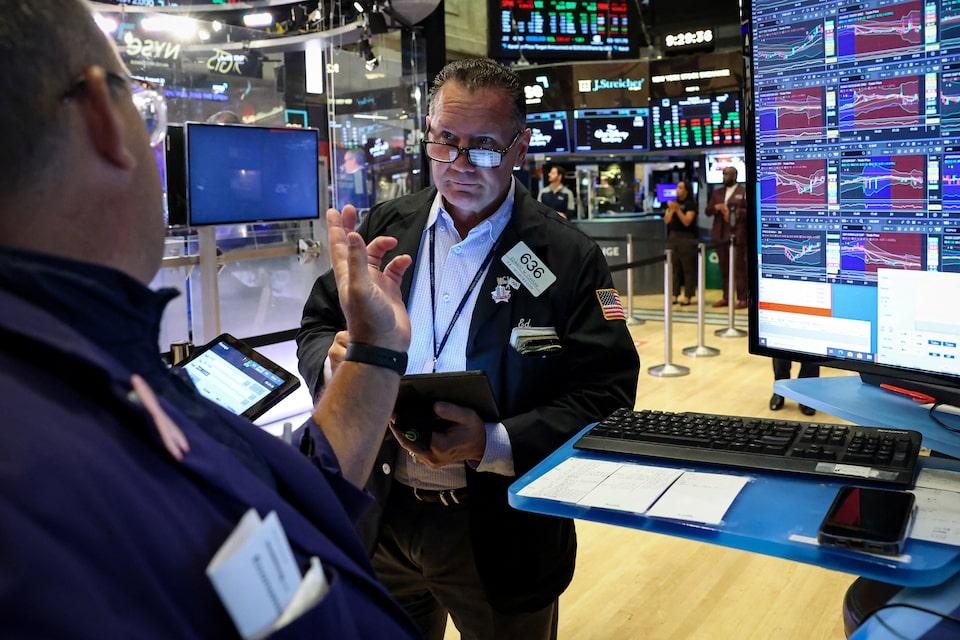
ORLANDO, Florida, Aug 21 (Reuters) - TRADING DAY Making sense of the forces driving global markets Sign up here. By Jamie McGeever, Markets Columnist U.S. stocks fell on Thursday and the dollar and Treasury yields rose, as solid factory data cast a bit more doubt on the Fed's readiness to lower interest rates next month. All eyes are now firmly on Fed Chair Jerome Powell's Jackson Hole speech on Friday. More on that below. In my column today, I look at the apparent contradiction between record inflows into U.S. assets from abroad, and the 125 basis points of Fed rate cuts traders are expecting by the end of next year. It doesn't add up. If you have more time to read, here are a few articles I recommend to help you make sense of what happened in markets today. Today's Key Market Moves Today's Talking Points: * Jackson Hole. Fed Chair Jerome Powell's eighth and final Jackson Hole speech is almost upon us. There may be three broad elements of his address to focus on: near-term policy signals, a new framework for the central bank, and a defense of his tenure. All three will be dissected, debated and debunked. The most important element for investors in the near term will be whether he leans toward a rate cut next month. These will be his first public remarks since weak jobs data three weeks ago made a September rate cut a virtual certainty, according to U.S. rate futures. Traders are no longer quite so certain, and rates futures markets are now barely attaching a one-in-four probability of a cut, the lowest since that payrolls shock three weeks ago. * Economic resilience. There were mixed signals in Thursday's sprinkling of U.S. employment, industry and activity indicators, but perhaps the most significant was the surprise strength in the manufacturing purchasing managers' index. The flash manufacturing PMI for July was 53.3. If confirmed by the final figure, this will be the highest in three years. Three Fed officials on Thursday signaled they are not ready to cut rates right now, and more figures like this PMI report will make the dovish case even harder to argue. The PMI surprises were not confined to the U.S. - the latest reports from Australia, Japan, India, the euro zone and Britain show that global business activity this month was strong too. * Trade. After a quiet few days for the global trade wars, investors got a reminder on Thursday of the brave new world ahead, as the US and European Union locked in a framework deal reached last month that includes a 15% U.S. tariff on most EU imports. In a 3-1/2-page joint statement, the two sides listed the commitments made, and senior EU officials said they are still pressing for lower duties on wine and spirits exports. One of the most controversial elements of the deal is European companies' apparent commitment to invest $600 billion in the U.S. through 2028. Watch this space. If America is in trouble, why do foreigners keep buying U.S. assets? Is the U.S. economic outlook so weak that it warrants multiple interest rate cuts? Or are U.S. markets pulling in huge inflows from abroad because the country's outlook is so attractive? Both can't be right, yet those are the respective narratives indicated by current pricing in the rates market and the latest capital flows data. Something doesn't quite add up. Much has been written this year about how foreign investors – spooked by U.S. President Donald Trump's unorthodox, populist policies – were going to reduce their exposure to U.S. markets and deploy that capital elsewhere. But that's not how it is panning out. Treasury International Capital (TIC) figures last week showed that foreign investors bought a net $192 billion of U.S. securities in June. This followed a record net purchase of $326 billion in May, swelled by the largest ever inflow from the private sector. Once U.S. investors' purchases of foreign assets are discounted, the net flow of long-term capital into U.S. securities in June was still a healthy $151 billion, taking the total for the second quarter to a record-matching $410 billion. Zooming out a little further, net inflows in the first half of this year stood at $643 billion, on course to match the record $1.3 trillion net inflow from 2022. And in the 12 months through June, a net $1.27 trillion was poured into U.S. stocks, Treasuries, agency and corporate debt. The end of American exceptionalism? It sure doesn't look like it. DE-DOLLARIZATION, WHERE ART THOU? Overseas demand for U.S. assets is clearly strong on an aggregate level. The explanation may be quite simple: capital continues to flood into the U.S. because that is where investors around the world believe they will see the strongest growth and thus earn the highest returns. "The flows picture is remarkably robust," says Robin Brooks, senior fellow at the Brookings Institution in Washington. "I don't think you can tell a 'de-dollarization' story or 'end of U.S. exceptionalism' story from these inflows." True, there is some justification for the de-dollarization narrative. The greenback is down 10% year to date, having recorded its worst start to a year in over half a century. But most of that slump was in the January-April period. In the last four months, the dollar index has been essentially flat. The dollar's weakness despite the influx of global capital certainly is a head-scratcher. Anecdotal evidence suggests this move partly reflects foreigners hedging more of their U.S. exposure, via currency options and derivatives. Short-term moves based on a dovish Fed outlook may be at play too. ULTIMATE HEAD-SCRATCHER But perhaps an even bigger head-scratcher is the disconnect between Fed expectations, the U.S. growth outlook, and capital flows. Traders expect the Fed to cut rates by around 125 basis points by the end of next year. That is, by far, the most dovish expectation for any G10 central bank. History suggests easing on this scale would only occur if there were a pretty sharp slowdown in economic growth. True, there are some red flags in the labor market, parts of 'Main Street' and U.S. public finances, even before factoring in tariff uncertainty. Yet, overall, the U.S. economy appears to be in reasonably decent shape. Economists at S&P Global Market Intelligence on Wednesday raised their 2025 and 2026 GDP growth forecasts to 1.7% and 2.4%, respectively. Is that an economy in need of six quarter-percentage point rate cuts over the coming 16 months, or is the growth outlook relatively rosy precisely because that level of monetary loosening is expected? That remains to be seen. For now, investors around the world continue to hoover up U.S. securities, which suggests they can't be all that pessimistic about the U.S. – or at least U.S. tech companies. It's worth noting that the TIC data showed the large inflows in May and June were mostly in so-called riskier equities rather than 'safer' Treasuries, suggesting foreigners may be more sanguine about Corporate America than the government. The end of U.S. exceptionalism may be around the corner, but it's a long bend. What could move markets tomorrow? Want to receive Trading Day in your inbox every weekday morning? Sign up for my newsletter here. Opinions expressed are those of the author. They do not reflect the views of Reuters News, which, under the Trust Principles , opens new tab, is committed to integrity, independence, and freedom from bias. https://www.reuters.com/business/global-markets-trading-day-graphic-2025-08-21/
2025-08-21 20:55
Israel to dispatch negotiators to talks once venue is set Remarks are PM's first on ceasefire proposal Hamas accepted At same time Israel proceeds with plans to seize Gaza City Gaza residents protest against war, call for ceasefire CAIRO/JERUSALEM, Aug 21 (Reuters) - Prime Minister Benjamin Netanyahu said on Thursday that Israel would immediately resume negotiations for the release of all hostages held in Gaza and an end to the nearly two-year-old war but on terms acceptable to Israel. It was Netanyahu's first response to a temporary ceasefire proposal put forward by Egypt and Qatar that Hamas accepted on Monday. Israel will dispatch negotiators to talks once a location is set, an Israeli official said. Sign up here. Speaking to soldiers near Israel's border with Gaza, Netanyahu said he was still set on approving plans for defeating Hamas and capturing Gaza City, the densely populated centre at the heart of the Palestinian enclave. Thousands of Palestinians have left their homes as Israeli tanks have edged closer to Gaza City over the last 10 days. "At the same time I have issued instructions to begin immediate negotiations for the release of all our hostages and an end to the war on terms acceptable to Israel," he said, adding: "We are in the decision-making phase." Israel's plan to seize Gaza City was approved this month by the security cabinet, which Netanyahu chairs, even though many of Israel's closest allies have urged the government to reconsider. His latest remarks underscore the Israeli government view that any deal ensures the release of all 50 hostages captured in Israel in October 2023 and still held by militants in Gaza. Israeli officials believe around 20 are still alive. The proposal on the table calls for a 60-day ceasefire and the release of 10 living hostages held in Gaza by Hamas militants and of 18 bodies. In turn, Israel would release about 200 long-serving Palestinian prisoners held by Israel. Once the temporary ceasefire begins, the proposal is for Hamas and Israel to begin negotiations on a permanent ceasefire that would include the return of the remaining hostages. PALESTINIAN PROTESTSIn a sign of growing despair at conditions in Gaza, residents staged a rare show of protest against the war on Thursday. Carrying banners reading "Save Gaza, enough" and "Gaza is dying by the killing, hunger and oppression," hundreds of people rallied in Gaza City in a march organised by several civil unions. "This is for a clear message: words are finished, and the time has come for action to stop the military operations, to stop the genocide against our people and to stop the massacres taking place daily," said Palestinian journalist Tawfik Abu Jarad during the protest. The Gaza health ministry said at least 70 people had been killed in Israeli fire in the enclave in the past 24 hours, including eight people in a house in Sabra suburb in Gaza City. A statement from the Palestinian Fatah movement said one of those killed in Sabra was a Fatah leader and former militant, along with seven members of his family. There was no immediate comment from the Israeli military. CEASEFIRE OR CAPTURE OF GAZA CITY? Even as the military begins its preparations to launch the assault on Gaza City, Israeli officials have indicated that there is time for a ceasefire to be reached. On Wednesday, the military called up 60,000 reservists in a sign the government was pressing ahead with the plan, despite international condemnation. Such a call-up is likely to take weeks. Netanyahu is under pressure from some far-right members of his coalition to reject a temporary ceasefire and instead to continue the war and pursue the annexation of the territory. Some Palestinian families in Gaza City have left for shelters along the coast, while others have moved to central and southern parts of the enclave, according to residents there. "We are facing a bitter, bitter situation, to die at home or leave and die somewhere else. As long as this war continues, survival is uncertain," said Rabah Abu Elias, 67, a father of seven. "In the news, they speak about a possible truce, on the ground, we only hear explosions and see deaths. To leave Gaza City or not isn't an easy decision to make," he told Reuters by phone. On Thursday, Israeli military spokesperson Avichay Adraee wrote on X that the military had started making what he said were initial warning calls to medical and international organisations operating in Gaza's north, telling them that Gaza City residents should start to prepare to move out of the city and towards the south. Adraee shared a recording of what he said was an Israeli officer telling a Gazan health ministry official that hospitals in southern Gaza should also prepare to receive patients from medical facilities in the north, who will be forced to evacuate. A Gaza health ministry official confirmed the phone call had taken place. The ministry rejected the Israeli request to shift medical resources south, warning it would cripple the already devastated health system and endanger over a million residents. It urged international bodies to intervene and protect lifesaving care. Two more people have died of starvation and malnutrition in Gaza in the past 24 hours, the ministry said on Thursday. The new deaths raised the number of Palestinians who have died from such causes to 271, including 112 children, since the war began. Israel disputes malnutrition and starvation figures posted by the Gaza health ministry. https://www.reuters.com/world/middle-east/netanyahu-says-israel-resume-gaza-negotiations-end-war-free-hostages-2025-08-22/