2025-08-21 12:51
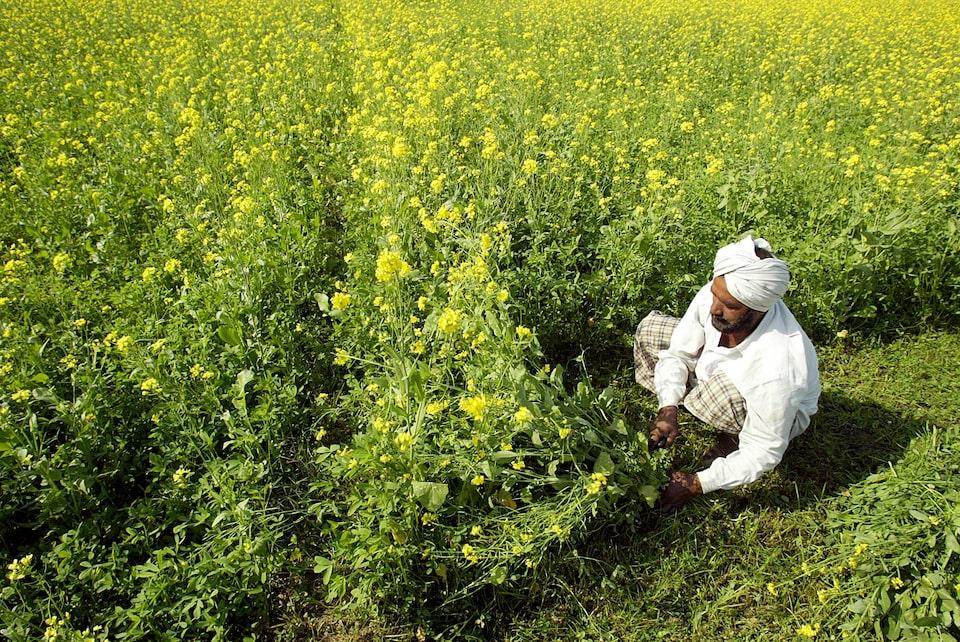
MUMBAI, Aug 21 (Reuters) - India bought canola oil for delivery in August for the first time in nearly five years, as local prices hit a 3-½-year high, making overseas purchases lucrative, industry officials told Reuters. A shipment of 6,000 tons of canola oil from the United Arab Emirates is expected to arrive at Kandla port in Gujarat this month, said Rajesh Patel, managing partner at GGN Research, an edible oil trader. Sign up here. India mainly buys palm oil from Indonesia and Malaysia, while it imports soyoil and sunflower oil from Argentina, Brazil, Russia and Ukraine. In July, rapeseed oil prices in the spot market surged to 167,000 rupees ($1,914.02) per ton — the highest since February 2022 and almost 34% above year-ago levels. "The price rally is creating an opening for imports, and we might see more coming in since the new local crop won't hit the market until March next year," said a Mumbai-based dealer with a global trade house. India's soyoil imports have also been rising, with some buyers substituting costlier rapeseed oil with the cheaper alternative, he said. ($1 = 87.2510 Indian rupees) https://www.reuters.com/world/india/india-imports-canola-oil-after-5-years-local-prices-surge-2025-08-21/
2025-08-21 12:42
STOCKHOLM, Aug 21 (Reuters) - Germany's Ecosia, a nonprofit search engine, said on Thursday it has submitted a proposal to assume a 10-year stewardship of Alphabet's (GOOGL.O) , opens new tab Google Chrome web browser. According to the proposal, Google would legally separate Chrome into a foundation, retaining ultimate ownership and intellectual property rights and give Ecosia operational responsibility for 10 years, Ecosia said. Sign up here. Ecosia plans to reinvest part of Chrome's profits in climate action under Ecosia’s governance, with the remainder returned to Google as compensation for the stewardship. Google did not immediately respond to a request for comment. Earlier in August, Perplexity AI made a $34.5 billion unsolicited all-cash offer for Chrome, a bid far above its own valuation as the startup reaches for the browser's billions of users pivotal to the AI search race. https://www.reuters.com/business/germanys-ecosia-proposes-stewardship-run-google-chrome-2025-08-21/

2025-08-21 12:40
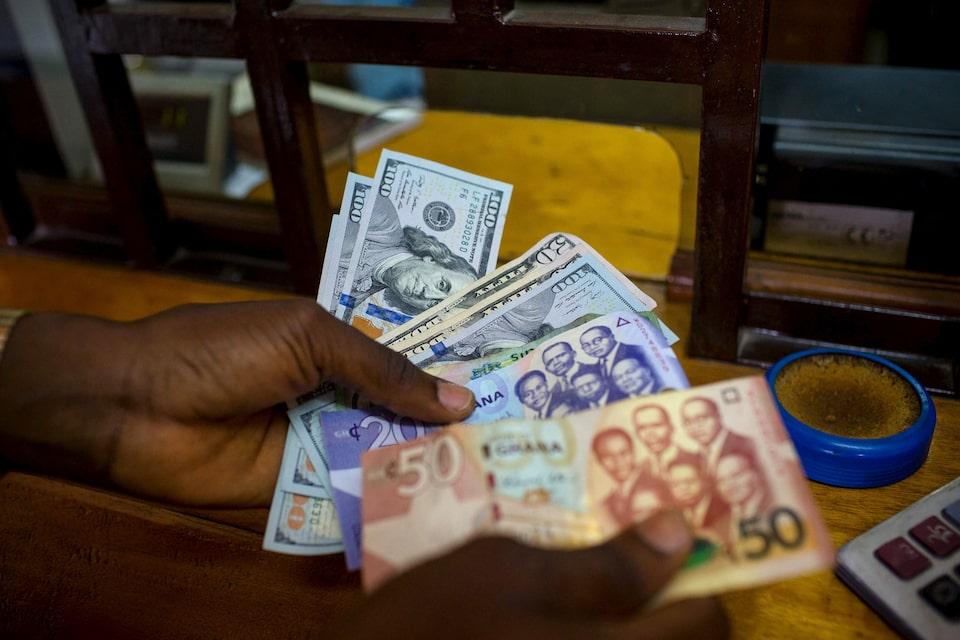
NAIROBI, Aug 21 (Reuters) - Ghana's cedi is expected to weaken against the dollar in the next week to Thursday, while the currencies of Kenya, Nigeria, Uganda and Zambia are expected to be broadly unchanged, traders said. KENYA Kenya's shilling is expected to be steady against the dollar over the next week. Sign up here. Commercial banks quoted the shilling at 129.00/40 per dollar, compared with last Thursday's close of 129.25/65. "For the next week, (it will be) stable, no change," said a trader at one commercial bank. NIGERIA Nigeria's naira is also expected to remain range-bound, with the central bank and exchange bureaus selling dollars to meet demand from importers and travellers. The naira was quoted around 1,533 to the dollar on the official market on Thursday, compared with last week's close of 1,534. It traded at about 1,540 on the street. "With inflation easing, speculative trading has been limited, causing the naira to trade in a tight range around 1,530," one trader said. "The naira is likely to stay in a narrow band between 1,520 and 1,560 next week." GHANA Ghana's cedi is expected to slip further on the back of strong corporate demand amid limited supply and a lack of continuous central bank liquidity support. LSEG data showed the cedi trading at 10.90 to the dollar on Thursday compared to 10.70 at last Thursday's close. "FX demand from local corporate accounts remains firm, particularly from the manufacturing, commerce and services sectors," one trader said. "We expect the cedi to slide further against the dollar in the coming week on account of this. Bids submitted at the intermittent central bank auctions are far outpacing the allocated amounts," the trader added. Chris Nettey, head of trading at Stanbic Bank Ghana, said he expected further weakness to persist until demand and supply reach equilibrium, something that could be supported by ongoing central bank reforms and an increase in intervention volumes. Meanwhile, the Bank of Ghana has instructed all banks to stop paying out foreign currency (FCY) to large corporates unless the transactions are fully backed by equivalent FCY cash deposits from the same institutions. It said FCY withdrawals by large corporates, including bulk oil distributors and mining firms, which are not directly funded by prior deposits, were putting pressure on the cedi and hampering efforts to ensure stability. UGANDA The Ugandan shilling is expected to trade in a stable range in the coming week, supported by subdued demand for dollars from merchandise importers following a traders' strike. Commercial banks quoted the shilling at 3,560/3,570 against the dollar at 1002 GMT on Thursday. This compares to last Thursday's close of 3,553/3,563. "We expect dollar appetite from merchandise importers to remain slow as activity slowly recovers from the strike," said an independent foreign exchange trader. Merchandise retailers in Uganda's capital, Kampala, and other areas staged a two-day strike this week, protesting against high taxes and what they describe as a "Chinese invasion" of their commercial activity. ZAMBIA Zambia's kwacha is likely to hold steady against the dollar next week, though rising demand for hard currency could exert mild downward pressure on the currency. On Thursday, the kwacha was quoted at 23.53 per dollar from 23.36 a week ago. "We expect the kwacha to trade within range, but could post some minor losses due to corporate greenback appetite," Zambia National Commercial Bank said in a note. https://www.reuters.com/world/africa/weekahead-africa-fx-ghanas-cedi-could-weaken-other-local-currencies-seen-stable-2025-08-21/
2025-08-21 12:35
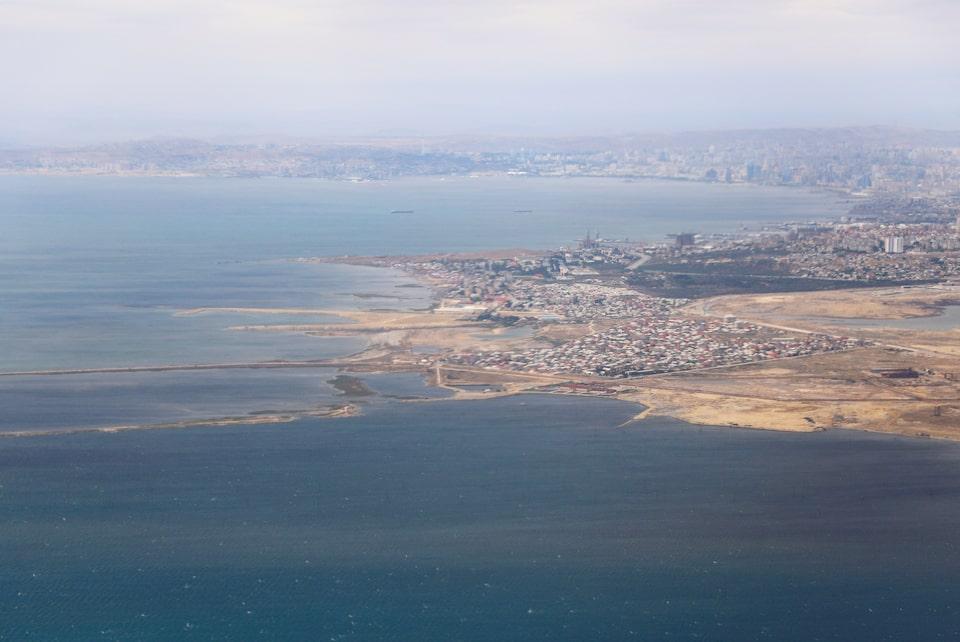
Minister says water loss is accelerating Oil volumes fall at Azerbaijan's Dubendi terminal Baku port steps up dredging to maintain tanker access Seals and sturgeon under threat BAKU, Aug 21 (Reuters) - Rapid falls in the level of the Caspian Sea are affecting ports and oil shipments and threatening to inflict catastrophic damage on sturgeon and seal populations, according to Azerbaijani officials. The Caspian, the world's largest salt lake, holds significant offshore oil reserves and is bordered by five countries that are all major producers of oil or gas or both: Azerbaijan, Iran, Kazakhstan, Russia and Turkmenistan. Sign up here. Azerbaijan's Deputy Ecology Minister Rauf Hajiyev told Reuters that the sea had been getting shallower for decades, but figures showed that the trend was accelerating. Its level has fallen by 0.93 metres (3 ft) in the past five years, by 1.5 metres in the last 10, and 2.5 metres in the past 30, he said in an interview, estimating the current rate of decline at 20-30 cm per year. "The retreat of the coastline changes natural conditions, disrupts economic activity and creates new challenges for sustainable development," said Hajiyev, who represents Azerbaijan in a joint working group with Russia that met for the first time in April to discuss the problem. Despite worsening relations between the two countries, according to the protocol signed between the two countries the working group plans to approve a joint programme online in September for monitoring and responding to the issue. Russia links the problem mainly to climate change but Azerbaijan also blames , opens new tab Russia's construction of dams on the Volga River which provides 80% of the water entering the Caspian. Hajiyev said the falling water level was already affecting the lives of coastal populations and the work of ports. About 4 million people live on the coast of Azerbaijan, and about 15 million in the Caspian region as a whole. He said ships are facing increased difficulties when entering and manoeuvring in the port of Baku, Azerbaijan's capital. This is reducing cargo capacity and raising logistics costs, he added. REDUCED OIL CARGOES Transportation of oil and oil products through the Dubendi oil terminal, the largest in the Azerbaijani waters of the Caspian Sea, fell to 810,000 tons in the first half of 2025 from 880,000 in the same period of last year, according to Eldar Salakhov, director of the Baku International Sea Port. He linked the decline to the falling water level, which he said was making it necessary to carry out major dredging work to ensure stable and uninterrupted port operations. In 2024, more than 250,000 cubic meters of dredging were carried out at the Dubendi oil terminal to ensure that the largest tankers could enter without restrictions, he told Reuters. In April, the Baku Shipyard finished building a new dredging vessel, the Engineer Soltan Kazimov, which is due to enter service shortly. Salakhov said it would be able to deepen the bottom to 18 metres in order to help maintain the port's capacity. THREAT TO FISH AND SEALS Hajiyev, the deputy minister, said the retreat of the waters was destroying wetlands, lagoons, and reed beds and threatening the survival of some marine species. The biggest blow is to sturgeon, prized for their caviar, which are already under threat of extinction. They are losing up to 45% of their summer and autumn habitats and being cut off from their traditional spawning grounds in rivers. Caspian seals are also threatened by the shrinking sea area and disappearance of seasonal ice fields in the north, where they breed, he added. "With a 5-metre drop in the sea level, seals lose up to 81% of their breeding sites, and with a 10-metre drop, they are almost completely deprived of suitable sites," Hajiyev said. https://www.reuters.com/sustainability/climate-energy/azerbaijan-sounds-alarm-over-shallowing-caspian-sea-2025-08-21/
2025-08-21 12:25
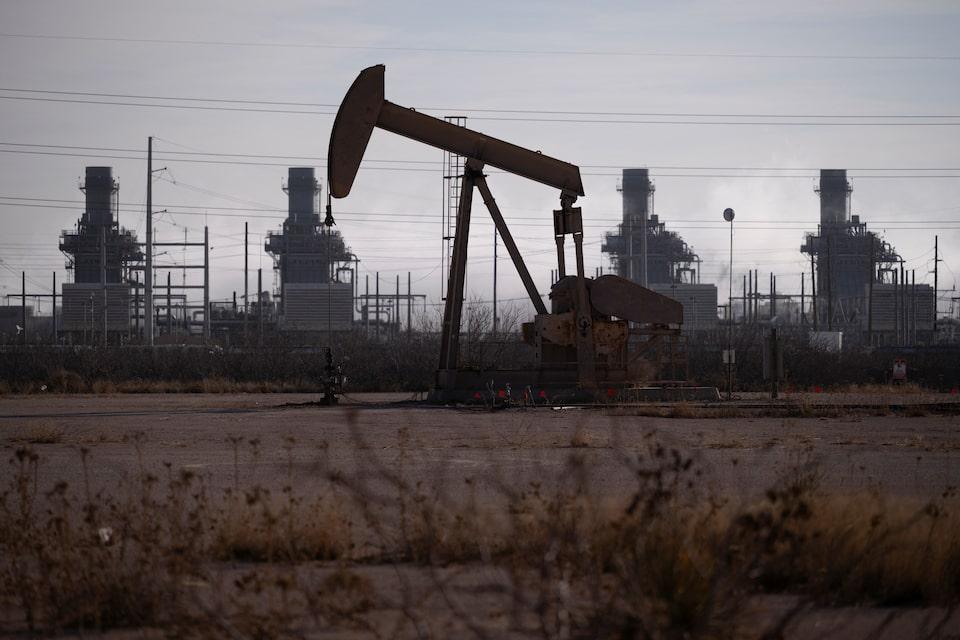
Brent, WTI rise for a second session US crude, gasoline stocks fall, lifting demand outlook Focus on talks for Ukraine peace deal LONDON, Aug 21 (Reuters) - Oil prices rose on Thursday, bolstered by signs of strong demand in the United States, with uncertainty over efforts to end the war in Ukraine also lending support. Brent crude futures were close to a two-week high and up 43 cents, or around 0.6%, at $67.27 a barrel at 1203 GMT. U.S. West Texas Intermediate (WTI) crude futures were up 45 cents, or 0.7%, at $63.16 a barrel. Sign up here. Both contracts climbed over 1% in the prior session. Russia said on Wednesday that attempts to resolve security issues relating to Ukraine over the war without Moscow's participation were a "road to nowhere". "If the White House's efforts do result in a halt to hostilities in Ukraine, and Russia gradually coming back into the international fold, it will be bearish for the crude market," said independent analyst Gaurav Sharma. "But for now the Brent price floor to watch out for remains at $65 a barrel." U.S. President Donald Trump has announced an additional tariff of 25% on Indian goods from August 27 because of India's Russian crude purchases, which make up nearly 35% of its overall oil imports. Russian embassy officials in New Delhi said on Wednesday that Moscow expects to continue supplying oil to India despite U.S. warnings. Given uncertainty over progress towards ending the war, the possibility of tighter sanctions on Russia has resurfaced, which has led to bullish sentiment among traders, said Tamas Varga, an analyst at PVM Oil Associates. Meanwhile, U.S. crude inventories fell by 6 million barrels last week to 420.7 million barrels, the U.S. Energy Information Administration said on Wednesday, against expectations in a Reuters poll for a 1.8 million-barrel draw. While the large draw indicates increased demand, the rise in crude levels at Cushing suggests underlying demand may be softer and that the draw was higher in part due to higher refinery runs and increased exports, Panmure Liberum's Ashley Kelty said. Investors were also waiting for policy cues that would signal an interest rate cut in September from the Federal Reserve's Jackson Hole symposium that begins on Thursday. Chair Jerome Powell is scheduled to speak on Friday at 10 a.m. ET (1400 GMT). https://www.reuters.com/business/energy/oil-rises-signs-strong-demand-russia-ukraine-peace-uncertainty-2025-08-21/
2025-08-21 12:20
H1 2025 net income the lowest interim profit since 2020 Oil and gas output up 2%, crude throughput fell 5.3% Sales of diesel, gasoline, jet fuel, chemical products all fell Expects higher H2 crude throughput and ethylene production Aug 21 (Reuters) - China's Sinopec (600028.SS) , opens new tab, reported a 39.8% drop in interim net profit due to lower oil prices, weaker fuel demand and as industry overcapacity weighs on margins at its chemicals business. Sinopec, the world's largest oil refiner by capacity, reported on Thursday a net income of 21.48 billion yuan ($2.99 billion) for January to June, the lowest interim profit since 2020. Sign up here. Its oil and gas output rose 2% year-on-year to 262.81 million barrels of oil equivalent, with gas up 5.1% to 736.3 billion cubic feet and crude oil output down 0.3% to 140 million barrels. Sales of diesel, gasoline and aviation fuel dropped 6.7%, 4.9% and 8.3% year-on-year, respectively, reflecting the rise of electric vehicles and also cheaper natural gas replacing diesel. "In the first half of 2025, global crude oil prices fluctuated lower, domestic gasoline and diesel demand was declining and chemicals margins remained thin," Sinopec said. Sinopec projects crude throughput for July-December at 130 million metric tons, or about 5.16 million barrels per day. That compared with the first-half's 119.97 million tons or 4.84 million bpd. Output of ethylene, a key building block for petrochemicals, rose 16.4% to 7.56 million tons in the first half, and the company sees production of 7.85 million tons in the second half. While forecasting demand growth in natural gas and chemical products in the second half, Sinopec expects Chinese refined fuel demand to remain under pressure from "alternative energy sources". Sinopec's Hong Kong-listed shares closed up 1.8% at HK$4.49. They have risen 0.9% year-to-date, while the benchmark Hang Seng Index has climbed 25.15% over the same period. ($1 = 7.1781 Chinese yuan renminbi) (metric ton = 7.3 barrels for crude oil conversion) https://www.reuters.com/sustainability/climate-energy/sinopec-interim-profit-lowest-five-years-weaker-fuel-demand-2025-08-21/