2025-08-20 07:01
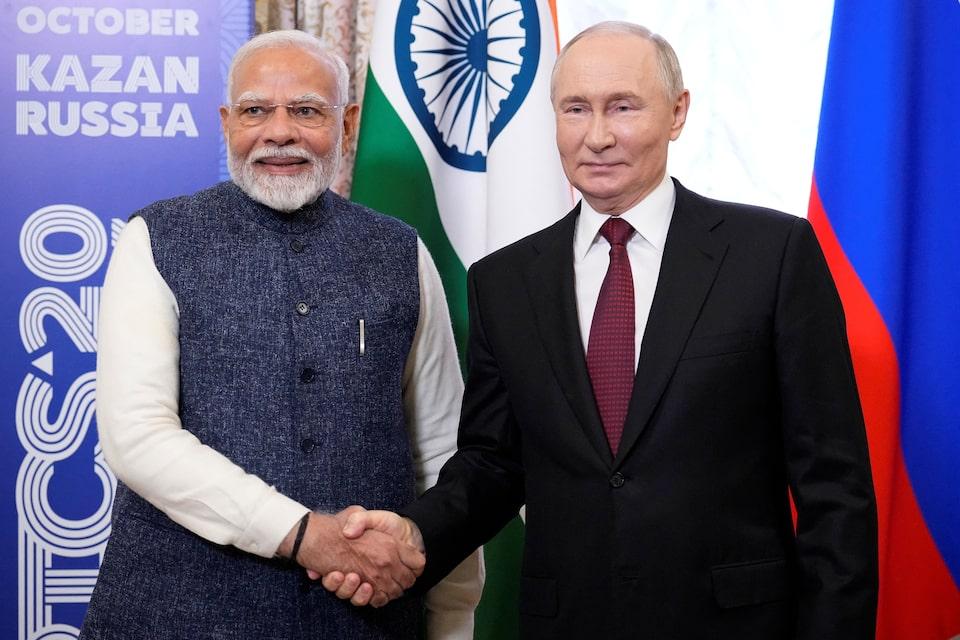
NEW DELHI, Aug 20 (Reuters) - Russia will continue supplying oil to India and the country's President Vladimir Putin will meet India's Prime Minister Narendra Modi in New Delhi by the end of year, a Russian embassy official in India said on Wednesday. Russia has a "very, very special mechanism" to continue oil supplies to India, Roman Babushkin, the charge d'affaires at the Russian embassy in India, told reporters at a press briefing, adding that India's crude oil imports from Russia will remain at the same level. Sign up here. No dates had been finalised for the Putin-Modi meeting yet, he said. The U.S. is set to impose an additional 25% tariff on Indian exports on August 28, citing their imports of Russian oil, which expanded after Western nations sanction Russian supply after its invasion of Ukraine. However, the U.S. has stopped short of imposing similar tariffs on China over its purchases of Russian oil. Last month, the European Union sanctioned Russian-backed Indian refinery Nayara Energy, leading the refiner to cut back processing and companies to curtail their trading with them. Trade between Indian and Russia was expected to grow 10% annually, Evgeniy Griva, Deputy Trade Representative of Russia to India said at the briefing. https://www.reuters.com/world/india/russia-has-special-mechanisms-supply-oil-india-embassy-official-says-2025-08-20/
2025-08-20 06:57
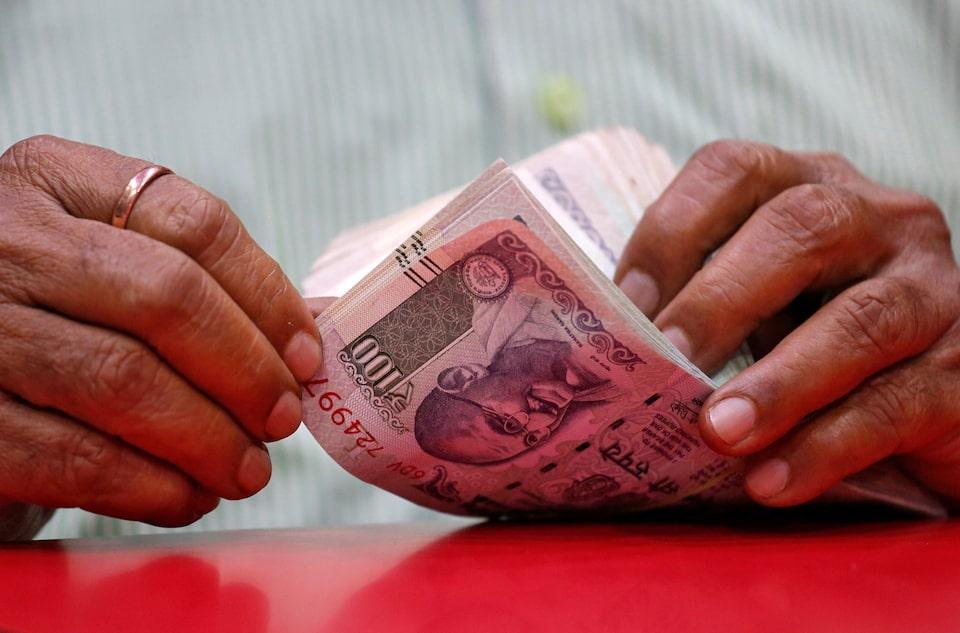
MUMBAI, Aug 20 (Reuters) - The Indian rupee was largely flat on Wednesday, holding near 87 per dollar, amid dollar sales by foreign banks, which offset broader demand for the U.S. currency from corporates and short-term speculators. The rupee was at 87.0575 to the U.S. dollar at 10:52 a.m. IST, after trading between 87.1650 and 87.0050 through the session. Sign up here. Traders said foreign banks were active on offers for USD/INR, preventing the pair from pushing higher despite weaker Asian peers and hedging by importers. "There’s no shortage of dollar buyers. However, foreign banks have been hitting offers again, which is most likely driven by client flows," a currency trader said. "That’s kept it (USD/INR) from moving up, like I had expected." Fading risks of an upside breakout in USD/INR, a rally in local equities and position squaring have helped the Indian currency recover after recent pressure. In recent weeks, the rupee’s direction has been dictated largely by domestic factors. News around U.S. tariffs on India has been a key driver, and more recently by S&P's upgrade of India's credit rating outlook and Prime Minister Narendra Modi's planned tax cuts on goods and services. On tariff-related news, U.S. Treasury Secretary Scott Bessent on Tuesday accused India of profiteering from its purchases of Russian oil during the war in Ukraine. His comments come at a time when U.S.-India relations are strained, with President Donald Trump imposing additional tariffs on New Delhi over Russian oil purchases. The tariffs are set to take effect next Wednesday. Meanwhile, other Asian currencies weakened on the day, while the dollar index inched higher. The key event this week is Federal Reserve Chair Jerome Powell’s speech at Jackson Hole, Wyoming, on Friday. https://www.reuters.com/world/india/foreign-banks-lean-against-broad-dollar-demand-pin-rupee-near-87dollar-2025-08-20/
2025-08-20 06:56
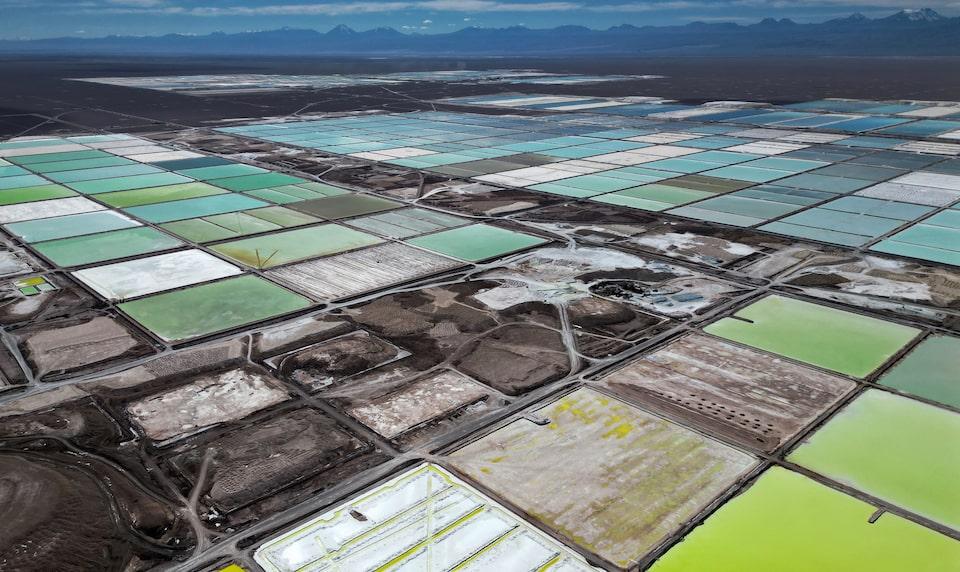
Aug 20 (Reuters) - Chile's SQM (SQMA.SN) , opens new tab, the world's second-largest lithium producer, reported a 59% decline in quarterly profit on Wednesday due to lower lithium prices. The company posted a second-quarter net profit of $88.4 million, missing analysts' estimates of $143.01 million, according to data compiled by LSEG. Sign up here. Its revenue of $1.04 billion in the quarter was broadly in line with the analysts' estimates of $1.064 billion. Lithium prices were down about 34% year-on-year, the company said. Global prices for lithium, a critical component of electric vehicle batteries, have plunged nearly 90% since their peak in late 2022, causing producers worldwide to slash workforces and pull back on plans. In June, SQM began laying off 5% of its Chilean workforce as it contended with a protracted slump in global prices for the battery metal. “As anticipated, during the second quarter, we navigated a period of lower lithium market prices than those observed in previous quarters. In this context, some of the contracts we had in place, hit the lower limits set in those contracts, affecting the volumes agreed," SQM Chief Executive Officer Ricardo Ramos said. Last month, Moody's lowered the miner's outlook to "negative" from "stable" due to uncertainty around lithium revenue, but affirmed the credit rating. SQM, one of two companies producing lithium in Chile, also makes fertilizers and industrial chemicals. It is due to this year finalize a partnership with state-run copper producer Codelco to produce lithium in the Atacama salt flat. https://www.reuters.com/world/americas/chiles-sqm-quarterly-net-profit-falls-by-about-59-lower-lithium-prices-2025-08-20/
2025-08-20 06:52
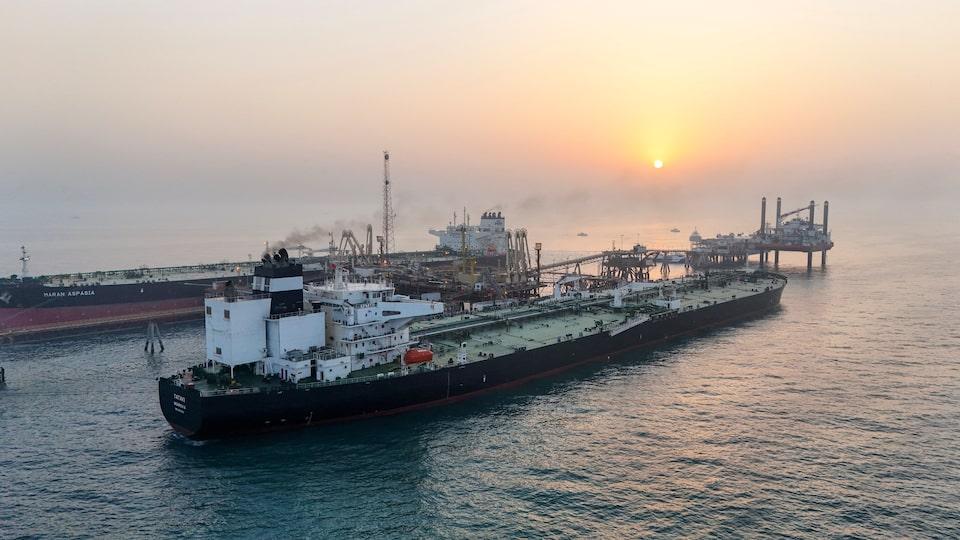
SINGAPORE, Aug 20 (Reuters) - Oil prices edged up on Wednesday as investors awaited the next steps in talks to end the war in Ukraine, with sanctions on Russian crude remaining in place for now and the potential for further restrictions on buyers of its exports still looming. Brent crude futures rose 50 cents to $66.29 a barrel by 0630 GMT. U.S. West Texas Intermediate crude futures for September delivery, set to expire on Wednesday, were at $62.80 a barrel, up 45 cents. The more active October contract was at $62.30 a barrel, up 53 cents. Sign up here. Prices settled down more than 1% on Tuesday on optimism that a deal to end the war seemed closer, which would likely lead to an easing of sanctions on Russia and an increase in global supply. However, despite comments from U.S. President Donald Trump on Tuesday that the U.S. might provide air support as part of security guarantees for Ukraine, he also conceded that Russian President Vladimir Putin might not want to make a deal. "Crude markets are in limbo ... continued protracted peace talks will keep the market on its toes," said Emril Jamil, a senior analyst at LSEG. Trump said on Monday he was arranging a meeting between Putin and Ukrainian President Volodymyr Zelenskiy to be followed by a trilateral summit among the three presidents. Russia has not confirmed it will take part in talks with Zelenskiy. "The likelihood of a quick resolution to the conflict with Russia now seems unlikely," said Daniel Hynes, senior commodity strategist at ANZ, in a note on Wednesday. In the U.S., BP (BP.L) , opens new tab said on Tuesday operations at its 440,000-barrel-per-day refinery in Whiting, Indiana, were affected by flooding caused by a severe thunderstorm overnight, potentially weighing on the facility's crude demand. The site is a key fuel producer for the Midwest market. Prices also found some support as an industry inventory report indicated steady crude and fuel demand in the United States, the world's biggest oil consumer. U.S. crude oil inventories fell by 2.42 million barrels in the week ended August 15, market sources said on Tuesday, citing American Petroleum Institute figures. Gasoline inventories fell by 956,000 barrels, while distillate inventories rose by 535,000 barrels from last week, the sources said. https://www.reuters.com/business/energy/oil-firms-while-investors-await-next-steps-ukraine-peace-talks-2025-08-20/
2025-08-20 06:42
South Korea's petrochemical sector to cut capacity to boost efficiency Government to ease regulations, offer financial support for restructuring Global petrochemical margins unlikely to recover before 2027, analysts say SEOUL, Aug 20 (Reuters) - Ten South Korean petrochemical companies have agreed to restructure their operations, including large cuts to their naphtha-cracking capacity, government officials said on Wednesday. South Korea's government has been putting pressure on a petrochemical sector it says is in "crisis" to speed up restructuring to boost efficiency and raise flagging margins. Sign up here. Executives from the companies signed an industry-wide agreement for restructuring at a meeting attended by the Minister of Trade, Industry and Energy Kim Jung-kwan. The companies have agreed to reduce their annual naphtha-cracking capacity by between 2.7 million and 3.7 million metric tons, the country's industry ministry said. That would mean shutting down as much as 25% of the country's annual capacity, according to Reuters calculations based on total capacity of 14.7 million tons. The companies will need to submit an outline on how the cuts will be done by the end of the year, the statement said. "The key for overcoming this crisis is clear - reducing capacity and restoring fundamental competitiveness," Koo said. The petrochemical industry made a mistake by allowing overcapacity and failing to shift to making higher-value products, he said. The government will ease regulations and offer financial and taxation support for companies that sincerely make efforts to rescue themselves, he said. Authorities would not tolerate any "free riders" expecting government aid without trying to restructure, Koo said. South Korea is one of the world's largest importers of naphtha, an oil product that is broken down into chemicals used in plastics for automobiles, electronics, clothing and construction. If the country is forced to cut capacity, it could impact global oil markets. RESTRUCTURING GOALS Hwang Kyu-won, an analyst at Yuanta Securities Korea, said the fact that the government was leading the plan and was linking financial support to restructuring meant companies would not be able to avoid pressure to take action. "The targets should be debt-ridden companies or those running very old facilities. The government may pressure them to merge with each other," said Hwang. South Korea's leading petrochemical companies include LG Chem (051910.KS) , opens new tab, which is the top producer of ethylene and propylene, as well as GS Caltex, Lotte Chemical (011170.KS) , opens new tab, Hanwha TotalEnergies, S-Oil (010950.KS) , opens new tab and HD Hyundai Chemical (267250.KS) , opens new tab. There have been particular concerns over the financial health of South Korea's Yeochun NCC Co (YNCC), a loss-making petrochemical maker that media say faces 180 billion won ($130 million) in loans coming due in August. YNCC, a joint venture between DL Chemical and Hanwha Solutions (009830.KS) , opens new tab, has not responded to requests for comment. DL Chemical and Hanwha Solutions were not immediately available for comment. Chua Sok Peng, LSEG lead analyst for LPG and petrochemicals, also echoed that restructuring should "not be that tough, since everyone knows they need to do it in order to survive the overcapacity crisis." The last major restructuring for South Korea's petrochemical industry was in 1999 during the Asian Financial Crisis, when YNCC was formed. The Korean government has set three goals for the restructuring, reducing overcapacity and facilities, improving finances at companies and minimising the impact on local economies and jobs, the industry ministry said in a statement on Wednesday. The government will seek to restructure three industrial complexes in the country simultaneously and offer a package of comprehensive support for the industry, it said. Communities in areas potentially affected by the restructuring could also be eligible for subsidies or loans. Margins have plunged for petrochemical companies in South Korea and across the globe due to an oversupply of products caused by relentless capacity additions in the last decade, particularly in China, the world's biggest petrochemical market. Demand has also been sluggish over the last four years. Analysts do not expect global petrochemical margins to recover before 2027. South Korea’s exports of petrochemical products stood at $21.7 billion in the first half of this year, down 11.1% from a year earlier, amid price declines and global oversupply. Total exports of petrochemical products were $48 billion in 2024, accounting for 7% of South Korea's total exports and a top-five export item after semiconductors, automobiles, machinery and petroleum products. https://www.reuters.com/business/energy/south-korean-petrochemical-companies-cut-capacity-restructure-government-says-2025-08-20/
2025-08-20 06:36
UK consumer price inflation 3.8% in 12 months to July Bank of England had expected 3.8%, Reuters poll 3.7% Service sector inflation speeds up to 5% UK has highest inflation among G7 economies BoE has suggested it might slow interest rate cuts LONDON, Aug 20 (Reuters) - British inflation hit its highest in 18 months in July when it increased to 3.8% from 3.6%, official data showed on Wednesday, once again leaving the country with the fastest rate of price increases among the world's largest rich economies. Inflation in Britain's services sector - which is watched closely by the Bank of England - accelerated to 5.0% from 4.7% a month earlier. Sign up here. The BoE expected headline inflation to rise to 3.8% in July but had forecast a smaller 4.9% rise in services prices. Economists polled by Reuters had mostly expected increases of 3.7% and 4.8% respectively. The BoE cut interest rates this month but only after a narrow 5-4 vote by policymakers and it suggested it would slow the already gradual pace of lowering borrowing costs due to inflation's persistence. Sterling rose slightly after the data was published and investors expected a longer wait before the next BoE rate cut. A quarter-point cut is not fully priced in until March 2026. Earlier this month, the next rate cut was viewed as highly likely before the end of 2025. "The economy is experiencing a bout of high inflation and weak growth that will likely remain until next spring," said Deloitte Chief Economist Ian Stewart. He said it was unclear whether the BoE would cut rates again in 2025. The BoE thinks British inflation will hit 4% in September, double its target, and stay above 2% until mid-2027. Inflation the United States held at 2.7% in July and in the euro zone it is expected to remain around the European Central Bank's 2% target over the coming years. Some of the difference reflects how energy and other utility prices are regulated in Britain. Big increases in utility bills in April have boosted year-on-year inflation comparisons. Britain's relatively tight labour market, which economists say has become more rigid since Brexit, is also putting upward pressure on prices. Wage growth in Britain has slowed but at about 5% it is too high for the BoE to feel comfortable about inflation returning rapidly to 2%. Furthermore, employers say that a tax increase imposed on them in April by finance minister Rachel Reeves and a big jump in the minimum wage are forcing them to put up prices. HIGHER AIRFARES Wednesday's data showed the biggest contributor to July's rise in inflation came from transport costs, particularly air fares - a component that BoE policymakers sometimes disregard because of its volatility. Electricity prices, petrol, soft drinks and hotel rooms also pushed up the annual rate of inflation between June and July. The ONS said it saw no evidence that a tour by rock band Oasis pushed up hotel costs. Previous tours by performers such as Taylor Swift nudged up inflation, some economists have said. Food and non-alcoholic drink prices - big influences on how the public thinks about inflation - were 4.9% higher than a year earlier, the biggest rise since February 2024. The BoE forecasts food inflation will peak at 5.5% at the end of the year. ONS data last week painted a picture of an economy with enough momentum to keep inflation high. Output grew by more than expected in the second quarter and the labour market, while still losing jobs, showed signs of stabilisation. Data published earlier on Wednesday showed basic pay settlements by British private-sector employers held at 3% in the three months to July for the eighth monthly report in a row by data firm Brightmine. The ONS, which has received criticism for problems with its data, said it had identified a "minor error" in the imputation of missing data for seasonal items but it had no impact on headline CPI. https://www.reuters.com/sustainability/sustainable-finance-reporting/uk-inflation-rises-highest-since-early-2024-38-2025-08-20/