2025-08-19 21:38
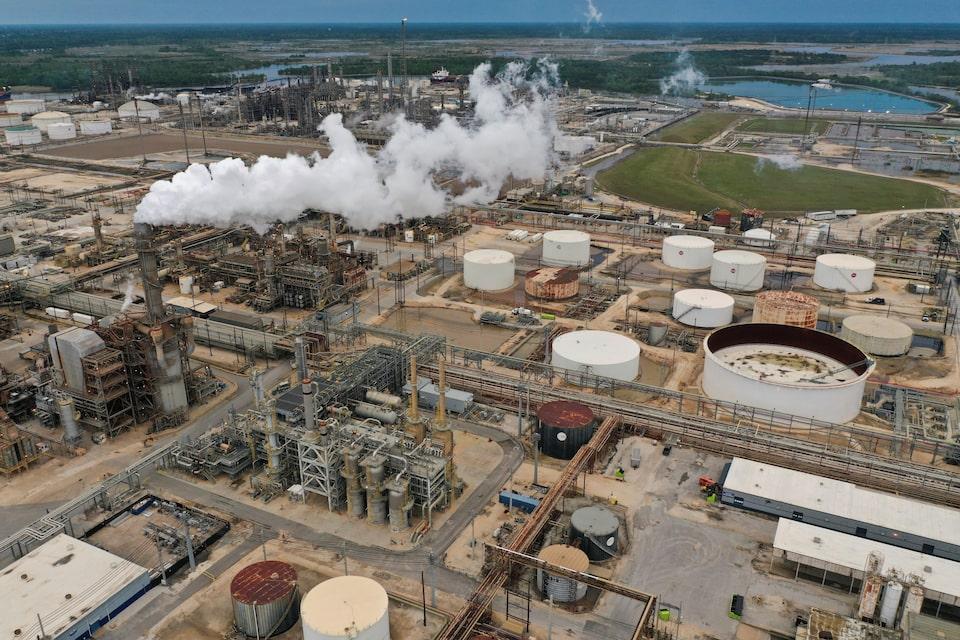
Leading energy companies spent $206.6 billion on M&A in 2024 ExxonMobil led the way with $84.5 billion in acquisitions Focus shift from shareholder returns to growth NEW YORK, Aug 19 (Reuters) - Mergers and acquisitions in the U.S. oil and gas sector more than quadrupled last year despite softer commodity prices as energy companies boosted spending to improve efficiency and profits, according to an Ernst & Young study published on Tuesday. WHY IT'S IMPORTANT The jump in dealmaking marks a shift in strategy after years of focusing on shareholder returns over growth as commodity prices retreated from their 2022 high. Sign up here. CONTEXT The sector-wide consolidation has been led by a handful of megadeals by large players, including Exxon Mobil (XOM.N) , opens new tab, Diamondback Energy (FANG.O) , opens new tab and ConocoPhillips (COP.N) , opens new tab. KEY QUOTE Companies flush with cash were focused on driving efficiency through scale, said Bruce On, partner at EY's strategy and energy transactions group. “It’s a relook at process, tools, workforce and everything around your operations,” On said. BY THE NUMBERS Leading energy companies spent $206.6 billion on mergers and acquisitions in 2024, up from $47.9 billion the previous year, according to the Ernst & Young study. Oil and gas companies cut spending on dividends and share repurchase payments by about 25% last year to $29.2 billion. Money spent on tapping oil and gas also fell slightly, with exploration and development expenditure down 7% year on year at $85.5 billion. Profits fell 10% last year to $74.8 billion, less than half the record level recorded in 2022, primarily owing to soft commodity prices, the report said. Exxon Mobil (XOM.N) , opens new tab was the biggest buyer in 2024 with total property acquisition costs of $84.5 billion. The company announced the acquisition of U.S. shale oil producer Pioneer Natural Resources in October 2023 and completed the $60 billion purchase last May. (This story has been corrected to fix the dateline to Aug. 19, and to say M&A activity quadrupled, not tripled, in the headline and paragraph 1) https://www.reuters.com/legal/litigation/us-oil-gas-ma-activity-quadrupled-last-year-report-says-2025-08-19/
2025-08-19 21:23
Move comes after competition watchdog's crackdown Congressional committee had requested CADE probe Farmer group says growers no longer need to dodge moratorium SAO PAULO, Aug 19 (Reuters) - A website containing information about Brazil's "soy moratorium," a private agreement enforced by global grain traders to protect the Amazon rainforest from soy-driven deforestation, was taken offline on Tuesday after Brazil's antitrust authority ordered suspension of the pact. The move is a response to a set of measures enforced by the agency on Monday that include starting a full-blown probe into some 30 traders and industry groups for alleged anti-competitive practices. Sign up here. The soy moratorium, long hailed as one of the most successful initiatives to protect the Amazon rainforest, bars soybean traders from buying from farmers who cleared land there after July 2008. But the General Superintendent regulator CADE ruled that it represents a potential breach of Brazilian competition law. Superintendent Alexandre Barreto de Souza ordered firms to suspend the pact or pay fines at the end of a preliminary investigation, which was prompted by a request in August 2024 from the agriculture committee of Brazil's lower house of Congress. A majority of lawmakers in the committee is backed by farmers, who called the moratorium's suspension a historic victory. Soy growers, however, are not expected to clear big areas of forest as that crop has been advancing over pastureland, according to Mauricio Buffon, president of farm lobby Aprosoja Brasil. Rather, the initiative's suspension changes market dynamics, he added. To circumvent the moratorium, he said, farmers would go through an intermediary, accepting less money for their soy. The difference now is that farmers would no longer need a middleman, Buffon noted. Most of Brazil's soy is sold to China, but European nations such as Spain, Italy and Britain buy it, too. TRADERS IN A BIND Pressure to end the moratorium escalated on several fronts in recent months. The Supreme Court is now hearing three cases about whether soy-growing states may refuse tax incentives to signatories of the agreement. Next Friday, a panel of justices will rule on whether to uphold a recent injunction that confirmed one of the states, Mato Grosso, can refrain from giving such incentives starting in 2026. On the competition front, people familiar with the thinking of trade groups Anec and Abiove told Reuters they would appeal the suspension of the pact at CADE's tribunal, which is composed of six commissioners, including its president. They have five days to appeal and the tribunal has 48 hours to assign a reporting commissioner to the case, CADE said. CADE may take years to conclude the investigation and issue a final opinion on the moratorium's legality. If soy exporters are found guilty of breaching competition law, their trade groups face fines of up to 2 billion reais ($365.60 million). For traders themselves, fines can reach up to 20% of the company's gross revenue in the last fiscal year before the investigation started. ($1 = 5.4704 reais) https://www.reuters.com/sustainability/boards-policy-regulation/brazils-soy-moratorium-site-offline-after-antitrust-ruling-setback-2025-08-19/

2025-08-19 21:22
FDA allowed to issue emergency authorizations to fight screwworm Flesh-eating pest can infest any warm-blooded animal Screwworm has spread north in Mexico toward US border CHICAGO, Aug 19 (Reuters) - U.S. health officials gave the Food and Drug Administration the power to quickly authorize veterinarians and farmers to treat or prevent infestations of a flesh-eating livestock pest with animal drugs that may be approved for other purposes or available in other countries, the Department of Health and Human Services said on Tuesday. No cases of the New World screwworm have been confirmed in the U.S. for decades. However, the Trump administration and livestock ranchers anticipate infestations that could reduce the nation's cattle herd and lift beef prices, already at record highs. Sign up here. Screwworm, a parasitic fly that eats livestock and wildlife alive, can infest any warm-blooded animal. Last month, the pest was found in Mexico about 370 miles from the U.S. border, prompting the U.S. Department of Agriculture to indefinitely halt imports of Mexican cattle. The best method to fight screwworm is by breeding sterile flies that reduce the mating population of wild flies. However, experts say many more sterile flies would be needed beyond the current production capacity to slow screwworm's spread in Latin America. It can take a year or more to build facilities to increase sterile fly output. Cattle ranchers may need quick access to screwworm drugs in the meantime, and there are no FDA-approved drugs for screwworm in the U.S. The Department of Health and Human Services said it allowed the FDA to issue Emergency Use Authorizations that permit the use of animal drugs not formally approved to treat or prevent screwworm. The FDA did not immediately respond to a question about whether drugmakers have already sought emergency authorizations. "The risk to human health in the United States remains very low, but the potential future threat to animal populations and the food supply chain requires proactive action," the FDA said. When HHS declares that an emergency use authorization is appropriate, the FDA can allow unapproved medical products or unapproved uses of medical products to tackle serious or life-threatening diseases, if no alternatives are available. In 2020, HHS allowed the emergency use of drugs during the COVID-19 pandemic. If screwworm is found in U.S. animals soon, an important part of the response would involve using drugs in ways that are not in line with their label directions, Tristan Colonius, chief veterinary officer for the FDA's Center for Veterinary Medicine, said during a webinar last week. This could allow veterinarians and ranchers to access products more quickly, rather than waiting for a longer FDA review process. Colonius said the FDA was assessing literature reviews of products that were approved for other uses to determine what may be effective against screwworm. The agency also wants products with specific approvals for screwworm, he added. The FDA has been looking at foreign markets where screwworm has been endemic to see whether drug companies will bring products to the U.S., Colonius said. In May, cattle producers' group R-CALF USA asked the FDA to allow ranchers to feed ivermectin , opens new tab to livestock, as a precaution against the potential return of screwworm. The USDA has successfully used the anti-parasite drug to control the northern movement of cattle fever ticks, another pest that can be fatal to livestock, according to R-CALF. The USDA said on Friday it would spend up to $750 million to build a facility in Texas that produces sterile flies. Agriculture Secretary Brooke Rollins did not say when the plant would open but previously said such a facility would take two to three years to build. https://www.reuters.com/business/environment/us-allows-emergency-authorizations-animal-drugs-fight-screwworms-2025-08-19/

2025-08-19 21:02
ORLANDO, Florida, Aug 19 (Reuters) - TRADING DAY Making sense of the forces driving global markets Sign up here. By Jamie McGeever, Markets Columnist Wall Street slumped on Tuesday, dragged down by weakness in some of the big tech companies that have led the charge to new highs this year, as investors hunker down ahead of a keynote speech by Fed Chair Jerome Powell later this week. More on that below. In my column today I look at the cagey dance between Donald Trump and Wall Street - the market knows it has the power to rein in some of the president's policy excesses, but isn't wielding it. Not yet, anyway. If you have more time to read, here are a few articles I recommend to help you make sense of what happened in markets today. Today's Key Market Moves Today's Talking Points: * Peace in our time? Investors digested the extraordinary summit between U.S. President Donald Trump, Ukraine President Volodymyr Zelenskiy, and a phalanx of European leaders in the White House on Monday. Did it move the dial much on the prospects of a Russia-Ukraine ceasefire, or a deal to end the war? Optimism around Trump's promise of security guarantees for Ukraine in the future buoyed European markets on Tuesday. But that evaporated as the U.S. session rolled on, as Trump told Fox News he thinks Russian President Vladimir Putin may not want to make a deal after all. There may be no immediate direct impact on major equity, bond, or currency markets from the conflict. But prolonged war on Europe's doorstep, fractured ties between the US and Europe, and a fickle relationship between Trump and Putin can't be good in the long term. * Retail therapy. Some of America's biggest retailers report second-quarter earnings this week, shining a light on the health of the U.S. consumer and, by extension, the economy at large. Home Depot reported on Tuesday; Lowe's, Target, and TJX release results on Wednesday; and Walmart is out on Thursday. There are conflicting signals coming from the U.S. consumer. By some measures, household consumption flat-lined in the first half of the year, but other indicators show consumer spending is the biggest contributor to GDP growth. The rich are spending, but the bottom 50% are struggling. The S&P 500's consumer discretionary sector is flat this year, and the consumer staples index is up 6%. Both are lagging the broader index, which is up 8%, and the IT and communications sectors, which are both up around 13%. * Interest rate decisions. The central banks of New Zealand, Indonesia, and China announce their latest policy decisions on Wednesday. Two of the three are expected to stand pat, and one is expected to cut borrowing costs. The People's Bank of China is expected to keep benchmark one- and five-year lending rates unchanged for the third straight month at 3.5% and 5.5%, respectively. Although the economy needs more support, the central bank may want to explore structural policies aimed at specific sectors rather than broad-based monetary easing. For now. This has helped propel a recovery in the yuan, which was plumbing 17-year lows at the depths of the "Liberation Day" tariff turmoil in April. Since then, the PBOC has only lowered borrowing costs once, by 10 basis points, and has fixed the yuan higher in 16 of the last 19 weeks. Markets, Trump in delicate policy dance U.S. President Donald Trump has faced little opposition in his drive to rip up the global economic rulebook, whether from his fellow Republicans, political opponents, or institutional guardrails. The only exception has been "the market." But now even investors are holding their fire, enabling more risk to build up in the financial system. Wall Street's reaction to Trump's "Liberation Day" tariffs on April 2 was so ferocious that the president did something he had rarely done: he backed down. Trillions of dollars were wiped off the value of U.S. stocks amid a 10% nosedive from April 3-4. The only two-day selloffs since the 1930s that were bigger occurred during the Second World War, "Black Monday" in 1987, the Global Financial Crisis in 2008, and the pandemic in 2020. The stock market bottomed out on April 7 after Trump paused most of his country-specific tariffs. Wall Street has not looked back since, with the S&P 500 rebounding 35% to an all-time high. This episode suggests that "the market" is one of the few true checks on Trump's apparent pursuit to reshape the U.S. – and indeed the world – economy. The only problem is that the president has continued to pursue unorthodox policies in recent months - including challenging the independence of the Federal Reserve, firing statisticians, and slapping tariffs on countries for non-economic reasons – and investors have failed to tap the brakes. FED PUT The so-called "Trump put" -- the idea that the president won't let the markets fall too far -- is essentially a funhouse mirror version of the famous "Fed put," the long-held belief that, in the event of a crisis, the central bank will step in to restore stability. Trump seemingly did just that in April, but it was to clean up a mess of his own making. And one could argue that it was actually investors who came to the economy's rescue by putting pressure on the president to reconsider policies considered ill-advised by most economists. Trump and markets are therefore now in a curious dance. Investors appear to believe that markets can ultimately stop Trump from pushing the envelope too far on tariffs or other policies. But as a result, investors are not overreacting – or reacting at all – to the latest controversies around the Bureau of Labor Statistics firing, his attacks on Fed Chair Jerome Powell, his pressure on Intel's CEO to resign, or the outsized tariffs slapped on Brazil and India. This, in turn, has powered the markets to new record highs, emboldening Trump to push the envelope even further. RISK ON So even though the market has the power to rein in the president's economic policy excesses, it's not using it. Why hasn't the market pushed back? As the cliche goes, equity investors are paid to be optimistic. It's in their interest to keep the train hurtling along, provided there aren't any immediate obstacles to derail it. There are, of course, a few pretty large hurdles on the horizon for the U.S. economy, including the highest tariffs since the 1930s and some of the biggest budget deficits since World War II outside of crisis periods. But until these or other issues present an immediate economic threat, markets can choose to ignore them. By under-reacting to Trump's unorthodox policies, markets may not only delay the day of reckoning but also amplify the potential impact. Why? Genuine economic and geopolitical paradigm shifts are under way, and investors are not pricing in the attendant risk. Nobody knows what the ultimate impact of these shifts will be, but we do know that with greater uncertainty comes greater downside risk. Yet equity volatility is the lowest it has been this year, and even in the bond market – not known for its optimism – volatility is the lowest in three and a half years, while U.S. corporate bond spreads are the tightest since 1998. Ultimately, the market is unlikely to call Trump's bluff until something truly unexpected or extreme hits. In the meantime, investors can justify this nonchalance by saying that corporate earnings growth is solid, AI enthusiasm is high, economic growth remains decent, unemployment is low, and consumers are still spending. Wall Street is choosing not to put on the brakes, meaning this train will continue rolling on. Whether it's heading for a collision is an open question. What could move markets tomorrow? Want to receive Trading Day in your inbox every weekday morning? Sign up for my newsletter here. Opinions expressed are those of the author. They do not reflect the views of Reuters News, which, under the Trust Principles , opens new tab, is committed to integrity, independence, and freedom from bias. https://www.reuters.com/business/global-markets-trading-day-graphic-2025-08-19/
2025-08-19 20:51
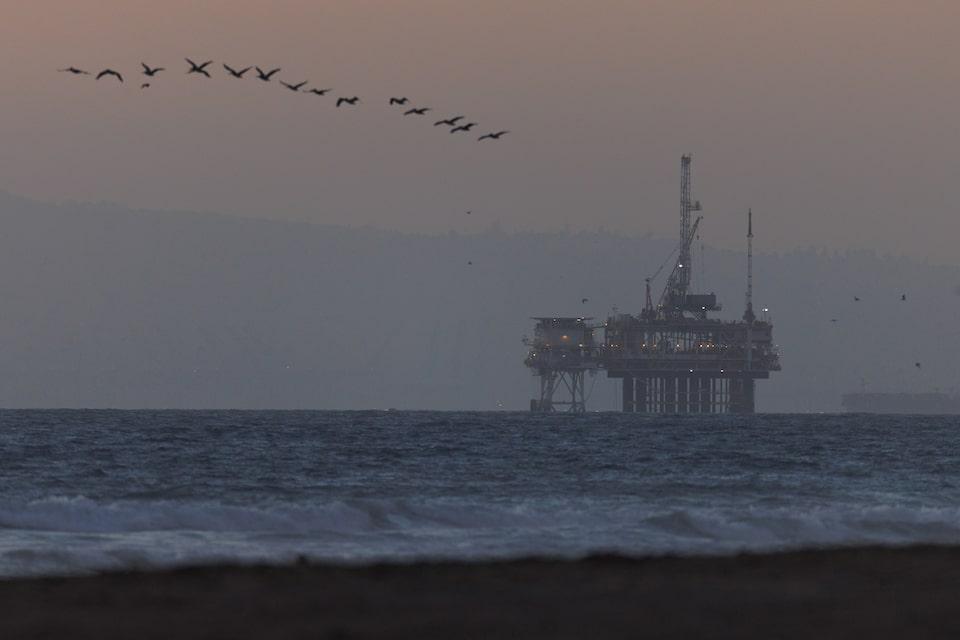
Aug 19 (Reuters) - U.S. President Donald Trump's administration on Tuesday unveiled a comprehensive schedule to hold more than 30 offshore oil and gas lease sales in the Gulf of Mexico and Alaska's Cook Inlet over the next 15 years. WHY IT'S IMPORTANT The plan fulfills a directive in Trump's One Big Beautiful Bill Act, which passed last month, and is aligned with his administration's energy dominance agenda to boost domestic fossil fuel production. Sign up here. The schedule marks a significant departure from former President Joe Biden, whose administration had planned for a historically small number of drilling rights auctions as part of its efforts to address climate change. KEY QUOTE "The One Big Beautiful Bill Act is a landmark step toward unleashing America’s energy potential," Interior Secretary Doug Burgum said in a statement. "Under President Trump's leadership, we're putting in place a bold, long-term program that strengthens American Energy Dominance, creates good-paying jobs and ensures we continue to responsibly develop our offshore resources." BY THE NUMBERS The schedule includes 30 lease sales through 2040 in the Gulf of Mexico, which Trump has renamed the Gulf of America. The first Gulf sale is set for Dec. 10 of this year. Starting next year, there will be two sales in the Gulf annually through 2039 and one in 2040. Six lease sales are planned for Alaska’s Cook Inlet through 2032. The first will be held in March of 2026. https://www.reuters.com/business/energy/us-hold-more-than-30-offshore-oil-gas-auctions-through-2040-2025-08-19/
2025-08-19 20:44
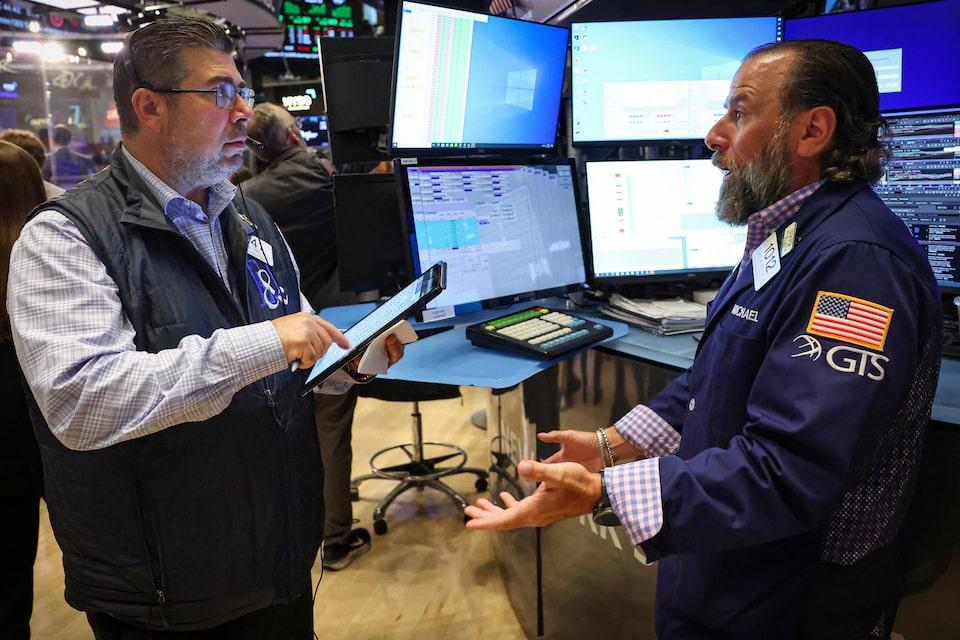
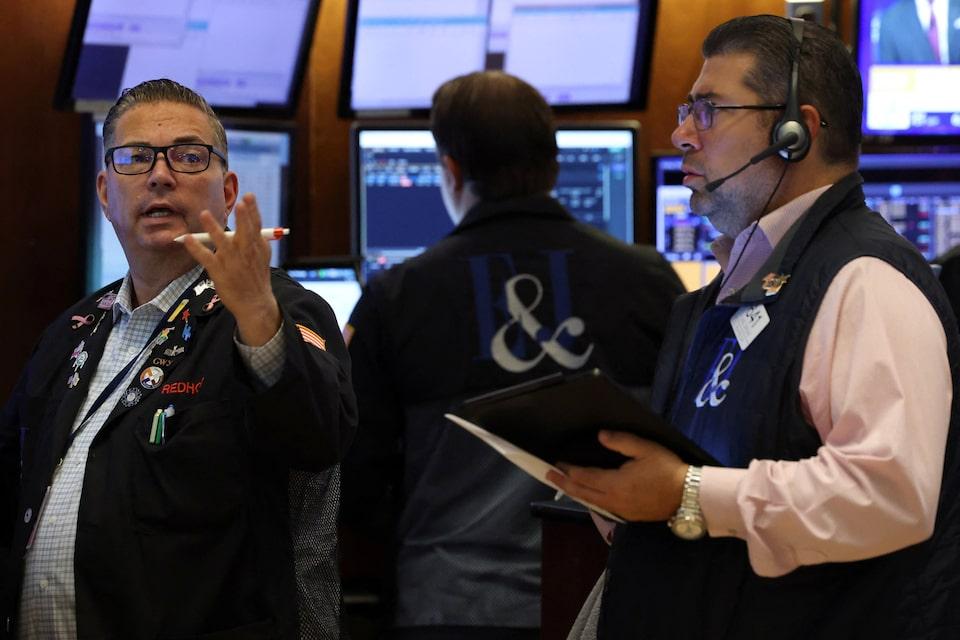
Magnificent Seven stocks fall Home Depot up after retaining annual forecasts Intel jumps on SoftBank investment Indexes: Dow flat; S&P down 0.59%; Nasdaq down 1.46% Aug 19 (Reuters) - The Nasdaq and S&P 500 slid on Tuesday driven by tech stocks, as investors gear up for what Federal Reserve chair Jerome Powell will say about the path of interest rates at a key conference later in the week. The Nasdaq fell as megacaps lost, after having rallied for much of the year. Nvidia (NVDA.O) , opens new tab fell 3.5%, the biggest drop in nearly four months. Sign up here. The key event this week is the Fed's annual symposium at Jackson Hole, Wyoming, from Aug. 21-23, where Powell's comments will be scrutinized for any clues on the central bank's outlook on the economy and monetary policy. "It seems like folks are hedging a little going into Jackson Hole, thinking Powell might be more hawkish than markets currently appreciate," said James Cox, managing partner at Harris Financial Group. Interest rate futures point to a total of two rate cuts this year worth 25 basis points each, with the first expected in September, according to data compiled by LSEG. Some market participants also expressed some concerns about AI-related stocks after OpenAI's CEO Sam Altman said they are in a bubble in an interview with "The Verge" late last week. The Dow Jones Industrial Average (.DJI) , opens new tab rose 10.45 points, roughly flat, to 44,922.27, the S&P 500 (.SPX) , opens new tab lost 37.78 points, or 0.59%, to 6,411.37 and the Nasdaq Composite (.IXIC) , opens new tab lost 314.82 points, or 1.46%, to 21,314.95. Steve Sosnick, chief strategist at Interactive Brokers, said some investors are taking some profits from tech stocks and rotating into other sectors. "(This move) spills into the broader market because of those stocks' weight in major indices," he added. Still, six of the S&P 500 sectors rose. Real estate (.SPLRCR) , opens new tab led the pack, up 1.8%, helped by better-than-expected housing data. On the other hand, technology (.SPLRCT) , opens new tab and communications services (.SPLRCL) , opens new tab lost over 1.9% and 1.2%, respectively. A Reuters poll showed on Tuesday that the S&P 500 will end 2025 just below current near-record levels, at 6,300 points, reflecting tempered optimism amid ongoing concerns over the economic impact of President Donald Trump's global tariffs and uncertainty surrounding Fed rate cuts. The blue-chip Dow briefly hit a record high on Tuesday, aided by a rise in Home Depot's shares after the retailer kept its annual forecasts intact. Home Depot (HD.N) , opens new tab rose 3.17% despite missing quarterly results estimates, while rival home-improvement chain Lowe's (LOW.N) , opens new tab also gained 2.18%. Earnings from Lowe's and big-box retailers Walmart (WMT.N) , opens new tab and Target (TGT.N) , opens new tab later this week are now in focus as investors await more insight on the health of the American consumer. "Consumers are still not really spending at full speed ahead, they're a little bit cautious," said Peter Cardillo, chief market economist at Spartan Capital Securities. "They're waiting to see the full results of the tariffs' impact on the upcoming holiday sales in a couple of months from now." Intel (INTC.O) , opens new tab jumped roughly 7% after the chipmaker got a $2 billion capital injection from Japan's SoftBank Group (9984.T) , opens new tab. Palo Alto Networks (PANW.O) , opens new tab rose 3.06% after the cybersecurity company forecast fiscal 2026 revenue and profit above estimates. Medtronic (MDT.N) , opens new tab lost 3.13%, after the company said it would add two new directors to its board after Elliott Investment Management took a large stake in the medical-device maker. Advancing issues outnumbered decliners by a 1.06-to-1 ratio on the NYSE. There were 205 new highs and 62 new lows on the NYSE. The S&P 500 posted 13 new 52-week highs and one new low while the Nasdaq Composite recorded 56 new highs and 88 new lows. https://www.reuters.com/business/nasdaq-tumbles-jackson-hole-jitters-hit-tech-stocks-2025-08-19/