2025-08-19 07:32
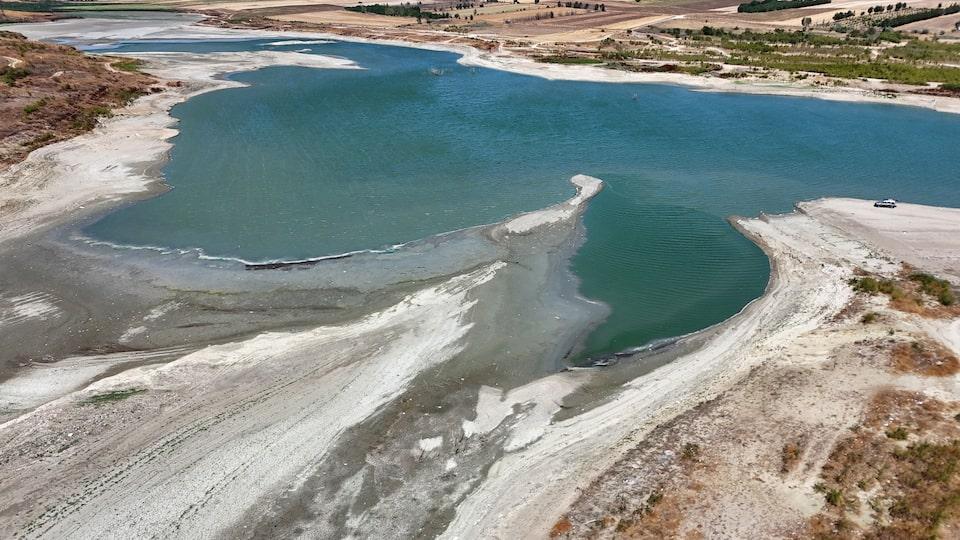
Drought causes critical water shortages, affecting daily life One dam's water level falls to 0%, alternative supply prompted Residents resort to fetching water from distant areas TEKIRDAG, Turkey, Aug 19 (Reuters) - A drought in Turkey's northwestern province of Tekirdag has left the area's main dams without potable water, straining infrastructure and leaving some homes without water for weeks, due to a sharp drop in precipitation in the country this year. Authorities say drought is a critical issue, with several provinces warning of limited fresh water supply this summer. Sign up here. Various areas in Izmir, Turkey's third-most populous province, have experienced frequent water cuts this month, while the municipality in the western province of Usak was told over the weekend it would have access to water just six hours a day, with the main water reservoir depleted. Rainfall slumped 71% in July across the country from a year ago, according to Turkey's Meteorological Service. In the Marmara region, which includes Tekirdag and Istanbul, it shrank 95% below the monthly norm in July. In the ten months to August, precipitation sank 32% in Marmara compared to the norm, while it fell 26% across Turkey to the lowest in 52 years. ALTERNATIVES The water level in Tekirdag's Naip Dam, which has not seen any rainfall in June and July, fell to zero percent in August. That has forced authorities to find alternatives like delivering irrigation water for domestic use and building a pump system for delivery into urban areas. The dam's water level was 21% this time last year, according to the State Hydraulic Works. Mehmet Ali Sismanlar, head of Tekirdag's Water and Sewerage Administration (TESKI), said rainfall in Tekirdag has reduced dramatically over the past decade, and severe drought over the last two years has spurred frequent water cuts in some areas this summer. "We are the area and the province that has been affected the most by the drought in Turkey," he said, attributing it to climate change. The water in Turkmenli dam, usually used for irrigation, was used to supply water to Tekirdag's Marmaraereglisi district, where some neighbourhoods faced water cuts. TESKI was working to open new wells to use ground water, not usually a preferred measure, Sismanlar said. He said ground water had sunk to twice its original depth over the years. Mehmet, 70, a resident who lives in the Dereagzi neighbourhood with his family, said their home has had no water for two months, leaving them unable to shower or perform chores, and they were fetching water from nearby areas in large bottles. "I have been living in filth for the past two months," he said, standing among dirty piles of dishes in the kitchen, and adding that he last showered when he went to Istanbul, around 130 kilometres (81 miles) away. His wife, Fatma, 65, said the family stayed up at night to fill up bottles in case water supply is resumed. Remzi Karabas, 71, said he takes his laundry to Istanbul to be washed, but was done with living in Tekirdag. "We'll leave some day soon. What can we do here? Water does not flow at all." https://www.reuters.com/sustainability/climate-energy/drought-depletes-turkeys-tekirdag-reservoirs-forcing-emergency-water-curbs-2025-08-19/
2025-08-19 06:55
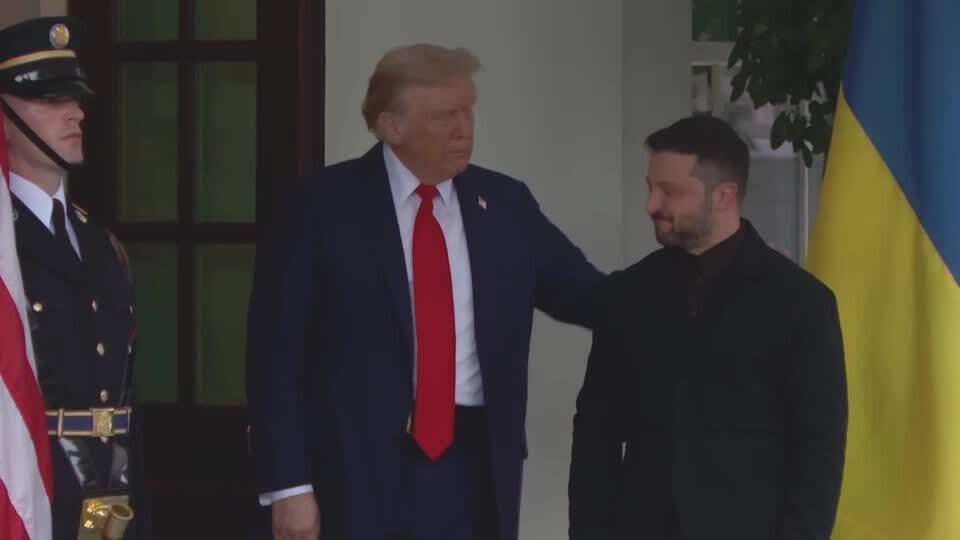
Trump says U.S. would help Europe provide security for Ukraine Zelenskiy welcomes 'strong signal' from Trump European leaders push for ceasefire ahead of any peace deal WASHINGTON, Aug 18 (Reuters) - U.S. President Donald Trump told President Volodymyr Zelenskiy on Monday that the United States would help guarantee Ukraine's security in any deal to end Russia's war there, though the extent of any assistance was not immediately clear. Trump made the pledge during an extraordinary summit at the White House, where he hosted Zelenskiy and a group of European allies following his meeting on Friday in Alaska with Russian President Vladimir Putin. Sign up here. "When it comes to security, there's going to be a lot of help," Trump told reporters, adding that European countries would be involved. "They are a first line of defence because they're there, but we'll help them out." Zelenskiy hailed the promise as "a major step forward," adding that the guarantees would be "formalized on paper within the next week to 10 days" and saying Ukraine offered to buy about $90 billion worth of U.S. weapons. The tone on Monday was much warmer than a disastrous Oval Office meeting that saw Trump and Vice President JD Vance publicly criticize the Ukrainian leader in February. But a peace deal still appeared far from imminent. Just before the talks began, Russia's Foreign Ministry ruled out the deployment of troops from NATO countries to help secure a peace deal, adding complications to Trump's offer. Both Trump and Zelenskiy said they hoped Monday's gathering would eventually lead to three-way talks with Putin, whose forces have been slowly grinding forward in eastern Ukraine. In a social media post late on Monday, Trump said he had called the Russian leader and begun arranging a meeting between Putin and Zelenskiy, to be followed by a trilateral summit among the three presidents. Trump told European leaders that Putin suggested that sequence, according to a source in the European delegation. While the Kremlin has not publicly announced its agreement, a senior U.S. administration official said the Putin-Zelenskiy meeting could take place in Hungary. The pair will meet within the next two weeks, according to German Chancellor Friedrich Merz. The last direct talks between Russia and Ukraine took place in Turkey in June. Putin declined Zelenskiy's public invitation to meet him face-to-face there and sent a low-level delegation instead. CEASEFIRE? Kremlin aide Yuri Ushakov said in audio remarks on Telegram on Monday that Trump and Putin had discussed "the possibility of raising the level of representatives from the Ukrainian and Russian sides ... participating in the mentioned direct negotiations." Meanwhile, European leaders - who rushed to Washington to back up Zelenskiy - urged Trump to insist that Putin agree to a ceasefire in the 3-1/2-year-old war before any talks can advance. Trump previously backed that proposal but reversed course after meeting with Putin on Friday, instead adopting Moscow's position that any peace agreement be comprehensive. Trump told reporters in the Oval Office that he liked the concept of a ceasefire but the two sides could work on a peace deal while the fighting continued. "I wish they could stop, I'd like them to stop," he said. "But strategically that could be a disadvantage for one side or the other." Merz and French President Emmanuel Macron voiced support for a ceasefire as a prerequisite to any direct talks with Russia. Macron also said European leaders would eventually need to be included in any peace talks. "When we speak about security guarantees, we speak about the whole security of the European continent," he told Trump. Trump and Zelenskiy spoke in private before joining the contingent of European leaders including heads of Britain, Germany, France, Italy, Finland, the European Union and NATO for more than two hours of multilateral talks. FRIENDLY TONE AFTER FEBRUARY DISASTER Zelenskiy navigated Monday's meeting more successfully than his Oval Office encounter in February, which ended abruptly when Trump and Vance publicly upbraided him for not being grateful enough. In his opening remarks to the media on Monday, Zelenskiy repeated his thanks at least eight times. Zelenskiy also had reinforcements this time. The European leaders traveled to Washington to demonstrate solidarity with Kyiv and push for strong security guarantees for the country in any post-war settlement. Trump greeted Zelenskiy warmly upon his arrival outside the White House, expressing admiration for his black suit, a departure from the Ukrainian leader's typical military clothes which media reports said irritated Trump in February. When a reporter asked Trump what his message was to the people of Ukraine, he said, "We love them." Zelenskiy thanked him, and Trump put his hand on Zelenskiy's back in a show of affection before the two men went inside to the Oval Office. TRUMP UPS PRESSURE Trump has pressed for a quick end to Europe's deadliest war in 80 years, and Kyiv and its allies worry he could seek to force an agreement on Russia's terms after the president on Friday rolled out the red carpet - literally - for Putin, who faces war crimes charges from the International Criminal Court. Putin denies those allegations. Russia says it is engaged in a “special military operation” in Ukraine to protect its national security, claiming NATO’s eastward expansion and Western military support for Ukraine pose existential threats. Kyiv and its Western allies say the invasion is an imperial-style land grab. Trump has rejected claims that the Alaska summit was a win for Putin, who has faced diplomatic isolation since Russia's invasion of Ukraine in 2022. Both sides must compromise, according to Trump's team. But the president has put the burden on Zelenskiy, saying Ukraine should give up hopes of regaining Crimea, annexed by Russia in 2014, or of joining NATO. NATO Secretary General Mark Rutte said NATO membership for Ukraine was not under discussion but that there was a discussion on "Article 5"-type security guarantees for the country. Article 5 of NATO's founding treaty enshrines the principle of collective defense, in which an attack on any of its 32 members is considered an attack on all. Joining the Atlantic alliance is a strategic objective for Kyiv that is enshrined in the country's constitution. Rutte's comments noted that a security guarantee of that scale could be offered to Ukraine in lieu of NATO membership. Zelenskiy has already all but rejected the outline of Putin's proposals from the Alaska meeting. Those included handing over the remaining quarter of its eastern Donetsk region, which is largely controlled by Russia. Any concession of Ukrainian territory would have to be approved by a referendum. The war has killed or wounded more than a million people from both sides, including thousands of mostly Ukrainian civilians, according to analysts, and destroyed wide swaths of the country. https://www.reuters.com/business/aerospace-defense/us-would-help-assure-ukraines-security-peace-deal-trump-tells-zelenskiy-2025-08-19/
2025-08-19 06:37
LONDON, Aug 19 (Reuters) - Britain's economy at the end of 2023 is now estimated to have been 2.2% bigger than its peak immediately before the coronavirus pandemic, up slightly from a previous estimate of 1.9%, the Office for National Statistics said on Tuesday. The ONS said the revision followed a regular update to the way it calculates gross domestic product including improved research and development data and changes to its measurement of the activity of large multinational companies. Sign up here. "This work has had the effect of boosting pharmaceuticals and the manufacturing sector as their directly owned production abroad now counts towards UK GDP," Craig McLaren, head of national accounts at the ONS, said in a blog. "Overall, there is little impact on growth from all these improvements, with average annual growth over the period 1998 to 2023 remaining at 1.8% and average quarterly growth remaining at 0.5%," McLaren said. Britain's post-pandemic recovery has lagged behind that of many other economies, something Prime Minister Keir Starmer and finance minister Rachel Reeves have promised voters they will change following last year's national election. At the end of June this year, British GDP was 4.5% higher than at the end of December 2019 compared with 6.0% growth in the euro zone and almost 13% in the U.S, according to data from the Organisation for Economic Cooperation and Development. However, Germany's economy was only 0.3% bigger than before the pandemic. https://www.reuters.com/world/uk/uk-economy-was-bit-bigger-than-thought-end-2023-ons-says-2025-08-19/

2025-08-19 06:36
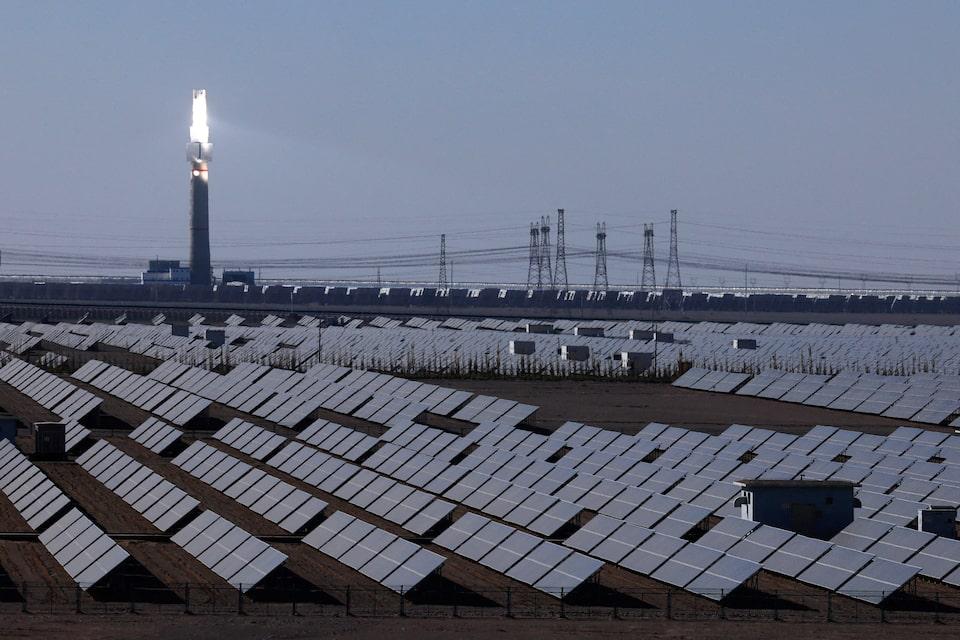
Polysilicon cartel is China's most concrete plan yet against overcapacity Plan might face opposition from small producers, local governments Its success is seen as a test for Beijing's supply-side reform BEIJING, Aug 19 (Reuters) - China's efforts to curb industrial overcapacity face their first test in the indebted and bloated polysilicon sector, a key cog in solar cell production, where analysts say it is easiest for Beijing to intervene but still difficult to succeed. Under the plan, devised by industry players in the presence of Chinese regulators, big producers will pool 50 billion yuan ($7 billion) to buy out the least efficient facilities and shut them down, then form a cartel to halt relentless price wars. Sign up here. Ideally, when prices rise, the loss-making producers will turn profitable and reimburse the debt incurred in the process. Reduced output and higher polysilicon costs would force solar panel makers - which can produce roughly twice as much annually as the world buys and have been a source of trade tensions between China and the West - to consolidate. But analysts see risks at every stage of this plan. First, it is unclear if the industry can agree who's in or who's out of the cartel. GCL Technology Holdings (3800.HK) , opens new tab, one of the biggest producers, said earlier this month cartel planning was close to wrapping up but declined to provide details of the other participants. Banks - whose incentive to finance this acquisition is to ensure that what they rate as a "safe" sector doesn't turn to "risky" - would likely be involved in the process, said Dan Wang, China director at Eurasia Group. Analysts warn local authorities, who have strived to fulfil Beijing's strategic green energy vision by handing out subsidies, tax breaks and cheap land to the sector, may not want the solar supply chains on their turf to shut. "Which local government is going to let go of their industry first?" said Max Zenglein, senior economist for the Asia-Pacific at The Conference Board research group. "They're going to be very cautious." Finally, even if the cartel does form, any success creates the conditions for failure: after prices climb, members might be tempted to raise output and reap the profits. Reformers face all these risks despite the industry having fewer players and fewer supply chain inputs than most other sectors in the world's second-largest economy, where overcapacity is endemic and deflationary, and threatens trade relations and long-term growth. "Success is hardly a foregone conclusion," Gavekal Dragonomics analysts Tilly Zhang and Wei He said in a note. If the overcapacity crackdown "fails to get traction in polysilicon, it will struggle in the many other industries" where the government has less capacity to foster swift changes, they said. GCL's peer Tongwei (600438.SS) , opens new tab declined to comment. Polysilicon producers Daqo New Energy (DQ.N) , opens new tab and TBEA (600089.SS) , opens new tab did not respond to requests for comment. The solar and metals industry associations, the National Development and Reform Commission (NDRC)- China's state planner - and the Ministry of Industry and Information Technology also did not respond to requests for comment. IS EVERYONE GAME? Over the past five years, the top four Chinese manufacturers alone built about two-thirds of the industry's capacity, which stood at 3.25 million metric tons at the end of 2024, according to Bernreuter Research, a consultancy. In 2025, Bernreuter anticipates an average utilisation of 35%-40%, down from 57% last year. Morningstar estimates about 965,000 tons of polysilicon capacity was built or is still under construction this year, citing the China Photovoltaic Industry Association. Past attempts to get the solar industry to self-regulate have failed. Last October, the solar industry body proposed a price floor for solar modules, but the temptation for manufacturers to undercut competitors proved too enticing. The NDRC called for a ban on new production in an online meeting in February. Still, Karamay, a city in the northwestern region of Xinjiang announced a 3 billion yuan solar module manufacturing plant as recently as May, Chinese media reported. The Xinjiang energy regulator did not respond to phone calls from Reuters. A new 140,000-ton polysilicon manufacturing plant in Qinghai, a major provincial investor, also started test operations in March, according to a trade media report. The energy regulator for northwestern China, which includes Qinghai, did not respond to a faxed request for comment. PAIN THRESHOLD In the event that the polysilicon cartel overcomes industry and local government opposition, it can raise prices to levels that the least competitive firms in the downstream solar panels sector cannot afford, forcing their exit, analysts say. "Unless I see a lot of defaults all of a sudden really shrinking the size of the industry, I don't see how this is going to work," said Alicia Garcia-Herrrero, Asia-Pacific chief economist at Natixis. She said that would test the Chinese leadership's tolerance for a bloodbath in an industry that it had championed as a national priority. The case for protecting strategic priorities also applies to other sectors, from electric vehicles and batteries to shipbuilding, all with supply chains much more complex than solar. "It's very easy to build capacity to burn money, but then to scale it down and direct that in a healthy manner is much more difficult," said The Conference Board's Zenglein. ($1 = 7.1815 Chinese yuan renminbi) https://www.reuters.com/sustainability/climate-energy/chinas-overcapacity-crackdown-faces-litmus-test-solar-sector-2025-08-19/
2025-08-19 06:22
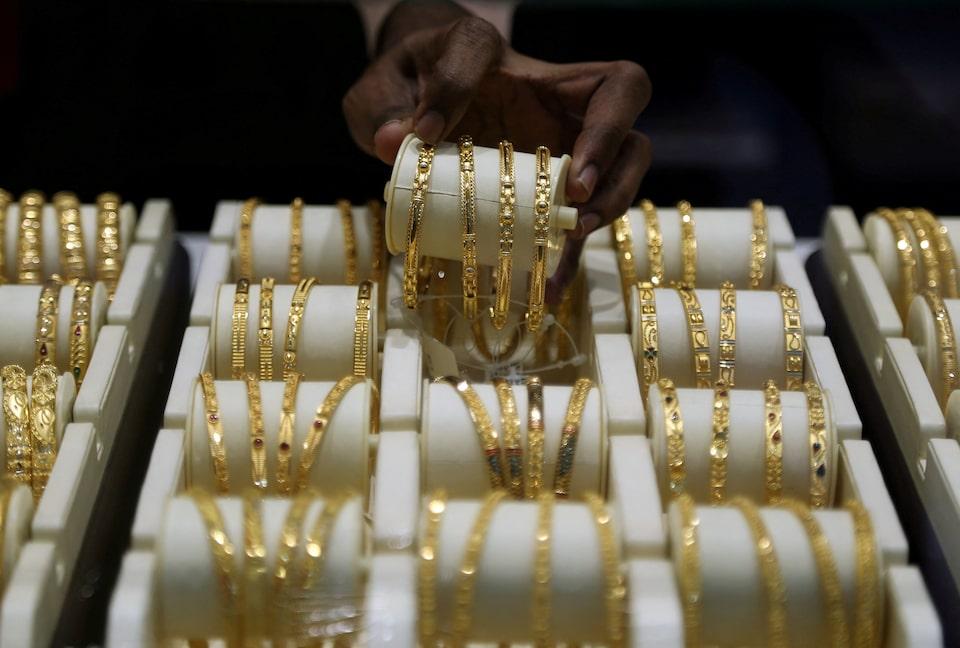
Fed's Jackson Hole symposium scheduled for August 21-23 Trump says U.S. would help assure Ukraine security in peace deal UBS raises gold price target for end-March 2026 to $3,600/oz Aug 19 (Reuters) - Gold held steady on Tuesday as investors awaited the Federal Reserve's Jackson Hole symposium later this week for cues into possible rate cuts and weighed Washington's efforts to end the war in Ukraine. Spot gold edged 0.2% higher to $3,337.62 per ounce by 0609 GMT. U.S. gold futures for December delivery rose 0.1% to $3,381.50. Sign up here. Fed Chair Jerome Powell's remarks at the Jackson Hole symposium through August 21-23 could offer clarity on the central bank's economic outlook and policy framework. "Gold is still consolidating and is really waiting for a new catalyst to break higher. I think the big event to watch is Jackson Hole and whether the Fed brings the dovish guidance or not," said Kyle Rodda, Capital.com's financial market analyst. Market participants currently see an 84% probability of a 25-basis-point rate cut at the Fed's next meeting, per the CME FedWatch tool. Gold typically performs well in a low-interest-rate environment and amid heightened uncertainties. Minutes of the Fed's July meeting, due for release on Wednesday, are expected to provide additional cues into its policy. On Monday, U.S. President Donald Trumptold his Ukrainian counterpart Volodymyr Zelenskiy that Washington would help guarantee Ukraine's security in any potential deal to end Russia's war there. Trump described his meeting with Zelenskiy as "very good" and said in a social media post that he had called Russian President Vladimir Putin and begun arranging a meeting between Putin and Zelenskiy. Trump hosted Zelenskiy and a group of European allies days after he met with Putinin Alaska, which ended without an agreement. UBS raised its gold price target for end-March 2026 by $100 to $3,600 on persistent U.S. macroeconomic risks, a decline in dollar use, and strong investment demand. Elsewhere, spot silver fell 0.3% to $37.88 per ounce, platinum was down 0.1% to $1,321.58 and palladium lost 1.1% to $1,110.53. https://www.reuters.com/world/china/gold-steadies-ahead-feds-jackson-hole-symposium-2025-08-19/
2025-08-19 06:17
BEIJING, Aug 19 (Reuters) - At least three more people have died in heavy rains in northern China, state media said on Tuesday, taking to 13 the death toll in recent storms across the region, with five still missing and no let-up in rain forecast. Downpours heavier than usual have battered parts of China in extreme weather since July, with the East Asian monsoon rains stalling over its north and south. Sign up here. Three bodies were retrieved from flood waters in the Inner Mongolia city of Ordos, the official news agency Xinhua said, while three people were reported missing about 70 km (44 miles) away near the banks of the Yellow River. Monday's downpour was the first of three forecast for the next few days, television news said. It dumped more than 204 mm (8 inches) of rain in less than 24 hours on the district where the bodies were found, or more than double the monthly average for August, weather authorities said. On Saturday, a flash flood after a river burst its banks in the region's grasslands killed at least 10 people, sweeping away 13 campers on the outskirts of the city of Bayannur, about 350 km (218 miles) northwest of Ordos. One of those was rescued, but two are missing. Rescue workers are scouring for the three missing people in Ordos, in an area that is also close to one of China's rare earth hubs, the city of Baotou. Heavy rainfall and severe floods that meteorologists link to climate change pose major challenges for authorities, threatening to overwhelm ageing flood defences, displace millions and lead to economic losses running into billions. https://www.reuters.com/business/environment/more-rain-northern-china-takes-death-toll-floods-13-2025-08-19/