2025-08-19 06:22
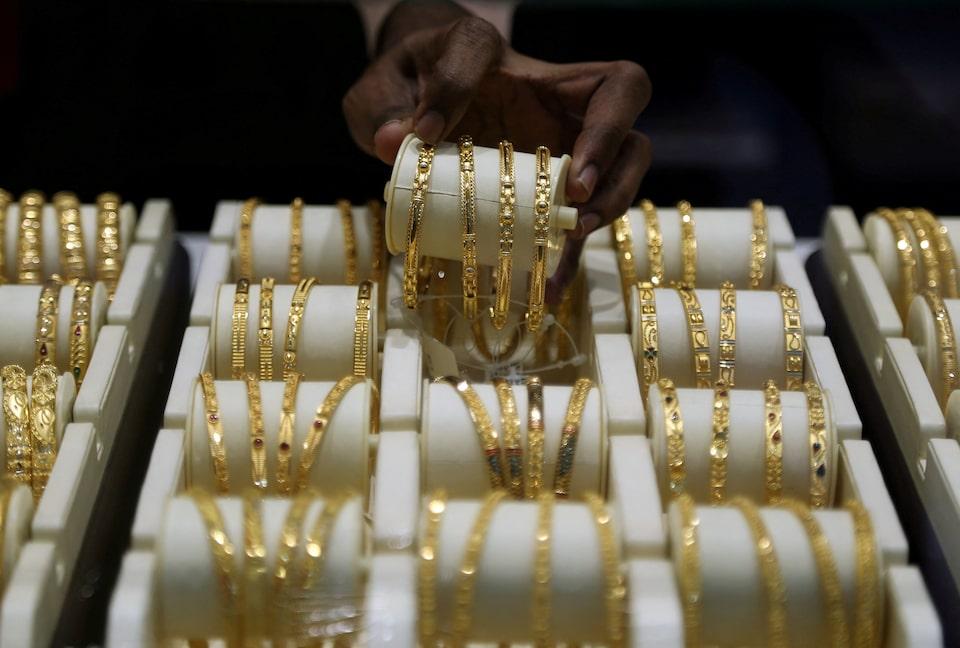
Fed's Jackson Hole symposium scheduled for August 21-23 Trump says U.S. would help assure Ukraine security in peace deal UBS raises gold price target for end-March 2026 to $3,600/oz Aug 19 (Reuters) - Gold held steady on Tuesday as investors awaited the Federal Reserve's Jackson Hole symposium later this week for cues into possible rate cuts and weighed Washington's efforts to end the war in Ukraine. Spot gold edged 0.2% higher to $3,337.62 per ounce by 0609 GMT. U.S. gold futures for December delivery rose 0.1% to $3,381.50. Sign up here. Fed Chair Jerome Powell's remarks at the Jackson Hole symposium through August 21-23 could offer clarity on the central bank's economic outlook and policy framework. "Gold is still consolidating and is really waiting for a new catalyst to break higher. I think the big event to watch is Jackson Hole and whether the Fed brings the dovish guidance or not," said Kyle Rodda, Capital.com's financial market analyst. Market participants currently see an 84% probability of a 25-basis-point rate cut at the Fed's next meeting, per the CME FedWatch tool. Gold typically performs well in a low-interest-rate environment and amid heightened uncertainties. Minutes of the Fed's July meeting, due for release on Wednesday, are expected to provide additional cues into its policy. On Monday, U.S. President Donald Trumptold his Ukrainian counterpart Volodymyr Zelenskiy that Washington would help guarantee Ukraine's security in any potential deal to end Russia's war there. Trump described his meeting with Zelenskiy as "very good" and said in a social media post that he had called Russian President Vladimir Putin and begun arranging a meeting between Putin and Zelenskiy. Trump hosted Zelenskiy and a group of European allies days after he met with Putinin Alaska, which ended without an agreement. UBS raised its gold price target for end-March 2026 by $100 to $3,600 on persistent U.S. macroeconomic risks, a decline in dollar use, and strong investment demand. Elsewhere, spot silver fell 0.3% to $37.88 per ounce, platinum was down 0.1% to $1,321.58 and palladium lost 1.1% to $1,110.53. https://www.reuters.com/world/china/gold-steadies-ahead-feds-jackson-hole-symposium-2025-08-19/
2025-08-19 06:17
BEIJING, Aug 19 (Reuters) - At least three more people have died in heavy rains in northern China, state media said on Tuesday, taking to 13 the death toll in recent storms across the region, with five still missing and no let-up in rain forecast. Downpours heavier than usual have battered parts of China in extreme weather since July, with the East Asian monsoon rains stalling over its north and south. Sign up here. Three bodies were retrieved from flood waters in the Inner Mongolia city of Ordos, the official news agency Xinhua said, while three people were reported missing about 70 km (44 miles) away near the banks of the Yellow River. Monday's downpour was the first of three forecast for the next few days, television news said. It dumped more than 204 mm (8 inches) of rain in less than 24 hours on the district where the bodies were found, or more than double the monthly average for August, weather authorities said. On Saturday, a flash flood after a river burst its banks in the region's grasslands killed at least 10 people, sweeping away 13 campers on the outskirts of the city of Bayannur, about 350 km (218 miles) northwest of Ordos. One of those was rescued, but two are missing. Rescue workers are scouring for the three missing people in Ordos, in an area that is also close to one of China's rare earth hubs, the city of Baotou. Heavy rainfall and severe floods that meteorologists link to climate change pose major challenges for authorities, threatening to overwhelm ageing flood defences, displace millions and lead to economic losses running into billions. https://www.reuters.com/business/environment/more-rain-northern-china-takes-death-toll-floods-13-2025-08-19/

2025-08-19 06:12
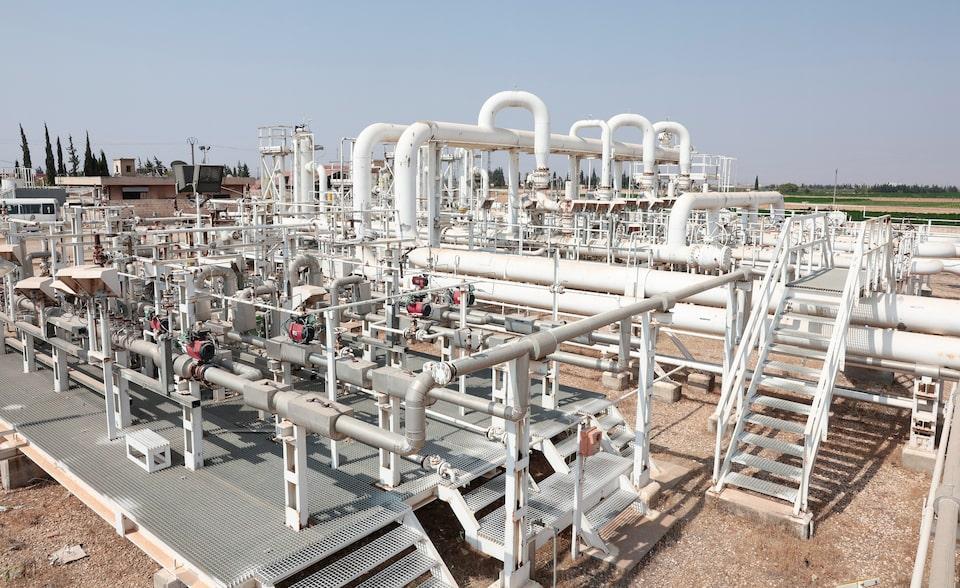
Trump's high-stakes diplomacy unlikely to lead to western sanctions easing Europe won't change goal to phase out Russian oil and gas by 2027 with Putin in power Secondary US tariffs on China unlikely to have significant effect LONDON, Aug 19 (Reuters) - U.S. President Donald Trump’s high-stakes diplomacy to resolve the war in Ukraine is unlikely to jolt oil and gas markets, no matter the outcome. Russia has faced multiple rounds of western sanctions and restrictions since its invasion of Ukraine in February 2022, which have dealt severe blows to the country’s giant oil and gas industry, sapping Moscow of vital revenue and reshaping global energy markets. Sign up here. Russian gas now accounts for just 18% of European imports, down from 45% in 2021, while the bloc’s oil imports from Russia have fallen to 3% from around 30% over that time. The European Union plans to fully phase out Russian energy by 2027. Meanwhile, India has increased its share of Russian crude to 38% of total imports from 16% in 2021, according to Kpler. China and Turkey have also notably ramped up their Russian oil purchases. The war in Ukraine has left over a million dead or wounded, so its conclusion would be welcomed by many. Energy markets, however, are not apt to register much of a reaction unless there is a full ceasefire along with the lifting of all U.S. and European sanctions. And that is long shot. Given the more probable set of scenarios, oil and gas markets are unlikely to be rattled by the fallout from either last Friday’s disappointing summit between Trump and Russian President Valdimir Putin or the U.S. president’s meetingwith his Ukrainian counterpart Volodymyr Zelenskiy and European leaders on Monday. UNLIKELY PEACE Full peace in Ukraine remains highly improbable. Trump’s apparent support for a comprehensive settlement, rather than a ceasefire, has widened the gap between America, Ukraine and Europe. At the same time, his suggestion of U.S. post-settlement security guarantees for Ukraine is likely to face resistance from Moscow. In other words, don’t bet on a full normalization of relations between Russia and the West any time soon. Trump might pressure Zelenskiy into accepting a temporary or partial halt in fighting. But even then, Europe is unlikely to resume Russian energy imports while Putin remains in power. Before 2022, Europe accounted for nearly half of Russia’s 4.7 million barrels per day of oil exports and 75% of its gas exports, according to the U.S. Energy Information Administration. The Trump administration could attempt to ease some sanctions unilaterally, but this could face opposition in Congress, including from Republicans, unless a broad peace deal is reached. BREAKDOWN Perhaps the more likely scenario – Trump failing to broker a deal – also shouldn’t have a major impact on energy markets. The U.S. could tighten sanctions, particularly by targeting buyers of Russian energy, as Trump has already threatened. But the U.S. president said on Friday that he would delay so-called "secondary sanctions" on China due to what he described as “successful” talks with Putin. Of course, India already faces secondary tariffs over its Russian oil purchases. Earlier this month, Trump announced a 25% tariff on Indian goods, citing the country’s continued oil imports from Russia. The new tariff, effective August 27, will bring total tariffs on Indian imports to 50%. But even though Indian buyers already appear to be reducing their Russian oil purchases, the impact on global supplies has been minimal as China has increased its intake of Russian crude. Ultimately, China matters far more in this story, and it’s unlikely to significantly curb its Russian oil imports, not least because it considers its relationship with Moscow to be strategic. Chinese and Russian oil producers, refiners and traders have already built a sprawling network of tankers and insurers to circumvent Western sanctions on Venezuela, Iran, and Russia. Additionally, U.S. tariffs on Chinese goods already average 55%, according to the Peterson Institute for International Economics. Additional tariffs could raise costs for U.S. consumers, and Beijing could retaliate, potentially by withholding rare earths or other critical minerals, all outcomes Trump would want to avoid – and Beijing knows this. In short, Trump appears to have little stomach for the potential consequences, and even if he were to tighten sanctions, this likely wouldn’t materially affect China’s ability to import oil. CUSHIONED MARKETS Crucially, oil and gas markets appear to be entering a period of oversupply, meaning any possible disruption in Russian volumes can easily be offset. The IEA expects oil supply to exceed demand by 1.76 million barrels per day in 2025 and by 3 million bpd in 2026, driven by rising output from OPEC+ and the Americas. Global liquefied natural gas (LNG) markets are also expanding rapidly, with new supply coming online in the coming years across the U.S., Qatar, Canada, and elsewhere. LNG capacity is projected to grow from 500 million tons per year in 2024 to 800 mtpa by 2030, according to the International Energy Agency. While Trump’s foreign policy remains unpredictable, a few things seem clear. He can’t, as he once claimed, end the Ukraine war in one day, and what he can do is unlikely to have much of an impact on oil and gas markets. Enjoying this column? Check out Reuters Open Interest (ROI), , opens new tab your essential new source for global financial commentary. ROI delivers thought-provoking, data-driven analysis. Markets are moving faster than ever. ROI , opens new tab can help you keep up. Follow ROI on LinkedIn , opens new tab and X. , opens new tab https://www.reuters.com/markets/commodities/war-or-peace-oil-markets-ukraine-outcome-is-insignificant-2025-08-19/
2025-08-19 06:05
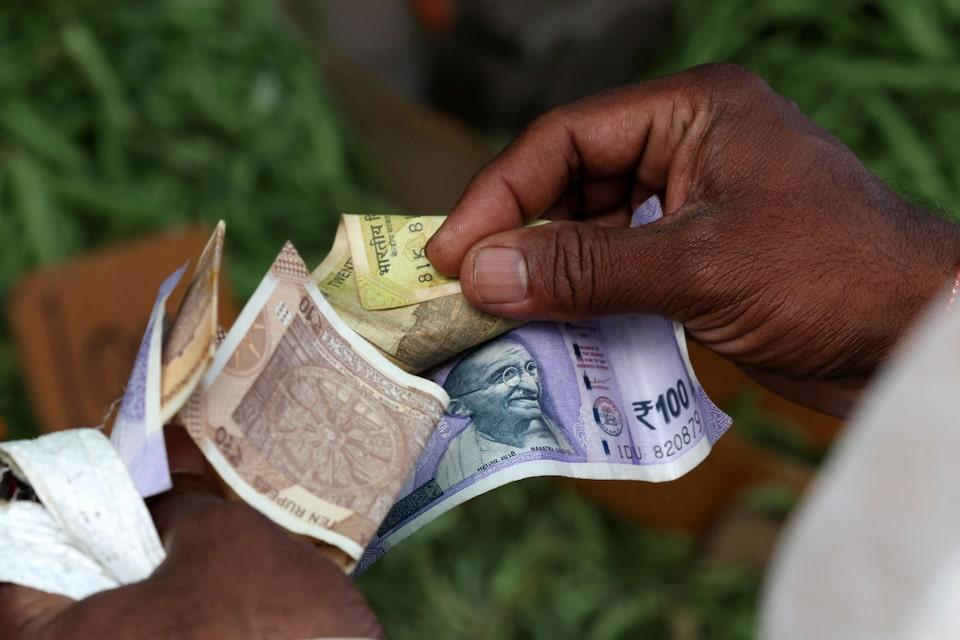
MUMBAI, Aug 19 (Reuters) - The Indian rupee climbed to its highest level so far this month, supported by lower risks of additional U.S. tariffs on domestic goods and optimism that planned tax cuts will bolster growth. The rupee rose as much as 87.2050 per U.S. dollar on Tuesday, compared with 87.35 in the previous session. It was last at 87.2250. Sign up here. The currency is being supported by the Trump-Putin meeting and subsequent talks between the U.S. and Ukrainian presidents, raising hopes a peace deal. This, Nomura said in a note, "appears to reduce the likelihood of additional tariffs/sanctions on India in relation to the purchase of Russia oil". Nomura further highlighted that Trump, after his meeting with Putin, said the tariff/sanction path will be delayed. An escalation in U.S. tariffs on India could have driven the USD/INR to break past key levels on the upside. Indian Prime Minister Modi’s planned cuts on goods and services tax (GST) is expected to support consumption and has also lifted sentiment in the rupee. Economists said the measures could provide a near-term boost to growth momentum and help offset the drag from weak external conditions. The rupee's Asian peers were mostly lower on Tuesday, pegged back by a rise in U.S. yields. The 10-year U.S. yield hit the highest in two weeks on Monday. https://www.reuters.com/world/india/rupee-hits-highest-level-august-fading-us-tariff-risks-tax-cut-boost-2025-08-19/
2025-08-19 06:04
SINGAPORE, Aug 19 (Reuters) - Independent oil trader Cathay Petroleum has hired Eugene Ganchev, an ex-senior banker at ABN Amro as its chief financial officer. Ganchev, 41, posted in his LinkedIn earlier on Tuesday that he started his new role at Cathay Petroleum last month based in Singapore. Sign up here. Ganchev's LinkedIn profile shows he served the bank for more than 16 years with extensive experiences in metals and energy sectors, and his latest position was head of ABN Amro's Hong Kong operation. Cathay did not immediately comment. Cathay, set up in 2003 in Hong Kong by Chen Wei, a former veteran crude oil trader with Chinese oil major Sinopec, is known as an arbitrage player focused on physical crude oil trading and logistics. Cathay runs trading desks in Hong Kong, Singapore and London, and turns around $6 billion worth of oil a year, according to Cathay's website. https://www.reuters.com/business/energy/oil-trader-cathay-petroleum-hires-ex-abn-amro-banker-cfo-2025-08-19/

2025-08-19 05:40
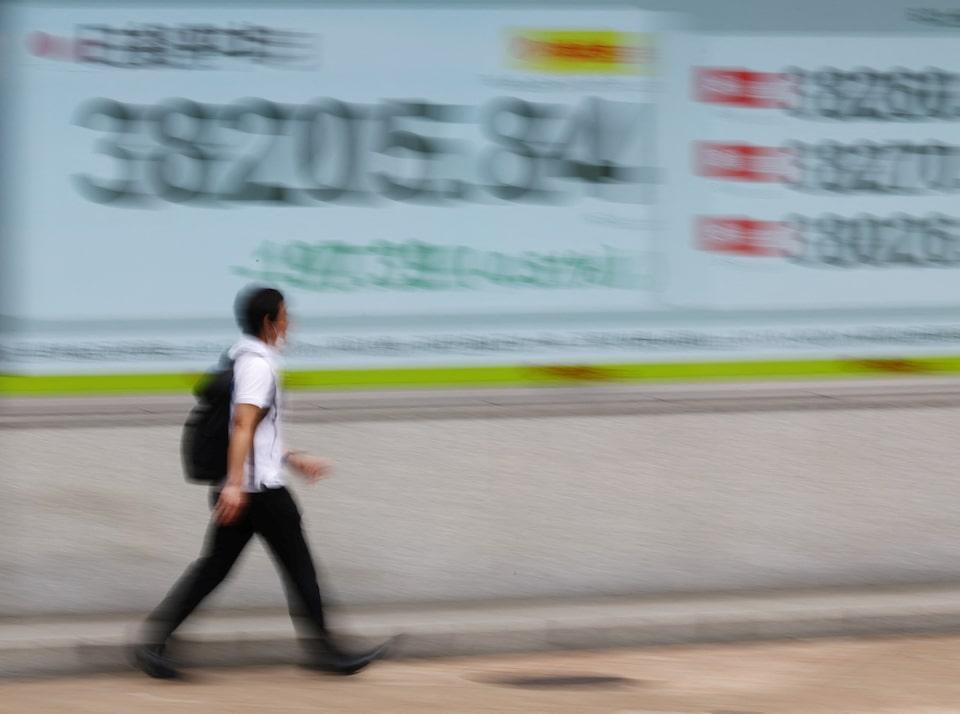
Traders evaluate diplomatic signals between Russia and Ukraine Nikkei hits record high before sliding after SoftBank announces Intel stake Markets eye Fed's Jackson Hole symposium for policy hints TOKYO, Aug 19 (Reuters) - Stocks in Asia were flat and oil slid on Tuesday before a key meeting of central bankers and as traders evaluated promising diplomatic signals toward ending hostilities between Russia and Ukraine. European equity futures posted modest gains after Ukrainian President Volodymyr Zelenskiy said security guarantees for his nation will likely be worked out within 10 days after talks with U.S. President Donald Trump and European leaders. Sign up here. Japan's Nikkei share gauge set a new intraday record high before heading lower. The U.S. dollar held on to gains from the previous session as traders awaited policy hints from the Federal Reserve ahead of its annual gathering in Jackson Hole, Wyoming. "The Jackson Hole Symposium looms as one potential source of volatility, and going into the event, the markets remain cautious," Kyle Rodda, an analyst at Capital.com, wrote in a note to clients. "A dovish shift is being priced in, with further strength in equity markets – and weakness in the U.S. dollar – reliant on the Fed meeting these expectations." MSCI's broadest index of Asia-Pacific shares outside Japan (.MIAPJ0000PUS) , opens new tab slid 0.1% after U.S. stocks ended the previous session with mild losses. Pan-region Euro Stoxx 50 futures were up 0.2%, while contracts for the German DAX and FTSE both crept up 0.1%. NATO Secretary General Mark Rutte told Fox News on Monday that Trump's meeting with Zelenskiy and other European and NATO partners was very successful. The meeting followed a summit in Alaska between the U.S. president and Russian leader Vladimir Putin, which did not result in an agreement on ceasing hostilities in the 3-1/2-year-old war. In a social media post late on Monday, Trump said he had called Putin and begun arranging a meeting between Putin and Zelenskiy, to be followed by a trilateral summit among the three presidents. While traders are keeping an eye on geopolitical developments, another key focus for the week is the Fed's August 21-23 Jackson Hole symposium, where Chair Jerome Powell is due to speak on the economic outlook and the central bank's policy framework. Money markets reflect an 83.6% chance of a quarter-point rate cut at the Fed's meeting on September 17, according to CME FedWatch. "Central banks seem to be easing even though inflation is creeping a little bit high in many countries," Tapas Strickland, head of market economics at National Australia Bank, said in a podcast. Bond investors may be "demanding a little bit more compensation for duration, just given the potential for the inflationary risk out there." Japan's Nikkei stock index (.N225) , opens new tab rose at the open before sliding 0.1%, dragged lower by a 2.5% plunge in SoftBank Group (9984.T) , opens new tab after the company announced a $2 billion stake in struggling U.S. chipmaker Intel (INTC.O) , opens new tab. The dollar slid 0.1% to 147.78 yen. The euro was steady at $1.1663, while the dollar index , which tracks the greenback against a basket of currencies, was little changed after a 0.2% gain in the previous session. Oil slipped as market participants contemplated a potential end to the war in Ukraine, which could lead to an end to sanctions on Russian crude. U.S. crude sank 0.8% to $62.92 a barrel. Brent crude fell 0.7% to $66.15. Spot gold rose 0.2% to $3,337.41 per ounce. Bitcoin slid 1% to $115,257.59, while ether dropped $2.7% to $4,224.33. https://www.reuters.com/world/china/global-markets-global-markets-2025-08-19/