2025-08-18 12:53
BRASILIA, Aug 18 (Reuters) - Brazil's economic activity contracted in June, central bank data showed on Monday, reinforcing signs of a slowdown under the weight of high borrowing costs. The IBC-Br index, a proxy for gross domestic product, fell 0.1% in June from May on a seasonally adjusted basis, missing the 0.05% increase forecast in a Reuters poll of economists. Sign up here. The decline was driven by a 2.3% drop in the farming sector, detailed central bank data showed. Excluding farming, the index - which also incorporates central bank estimates for industry and services along with production-related taxes - would have posted a 0.1% rise. In the second quarter, the IBC-Br grew 0.3% from the prior three months. Official GDP figures for the period will be released on September 2 by statistics agency IBGE. Brazil's benchmark Selic rate stands at 15%, near a two-decade high, as policymakers seek to rein in annual inflation that has persistently exceeded the 3% target, though it has more recently shown signs of easing. When keeping rates unchanged in late July, the central bank said the outlook for Latin America's largest economy pointed to moderating growth, while data across sectors and indicators remained mixed. https://www.reuters.com/world/americas/brazil-gdp-proxy-dips-june-weaker-farming-sector-2025-08-18/
2025-08-18 12:38
Treasury yields slip from more than two-week high Zelenskiy to meet Trump in Washington later on Monday Aug 18 (Reuters) - Gold prices eked out gains on Monday, helped by lower U.S. Treasury yields, while market players awaited U.S. President Donald Trump's meeting with Ukrainian President Volodymyr Zelenskiy and European leaders later in the day. Spot gold was 0.4% higher at $3,347.57 per ounce at 1214 GMT, after hitting its lowest level since August 1 earlier in the session. U.S. gold futures for December delivery rose 0.3% to $3,393.70. Sign up here. "The firm tone to gold prices has returned today with the market nudging the $3,350 level (as) the combination of soft yields and a weaker dollar would for sure create a tailwind for gold," said independent analyst Ross Norman. Benchmark 10-year U.S. Treasury yields fell from more than two-week highs. European leaders are set to join Zelenskiy for talks with Trump later on Monday on ways to end the war between Russia and Ukraine. Russia would relinquish tiny pockets of occupied Ukraine and Kyiv would cede swathes of its eastern land which Moscow has been unable to capture, under peace proposals discussed by Russia's Vladimir Putin and Trump at their Alaska summit on Friday, sources briefed on Moscow's thinking said. "Front-running the geopolitical news would be unwise just now given that almost any outcome is conceivable. If there was a sense that tensions over Ukraine were easing, then we might expect some modest softness in gold prices," Norman added. Investors are also looking ahead to the Federal Reserve's annual symposium in Jackson Hole, Wyoming for more cues on the path of U.S. interest rates. Economists polled by Reuters largely expect the Fed to announce a rate cut in September, its first this year, with a possible second cut by year-end. Non-yielding bullion, considered a safe-haven asset during periods of geopolitical and economic uncertainty, tends to perform well in a low-interest-rate environment. Elsewhere, spot silver was up 0.3% at $38.10 per ounce, while platinum fell 0.5% to $1,329.09, after hitting its lowest in nearly a week earlier in the session. Spot palladium gained 0.8% to $1,121.06. It fell to its lowest level since July 10 earlier in the session. https://www.reuters.com/world/china/gold-gains-soft-yields-focus-trump-zelenskiy-meeting-2025-08-18/

2025-08-18 12:27
US adviser says if India wants to be a US strategic partner, it has to act like one Zelenskiy and European leaders to meet Trump on Monday LONDON, Aug 18 (Reuters) - Oil prices edged up on Monday after White House trade adviser Peter Navarro said India's purchases of Russian crude were funding Moscow's war in Ukraine and had to stop. Traders were also watching for clues from a meeting later in the day between U.S. President Donald Trump and Ukrainian President Volodymyr Zelenskiy as they attempt to reach a peace deal to end Europe's deadliest war in 80 years. Sign up here. Brent crude futures rose 20 cents, or 0.3%, to $66.05 a barrel by 1208 GMT. U.S. West Texas Intermediate crude was up 28 cents, or 0.45%, at $63.08. Navarro's comments revived concerns about supply flows. "India acts as a global clearing house for Russian oil, converting embargoed crude into high-value exports while giving Moscow the dollars it needs," Navarro said. The statement triggered some buying interest in the market, said SEB analyst Ole Hvalbye. Priyanka Sachdeva, senior market analyst at brokerage Phillip Nova, said: "The U.S. adviser's sharp words on India's Russian crude imports, paired with postponed trade talks, revive concerns that energy flows remain hostage to trade and diplomatic frictions, even as peace prospects in Ukraine brighten." Trump will meet Zelenskiy at 1715 GMT and then with other European leaders at 1900 GMT. The U.S. President told Ukraine on Monday to give up hopes of getting back annexed Crimea or joining NATO, emerging more aligned with Moscow on seeking a peace deal instead of a ceasefire first after his meeting with Russian President Vladimir Putin in Alaska on Friday. "I don't believe the oil market has priced in a full peace dividend that potentially could see prices of crude and EU gas suffer further setbacks," said Saxo Bank commodities strategist Ole Hansen. Speculators in the week to August 12 held the first combined net short position in WTI (CME & ICE), leaving prices exposed to any upside surprises, Hansen added. CTFC/ Investors are also watching for clues on U.S. interest rates from Federal Reserve Chairman Jerome Powell's comments at this week's Jackson Hole meeting. https://www.reuters.com/business/energy/oil-prices-edge-higher-us-adviser-comments-india-buying-russian-crude-2025-08-18/
2025-08-18 12:24
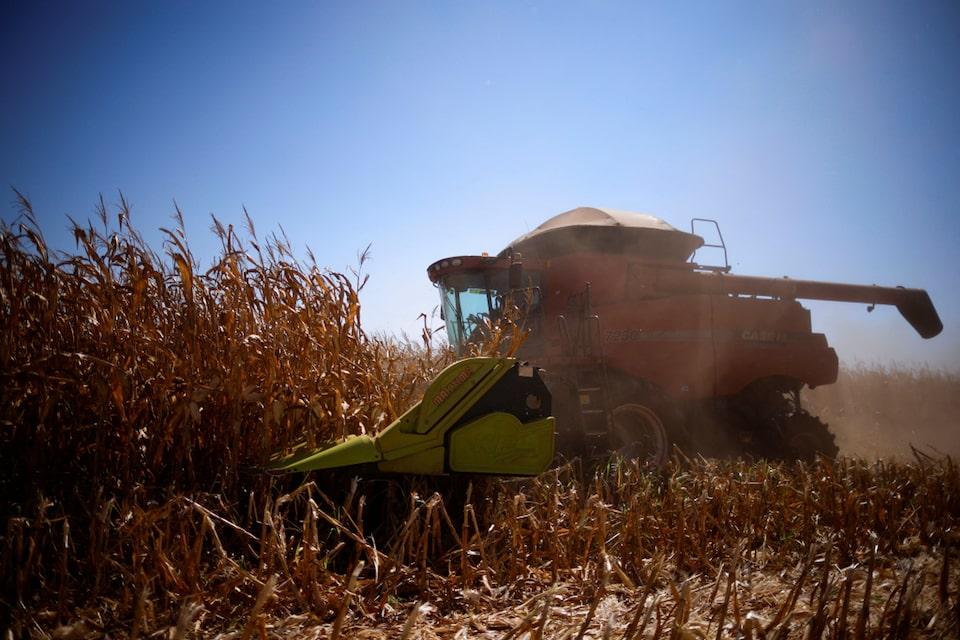
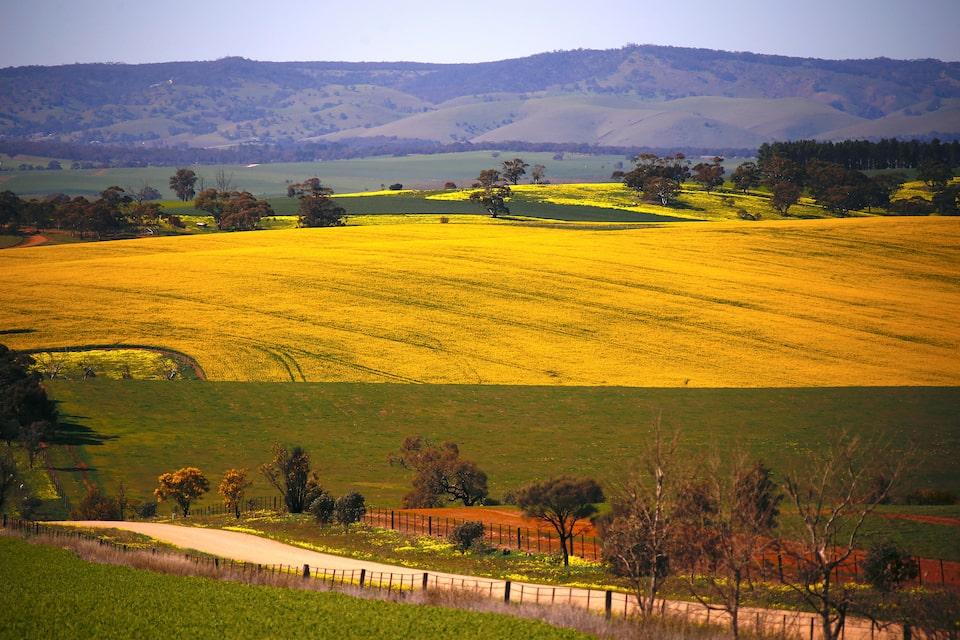
SINGAPORE/BEIJING, Aug 18 (Reuters) - Chinese state-run trading firm COFCO has booked a cargo of about 50,000 metric tons of new-crop Australian canola, two traders told Reuters, just days after Beijing imposed temporary levies on top supplier Canada. The purchase would mark China's first imports from Australia since 2020 when Australia, the world's second-largest canola exporter, was locked out of the Chinese market, largely due to phytosanitary restrictions aimed at preventing the spread of fungal plant disease. Sign up here. COFCO has purchased the cargo for November-December shipment and is negotiating for more deals, according to the two sources with direct knowledge of the deal. The purchase price is below $600 per ton, including freight, the sources said. COFCO did not immediately respond to Reuters' request for comment. Reuters reported in July that Canberra was close to reaching an agreement with Beijing to allow Australian suppliers to ship five trial canola cargoes to China. It remains unclear whether COFCO's recent purchases are part of this trial agreement. "One cargo is a done deal and there is talk (they are) going to buy more," said one of the sources, a Singapore-based trader. "Very soon there are going to be more deals." As the world's largest canola importer, China has sourced nearly all of its canola from Canada in recent years. However, Beijing's decision last week to impose a temporary 75.8% levy is expected to cut off Canadian canola from the Asian market. "The price is very good if you look at crush margins for canola in China," said the second trader also in Singapore, adding that canola to be shipped to China is from Australia's new crop due to be harvested in the coming months. "By the time it arrives in China it will be end of December or early next year." Both cargoes were genetically modified organisms (GMO), which require special licenses in China, the sources said. Acquiring GMO approval was the final hurdle before China would agree to import canola cargoes from Australia, according to two other sources familiar with the matter. On Friday, China's Ministry of Agriculture and Rural Affairs (MARA) granted seven GMO Safety Certificate approvals to COFCO Oils & Oilseeds Trading Co., a COFCO subsidiary, without disclosing specific details, an official website showed. MARA did not immediately respond to Reuters' requests for comment. https://www.reuters.com/world/china/china-buys-first-australian-canola-cargo-since-2020-traders-say-2025-08-18/
2025-08-18 12:07
Syria needs to import 53% more wheat in 2025/26 than in 2024/25 No major wheat deals announced by new Syrian government yet Wheat is Syria's top crop supporting a bread-subsidy programme Syria experiencing worst drought since 1989, UN agencies say Russia scales back wheat exports following Assad ouster DUBAI, Aug 18 (Reuters) - Syria faces a potential food crisis after the worst drought in 36 years slashed wheat production by around 40%, squeezing the country's cash-strapped government, which has been unable to secure large-scale purchases. Around three million Syrians could face severe hunger, the United Nations' World Food Programme told Reuters in written answers to questions, without giving a timeframe. Sign up here. Over half of the population of about 25.6 million is currently food insecure, it added. In a June report, the U.N.'s Food and Agriculture Organization estimated , opens new tab that Syria faced a wheat shortfall of 2.73 million metric tons this year, or enough to feed around 16 million people for a year. The situation poses a challenge to President Ahmed al-Sharaa, whose government is seeking to rebuild Syria after a 14-year civil war that saw the toppling of long-time ruler Bashar al-Assad in December. Wheat is Syria's most important crop and supports a state-subsidised bread programme - a vital part of everyday life. Yet Sharaa's government has been slow to mobilise international support for big grain purchases. Reuters spoke to a Syrian official, three traders, three aid workers and two industry sources with direct knowledge of wheat procurement efforts, who said more imports and financing were needed to alleviate the impending shortage. The new government has only purchased 373,500 tons of wheat from local farmers this season, the Syrian government official said, speaking on condition of anonymity. That is around half of last year's volume. The government needs to import around 2.55 million tons this year, the source added. So far, however, Damascus has not announced any major wheat import deals and is relying on small private shipments amounting to around 200,000 tons in total through direct contracts with local importers, the two industry sources said, also declining to be named due to the sensitivity of the matter. The ministry of information did not respond to a request for comment. "Half of the population is threatened to suffer from the drought, especially when it comes to the availability of bread, which is the most important food during the crisis," Toni Ettel, FAO's representative in Syria, told Reuters. So far, Syria has received only limited emergency aid, including 220,000 tons of wheat from Iraq and 500 tons of flour from Ukraine. 'THE WORST YEAR' While Syria consumes around four million tons of wheat annually, domestic production is expected to fall to around 1.2 million tons this year, down 40% from last year, according to FAO figures. "This has been the worst year ever since I started farming," said Nazih Altarsha, whose family has owned six hectares of land in Homs governorate since 1960. Abbas Othman, a wheat farmer from Qamishli, part of Syria's breadbasket region in northeast Hasaka province, didn't harvest a single grain. "We planted 100 donums (six hectares) and we harvested nothing," he told Reuters. Only 40% of farmland was cultivated this season, much of which has now been ruined, particularly in key food-producing areas like Hassakeh, Aleppo, and Homs, the FAO said. Local farmers were encouraged to sell what they salvaged from their crop to the government at $450 a ton, around $200 per ton above the market price as an incentive, the official source said. "In a good year I can sell the government around 25 tons from my six hectares but this year I only managed to sell eight tons," said Altarsha, the Homs farmer. "The rest I had to just feed to my livestock as it wasn't suitable for human consumption," he said, hoping for better rains in December when the new planting season begins. Before the civil war, Syria produced up to four million tons of wheat in good years and exported around one million of that. U.S. POLICY SHIFT In a major U.S. policy shift in May, President Donald Trump said he would lift sanctions on Syria that risked holding back its economic recovery. The U.S. Department of Agriculture estimates Syria will need to import a record 2.15 million tons of wheat in 2025/26, up 53% from last year, according to the department's database. Still, Syria's main grain buying agency is yet to announce a new purchasing strategy. The agency did not respond to Reuters questions over the issue. Wheat imports also face payment delays due to financial difficulties despite the lifting of sanctions, according to two sources with direct knowledge of the matter. Food was not restricted by Western sanctions on Assad's Syria, but banking restrictions and asset freezes made it difficult for most trading houses to do business with Damascus. Russia, the world's largest wheat exporter and a staunch supporter of Assad, had been a steady supplier but to a large extent has suspended supplies since December over payment delays and uncertainty about the new government, sources told Reuters following Assad's ouster. https://www.reuters.com/world/middle-east/historic-drought-wheat-shortage-test-syrias-new-leadership-2025-08-18/

2025-08-18 12:00
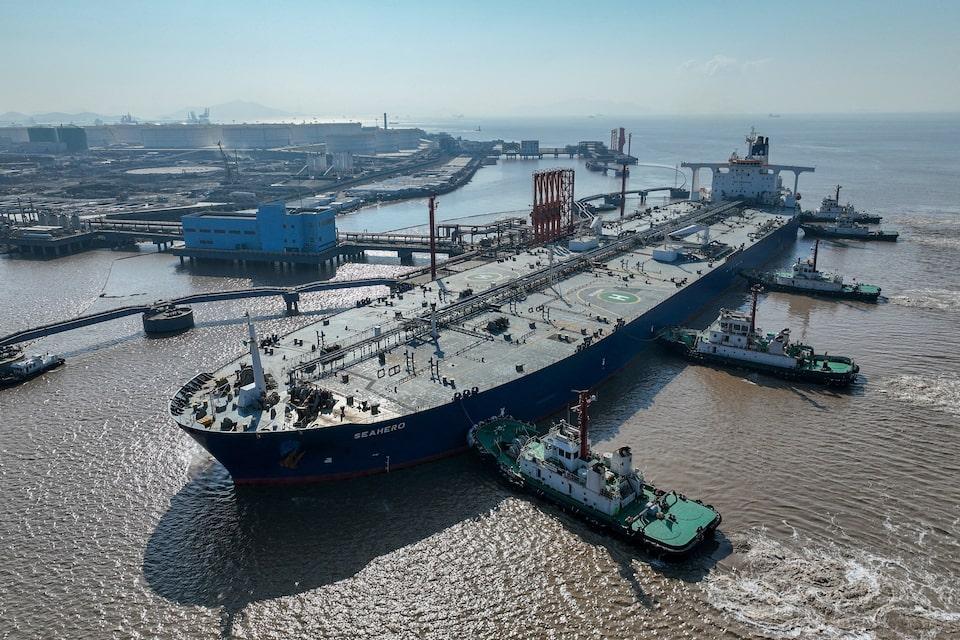
LAUNCESTON, Australia, Aug 18 (Reuters) - China's refiners lifted their processing rates in July, but strong crude oil imports and domestic output meant there was still a surplus of more than half a million barrels per day (bpd) available for storage. The volume of surplus crude in July fell to 530,000 bpd from 1.42 million bpd in June, according to calculations based on official data. Sign up here. Despite the decline in surplus oil, the key point is that refiners are still likely adding to stockpiles, which will allow them to trim imports should prices rise to levels they believe are not justified by market fundamentals. China does not disclose the volumes of crude flowing into or out of strategic and commercial stockpiles, but an estimate can be made by deducting the amount of oil processed from the total of crude available from imports and domestic output. Refiners processed 14.85 million bpd of crude in July, up 8.9% from the same month last year, but down 2% from June, although that month was the highest since September 2023. The utilisation rate rose to 71.84% in July, up 1.02 percentage points from June and 3.56 percentage points from July 2024, according to official data released on Aug. 15. China, the world's biggest crude importer, saw arrivals of 11.11 million bpd in July, while domestic production was 4.27 million bpd. This meant that a total of 15.38 million bpd was available to refiners, and subtracting the 14.85 million bpd that was processed leaves a surplus of 530,000 bpd. For the first seven months of the year China's surplus crude amounted to 980,000 bpd, the bulk of this being built up from March onwards as crude imports and domestic output rose at a faster rate than refinery processing. It is worth noting that not all of this surplus crude is likely to have been added to storage, with some being processed in plants not captured by the official data. But even allowing for gaps in the official data, it is clear that from March onwards China has been importing crude at a far higher rate than it needs to meet its domestic fuel requirements. CRUDE IMPORTS The question for the market is whether the recent strength in crude imports will persist or if they will decline in coming months as refiners use more of their stockpiled oil. The key is generally prices, with China's refiners showing a pattern of increasing imports when they deem prices to be reasonable, but cutting back when they believe they have risen too high, or too quickly. The increase in crude imports from March onwards coincided with a declining trend in prices, with global benchmark Brent crude falling from a high of $82.63 a barrel on January 15 to a four-year low of $58.50 on May 5. Since then the picture has been more volatile, with the brief conflict between Israel and Iran, later joined by the United States, sending Brent to a high of $81.40 a barrel on June 23, before prices slipped back to around $65.57 in early Asian trade on Monday. It's possible that the rising prices from the May low to the June high may see China trim imports for cargoes arriving in late August and early September, as this would be the time period in which they were arranged. The move by top exporter Saudi Arabia to increase its official selling prices for both August- and September-loading cargoes may also see China buy fewer cargoes. But if refinery processing rates continue to rise and Chinese refiners continue their recent trend of exporting more fuels such as diesel and gasoline, imports of crude may hold up in coming months. Enjoying this column? Check out Reuters Open Interest (ROI), your essential new source for global financial commentary. ROI delivers thought-provoking, data-driven analysis of everything from swap rates to soybeans. Markets are moving faster than ever. ROI can help you keep up. Follow ROI on LinkedIn , opens new tab and X , opens new tab. The views expressed here are those of the author, a columnist for Reuters. https://www.reuters.com/markets/commodities/china-still-storing-crude-oil-even-refinery-runs-rise-2025-08-18/