2025-08-18 10:40
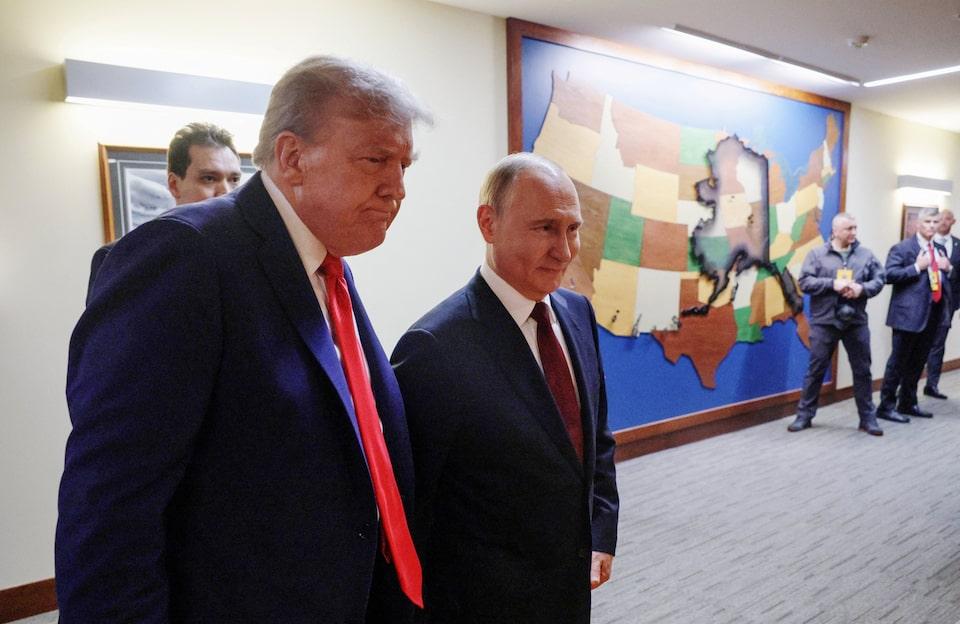
LONDON, August 18 (Reuters) - A look at the day ahead in U.S. and global markets by Dhara Ranasinghe, European Financial Markets Editor After Donald Trump and Russian President Vladimir Putin's gathering in Alaska, it's now Ukraine President Volodymyr Zelenskiy and European leaders’ turn to meet the U.S. President. They’re all gathering on Monday to map out a peace deal to end the war in Ukraine. Sign up here. Unsurprisingly, the response from financial markets to Friday's Alaska summit has been muted, to say the least. Oil prices , the euro and Ukraine's bonds are little changed. * The fear (from Europe) is that Trump could try to pressure Kyiv into accepting a settlement favourable to Moscow. Zelenskiy has already all but rejected the outline of Putin's proposals, including for Ukraine to give up the rest of its eastern Donetsk region, of which it currently controls a quarter. Analysts reckon a ceasefire remains some way off, meaning geopolitical tensions remain a potential headwind to otherwise pretty buoyant world stock markets. * Markets will likely be on alert for any sign of deterioration in Trump’s further talks with Putin. Especially those that might prompt the U.S. president to impose secondary tariffs targeting Russian energy trading, say with India. In an opinion piece published in Monday's Financial Times, White House trade adviser Peter Navarro said India's Russian crude buying was funding Moscow's war in Ukraine and had to stop. * Trump's meeting with Zelenskiy in Washington is one key gathering markets have their eye on this week. The other, the Federal Reserve's annual central bank conference in Jackson Hole, Wyoming, takes place later this week. Fed chief Jerome Powell's speech there on Friday is expected to be his valedictory speech , opens new tab before his term ends next May. In Mike Dolan’s column today, he looks at what could disturb the eerily calm credit markets. Today's Market Minute * Ukraine's Volodymyr Zelenskiy and European leaders will meet Donald Trump in Washington on Monday to map out a peace deal amid fears the U.S. president could try to pressure Kyiv into accepting a settlement favourable to Moscow. * India aims to slash taxes on small cars and insurance premiums as part of a sweeping reform of its goods and services tax (GST), a government source said on Monday, as Prime Minister Narendra Modi's plan sparked a rally in stock markets. * Hong Kong's debt-laden developers and their creditors are set to face intensifying financial pressure as bond maturities are slated to jump by nearly 70% next year amid falling sales and valuations for the city's economically crucial property sector. * China's refiners lifted their processing rates in July, they are still likely adding to their stockpiles, which will allow them to trim imports should prices rise to levels they believe are not justified by market fundamentals. * News that Chinese battery giant CATL has suspended operations at its giant Jianxiawo mine has lit a fire under the lithium market, writes ROI columnist Andy Home. Chart of the day Although stock markets across the globe are at or near world highs, analysts say a ceasefire scenario is not yet priced in. So if there was any sign of a movement in that direction, risk assets - especially European shares - would be in a good position to rally further. Today's events to watch * Zelenskiy meets Trump in Washington * U.S. bills auction https://www.reuters.com/world/china/global-markets-view-usa-2025-08-18/

2025-08-18 10:20
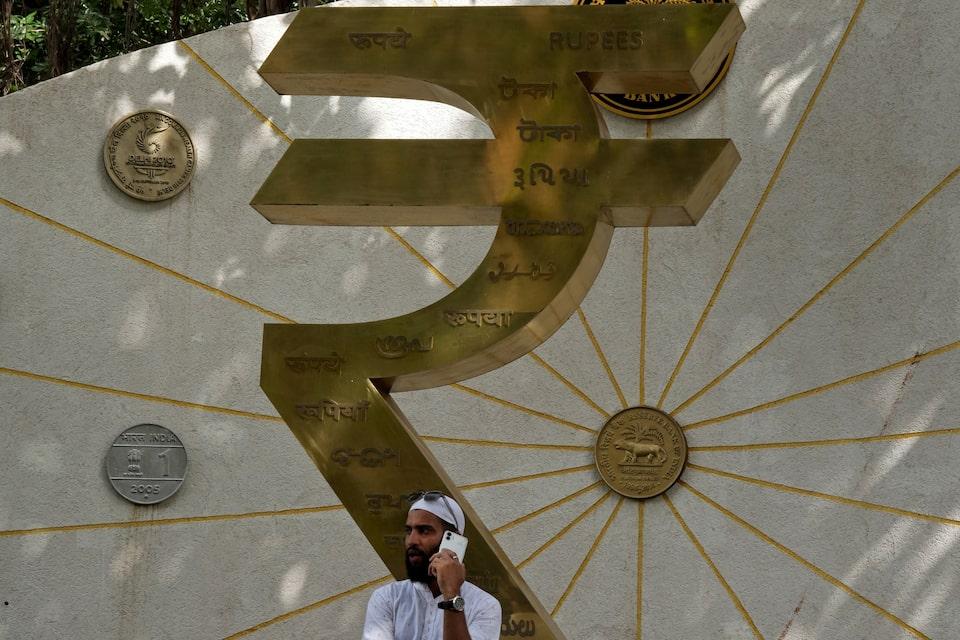
MUMBAI, Aug 18 (Reuters) - The Indian rupee rose on Monday, boosted by the rally in local equities on Prime Minister Narendra Modi's planned tax cuts, while forward premiums and volatility expectations barely budged following the Trump-Putin meeting. The rupee settled at 87.35 per U.S. dollar, up 0.23% from 87.55 in the previous session, rising in tandem with local shares. The Nifty 50 (.NSEI) , opens new tab rose 1% - the biggest single-day percentage gain since June 26, 2025 - to 24,876.95 points and the BSE Sensex (.BSESN) , opens new tab gained 0.84% to 81,273.75. Sign up here. New Delhi will propose a two-rate structure of 5% and 18%, doing away with the 12% and 28% tax that was imposed on some items, a government official said on Friday, after Modi announced the reforms. The tax cuts are expected to boost consumption in India's economy, with steep U.S. tariffs threatening economic growth, dragging the rupee and dampening the foreign investor appetite for local equities. The tax cuts, coupled with faint hopes of progress on a Russia–Ukraine deal, could encourage foreign investors back into Indian equities, lending support to the rupee, traders said. Following his meeting with Russian leader Vladimir Putin, U.S. President Donald Trump is pressing for a Russia-Ukraine deal. Ukraine's Volodymyr Zelenskiy flies to Washington on Monday for meeting Trump. Any tangible progress would likely be taken as a boost for the rupee, traders say, as it could improve the odds that Trump might reverse the additional 25% tariffs on Indian goods for purchase of Russian oil, currently scheduled to take effect on Aug. 27. The rupee's near-term outlook remains tethered to how U.S.–India trade relations shape up, Kunal Kurani, vice president at FX risk advisory firm Mecklai Financial, said. For now, he is advising his importer clients to hedge on dips on the dollar/rupee pair. Meanwhile, the dollar/rupee forward premiums and volatility expectations barely moved in response to the Trump–Putin meeting over the weekend, in line with the mostly muted reaction seen across Asian markets. https://www.reuters.com/world/india/rupee-ends-higher-alongside-local-equities-premiums-volatility-flat-2025-08-18/
2025-08-18 09:44
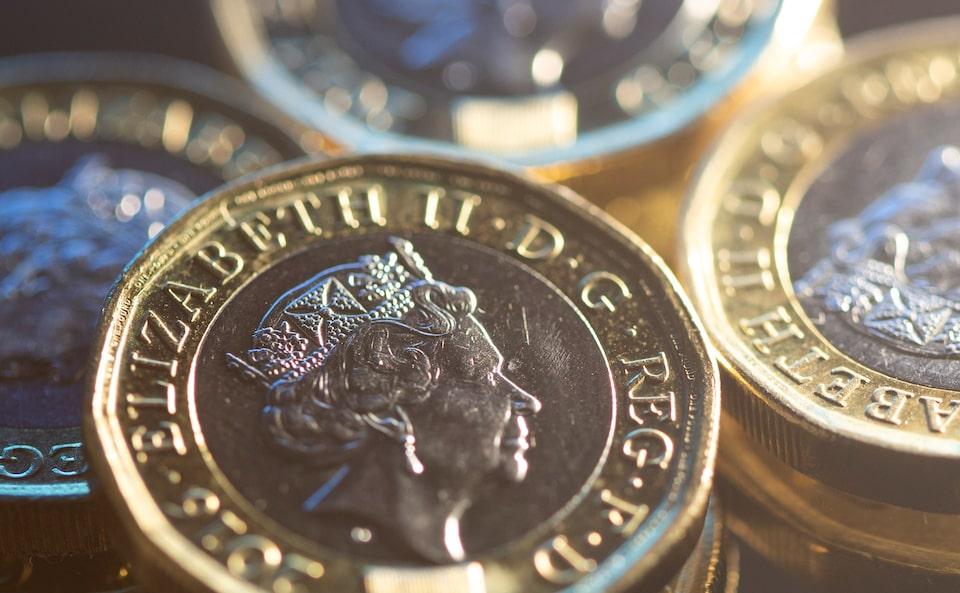
Aug 18 (Reuters) - Sterling treaded water against the dollar on Monday as investors focused on a pending meeting between U.S. President Donald Trump and leaders from Ukraine and Europe as well as UK consumer inflation data due later in the week. Sterling was flat at $1.3547 on the day but has gained about 2% against the dollar over August so far, helped by upbeat economic data and a hawkish rate cut by the Bank of England earlier in the month. Sign up here. Britain's consumer inflation data for July is due on Wednesday and analysts at Goldman Sachs reckon that the domestic macro backdrop will continue to be a key source of volatility for the currency’s performance versus European peers. Goldman Sachs forecasts imply that core inflation in Britain edged down to 3.62% last month, from 3.66% in June and 9 basis points below the level implied by the Bank of England's projections. "Even with regional underperformance, though, we continue to expect sterling’s high beta to the Euro to support an upward path in GBP/USD," analysts at Goldman Sachs said in a note. On Monday, the euro was down 0.1% against sterling at 0.8624. "We do think that the UK's CPI data is going to come in a little hotter this week. That should temporarily support the pound but PMI (data) on Thursday should reverse that," said Nick Rees, head of macro research at Monex Europe. "We think you're going to see increased divergence between the UK and euro zone economies." The major economic event for global markets this week will be the Kansas City Federal Reserve's August 21-23 Jackson Hole symposium. Fed Chair Jerome Powell is due to speak on the economic outlook and the central bank's policy framework on Friday. Money markets are currently pricing in an 85% chance that the Fed will cut policy rates by 25 basis points next month. https://www.reuters.com/world/uk/sterling-treads-water-markets-await-ukraine-talks-uk-cpi-2025-08-18/
2025-08-18 07:32
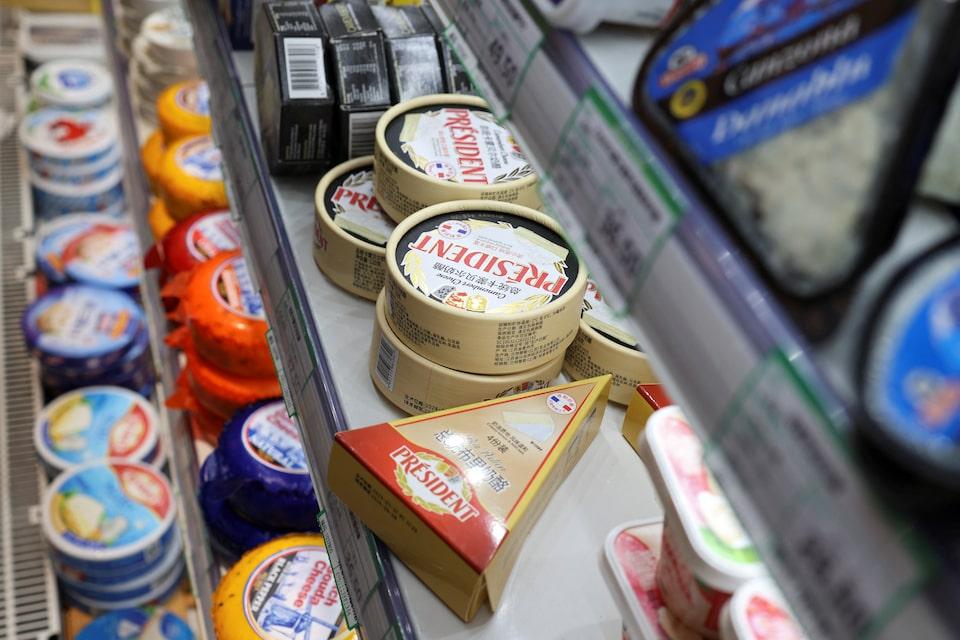
BEIJING, Aug 18 (Reuters) - China's Commerce Ministry on Monday extended its anti-subsidy investigation into dairy products from the European Union to February 21, 2026, according to a ministry statement. Sign up here. https://www.reuters.com/world/china/china-extends-probe-into-eu-dairy-products-february-2026-2025-08-18/
2025-08-18 07:14
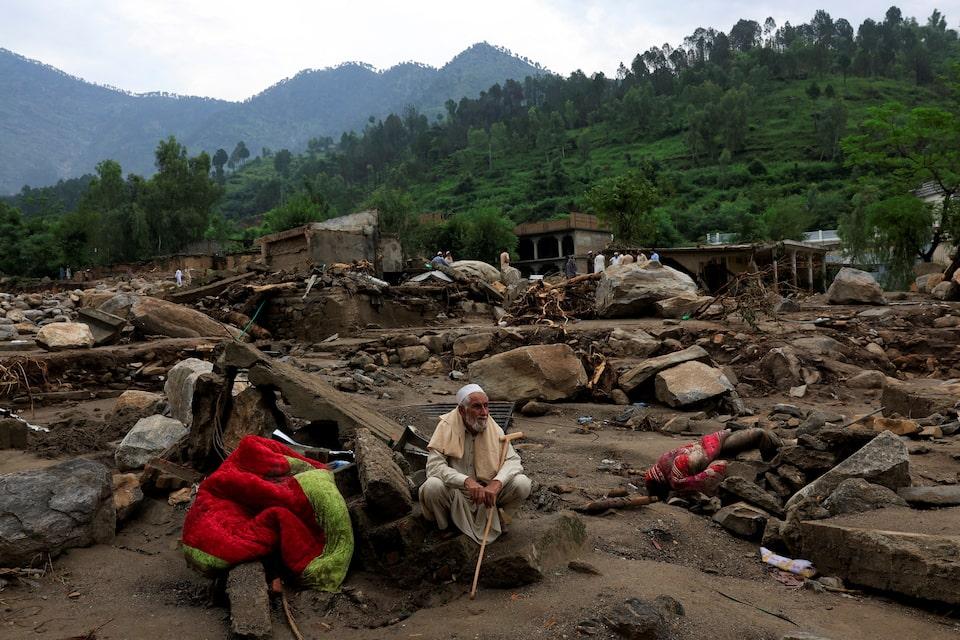
Panicked residents run to higher ground after more rain Excavator machine at work to remove mud, fallen trees `It was like a doomsday scenario,` says a resident Rescuers shifting people to relief camps BUNER, Pakistan, Aug 18 (Reuters) - Heavy rain in northwest Pakistan halted rescue and relief operations for several hours on Monday before resuming in the northwest region where flash floods have killed over 300 people since Friday, officials said. The intense rain has claimed lives and spread destruction in several northern districts, with most people killed in flash floods, according to the National Disaster Management Authority. Sign up here. In hilly areas, the rains caused flash floods as well as mud and rock slides that washed away houses, buildings, vehicles and belongings. "It was like a doomsday scenario," 24-year-old university student Sahil Khan told Reuters TV, describing the flash floods. "Everybody is scared. Children are scared. They cannot sleep." Buner district was the worst hit, with over 200 deaths. Heavy rain in the flood-hit areas, including Buner, forced rescue teams to halt relief efforts for several hours on Monday, a regional government officer, Abid Wazir, told Reuters. "Our priority is now to clear the roads, set up bridges and bring relief to the affected people," he said. Residents in Buner's Bayshonai Kalay village panicked and ran to higher ground after a water channel that had earlier overflowed and caused major devastation started swelling with the fresh rain on Monday, according to Reuters witnesses. Rescuers from local government, the disaster management authority and the army used excavator machines to clear the roads and streets from mud, fallen trees and electric poles. Relief goods have been sent to the affected areas, Information Minister Attaullah Tarar said in a recorded video statement on Monday. Food, medicine, blankets, camps, an electric generator and de-watering pumps are included in the relief goods, the authority said in a statement. Buner, a three-and-a-half-hour drive from the capital Islamabad, was hit by a cloudburst, a rare phenomenon in which more than 100 mm (4 inches) of rain falls within an hour in a small area, officials said. In Buner, there was more than 150 mm of rain within an hour on Friday morning, they said. More heavy rain was expected across Pakistan until early September, officials said. "The current weather system is active over the Pakistan region and may cause heavy to very heavy rainfall during the next 24 hours," the disaster management authority said on Sunday. Torrential rains and flooding this monsoon season have killed 657 people across Pakistan since late June, it said. https://www.reuters.com/business/environment/pakistan-resumes-rescue-operations-flood-hit-areas-death-toll-over-300-2025-08-18/
2025-08-18 06:37
Aug 18 (Reuters) - There seems to be very little standing in the way of stock-market bulls right now, but what follows a U.S./Russia summit in Alaska, a central bank shin-dig in Wyoming and the outcome of Bolivia's election may imbue them with some caution. Here's your week ahead from Rocky Swift in Tokyo; Suzanne McGee and Rodrigo Campos in New York and Dhara Ranasinghe and Naomi Rovnick in London. Sign up here. 1/ BEGINNING OF THE END? Following Friday's meeting between Donald Trump and Russian President Vladimir Putin, it's the turn of Ukraine's President Volodymyr Zelenskiy and European leaders to meet the U.S. President later on Monday , opens new tab to map out a peace deal. The fear is Trump could try to pressure Kyiv into accepting a settlement favourable to Moscow. Zelenskiy has already all but rejected the outline of Putin's proposals, including for Ukraine to give up the rest of its eastern Donetsk region, of which it currently controls a quarter. No doubt, markets will be hesitant to price in an end to the war until a ceasefire, at least, is agreed. Europe, meanwhile, is unlikely to embrace Russia, even if peace returns to Ukraine. Defence stocks are likely to remain an investor favourite for now. 2/ JACKSON HOLE-IN-ONE It's officially summer in financial markets. Q2 earnings are out, the next crop of major economic data isn't until early September and many money managers and traders are heading out to the beaches for a break. There is just one thing to worry about: Jackson Hole. The Wyoming resort plays host to the annual central bankers' schmoozefest and will include Federal Reserve Chair Jerome Powell among its attendees. The conference takes place as stocks hover near record levels, and Trump continues to take pot-shots at Powell. Jackson Hole has the potential to be disruptive. Any hint from Powell that a September rate cut isn't happening and markets could sell off hard, while an overly upbeat tone from the Fed chair may feed more euphoria. “And bull markets die in euphoria,” says Steve Sosnick, strategist at trading firm IBKR. 3/ STAGFLATION NATION As global stocks rally, everything from weak U.S. jobs data to trouble at the top of the Federal Reserve has been a reason to bet on U.S. rate cuts, meaning it's not been profitable to be bearish. About 60% of global investors surveyed by BofA think U.S. stagflation could be the dominant global market regime within three months. A basket of stocks that do well in stagflationary environments, where growth slows as inflation accelerates, has been outpaced by Wall Street's benchmark S&P 500 index (.SPX) , opens new tab this year, Societe Generale strategists reckon. Next week's business surveys, which can show economic trends months before they appear in official data, will offer more clues about whether U.S. tariffs are driving the world's largest towards stagflation. SocGen, however, expects Fed rate cuts to inflate a stock-market bubble that might not pop until at least next year. 4/ OUTLIER With nearly every central bank looking to cut rates to give their economies a soft landing, the Bank of Japan stands apart in its mission to raise borrowing costs - in theory. So, next Friday's inflation data will be in focus for any sign of when the BOJ's long-pledged tightening cycle will resume. The previous reading of the core consumer price index (CPI) showed an annual 3.3% increase in June, remaining above the BOJ's 2% target for over three years. No bank went harder or longer with quantitative easing than the BOJ. But the long road towards normalisation has been complicated by uncertainty over U.S. tariffs and concerns about whether Japan was seeing the right kind of price increases. BOJ Governor Kazuo Ueda has justified slower rate hikes because underlying inflation, which focuses on domestic demand and wages, remains below the central bank's target. 5/ PICK ME Centrist senator Rodrigo Paz was leading Bolivia's presidential election late on Sunday. The election kicks off a string of national and local votes across Latin America that extends into late next year, when behemoth Brazil votes to elect a new (or sitting) president. After 2022's "pink tide" brought left-leaning governments to power in Chile, Colombia and Brazil, investors want to see if voters will return to more market-friendly right-wingers. Ahead of the Bolivian election, the country's bonds rallied on hopes that political change could bring the economy back from the brink. Argentina's local elections in September and October are seen as a gauge of the popularity of President Javier Milei's radical economic transformation. Chile votes for a president in November, while next year Colombia elects its congress in March and president in May. Peru holds a presidential election in April and Brazil does so in October 2026. https://www.reuters.com/world/china/global-markets-themes-update-1-graphic-2025-08-15/