2025-08-18 03:05
MUMBAI, Aug 18 (Reuters) - The Indian rupee is poised to open higher on Monday, supported by a likely rally in local equities after Prime Minister Narendra Modi’s sweeping tax reforms to boost growth, though persistent U.S.–India trade tensions should cap the advance. The 1-month non-deliverable forward indicated the rupee will open in the 87.50-87.52 range versus the U.S. dollar, compared with 87.55 on Thursday. Indian financial markets were closed on Friday. Sign up here. Gift Nifty futures indicated that the Nifty 50 (.NSEI) , opens new tab will open more than 1% higher after India announced sweeping tax reforms to lift the economy in the face of a trade conflict with Washington. The rupee will "see a bit of lift from equity, however it’s hard to see it doing much with the U.S.–India trade cloud hanging overhead,” said a Mumbai-based FX trader. "The downside (on dollar/rupee) is capped, and any dip will likely be faded." TRUMP-PUTIN MEETING The outcome of the weekend's Trump–Putin meeting did not evoke much of a reaction from Asian equities and currencies. U.S. President Donald Trump has said a full-fledged peace deal for Ukraine remained the ultimate aim rather than a mere ceasefire. After talks with Russian President Vladimir Putin, Trump said he would delay new tariffs on countries like China that continue purchasing Russian oil. Absent from his remarks was any reference to India, which remains on track to face an additional 25% duty starting August 27. Adding to the pressure on the rupee, Washington has scrapped a planned August 25–29 visit by trade negotiators to New Delhi, shelving discussions on a potential trade deal and extinguishing hopes of relief from the fresh tariffs on Indian goods. KEY INDICATORS: ** One-month non-deliverable rupee forward at 87.62; onshore one-month forward premium at 11.5 paise ** Dollar index up at 97.88 ** Brent crude futures down 0.1% at $65.8 per barrel ** Ten-year U.S. note yield at 4.31% ** As per NSDL data, foreign investors sold a net $258.2mln worth of Indian shares on Aug. 13 ** NSDL data shows foreign investors bought a net $200.5mln worth of Indian bonds on Aug. 13 https://www.reuters.com/world/india/rupee-receive-risk-boost-us-india-trade-discord-overhang-persists-2025-08-18/

2025-08-18 00:40
Asian stock markets : Nikkei makes new high, Wall St futures firm Oil slips as Zelenskiy goes to Washington Dollar defensive ahead of Fed conference SYDNEY, Aug 18 (Reuters) - Share markets edged higher in Asia on Monday ahead of what is likely to be an eventful week for U.S. interest rate policy, while oil prices slipped as risks to Russian supplies seemed to fade a little. U.S. President Donald Trump now seemed more aligned with Moscow on seeking a peace deal with Ukraine instead of a ceasefire first, after meeting Russian President Vladimir Putin in Alaska on Friday. Sign up here. Trump will meet Ukrainian President Volodymyr Zelenskiy and European leaders later on Monday to discuss the next steps, though actual proposals are vague as yet. The major economic event of the week will be the Kansas City Federal Reserve's August 21-23 Jackson Hole symposium, where Chair Jerome Powell is due to speak on the economic outlook and the central bank's policy framework. "Chair Powell will likely signal that risks to the employment and inflation mandates are coming into balance, setting up the Fed to resume returning policy rate to neutral," said Andrew Hollenhorst, chief economist at Citi Research. "But Powell will stop short of explicitly signalling a September rate cut, awaiting the August jobs and inflation reports," he added. "This would be fairly neutral for markets already fully pricing a September cut." Markets imply around an 85% chance of a quarter-point rate cut at the Fed's meeting on September 17, and are priced for a further easing by December. The prospect of lower borrowing costs globally have underpinned stock markets and Japan's Nikkei (.N225) , opens new tab firmed 0.5% to a fresh record high. MSCI's broadest index of Asia-Pacific shares outside Japan (.MIAPJ0000PUS) , opens new tab was a fraction lower, having hit a four-year top last week. EUROSTOXX 50 futures rose 0.3%, while FTSE futures and DAX futures gained 0.2%. SOLID EARNINGS S&P 500 futures nudged up 0.1%, while Nasdaq futures added 0.2% with both near all-time highs. Valuations have been underpinned by a solid earnings season as S&P 500 EPS grew 11% on the year and 58% of companies raised their full-year guidance. "Earnings results have continued to be exceptional for the mega-cap tech companies," noted analysts at Goldman Sachs. "While Nvidia has yet to report, the Magnificent 7 apparently grew EPS by 26% year/year in 2Q, a 12% beat relative to consensus expectation coming into earnings season." This week's results will provide some colour on the health of consumer spending with Home Depot, Target, Lowe's and Walmart all reporting. In bond markets, the chance of Fed easing is keeping down short term Treasury yields while the longer end is pressured by the risk of stagflation and giant budget deficits, leading to the steepest yield curve since 2021. European bonds also have been pressured by the prospect of increased borrowing to fund defence spending, pushing German long-term yields to 14-year highs. Wagers on more Fed easing has weighed on the dollar, which dropped 0.4% against a basket of currencies last week to last stand at 97.851 . The dollar was a fraction firmer on the yen at 147.33 , while the euro held at $1.1704 after adding 0.5% last week. The dollar has fared better against its New Zealand counterpart as the country's central bank is widely expected to cut rates to 3.0% on Wednesday. In commodity markets, gold was stuck at $3,328 an ounce after losing 1.9% last week. Oil prices struggled as Trump backed away from threats to place more restrictions on Russian oil exports. Brent dropped 0.4% to $65.61 a barrel, while U.S. crude eased 0.2% to $62.67 per barrel. https://www.reuters.com/world/china/global-markets-wrapup-1-2025-08-18/

2025-08-18 00:39
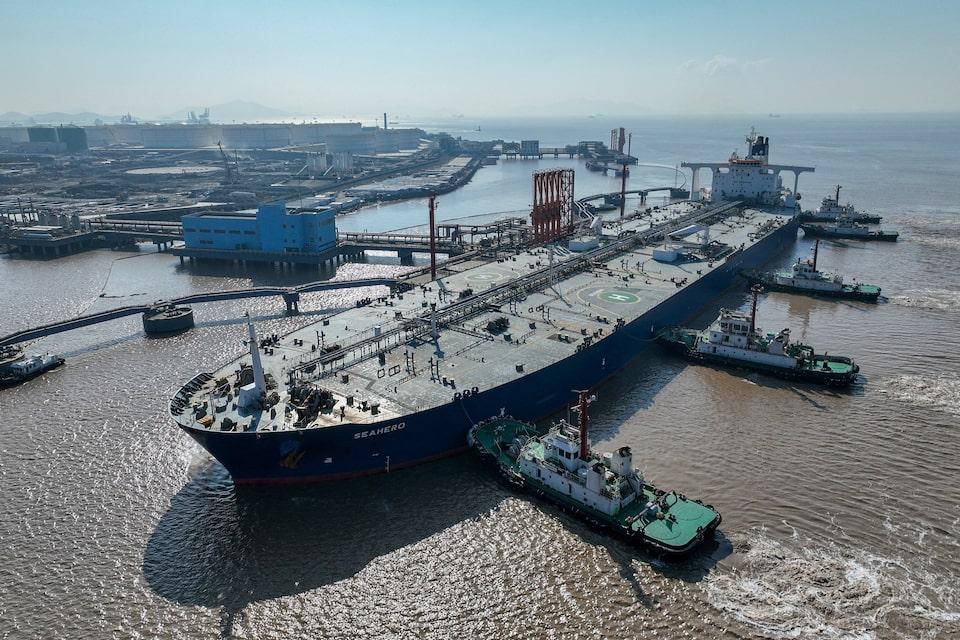
LAUNCESTON, Australia, Aug 18 (Reuters) - China's refiners lifted their processing rates in July, but strong crude oil imports and domestic output meant there was still a surplus of more than half a million barrels per day (bpd) available for storage. The volume of surplus crude in July fell to 530,000 bpd from 1.42 million bpd in June, according to calculations based on official data. Sign up here. Despite the decline in surplus oil, the key point is that refiners are still likely adding to stockpiles, which will allow them to trim imports should prices rise to levels they believe are not justified by market fundamentals. China does not disclose the volumes of crude flowing into or out of strategic and commercial stockpiles, but an estimate can be made by deducting the amount of oil processed from the total of crude available from imports and domestic output. Refiners processed 14.85 million bpd of crude in July, up 8.9% from the same month last year, but down 2% from June, although that month was the highest since September 2023. The utilisation rate rose to 71.84% in July, up 1.02 percentage points from June and 3.56 percentage points from July 2024, according to official data released on Aug. 15. China, the world's biggest crude importer, saw arrivals of 11.11 million bpd in July, while domestic production was 4.27 million bpd. This meant that a total of 15.38 million bpd was available to refiners, and subtracting the 14.85 million bpd that was processed leaves a surplus of 530,000 bpd. For the first seven months of the year China's surplus crude amounted to 980,000 bpd, the bulk of this being built up from March onwards as crude imports and domestic output rose at a faster rate than refinery processing. It is worth noting that not all of this surplus crude is likely to have been added to storage, with some being processed in plants not captured by the official data. But even allowing for gaps in the official data, it is clear that from March onwards China has been importing crude at a far higher rate than it needs to meet its domestic fuel requirements. CRUDE IMPORTS The question for the market is whether the recent strength in crude imports will persist or if they will decline in coming months as refiners use more of their stockpiled oil. The key is generally prices, with China's refiners showing a pattern of increasing imports when they deem prices to be reasonable, but cutting back when they believe they have risen too high, or too quickly. The increase in crude imports from March onwards coincided with a declining trend in prices, with global benchmark Brent crude falling from a high of $82.63 a barrel on January 15 to a four-year low of $58.50 on May 5. Since then the picture has been more volatile, with the brief conflict between Israel and Iran, later joined by the United States, sending Brent to a high of $81.40 a barrel on June 23, before prices slipped back to around $65.57 in early Asian trade on Monday. It's possible that the rising prices from the May low to the June high may see China trim imports for cargoes arriving in late August and early September, as this would be the time period in which they were arranged. The move by top exporter Saudi Arabia to increase its official selling prices for both August- and September-loading cargoes may also see China buy fewer cargoes. But if refinery processing rates continue to rise and Chinese refiners continue their recent trend of exporting more fuels such as diesel and gasoline, imports of crude may hold up in coming months. Enjoying this column? Check out Reuters Open Interest (ROI), your essential new source for global financial commentary. ROI delivers thought-provoking, data-driven analysis of everything from swap rates to soybeans. Markets are moving faster than ever. ROI can help you keep up. Follow ROI on LinkedIn , opens new tab and X , opens new tab. The views expressed here are those of the author, a columnist for Reuters. https://www.reuters.com/markets/commodities/china-still-storing-crude-oil-even-refinery-runs-rise-russell-2025-08-18/
2025-08-17 23:17
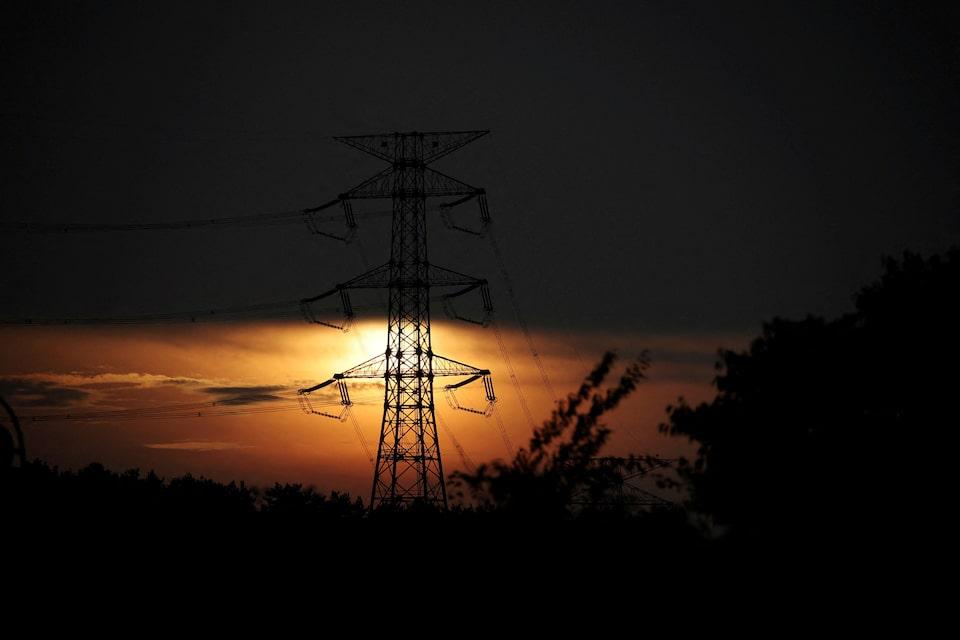
Nuclear's 2024 share in power mix at 31.7% vs 25.9% in 2019 Coal's share declines to 28.1% from 40.4% before pandemic Coal use down due to cheaper nuclear power, grid constraints Declining industrial power demand also capping LNG use SINGAPORE/SEOUL, August 18 (Reuters) - South Korea's nuclear power output is racing ahead of official targets due to fewer maintenance outages, a new plant coming online and reactors running at full tilt, helping to rein in generation costs and pushing down coal usage. Generation from nuclear plants grew 8.7% year-over-year in the six months through June - three times official plans for 2.9% annual growth - while coal-fired output plunged 16%, data from state-run utility Korea Electric Power Corp (KEPCO) showed. Sign up here. "The basic principle of generator operation in the power market is minimization of generation costs. Nuclear power generally has lower fuel costs than other generation sources such as coal and liquefied natural gas (LNG)," a Korea Power Exchange (KPX) spokesperson said in a statement to Reuters. "If nuclear and renewable facilities continue to be additionally expanded in the future, generation from gas and coal is likely to continue to decrease," the spokesperson said. A 29% annual decline in maintenance outage times and a 6% increase in installed nuclear capacity in the first half of 2025 also boosted output, KPX said. The 1.4 GW Shin Hanul #2 plant southeast of Seoul came online in April 2024. South Korea is Asia's No.2 nuclear power generator after China. It is ramping up nuclear generation as policy resistance to the technology is waning, with Japan restarting idled plants and new reactors beginning commercial operations in India. The country of 51 million people operates 26 nuclear reactors with 26.05 GW of capacity and is building four more, including two units totalling 2.8 GW expected online in 2026. Tighter safety checks and maintenance shutdowns after the 2011 Fukushima disaster in Japan curbed nuclear output in South Korea last decade, lifting coal and LNG use. However, nuclear output has risen 6.1% annually since power consumption stabilised in 2022, and President Lee Jae Myung, who took office in June, has pledged continued support. Nuclear's share of power generation rose to 31.7% in 2024 from 25.9% in 2019, KEPCO data showed, offsetting most of coal's decline to 28.1% from 40.4% across the same years. That helped South Korea cut its energy import costs, with overseas coal volumes falling 8% annually on average from 2022 levels, according to customs data, and the coal import bill falling 23% over that period to $15.4 billion last year. TRANSMISSION CONSTRAINTS The growth in nuclear power is crowding out coal-fired power on transmission lines in South Korea. "Plenty of coal plants are sitting idle not by choice, but because there's no spare capacity on the transmission lines to carry more power," said Seunghoon Yoo, professor in the energy department in the Seoul National University of Science and Technology. Transmission constraints have also capped renewables, which along with hydropower provide just over a tenth of annual power generation, compared with a global average of 30%, according to the Institute for Energy Economics and Financial Analysis (IEEFA , opens new tab). Power demand has mainly been driven by higher cooling requirements since 2022, KEPCO data showed, as industrial demand declines. Slow power demand growth has also discouraged operation of expensive gas-fired plants through the day despite the proximity of most of those facilities to Seoul. Gas is increasingly used to manage volatility, KPX said. "There has been an increasing pattern of gas plants operating during the morning peak hours, stopping around midday when demand is at its minimum, and restarting for the evening peak," the power exchange said. Electricity use by semiconductor manufacturers and data centres is rising but has not impacted fuel procurement, South Korea's energy ministry said. https://www.reuters.com/sustainability/boards-policy-regulation/south-koreas-nuclear-power-output-surges-coal-use-plunges-2025-08-17/
2025-08-17 23:14
Aug 18 (Reuters) - Australia's top fuel retailer Ampol (ALD.AX) , opens new tab posted a 23% fall in profit in the first half of 2025 on Monday, hit by a drop in refinery margins and operational and weather-related disruptions, but the result was better than feared. Planned maintenance shutdowns and production losses from a cyclone disrupted operations, while weak Singapore refining margins pressured profitability at its Queensland refinery. Sign up here. The refinery's underlying operating earnings shrank substantially to A$1.1 million ($716,210) from A$89.5 million a year ago, while earnings from its fuel and infrastructure division also nearly halved to A$118.3 million. As a result, the company's net profit after tax from continuing operations fell to A$180.2 million on a replacement-cost basis for the six months ended June 30, compared with A$233.7 million a year ago. That beat the Visible Alpha consensus estimate of A$165.6 million. Ampol declared an interim dividend of 40 Australian cents per share, lower than 60 Australian cents per share paid out a year ago. ($1 = 1.5361 Australian dollars) ($1 = 1.5359 Australian dollars) https://www.reuters.com/business/energy/australias-ampols-h1-profit-slumps-lower-volumes-refinery-margins-2025-08-17/

2025-08-17 23:07
LONDON, Aug 18 (Reuters) - Asking prices for newly advertised British houses and apartments fell in the four weeks to mid-August but the drop was less notable than in the previous two months and sales in July were their highest for the time of year since 2020, a survey showed. Property website Rightmove said on Monday prices for homes put on sale between July 13 and August 9 dropped by 1.3% from the previous four weeks, in line with the normal mid-summer fall in prices. Sign up here. Asking prices had shown unusually big declines for the time of year in the previous two four-week periods. In annual terms, prices were up by 0.3%, Rightmove said. Colleen Babcock, Rightmove's property expert, said sellers were competing more on price. The number of sales agreed in July was the highest for the month since 2020 when demand for bigger homes was unleashed by the COVID-19 pandemic and government tax breaks. However, the number of available homes for sale again grew by more than the increase in sales during July, keeping the volume of homes for sale at a decade high. A third of homes on sale were cut in price while on the market, the second-highest proportion for the time of year in data going back to 2012. Babcock said this month's interest rate cut by the Bank of England - its fifth since August 2024 - was unlikely to push down mortgage costs much further but could encourage buyers. Two-year fixed-rate mortgage rates have fallen to 4.49% from 5.17% a year ago. Last week, the Royal Institution of Chartered Surveyors said Britain's housing market recovery lost steam at the fastest pace in a year in July and some buyers were worried about possible tax increases in finance minister Rachel Reeves' next budget. https://www.reuters.com/world/uk/asking-prices-uk-homes-drop-july-sales-hit-5-year-high-rightmove-says-2025-08-17/