2025-08-16 12:34
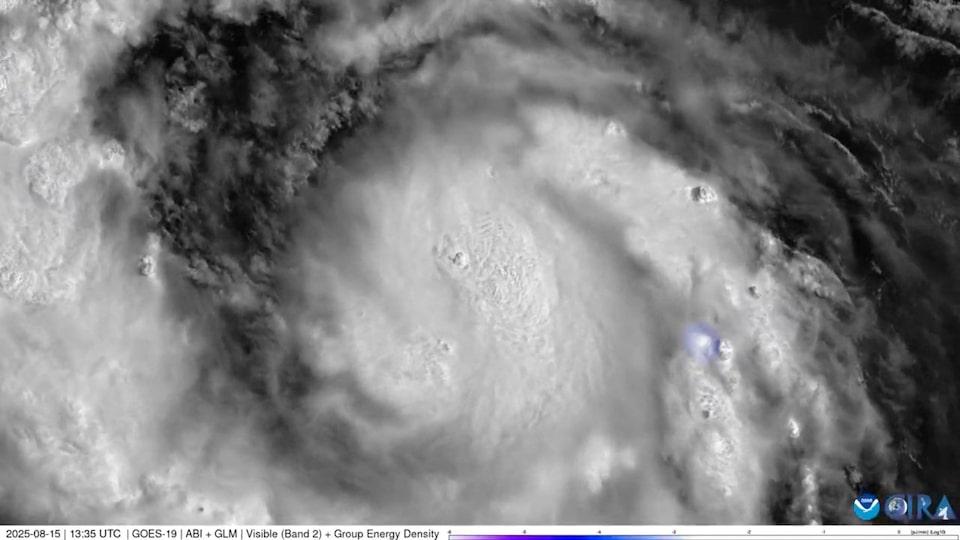
Aug 16 (Reuters) - Erin, the first hurricane of the 2025 Atlantic season, intensified into a dangerous Category 4 storm, the U.S. National Hurricane Center (NHC) said on Saturday. The storm is currently 120 miles (193 km) northeast of Anguilla, with maximum sustained winds of 145 mph (233 kph). Sign up here. Swells generated by Erin will affect portions of the northern Leeward Islands, the Virgin Islands, Puerto Rico, Hispaniola, and the Turks and Caicos Islands through the weekend, NHC said. The swells will spread to the Bahamas, Bermuda, and the east coast of the United States early next week, it said. Erin is expected to produce areas of heavy rainfall through Sunday across the northern Leeward Islands, the Virgin Islands, and Puerto Rico, the Center said. https://www.reuters.com/business/environment/category-4-hurricane-erin-continues-intensify-nhc-says-2025-08-16/
2025-08-16 11:16
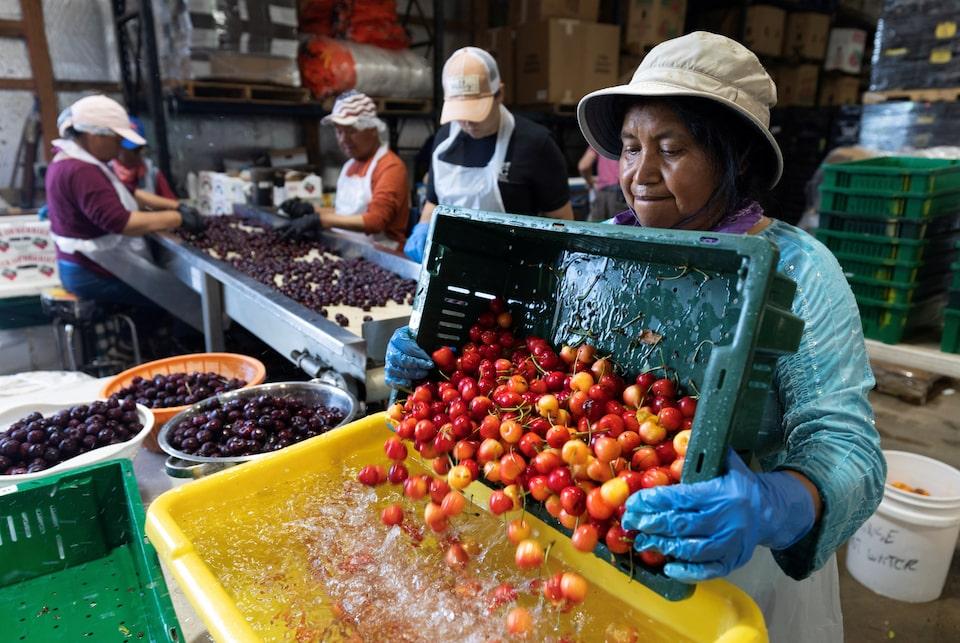
CENTRAL LAKE, MICHIGAN - The frost came in late April, sliding across the hills before dawn. Juliette King McAvoy stepped into the orchard, hoping the cold had spared the cherry buds. But they glittered in the morning sun like glass, just as dead. Weather had damaged much of the family orchard’s crop for the third time in five years. The blow landed on a farm and an industry already squeezed by the Trump administration’s changes to government services, immigration and trade policies. King Orchards’ harvest crew from Guatemala arrived in mid-July, short-handed and weeks late after delays in securing the H-2A seasonal farmworker visas they rely on each year. They paid more to ship fresh cherries by private carrier after a U.S. Postal Service reorganization left fresh fruit sitting a bit too long. A U.S. Department of Agriculture grant request for funding a cold-storage unit remained in limbo, as Washington cut spending on farm programs and agricultural research. And Jack King, Juliette’s brother and the farm’s agronomist, kept searching for fertilizer cheap enough to haul and untouched by President Donald Trump’s trade wars. “It all slows us down,” King McAvoy, the farm’s business manager, said during a brief pause in July’s harried harvest. Farmers in the hills near Grand Traverse Bay, where the fruit of their labor has filled pies and fed generations, said they are caught in the crosshairs of Trump’s reshaping of government, with sharp cuts and increasing delays hitting the $227 million U.S. tart cherry industry hard. From weather, plant disease and pest woes, USDA forecast Michigan will lose 41% of its tart cherry crop this year, compared to 2024. Northwest Michigan, where the King farm is located, faces the steepest drop – about 70%, according to the Cherry Industry Administrative Board. After the April freeze, King McAvoy’s phone rang. It was her friend and fellow grower, Emily Miezio, in Suttons Bay, Michigan. “What are you seeing?” Juliette stared at the trees. “I’m not sure. But it’s not good.” South of the Kings, the cold snap left farmer Don Gallagher’s trees sparse. “We can grow leaves,” he said, as his family hunted for fruit in the branches. “We just can’t grow cherries.” POLITICS AND TARIFFS Michigan’s cherry roots run deep, from French settlers bringing the fruit to the Midwest. The Montmorency, ruby-red and mouth-puckering, became the region’s signature, in pies, juice, dried fruit and the syrup Midwesterners spoon over cheesecake. When John King bought the farm in 1980, cherries were a Michigan birthright, like cars. He grew up in a General Motors family in Flint, working summers picking fruit. “It felt pure,” said King, now 74. He secured 80 acres of land with help from a federal loan. The roadside stand came with a preacher’s warning painted on the sign: Repent lest you perish in the fires of hell. He covered it with a rainbow and his dream: King Orchards. Today, it’s a full family operation: In addition to John’s daughter Juliette and son Jack, John’s wife Betsy runs the market with Jack’s wife, Courtney. John’s brother Jim manages the harvest; Jim’s wife Rose is chief baker; and their son-in-law Mark Schiller runs the hand-pick crews. Antrim County, where the farm sits, has long leaned Republican. The Kings, who are progressives, say the past few years have shown how national politics can ripple through their orchards. Trump’s sweeping tax-and-spending law expanded safety nets for large commodity crop operations, such as corn and soybeans, for feed and biofuels. But nutrition and local food programs fruit and vegetable growers depend on were slashed, and his trade policies chilled demand from top export partners, according to government data and academic researchers. While USDA did not answer Reuters' specific questions regarding challenges facing the cherry industry, a spokesperson said Trump’s law boosts the farm safety net, and includes increased funding for programs that support specialty crops and fight plant pests and diseases. The Kings and nearly a dozen other farmers across party lines told Reuters they expected tariffs to return if Trump won, but they hoped for a more surgical approach. About one-third of the Kings’ concentrate goes overseas, mostly to Taiwan and New Zealand. But Michigan’s crop loss will play a bigger role in diminished tart cherry exports than tariffs this year, the Kings and other growers said. The White House did not comment on questions about the administration’s trade policy. Asked about delivery delays, the USPS said it had a plan to save $36 billion over 10 years that would mean slightly slower delivery for some mail, but faster service for other customers. SHRINKING EXPORTS AND BUDGETS While Michigan orchards struggle to fill bins, branches are bending in the West, with Washington State’s sweet cherry production 29% bigger this year due to favorable weather, USDA forecasted. But growers there face different woes: fewer places to sell and low prices. In 2024, the U.S. exported nearly $506 million in fresh cherries worldwide – up 10% in value and 3% in volume from the year before, U.S. Census Bureau trade data shows. In the first half of this year, as Trump’s trade wars reignited, U.S. fresh fruit exports fell 17% in volume and 15% in value. U.S. shipments to China never fully recovered after Trump’s 2018 trade war. Sales to Canada also fell 18% by volume in the first six months. “There’s little appetite for U.S. products in Canada,” said Sylvain Charlebois, director of the Agri-Food Analytics Lab at Dalhousie University in Nova Scotia. Jon DeVaney, president of the Washington State Tree Fruit Association, said wholesale sweet cherry prices are slumping, and many Northwest farmers are losing money. Back in Michigan, sideways rain lashed Suttons Bay. Emily Miezio hunched in the downpour in her family and business partners’ orchard, watching the storm-lit sky. A worker steered a low-slung tree shaker to the trunk, clamping its arms tight. Tart cherries fell like red hail into a catching frame, funneled into bins, as another worker scooped out twigs and leaves, moving fast, racing the dawn. At the chilling station, a Michigan State University intern logged each truck with fruit to be cooled and processed by morning. Miezio, whose farm spans about 2,500 acres, leads the Cherry Marketing Institute, the tart cherry industry trade group. For years, they’d tried to claw back into China. “That door’s pretty much slammed shut,” she said, since the 2018 trade wars. Now they’re courting Mexico and South Korea. USDA HELP On Traverse City’s northern edge, the Northwest Michigan Horticulture Research Center is a 137-acre test farm. Run by Michigan State University and funded by USDA grants and grower money, it’s where Dr. Nikki Rothwell has spent more than two decades helping orchards survive. She’s got the sun-creased skin of someone who lives outdoors and a laugh like a cracked whip. Farmers lean on her, especially now. On a sticky summer morning, she walked the rows with interns and researchers, testing hardier trees and better fruit. When they fired up the tree shaker – a grumbling relic older than some of the scientists – a rust-colored cloud of brown rot spores rose in the heat and settled on their sleeves. Tree by tree, they logged bruised fruit and powdery mold. “This kind of research doesn’t have corporate backers,” Rothwell said. “It’s always been the government and the growers.” This month, she’s submitting the last paperwork for a $100,000 USDA grant awarded under the Biden administration for a disease study – money that’s part of a federal review of climate-related research. She’s not sure if the money will come through. Colleagues at other land-grant schools haven’t been paid, she said. LABOR SQUEEZE Money isn’t the only thing held up. So are the people needed to bring in the crop. The labor squeeze stretches coast to coast. In Oregon, grower Ian Chandler watched half a million pounds of cherries rot on trees. He began harvesting with 47 workers on June 10. He needed 120. Fear that Immigration and Customs Enforcement raids in California would spread north kept some people away, he said. “We are bleeding from a thousand cuts,” said Chandler, 47, an Army veteran with two sons in uniform. “It’s an untenable position.” White House spokeswoman Abigail Jackson said President Trump is committed to ensuring farmers have the workforce they need, but that there will be no safe harbor for criminal illegal immigrants. In Michigan, the King Orchards crew was short two people, whose H-2A visa paperwork in Guatemala cleared too late, said Schiller, who runs the farm’s hand-pick harvest crew. A U.S. State Department spokesperson told Reuters that H-2 visa applicants should apply early and anticipate additional processing time, as U.S. embassies and consulates work to process them quickly without compromising U.S. national or economic security. Inside the barn, one of the farm’s long-time workers named Maria Pascual stood at the sorting line, head wrapped against the heat, hands moving with quiet precision. She came to the U.S. from Guatemala at 17 with her father. They picked peppers and cucumbers in Florida, then followed the harvest north. She met her husband on the road. For a while, they lived the migrant rhythm – cherries in Michigan, oranges in Florida – until 1990, when they stayed for good. “When you have kids…” she said and let the sentence hang. She and her husband earned legal permanent residency under Ronald Reagan’s 1986 immigration law, which helped millions of immigrants who entered the U.S. illegally to secure legal status. Two years ago, Maria became a U.S. citizen. “I just wanted to be a citizen,” she said. “I feel like… just normal.” Now, Trump's immigration policies hang over her family like a brewing storm. One brother was picked up by ICE this summer in Florida and deported. Others back home hope to come on H-2A visas. There have been no major ICE raids on Michigan farms this year. But the fear lingers, sharpened this summer by the opening of the Midwest’s largest ICE detention center – up to 1,810 beds set deep in the forest in Baldwin, Michigan, where birdsong drifts over the Concertina wire. Sign up here. https://www.reuters.com/markets/commodities/michigans-cherry-country-federal-safety-net-is-fraying-2025-08-16/
2025-08-16 10:21
Aug 16 (Reuters) - Hurricane Erin has developed into a dangerous Category 4 hurricane, the U.S. National Hurricane Center (NHC) said on Saturday, adding that maximum sustained winds have increased to 130 mph (215 km/h) with higher gusts. Erin is expected to produce areas of heavy rainfall through Sunday across the northern Leeward Islands, the Virgin Islands, and Puerto Rico, NHC said. Sign up here. https://www.reuters.com/business/environment/erin-now-category-4-hurricane-nhc-says-2025-08-16/

2025-08-16 08:10
Hundreds killed in deadliest downpour of monsoon season Flash floods sweep away homes Death toll expected to rise as many still missing Rescue efforts underway for victims made homeless PESHAWAR, Pakistan, Aug 16 (Reuters) - More than 300 people are dead in northwest Pakistan after two days of heavy rains and flash floods, local officials said on Saturday. The deluge hit the remote mountainous northern part of the Khyber Pakhtunkhwa region, with cloud bursts, flash floods, lightning strikes and landslides in the deadliest downpour of this year’s monsoon season. Sign up here. By Saturday, 307 were confirmed dead, with more people missing, according to the Provincial Disaster Management Authority. Parts of neighbouring India and Nepal have also been hit hard by heavy rains, flooding and other rain-related incidents over the past week. In Bajaur district, close to the Afghan border, Saeedullah was asleep in the yard of his home on Thursday night when he was woken by loud thunder. He rushed to his house where his family were sleeping to find the roof had collapsed. Helped by neighbours, he dug through the debris and found the bodies of his wife and five children. He said he suspected the house was hit by lightning, with parts of it on fire before the rain came down. He said he buried his family on Friday, with the help of the community. "There is destruction everywhere, piles of rubble," Saeedullah, 42, said. Bilal Faizi, a spokesperson for the country's official 1122 rescue service, said that he expected the death toll to climb as more bodies are recovered from under the debris of homes. Buner district, north of Pakistan's capital Islamabad, was the worst-hit, with 184 confirmed killed so far. Faizi said there was a cloud burst in Buner early on Friday creating a torrent of water that swept down to the villages below. "There was no time for anyone to react," Faizi said. Zahid Hussain, 62, a resident of Beshonrai village, in Buner, said that more than 60 people had lost their lives in his village and more than 20 were missing. He said he told his family to flee when he noticed water rising quickly in a stream near his house that swept towards his front door. One of his nephews got trapped and broke his leg as the waters rose. Hussain rescued him and took him to a hospital in Buner. "The floodwater washed away our house in front of our eyes,” Hussain told Reuters from the hospital. “Within minutes, we were made homeless." More than 30 homes in the village were swept away. Ishaq Dar, the deputy prime minister and foreign minister, said that civilian and military teams were carrying out rescue and relief operations, while the prime minister had chaired an emergency meeting. Provincial Chief Secretary Shahab Ali Shah said that local officials had been dispatched to the flooded areas to supervise relief operations and assess the damage. He said medical camps were being set up for the flood victims, along with arrangements to provide food for families who lost their homes. On Friday, a rescue helicopter crashed, due to bad weather, killing the five crew members. Zaheer Babar, Pakistan's chief meteorologist, said the country has seen an increase in the frequency and destructiveness of extreme weather events. He said heavy rainfall in the mountains meant people in lower-lying areas were not aware of the strength of the downpour until it reached them as a flash flood. Climate change was one factor, he said, but it was made worse by homes being built next to rivers and streams, while some waterways were constricted by construction activity and garbage dumping, making it harder for the rainfall to disperse. https://www.reuters.com/business/environment/more-than-300-people-dead-pakistan-after-heavy-rains-floods-2025-08-16/

2025-08-16 06:02
Aug 16 (Reuters) - The death toll from heavy rains and flooding in Pakistan has crossed 300, local officials said on Saturday. Hundreds have been killed in recent weeks as Pakistan experienced more rain than usual during the current monsoon season, washing away roads and buildings. Sign up here. https://www.reuters.com/business/environment/more-than-300-people-killed-due-heavy-rain-floods-pakistan-2025-08-16/

2025-08-15 23:42
Aug 15 (Reuters) - The Trump administration on Friday widened the reach of its 50% tariffs on steel and aluminum imports by adding hundreds of derivative products to the list of goods subject to the levies. In a Federal Register notice late on Friday, the Commerce Department said the Bureau of Industry and Security was adding 407 product codes to the Harmonized Tariff Schedule of the United States that identify the goods to be hit with the additional duties on the steel and aluminum content of those products. Sign up here. The non-steel and non-aluminum content will be subject to the tariff rates President Donald Trump has imposed on the goods originating from specific countries, the notice said. The levies on the goods on the expanded list go into effect on August 18. Earlier on Friday, Trump told reporters aboard Air Force One as he headed to a meeting with Russian President Vladimir Putin in Alaska that he planned additional announcements on steel tariffs and on levies for semiconductor imports. https://www.reuters.com/business/us-commerce-dept-widens-products-subject-steel-aluminum-tariffs-2025-08-15/