2025-08-15 12:34
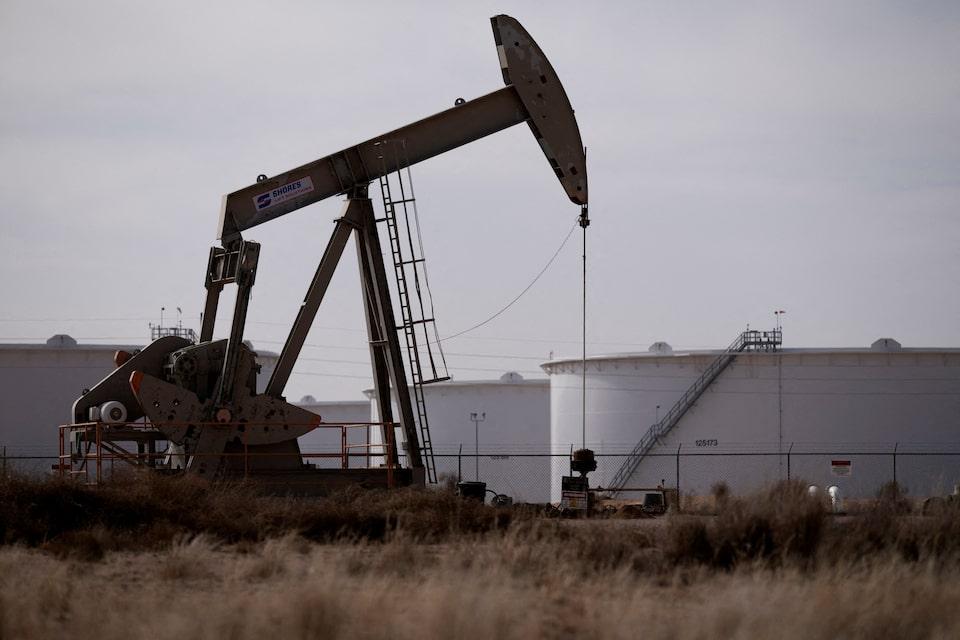
Traders watch for progress in peace talks Weaker Chinese data raises fuel demand concerns Projected oil market surplus also weighs on price sentiment Traders await LONDON, Aug 15 (Reuters) - Oil prices eased on Friday as traders awaited talks between U.S. President Donald Trump and Russian leader Vladimir Putin, which some expect could lead to an easing of the sanctions imposed on Moscow over the war in Ukraine. Brent crude futures were down 29 cents, or 0.4%, at $66.55 a barrel by 1230 GMT. U.S. West Texas Intermediate crude futures were 35 cents, or 0.6%, lower at $63.61. Sign up here. At Friday's meeting between Trump and Putin in Alaska, a ceasefire in Ukraine is at the top of the agenda. Trump has said he believes Russia is prepared to end the war, but he has also threatened to impose secondary sanctions on countries that buy Moscow's oil if there is no progress with peace talks. "The market is watching out for whether there is a ceasefire or not. An expectation of a ceasefire translates into more Russian production," said UBS commodities analyst Giovanni Staunovo. "The question is will there be escalation or de-escalation?" For the week, WTI is set to drop 0.7% while Brent is on track for a 0.4% gain. Weaker economic data from China, meanwhile, raised concerns over fuel demand. Chinese government data showed factory output growth slumped to an eight-month low and retail sales growth expanded at its slowest pace since December, weighing on sentiment despite stronger oil throughput in the world's second-largest crude user. Throughput at Chinese refineries rose 8.9% year on year in July, but that was down from June levels, which were the highest since September 2023. Despite the increase, China's oil product exports last month were also up from a year ago, suggesting lower domestic fuel demand. Forecasts of a growing oil market surplus also weighed on sentiment, as did the prospect of higher-for-longer U.S. interest rates. Bank of America analysts said on Thursday that they were widening their forecast for the oil market surplus, citing growing supplies from the OPEC+ producer group comprising the Organization of the Petroleum Exporting Countries, Russia and other allies. The analysts now project an average surplus of 890,000 barrels per day from July 2025 through June 2026. That forecast follows this week's International Energy Agency predictions saying the oil market looks "bloated" after the latest increases to OPEC+ output. https://www.reuters.com/business/energy/oil-edges-down-ahead-trump-putin-summit-alaska-2025-08-15/
2025-08-15 11:54
STOCKHOLM, Aug 15 (Reuters) - Swedes in a wide area around the capital Stockholm have been told by authorities to save water after an unusually warm summer pushed temperatures across Scandinavia to record levels. Stockholm's city authorities said high water temperatures in Lake Malaren - a source of drinking water for two million people - had reduced the amount of tap water the region can produce. Sign up here. Residents of the capital and surrounding areas have been told to cut down on shower time, not to fill swimming pools and to stop watering gardens and cleaning cars - unusual advice in a country known for its lakes and water. "Every drop counts," Stockholm Water and Waste said in a statement. Europe sweltered under a heatwave for much of July with temperatures over 40 degrees Celsius in some parts of the continent, causing wildfires and hundreds of deaths. Scientists warn such events are becoming more frequent and more intense due to global warming. "We have had big changes in Sweden's climate," Erik Kjellstrom, Professor of Climatology at Sweden's Meteorological and Hydrological Institute said. "Winters have become shorter and much milder and we can see that summers have become longer and warmer in general." July was the warmest month for 100 years in parts of Sweden, with the far north worst affected. Jokkmokk - just north of the Arctic Circle - registered 15 days in a row of daytime temperatures over 25 degrees Celsius, according to the institute. Norway's capital Oslo has also struggled to fill its reservoirs due to lower than normal precipitation this year, and has asked inhabitants since late July to voluntarily limit their water consumption, a spokesperson for the city's water authority said. In Finland's Ylitornio, near the Santa Claus Village in Rovaniemi, maximum temperatures stayed above 25° degrees for 26 days in a row. "Based on the available evidence we conclude that similar events are at least ten times more likely to occur now than they would have been in a preindustrial climate without human-caused warming," said a study published this week on the recent extreme heatwave in Scandinavia by climate research group World Weather Attribution. According to the EU's Copernicus Climate Change Service, the average global surface air temperature reached 16.68 degrees Celsius in July, which is 0.45 degrees above the 1991-2020 average for the month. https://www.reuters.com/sustainability/cop/swedens-capital-dwellers-told-save-water-after-sweltering-july-2025-08-15/

2025-08-15 11:28
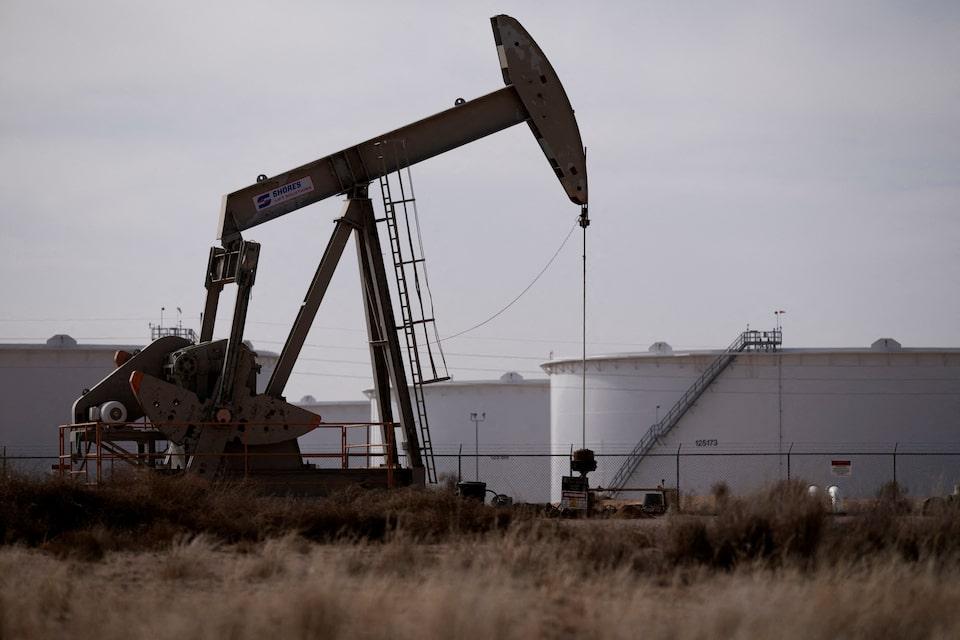
Traders watch for progress in peace talks Weaker Chinese data raises fuel demand concerns Projected oil market surplus also weighs on price sentiment Traders await LONDON, Aug 15 (Reuters) - Oil prices fell on Friday as traders awaited talks between U.S. President Donald Trump and Russian leader Vladimir Putin, which some expect could lead to an easing of the sanctions imposed on Moscow over the war in Ukraine. Brent crude futures fell 49 cents, or 0.7%, to $66.35 a barrel by 1105 GMT. U.S. West Texas Intermediate crude futures lost 58 cents, or 0.9%, to $63.38. Sign up here. At Friday's meeting between Trump and Putin in Alaska, a ceasefire in Ukraine is at the top of the agenda. Trump has said he believes Russia is prepared to end the war, but he has also threatened to impose secondary sanctions on countries that buy Moscow's oil if there is no progress with peace talks. "The market is watching out for whether there is a ceasefire or not. An expectation of a ceasefire translates into more Russian production," said UBS commodities analyst Giovanni Staunovo. "The question is will there be escalation or de-escalation?" For the week, WTI is set to drop 0.7% while Brent is on track for a 0.4% gain. Weaker economic data from China, meanwhile, raised concerns over fuel demand. Chinese government data showed factory output growth slumped to an eight-month low and retail sales growth expanded at its slowest pace since December, weighing on sentiment despite stronger oil throughput in the world's second-largest crude user. Throughput at Chinese refineries rose 8.9% year on year in July, but that was down from June levels, which were the highest since September 2023. Despite the increase, China's oil product exports last month were also up from a year ago, suggesting lower domestic fuel demand. Forecasts of a growing oil market surplus also weighed on sentiment, as did the prospect of higher-for-longer U.S. interest rates. Bank of America analysts said on Thursday that they were widening their forecast for the oil market surplus, citing growing supplies from the OPEC+ producer group comprising the Organization of the Petroleum Exporting Countries, Russia and other allies. The analysts now project an average surplus of 890,000 barrels per day from July 2025 through June 2026. That forecast follows this week's International Energy Agency predictions saying the oil market looks "bloated" after the latest increases to OPEC+ output. https://www.reuters.com/business/energy/oil-falls-ahead-trump-putin-summit-alaska-2025-08-15/
2025-08-15 11:18
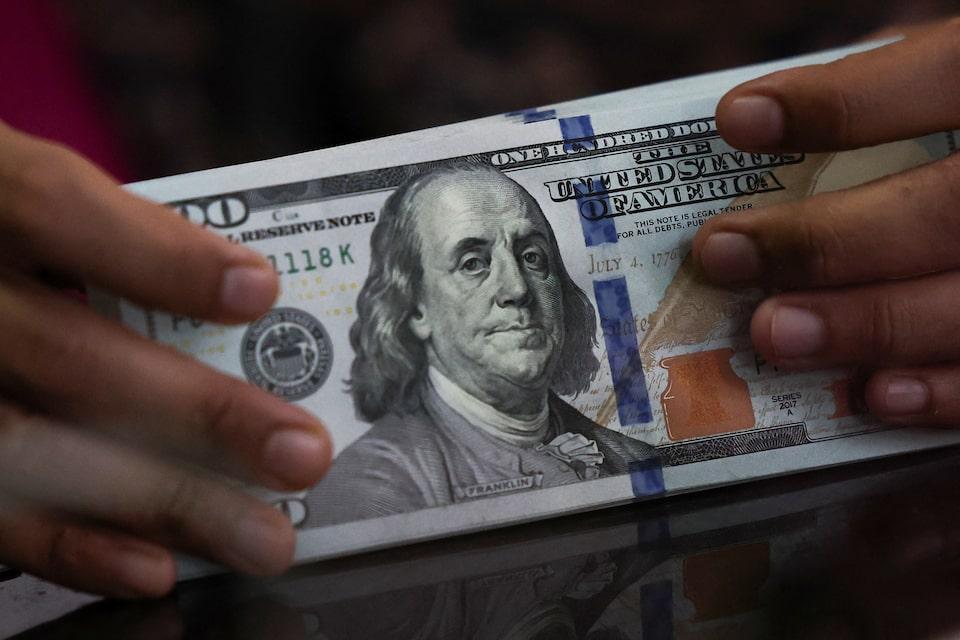
Yen outperforms after upbeat data, Bessent’s remarks Trump-Putin summit over Ukraine in focus Investors await US import price data for fresh inflation clues Morgan Stanley sees scope for a rise in the dollar risk premium Aug 15 (Reuters) - The dollar slipped on Friday with investors cautious about the rate outlook ahead of import price data, after recent figures suggested inflation could accelerate in the coming months. The yen outperformed the euro and the pound following the release of surprisingly strong Japanese growth data, which showed export volumes held up well against new U.S. tariffs. Sign up here. All eyes will be on a meeting in Alaskalater on Friday between Donald Trump and his Russian counterpart Vladimir Putin, focused on the U.S. president's push to seal a ceasefire deal on Ukraine. U.S. import price figures will be more closely watched than usual after data on Thursday showed a sharp jump in producer prices last month, pushing the dollar higher. If import prices keep rising, it may signal that U.S. companies are fully absorbing the tariffs, leaving them with two options: pass the costs on to consumers, potentially stoking inflation, or take the hit to profit margins. Money markets reflect a 95% chance of a 25-basis point Fed rate cut in September. They fully priced a 25-bp cut and a 5% chance of a larger 50-bp move before Thursday's U.S. data. Markets also await next week's Jackson Hole symposium for clues on the Fed's next move. Signs of weakness in the U.S. labour market combined with inflation fromtrade tariffs could present a dilemma for the Fed's rate cut trajectory. The U.S. dollar index , that measures the value of the greenback relative to a basket of six major foreign currencies, was down 0.33% at 97.882. However, it's not just a matter of rate outlook divergence according to some analysts. Morgan Stanley estimates that the dollar risk premium is currently 6% compared to a range of 5% to 9% since April. The bank sees ample scope for it to return to, or even exceed, those peaks, potentially weakening the U.S. currency, because investors are increasing the share of their U.S. asset exposure that is hedged against exchange rate risks. After Trump's so-called Liberation Day tariff announcements, markets sold off U.S. assets, including the greenback, on fears that Washington was about to launch a trade war against its major allies. The yen was up 0.56% against the dollar at 146.94, helped by data showing Japan's economy grew much faster than expected in the second quarter. U.S. Treasury Secretary Scott Bessent's remarks earlier this week that the Bank of Japan could be "behind the curve" in dealing with the risk of inflation proved to be another tailwind for the yen. "Although BoJ Governor Ueda may choose to disregard Bessent's remarks, the Japanese authorities will not want the value of the yen to become more of a concern to the Trump administration than it already is," said Jane Foley senior forex strategist at RaboBank. The euro rose 0.34% versus the dollar to $1.1687. Most analysts expect Europe's single currency to benefit from any ceasefire deal in Ukraine. "The Trump-Putin meeting and any better clarity on the path ahead in the Ukraine conflict have longer-lasting implications for the euro than for the dollar," said Francesco Pesole, forex strategist at ING. "There is a chance that today might be the first step in the direction of de-escalation, and markets may tread carefully for now," he added. The pound was up 0.24% against the U.S. currency at $1.3563. The Australian dollar was up 0.25% versus the greenback at 0.6512. Elsewhere, bitcoin and ether rose after dropping about 4% each on Thursday. Bitcoin had at one point touched a record high on Thursday on shifting Fed rate-cut expectations. https://www.reuters.com/world/middle-east/dollar-slips-before-data-yen-outperforms-eyes-trump-putin-meeting-2025-08-15/
2025-08-15 11:10
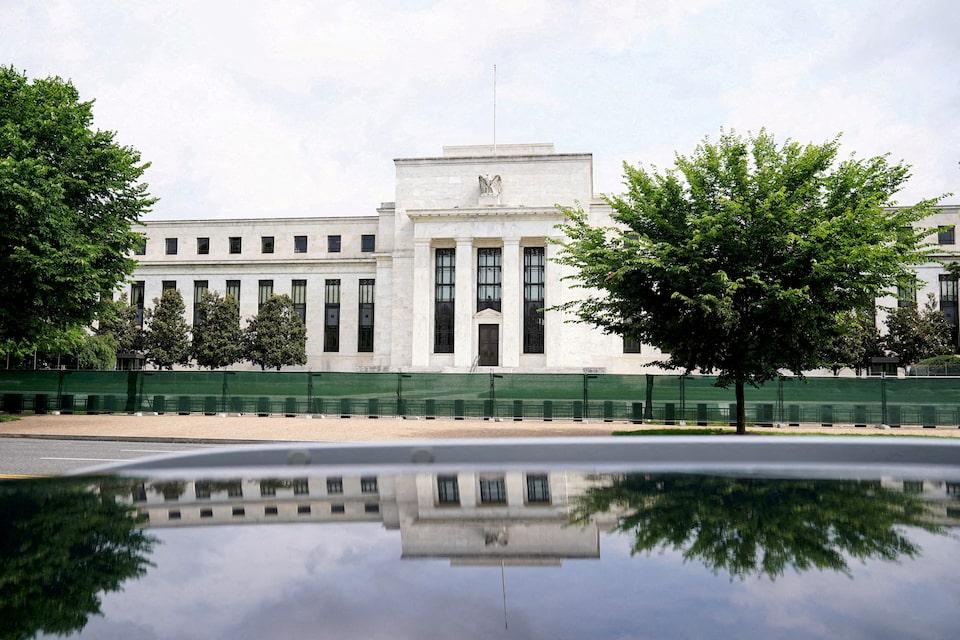
BENGALURU, Aug 15 (Reuters) - A Federal Reserve interest rate cut in September, the first this year, followed perhaps by another before year-end remains the base forecast for most economists polled by Reuters amid rising concerns about the health of the world's biggest economy. U.S. inflation is rising again, with more upward pressure expected from President Donald Trump's tariffs, and there have been big downward revisions to hiring figures over recent months that suggest the job market is weakening. Sign up here. Trump has berated Fed Chair Jerome Powell over his reluctance to cut rates. And at the July meeting there was clear divergence from the steady rates position among a minority of Federal Open Market Committee members. Alongside simmering doubts over the Fed's independence from political interference and declining reliability of economic data, it has become more difficult for economists to make predictions with great conviction. August is not typically a month for big forecast changes either. Many are waiting for the next round of inflation and jobs data, as well as a speech from Powell, his last at the Fed's annual Jackson Hole conference held this month as his term as Fed chief ends in May. Economists are broadly sticking to a more cautious outlook than interest rate futures traders, whose pricing suggests a near-certainty of a September cut and strong likelihood of another, and the possibility of a third by year-end. A 61% majority, 67 of 110, predicted the Fed would lower its benchmark interest rate by 25 basis points to 4.00%-4.25% on September 17 for the first time this year, up from 53% in July's survey. One forecast a 50 basis point move. The remaining 42 said the Fed would hold rates again. "We think that market participants are excessively confident in a September cut, as they are misinterpreting both the FOMC's assessment of labor market conditions and its reaction function," wrote economists at Barclays in a note. "In our view, the main question is not so much about whether the Fed needs to ease policy to lean against job declines, but whether the situation warrants cuts on the grounds that the balance of risks has shifted away from inflation and toward the full employment mandate." Over 60% of respondents, 68 of 110, predicted there would be either one or two rate cuts this year, broadly unchanged from last month. But there was no consensus on where the federal funds rate would be at end-2025. A near-80% majority of economists who answered an extra question, fewer than the usual sample, said the inflation impact from tariffs would be temporary. A 68% majority also expected no serious erosion of the Fed's independence during the remainder of Powell's term. Inflation forecasts were broadly unchanged from last month, averaging above the Fed's 2% target through at least 2027. The unemployment rate was expected to be around the current 4.2% or slightly above over the next few years, suggesting economists have not yet fully responded to the recent sharp downward revisions to hiring and may do so in the next poll if August jobs data are also weak. "We come down on the side of thinking the Fed would prefer to retain optionality," said Michael Gapen, chief U.S. economist at Morgan Stanley. "This would leave room for a soft August employment report to open the door for cuts, or a reasonably strong employment report plus another round of firming in CPI inflation to keep the Fed on hold." (Other stories from the Reuters global economic poll) https://www.reuters.com/business/us-fed-cut-rates-september-once-more-this-year-say-most-economists-2025-08-15/
2025-08-15 11:07
LONDON, Aug 15 (Reuters) - Even if you don't think tariffs are feeding price rises yet, the sharp jump in U.S. producer prices in July - driven by the biggest jump in retail and wholesale margins in two years - was a shot across the bow that tempers heady interest rate cut speculation. Lifting Treasury yields, buoying the dollar and stalling Wall Street stocks at record highs, the PPI report scotched any thought of a half point rate cut from the Federal Reserve next month and sowed a sliver of doubt it would ease at all. Sign up here. Attention now switches to retail sales and industry updates on Friday, while next week's Fed conference in Jackson Hole comes onto the radar too. * With some of the heat taken out of effervescent risk markets, U.S. retail sales are expected to show a brisk 0.5% gain last month but industrial production growth is forecast to have stalled, with import prices flat. June inventory readings and a consumer sentiment survey for August add to a busy diary. Fed officials threw cold water on talk of a 50 basis point cut in September, an idea that had been stoked by Treasury Secretary Scott Bessent the previous day. * As hopes of a Ukraine ceasefire stirred with the Trump-Putin summit in Alaska due to get under way, European stocks and the euro advanced on Friday, while the European defence sector fell back 1.5%, crude oil slipped about 0.6% and gold prices remained subdued. Chinese stocks rallied despite another poor set of industry, retail and housing reports as speculation about some further stimulus there resurfaced, with reports of government support for troubled property developers in the mix. The yen firmed as Japan's Q2 GDP came in more than twice expectations at +1.0% annualised. * Shares of Intel surged almost 5% in pre-market trading after Bloomberg reported the Trump administration was in talks with the struggling chipmaker on the U.S. government taking a stake in the company. The reported discussions follow a meeting this week between Trump and Intel CEO Lip-Bu Tan - just days after Trump called for Tan's resignation over alleged China-linked investments. Today's Market Minute: * Donald Trump and Vladimir Putin hold talks in Alaska on Friday, with the U.S. president's hopes of sealing a ceasefire agreement on Ukraine uncertain but with a last gasp offer from Putin of a possible nuclear deal that could help both men save face. * The talks in Alaska mark the potential beginnings of a return of Russia - and its commodities - to the global arena following Moscow's recent international isolation. ROI columnist Gavin Maguire provides a guide on the potential market impacts should global relations with Russia return to normal. * China's factory output growth slumped to an eight-month low in July, while retail sales slowed sharply, raising pressure on policymakers to roll out more stimulus to revive domestic demand and ward off external shocks to the $19 trillion economy. * Wall Street's largest hedge funds, Bridgewater Associates, Tiger Global Management and Discovery Capital, increased their exposure to Big Tech in the second quarter amid a generational boom in the growth of artificial intelligence. * The U.S. economy seems to be chugging along fairly smoothly, but ROI columnist Jamie McGeever discusses five charts that indicate the foundations of the resilient U.S. economy and booming stock market may be much shakier than they appear. Chart of the day: China's factory output growth slumped to an eight-month low in July, while retail sales slowed sharply, raising pressure on policymakers to roll out more stimulus to revive domestic demand and ward off U.S. tariff-related pressures. While reports of more official support for ailing property firms emerged, the housing sector remains a running sore. New home prices fell 2.8% in July year-on-year, versus a 3.2% drop in June. Weekly reads: * INDEPENDENCE AND LOYALISM: Pushing back on a view that Federal Reserve Chair Jerome Powell should resign to clear the air over Trump's repeated attacks on him, former Fed Vice Chair Roger Ferguson , opens new tab gives a stout defense of Fed Independence. "For the stability of the dollar and the entire U.S. financial system, it is critical that Powell does not resign prematurely," Ferguson wrote in a piece for the Council on Foreign Relations. "Equally important is that the next chair not be seen as a political loyalist of President Trump." * WHO ARE 'BOND VIGILANTES'?: European Central Bank economists look at the role of investment funds, who they say hold up to a quarter of outstanding euro government debt in some countries, as the prime 'vigilantes' in times of stress , opens new tab. Foreign funds are the most jumpy and 'procyclical' of that grouping in offloading bonds due to credit, stability or interest rate concerns - while domestic households and insurance firms tend to buy the bonds investment funds sell, they explain. * DEBT BURDENS LIFT RATES: As some puzzle over the relatively calm U.S. bond markets despite rising sovereign deficits and debts, IMF economists re-examine the links between debt burdens and higher borrowing rates and term premiums , opens new tab in a paper published on CEPR's VoxEU site. Updating the dataset from earlier studies, they conclude that a 10% of GDP increase in expected debt is associated with an increase in long-term rates of between 20 and 30 basis points, while a 1% of GDP increase in the fiscal and primary deficit has a similar impact. * INVESTMENT SPENDING NOT ENOUGH: Using Japan's experience as a example, Daniel Gros at the Institute for European Policymaking at Bocconi argues that Europe just upping billions in investment spending may not be the spur , opens new tab to the economy that many assume. Ensuring the money is better spent on start-ups and its "innovation ecosystem" rather than via big companies alone would yield better results, he wrote on Project Syndicate. * DARK SIDE OF AI CHATBOTS: Internal guidelines at Facebook owner Meta Platforms explicitly permitted its artificial intelligence chatbots to "engage a child in conversations that are romantic or sensual", according to a Reuters special report. Reuters' Jeff Horwitz illustrates some of the darker side of the AI revolution now sweeping tech and the broader business world. Today's events to watch * US July retail sales (0830 EDT) July import and export prices (0830 EDT) New York Fed's August manufacturing survey (0830 EDT) July industrial production (0915 EDT) June business/retail inventories (1000 EDT) University of Michigan August consumer sentiment survey (1000 EDT) Treasury's June TIC data on U.S. securities holdings (1500 EDT) * U.S. President Donald Trump meets Russian President Vladimir Putin in Alaska to push for a ceasefire deal in the war in Ukraine -- Want to receive the Morning Bid in your inbox every weekday morning? Sign up for the newsletter here. You can find ROI on the Reuters website, and you can follow us on LinkedIn Opinions expressed are those of the author. They do not reflect the views of Reuters News, which, under the Trust Principles , opens new tab, is committed to integrity, independence, and freedom from bias. https://www.reuters.com/business/finance/global-markets-view-usa-2025-08-15/