2025-08-15 10:53
Mexico's illegal livestock trade exacerbates screwworm outbreak US closes border to Mexican cattle, impacting $1 billion industry Mexico plans $51 million sterile screwworm fly plant by 2026 TAPACHULA, Mexico, Aug 15 (Reuters) - On a scorching afternoon in the rural heartland outside Mexico's southern city of Tapachula near the Guatemala border, rancher Julio Herrera calls his herd back from an afternoon of grazing. "Gate! Gate!" he hollers as the cows turn the corner from the pasture and trot instinctively to their corral. Sign up here. He runs his hands under their hooves, feeling for wounds through which the deadly screwworm , opens new tab parasite could burrow inside their bodies. Efforts to protect his herd can only go so far, he says, until Mexico's government steps up to tackle what he considers the core issue: illegal livestock moving unchecked across the border from Central America. Maggots from screwworm flies burrow into the flesh of living animals, causing serious damage. While it can often be fatal, infected animals can be treated by removing larvae and applying medications, if it is detected early enough. The infestation, which began in November, has now claimed its first human casualty: an 86-year-old woman with advanced cancer and complications from a screwworm infection who died in the state of Campeche in late July. While infections are rarer (and treatable) in humans, Mexico confirmed more than 30 cases in people in the last week of July. "From Guatemala there is indiscriminate passage of stolen cattle, sick cattle. There is no health control," Herrera told Reuters. "We, the producers, are the ones who suffer." Estimates cited , opens new tab by Mexican authorities in 2022 and others by sector experts indicate the number of illegal cattle crossing into Mexico is at least 800,000 per year. Organized crime groups have long been linked to the theft and trafficking of livestock, which enables them to tap a lucrative market and extort money along the way. The animals may come from Guatemala, Honduras, Nicaragua or other Central American countries. They enter Mexico with black market ear tags and falsified documents. CLOSED BORDER Local veterinarians in Chiapas, slaughterhouse professionals and producers said the illegal crossings were a major factor in the outbreak. These animals bypass government checkpoints, sanitary inspections and taxes, and are then sold to meat companies or larger cattle producers. While local government officials in Chiapas acknowledged the illegal trade, they said it was being handled by the federal government - and was not the main factor in the spread of screwworm. Instead, they blamed the unchecked movement of the screwworm fly and a failure to report cases and seek treatment. Mexico's Ministry of Agriculture did not respond to questions about measures to stop illegal livestock at the southern border, but pointed to past statements on efforts to reduce counterfeit and unauthorized ear tags. The U.S. , opens new tab has kept its border mostly closed to Mexican cattle since May because of the outbreak, dealing a heavy blow to an industry that exports approximately a billion dollars’ worth of cattle to the U.S. annually, and contributing to high beef prices in the U.S. The outbreak is costing the Mexican meat industry an estimated $25 million to $30 million a month, according to the Mexican Association of Meat Producers (AMEG). Three ranchers told Reuters they are increasingly angry over the government's lack of control at the southern border. In July, Mexico's National Confederation of Livestock Organizations called on the government to redouble efforts to control illegal crossings. "It's a business," said Jorge Ortiz of the Tapachula municipal slaughterhouse and a local pig farmer, about illegal livestock. "It needs a lot of attention to be able to control this problem... and where that should come from is the federal government." The outbreak is bringing fresh trade tensions to the U.S.-Mexico trade relationship as Mexico has three months to negotiate a trade deal with the U.S. or face increased tariffs. Mexico's federal government is working on a $51 million plant in Chiapas to breed sterile screwworm flies, with the help of $21 million from the U.S., though it is not expected to begin operating until 2026. DISPELLING MYTHS Officials have said that infected animals will not be slaughtered. A few screwworm-detecting dogs have been deployed to a Chiapas livestock border crossing and training sessions and free care, such as de-worming products, are offered to producers who report infected animals. Chiapas state Agriculture Secretary Marco Barba said local efforts are focused on awareness and prevention. Signs are posted around towns with slogans such as "Without wounds, there's no worms." Authorities are also trying to dispel myths about contaminated meat, Barba said, adding that consumption has dropped in the state. Officials have said that screwworm infections are not transmitted through the consumption of meat. Livestock producers hesitate to report screwworm cases because they fear officials could shut down their business or slaughter their animals, said Carlos Mahr, president of the Livestock Union of Chiapas. At Mahr's ranch outside Tuxtla Gutierrez, a worker lassos a young cow. The animal bucks as it is guided over to Mahr, who is waiting with an aerosol can of disinfectant used to clean the wound left from removing the animal's horns. Infected animals can be easily treated, Mahr said. "There should be no fear or worry," he said. "Reporting is important to have a generalized map of where the worm is found." It is vital for the country's cattle producers that the border with the U.S. reopens, Barba said, and his government has been working to show USDA officials that there's progress. U.S. Agriculture Secretary Brooke Rollins has said the U.S. is working more closely with Mexico than ever before and that the USDA team was "staffing up in the hundreds" to get into Mexico to verify the data the country was providing. The resources, though, haven't trickled down to everyone. Alfonso Lopez, a livestock veterinarian in Tapachula, said he sees cases every day, on several ranches. "Right now, it's a very serious situation," Lopez said from his office, where he had a fresh sample of screwworms collected from a newborn calf earlier that day. "What the federal government is doing, which isn't enough, is sending personnel to address the cases, but Chiapas isn't just highways... it has mountains and valleys, and so the fly isn't going to travel only on the roads. It's insufficient," Lopez said. While controlling screwworm in livestock is the main priority, Herrera, the rancher in Tapachula, noted that the pest can infect any warm-blooded animal. "What happens with the coyotes, the stray dogs... the deer, the jaguar?" Herrera said. https://www.reuters.com/business/healthcare-pharmaceuticals/mexican-ranchers-hit-by-flesh-eating-screwworm-want-action-cattle-smuggling-2025-08-15/
2025-08-15 10:42
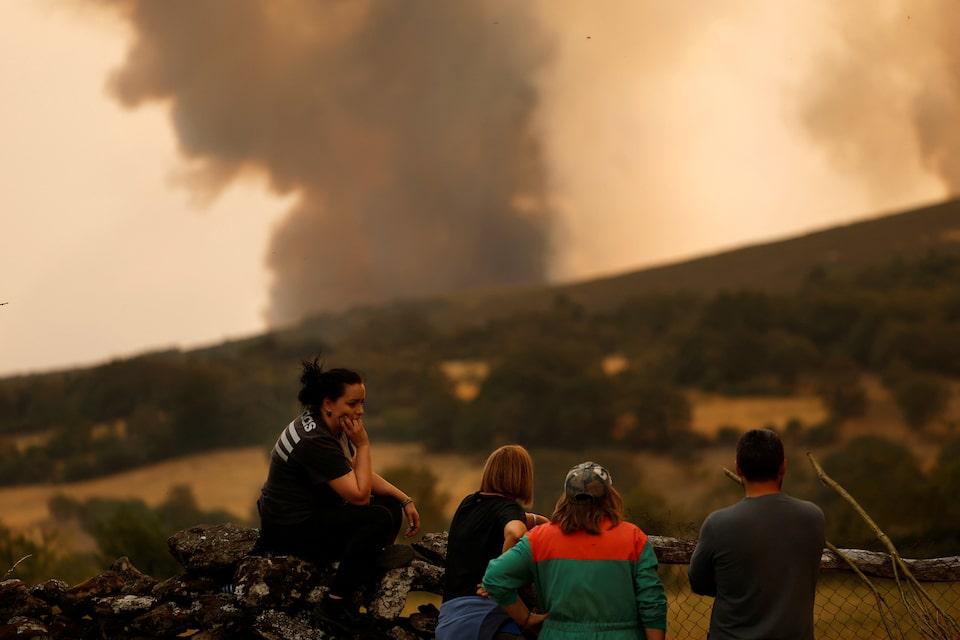
Surface area burned in Spain this year equivalent to the size of London Conditions causing fires to spread at speeds hard to control Aerial firefighting services record 50% increase in flight hours VILLANUEVA DE LA SIERRA, Spain, Aug 15 (Reuters) - Spain battled 14 major fires on Friday as authorities warned of "unfavourable conditions" to tackle flames that have already killed seven people and burned a surface area the same size as London. A 12-day heatwave and southerly winds meant firefighters were facing another challenging day in one of the worst summers for fires in the past 20 years, said Virginia Barcones, director general of emergency services. Sign up here. "In the western part of the country the situation is extremely worrying," Barcones said on RTVE. In Galicia, several fronts had joined together to form an even bigger blaze forcing the closure of highways and rail services to the region. The fires in Ourense province in Galicia spread to the neighbouring province of Zamora. While many people were evacuated, some stayed behind to protect their homes. "In the village some people have tractors and they have made a firewall in a flat area with fewer hills," Loli Baz, a 52-year-old teacher in the village of Villanueva de la Sierra, told Reuters. "We are waiting for the fire to come down to try and stop it, so it does not get to the houses in the village.” Firefighters have been battling to put out wildfires across southern Europe, with the flames stoked by the extended heat wave gripping the region. Spain's national weather agency AEMET warned of extreme fire risk in the north and west of the country, as temperatures are expected to reach as high as 40 degrees Celsius (104 degrees Fahrenheit) on the north coast. "Today will be another very difficult day, with an extreme risk of new fires," Prime Minister Pedro Sanchez wrote on X. FIRES SPREADING QUICKLY A fire near Molezuelas de la Carballeda in the Castile and Leon region that was one of the largest in Spain's history hadn't advanced since Thursday, said Angel Sanchez, head of the region's forest fire service. "We will continue working to stabilise it," he said. The conditions are causing fires to spread at speeds that mean that firefighters can quickly lose control. The Molezuelas fire at one stage was propagating at a rate of 4,000 hectares (15.4 square miles) per hour, national government representative for the Castile and Leon region Eduardo Diego told reporters, according to Europa Press. A fire near Badajoz in the Extremadura region burned 2,500 hectares in a few hours before being brought under control, Jose Luis Quintana, the national government representative for the region, told RTVE. "It was very fast with enormous growth, but it has been possible to tackle it," Quintana said. Avincis, the largest operator of emergency aerial services in Spain and Europe, said it had registered a 50% increase from last year in flight hours dedicated to firefighting operations in Spain and Portugal so far this season. In Oimbra, Ourense, where three firefighters were seriously injured, a man was arrested for causing a fire by using his tractor when it was prohibited, police said. Two people were arrested in Costa da Morte in Galicia for provoking fires by illegally burning copper cables to extract the metal and sell it, according to the Interior Ministry. Wildfires this year have so far burned more than 157,000 hectares, almost double the annual average since 2006, according to the European Union’s Forest Fire Information Service. https://www.reuters.com/business/environment/spain-battles-14-major-fires-with-unfavourable-conditions-expected-fuel-more-2025-08-15/
2025-08-15 10:09
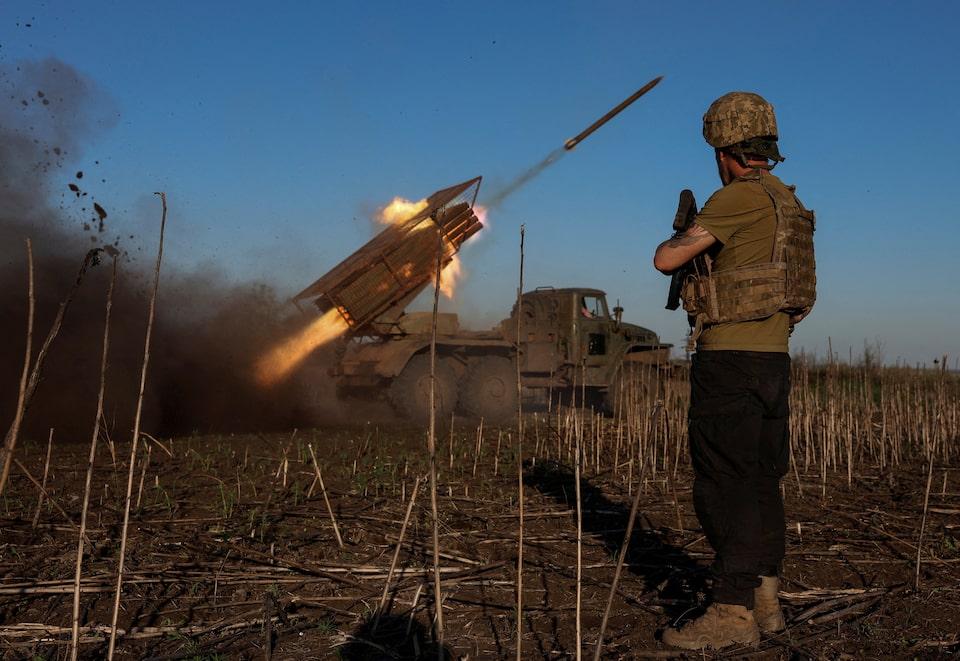
Markets await Trump-Putin Alaska summit Conflict roiled world markets Investors eye longevity of deal, detail Ukraine bonds, euro seen benefiting from any ceasefire LONDON, Aug 15 (Reuters) - World markets are watching closely as U.S. President Donald Trump and Russia's Vladimir Putin meet in Alaska later on Friday to seal a possible ceasefire agreement in Ukraine. This was a conflict that sparked an energy shock, sent food prices soaring, battered European assets and cut Russia's economy off from much of the Western world. Sign up here. Details and the longevity of any agreement will be key. "The big issue will be, of course, that even if we get a ceasefire, how sustainable is that?," said Zurich Insurance Group's chief markets strategist Guy Miller. Here is how Europe's biggest conflict since World War Two has shaped markets. 1/ EUROPE HURT Europe's reliance on cheap Russian gas meant its economy and stock market were ill-equipped to handle surging energy prices, and Germany's economy, Europe's industrial powerhouse, stagnated. Stocks (.STOXX) , opens new tab were broadly punished, with sectors reliant on low energy prices, such as industrials (.SXNP) , opens new tab and chemicals (.SX4P) , opens new tab, notably hit. European banks also took a drubbing but have since recovered as those exposed to Russia cut ties. It has not been all doom and gloom and the European STOXX 600 index is not far off March's record high. Aerospace and defence stocks (.SXPARO) , opens new tab have had a supercharged rally since February 2022, with gains ranging from over 600% for Leonardo (LDOF.MI) , opens new tab to over 1,500% for Rheinmetall (RHMG.DE) , opens new tab. "If the fighting stops in Ukraine, I'd expect defence stocks to come off a little bit but I think the fundamental reason why defence stocks have rallied is still there," said Toni Meadows, CIO at BRI Wealth Management. "If Putin is still there and Trump is still there, then the need for Europe to spend on defence is still there." 2/ HEATED The invasion triggered a surge in European energy prices. Brent crude rose as much as 30% to $139 a barrel, while natural gas prices soared nearly 300% to record highs. Crude subsided in the following months. But Dutch TTF futures, the regional benchmark for natural gas soared as Europe scrambled for an alternative to the Russian gas that fed over 40% of total demand. Europe has since become increasingly reliant on U.S. super-chilled liquefied natural gas. The European Union has committed to boosting its purchases of U.S. crude, gas and coal from around $75 billion in 2024 to $250 billion per year to 2027, under a new U.S. trade deal - a figure most experts say is unrealistic. Oil and gas prices are below 2022 peaks, but they are higher than five years ago, up 50% and 300%, respectively. 3/ GENIE OUT OF THE BOTTLE Following the COVID-19 pandemic, the war ensured the inflation genie was well out of its bottle as energy and food prices soared with agricultural exports from Russia and Ukraine - two leading grain exporters - disrupted. Central banks backtracked on the notion that an inflation spike was "transitory" and aggressive interest rate hikes followed. Since late 2022, inflation and rates have come down in big economies and focus shifted to U.S. tariffs. High food prices remain a concern, especially for developing economies. World food commodity prices rose in July to their highest in over two years, according to the United Nations' Food and Agriculture Organization. "If Ukraine could operate normally as an economy, that would help food prices around the world," said April LaRusse, head of investment specialists at Insight Investment. 4/ UKRAINE AND RUSSIA Ukraine's economy was battered by the war. The country was forced to restructure $20 billion of its government debt last year as it could no longer afford the repayments given the demands of the conflict. Its bonds , then rallied on hopes that a re-elected Trump would broker a peace deal but plunged following increasingly ugly exchanges between Trump and Ukraine's Volodymyr Zelenskiy culminated in February's infamous Oval Office meeting. The bonds recovered some ground again this week. Russia's economy also contracted after the West introduced sweeping sanctions but soaring defence spending led to a rebound in 2023 and 2024. After jacking up rates to combat the subsequent inflation spike though, some Russian officials now warn of recession risks. Russia's rouble sank to a record low soon after the invasion, but rebounded to seven-year highs later in 2022 as imports dried up. It is up nearly 40% against the dollar this year. Russia and China meanwhile now do more of their trade in the yuan, which has overtaken the dollar as Russia's most traded foreign currency. 5/CURRENCIES UPENDED The war hit the euro , which fell almost 6% against the dollar in 2022 as the economic impact was felt. Analysts say any improving sentiment created by a ceasefire could help the euro, but note that other factors, such as monetary policy were also key. "The euro might benefit, but we wouldn't see this as a game changer for the currency," said Frederique Carrier, head of investment strategy for RBC Wealth Management in the British Isles and Asia. While safe-havens such as the dollar and Swiss franc benefited , , the conflict shaped currencies in other ways. Analysts say the use of sanctions against Russia and a decision by the West to freeze some $300 billion of Russian states assets in 2022 has accelerated de-dollarisation, in short, efforts by countries to decrease reliance on the dollar. https://www.reuters.com/world/europe/here-is-how-russias-war-ukraine-has-shaped-global-markets-2025-08-15/
2025-08-15 10:00
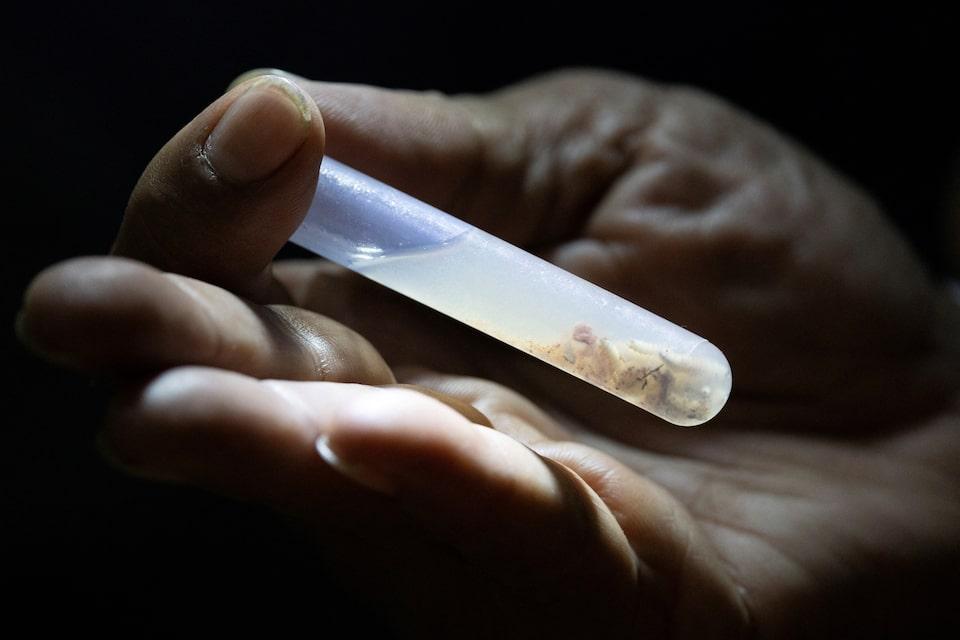
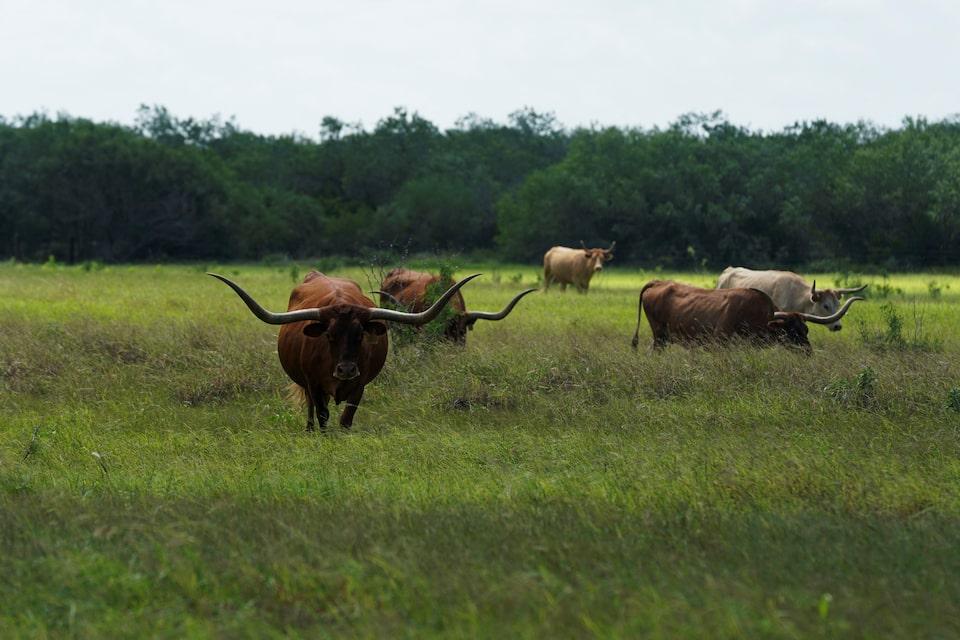
LIVE OAK COUNTY, TEXAS; TAPACHULA, MEXICO; PANAMA CITY - He was only eight years old in 1973, but fifth-generation Texas rancher Kip Dove remembers spending countless days trotting up to sick and dying cattle on horseback that year during the last major outbreak of flesh-eating screwworm. He carried a bottle of foul-smelling, tar-like medicine in his saddlebag and a holstered revolver to shoot any animals too far gone to treat. Surrounded by baying cattle dogs and cowboys, the infested cattle kicked and bit at their open wounds, staring wild-eyed at the truck headlights illuminating them and giving off the unmistakable smell of rotting flesh, he recalls. Now surrounded by a healthy herd of longhorn cattle, Dove is anticipating the return of screwworm, the parasitic fly that eats livestock and wildlife alive. From 1972 to 1976, a screwworm outbreak in the United States infested tens of thousands of cattle across six states, cost tens of millions of dollars to contain, and was only defeated after a massive eradication effort. Today, the parasitic flies are pushing northward from Central America again after being officially eradicated from the U.S. in 1966, threatening $1.8 billion in damage to Texas’ economy alone, according to a U.S. Department of Agriculture estimate. An outbreak could further elevate record-high beef prices by keeping more calves out of the U.S. cattle supply. Ranchers in central Mexico are discovering the dreaded fly’s maggots burrowed in their cattle for the first time in a generation, and a factory in Panama is losing a race against time to breed sterile flies, the most powerful tool to quell an outbreak. As cases in livestock – and occasionally in humans and house pets – increase, it’s more likely than not that the fly will infest the U.S. again, Dr. Thomas Lansford, assistant state veterinarian at the Texas Animal Health Commission, and other experts told Reuters. “I don’t know what we’re going to do,” Dove said, folding his arms, scarred from decades of riding horses and chasing cattle through thorny brush. Female screwworm flies lay hundreds of eggs in wounds on any warm-blooded animal. Once the eggs hatch, the larvae use their sharp, hooked mouths to burrow through living flesh – feeding, enlarging the wound and eventually killing their host if left untreated. A tiny scrape, a recent brand or a healing ear tag can quickly become a gaping wound, carpeted with wriggling maggots. “The smell is bad, and some of the wounds are horrific. You have humongous holes in these animals teeming with worms,” Dove said. “I don’t know if I could handle it if it happens now.” Washington has halted cattle imports from Mexico and invested millions in setting up a new sterile fly production plant in Metapa, Mexico. But it will take roughly a year to come online. So, cattle producers in the U.S. are stockpiling insecticides, making contingency plans and sounding the alarm that a shortage of skilled ranch labor will hamstring their ability to detect and treat screwworms. Treatment is low-tech and onerous: vets and ranchers must scrape each worm out of the infested animals by hand before spraying the wounds with an insecticide. In 1973, Dove was a child who could rope cattle for treatment until 2 a.m. and head to school the next morning. Now at age 60, injuries accumulated from years of ranching would make it more difficult to do the exhausting work of managing cattle during an outbreak, he said. Freddy Nieto is the manager at El Sauz Ranch in South Texas, which runs cattle but also offers deep-pocketed clientele the opportunity to hunt wildlife, from whitetail deer and wild hogs to exotic animals. “This might be the worst biological outbreak that we’re facing in our lifetime,” he said. The multi-billion-dollar hunting industry is especially vulnerable since wildlife infested with screwworms are essentially untreatable. They often disappear into the thick brush to die from their wounds. ‘IT’S AN OVERWHELMING SITUATION’ In the sweltering heat and humidity of Panama City, a world-renowned biological facility has operated since 2006. Biologists and technicians work in extreme heat surrounded by pungent odors – an overwhelming mix of ammonia and the artificial diet fed to fly larvae – to breed up to 100 million sterile screwworm flies per week. Flies are fed a carefully formulated mixture of egg, milk, and powdered hemoglobin that mimics the conditions of a wound. The flies are blasted with radiation before they are released into hotspots, where the sterile males will mate with wild females to produce infertile eggs. Until 2023, the sterile flies were dropped into the Darien Gap, a sliver of jungle between Panama and Colombia, to maintain a biological barrier against northward spread. Now they’re being sent to Mexico. Screwworms cannot fly more than 12 miles on their own, but they can cover large distances inside the flesh of their hosts, such as cattle, horses and deer. The flies have already passed through the narrowest stretches of land in Central and North America – the Darien Gap in Panama and the isthmus in Mexico – meaning that exponentially more need to be released to control the outbreak. The U.S. eliminated screwworms in the 20th century by flying planes over hotspots to drop red-striped boxes packed with sterile flies, sometimes called “cupcakes” by ranchers. The USDA constructed a fly production plant in Mission, Texas, in 1962, that pumped out 96 trillion flies until it was decommissioned in 1981. Now the USDA is planning to resurrect the plant to disperse sterile flies, while Texas officials have scattered 100 screwworm traps along the border. USDA inspectors known as Tick Riders who patrol the border on horseback to guard against another pest, the cattle fever tick, have also been tasked with conducting screwworm preventive treatment for all cattle and horses they find in the border area. At the heart of the problem is an unworkable math equation. The USDA estimated 500 million flies need to be released weekly to push the fly back to the Darien Gap. At its maximum, the Panama plant produces just 100 million. “It’s an overwhelming situation at this point,” Dr. Lansford said. “Screwworm is obviously doing well in Mexico, and they’re up against the same challenges we are.” Alfonso Lopez, a livestock veterinarian in Tapachula, Mexico, told Reuters he sees new cases of screwworm every day. He showed a tube containing worms collected from a newborn calf hours earlier. The worm’s body features distinctive rings that make it possible to twist and burrow into an animal’s flesh, earning its “screw” moniker. When removed from the tube with a pair of tweezers, one worm rears its head, still alive. Chiapas state is ground zero in Mexico’s outbreak. Infestation in livestock started emerging here last year and cases in the country are now increasing by roughly 10% each week. There have been nearly 50,000 cases reported from Panama to Mexico so far, according to the Panama-United States Commission for the Eradication and Prevention of Screwworm. Rancher Julio Herrera in Tapachula checks his animals regularly for wounds but he said his efforts can only go so far until the government addresses what he considers the root of the problem. He and other experts say increased migration of cattle and people from Central America has fueled the expanding outbreak. Chiapas State Agriculture Secretary Marco Barba said federal authorities are reviewing the issue of illegal livestock crossings. “No country is immune,” Barba said in an interview with Reuters in state capital Tuxtla Gutierrez. The state government has launched a highly-publicized campaign encouraging producers to check their herds carefully for any sign of screwworm and report cases. ‘THERE ARE NO COWBOYS ANYMORE.’ Even with government action, many U.S. ranches don’t have enough skilled labor to monitor and treat their herds for screwworm. They need cowboys who can tell if cattle are sick just by looking at them, who don’t get squeamish elbow deep in a birthing cow, who can lasso and tie temperamental bulls. Isaac Sulemana, a rancher and attorney in Sullivan City, Texas, estimated his ranch would need at least 10 cowboys to monitor pastures during an outbreak. He only has two. Preventing deaths during a screwworm outbreak requires ranchers to adopt a punishing routine of monitoring every single head of cattle every single day. But as Dove lurched down a bumpy two-track dirt road looking in vain for his scattered cattle, the challenges of locating animals – even 1,000-pound ones – on a sprawling ranch were laid bare. “You look at this,” Dove said, pointing toward the dense thickets of mesquite, catclaw and prickly pear that mark Texas cattle country. “Just take a look at that and think about going and getting your cattle out of that when they don’t want to be got.” In the meantime, ranchers are preparing for the worst. In May, third-generation West Texas cattle and sheep rancher Warren Cude entered a barn where his dad kept old canisters of screwworm medicine and jars filled with dead screwworms. He added new bottles of wound spray and insecticides to the collection. “We’re repeating history after 50 years. We didn’t learn from the first time and we let those facilities go and now we’re having to do everything again to combat something we eradicated 50 years ago,” Cude said. Sign up here. https://www.reuters.com/business/healthcare-pharmaceuticals/texas-cattle-country-ranchers-brace-flesh-eating-screwworms-2025-08-15/
2025-08-15 09:50
Aug 15 (Reuters) - Sterling rose against a weakening dollar on Friday and was set to end the week higher after upbeat economic data and a hawkish rate cut by the Bank of England. Sterling , which has gained 8.5% this year against the dollar, was last up 0.15% at $1.3549. It hit a session peak of $1.3594 on Thursday, the highest since July 7. It was about to end the week with a 0.70% rise. Sign up here. The greenback slipped, after rising the day before, as investors remained cautious about the rate outlook ahead of import price data. “RBC BlueBay retains a negative view on UK assets but doesn’t think that gilts are an attractive short at the time being due to valuation,” said Mark Dowding, BlueBay chief investment officer, RBC BlueBay Asset Management. “However, should sterling continue its recent rally as hopes for further BoE rate cuts fade, then the pound may be an attractive way to express a structurally negative view on the dynamics within the UK over the months to come,” he added. Dowding expects inflation to remain around 4%, even as the economy grapples with negligible growth. The Bank of England cut interest rates by 25 basis points to 4% last week, but only after a narrow 5-4 vote. That suggested the BoE may adopt a cautious stance on further cuts due to persistent inflation concerns, even as job losses worsen. The euro rose against the pound after recent falls, and was last up 0.19% at 86.22 pence. It hit 87.69 pence late last month, its highest since May 2023. The single currency was also set for a weekly drop of 0.35%. Some analysts flagged that the positive impact on the pound from Thursday’s stronger headline growth could be dampened somewhat by the less favourable breakdown of expenditure. Growth was mainly driven by increases in government consumption and the other category of gross capital formation, which includes changes in inventories, while private consumption and business investment were weaker than expected. https://www.reuters.com/world/uk/sterling-climbs-versus-dollar-track-weekly-rise-2025-08-15/

2025-08-15 08:41
Akazawa brushes aside view Bessent called for BOJ rate hike Some analysts saw Bessent's comments as US pressure on BOJ Prospects of near-term rate hike pushes up JGB yields, yen BOJ next rate review in September TOKYO, Aug 15 (Reuters) - Japan's government on Friday brushed aside rare and explicit comments from U.S. Treasury Secretary Scott Bessent who said the Bank of Japan was "behind the curve" on policy, which appeared to be aimed at pressuring the country's central bank into raising interest rates. However, some analysts saw Bessent's comments, coupled with unexpectedly solid domestic growth data, as heightening the chance of a near-term rate hike by the BOJ - a view that pushed up Japanese government bond (JGB) yields and the yen on Friday. Sign up here. "It's a sign from the U.S. that they're watching BOJ policy carefully," Yuji Saito, executive advisor to SBI FX Trade, said of Bessent's comments, adding that markets are pricing in the chance of an BOJ rate hike in the next few months. "With Bessent's comments and today's GDP, the BOJ may see itself cornered" into raising rates, he added. In his most explicit comments on Japan's monetary policy, Bessent told Bloomberg on Wednesday the BOJ will likely be hiking rates as it had an "inflation problem" and could be "behind the curve" in dealing with upward price risks. The comments came as rising food and raw material costs have kept Japan's core inflation above the central bank's 2% target for well over three years, causing some BOJ policymakers to worry about second-round price effects. Japan's economic revitalisation minister Ryosei Akazawa, who also oversees trade talks with the U.S., brushed aside the view Bessent was pressuring the BOJ to hike rates. "He absolutely was not calling on the BOJ to raise rates," and was only predicting it could do so, Akazawa told a news conference on Friday. Finance minister Katsunobu Kato declined to comment when asked about Bessent's comments in a news conference on Friday. Some analysts, however, saw Bessent's comments as an escalation of Washington's pressure on Japan to help address the huge U.S. trade deficit by weakening the dollar, such as by pushing up the yen through tighter monetary policy. "Bessent's remarks may reflect the Trump administration's hope of using BOJ rate hikes to reverse the weak-yen trend," said former BOJ board member Takahide Kiuchi, who is currently an economist at Nomura Research Institute. "The BOJ may see the need to pay heed as refusing to hike for too long could anger the U.S., and turn into a diplomatic headache for Japan," he said. "Such U.S. calls may escalate and add to the case for a near-term BOJ rate hike." Prospects of a near-term rate hike pushed up the yen and Japanese government bond (JGB) yields. The yield on the benchmark 10-year note rose 1 basis point to 1.56% on Friday after hitting a two-week high of 1.565%. Japan's unexpectedly strong second-quarter gross domestic product (GDP) data on Friday also pushed up the yen by easing concern about the economic outlook, analysts say. Bessent - who oversees Washington's trade and exchange-rate talks with Tokyo - has repeatedly signalled his preference for tighter Japanese monetary policy. In its exchange-rate report to Congress in June, the U.S. Treasury Department said the BOJ should keep tightening policy, which would support a "normalization of the yen's weakness." The BOJ next meets for a policy meeting in September. In its October review, it will also conduct a quarterly review of its economic growth and price projections. A Reuters poll last month showed a majority of economists expected another rate hike by year-end. Swap rates indicate a 43% chance of a BOJ rate hike by October and a 66% chance by the end of this year, according to estimates by Japan's Okasan Securities. https://www.reuters.com/business/japan-says-us-is-not-pressuring-boj-rate-hikes-markets-not-so-sure-2025-08-15/