2025-08-14 17:54
Law passed by Congress increased companies' interest in issuing stablecoins Citi could be custodian of Treasuries and cash backing stablecoins Bank also considers stablecoin payments and conversion services to dollars NEW YORK, Aug 14 (Reuters) - Citigroup (C.N) , opens new tab is exploring providing stablecoin custody and other services, a top executive told Reuters, in a further sign sweeping policy changes in Washington are spurring major financial firms to expand into the cryptocurrency business. The U.S. bank is among a handful of traditional institutions, including Fiserv and Bank of America, considering pushing into stablecoins after Congress passed a law paving the way for the crypto tokens to become widely used for payments, settlement, and other services. Stablecoins are cryptocurrencies pegged to a fiat currency or another asset, commonly the U.S. dollar. Sign up here. That law requires stablecoin issuers to hold safe assets such as U.S. Treasuries or cash to back the digital coins, creating opportunities for traditional custody banks to provide safekeeping and administration of the assets. "Providing custody services for those high-quality assets backing stablecoins is the first option we are looking at," Biswarup Chatterjee, global head of partnerships and innovation for Citigroup's services division, said in an interview. Citi's services business, which includes treasury, cash management, payments, and other services to large companies, remains a core unit for the bank, which has been undergoing a major restructuring. A McKinsey study , opens new tab estimates about $250 billion in stablecoins have been issued so far, but are mainly used to settle cryptocurrency trades. While Citigroup said last month it was considering issuing its own stablecoin, the bank has not previously discussed its broader digital asset plans. Citi is also exploring custody services for digital assets that back crypto-related investment products. For example, many asset managers have launched ETFs tracking the spot price of bitcoin since the Securities and Exchange Commission authorized such products last year. The largest bitcoin ETF, BlackRock's iShares Bitcoin Trust (IBIT.O) , opens new tab, has around $90 billion in market capitalization. "There needs to be custody of the equivalent amount of digital currency to support these ETFs," Chatterjee said. Currently, crypto exchange Coinbase (COIN.O) , opens new tab dominates that business. In a statement, a Coinbase spokesperson said the company serves as the custodian for more than 80% of issuers of crypto ETFs. Citi is also exploring using stablecoins to speed up payments, which in the traditional banking system typically take several days or longer. Currently, Citi offers "tokenized" U.S. dollar payments that use a blockchain network to transfer dollars between accounts in New York, London, and Hong Kong 24 hours a day. It is developing services to allow clients to send stablecoins between accounts or to convert them to dollars to make instant payments, and is talking to clients about the use cases, Chatterjee added. Once wary of allowing traditional financial firms to expand into the often-volatile crypto sector, banking and securities regulators under U.S. President Donald Trump's crypto-friendly administration are taking a more relaxed stance on the sector. Still, Citi and other firms would have to comply with current regulations, including money laundering and currency controls in some countries for international transfers. Chatterjee said the custody of crypto assets needs to ensure these assets, prior to being acquired, were used for legitimate purposes, and also strengthen cyber and operational security for safekeeping and theft prevention. The issuance of a stablecoin by the bank is also under consideration, Chatterjee added. https://www.reuters.com/business/finance/citigroup-considers-custody-payment-services-stablecoins-crypto-etfs-2025-08-14/
2025-08-14 17:49
NEW YORK, Aug 14 (Reuters) - Shares of Miami International Holdings (MIAX.N) , opens new tab jumped 38% from their initial public offering price, valuing the exchange operator at about $2.5 billion on its debut in New York on Thursday. The stock market launch of MIAX, as the company is referred to, marks the first listing of a major U.S. financial exchange in 15 years, as only a handful of exchange operators have gone public since the 2000s. Sign up here. Shares of MIAX, which has been attempting to go public since 2022 when it first filed confidentially for its flotation, opened for trading at $31.65 apiece, above the $23 IPO price. "We thought now is a good time (for us to go public) because of the macro-economic climate. I also thought in mid-August there wouldn't be as much going on in the capital markets with respect to IPOs, and we could get the attention," said Thomas Gallagher, chairman and CEO of MIAX, in an interview with Reuters. The Princeton, New Jersey-based company sold 15 million shares above the marketed range of $19 to $21 apiece to raise $345 million on Wednesday, making it one of the biggest share sales of a U.S. bourse operator. CME Group (CME.O) , opens new tab was the first U.S. exchange to go public in 2002, while Cboe Global (CBOE.Z) , opens new tab listed in 2010. Exchanges have also thrived this year as heightened market volatility fueled record trading volumes and boosted profits. "It's a niche area, but it's one investors are comfortable with. MIAX is clearly riding some multi-year tailwinds in the options space," said Matt Kennedy, senior strategist at IPO-focused research and ETFs provider Renaissance Capital. OPTIONS FOCUS MIAX, which was co-founded by Gallagher, was launched in 2007 after a wave of consolidation amongst equity and options exchanges. MIAX operates nine securities and derivatives exchanges and the majority of its revenues are generated from options trading. The U.S. options market has witnessed explosive growth since the Covid-19 pandemic and the meme-stock frenzy of 2021. The company launched its first options exchange in 2012 and has gained market share from rivals over the past decade. In the first half of 2025, it had a 16% market share in the U.S. options industry, behind only the NYSE, Nasdaq, and Cboe, according to the Options Clearing Corporation. While it currently does not have any products involving crypto futures, MIAX is open to opportunities to expand its offerings to potentially cash in on the demand for crypto. "If a crypto partner comes to me and says, we'd like to do a joint venture to bring a crypto offering, either to your futures exchange or some type of an option on some crypto index, we're open for business," Gallagher said. MIAX counts the likes of private equity firm Warburg Pincus and market-making giant Citadel Securities among its prominent investors. Citadel and other market-making firms like Susquehanna Securities, which are also MIAX's biggest customers, currently hold a roughly 20% stake in the company. MIAX's debut comes a day after a blowout launch for crypto exchange Bullish, whose shares surged 84% after it started trading on Wednesday. JPMorgan Chase, Morgan Stanley, and Piper Sandler were the lead underwriters for MIAX's offering. https://www.reuters.com/markets/europe/exchange-operator-miami-international-soars-38-debut-after-345-million-ipo-2025-08-14/
2025-08-14 17:47
BRASILIA, Aug 14 (Reuters) - Brazil's inflation has shown more downside surprises than analysts had expected, but remains above target and is being driven by strong demand, requiring contractionary monetary policy for a "very long" period, a central bank official said on Thursday. Economic policy director Diogo Guillen said in a presentation delivered during a closed-door meeting and later published by the central bank that the labor market has provided considerable support to consumption and income, while services inflation remains above the level consistent with meeting the official 3% target. Sign up here. https://www.reuters.com/world/americas/brazils-central-bank-stresses-need-prolonged-restrictive-rates-despite-softer-2025-08-14/
2025-08-14 16:41
Wall Street stocks end flat, S&P 500 ekes out fresh record closing high Risk-on rally pauses after sharp jump in US producer prices Longer-dated Treasuries spooked by rising inflation pressures Oil prices settle higher ahead of Friday's US-Russia summit NEW YORK/LONDON, Aug 14 (Reuters) - Global stocks edged lower on Thursday, with equities on Wall Street ending flat, while U.S. Treasury yields rose after market expectations for Federal Reserve interest rate cuts were shaken by surprisingly strong inflation data. The benchmark S&P 500 eked out a fresh closing high for the third straight session, while the Dow and the Nasdaq finished little changed. The Dow Jones Industrial Average (.DJI) , opens new tab eased 0.02%, the S&P 500 (.SPX) , opens new tab rose 0.03% and the Nasdaq Composite (.IXIC) , opens new tab dipped 0.01%. Sign up here. "We've had a good ride for the last few trading days," said Genter Capital Management CEO Dan Genter. "The PPI (Producer Price Index) number was not something that was going to rally the market further, but it also wasn't something that was going to particularly scare the market." U.S. producer prices rose 0.9% in July, the Labor Department reported, surpassing consensus forecasts for a 0.2% gain. Investors have been watching for signs of inflation pressures from U.S. President Donald Trump's tariffs. European stocks (.STOXX) , opens new tab held gains from earlier in the day and were last 0.55% higher. MSCI's gauge of stocks across the globe (.MIWD00000PUS) , opens new tab fell 0.12% to 951.91, taking a breather a day after hitting an all-time high. "I think the market is falling into an acceptance that the overall economy is slowing ... and having some confirmation with the inflation numbers puts us in a good place for at least two 25-basis-point cuts that this market is going to need for support," Genter added. U.S. Treasury yields leaped after the inflation data as expectations for jumbo Fed rate cuts faded. The two-year note yield was last up 4.5 basis points at 3.732%. The benchmark U.S. 10-year note yield rose 4.9 basis points to 4.289%. Money markets showed traders still almost unanimously expect the Fed to cut borrowing costs next month, although some traders have lowered their bets. Markets are predicting a 92.5% chance that the Fed will cut rates by 25 basis points in September, down slightly from 94.3% on Wednesday but up from nearly 59% a month ago, according to the CME FedWatch tool. "We have been too anxious to draw a conclusion that the economy is fine; it's not overheated," said Peter Andersen, founder of Andersen Capital Management in Boston. "But this wholesale data does show that perhaps there is some inflation working, and we shouldn't be so quick to conclude we need to cut interest rates." "It reinforces the case that the Fed might say we still don't have a clear picture yet, based on the tariffs in the employment picture to take any action, and I would expect that they would tend to be neutral and make no change in September as opposed to the majority of opinions out there," Andersen said. About 70% of global investors expect U.S. stagflation, with growth slowing as consumer price rises accelerate, to become the dominant market narrative within three months, a Bank of America survey found this week. The dollar rose against major peers after falling in the prior session. It strengthened 0.25% to 147.75 against the Japanese yen and was up 0.39% at 0.808 against the Swiss franc . The euro fell 0.49% to $1.1647. The dollar index tracking the greenback against peers, including the euro and Japan's yen edged 0.5% higher. Trump on Wednesday threatened "severe consequences" if Russian leader Vladimir Putin did not agree to peace in Ukraine at a Friday meeting and has also floated the idea of a second summit that would include Ukrainian President Volodymyr Zelenskiy. Brent crude, the global oil benchmark, rose from almost a two-month low to settle up 1.84% to $66.84 a barrel and U.S. crude added 2.09% to settle at $63.96 . Spot gold fell 0.57% to $3,335.34 an ounce. U.S. gold futures for December delivery settled 0.7% lower at $3,383.20. https://www.reuters.com/world/china/global-markets-global-markets-2025-08-14/
2025-08-14 16:04
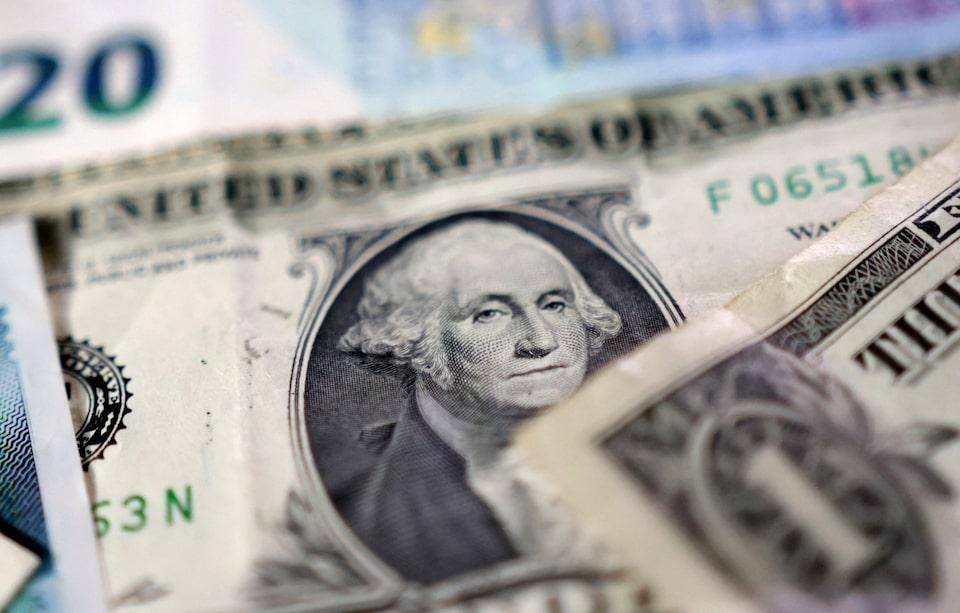
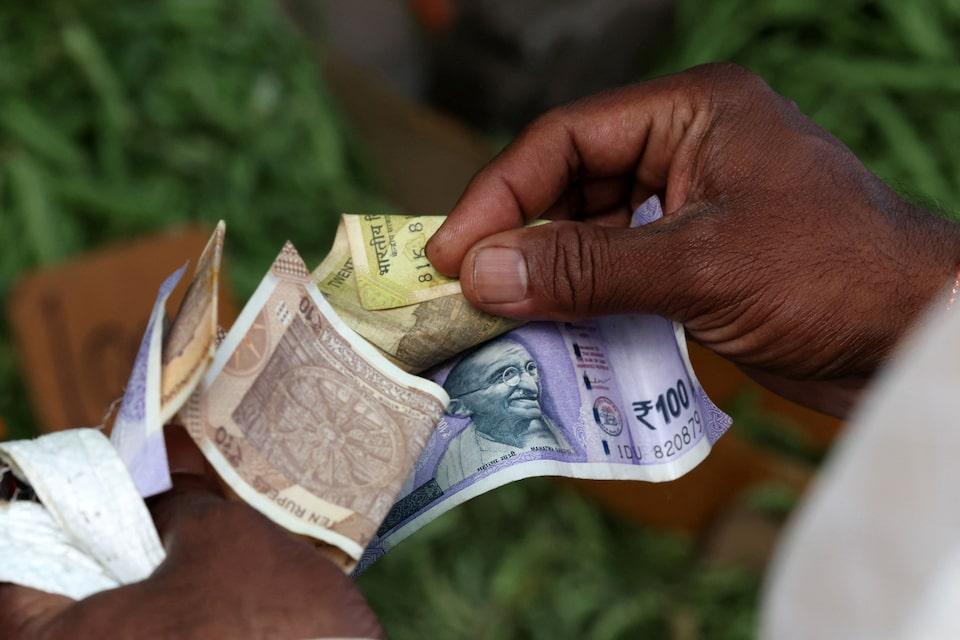
MUMBAI, Aug 14 (Reuters) - The Indian rupee declined on Thursday with traders treading lightly ahead of the Trump-Putin summit, although S&P’s upgrade offered a silver lining. The rupee closed at 87.5500 against the U.S. dollar, softer than Wednesday’s close of 87.4400, navigating a choppy session that saw it swing between 87.39 and 87.67. Sign up here. With the focus squarely on the Trump-Putin meet, the S&P's upgrade of India offered a boost to the local currency right when it was grappling with midday pressure. S&P noted that India’s robust external position is a key credit strength. It highlighted that current account deficits are likely to remain small over the next few years, while domestic demand stabilises and a weaker rupee boosts competitiveness. The agency further pointed to the rupee’s active trading status, noting it accounts for more than 1% of global foreign exchange turnover. "In the shorter term, we may see some relief on the ratings upgrade, but the rupee is still not out of the woods as trade uncertainties persist and broad economic indicators are still weak," said Dilip Parmar, currency analyst at HDFC Securities. The Trump-Putin meeting to discuss the Russia-Ukraine war holds added significance for the rupee. The U.S. president has criticised India’s purchase of Russian oil and imposed an extra 25% tariff on its goods effective August 27, doubling the rate to 50% - the highest U.S. tariff on a country alongside Brazil. The currency unit touched 87.8850 last week after Trump's tariffs salvo, with the Reserve Bank of India stepping in to prevent the rupee from breaching the all-time low of 87.95 - a level bankers believe the central bank will continue to defend. Meanwhile, the U.S. dollar index was up 0.1% at 97.835 at 1550 IST. https://www.reuters.com/world/india/rupee-slips-sp-upgrade-lends-lifeline-ahead-trump-putin-meet-2025-08-14/
2025-08-14 15:30
SAO PAULO, Aug 14 (Reuters) - U.S.-based beef-packers will continue to reel from low cattle availability for about three or four quarters, with gradual improvements of the U.S. cattle herd happening gradually from late 2027, JBS (Z98.F) , opens new tab managers said on Thursday. In remarks made after releasing second quarter results, the world's largest meat company said other factors affecting its U.S. beef operation, which accounts for about a third of its net sales, include the U.S. closure of its border with Mexico in May due to a flesh-eating parasite. Sign up here. "The Mexican situation is obviously relevant," said Wesley Batista Jr, who leads JBS' U.S. operations. The Mexican and the U.S. governments are in talks for potentially reopening the border, he said, estimating around 1.1 million head of feeder cattle cannot go through at this point. Other operating challenges in the U.S. for the company include the pork business, which has been heavily hit since U.S. President Donald Trump started a trade war with Beijing. Restrictions on Brazilian chicken exports from China and the European Union, enforced since May after a bird flu outbreak in the world's largest poultry exporter, are also weighing on JBS, which in June created a dual U.S.-Brazil listing. CEO Gilberto Tomazoni estimated that if sanitary trade barriers are not removed, earnings before interest, tax, depreciation and amortization (EBITDA) of its Brazil Seara prepared foods division may be impacted by around 1.5%. Seara's margins, however, remained in the double digits despite bird flu-related disruptions in the second quarter. Bolstered also by strong results from JBS' poultry processor Pilgrims Pride (PPC.O) , opens new tab, the firm, now listed in New York, posted record overall net sales of $21 billion while net profit rose nearly 61% to $528.1 million in the second quarter. https://www.reuters.com/world/china/jbs-sees-us-cattle-cycle-improving-late-2027-2025-08-14/