2025-08-13 21:49
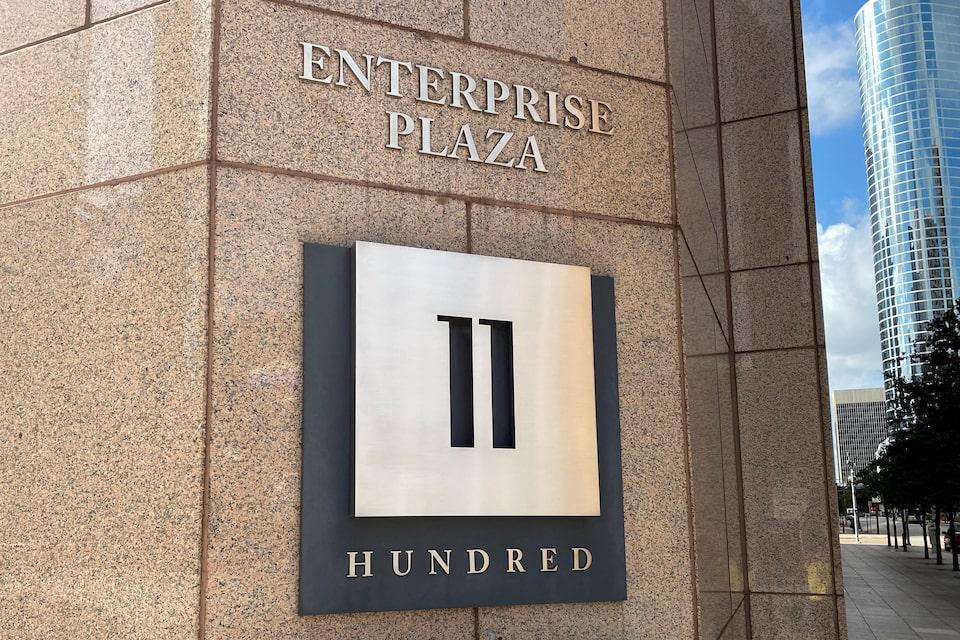
NEW YORK, Aug 13 (Reuters) - Enterprise Products Partners (EPD.N) , opens new tab said on Wednesday it was responding to a crude oil leak from the company's oil terminal in southeast Houston. Crude oil flows on the Seaway pipeline, which runs from Cushing, Oklahoma, to the Freeport, Texas, area and connects to the Enterprise Crude Houston (ECHO) terminal, fell early on Wednesday, four sources said. A portion of the pipeline went down on Tuesday night, three sources said. Sign up here. The cause of the release is under investigation, Enterprise said, adding there was no offsite impact, fire, or injuries from the oil leak. Enterprise activated its emergency response plan and has begun cleanup, the company said in a statement, adding it was coordinating with regulatory authorities to address the leak and resume normal operations. The price of West Texas Intermediate crude at East Houston, called MEH, climbed by as much as 35 cents to about a $1.30 premium to WTI at Cushing in early Wednesday trading, a trade source said. The ECHO terminal is a physical delivery point for Midland crude oil in Houston. It traded around 90 cents at market close on Wednesday. The ECHO terminal also provides crude oil storage to customers with access to major refineries along the Texas Gulf Coast and has connections to marine terminals that in turn supply other domestic and international refineries. The Seaway pipeline is a 50-50 joint venture between Enterprise, which operates the line, and Canada's Enbridge (ENB.TO) , opens new tab. Enbridge directed questions about Seaway's operations to Enterprise. Operations on the pipeline are expected to be restored later on Wednesday, two sources said. https://www.reuters.com/business/energy/enterprise-products-responding-crude-oil-leak-houston-terminal-2025-08-13/
2025-08-13 21:06
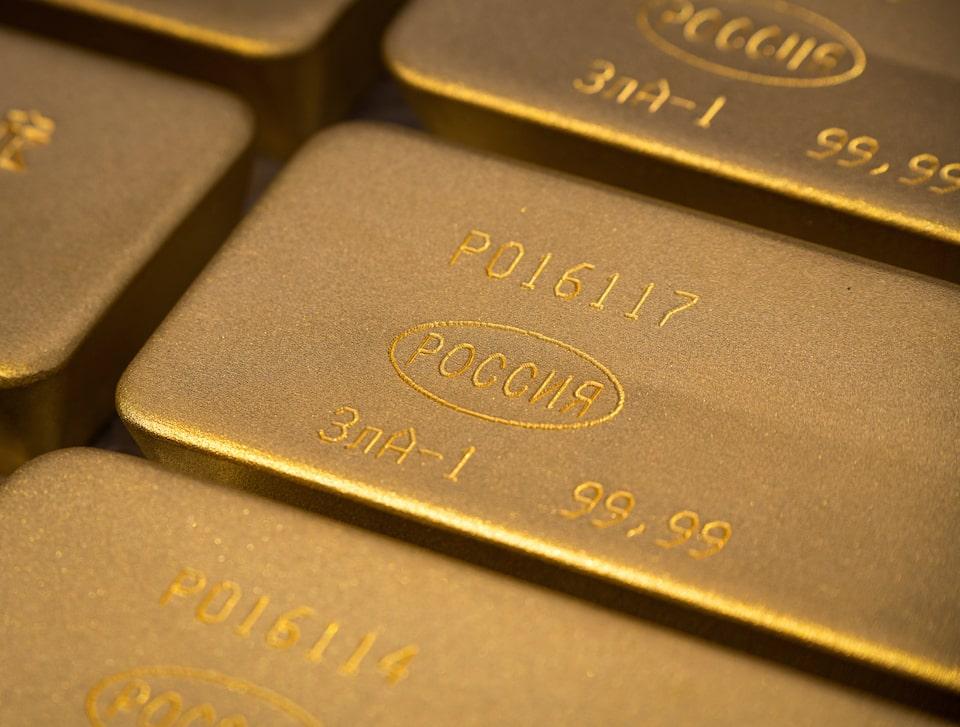
Rate cut bets rise after mild July inflation US dollar target="_blank">(.DXY) at an over two-week low Trump meets Putin on Friday to discuss war in Ukraine US and China extend tariff truce by 90 days Aug 13 (Reuters) - Gold rose on Wednesday, lifted by a weaker dollar and falling Treasury yields, as mild U.S. inflation data cemented expectations for a Federal Reserve rate cut in September and nudged up bets on additional easing later this year. Spot gold gained 0.3% to $3,355.58 per ounce by 4:58 p.m. ET (2058 GMT). U.S. gold futures for December delivery settled 0.3% higher at $3,408.3. Sign up here. The dollar index (.DXY) , opens new tab hit a more than two-week low, making bullion cheaper for overseas buyers, while the yield on the benchmark 10-year Treasury note edged lower. "Gold is buoyant on heightened expectations of a September Fed rate cut, following benign CPI data and July's weak non-farm payrolls," said Nikos Tzabouras, senior market analyst at Tradu.com. Markets are pricing in a 97% chance of a September Fed cut after mild July inflation data signalled limited pass-through from U.S. President Donald Trump's sweeping import tariffs, following weak jobs data earlier this month, reinforcing bets on at least one more cut. Investors now await further U.S. indicators this week, including the producer price index, weekly jobless claims, and retail sales. On the geopolitical front, European and Ukrainian leaders were set to speak with Trump ahead of his meeting with Russian President Vladimir Putin, while Washington and Beijing extended their tariff truce by 90 days. "If gold were to take out recent resistance around $3,400, it would likely be driven more by geopolitical developments than by economic data," Fawad Razaqzada, market analyst at City Index and FOREX.com said. "While I maintain a bullish long-term outlook on gold, my view for the rest of this year is more cautious. Prices may continue to consolidate or see a mini correction in the coming months as equity markets rally aggressively." Gold, a traditional refuge in times of economic or geopolitical strain, tends to benefit from low interest rates. Spot silver rose 1.6% to $38.50 per ounce, platinum gained 0.3% at $1,339.75 and palladium added 0.5% to $1,135.23. https://www.reuters.com/world/china/gold-gains-weak-dollar-investors-ramp-up-fed-rate-cut-bets-2025-08-13/
2025-08-13 21:04
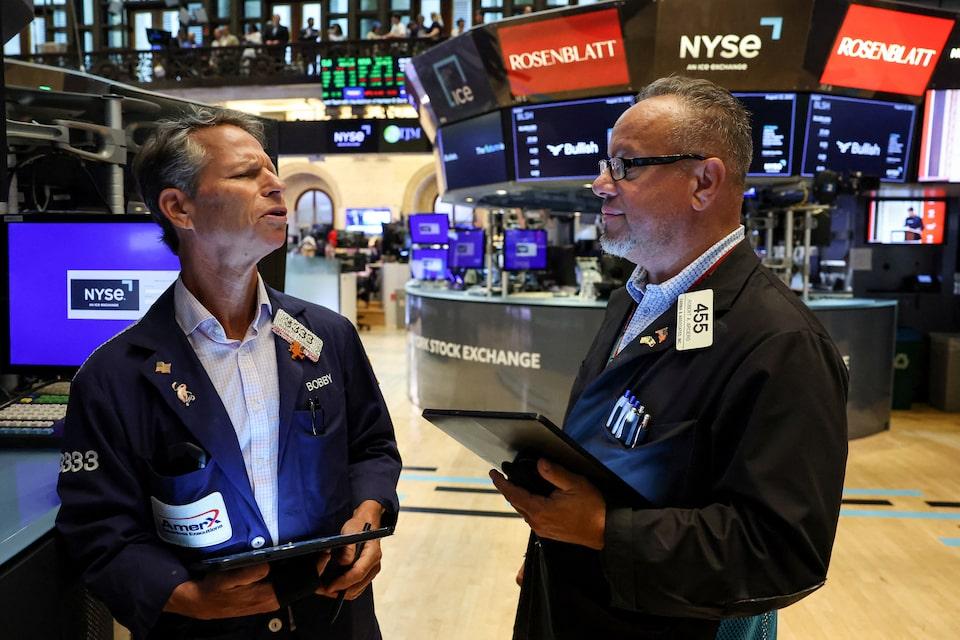
ORLANDO, Florida, Aug 13 (Reuters) - TRADING DAY Making sense of the forces driving global markets Sign up here. By Jamie McGeever, Markets Columnist Stocks rose around the world on Wednesday, and bond yields and the dollar fell, as comments from U.S. Treasury Secretary Scott Bessent fueled traders' bets that the Fed will cut interest rates next month, perhaps even by half a percentage point. More on that below. In my column today I suggest that what's giving Fed Chair Jerome Powell his biggest headache right now is not the pressure or attacks from U.S. President Donald Trump, but the inconclusive economic data. If you have more time to read, here are a few articles I recommend to help you make sense of what happened in markets today. Today's Key Market Moves Today's Talking Points: * Fed policy. In the realms of market pricing, a rate cut next month is now a nailed-on certainty, with traders putting the chances of a quarter point cut at 99.9%. This wager was strengthened by comments from Bessent, who told Bloomberg News a 50-basis point cut was possible. Bessent's comments are the latest in a growing list of verbal interventions - or outright political interference - from the Trump administration in the business and economics arena it traditionally steers clear of, like the Fed, non-partisan institutions, and private sector companies and banks. * Trump's Fed nominations. Bessent said early on Wednesday that no fewer than 11 candidates were being considered to replace Powell, whose term expires in May (or, earlier, if he is fired or resigns). The president later shortened that list to three or four. Interestingly, absent from Bessent's list was current Council of Economic Advisers Stephen Miran, nominated to fill an open Fed board seat with a term that ends in January. * Trump-Putin meeting. The U.S. and Russian leaders are scheduled to meet in Alaska on Friday, a face-to-face which Ukraine's allies hope will see Trump urge Putin to agree a ceasefire without selling out Kyiv's interests or carving up its territory. Trump, Ukraine's Volodymyr Zelenskiy and European leaders met in a last-ditch videoconference on Wednesday to lay out Ukraine's red lines, a call Trump said was "very friendly". France's Emmanuel Macron said Trump was "very clear" that he wants to achieve a ceasefire in Alaska. Fed more hamstrung by murky data than Trump interference It's widely believed that U.S. President Donald Trump's insistence on lower interest rates is what's making life most difficult for Federal Reserve Chair Jerome Powell and his colleagues. But what's causing the biggest headache for Fed officials is, in fact, probably more prosaic: economic data. The key challenges facing Powell were encapsulated perfectly on Tuesday by the release of an inconclusive U.S. inflation readout followed by Trump's latest verbal attack – and threats of a "major lawsuit." Politics aside, most Fed officials agree that rates will fall this year, with the median "dot plot" in the Fed's June Summary of Economic Projections pointing to 50 basis points of easing through December. Traders are betting heavily that the first move will be in September. But it's tough to justify that confidence based purely on economic data. While some indicators suggest policy should be eased sooner rather than later, others indicate that would be a high-risk move. Looking at the "totality of the data," to borrow a phrase from Powell, there is no clear signal either way. PLENTY NOISE, FEW SIGNALS Consider the latest U.S. inflation and employment reports, the two most important data sets. On their own, they don't appear soft enough to warrant the Fed trimming rates right now, but they also aren't firm enough to dispel the notion that policy easing is only a question of "when" not "if." Annual headline CPI inflation held steady in July at 2.7%, contrary to an expected rise, with month-on-month increases in line with forecasts. But annual core inflation rose more than expected to 3.1%, the highest level since February and still meaningfully above the Fed's 2% target. Economists calculate that durable goods prices rose 1.7% in the first six months of the year – the biggest six-month rise since 1987, excluding the COVID-19 pandemic. They warn there is likely more of that to come as Trump's tariffs kick in. "July's CPI data are probably more worrying under the surface than in the headlines, and we expect the upward pressure to goods inflation to build in the coming months," James Pomeroy, a global economist at HSBC, wrote on Tuesday. Meanwhile, last week's employment report showed job growth in July was much weaker than anticipated, and, more importantly, downward revisions to the previous two months were among the biggest on record. But these ominous signals were offset by accelerating wage growth, an increase in hours worked, and a meager rise in the unemployment rate. Hardly signs of a shaky labor market. Nevertheless, markets focused more on the softer elements in the jobs data, suggesting investors think the Fed's bar to easing is much lower than the bar to standing pat. Indeed, the rates market is now pricing in a near-100% chance of a cut at the U.S. central bank's September 16-17 meeting. RISK MANAGEMENT But markets may be getting ahead of themselves. Powell has indicated that a rise in the unemployment rate is needed for the Fed to act. But that rate is potentially being distorted by post-pandemic labor supply issues - employers' reluctance to fire workers and Trump's immigration policies are limiting the number of people looking for work. Regardless, cutting before seeing a meaningful rise in the unemployment rate would be tough to justify, creating a significant communications problem for Powell. And on a more fundamental level, as economist Phil Suttle noted on Tuesday, is preparing to cut rates at full employment just as inflation is accelerating good risk management? This is a particularly apt question when looking at financial markets: the S&P 500 and Nasdaq, gold, and bitcoin are all near record highs, and corporate bond spreads are the tightest in years. This hardly looks like a restrictive policy environment. In that light, patience and caution would appear justified, especially given the added risk of appearing to buckle under Trump's political pressure. If the Fed wants to cut, Powell could use some cover. Unfortunately for him, he's unlikely to find that in this noisy data. What could move markets tomorrow? Want to receive Trading Day in your inbox every weekday morning? Sign up for my newsletter here. Opinions expressed are those of the author. They do not reflect the views of Reuters News, which, under the Trust Principles , opens new tab, is committed to integrity, independence, and freedom from bias. https://www.reuters.com/business/global-markets-trading-day-graphic-2025-08-13/
2025-08-13 21:04
Benchmark S&P 500, Nasdaq hit record European shares gain Oil prices drop, gold rises Nikkei attains record high above 43,000 Dollar index falls to two-week low NEW YORK, Aug 13 (Reuters) - An index of global equity markets rose to a record high for the second straight session on Wednesday, partly underpinned by bullish sentiment on Wall Street as investors positioned for a likely interest rate cut from the U.S. Federal Reserve. The MSCI All Country World Index (.MIWD00000PUS) , opens new tab rose as high as 954.21, breaking another record a day after reaching a new peak. It was last up 0.60% at 952.83. Sign up here. The benchmark S&P 500 and the Nasdaq Composite Index scored record highs for the second straight session, while the Dow Jones Industrial Average finished stronger. Among the S&P 500's 11 sectors, materials, healthcare and consumer discretionary stocks led gains while communication services, consumer staples and technology shares lost ground. The Dow (.DJI) , opens new tab gained 1%, the S&P 500 (.SPX) , opens new tab rose 0.32% and the Nasdaq Composite (.IXIC) , opens new tab added 0.14%. European stocks (.STOXX) , opens new tab advanced 0.54%, almost reaching two-week highs, while Japan's Nikkei (.N225) , opens new tab rose for the sixth straight day, breaking the 43,000 level for the first time and hitting a fresh high. MSCI's broadest index of Asia-Pacific shares outside Japan (.MIAPJ0000PUS) , opens new tab rose 1.54%. "It's largely just a continuation from what we saw yesterday, with inflation obviously being the driver of the rally," said Garrett Melson, portfolio strategist at Natixis Investment Managers Solutions in Boston. U.S. inflation readings, which on Tuesday showed the consumer price index rising slightly less than forecast in the year through July, indicated President Donald Trump's import tariffs had yet to filter down to consumer prices. That helped Wall Street scale new heights, supported by the increasing likelihood that the Federal Reserve will cut interest rates next month. "It's hard to really glean any sort of trends from that report other than maybe just some noise. I think on the whole, it's better than feared and that was enough to kind of spur expectations that the Fed has kind of the green light to go in September," Melson added. Traders are pricing in a nearly 94% chance of a Fed cut in September, up from about 57% a month ago, according to the CME FedWatch tool. Also boosting market optimism was Trump's signing of an executive order pausing triple-digit levies on Chinese imports for another 90 days. Treasury Secretary Scott Bessent said he thought an aggressive half-point cut was possible given recent Bureau of Labor Statistics revisions showing job growth had slowed to a crawl in May, June and July, though initial estimates had shown stronger employment growth that Fed officials used to argue that the labor market remained in good shape. U.S. Treasury bond prices rose across the board, with the 2-year note yield, which typically moves in step with interest rate expectations for the Fed, dropping 5.2 basis points to 3.679%. The benchmark U.S. 10-year note yield fell 5.5 basis points to 4.238%. The dollar weakened 0.32% to 147.36 against the Japanese yen and was down 0.12% to 0.805 against the Swiss franc . The euro was up 0.27% at $1.1704. The dollar index , which tracks the greenback against a basket of major peers, fell for a second day to its lowest in two weeks. It was last down 0.25% at 97.79. Oil prices fell ahead of Trump's meeting with Russian President Vladimir Putin. Brent crude futures settled down 0.74% to $65.63 a barrel, while U.S. West Texas Intermediate crude futures fell 0.82% to settle at $62.65 a barrel. Spot gold rose 0.34% to $3,356.49 an ounce. https://www.reuters.com/world/china/global-markets-update-6-graphic-2025-08-13/
2025-08-13 21:02
Aug 14 (Reuters) - New Zealand home prices rose in July but the housing market remains mixed across the country, the Real Estate Institute of New Zealand (REINZ) said on Thursday. Seasonally adjusted median house prices nudged 1.1% higher from June, and were 1.7% higher on the previous year, REINZ data showed. Seasonally adjusted national home sales fell 1.7% from June, but were up 4.2% from July 2024. Sign up here. "Sales growth varied widely across regions, with strong rises in areas like Northland, while some regions experienced declines, reflecting a varied sales market across the country,” said Lizzy Ryley, REINZ chief executive. https://www.reuters.com/world/asia-pacific/new-zealand-house-prices-move-higher-july-market-mixed-2025-08-13/

2025-08-13 20:39
US crude supply build exceeds expectations, hitting oil prices Trump threatens 'severe consequences' if Putin blocks Ukraine peace IEA raises supply forecast, OPEC+ sees tighter market next year NEW YORK, Aug 13 (Reuters) - Oil prices fell to over two-month lows on Wednesday after bearish supply guidance from the U.S. government and the International Energy Agency, while investors eyed U.S. President Donald Trump's threat of "severe consequences" if Russia's Vladimir Putin blocked peace in Ukraine. Brent crude futures settled down 49 cents, or 0.7%, to $65.63 a barrel. During the session it dropped to $65.01 a barrel, the lowest since June 6. Sign up here. U.S. West Texas Intermediate crude futures fell 52 cents, or 0.8%, to $62.65 a barrel. The contract fell to $61.94 a barrel, the lowest since June 2. U.S. crude stocks rose by 3 million barrels to 426.7 million barrels, the Energy Information Administration said on Wednesday. Analysts in a Reuters poll had expected a 275,000-barrel draw. Net U.S. crude imports rose last week by 699,000 barrels per day, EIA said. "These crude exports remain subpar from what we got used to, falling due to tariff pushback," said John Kilduff, partner at Again Capital in New York, adding continued lower exports could weigh on prices. The International Energy Agency on Wednesday raised its forecast for oil supply growth this year but lowered its demand forecast. Trump is expected to meet with Putin in Alaska on Friday to discuss ending Russia's war in Ukraine, which has shaken oil markets since February 2022. When asked whether Russia would face any consequences if Putin does not agree to stop the war after Friday’s meeting, Trump responded on Wednesday: “Yes, they will.” Asked if those consequences would be sanctions or tariffs, Trump told reporters: “I don't have to say, there will be very severe consequences." Trump also said a meeting between the pair could swiftly be followed by a second that included the leader of Ukraine. Meanwhile, in its monthly report on Tuesday, OPEC+ raised its global oil demand forecast for next year and trimmed estimates of supply growth from the United States and other producers outside the wider group, pointing to a tighter market. "Were we to take an aggregate of the respective IEA and OPEC oil demand growth projections for 2025 at their respective bearish and bullish ends, even a modest middle figure, say just north of 1 million bpd, can easily be serviced by non-OPEC supply growth alone at the moment," said independent energy analyst Gaurav Sharma. "So, I don't see a bullish case for oil over the near-term horizon." https://www.reuters.com/business/energy/oil-hits-two-month-low-us-iea-supply-guidance-weighs-2025-08-13/