2025-08-13 07:16
BANGKOK, Aug 13 (Reuters) - Thailand's central bank lowered its key interest rate by a quarter point on Wednesday, its fourth cut in 10 months as it looks to support a sluggish economy grappling with negative inflation and the impact of U.S. tariffs. The Bank of Thailand's monetary policy committee unanimously voted to reduce the one-day repurchase rate (THCBIR=ECI) , opens new tab by 25 basis points to 1.50%, the lowest in more than two years. Sign up here. The BOT had held the key rate at its June meeting following back-to-back cuts at reviews in February and April. It had also cut rates in October last year. Twenty-three of 28 economists in a Reuters poll had predicted a quarter-point reduction this week. The other five had expected no rate change. The central bank in a statement said the Thai economy was expected to expand this year and next close to earlier assessments, but U.S. trade policies would exacerbate structural problems and weaken competitiveness, with small businesses vulnerable. "The committee views that monetary policy should be accommodative going forward to support the economy," the statement said. It expects growth in Southeast Asia's second-largest economy to slow in the second half of the year, it said. The baht reversed course to fall 0.1% after the announcement, while Thai stocks (.SETI) , opens new tab were largely unchanged. The economy has struggled with weak consumption, high household debt, slowing tourism, trade uncertainty and U.S. tariffs. The central bank has said the economy might have grown about 3% annually in the second quarter of 2025 but would feel the impact of U.S. tariffs and weakening consumption later this year. Wednesday's meeting was the last for Governor Sethaput Suthiwartnarueput. New Governor Vitai Ratanakorn will take over on October 1, and he has said rate cuts will support growth. The next policy review will be on October 8. In June, the BOT predicted 2025 economic growth of 2.3%, with export growth of 4%, after factoring in U.S. tariff rates of 18%. The economy expanded 2.5% last year, lagging peers. Last month, the United States reduced its tariff rate to 19% on imported goods from Thailand, down from the initial 36% level and more aligned with other countries in the region. There are still uncertainties relating to U.S. tariffs on transshipments via Thailand from third countries. https://www.reuters.com/world/asia-pacific/thai-central-bank-cuts-key-rate-by-25-bps-expected-2025-08-13/
2025-08-13 07:13
SINGAPORE, Aug 13 (Reuters) - Oil prices were little changed on Wednesday as investors awaited U.S. inventory data, while eyeing an upcoming meeting between U.S. President Donald Trump and Russian President Vladimir Putin. Brent crude futures dipped 3 cents, or 0.05%, to $66.09 a barrel at 0711 GMT, while U.S. West Texas Intermediate crude futures edged down 8 cents, or 0.13%, at $63.09. Both contracts settled lower on Tuesday. Sign up here. Trump and Putin are due to meet in Alaska on Friday to discuss ending Russia's war in Ukraine that has shaken oil markets since February 2022. Oil investors are in a "wait-and-see mode" ahead of the meeting, said ING commodity strategists. "The outcome could remove some of the sanction risk hanging over the market," the ING strategists added. Investors also awaited further cues after an industry report showed U.S. crude stockpiles climbed last week. Crude inventories in the United States, the world's biggest oil consumer, rose by 1.52 million barrels last week, market sources said, citing American Petroleum Institute figures on Tuesday. Gasoline inventories dropped while distillate inventories gained slightly. Should the U.S. Energy Information Administration data later on Wednesday also show a decline, it could indicate that consumption during the summer driving season has peaked and refiners are easing back their runs. The driving season typically runs from the Memorial Day holiday at the end of May to the Labor Day holiday in early September. Analysts polled by Reuters expect the EIA report to show crude inventories fell by about 300,000 barrels last week. Outlooks issued by OPEC and the EIA on Tuesday pointed to increased production this year which also weighed on prices. But both expect output in the U.S., the world's largest producer, to decline in 2026 while other regions will increase oil and natural gas production. U.S. crude production will hit a record 13.41 million barrels per day in 2025 due to increases in well productivity, though lower oil prices will prompt output to fall in 2026, the EIA forecast in a monthly report. The Organization of the Petroleum Exporting Countries' monthly report said global oil demand will rise by 1.38 million bpd in 2026, up 100,000 bpd from the previous forecast. Its 2025 projection was left unchanged. The White House on Tuesday tempered the expectations for a quick Russia-Ukraine ceasefire deal, which may lead investors to reconsider an end to the war soon and any easing of sanctions on Russian supply, which had been supporting prices. "Trump downplayed expectations of his meeting with President Putin ... However, expectations of additional sanctions on Russian crude continue to fall," ANZ senior commodity strategist Daniel Hynes wrote in a note. https://www.reuters.com/business/energy/oil-steady-market-awaits-inventory-data-us-russia-meeting-2025-08-13/

2025-08-13 07:06
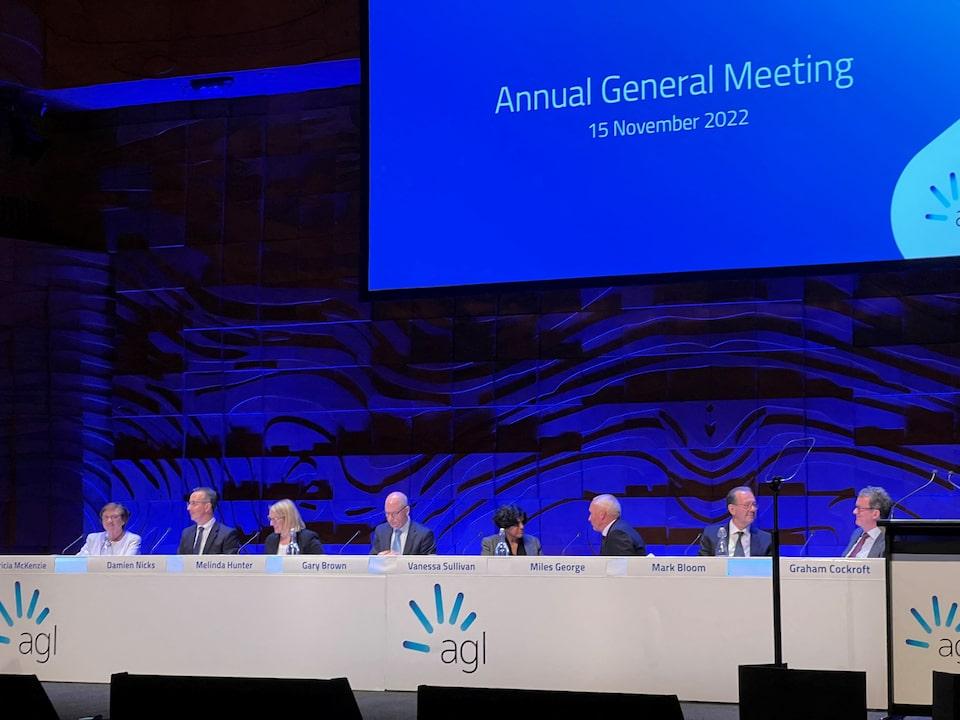
AGL shares close down 13% at over one-year low Cuts final dividend by 29% to 25 Australian cents Results reflect ongoing green transition, says investor SYDNEY, Aug 13 (Reuters) - Australia's top power producer AGL Energy (AGL.AX) , opens new tab on Wednesday reported a 21% drop in annual underlying profit and missed earnings expectations due to tighter retail margins and higher costs from its transition to renewable energy. Shares closed down 13% at the lowest level since April 2024, and had their weakest trading session since October 2007. Sign up here. But the Sydney-based company, which is Australia’s biggest carbon emitter, said it was confident its investments in big batteries would bring a strong earnings stream once operational. "We have invested heavily in growth this year, with approximately A$900 million ($587.79 million) deployed towards battery developments and strategic investments,” AGL CEO Damien Nicks said on an earnings call. He said the batteries would also "more than offset" rising gas purchasing costs as legacy contracts neared expiration in 2027. "That’s why we're going after these as quickly and as hard as we can," he said. AGL is targeting final investment decisions for 900 megawatts of grid-scale battery projects for storage, as part of a commitment to more ambitious renewable energy targets. On Wednesday, it released a new climate plan targeting 6 gigawatts of renewable and storage assets by 2030, up from its previous target of 5GW. The need for liquidity to support its green spending meant it declared a final dividend of 25 Australian cents per share, down from 35 Australian cents in the previous fiscal year, and on the lower end of its forecast payout ratio range of 50% to 75%. Earnings before interest, tax, depreciation and amortisation fell 9% to A$2.01 billion and core profit was down by over one-fifth to A$640 million. AGL said compressed consumer margins from gas and electricity retailing added to the softer result, as well as increased spending to support ageing coal plants that had suffered unplanned outages and downtime in the past year. "We are not satisfied with the fleet performance. I think that's very clear," said Chief Operating Officer Markus Brokhof. RBC Capital Markets analyst Gordon Ramsay said the result missed his estimates due to higher-than-expected costs and margin compression in its electricity and gas portfolio and the guidance had "disappointed". AGL forecast underlying net profit for the financial year ending June 30, 2026 of between A$500 million and A$700 million. The midpoint of the range is 10% below the average A$667 million net profit estimate of nine analysts polled by LSEG. But Jamie Hannah, deputy head of investments at top-15 AGL shareholder VanEck, was undeterred. He called the market reaction "out of kilter with the medium and long-term strategies" of the company. The softer performance reflected the fact the company was in a transition period as it looks to pivot to clean energy and prepare for its exit from coal power in 2035, Hannah said. “They've got the ageing coal power plants so outages are obviously affecting ability to run those power plants,” he said. “But at the same time, they have to spend money to build out the next phase of power generation, a lot of that’s renewables and the like.” “That’s an ongoing transition which is going on globally. AGL being one of the biggest players in Australia is obviously the centre of that here.” ($1 = 1.5319 Australian dollars) https://www.reuters.com/business/energy/australias-agl-shares-plunge-weaker-results-reflect-cost-going-green-2025-08-12/
2025-08-13 07:03
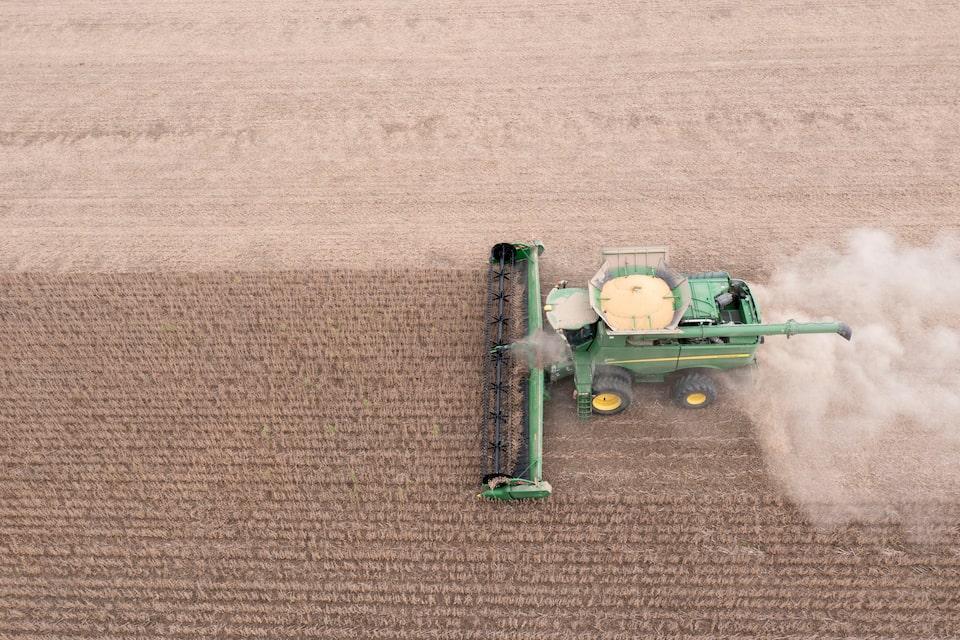
Chinese crushers buy Brazilian beans amid US-China trade war Chicago soybean futures near 5-year lows amid trade uncertainty US soybeans around $40/ton cheaper than Brazilian for October shipment SINGAPORE/BEIJING, Aug 13 (Reuters) - U.S. soybean exporters risk missing out on billions of dollars worth of sales to China this year as trade talks drag on and buyers in the top oilseed importer lock in cargoes from Brazil for shipment during the key U.S. marketing season, according to traders. Chinese importers have finished booking soybean cargoes for September, taking around 8 million metric tons, all from South America, three traders told Reuters. Sign up here. For October, Chinese buyers have secured about 4 million tons - half of their expected requirement - also from South America, the traders said. "China's heavy Q3 soybean purchases suggest the industry has built up inventories ahead of potential Q4 supply risks," said Wang Wenshen, an analyst at Sublime China Information. Last year, Chinese oilseed importers bought around 7 million tons from the U.S. for shipments during the two months. The risk of a prolonged absence of Chinese purchases for the U.S. crop year starting in September amid unresolved trade tensions could add pressure on Chicago futures trading not far from five-year lows, traders said. Typically, most Chinese purchases of U.S. soybeans are shipped between September and January, before Brazilian supplies take over after South America's harvest. Chinese buyers are expected to complete this year's October bookings by early next month, said a trader at an international firm in Singapore. China has been cutting its dependence on U.S. agricultural products since the trade war under President Donald Trump's first term. Last year, China imported roughly 105 million metric tons of soybeans. Of that, 22.13 million tons came from the U.S., worth $12 billion. TRADE TENSIONS CLOUD OUTLOOK On Sunday, Trump urged China to quadruple its soybean purchases ahead of a tariff truce deadline, a target that analysts said was unfeasible as it would require China to buy almost exclusively from the U.S. The next day, the two sides extended their tariff truce by 90 days. However, three traders told Reuters the extension by itself was unlikely to spur purchases, as Beijing's tariff on U.S. soybean imports remains at 23% - making them uncompetitive. China could resume buying U.S. soybeans if an agreement to reduce duties is reached. "One possible scenario is that if both sides reach a deal in November, China could resume buying U.S. soybeans, potentially extending the U.S. export window and putting pressure on Brazil's new-crop sales," said Johnny Xiang, founder of Beijing-based AgRadar Consulting. Excluding tariffs, U.S. soybeans for October shipment are around $40 per ton cheaper than Brazilian cargoes being bought by China, two traders said. China has plentiful soybeans on hand after stepping up imports with purchases hitting record highs in recent months. https://www.reuters.com/world/china/us-losing-out-china-soybean-sales-brazil-fills-key-supply-period-2025-08-13/
2025-08-13 07:01
US consumer price index rose 0.2% last month US and China extend tariff truce by 90 days Mild US inflation data lifts Fed rate-cut bets Aug 13 (Reuters) - Gold edged higher on Wednesday, supported by a weaker dollar after mild U.S. inflation data cemented bets for an interest rate cut in September, while investors awaited this week's U.S.-Russia talks over the war in Ukraine. Spot gold was up 0.3% at $3,355.30 per ounce, as of 0651 GMT. U.S. gold futures for December delivery gained 0.2% to $3,405.50. Sign up here. "The fall in the USD enabled a moderate bounce in the gold price, with the precious metal oscillating around the $3,350 level ahead of the Trump-Putin meeting on Friday," said Tim Waterer, chief market analyst at KCM Trade. "If the meeting in Alaska doesn't resolve anything and the war in Ukraine continues, gold could be making a push back towards $3,400 once again." The summit between U.S. President Donald Trump and Russian President Vladimir Putin "is a listening exercise for the president," the White House said on Tuesday, tempering expectations for a quick Russia-Ukraine ceasefire deal. Data released on Tuesday showed that the U.S. Consumer Price Index (CPI) rose 0.2% in July, following a 0.3% increase in June. On a year-over-year basis, the CPI climbed 2.7%. The dollar index extended declines, making greenback-denominated assets more affordable to holders of other currencies. Markets are pricing in about a 90% chance of a Federal Reserve rate cut in September, with at least one additional reduction expected by the end of the year. Non-yielding gold thrives in a low-interest-rate environment. Easing trade tensions in the market, the United States and China have extended a tariff truce for another 90 days, staving off triple-digit duties on each other's goods. Investors are now awaiting more U.S. economic data due later this week, including the U.S. Producer Price Index, weekly jobless claims, and retail sales. Elsewhere, spot silver climbed 1.2% to $38.35 per ounce, platinum gained 1% to $1,348.70 and palladium rose 0.8% to $1,138.04. https://www.reuters.com/world/china/gold-gains-soft-us-data-pressures-dollar-fuels-rate-cut-bets-2025-08-13/

2025-08-13 06:53
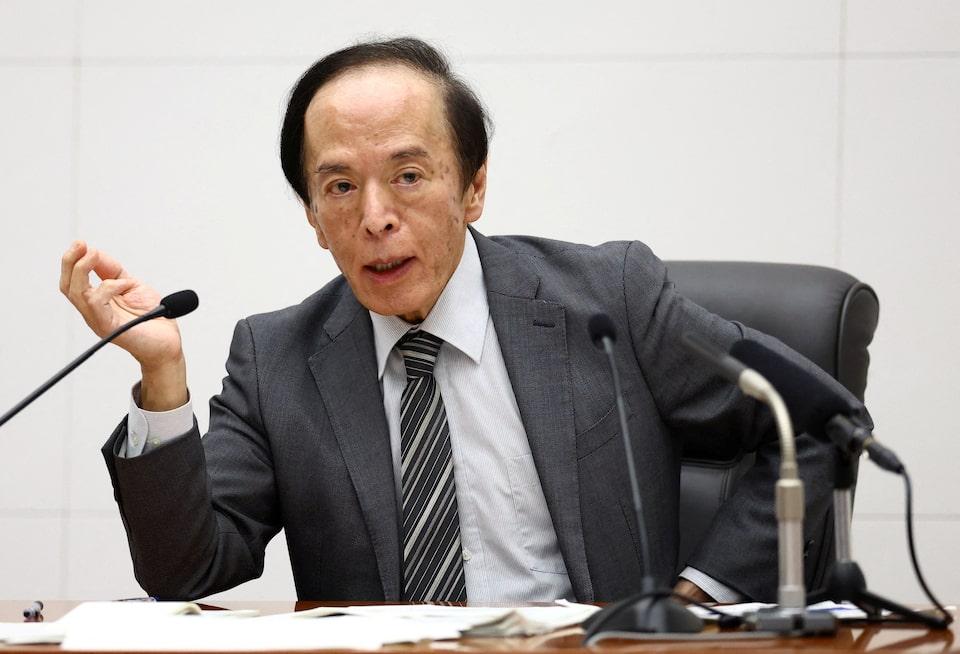
Some in board call for tweak to BOJ's focus on 'underlying' inflation Calls for communication change reflects mounting price pressure Government panel member warned BOJ may be 'behind the curve' BOJ may shift communication as rate hike draws near TOKYO, Aug 13 (Reuters) - Pressure is mounting within the Bank of Japan to ditch a vaguely defined gauge of inflation as worries about second-round price effects prompt some board members to call for a more hawkish communication of policy and a clearer path to future rate hikes. BOJ Governor Kazuo Ueda has justified going slow on rate hikes by explaining that "underlying inflation," which focuses on the strength of domestic demand and wages, remains short of the central bank's 2% target. Sign up here. The trouble is that there is no single indicator that gauges "underlying inflation", making it a target for critics who say the BOJ is overly reliant on an obscure reading to guide monetary policy despite both headline inflation and core measures exceeding its target for years. Now, even some members of the BOJ board - worried that second-round price effects were becoming embedded in pricing behaviour and public perceptions of future inflation - are calling for a change to the bank's communication to a more hawkish one that focuses on headline inflation, which hit 3.3% in June. "We're at a phase where we should shift the core of our communication away from underlying inflation to actual price moves and their outlook, as well as the output gap and inflation expectations," one member said, according to a summary of opinions at the bank's July policy meeting. Another member said the BOJ must put more emphasis on upside risks to prices, and consider tweaking its communication to one that is based on the view Japan will hit 2% inflation. Some members of the government's top economic council also warned this month the BOJ might be too complacent of mounting price pressure, a clear nudge to the central bank to steer a more hawkish policy path in the wake of growing public alarm over persistent inflation. "I'm worried that monetary policy is already behind the curve," one panel member was quoted as saying at a meeting last week, adding that prolonged price rises were already affecting people's livelihood and their inflation expectations. OCTOBER POLICY TILT? The BOJ exited a decade-long, radical stimulus programme last year and raised short-term interest rates to 0.5% in January on the view that Japan was on the cusp of sustainably hitting its 2% inflation target. While the central bank has signalled its readiness to raise rates further, the economic impact of higher U.S. tariffs forced it to cut its growth forecasts in May and complicated decisions around the timing of the next rate increase. With Japan having agreed on a trade deal with the U.S. in July, the BOJ has shed some of its gloom over the economic outlook. Of the BOJ's nine board members, Naoki Tamura, Hajime Takata and Junko Koeda have highlighted the risk of persistent rises in food prices leading to broader-based, sustained inflation. To be sure, there is no consensus within the board yet on whether a communication overhaul is needed, with one member quoted as saying in the summary that underlying inflation remained an "important concept in guiding policy." But the fact some members openly called for a tweak to the dovish communication highlights the board's growing attention to broadening inflationary pressure that may pave the way for rate hikes in coming months and into 2026, some analysts say. Annual core consumer inflation hit 3.3% in June, exceeding the BOJ's 2% target for well over three years, due largely to a 8.2% spike in food costs. Such price pressures led the board to revise up its core inflation estimates last month, and cast doubt on the BOJ's view that underlying inflation - measured by a mix of proxies such as public expectations of future price moves - has yet to reach 2%. The BOJ may gradually phase out the concept of underlying inflation from its communication, as it gears up for the next rate hike that could happen as soon as in October, said veteran BOJ watcher Naomi Muguruma. "I think many BOJ officials are beginning to realise that the idea doesn't fit quite well with reality," she said. "We might hear less of this concept when the timing of the next rate hike draws near." https://www.reuters.com/business/boj-faces-pressure-ditch-obscure-inflation-gauge-clear-path-tighter-policy-2025-08-13/