2025-08-12 23:05
HONG KONG, August 13 (Reuters) - Overcapacity has made its way into China’s domestic market, with price wars leading to collapsing profitability and accelerating deflation. The government has responded by launching a so-called “anti-involution” program to combat deflationary price wars. It’s had some early wins, but this could be a lengthy battle. The Chinese internet slang for “involution” originally referred to competitive pressures faced by young Chinese in education and the workplace. Since early 2024, however, the word has come to describe supposedly excessive, unsustainable competition among Chinese firms, where more resources are being invested without increasing higher returns. Sign up here. The Chinese government began to highlight the economic dangers of involution as early as June 2024 , opens new tab in the face of declining corporate margins and profitability across diverse sectors such as electric vehicles, solar panels, lithium batteries, steel, cement and food delivery. Critiques of "excessive" competition grew much louder in the first half of 2025 as several price wars escalated. In particular, EV leader BYD(002594.SZ) , opens new tab started sharply cutting prices, and food delivery giant Meituan (3690.HK) , opens new tab and new ecommerce platform JD.com(9618.HK) , opens new tab began offering discounts and subsidies. Increased competition in China also appears to be amplifying deflationary pressures. While China’s Producer Price Index (PPI) has been in negative territory for much of the last three years, hopes of escaping this morass were ignited in mid-2024 as domestic demand appeared to be recovering. However, that optimism was doused this year as price wars intensified, with PPI falling by 3.6% year-on-year in the most recent report. EARLY DAYS China’s government, recognising that industrial overcapacity is a potential danger to the domestic economy, launched a multi-pronged anti-involution campaign in July. The program seeks to channel investment funds to advanced manufacturing, control production in highly competitive industries like steel, oversee pricing and subsidies in EVs and food delivery, and continue phasing out obsolete industrial capacity. It’s early days, but some nascent impacts are visible. Carmakers’ average price discount declined in July, and Meituan, JD.com and Alibaba (9988.HK) , opens new tab recently agreed to end aggressive discounting in food delivery and promote "fair competition". Industry consolidation has accelerated as well. Polysilicon manufacturers are discussing the creation of a $7 billion fund to acquire and shut down almost one-third of their production capacity and restructure part of the loss-making sector. Additionally, the country’s largest coal miner, China Shenhua Energy (601088.SS) , opens new tab , stated its intention to acquire various assets from the subsidiaries of its controlling shareholder to improve operational efficiency. CHALLENGES AHEAD China’s anti-involution program faces myriad hurdles, however. For one, most of the targets of the anti-involution program are in the private sector, which means they will be making voluntary pledges to maintain pricing discipline and thus could revert to aggressive tactics in the face of market pressure. Importantly, Beijing’s previous supply-side structural reforms from 2015-17 reduced excess capacity among state-owned firms, over which Beijing, by definition, had much more control. Moreover, many of China’s local governments are highly indebted and may prioritise short-term revenue generation over long-term reform, potentially offering subsidies to firms to attract investment even in industries targeted by the anti-involution campaign. Innovation in emerging technologies could also be a casualty if deterring overlapping investments hinders experimentation with different approaches. And tighter oversight on pricing and capacity could dampen private capital’s investment enthusiasm overall. Finally, one of the biggest risks to the implementation of the program is the possibility of job losses as industries consolidate and become more inefficient. While China’s youth unemployment rate has declined recently, it remains high and could increase over the next few months as over 12 million new university graduates join the workforce. And the private sector – the target of the anti-involution program – generates the vast majority of China’s incremental employment. UPDATED PLAYBOOK China’s anti-involution efforts have had some success, but this will likely not be a short fight. First, to truly absorb excess capacity in various industries, Beijing will almost certainly have to stimulate domestic consumption more aggressively than it has in the past. Sentiment among Chinese consumers remains quite low, implying that the monetary and fiscal stimuli undertaken by China’s government over the past year have had only a limited impact. The government could also consider more innovative, hitherto untested policies. For example, it could mandate superior product quality to weed out players who compete purely on cost to encourage industry consolidation. However, defining “low quality” and enforcing standards would be challenging, and this strategy may be less effective in services industries. Another way to reduce the incentives for extreme competition would be encouraging collaboration between firms through technology sharing and mutual equity holdings. And the increased availability of patient long-term capital could obviate the need for companies to ramp up production and revenues rapidly. The anti-involution program marks a new phase of China’s pursuit of high-quality development. Enforcing pricing discipline and market stability in furiously competitive industries will be no easy task. That means an updated playbook may be needed. (The views expressed here are those of Manishi Raychaudhuri, the founder and CEO of Emmer Capital Partners Ltd, and the former Head of Asia-Pacific Equity Research at BNP Paribas Securities). Enjoying this column? Check out Reuters Open Interest (ROI), , opens new tab your essential new source for global financial commentary. ROI delivers thought-provoking, data-driven analysis of everything from swap rates to soybeans. Markets are moving faster than ever. ROI, , opens new tab can help you keep up. Follow ROI on LinkedIn, , opens new tab and X. , opens new tab https://www.reuters.com/markets/asia/chinas-fight-against-price-wars-is-an-uphill-battle-2025-08-12/
2025-08-12 22:51
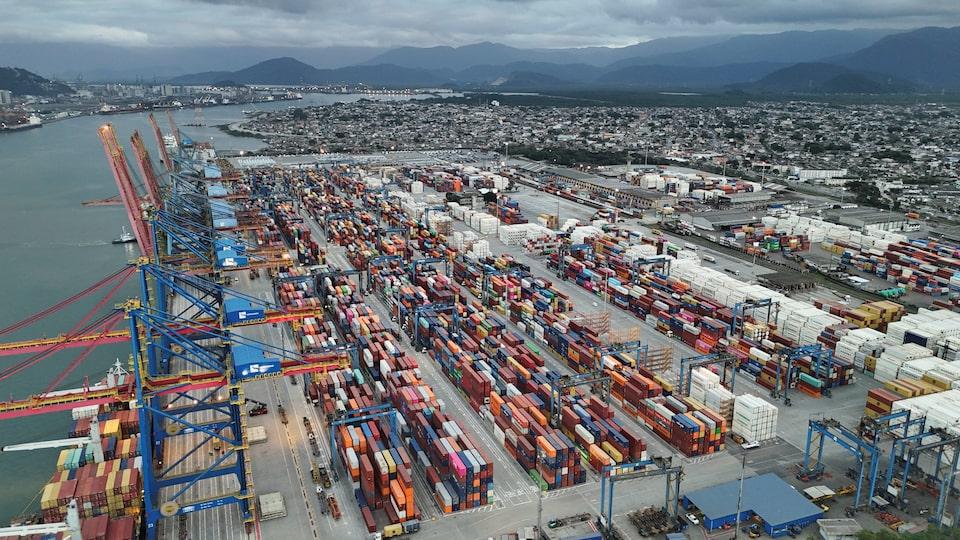
BRASILIA, Aug 12 (Reuters) - Brazil's President Luiz Inacio Lula da Silva on Tuesday said his government would provide 30 billion reais ($5.55 billion) in credit as part of a plan to support companies that export goods and are affected by steeper tariffs imposed from Washington. In an interview with local news outlet BandNews, Lula said this was an initial amount to help the exporters, adding the package will also include support through government purchases. Sign up here. The government is set to announce on Wednesday the highly anticipated plan at an event 11:30 a.m. (1430 GMT) in the capital Brasilia, according to the office of Lula's chief of staff. Reuters had reported last week, citing sources, that Brazil's government was mulling shifting some 30 billion reais from a fund managed by state development bank BNDES to support local firms hit the tariffs. The U.S. hiked the levies imposed on the imports of Brazilian goods to 50% from 10% earlier this month, although products including orange juice and aircraft were exempted from the increase. ($1 = 5.4020 reais) https://www.reuters.com/world/americas/brazil-provide-56-billion-help-exporters-navigate-us-tariffs-2025-08-12/
2025-08-12 22:49
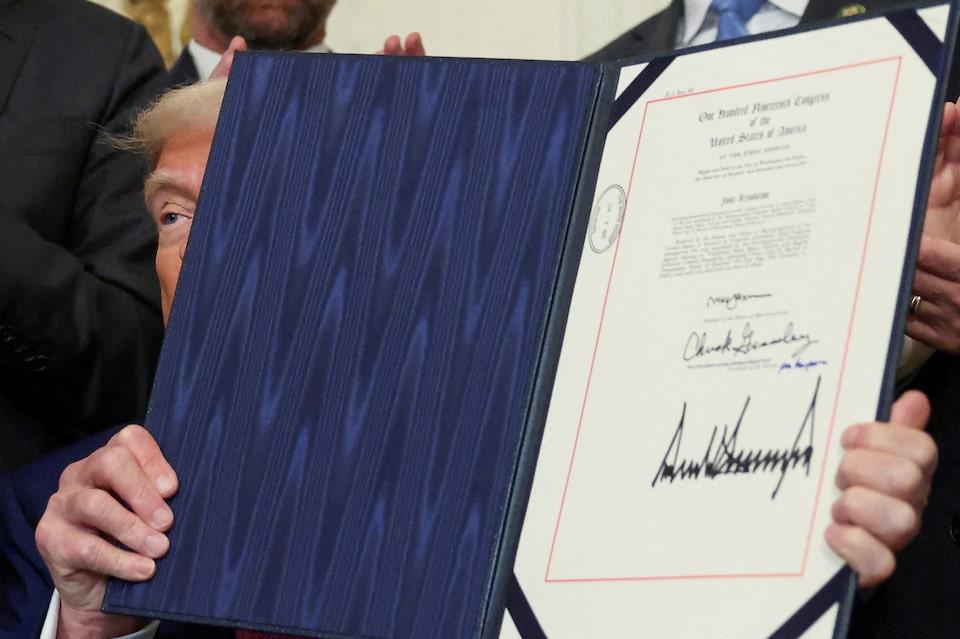
Truckmakers caught in crossfire between US, California US ends antitrust probe into California clean truck plan California governor, regulator not available for comment Aug 12 (Reuters) - Four major truckmakers, including Daimler (DTGGe.DE) , opens new tab and Volvo, sued California to block the state from enforcing strict emissions standards that U.S. President Donald Trump declared void in June. Daimler, Volvo, Paccar (PCAR.O) , opens new tab and International Motors (VOWG.DE) , opens new tab, formerly Navistar, said they have been "caught in the crossfire" after Trump reversed waivers issued during the Biden administration that let California set its own standards. Sign up here. In a complaint filed on Monday, the truckmakers said Trump's rescinding U.S. Environmental Protection Agency approval of California's plan to boost zero-emission heavy-duty truck sales and reduce nitrogen oxide emissions preempted the state's enforcement. They said this included enforcing the Clean Truck Partnership, a 2023 program giving the truckmaking industry flexibility to meet emissions requirements while advancing California's goal of lowering emissions. The truckmakers said the regulatory uncertainty has caused irreparable harm because they cannot plan production in advance without knowing which vehicles they will be permitted to sell. Monday's complaint names the California Air Resources Board and Democratic Governor Gavin Newsom as defendants, and was filed in the federal court in Sacramento, the state's capital. Newsom's office and the board did not respond on Tuesday to requests for comment. On Tuesday evening, the Federal Trade Commission ended an antitrust probe into the Clean Truck Partnership, and said Daimler, Volvo, Paccar and International Motors agreed to avoid future anticompetitive agreements with state regulators. "CARB's regulatory overreach posed a major threat to American trucking," Taylor Hoogendoorn, deputy director of the FTC bureau of competition, said in a statement. Trump, a Republican, is trying to curb California's power under the federal Clean Air Act to set tighter pollution limits than federal law requires, and Newsom's ability to promote electric vehicles as the governor fights climate change. California has received more than 100 waivers under the Clean Air Act since 1970. During his June signing of joint congressional resolutions, Trump also blocked California's effort to end sales of gasoline-only vehicles by 2035. The state is also suing to undo Trump's actions. The case is Daimler Truck North America LLC et al v. California Air Resources Board et al, U.S. District Court, Eastern District of California, No. 25-02255. https://www.reuters.com/legal/litigation/daimler-volvo-other-truckmakers-sue-california-block-emissions-rules-2025-08-12/
2025-08-12 22:17
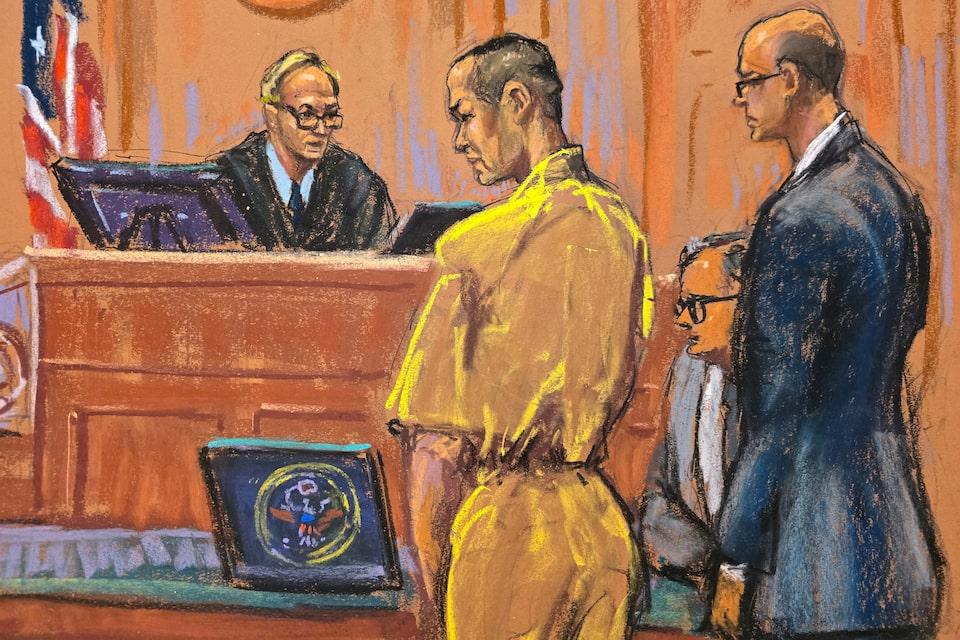
Kwon pleads guilty to conspiracy to defraud and wire fraud Terraform Labs founder accused of misleading crypto investors South Korean entrepreneur faces up to 25 years in prison NEW YORK, Aug 12 (Reuters) - Do Kwon, the South Korean cryptocurrency entrepreneur behind two digital currencies that lost an estimated $40 billion in 2022, pleaded guilty on Tuesday to two U.S. charges of conspiracy to defraud and wire fraud. Kwon, 33, who co-founded Singapore-based Terraform Labs and developed the TerraUSD and Luna currencies, entered the plea at a court hearing in New York before U.S. District Judge Paul Engelmayer. Sign up here. He had pleaded not guilty in January to a nine-count indictment charging him with securities fraud, wire fraud, commodities fraud and money laundering conspiracy. Accused of misleading investors in 2021 about TerraUSD - a so-called stablecoin designed to maintain a value of $1 - Kwon pleaded guilty to the two counts under an agreement with the Manhattan U.S. Attorney's office, which brought the charges. “Do Kwon used the technological promise and investment euphoria around cryptocurrency to commit one of the largest frauds in history," Manhattan U.S. Attorney Jay Clayton said in a statement. He faces up to 25 years in prison when Engelmayer sentences him on December 11, though prosecutor Kimberly Ravener said the government had agreed to advocate for a prison term of no more than 12 years provided he accepts responsibility for his crimes. Kwon is one of several cryptocurrency moguls to face federal charges after a slump in digital token prices in 2022 prompted the collapse of a number of companies. Prosecutors alleged that when TerraUSD slipped below its $1 peg in May 2021, he told investors a computer algorithm known as "Terra Protocol" had restored the coin's value. Instead, they said, he arranged for a high-frequency trading firm to secretly buy millions of dollars of the token to artificially prop up its price. Prosecutors said that false claim and others drove retail and institutional investors to buy Terraform products and boost the value of Luna - a more traditional token that fluctuated in value but was closely linked to TerraUSD - to $50 billion by the spring of 2022. In court, Kwon apologized for his conduct. "I made false and misleading statements about why it regained its peg by failing to disclose a trading firm's role in restoring that peg," Kwon said. "What I did was wrong." Kwon agreed in 2024 to pay $80 million as a civil fine and be banned from crypto transactions as part of a $4.55 billion settlement he and Terraform reached with the U.S. Securities and Exchange Commission. Kwon has been detained since his extradition from Montenegro late last year. He also faces charges in South Korea. As part of the deal, prosecutors will not oppose Kwon's potential application to be transferred abroad after serving half his U.S. sentence, Ravener said. https://www.reuters.com/legal/government/do-kwon-pleads-guilty-us-fraud-charges-40-billion-crypto-collapse-2025-08-12/
2025-08-12 21:59
Venture Global wins arbitration case against Shell Stock rises in after-hour trades HOUSTON, Aug 12 (Reuters) - Venture Global (VG.N) , opens new tab has won a legal battle against Shell (SHEL.L) , opens new tab over its failure to deliver liquefied natural gas under long-term contracts starting in 2023, the U.S. LNG major said on Tuesday. The company's stock price rose almost 6% in after hour trade as investors cheered the decision. Sign up here. Firms, including Shell, BP (BP.L) , opens new tab, Edison (EDNn.MI) , opens new tab and Galp (GALP.LS) , opens new tab, filed arbitration claims starting in 2023, accusing Venture Global of profiting from the sale of LNG on the spot market while not providing them with their contracted cargoes from the Calcasieu Pass export facility in Louisiana. The companies accused Venture Global of profiteering by selling commissioning cargoes at higher spot market prices, rather than at long term contracted prices. Venture Global denied the claim, saying it delayed moving to commercial operations because of a faulty electric system that did not allow the plant to operate optimally. "We are disappointed with the outcome but respect the Tribunal's decision," Shell said in a statement to Reuters. Trust in long-term contracts is the bedrock of the LNG industry and essential for continued investment and sustainable growth, the company statement said. The decision of the tribunal is in keeping with Venture Global's position that it has always honored its agreements with its customers, the company said. "Our industry and the investors and lenders who underpin it, all rely on respect for both the sanctity of negotiated contracts and the experienced, objective regulatory and legal bodies that govern it," Venture Global said. Earlier on Tuesday, Venture Global said it faced a potential penalty of up to $1.6 billion, according to its second-quarter earnings report. Some of the companies involved in the arbitration were pushing for a higher penalty, the report said. In just three years, Venture Global has become the second-largest U.S. LNG producer, playing a key role in keeping the country as the world's top LNG exporter. The company is also poised to become the largest U.S. LNG company by next year if it proceeds with its CP2 project in Louisiana and continues overproduction at its existing plants, according to LSEG data and company statements. https://www.reuters.com/business/energy/venture-global-wins-arbitration-case-against-shell-over-contracted-lng-cargoes-2025-08-12/
2025-08-12 21:30
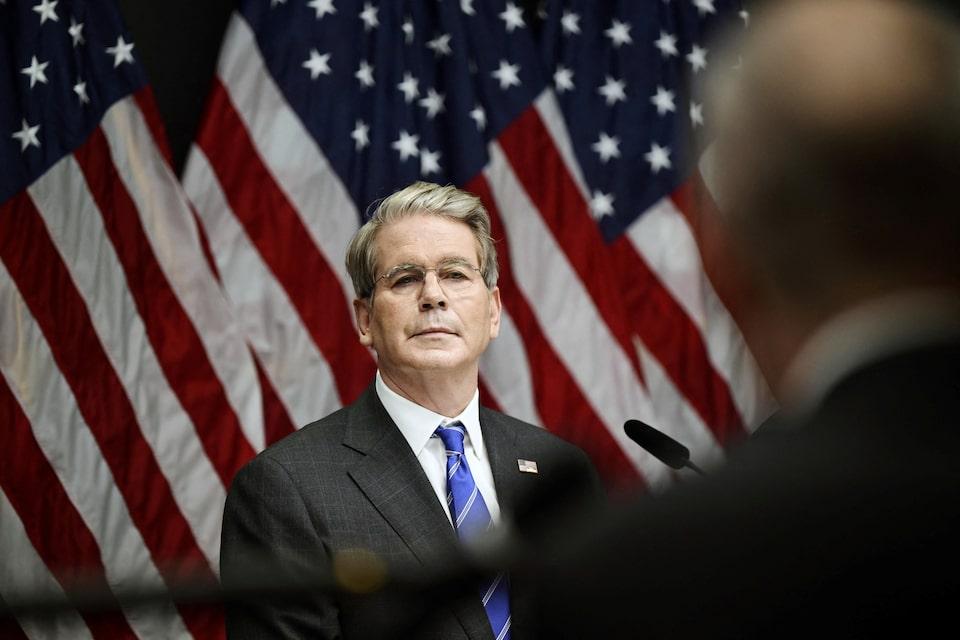
WASHINGTON, Aug 12 (Reuters) - U.S. trade officials will meet again with their Chinese counterparts within the next two or three months to discuss the future of the economic relationship between the two countries, Treasury Secretary Scott Bessent said on Tuesday. The comments come a day after the trading partners extended a tariff truce for another 90 days, staving off triple-digit duties on each other's goods. Sign up here. In an interview on Fox Business Network's "Kudlow," Bessent also said Chinese President Xi Jinping had invited Trump to a meeting, but one had not been scheduled. "There's no date," Bessent said. "The president hasn't accepted yet." Trump told CNBC earlier this month that the U.S. and China were getting very close to a trade agreement and he would meet Xi before the end of the year if a deal was struck. Bessent also said on Fox Business that the U.S. will need to see "months, if not quarters, if not a year" of progress on fentanyl flows before it considers reducing tariffs on China. Washington accuses Beijing of failing to curb the flow of precursor chemicals for fentanyl, a leading cause of U.S. overdose deaths. Beijing has defended its drug control record and accused Washington of using fentanyl to "blackmail" China. Trump imposed 20% tariffs on Chinese imports over the issue in February, and they have remained in effect despite a fragile trade truce reached by both sides in Geneva in May. An additional 10% base tariff has also been imposed on Chinese imports. https://www.reuters.com/world/china/us-trade-team-will-meet-chinese-officials-two-or-three-months-bessent-says-2025-08-12/