2025-08-12 21:28
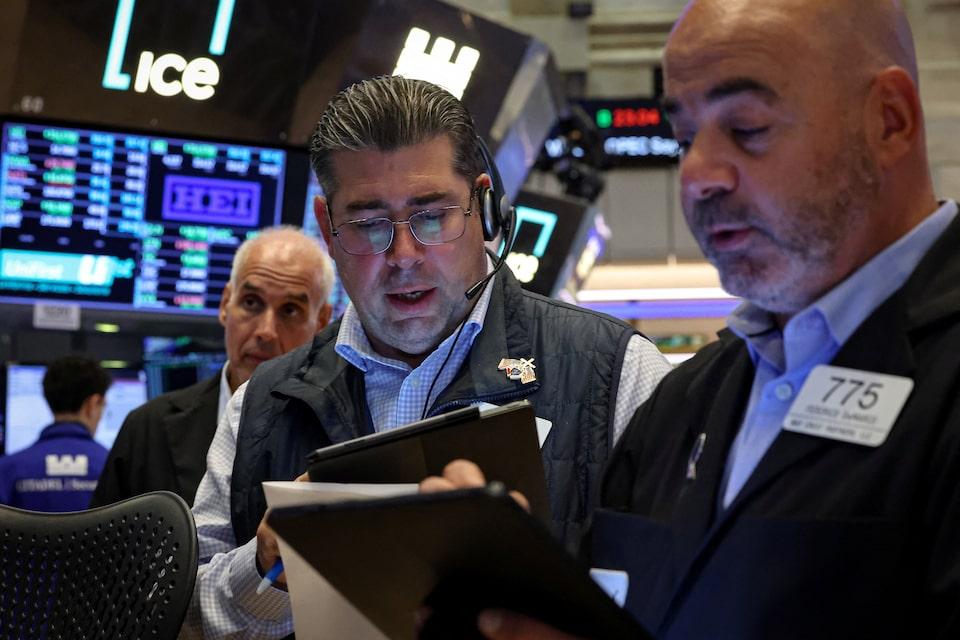
S&P 500, Nasdaq reach new record levels Short-term Treasury yields drop as tariff inflation fears ease, rate cut bets build UK gilts under pressure as wage data signals inflation pain Investors await Trump-Putin summit on Friday NEW YORK/LONDON, Aug 12 (Reuters) - World shares hit record highs on Tuesday after U.S. consumer prices data fueled expectations of an impending Federal Reserve interest rate cut in September, and a trade war truce between Washington and Beijing also buoyed sentiment. On Wall Street, the benchmark S&P 500 and the Nasdaq hit record highs after losing ground in the previous session. All 11 sectors on the S&P 500 advanced, led by stocks in communication services, technology and financials. Sign up here. The Dow Jones Industrial Average .DJI , opens new tab closed up 1.10%, the S&P 500 .SPX , opens new tab gained 1.13% and the Nasdaq Composite .IXIC , opens new tabadvanced 1.39%. European stocks (.STOXX) , opens new tab finished higher, rising 0.21%. MSCI's gauge of stocks across the globe (.MIWD00000PUS) , opens new tab rose 1% to 947.66, hitting a fresh record high. U.S. Labor Department data showed that the consumer price index rose 2.7% in 12 months through to July, which was slightly below the 2.8% rate that economists polled by Reuters had forecast. "There was upside risk to inflation, and the market was bracing for that in some respects," said James St. Aubin, chief investment officer at Ocean Park Asset Management in Santa Monica, California. "The report today, all things considered, was fairly benign. I don't think there was anything to write home about, but it certainly took the worst-case scenario off the table." Asian equities had rallied overnight after U.S. President Donald Trump signed an executive order pausing triple-digit levies on Chinese imports for another 90 days. MSCI's broadest index of Asia-Pacific shares outside Japan (.MIAPJ0000PUS) , opens new tab gained 0.18%. Markets on Tuesday traded on short-term relief, however, as the softer-than-expected consumer price data firmed up bets for U.S. rate cuts. Traders are pricing in a 94% chance of a Fed cut in September, up from nearly 86% a day ago and about 57% a month earlier, according to the CME FedWatch tool. Short-term U.S. Treasury bond prices rallied moderately, with the yield on two-year notes, which track interest rate expectations, down 2.3 bps at 3.731%. Longer-dated bond prices were lower. The yield on benchmark U.S. 10-year notes rose 1.4 basis points to 4.287% while the yield on 30-year notes rose 3.4 basis points to 4.8746%. Investors had been on tenterhooks about this batch of inflation data because it had followed a surprisingly weak jobs report on August 1 and had the potential to make concerns about U.S. stagflation a dominant global narrative. Trump has nominated White House adviser Stephen Miran to temporarily fill a vacant board seat at the U.S. central bank, stirring up speculation about presidential interference in monetary policy. The U.S. and China have engaged in a tit-for-tat tariff duel throughout the year, culminating in trade talks in Geneva, London, and Stockholm since May that focused on bringing tariffs down from triple-digit levels. Chinese exports jumped 7.2% year-on-year in July, beating the consensus forecast of economists polled by Reuters, but the nation's factory gate prices dropped by the most in two years in a further sign of manufacturers struggling to sell goods at home. In currency markets, the dollar weakened 0.25% to 147.77 against the Japanese yen and was down 0.71% at 0.807 against the Swiss franc . The euro rose 0.53% against the dollar at $1.1675. The pound rose 0.51% against the dollar to $1.3496 as traders anticipated the Bank of England will lag other non-U.S. central banks in implementing rate cuts. The BoE cut benchmark borrowing costs by a quarter-point to 4% last week after a tightly balanced vote between members of its monetary policy committee, who also broadly agreed that the risks of an upward wages-and-prices spiral remained present. Ten-year gilt yields were flat at 4.6186%. In commodities, spot gold prices were up 0.11% at $3,347.60 per ounce after dropping nearly 1.6% on Monday in response to Trump announcing there would be no tariffs on imported gold bars. Brent crude oil settled down 0.77% to $66.12 a barrel ahead of the August 15 meeting between Trump and Russian President Vladimir Putin, aimed at negotiating an end to the war in Ukraine. U.S. crude settled down 1.24% to $63.17 a barrel. https://www.reuters.com/world/china/global-markets-wrapup-6-graphic-2025-08-12/
2025-08-12 21:11
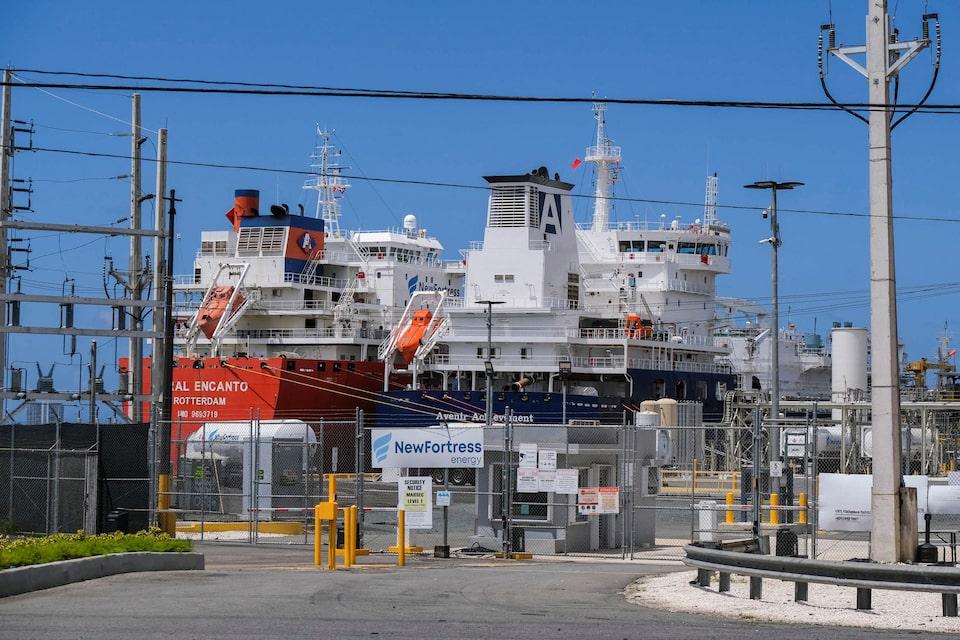
Aug 12 (Reuters) - New Fortress Energy said on Tuesday it has sought more time from the U.S. securities regulator to file its report for the second quarter ended June 30, citing ongoing talks over additional credit support required under one of its debt agreements. Shares of the U.S.-based liquefied natural gas company (NFE.O) , opens new tab declined nearly 5% in early trading. Sign up here. The timing for resolving the discussions is uncertain and could affect how its long-term debt and related disclosures are presented, New Fortress said in a filing with the U.S. Securities and Exchange Commission. The company also needs more time to complete procedures for interim financial statements and allow its auditor to finish its review. New Fortress had made a similar announcement in May that it would extend its first-quarter filing with the SEC due to delays in completing a previously announced sale of its business in Jamaica and the resignation of its accounting chief. It had long-term debt worth $8.9 billion at the end of the first quarter. The company's financial woes stem from its inability to secure LNG for its power-generation assets in Latin America on long-term agreements because its credit was not rated investment-grade and had to acquire the gas at higher prices. https://www.reuters.com/business/energy/new-fortress-energy-seeks-sec-extension-file-quarterly-report-amid-debt-2025-08-12/
2025-08-12 21:05
Exxon aims to replicate Guyana success in Trinidad's deepwater Initial exploration plan requires $42 million for seismic, wells Trinidad's existing infrastructure may speed up Exxon's output Aug 12 (Reuters) - Exxon Mobil (XOM.N) , opens new tab could invest as much as $21.7 billion in Trinidad and Tobago if the U.S. energy major finds reserves in a large deepwater area it was awarded on Tuesday to explore for oil and gas in the Caribbean country, Energy Minister Roodal Moonilal said. Moonilal was speaking at an event in Port of Spain where a production-sharing contract was signed with Exxon, marking its return to the country after 20 years. Sign up here. Reuters reported last week that government had agreed to grant Exxon access to an area equivalent to seven blocks and located northwest of its prolific Stabroek block offshore Guyana. "What we are awarding today is larger than the surface area of the country," Moonilal said. Exxon and Trinidad's government negotiated the deal in "record time," Exxon's Vice President of global exploration John Ardill said at the signing ceremony, adding that the company wants to use its knowledge about the Caribbean geology and replicate its success in Guyana. Exxon's initial exploration plan will need a $42 million investment for 3D seismic and up to two exploration wells, Trinidad's officials said. The first well could be drilled after completing seismic, to begin in six months, Ardill added. An Exxon spokesperson said the company is the operator of the block and holds 100% interest. An Exxon-led consortium has confirmed more than 11 billion barrels of recoverable oil and gas at the neighboring waters of Guyana. "While this is still frontier exploration, it has great potential in this ultra deepwater area," Ardill said, referring to Trinidad. Trinidad has had some success in deepwater exploration by consortia including companies BHP (BHP.AX) , opens new tab, Woodside (WDS.AX) , opens new tab, BP (BP.L) , opens new tab and Shell (SHEL.L) , opens new tab. Some of the discoveries are advancing to commercial developments, the minister said. If reserves are confirmed by Exxon, it could move even faster than it did in Guyana to begin output because Trinidad has oil and gas infrastructure in place. Exxon plans to use its equipment and resources between Guyana and Trinidad and Tobago to expedite exploration, according to Ardill. Trinidad's Prime Minister Kamla Persad has promised that her country will review fiscal terms to further attract investment for its energy sector. "Trinidad will not wait for the end of any energy era," she said. "Our principle is simple: investment goes where it is welcomed and stays where it is well treated." https://www.reuters.com/business/energy/trinidad-awards-deepwater-blocks-exxon-could-see-217-billion-investment-minister-2025-08-12/
2025-08-12 21:02
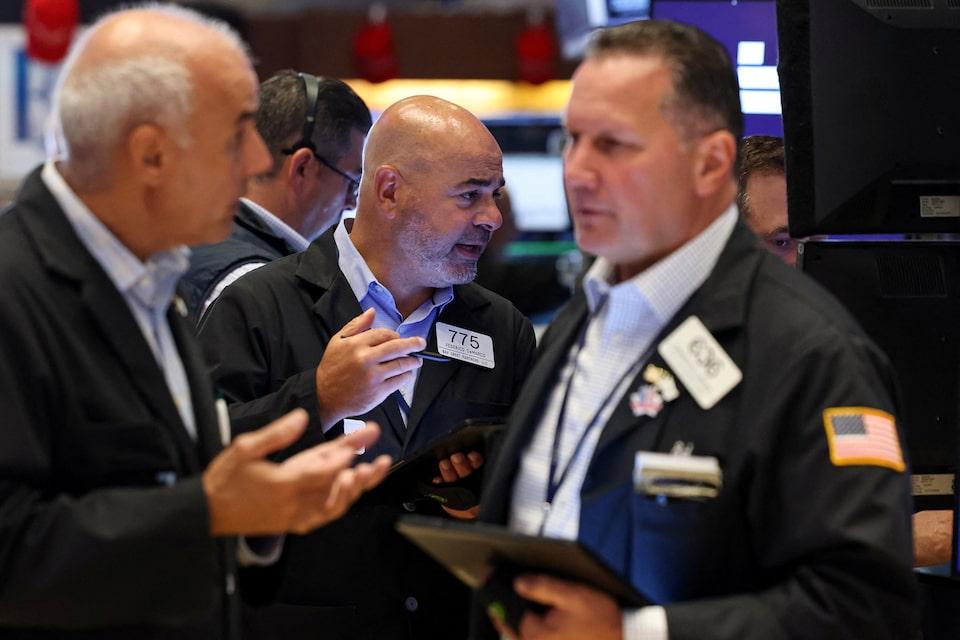
ORLANDO, Florida, Aug 12 (Reuters) - TRADING DAY Making sense of the forces driving global markets Sign up here. By Jamie McGeever, Markets Columnist Stocks around the world raced to fresh highs on Tuesday, with investors betting that U.S. inflation is tame enough to pave the way for a rate cut next month, although they remain on edge over the pressure President Donald Trump continues to bear on the Fed and other public and private sector institutions. More on that below. In my column today I look at Latin American currencies and ask whether their attractive "carry" will be enough to sustain their remarkable outperformance so far this year. If you have more time to read, here are a few articles I recommend to help you make sense of what happened in markets today. Today's Key Market Moves Today's Talking Points: * Weakness in the long end of the U.S. bond market and steepening of the yield curve. Reasons? Unease about the apparent certainty of a rate cut next month, deepening concern over Fed credibility and independence in the face of Trump's pressure on Chair Jerome Powell. On Powell's potential replacements, James Bullard and Stephen Miran both stressed on Tuesday that Fed independence is of paramount importance. * Deepening unease around Trump's interference in the economic arena. He has intensified his verbal attacks on Powell for not cutting rates, and is considering a lawsuit against him related to renovations at the Fed's Washington HQ. He has fired the Bureau of Labor Statistics commissioner, called for the CEO of Intel to resign, and on Tuesday hit out at Goldman Sachs' CEO and chief economist for the bank's analysis of the impact of tariffs. * Another whoosh in U.S. and global equities, which lifts many benchmark indices to new highs. With Trump's trade war on pause and the earnings season winding down, AI-related optimism and rate cut hopes are underscored by Perplexity AI's unsolicited $34.5 billion all-cash offer for Alphabet's Chrome browser, and July's in-line CPI inflation report. High-flying LatAm currencies may struggle to carry on As U.S. President Donald Trump has upended many global economic norms this year, investors have faced several counterintuitive swings, including the dollar's plunge and record highs in bitcoin and U.S. stocks. Now we can add another to that list: the stellar outperformance of Latin American currencies against the dollar. At the start of the year Mexico's peso was thought to be particularly vulnerable to looming U.S. tariffs, and domestic fiscal concerns were expected to limit the Brazilian real's upside. But last week, one index tracking the region's currencies against the greenback, MSCI's International EM Latin America Currency Index, rose to the highest level since it was launched in 2009, bringing its year-to-date gains up to 20%. For comparison, MSCI's EM Asian currency index and global EM currency indexes both peaked in early July, but their year-to-date gains at that time were only around 7%. And both have eased back since. Bank of America analysts estimate that Latin American currencies have appreciated more than 5% this year in real terms, moving from 3.2% undervalued to 2.2% over-valued versus averages over the last decade. What accounts for this outperformance? And, perhaps more importantly, can it continue? CARRY ON Price was obviously one major catalyst here. Many of these currencies were simply cheap at the start of the year. The Brazilian real and Mexican peso both depreciated around 20% in calendar year 2024. But the key factor is 'carry', the yield and interest rate differential relative to the U.S. dollar. In nominal and inflation-adjusted terms, the carry in Latin America is among the highest in the world, thanks to borrowing costs in Mexico and particularly Brazil. The Brazilian central bank's benchmark Selic rate is an eye-popping 15%, and even factoring in above-target inflation, real rates and bond yields are still close to 10%. Mexico's central bank may have cut rates 325 basis points in the past year, but its policy rate is still more than 330 bps higher than the U.S. fed funds rate. When you factor in the liquidity of these two currencies relative to most of their EM counterparts, you can see why foreign investors have flocked to them. The real is up 14% against the dollar this year, and the peso is up 12%. Even the Colombian peso, facing headwinds from a renewed wave of domestic political violence and uncertainty, is up 10% this year. Citing high real carry, analysts at UBS and Barclays remain positive on emerging market currencies, including Latin America's big two. That's partly because the gap with U.S. rates is likely to persist, especially in Brazil, even if local rates fall, given that the Fed may soon be easing policy as well. RETHINK Upside potential in the second half of the year is bound to be capped, however, precisely because of the bumper gains in the first six months. Emerging market local currency government bonds have returned 12% in dollar terms this year, while EM stocks are up 16%, outpacing hard currency bonds (+7%), U.S. corporate bonds (+5%), U.S. Treasuries (+4%), and U.S. equities (+8%), according to Bank of America. "This strong rally is prompting many investors to reassess their exposure to EM rates and currencies," BofA analysts wrote last week. This exposure was highlighted in BofA's August global fund manager survey released on Monday. The closely-watched poll showed that investors' biggest rotation recently has been into emerging markets, with a 15 percentage point jump from the month before. Their largest overweight position now, by some distance, is in EM assets. Significantly – and perhaps ominously from an exchange rate perspective – investors' biggest short position is in the U.S. dollar. And when considering headwinds, we can't forget tariffs. While the vulnerabilities in Asian countries have been a key investor focus, Brazil is also clearly in Trump's line or fire, as it faces 50% tariffs on many of its U.S.-bound goods. Trade talks between Brasilia and Washington have broken down completely, with President Luiz Inacio Lula da Silva saying U.S.-Brazil relations are at a 200-year low. Mexico has more breathing room, having secured a three-month truce to safeguard the U.S.-Mexico-Canada Agreement (USMCA), stave off 30% levies, and negotiate a broader trade deal. But until the ink dries, uncertainty will persist. The Trump 2.0 era has taken markets on a wild ride with many unexpected turns. Latin American exchange rates have enjoyed a dramatic upward climb, and while this doesn't mean they'll necessarily plummet, investors may want to buckle up. What could move markets tomorrow? Want to receive Trading Day in your inbox every weekday morning? Sign up for my newsletter here. Opinions expressed are those of the author. They do not reflect the views of Reuters News, which, under the Trust Principles , opens new tab, is committed to integrity, independence, and freedom from bias. https://www.reuters.com/business/global-markets-trading-day-graphic-2025-08-12/
2025-08-12 20:59
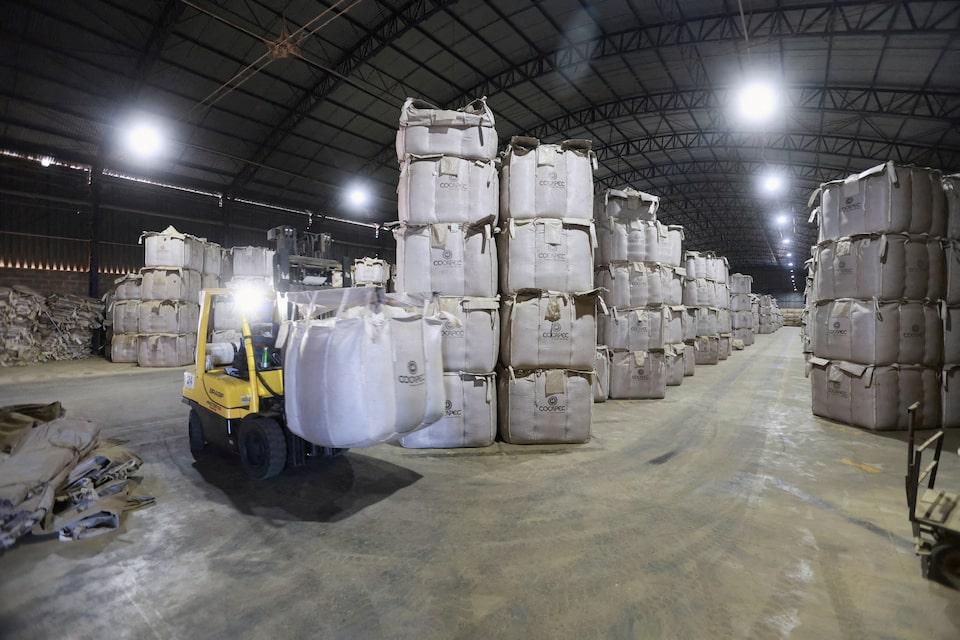
SAO PAULO, Aug 12 (Reuters) - Coffee buyers in the United States have started requesting to postpone imports of Brazilian coffee following a 50% tariff imposed on Brazilian goods by U.S. President Donald Trump, local exporters' group Cecafe said on Tuesday. The U.S. coffee industry, a major buyer of Brazilian coffee, is now in a holding pattern as it awaits news on tariff negotiations, said Cecafe President Marcio Ferreira. Sign up here. "They have inventory for 30 to 60 days, which gives them some breathing room to wait a little longer for ongoing negotiations," Ferreira said. In an email to Reuters, the United States' National Coffee Association said it did not have information on the matter. Postponements in shipping would also hit exporters using advances on exchange contracts, or ACCs, a type of instrument used for pre-shipment financing, Ferreira said. "With delays to business, an ACC is not complied with and we start to suffer from more interest, high fees, and additional costs, with overheads, for example," Ferreira said. Furthermore, the current inverted futures market - where more distant contracts depreciate versus closer ones, he said, adding that postponing a shipment planned for September until December would cause an additional loss of $10 per bag. "Postponing shipments ... has this cumulative and accentuated negative impact," Ferreira said. While the tariff took effect this month, Brazilian green coffee exports to all destinations fell 28.1% in July compared to the same month a year ago, to 2.45 million 60-kilogram (132.3 lb) bags, according to Cecafe data. Brazil, the world's top coffee producer and exporter, shipped 1.98 million bags of arabica beans abroad last month, a 20.6% decline year-on-year, while exports of the robusta variety dropped nearly 49% to about 461,000 bags, the data showed. While the U.S. is the biggest consumer, other top customers include Germany, Italy, and Belgium, according to Cecafe. https://www.reuters.com/world/americas/us-coffee-buyers-requesting-postpone-brazil-imports-brazilian-lobby-says-2025-08-12/
2025-08-12 20:58
HOUSTON, Aug 12 (Reuters) - A Chevron-chartered (CVX.N) , opens new tab tanker docked at Venezuelan state company PDVSA's Jose terminal on Tuesday, positioning it to be the first to export crude to the United States under a new license Chevron received in July, LSEG tracking data showed. The U.S. Treasury Department late last month authorized Chevron to operate in the sanctioned OPEC nation again, export its oil and do swaps with PDVSA through a restricted license banning any payments to Venezuela's government. Sign up here. Chevron suspended loading of Venezuelan crude in April ahead of its prior license's expiration on May 27. The Bahamas-flagged tanker Canopus Voyager arrived in Venezuelan waters last week and will load Hamaca heavy crude, which is produced by a joint venture between Chevron and PDVSA. At least five other vessels that Chevron had used to transport Venezuelan crude to the U.S. were near or navigating toward the South American country's waters on Tuesday, the LSEG data showed. Vessel MediterraneanVoyager was near the Bajo Grande port in Venezuela's western region waiting for authorization to load Boscan heavy crude, while Nave Cosmos, Sea Jaguar, Ionic Anax and Nave Neutrino signaled Aruba, a popular location for ship-to-ship transfers of Venezuelan crude, the LSEG data showed. Chevron did not reply to questions about the tankers, instead saying that it conducts business in compliance with laws, and sanctions frameworks. PDVSA did not immediately reply to a request for comment. https://www.reuters.com/business/energy/chevron-chartered-tanker-docks-venezuela-load-oil-after-new-us-license-2025-08-12/