2025-08-12 12:31
Aug 12 (Reuters) - Hubbell (HUBB.N) , opens new tab said on Tuesday it will acquire smaller peer DMC Power for $825 million in cash, as the electrical equipment maker bolsters its critical components portfolio to meet an expected boom in power demand. DMC designs and makes connector technology systems for high-voltage power infrastructure, and complements Hubbell's existing substation and transmission connector solutions, the acquiring firm said. Sign up here. Growing demand for artificial intelligence has fueled investments into modern data centers, in turn boosting the requirement for power infrastructure and components, and benefiting manufacturers like Hubbell and DMC Power. "As load growth, datacenter buildouts and aging infrastructure drive highly visible utility substation and transmission investment over the next several years, the acquisition of DMC Power expands Hubbell's strong presence in these attractive markets," said Hubbell CEO Gerben Bakker. Last month, Hubbell raised its annual profit forecast banking on strong demand for its products. DMC has more than 350 employees and two manufacturing facilities along with multiple distribution facilities located across North America, Hubbell said. Hubbell expects the deal to close by the end of this year, and boost its adjusted earnings per share in 2026. It plans to finance the transaction with a combination of cash on hand and debt. https://www.reuters.com/technology/electrical-component-maker-hubbell-buy-peer-dmc-power-825-million-2025-08-12/

2025-08-12 12:21
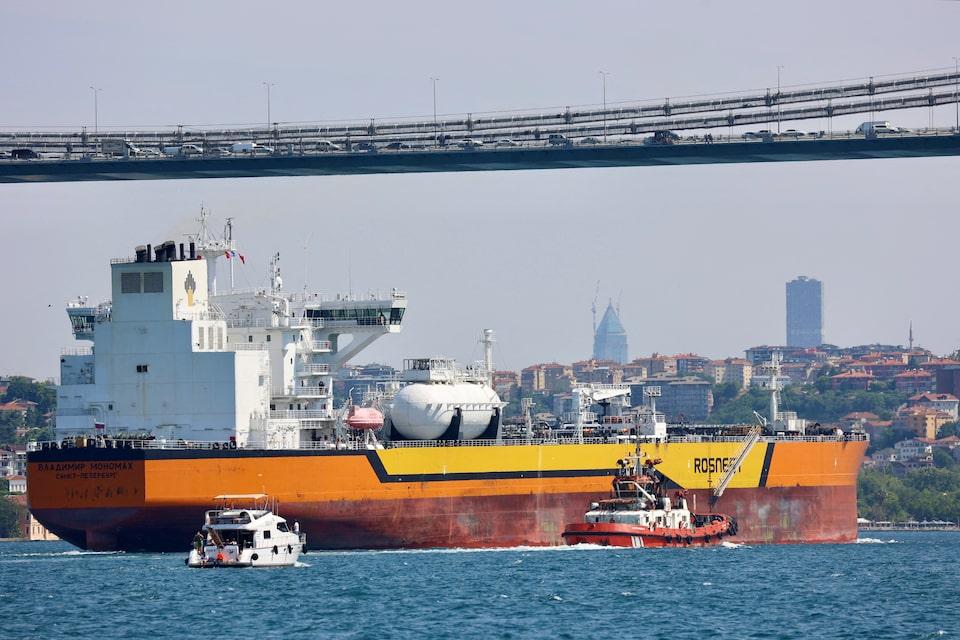
NEW DELHI, Aug 12 (Reuters) - India's state oil refiners will continue to use annual contracts to secure oil supplies and hedge against market volatilities as the future of cheap Russian purchases is in doubt, the oil ministry said in a report to parliament on Tuesday. India has emerged as the leading buyer of Russian seaborne oil, which is sold at a discount after some Western nations shunned purchases and imposed restrictions on Russian exports over Moscow's 2022 invasion of Ukraine. Sign up here. However, U.S. President Donald Trump, who announced 25% import tariffs on Indian goods last month, is threatening further levies due to India's Russian oil purchases. And state refiners are currently awaiting clarity from the government on whether to continue importing Russian oil. "Increased imports of Russian crude into India may not last forever," the ministry said in a report responding to a parliamentary panel's questions that did not directly mention the United States or Trump's threatened tariffs. The report said that state refineries were moving forward with all of their term contracts with other suppliers and regions to secure supply requirements. Refiners consider factors including supply security, international politics and trade relations when finalising their procurement plans, it added. "This approach ensures both energy security and the procurement of crude oil at optimal value," the report said. India, the world's third-largest oil importer and consumer, relies on Russian crude for more than a third of its imports. State refiners, which account for over 60% of the country's 5.2 million barrels per day of refining capacity, have paused purchases of Russian oil due to narrowing discounts. Private refiners Reliance Industries Ltd (RELI.NS) , opens new tab, Nayara Energy, and HPCL-Mittal Energy Ltd are continuing with their purchases. Trump has made bringing an end to the war in Ukraine a priority of his administration. He is due to meet with his Russian counterpart Vladimir Putin, with whom he's had a tumultuous relationship, in Alaska on Friday as part of his efforts to secure a peace deal. https://www.reuters.com/business/energy/indian-refiners-using-term-deals-hedge-against-russian-supply-risk-govt-says-2025-08-12/
2025-08-12 12:15
KUALA LUMPUR, Aug 11 (Reuters) - (This Aug 11 story has been corrected to add the word 'upstream' to clarify that this refers to Petronas' upstream portfolio, not its total business portfolio, in the headline and paragraphs 1 and 2) Malaysia's state energy firm Petronas plans to raise the share of its international upstream portfolio to 60% over the next decade, it said on Monday. Sign up here. The firm will build on its current international upstream portfolio, which now accounts for around 40% to 50% of its investments, by integrating its domestic expertise with global partnerships, it said in a fact sheet shared with Reuters. In a volatile market, Petronas is upgrading its upstream operation portfolio to focus on high-quality assets while at the same time ensuring that energy supplies for Malaysia remain reliable, the company added. "Malaysia remains a core part of our investment portfolio, and we are committed to this market," executive vice president and chief executive officer of upstream business Mohd Jukris Abdul Wahab said in the fact sheet. Malaysian state news agency Bernama reported that Mohd Jukris saying Petronas would review its operations including maintenance, field operations and others in order to mitigate the impact of lower crude oil prices. Crude oil prices are currently trading at US$66.68 per barrel as of 1006 GMT. Mohd Jukris said Petronas would consider partnering with other firms to reduce its risk exposure, especially for projects requiring high capital investment. He added that Petronas is also considering expanding its presence in Canada, given that the country has now become one of its major liquefied natural gas suppliers, Bernama reported. In July, Petronas delivered its first LNG Canada cargo to Japan from its newly operational LNG facility in Kitimat. Petronas has a 25% stake in the Kitimat LNG plant in British Columbia on Canada's west coast. https://www.reuters.com/business/energy/malaysias-petronas-boost-international-upstream-portfolio-60-over-next-decade-2025-08-11/
2025-08-12 11:55
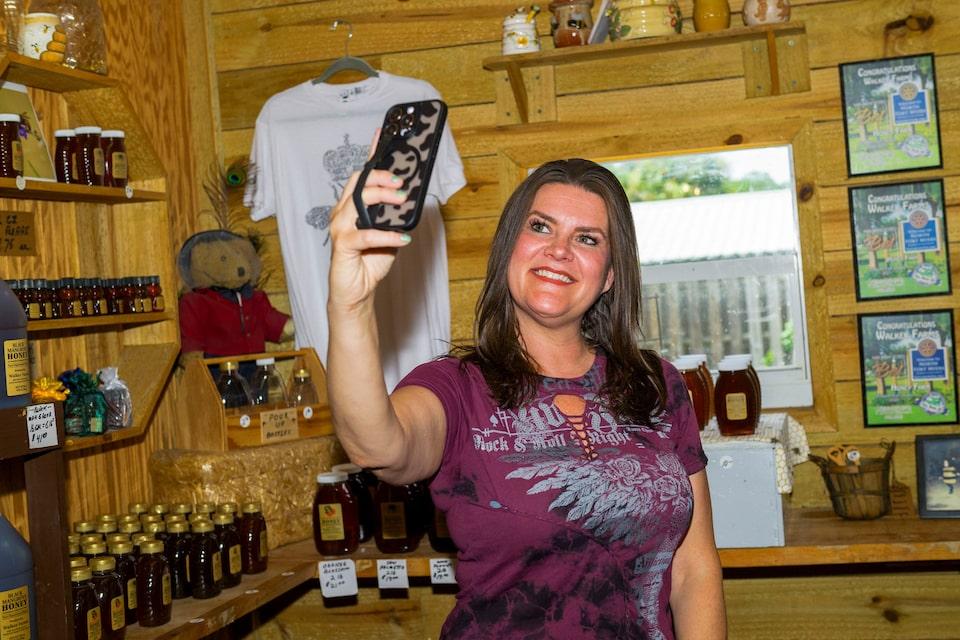
Miller pushes back on "Make America Healthy Again" narrative Wellness influencer Hari's platform has grown with MAHA movement Survey shows people increasingly trust peers and influencers over experts Aug 12 (Reuters) - Michelle Miller stands in a field of corn, stalks stretching above her perfectly styled hair, holding a tiny microphone and addressing an audience online. She was farming genetically-modified corn in Iowa in 2017, she says, when a tornado hit. Now a social media influencer who goes by the name the "Farm Babe," Miller says the wind knocked her corn flat on the ground. But in a feat of botanical fortitude, the plants bounced back. Sign up here. "So when you ask farmers: why are they growing these GMO seeds?" she says in the video, "it's because the genetics hold up." Miller has starred in hundreds of videos, often set in fields and on farms, since she began her influencing career. She aims to debunk what she sees as misperceptions around farming perpetuated by another universe of influencers, many of whom are now closely aligned with Health and Human Services Secretary Robert F. Kennedy, Jr., and his Make America Healthy Again, or MAHA, campaign. But unlike Miller's GMO corn, arguments in favor of the status quo in U.S. food and agriculture are increasingly falling flat, especially on social media. Among the most prominent of those MAHA influencers is Vani Hari, who blogs as "The Food Babe" -- Miller says her own name is a self-conscious spin-off. Hari has gained millions of followers by railing against processed food, GMOs, pesticides and other mainstays of the U.S. food system. Although Miller partners with powerful interests in the food and agriculture industry with huge marketing budgets, her message is not gaining as much traction as Hari's. Her Instagram account, for example, had just over 43,000 followers in early August, to Hari's 2.3 million. The bloggers' uneven rivalry speaks to the ascendance of a movement that has put conventional food and farming in its crosshairs, and Big Agriculture's struggle to respond. Hari and Miller, both in their 40s, emerged as food commentators in the 2010s amid a boom in social media influencing, when a single post going viral could help rocket its author to fame and fortune. Their rise also coincided with growing national attention on the relationship between food, obesity and chronic illness, with then-First Lady Michelle Obama spearheading new regulations on school nutrition and promoting vegetable gardening and exercise through her "Let's Move!" campaign. Hari grew up in Charlotte, North Carolina, where she said she was largely raised on ultra-processed foods, to which she attributes later chronic health conditions, from eczema to endometriosis. An appendectomy in 2002 launched her on a quest to understand the source of her health issues. She pored over books on nutrition at the library, from which she concluded that her diet was at the root of her diseases, and those of many other Americans. "I wanted to investigate: what was it about these foods that made me feel so bad?" Hari said. Hari began writing a blog in 2011 as The Food Babe, a name suggested by her husband, with the aim of educating her friends and family. The blog reached well beyond her immediate circle and led to book deals and the creation of Truvani, a line of supplements now sold at Target and Walmart. More recently, she has become a sort of mascot of the MAHA movement, though she is a registered Democrat, according to public voter registration records. At a press conference in April, at which Kennedy announced the administration's intention to phase out synthetic food dyes, Hari was an opening act, appearing in a bejeweled white suit before a room of press and MAHA supporters. When Kennedy took the stage, he called her an "extraordinary leader." She said she does not have a formal role in the administration. Miller wanted her own pulpit after she began noticing Hari's content in 2014. A commercial farmer of soybeans, corn and livestock in Iowa at the time, Miller said she posted a comment on Hari's Facebook page taking issue with her claims about the toxicity of GMO crops. After that, Miller said, she was blocked. So, she launched a rival blog. "I really took it upon myself to be a myth buster for the industry," she said. Hari did not respond to questions about blocking Miller or others who make critical comments. Hari has published books blasting corruption in the food industry as well as her own cookbooks, and sells subscriptions to her blog. The supplements, however, are her main business, Hari said. She declined to disclose the company's value. Miller, who said she is not registered with either political party, travels about 300 days a year, doing paid speaking engagements, farm visits and branded partnerships with companies like Tyson Foods, Domino's Pizza and the California Beef Council. She also writes a column for an agriculture industry trade publication. She declined to say exactly how much she earns, but her published fee for speeches ranges from $2,500 to $15,000. Mariah Wellman, a professor of advertising and public relations at Michigan State University who focuses on social media and wellness, said both women likely earn in the high six figures for their work. But they speak to different audiences. And the constraints of traditional public relations may hinder pro-agriculture messaging, while the MAHA crowd's comfort with social media helps propel its narrative. "When you think about large brands and large agricultural companies, they are headed by a demographic that's not super comfortable with influencer culture," said Wellman. She said that such companies often find it hard to keep up with fast-moving social media trends as they like to vet their partnerships carefully. Miller, for her part, is sometimes frustrated by the challenges of working with an industry that is less nimble on social media, noting that it skews older and male, and saying it is often "preaching to the choir." But she sees it as part of her mission to help agriculture better communicate about itself. Hari has gained traction as public skepticism of U.S. public health institutions grew during the Covid-19 crisis. And her profile exploded when Kennedy, a longtime vaccine skeptic and environmental lawyer who was involved in suing companies like Bayer Monsanto over its pesticides, joined President Donald Trump's administration. Kennedy's MAHA zeal has already inspired corporate action and state legislation on food. In June, Kraft Heinz and General Mills announced they would phase out synthetic food dyes, which MAHA adherents believe cause problems ranging from hyperactivity in children to cancer, by 2027. Scientists say there is not yet a large enough body of evidence to show whether synthetic food dyes cause these problems. West Virginia in March banned some synthetic food dyes from being sold in the state, and Arizona and Utah have recently banned a list of synthetic food dyes in school meals. Communications firm Edelman found in a large, global public opinion survey , opens new tab taken in 2024 that people, especially those aged 18-34, are increasingly disregarding the advice of credentialed medical providers in favor of recommendations from friends, family and social media. As Lauri Baker, a professor of agricultural communication at the University of Florida, says: "In almost any study we've conducted, people are more likely to trust someone who looks like them, thinks like them, who they believe is like them." (This story has been refiled to say America, not American, in the first bullet point) https://www.reuters.com/business/healthcare-pharmaceuticals/farm-babe-versus-food-babe-influencer-rivalry-is-lopsided-battle-2025-08-12/
2025-08-12 11:40
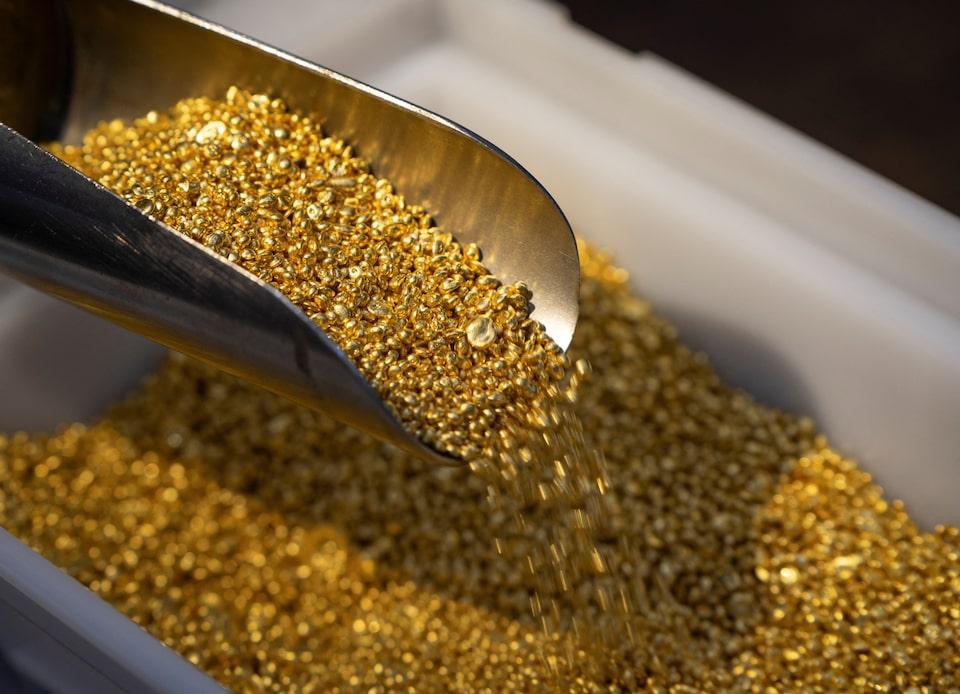
US CPI data due at 1230 GMT, PPI data due on Thursday U.S. gold futures slid over 2% on Monday from Friday's record Spot gold prices dropped 1.6% on Monday Aug 12 (Reuters) - Gold prices steadied on Tuesday after the previous session's sharp sell-off in U.S. futures from record levels, with investors now focusing on U.S. inflation data that could shape the Federal Reserve's rate-cut timeline. Spot gold was little changed at $3,345.59 per ounce as of 1046 GMT, while U.S. gold futures for December delivery were down 0.2% at $3,394.10. Sign up here. Bullion slid 1.6% to a more than one-week low on Monday and futures dropped more than 2% after U.S. President Donald Trump said on social media he would not impose tariffs on imported bullion. A report that Washington has imposed tariffs on imports of 1-kg bullion bars sent U.S. gold futures to record highs on Friday. Comex front-month gold futures are now in line with London spot after reaching a near $40/ounce premium on Friday, said Nitesh Shah, commodities strategist at WisdomTree. "However, in the absence of an official statement, this convergence may prove temporary, and the two prices could diverge again if uncertainty resurfaces," he said. Focus is also on the U.S. consumer prices index report due at 1230 GMT. Economists polled by Reuters expect core CPI to have risen 0.3% in July, pushing the annual rate to 3%, drifting further away from the Fed's 2% target. "After recent surprise weak labor data, if inflation numbers come in softer, market expectations for a rate cut are likely to rise, which would support gold," said ANZ Commodity Strategist Soni Kumari. CME's FedWatch Tool , opens new tab shows markets are pricing in an 85% chance of a rate cut next month. Looser monetary policy, coupled with political and economic uncertainty, tends to benefit gold. Attention is also shifting to the Fed's leadership beyond the current cycle, with Chair Jerome Powell's term ending next May. Elsewhere, spot silver gained 0.3% to $37.70 per ounce, while platinum rose 0.9% to $1,338.84 and palladium climbed 1.2% to $1,149.25. https://www.reuters.com/world/china/gold-prices-steady-investors-await-key-us-inflation-data-2025-08-12/
2025-08-12 11:38
Aug 12 (Reuters) - Stock and crypto trading platform eToro beat Wall Street views for profit in the second quarter on Tuesday, as retail investors maintained a firm risk appetite despite broader macroeconomic uncertainty due to new tariffs. Shares of eToro jumped 5% in premarket trading after results. Sign up here. Retail trading activity has been strong this year, buoyed by gains in U.S. equity markets and renewed interest in high-risk assets such as cryptocurrencies and tech stocks. Analysts say volatility from geopolitical tensions and shifting trade policies has done little to deter individual investors, who have been quick to capitalize on market swings and look for opportunities to "buy the dip". Net contribution, which deducts the cost of revenue from cryptoassets and margin interest expense, jumped 26% to $210 million from the year-ago quarter, driven primarily by increased trading activity. New-age fintech platforms have chipped away at the dominance of Wall Street incumbents in recent years, luring younger and tech-savvy investors with low fees, slick mobile apps and access to a wider range of assets. Funded accounts, referring to customers with deposited money, increased 14% in the quarter to 3.63 million, eToro said. A combination of accessible trading apps, volatile price moves and a steady flow of market news has kept retail engagement high, helping these platforms sustain growth. The financial technology company's assets under administration grew by 54% year-on-year to $17.5 billion. The company went public in May in a bumper U.S. initial public offering, with its shares surging on debut after pricing above the marketed range. They had ended the previous session about 6.3% above their IPO price. eToro posted an adjusted profit of 56 cents per share in the three months ended June 30. Analysts, on average, had expected 50 cents, according to estimates compiled by LSEG. https://www.reuters.com/business/finance/trading-platform-etoro-beats-profit-estimates-retail-investing-boom-2025-08-12/